


When You Need to Hot Water Restore Fast: What to Do First
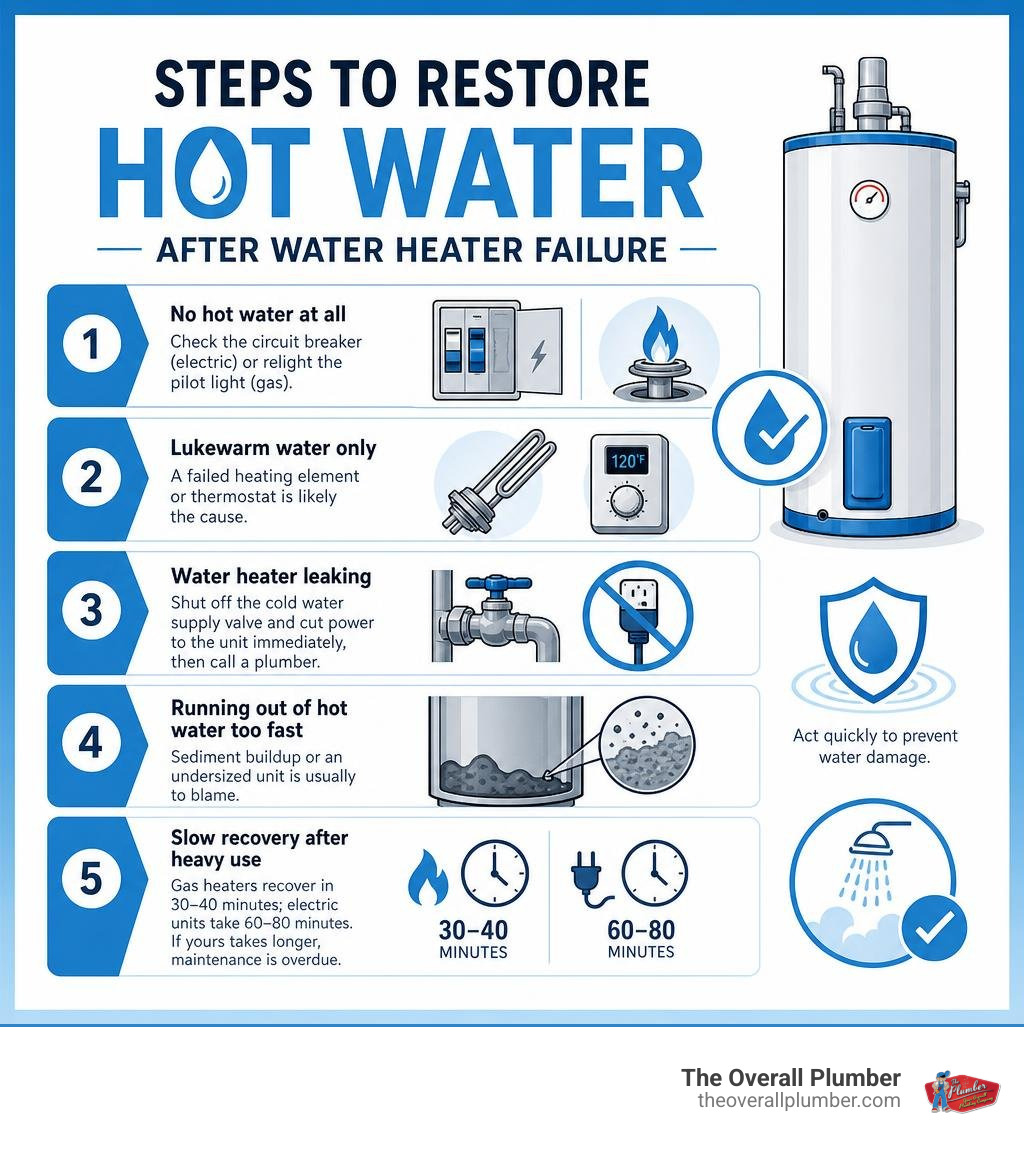
If you need to hot water restore service quickly, here are the most common fixes based on your water heater type:
- No hot water at all — Check the circuit breaker (electric) or relight the pilot light (gas).
- Lukewarm water only — A failed heating element or thermostat is likely the cause.
- Water heater leaking — Shut off the cold water supply valve and cut power to the unit immediately, then call a plumber.
- Running out of hot water too fast — Sediment buildup or an undersized unit is usually to blame.
- Slow recovery after heavy use — Gas heaters recover in 30-40 minutes; electric units take 60-80 minutes. If yours takes longer, maintenance is overdue.
A water heater failure doesn’t just mean a cold shower. When a tank bursts or a valve fails, standing water can warp floors and trigger mold growth within 24 to 48 hours. Getting the right information fast — and acting on it — makes all the difference between a quick fix and a costly repair.
This guide walks you through everything: recovery times, emergency steps, water damage control, energy-saving upgrades, and ongoing maintenance to keep failures from happening again.
I’m Dayton Whitworth, a second-generation plumber serving Greater Brazoria County, Galveston County, Houston, and the surrounding Gulf Coast, with hands-on experience helping homeowners hot water restore service after everything from a tripped breaker to a fully ruptured tank. In the sections ahead, I’ll share exactly what works — and what to do first.
Understanding Water Heater Recovery Times and Sizing
When you are waiting to hot water restore to your household, understanding recovery times is critical. “Recovery time” is the amount of time it takes for a water heater to reheat its entire tank of water after it has been completely depleted. Depending on your system’s fuel source, this wait time can vary dramatically.
Gas water heaters are highly efficient at rapid heat transfer because gas burners heat the tank much faster than electric elements can. On average, a standard gas unit can reheat a 50-gallon tank in 30 to 40 minutes. On the flip side, electric water heaters generally take 60 to 80 minutes to recover the same capacity. Tankless water heaters, of course, do not have a recovery time since they heat water on demand, but they can still struggle to keep up if the demand exceeds their maximum flow rate.
| Water Heater Type | Average Recovery Time (50-Gallon Tank) | Lifespan | Primary Benefit |
|---|---|---|---|
| Gas Tank | 30 – 40 minutes | 6 – 12 years | Rapid recovery times |
| Electric Tank | 60 – 80 minutes | 6 – 12 years | Lower upfront installation cost |
| Tankless | Instantaneous (On-Demand) | 20+ years | Endless hot water, high efficiency |
Another vital metric is the First Hour Rating (FHR). Found on your system’s yellow EnergyGuide label, the FHR measures how many gallons of hot water the heater can supply in a single hour of peak usage, starting with a fully heated tank. This rating combines the tank’s storage capacity with its hourly recovery rate. For most households, a first hour rating between 60 and 80 gallons works incredibly well for families of four. If your FHR is too low for your household’s peak usage hours, you will find yourself constantly running out of hot water.
Calculating Your Household’s Peak Hot Water Demand
To ensure you never have to wait on a slow recovery cycle, you must calculate your household’s peak-hour demand. This calculation helps you choose a system with an appropriate FHR or determine if it is time to upgrade. To do this, look at the times of day when your family uses the most hot water simultaneously and add up the estimated consumption:
- Standard shower: Uses 10 to 15 gallons of hot water.
- Taking a bath: Uses 20 to 25 gallons.
- Running the dishwasher: Uses 6 to 10 gallons (with older models using up to 15 gallons).
- A standard washing machine cycle: Uses 35 to 40 gallons of hot water.
If your family of four takes back-to-back showers in the morning while running the dishwasher, your peak demand could easily top 70 gallons in a single hour. If you are planning an upgrade to prevent future shortages, it is helpful to explore how much to budget for your new water heater installation or look into the long-term energy savings of electric water heater costs with a 50-gallon guide to find the ideal balance of capacity and cost. For a complete breakdown of choices, you can also consult a comprehensive guide to water heater installation or read about hot water service installation as your ticket to a better morning.
Troubleshooting Common Issues to Hot Water Restore
If your water heater is taking far too long to recover or has stopped producing hot water altogether, several common mechanical issues may be at play:
- Sediment Buildup: Over time, dissolved minerals in our Texas hard water settle to the bottom of the tank. This sediment creates an insulating barrier between the gas burner or electric heating element and the water. As a result, the system has to work twice as hard, which slows down recovery times and can eventually cause the tank to overheat and crack.
- Broken Dip Tube: The dip tube is responsible for directing cold incoming water straight to the bottom of the tank to be heated. If the dip tube cracks or disintegrates, cold water mixes directly with the hot water at the top of the tank, resulting in lukewarm water at your faucets.
- Failed Heating Elements: Electric water heaters rely on upper and lower heating elements. If one fails, you will experience either a severe drop in hot water volume or lukewarm temperatures. You can learn how to fix this by reading the complete electric heater element replacement manual.
- Thermostat Calibration: If your thermostat is faulty or miscalibrated, it may shut off the heating elements prematurely.
If you have family members experiencing water heater issues further west in Texas, they can look into water heater repair in San Antonio. For those trying to troubleshoot electric geysers or looking to handle minor fixes, we recommend checking out our guide on how to repair an electric geyser without flooding your house and avoiding the risks detailed in don’t get burned by DIY hot water line repair.
Emergency Steps to Safely Hot Water Restore After a Tank Failure
A ruptured water heater tank can dump dozens of gallons of water into your home in minutes. If you experience a sudden tank failure or a severe leak, taking immediate action can prevent thousands of dollars in structural damage.
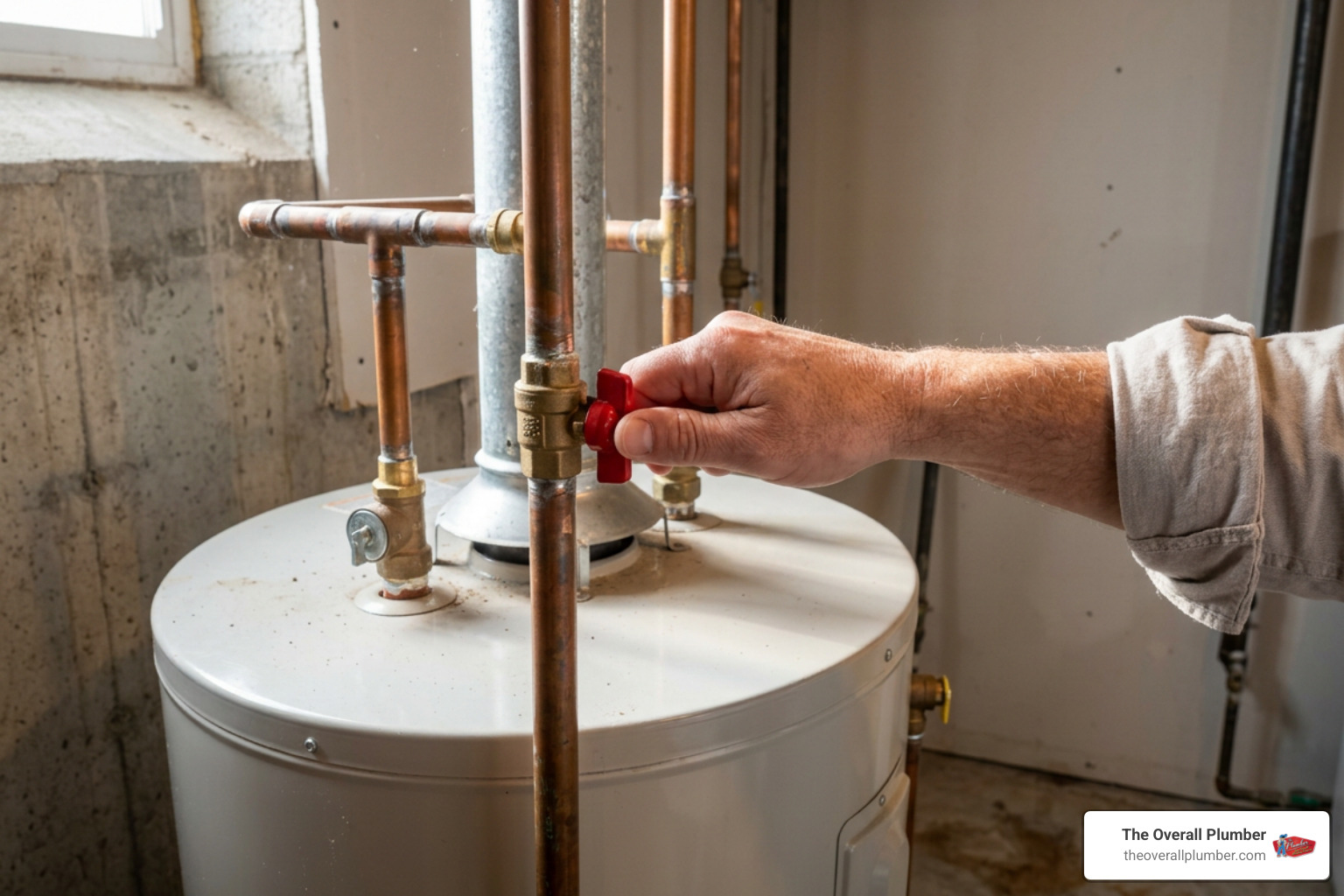
Follow these steps immediately:
- Cut the Power Source: For an electric water heater, locate your home’s main breaker panel and flip the circuit breaker dedicated to the water heater to the “off” position. For a gas unit, turn the dial on the water heater’s thermostat valve to the “off” or “pilot” position.
- Shut Off the Water Supply: Locate the cold water shut-off valve on the pipe entering the top of your water heater. Turn it clockwise to stop the flow of water into the tank. If the valve is stuck or the leak is coming from a main line, shut off your home’s main water valve.
- Open the Faucets: Turn on the hot water tap at any sink or bathtub to relieve pressure within the plumbing system.
- Call a Professional: Once the site is safe and the water flow has stopped, contact our emergency plumbing team to inspect the unit.
Managing Water Damage and Structural Drying
Standing water from a hot water leak is a major hazard. Because the water is warm, it creates a highly humid environment that accelerates structural warping and mold growth. If a leak has occurred, professional water damage restoration is essential.
The mitigation process involves rapid water extraction using heavy-duty truck-mounted pumps. Once the standing water is gone, technicians use advanced moisture mapping tools to detect hidden dampness behind drywall and beneath flooring. Industrial air movers and dehumidifiers are then deployed to dry out the structural elements of your home. Finally, the area must be disinfected to prevent mold spores from taking root.
While mountain properties might rely on expert water damage restoration in Denver to handle high-altitude flooding, our coastal Texas homes face intense local humidity that requires specialized regional care. For those interested in national restoration standards, you can read about broken water heater restoration in Elgin.
Professional Solutions to Hot Water Restore Your Home’s Comfort
When your system fails, you shouldn’t have to wait days for a solution. We offer emergency plumbing services to help you hot water restore service quickly and safely. Whether your system requires a simple thermostat replacement or a complete system overhaul, our certified technicians are available 24/7.
If your system is past its prime, we can assist you with selecting and installing a brand-new unit. You can read more about choosing a 24-hour water heater service to ensure you are never left in the cold. If you are ready to shop, browse our resources on hot water heater replacement, check out tankless water heaters on sale, or view our guide on water heater sales. If you plan to install a system yourself or want to understand the professional process, consult our ultimate step-by-step guide to installing a hot water system.
Advanced Energy Recovery: Heat Recovery Units and Drain-Water Systems
If you are looking for innovative ways to lower your energy bills while easing the load on your water heater, installing a heat recovery system is an excellent option. These systems capture waste heat that would otherwise go down the drain or escape into the atmosphere and repurpose it to heat your water.
How Drain-Water Heat Recovery Works
Did you know that hot water retains about 90% of its heat when it goes down the drain? A drain-water heat recovery system captures up to 60% of this wasted heat.
The system consists of a copper heat exchanger that replaces a vertical section of your ordinary drainpipe. As warm wastewater flows down the drain, it clings to the inside wall of the copper pipe. At the same time, cold incoming supply water runs through a copper coil wrapped tightly around the outside of the drainpipe. The heat is transferred from the wastewater to the cold supply water, preheating it before it ever reaches your water heater.
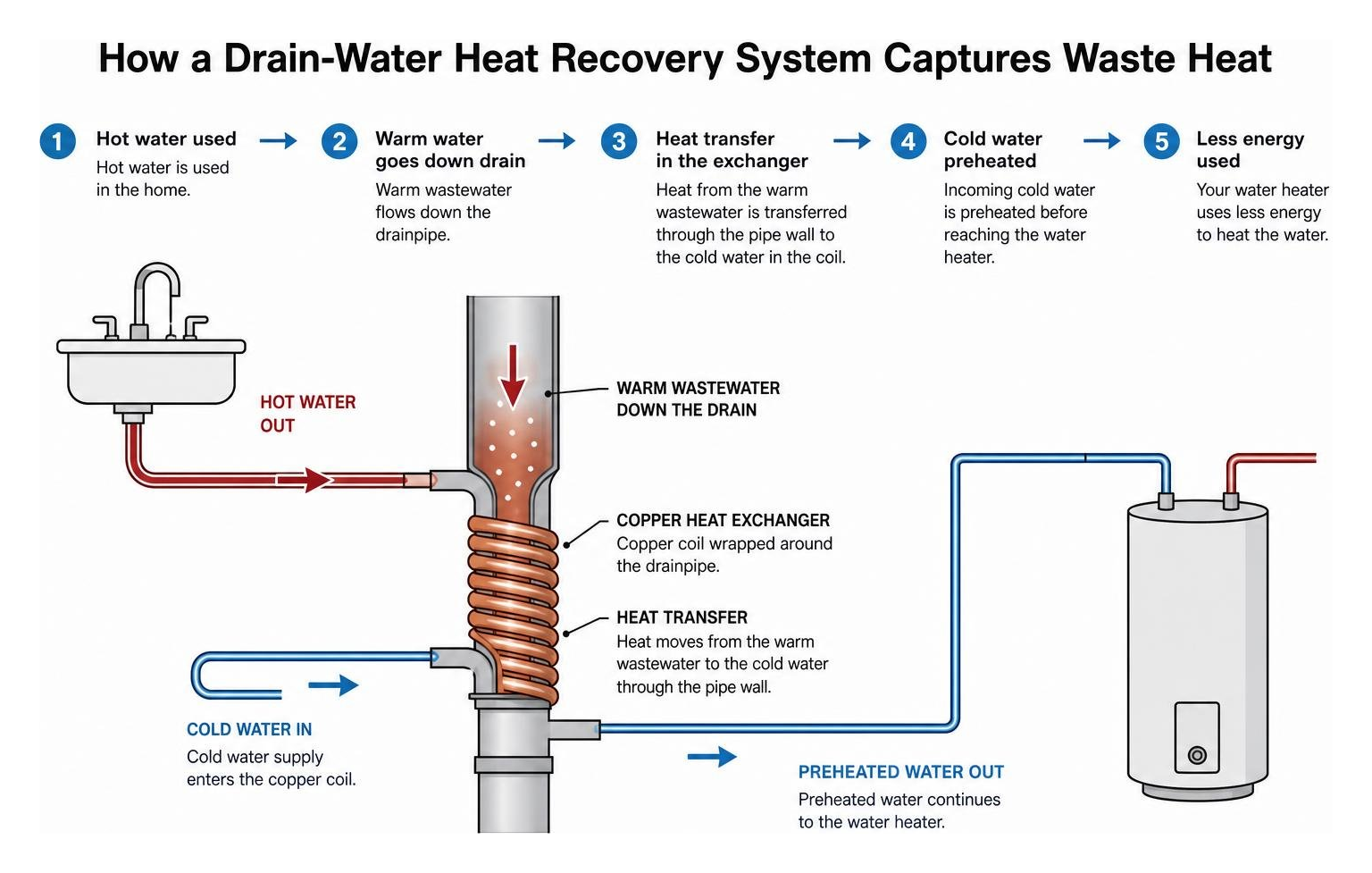
These systems can reduce your water heater’s energy consumption by up to 60% while significantly increasing your system’s effective recovery time. Better yet, because they have no moving parts, they are highly durable and virtually maintenance-free. The typical payback period for a drain-water heat recovery system ranges between 2.5 and 7 years. If you are looking at alternative eco-friendly options, you can also learn about the real cost to install a heat pump water heater in 2026.
Capturing Waste Heat from Your Air Conditioner
For homeowners in hot climates like League City, Pearland, or Galveston, running the air conditioner is a daily reality. A heat recovery unit (HRU), such as a HotSpot recovery unit, connects directly to the hot gas refrigerant circuit between your AC’s compressor and condenser, where temperatures can reach up to 200 degrees Fahrenheit.
The HRU captures this concentrated heat and pumps it directly into your hot water tank. A typical 3.5-ton air conditioner running just 5 hours per day can recover more than 34,000 BTU of heat. This is enough to save about 10 kWh of electricity per day, essentially providing free hot water as a byproduct of cooling your home.
Furthermore, removing this heat lowers the head pressure of your AC compressor, which can improve your air conditioner’s operating efficiency by up to 18%. When installing an HRU, industry best practice is to utilize a pre-heat tank design to maximize efficiency, especially when paired with modern high-SEER or variable-speed cooling systems.
Preventative Maintenance to Avoid Emergency Failures
The best way to handle a hot water emergency is to prevent it from happening in the first place. A standard tank-style water heater typically lasts 6 to 12 years if maintained correctly, while tankless water heaters can function well for over 20 years. Consistent, preventative maintenance is the key to reaching these lifespans.
Annual Flushing and Sediment Removal
To prevent sediment from building up and damaging your tank, you should flush your water heater at least once a year. Flushing clears out mineral crusts, maintains heating efficiency, and protects the inner lining of the tank.
During your annual maintenance, you should also inspect the anode rod. This sacrificial rod hangs inside the tank and attracts corrosive elements in the water, rusting so that your tank doesn’t have to. If the anode rod is fully depleted, your tank will begin to rust from the inside out. Finally, test the temperature and pressure relief (T&P) valve to ensure it can release excess pressure safely.
For a safe, step-by-step walkthrough, read our guides on how to perform a water heater flush service without flooding the house and our easy-to-follow guide to drain a water heater safely.
Optimizing Thermostat and Expansion Tank Settings
Setting your water heater’s thermostat to 120 degrees Fahrenheit is highly recommended. This temperature is hot enough to prevent harmful bacteria, like Legionella, from multiplying inside the tank, yet cool enough to reduce standby energy losses, slow down mineral corrosion, and prevent accidental scalding.
Additionally, installing a hot water expansion tank is a smart way to protect your plumbing. When water is heated, it expands. In a closed plumbing system, this thermal expansion creates intense pressure spikes that stress your water heater tank and piping. An expansion tank provides a safe cushion for this expanding water, preventing leaks and premature tank failures. Learn how to add one by reading our guide on how to install a hot water expansion tank without making a mess.
Frequently Asked Questions about Water Heater Restoration
How long does it take for a water heater to heat up?
A standard gas tank water heater takes approximately 30 to 40 minutes to heat a full tank from cold, while an electric model typically takes 60 to 80 minutes. Tankless water heaters provide hot water on demand within seconds of turning on the tap.
What should I do immediately if my water heater starts leaking?
Immediately turn off the power supply (at the breaker for electric units or the gas dial for gas units), shut off the cold water inlet valve at the top of the tank, open a hot water faucet to relieve system pressure, and call a licensed plumber.
How can I extend the lifespan of my water heater?
Flush the tank annually to remove sediment, check and replace the sacrificial anode rod every 3 to 5 years, test the pressure relief valve regularly, and keep the thermostat set at 120 degrees Fahrenheit.
Schedule Professional Hot Water Restore Services Today
If your water heater is struggling, leaking, or has stopped working entirely, do not wait for a minor issue to turn into a major flood. At The Overall Plumber, we serve homeowners throughout Brazoria County, Houston, Clear Lake, Santa Fe, League City, Texas City, La Porte, Friendswood, Pearland, Pasadena, Galveston, Harris County, and Galveston County, Texas.
We offer comprehensive plumbing services, including drain cleaning with augers and camera inspections, water heater repairs, and complete system replacements. With our satisfaction guarantees, priority scheduling, and no overtime fees, we make it easy and stress-free to get your home’s hot water back online. We also offer plumbing protection plans to keep your home’s systems running smoothly year-round.
If dealing with a flooded utility closet has you stressed out, you might want to schedule a recovery session at Restore Hyper Wellness in League City to recharge, but let us handle the hard work of restoring your plumbing. While physical rehabilitation might take you to centers like Clear Lake Rehabilitation, restoring your home’s hot water requires our specialized plumbing care. If your home has older, failing pipes that are contributing to your water heater issues, you can also learn more about our Lake Jackson repiping services to permanently upgrade your home’s plumbing infrastructure.
If you are experiencing a water heater emergency or need professional assistance to restore your hot water, contact our expert team today. Call us now at (979) 665-4150 for fast, reliable service!