


Why Hot Water Heater Sales and Installation Matter for Every Homeowner
Hot water heater sales and installation is one of the most important home service decisions you’ll make. Here’s a quick overview to answer your most common questions right away:
| Question | Quick Answer |
|---|---|
| How much does it cost? | Tank units typically start around $2,399 installed; tankless starts around $4,999 installed |
| How long does installation take? | Usually 2–4 hours for a standard tank replacement |
| Do I need a permit? | Yes, most municipalities require one |
| How long will it last? | 10–15 years for tank models; up to 20 years for tankless |
| Can I get financing? | Yes, many installers offer monthly payment plans |
Your water heater quietly works every single day — showers, dishes, laundry. When it fails, life gets uncomfortable fast. Most homeowners don’t think about their water heater until something goes wrong: a cold shower, a puddle on the floor, or a rumbling noise that won’t quit.
The good news? Knowing what to look for makes the whole process much easier. Whether you’re replacing an aging unit or buying your first home, this guide walks you through everything — types, costs, sizing, installation, and how to choose the right team for the job.
I’m Dayton Whitworth, a second-generation plumber serving Greater Brazoria County, Galveston County, Houston, and the surrounding Gulf Coast, with hands-on experience across all aspects of hot water heater sales and installation. In the sections below, I’ll share everything my team at The Overall Plumber uses to help homeowners make confident, cost-smart decisions.
Relevant articles related to hot water heater sales and installation:
Comparing Water Heater Types: Tank, Tankless, and Hybrid
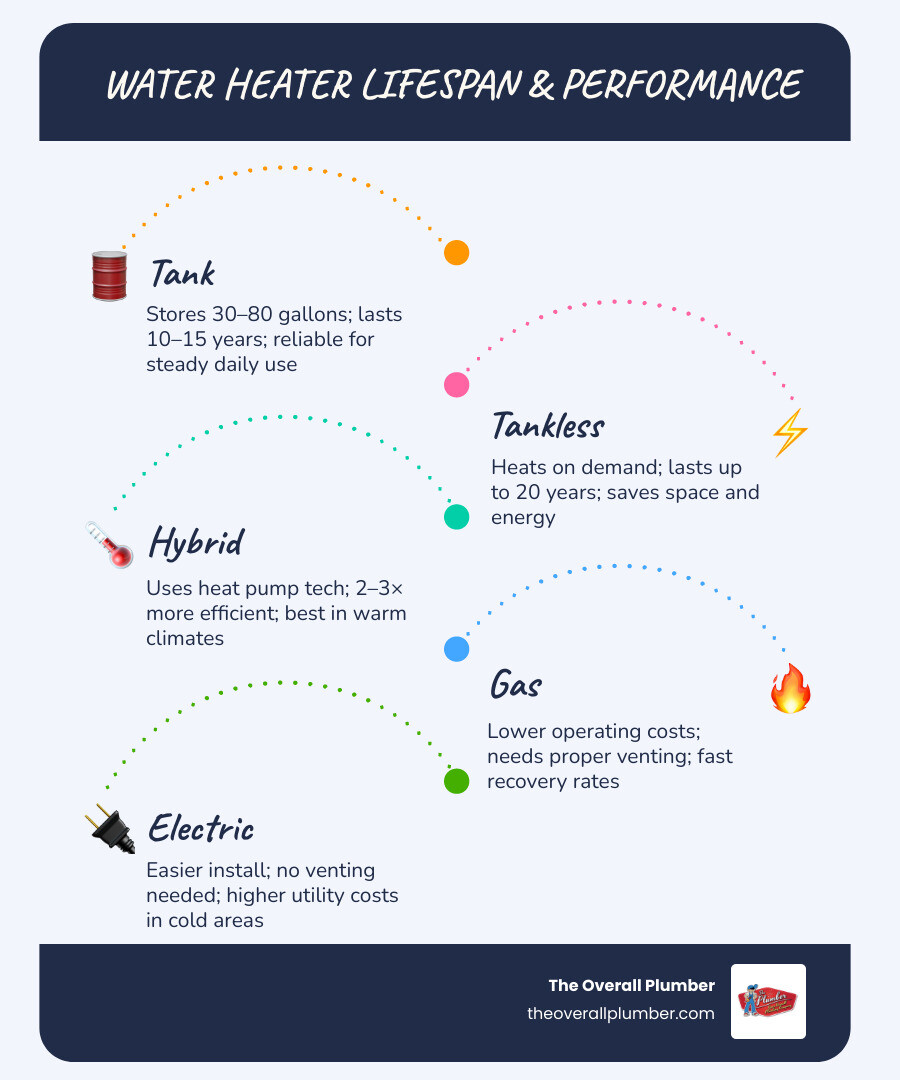
When exploring the market for a new water heater, you will find that technology has advanced significantly. The days of simply picking the same basic metal cylinder are long gone. Today, homeowners in the Houston and Galveston area can choose from traditional storage tanks, high-tech tankless systems, and incredibly efficient hybrid units.
Traditional tank water heaters keep a constant reservoir of hot water ready to go. They are reliable, familiar, and carry a lower upfront cost. However, they constantly expend energy to keep that water hot, a phenomenon known as standby heat loss.
On the other hand, tankless systems heat water on demand. When you turn on a hot water tap, cold water travels through a pipe and into the unit, where either a gas burner or an electric element heats it instantly. This means you get a continuous supply of hot water without waiting for a giant tank to refill and reheat. If you are interested in exploring these on-demand systems, you can check out our Tankless Water Heaters on Sale to see available options.
Hybrid (or heat pump) water heaters represent a third, highly innovative category. These units pull heat from the surrounding air and transfer it to the water tank, using up to 60% less energy than standard electric models. While they require a bit more physical space and a warm environment to operate at peak efficiency, they are an exceptional choice for hot Texas climates like we experience in Pearland, Pasadena, and League City.
Tank vs. Tankless Performance
The performance differences between tank and tankless systems come down to how your household uses water. Standard tank heaters are excellent for delivering a large volume of hot water all at once, but once that tank is emptied, you must wait for the system to recover. A standard tank water heater typically has a lifespan of 10 to 15 years.
Tankless water heaters provide a continuous flow of hot water, making them ideal for large families who frequently run out of hot water during morning routines. Because they do not store water, they suffer no standby energy loss, which can drastically lower your monthly utility bills. Furthermore, tankless models boast an impressive lifespan of up to 20 years when properly maintained. For a deeper dive into how these systems operate, you can consult the Energy.gov Tankless Water Heater Guide.
Gas vs. Electric Efficiency
Choosing between gas and electric units is a major decision in the hot water heater sales and installation process. Gas water heaters generally heat water faster and have a quicker recovery rate than electric models. They are highly popular in areas with established natural gas lines, such as older neighborhoods in Houston and Galveston. However, they require proper venting to safely exhaust combustion gases outside the home.
Electric water heaters are highly efficient, simpler to install, and require no venting systems. They are often the go-to choice in communities like Clear Lake, Friendswood, and La Porte where natural gas may not be run to every property. The downside is that electric resistance heating can take longer to recover, and if an element burns out, you will find yourself taking an icy shower. If you ever need to troubleshoot or service these elements, our step-by-step guide, The Complete Electric Heater Element Replacement Manual, is an invaluable resource.
Sizing Your System and Assessing Local Environmental Factors
A water heater that is too small will leave your family shivering, while a system that is too large will waste energy and inflate your utility bills. Finding the perfect balance requires evaluating your home’s peak water usage alongside regional environmental factors.
| Household Size | Recommended Tank Capacity (Gallons) | Recommended Tankless Flow Rate (GPM) |
|---|---|---|
| 1–2 People | 30–40 Gallons | 3–4 GPM |
| 3–4 People | 40–50 Gallons | 5–7 GPM |
| 5+ People | 50–80 Gallons | 7+ GPM |
Sizing for Household Demand
Sizing a storage tank water heater is determined by its “First Hour Rating” (FHR). The FHR is the number of gallons of hot water the heater can supply per hour starting with a fully heated tank. To calculate your home’s needs, think about your peak hour of water usage—usually in the morning when multiple family members are showering, running the dishwasher, or washing clothes.
For tankless systems, sizing is based on flow rate, measured in Gallons Per Minute (GPM), and the required temperature rise. Temperature rise is the difference between the incoming cold groundwater temperature and your desired hot water temperature (usually 120°F). In Southeast Texas, our groundwater is relatively warm compared to northern states, meaning a tankless unit does not have to work quite as hard to achieve the desired temperature rise, allowing for excellent flow rates even with moderately sized units. To learn more about calculating these requirements, read the Energy.gov Sizing a New Water Heater resource.
Environmental and Water Quality Impacts
Local environmental factors heavily influence the longevity and performance of your water heater. In coastal and near-coastal areas like Galveston, Texas City, and Brazoria County, water hardness is a common issue. Hard water contains high levels of dissolved minerals like calcium and magnesium. When heated, these minerals precipitate out of the water and form a hard scale inside the tank or on the heating elements.
This mineral buildup acts as an insulating barrier, forcing your water heater to work harder to heat the water, which wastes energy and accelerates physical wear. To protect your investment, we recommend regular flushing of your tank. You can learn how to do this yourself with our Easy to Follow Guide to Drain a Water Heater Safely. For more information on water quality in your area, you can review the USGS Water Hardness Guide.
Additionally, while high-altitude areas experience efficiency losses (such as gas units losing roughly 4% efficiency per 1,000 feet of elevation), our coastal communities in Texas do not have to worry about altitude-related derating. Our main challenges are humidity, coastal salt air, and hard water, all of which make professional installation and high-quality materials essential.
Understanding Hot Water Heater Sales and Installation Costs
The total cost of a new water heater involves two main components: the purchase price of the unit itself and the labor required for a safe, code-compliant installation.
A standard tank water heater replacement typically costs between $1,400 and $2,800 depending on the tank size, fuel type, and any code upgrades required for your home. Tankless installations carry a higher upfront cost, often ranging from $3,500 to $6,000 or more. This is because switching from a tank to a tankless system usually requires retrofitting gas lines, upgrading electrical circuits, and installing specialized venting systems. However, the long-term energy savings and doubled lifespan often make tankless units the most cost-effective choice over time.
Navigating Hot Water Heater Sales and Installation Financing
We understand that a water heater failure is often an unexpected emergency that can strain your household budget. That is why we offer flexible financing options and monthly payment plans to help bridge the gap.
By taking advantage of special financing, you can secure a brand-new, highly efficient system with low monthly payments rather than delaying a necessary replacement. This allows you to restore hot water to your home immediately while keeping your savings intact.
Rebates and Tax Credits
You can significantly offset the upfront cost of your water heater upgrade by leveraging energy-efficiency rebates and federal tax credits. High-efficiency gas and electric heat pump water heaters that achieve ENERGY STAR certification often qualify for substantial incentives.
For instance, manufacturers like A. O. Smith have earned the ENERGY STAR® Sustained Excellence Partner of the Year Award for six consecutive years, underscoring the industry’s commitment to energy savings. Homeowners can claim federal tax credits on qualifying high-efficiency models using Form 5695. Additionally, local utility companies frequently offer rebates of up to $250 or more for upgrading to qualifying high-efficiency gas models, putting money directly back into your pocket.
The Installation Process, Permits, and Code Compliance
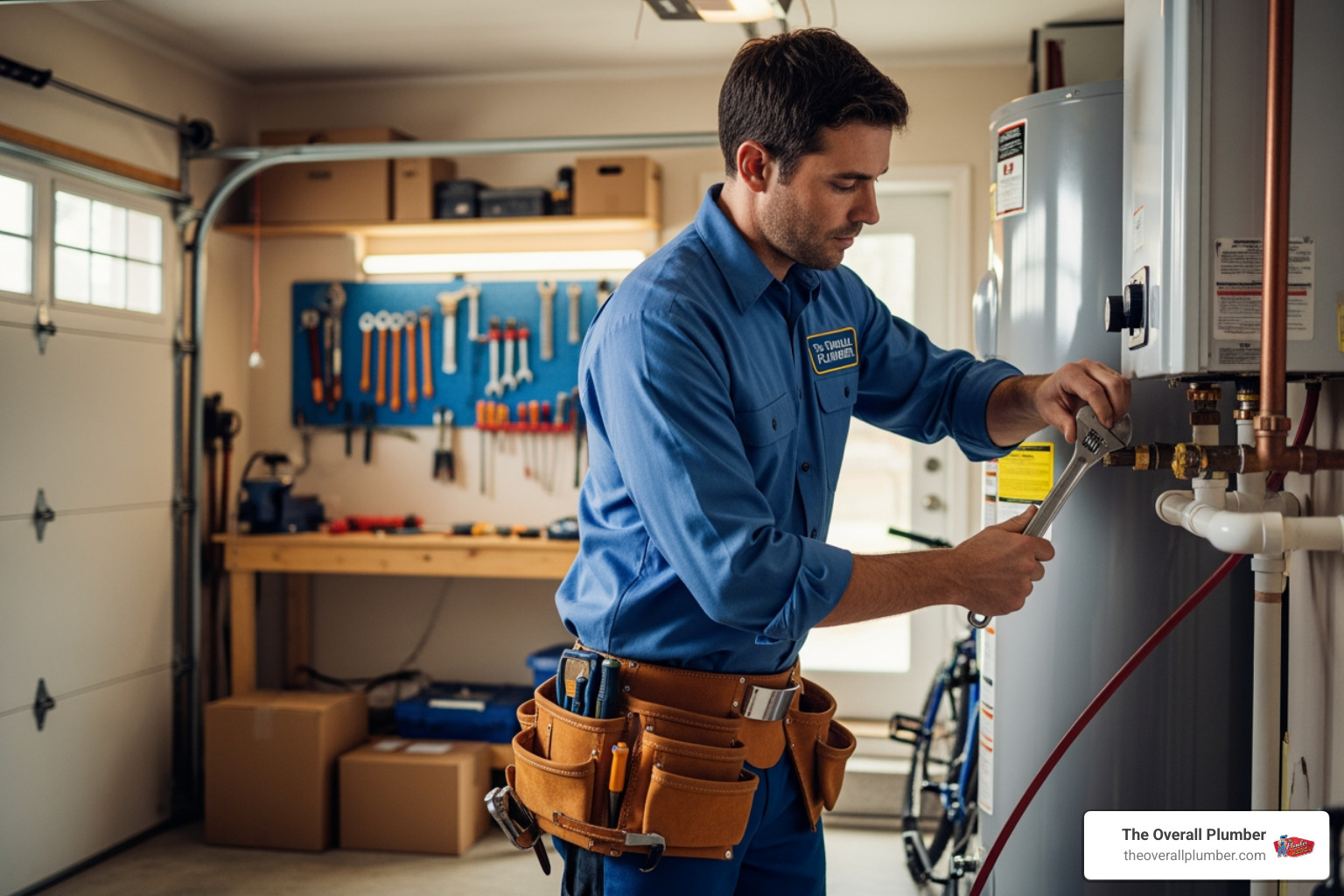
Installing a water heater is not a simple DIY project. It involves working with high-voltage electricity, natural gas, high-pressure water, and combustion venting. A single mistake can lead to water damage, electrical fires, gas leaks, or dangerous carbon monoxide buildup.
To ensure your home remains safe and your manufacturer’s warranty stays valid, it is vital to trust a licensed plumbing professional. For a comprehensive look at what a professional setup involves, read A Comprehensive Guide to Water Heater Installation.
What to Expect During Installation
When you schedule a professional installation with us, the process is streamlined and efficient:
- In-Home Assessment: We verify your home’s hot water demands, gas line capacity, electrical panel space, and venting options.
- Delivery and Old Unit Removal: We bring the new unit directly to your home, carefully disconnect your old water heater, and haul it away for proper recycling and disposal.
- System Setup: We position the new unit, making sure to install safety accessories like a thermal expansion tank, a drain pan, and code-compliant shut-off valves.
- Testing and Calibration: We fill the system, check for leaks, test gas pressure or electrical connections, and calibrate the thermostat to a safe 120°F.
- Clean Up: We thoroughly clean the workspace and walk you through how to operate your new system.
For a standard tank replacement, the entire process takes about 2 to 4 hours. If you are converting from a tank to a tankless system, the project can take a full day due to the necessary line upgrades and venting modifications.
Permits and Building Codes
In most municipal areas across Harris County, Galveston County, and Brazoria County, a plumbing permit is required to replace a water heater. This permit ensures that a local municipal inspector will review the work to verify it meets all safety codes.
Key code requirements in our region include:
- Thermal Expansion Tanks: Required on closed water systems to absorb excess pressure created when water heats up and expands.
- Seismic and Windstorm Strapping: Essential in coastal Texas zones to secure the water heater against movement during extreme weather events.
- Safety Pans and Drain Lines: If a water heater is installed in an attic, garage, or interior closet, a safety pan with a drain line routed to the exterior is required to prevent catastrophic water damage in the event of a leak.
Repair vs. Replacement: When is it Time for a New Unit?
If your water heater is acting up, you might wonder if a quick repair will do the trick or if you need to invest in a full replacement. Consider these key warning signs:
- Age of the Unit: If your tank water heater is over 10 years old, it is approaching the end of its reliable lifespan. Investing in costly repairs for an old system is often throwing good money after bad.
- Rusty Water: If rusty or discolored water is coming from your hot water taps but not the cold ones, the interior lining of your water heater is likely corroding.
- Rumbling or Popping Noises: As sediment builds up on the bottom of a tank, water gets trapped beneath it. When the water boils, it bubbles through the sediment layer, creating loud rumbling or popping sounds. This sediment buildup eventually causes the tank bottom to overheat and crack.
- Active Leaks: If you see water pooling around the base of your water heater tank, the internal tank has likely fractured. A leaking tank cannot be repaired; it must be replaced immediately to prevent major water damage.
Frequently Asked Questions about Water Heaters
How long does a standard water heater installation take?
A standard tank-to-tank water heater replacement typically takes between 2 and 4 hours. If you are converting from a tank system to a tankless system, the installation can take anywhere from 6 to 8 hours because of the required modifications to your utility lines and venting.
What are the warning signs that my water heater is failing?
The most common indicators of a failing water heater include inconsistent water temperatures, discolored or rusty hot water, unusual rumbling or banging noises from the tank, and visible water pooling around the base of the unit.
Can I switch from a traditional tank to a tankless water heater?
Yes, you can absolutely convert from a tank to a tankless system. This transition requires upgrading your gas lines or electrical circuits to handle the high energy demand of heating water instantly, along with routing new venting lines through an exterior wall. Our team specializes in these retrofits and can assess your home’s layout to provide a seamless transition.
Ready for a New Water Heater? Contact the Experts
When it is time to upgrade or replace your home’s water heating system, you deserve a team that prioritizes your safety, comfort, and budget. At The Overall Plumber, we handle every step of your hot water heater sales and installation with the highest level of professionalism.
From helping you select the perfect energy-efficient model to securing local permits and performing a flawless installation, we make the entire process stress-free. We back our work with satisfaction guarantees, priority scheduling, and we never charge overtime fees. If you are ready to experience reliable, endless hot water, let our family take care of yours.
Professional Hot Water Heater Sales and Installation Services
Our licensed plumbers are experts in installing all major brands and styles of water heaters, including advanced tankless systems and traditional storage models. We proudly serve homeowners throughout Brazoria County, Houston, Clear Lake, Santa Fe, League City, Texas City, La Porte, Friendswood, Pearland, Pasadena, and Galveston.
If you are ready to upgrade your home’s comfort with a highly efficient new system, call our licensed team today at (281) 668-8055 to schedule your consultation.