


What Does It Cost to Install a Heat Pump Water Heater in 2026?
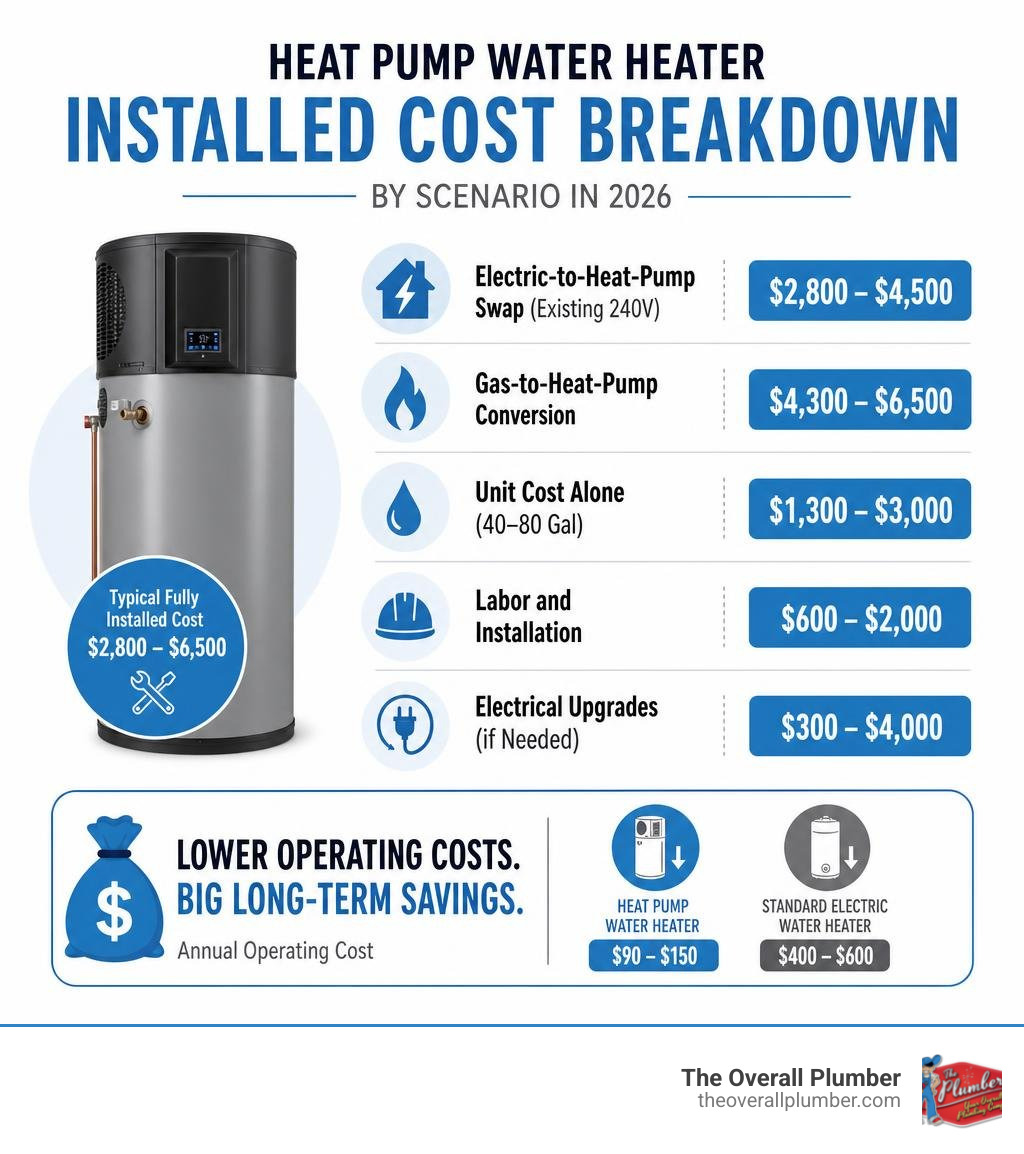
The cost to install a heat pump water heater in 2026 typically falls between $2,800 and $6,500 fully installed — here’s a quick breakdown:
| Scenario | Estimated Installed Cost |
|---|---|
| Electric-to-heat-pump swap (existing 240V) | $2,800 – $4,500 |
| Gas-to-heat-pump conversion | $4,300 – $6,500 |
| Unit cost alone (40–80 gal) | $1,300 – $3,000 |
| Labor and installation | $600 – $2,000 |
| Electrical upgrades (if needed) | $300 – $4,000 |
These numbers shift depending on your home’s existing setup, tank size, and whether electrical work is required. The good news: annual operating costs drop to around $90–$150, compared to $400–$600 for a standard electric tank — so the savings add up fast.
Most homeowners don’t replace a water heater until it fails. That’s usually the worst time to make a big decision. A heat pump water heater costs more upfront than a standard tank, but it uses up to 70% less energy and can pay for itself in as little as 3 to 7 years.
This guide breaks down every cost factor so you know exactly what to expect before you get a single quote.
I’m Dayton Whitworth, a second-generation plumber serving Greater Brazoria County, Galveston County, Houston, and the surrounding Gulf Coast, and I’ve helped many homeowners in this region navigate the real cost to install a heat pump water heater — including the electrical surprises that catch people off guard. Let’s walk through everything you need to know.
Important cost to install heat pump water heater terms:
- cost of a 50 gallon electric water heater
- cost to have water heater installed
- water heater installation
The Total Cost to Install a Heat Pump Water Heater in 2026
When budgeting for this upgrade, it is helpful to look at the investment in two distinct parts: the physical equipment and the professional labor required to install it safely. According to data compiled by How Much Does a Heat Pump Water Heater Cost? – Rewiring America , the total upfront price for most homeowners ranges from $3,600 to $6,500.
The equipment itself comprises a significant portion of this budget. A residential hybrid heat pump water heater unit generally costs between $1,500 and $3,000. This is higher than a standard electric resistance tank, which typically runs between $500 and $1,000 for the hardware alone.
Professional labor and materials for a standard installation add another $600 to $2,000. However, the total invoice is highly dependent on your home’s current infrastructure. If we are performing a direct, “like-for-like” swap of an old electric water heater in a space that already has a dedicated 240V circuit and a nearby floor drain, the installation is straightforward and sits on the lower end of the pricing spectrum.
If we are converting your home from a gas water heater to an electric heat pump model, the scope of work expands. We must cap off the old gas lines, modify the existing venting system, and bring in a licensed electrician to run a brand-new electrical line from your main service panel. These necessary modifications can push the final cost of a gas-to-electric conversion up to $4,300 or $6,500.
Average Cost to Install Heat Pump Water Heater by Tank Size
Because heat pump water heaters rely on drawing warmth from the surrounding air, they heat water more slowly than traditional systems. To prevent running out of hot water during peak times (like back-to-back morning showers), we often recommend sizing up. If your household is accustomed to a 40-gallon standard tank, a 50-gallon hybrid unit is usually the best fit.
The table below outlines typical equipment costs and estimated total installation costs in 2026 by tank size:
| Tank Size | Equipment Cost | Estimated Installed Cost | Best Suited For |
|---|---|---|---|
| 40 Gallons | $1,200 – $2,000 | $2,800 – $4,200 | 1 – 2 People |
| 50 Gallons | $1,500 – $2,800 | $3,200 – $5,000 | 2 – 3 People |
| 65 Gallons | $1,800 – $3,000 | $3,600 – $5,500 | 3 – 4 People |
| 80 Gallons | $2,500 – $3,500 | $4,200 – $6,500 | 5+ People |
Note: Estimates do not include major electrical panel upgrades or extensive structural modifications. For a closer look at regional equipment and labor averages, you can consult the Heat Pump Water Heater Cost in 2026: Installed Price by Tank Size | Home Energy Decisions .
How Efficiency Ratings (UEF) Impact the Price
When shopping for a new water heater, you will notice a metric called the Uniform Energy Factor (UEF). This is the official standard used to measure the overall water heating efficiency of a unit. The higher the UEF number, the more efficiently the system converts electricity into hot water.
Standard electric resistance water heaters are limited by their design, typically carrying a UEF between 0.90 and 0.95. Heat pump water heaters, on the other hand, boast incredible UEF ratings ranging from 3.0 to over 4.0. This means they are three to four times more efficient than traditional systems because they move heat rather than create it.
Units with premium UEF ratings (3.5 and above) utilize advanced compressor technology and better tank insulation. While these high-efficiency models carry a premium upfront price tag—often costing $300 to $600 more than base-level hybrid units—they maximize your monthly utility savings. You can learn more about how standard electric tank costs stack up by reviewing our guide on Electric Water Heater Costs: A 50 Gallon Guide.
Key Factors That Drive Installation Costs Up or Down
No two homes are identical, and several structural and mechanical variables will influence your final installation estimate. Understanding these factors beforehand will help you avoid unexpected surprises on your final invoice.
For a detailed overview of the physical requirements involved in these projects, refer to the guide on What Goes into the Cost of Installing a Heat Pump Water Heater? | ENERGY STAR .
Electrical Upgrades and the 120V Plug-In Option
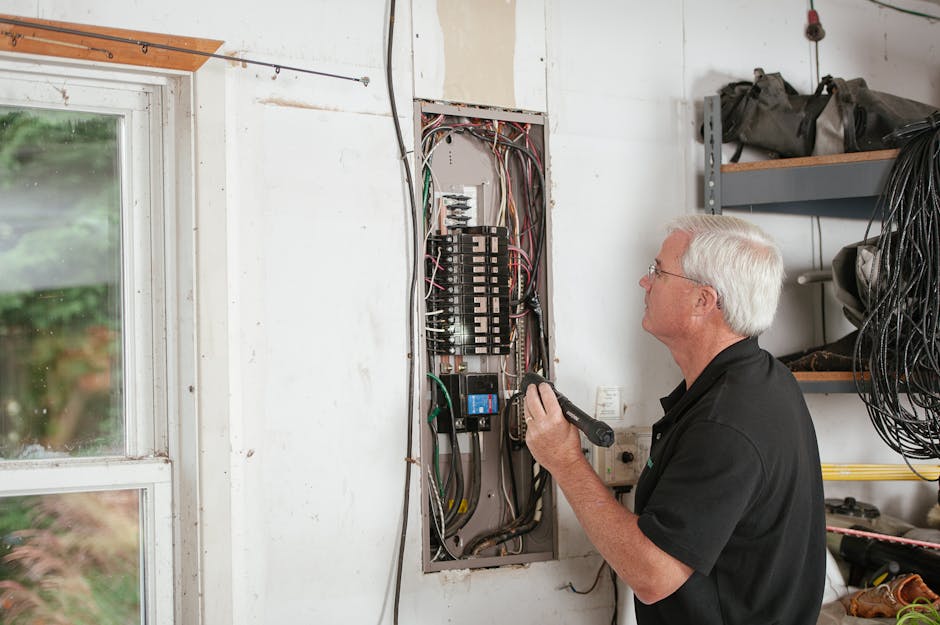
Most standard residential heat pump water heaters operate on a 240-volt circuit and require a dedicated 30-amp breaker. If you are replacing an older electric water heater, this wiring is likely already in place. However, if you are switching from gas, or if your home’s electrical panel is fully loaded, you may need to budget for electrical modifications.
Adding a new 240V circuit typically costs between $300 and $1,500, depending on the distance between your electrical panel and the water heater. In older homes—such as those with 100-amp service panels common in established neighborhoods across Pasadena or Galveston—a complete panel upgrade to 200 amps may be necessary to support the new load. A panel upgrade is a significant project, usually costing between $1,500 and $4,000.
Fortunately, manufacturers have introduced 120V plug-in heat pump water heaters designed specifically to avoid these costly panel upgrades. These units can plug directly into a standard household outlet.
While they save you thousands of dollars on upfront electrical work, they do have a trade-off: a slower recovery rate. Because they run on lower voltage, they take longer to reheat the water in the tank once it has been depleted. They are an excellent solution for smaller households or homes with lower peak hot water demands.
Condensate Drainage and Space Requirements
Unlike standard tanks, heat pump water heaters act like air conditioners; as they pull heat from the air, they produce condensation. This moisture must go somewhere.
If your water heater is located near an active floor drain or a utility sink, we can run a simple gravity drain line. If there is no gravity drain nearby—which is common when units are installed in interior closets or certain garages—we must install a condensate pump. A condensate pump system costs between $150 and $400, including the pump itself and the routing of a small discharge line to the exterior of your home.
Additionally, heat pumps require a steady supply of ambient air to operate efficiently. Most manufacturers specify that the room housing the unit must have at least 450 to 1,000 cubic feet of open air space (roughly equivalent to a 10′ x 10′ room).
If the unit is installed in a tight utility closet, we must install louvered doors to allow proper airflow, or run specialized ductwork to pull air from an adjacent room or attic space. Ducting kits typically add $150 to $500 to the total installation cost.
Replacing Gas vs. Electric Water Heaters
Converting from a gas or propane water heater to an electric heat pump model requires a bit more labor than a standard swap. First, we must safely cap off the existing gas line to prevent leaks. Second, the old atmospheric venting system that routed exhaust gases through your roof must be sealed off or modified.
These steps require specialized plumbing tools and expertise to ensure your home remains safe and up to municipal building codes. If you want to explore the differences in how these systems are built and installed, read through A Comprehensive Guide to Water Heater Installation.
Operating Costs, Lifetime Savings, and the 2026 Rebate Landscape
While the upfront cost to install a hybrid water heater is higher than a conventional system, the long-term financial picture is incredibly favorable. In fact, water heating is typically the second-largest utility expense in a Texas home, meaning efficiency upgrades here yield immediate results on your monthly energy bills.
Annual Energy Savings and Payback Period
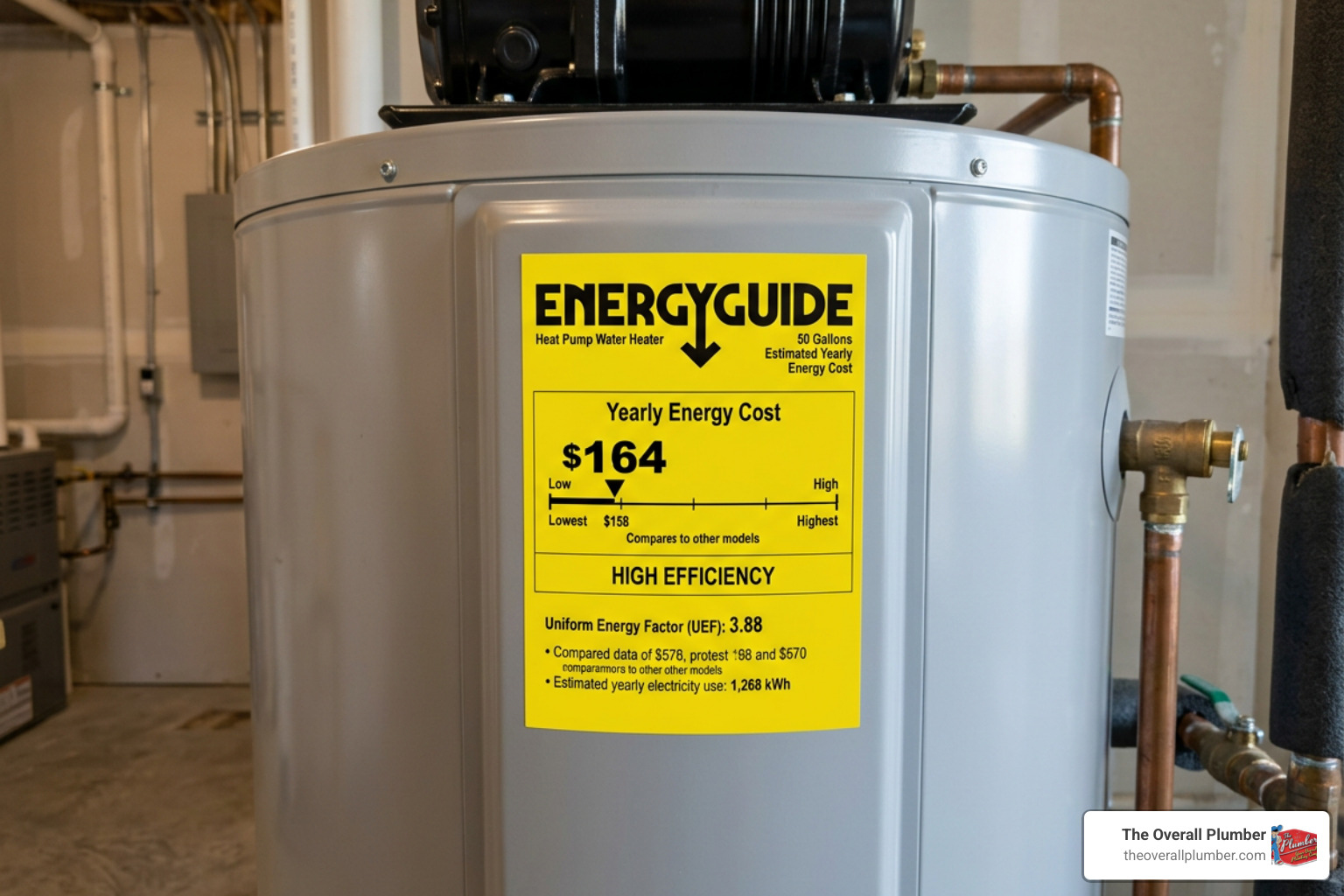
Standard electric resistance water heaters are notorious energy hogs, often costing between $400 and $600 per year to operate. Because heat pump models are incredibly efficient, they drop the average household’s annual operating cost to just $90 to $150.
For a typical family of four, this translates to roughly $550 in annual energy bill savings. Over the system’s expected 10-to-15-year lifespan, those savings add up to thousands of dollars back in your pocket.
When you compare the extra upfront cost of a heat pump unit to these annual savings, the typical payback period is remarkably short — usually between 3 and 7 years. Once you cross that payback threshold, the unit is essentially putting money back into your household budget every single month.
Navigating Post-2025 Tax Credits and Utility Rebates
As we navigate 2026, the rebate and incentive landscape has shifted. The popular federal Section 25C tax credit, which previously provided up to $2,000 for energy-efficient upgrades, has undergone changes. It is critical to work with a professional who understands the current year’s tax laws and local utility incentives to ensure you don’t leave money on the table.
While federal programs evolve, local Texas utility companies and cooperative programs continue to offer excellent rebates to encourage homeowners to transition to high-efficiency electric appliances. Depending on your electricity provider in the Houston or Galveston area, you may qualify for utility rebates ranging from $300 to $1,000.
Additionally, state-level electrification programs funded by federal grants provide income-qualified households with substantial rebates that can cover a significant portion of the upfront installation costs. To get a comprehensive view of how these incentives impact your out-of-pocket expenses, check out the How Much Does a Heat Pump Water Heater Cost? (2026) | Today’s Homeowner .
When Is a Hybrid Water Heater Not Worth It?
While we love the efficiency of heat pump technology, we also believe in giving honest advice. A hybrid water heater is not always the perfect fit for every home.
Because these systems extract heat from the surrounding air, they perform best in unconditioned spaces that stay warm year-round, such as a garage or a spacious utility room. Here in the warm, humid climate of the Texas Gulf Coast—including League City, Pearland, and Texas City—our garages stay warm most of the year. This makes our region one of the absolute best places in the country for a heat pump water heater. The unit actually acts as a mini-dehumidifier and cools the garage slightly while it heats your water!
However, if your water heater must be installed inside a small, conditioned closet in the center of your living space, a heat pump might not be ideal. The unit will pull warmth from your air-conditioned living space, forcing your home’s HVAC system to work slightly harder.
Additionally, if your home requires a massive electrical panel upgrade that costs upwards of $4,000, the extended payback period might make a standard high-efficiency tank or a tankless system a more practical financial choice. To help plan your plumbing budget, you can read our breakdown on How Much to Budget for Your New Water Heater Installation.
Red Flags and Common Installation Mistakes
Installing a hybrid water heater requires a blend of plumbing, electrical, and HVAC expertise. Some of the most common installation mistakes we see from inexperienced installers include:
- Insufficient Air Clearance: Installing the unit in a cramped, sealed closet without louvered doors. This starves the heat pump of air, forcing it to run on inefficient electric resistance mode constantly.
- Improper Condensate Routing: Neglecting the condensate drain line, leading to water pooling around the base of the tank and causing structural damage.
- Incorrect Sizing: Sizing the unit too small for the household’s peak usage, leaving family members with cold showers.
- Ignoring Noise Levels: Heat pumps contain a compressor and a fan, which produce a humming sound (usually between 45 and 60 decibels) similar to a running dishwasher. Installing one directly next to a bedroom wall without proper sound-dampening measures can lead to sleepless nights.
Lifespan and Essential Maintenance Requirements
A quality heat pump water heater is built to last 10 to 15 years, which is slightly longer than the 6-to-12-year lifespan of a conventional tank. However, achieving this longevity requires a small amount of regular maintenance:
- Clean the Air Filter: Because the unit draws in surrounding air, it has an air filter to protect the evaporator coils from dust and pet dander. This filter should be pulled out and rinsed off every few months.
- Annual Tank Flushing: Just like standard heaters, sediment from our local water supply can build up at the bottom of the tank. Flushing the tank once a year keeps the system running quietly and efficiently.
- Anode Rod Inspection: The sacrificial anode rod protects the inside of your steel tank from rusting. We recommend having us inspect this rod around year five to see if it needs a quick replacement.
Professional vs. DIY: Getting the Best Cost to Install Heat Pump Water Heater
With so many home improvement tutorials online, it can be tempting to treat a water heater replacement as a weekend DIY project. However, heat pump water heaters present unique challenges that go far beyond standard plumbing.
Comparing the Professional vs. DIY Cost to Install Heat Pump Water Heater
At first glance, a DIY installation looks like a great way to save on labor costs. However, when you factor in the cost of specialized tools, permitting fees, electrical supplies, and the physical effort required to safely move a heavy 200-pound tank, the savings gap shrinks.
Furthermore, a DIY mistake can be incredibly costly. An improperly wired 240V connection poses a severe fire hazard. A poorly routed condensate line can cause thousands of dollars in water damage to your walls and floors.
Most importantly, many manufacturers will void the equipment warranty if the unit is not installed by a licensed professional. When you hire our team at The Overall Plumber, you aren’t just paying for labor; you are purchasing peace of mind, code compliance, and a professional installation that keeps your valuable manufacturer warranty fully intact.
For homeowners interested in researching the mechanical details and cost structures of professional installations, you can explore the Heat Pump Water Heater Cost Guide: Price, Savings & ROI Calculator – Rheem Manufacturing Company .
How to Compare Contractor Bids and Get Accurate Quotes
When you are ready to gather estimates, we always recommend getting written, itemized bids. A professional quote should clearly break down the cost of the unit, labor, permit fees, and any necessary additions like condensate pumps, thermal expansion tanks, or electrical work.
Be wary of extremely low bids, as they often indicate that the contractor is cutting corners, skipping permits, or planning to hit you with hidden fees later. To help you evaluate your options, you can use the Water Heater Cost Calculator (2026) | Tank & Tankless to establish a reliable baseline for your local area.
At The Overall Plumber, we believe in complete transparency. We provide clear, upfront pricing with no hidden fees, priority scheduling, and a satisfaction guarantee. Whether you live in Brazoria County, Galveston, or the heart of Houston, we are here to ensure your transition to an energy-efficient home is smooth and stress-free. If you are ready to explore your options, read more about our Hot Water Heater Replacement services.
Ready to upgrade your home’s efficiency and start saving on your energy bills? Contact our team of certified professionals today at (281) 668-8055 or reach out to The Overall Plumber to get an accurate, transparent quote for your heat pump water heater installation.