


How Much Does It Cost to Have a Water Heater Installed in 2026?
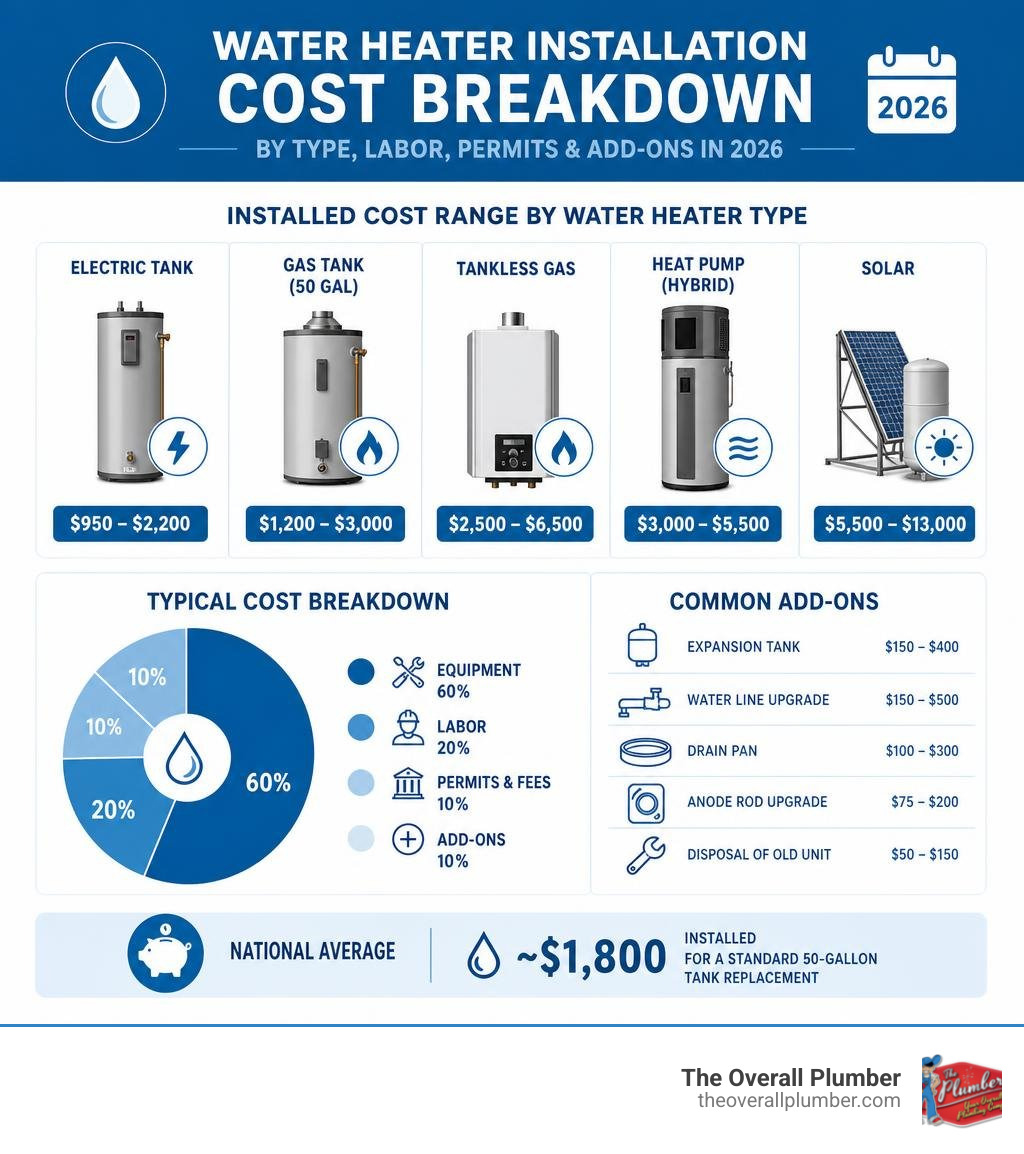
The cost to have water heater installed in your home typically falls between $900 and $5,800, depending on the type of unit, your location, and the complexity of the job. Here’s a quick snapshot to help you budget:
| Water Heater Type | Installed Cost Range (2026) |
|---|---|
| Electric Tank | $950 – $2,200 |
| Gas Tank (50 gal) | $1,200 – $3,000 |
| Tankless Gas | $2,500 – $6,500 |
| Heat Pump (Hybrid) | $3,000 – $5,500 |
| Solar | $5,500 – $13,000 |
National average for a standard 50-gallon tank replacement: ~$1,800 installed.
Most homeowners don’t think about their water heater until something goes wrong — a cold shower, a puddle on the floor, or a unit that’s quietly been running past its prime. By then, you’re often looking at emergency pricing, which can add 25% to 50% on top of normal installation costs.
This guide walks you through everything you need to know to budget smart: average costs, cost factors, when to repair vs. replace, and how to avoid paying more than you should.
I’m Dayton Whitworth, a second-generation plumber serving Greater Brazoria County, Galveston County, Houston, and the surrounding Gulf Coast, with hands-on experience helping homeowners understand the true cost to have a water heater installed — from a straightforward tank swap to a full tankless conversion. Let’s break it all down so you can make a confident decision.
Simple cost to have water heater installed glossary:
- cost of a 50 gallon electric water heater
- hot water expansion tank install
- water heater installation
Average Cost to Have Water Heater Installed in 2026
When calculating the total investment for a warm, comfortable home, the cost to have water heater installed varies dramatically based on the technology you choose. In 2026, the national average range sits between $1,600 and $5,800, but local factors right here in the Texas Gulf Coast—from Houston down to Galveston—will ultimately shape your final invoice.
To help you visualize the upfront financial commitment of different systems, we have broken down the typical equipment and installation ranges below:
| Water Heater Type | Upfront Equipment Cost | Professional Labor Cost | Total Installed Cost Range |
|---|---|---|---|
| Standard Tank (Electric/Gas) | $400 – $1,800 | $300 – $1,500 | $750 – $3,500 |
| Tankless (Electric/Gas) | $1,000 – $3,000 | $800 – $3,000 | $4,500 – $10,000 |
| Heat Pump (Hybrid) | $1,500 – $3,000 | $1,000 – $2,500 | $3,000 – $5,500 |
| Solar Water Heater | $2,500 – $7,000 | $2,000 – $3,000 | $5,500 – $13,000 |
To run the numbers for your specific home layout, fuel source, and capacity needs, you can Compare options using the Water Heater Cost Calculator (2026).
Tank vs. Tankless: Cost to Have Water Heater Installed
The debate between traditional tank water heaters and modern tankless units is one of the most common conversations we have with homeowners in Pearland, League City, and Pasadena.
Traditional tank-style water heaters remain the budget-friendly favorite. A standard tank unit heats water continuously in a large reservoir (usually 40 to 80 gallons) so it is ready when you turn on the tap. Because the technology is straightforward and the footprint rarely changes during a replacement, the installation is relatively quick (typically 2 to 4 hours). You can expect a standard tank replacement to range from $750 to $3,500, depending on size and fuel source. However, these units have a shorter lifespan of 8 to 12 years and suffer from “standby heat loss,” meaning they consume energy to keep water warm even when you are asleep or at work.
Tankless water heaters, on the other hand, heat water on demand using high-powered gas burners or electric heating elements. This eliminates the standby heat loss entirely, resulting in utility bills that are up to 30% lower. Additionally, tankless systems are highly compact, saving valuable closet or garage space, and boast an impressive lifespan of 20+ years.
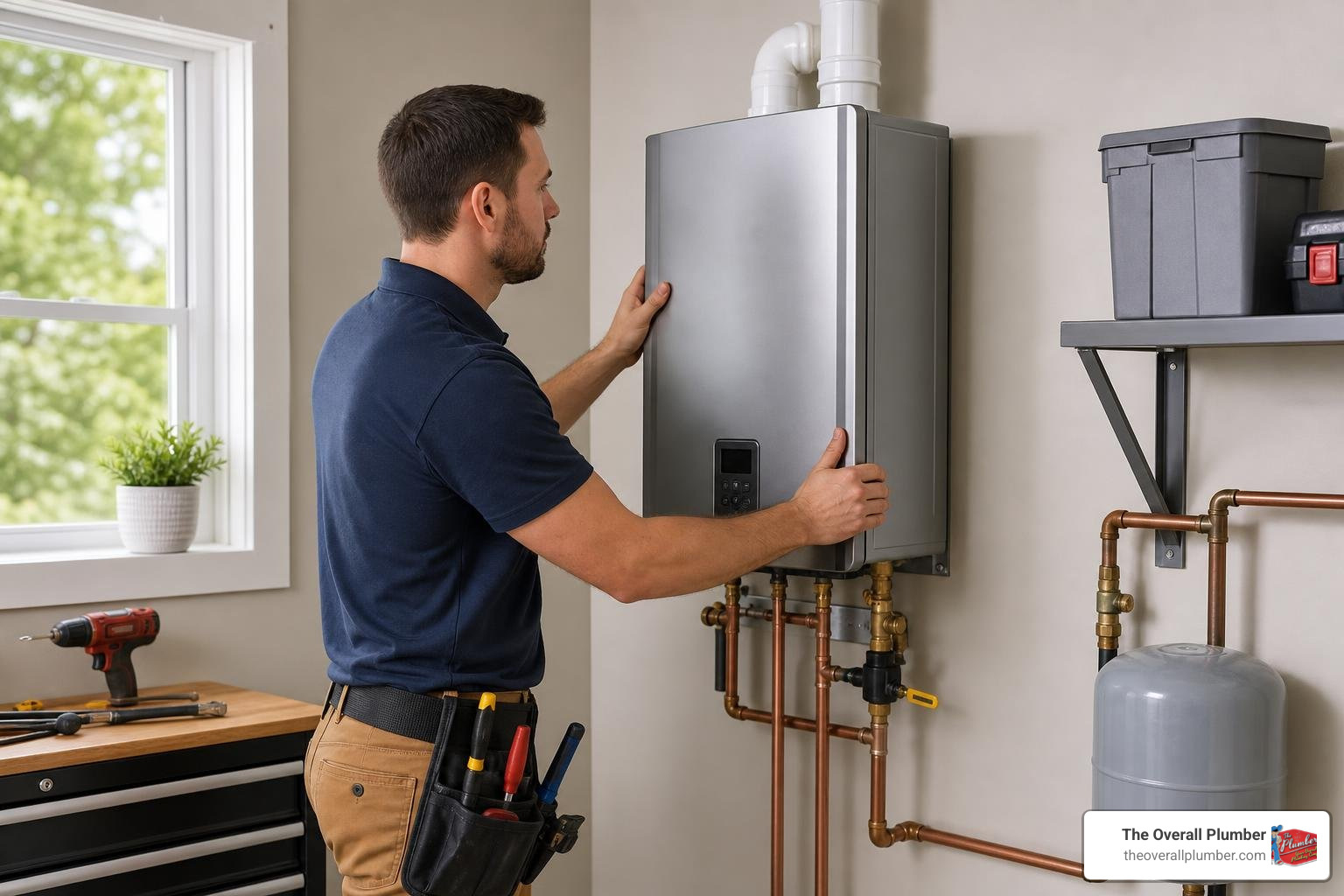
The trade-off is the upfront cost. Installing a tankless system ranges from $4,500 to $10,000. Why is it so much higher? If you are converting from a tank to a tankless system, the labor is significantly more complex. We often have to run new, larger gas lines (upgrading from 1/2-inch to 3/4-inch), install specialized corrosion-resistant venting through your home’s exterior, and make electrical modifications. If you are interested in making the switch while keeping your budget in check, you can Check out tankless water heaters on sale.
Cost Breakdown by Fuel Source: Gas, Electric, and Hybrid
Your home’s existing infrastructure dictates which fuel source is the most practical and cost-effective choice. Changing your fuel source (such as converting from gas to electric or vice versa) is a major project that typically adds $1,500 to $2,300 to your total installation bill due to the extensive plumbing, gas line, and electrical work required.
- Electric Water Heaters: These are the most affordable units to purchase and install upfront. They do not require venting systems, making them highly flexible in terms of placement. A standard electric tank installation typically ranges from $920 to $1,177. If you want a deep dive into the specific financial breakdown of a mid-sized family unit, you can Read our electric water heater costs 50-gallon guide.
- Natural Gas Water Heaters: Gas units cost more upfront than electric models—averaging around $2,607 for a standard professional installation—but they are highly efficient and generally cost less to operate month-to-month depending on local Texas gas rates. Because they rely on combustion, they require dedicated venting systems to safely exhaust carbon monoxide outside your home.
- Propane Water Heaters: Highly common in rural pockets of Brazoria and Galveston Counties where natural gas lines do not reach. Propane units operate similarly to natural gas units but require specific burner orifices and hookups to a local propane tank.
- Heat Pump (Hybrid) Water Heaters: Hybrid units are the ultimate efficiency champions for all-electric homes. They pull heat from the surrounding air and transfer it into the water tank, using up to 70% less electricity than standard electric tanks. While they carry a higher installation cost ($3,000 to $5,500), they can save a family hundreds of dollars a year in operating costs and qualify for substantial tax incentives. That hybrid units require at least 1,000 cubic feet of surrounding airspace to operate efficiently, making garages or unconditioned utility rooms in Santa Fe or Texas City the perfect location.
Key Factors That Influence Your Total Installation Bill
If you have ever received a plumbing quote and wondered why the price varies from your neighbor’s, it is because no two water heater installations are identical. Several technical and structural variables shape the final cost. To better understand how these elements interact to determine your final quote, you can Learn more about installation costs on Fixr.
Here are the primary drivers behind your total bill:
- Tank Size and Capacity: The larger the tank, the more expensive the equipment. A 30-gallon tank designed for a single-person apartment is significantly cheaper than an 80-gallon commercial-grade residential tank designed for a household of six.
- Accessibility and Location: If your water heater is easily accessible in an open garage or a spacious first-floor utility closet, the installation will be fast and cost-effective. However, if your unit is tucked away in a tight attic space, a narrow crawlspace, or on a third floor, expect to pay an additional $200 to $1,000 in labor. These difficult locations require extra technicians to safely maneuver the heavy equipment and take longer to secure and align.
- Venting System Requirements: Gas-powered units must vent exhaust gases safely outside. If your existing chimney or flue pipe is deteriorated or does not meet modern safety codes, it must be replaced. Upgrading to a modern power-venting system, which uses a blower fan to push exhaust horizontally through a side wall, typically adds $300 to $1,000 to the project.
Professional Labor and Plumbing Rates
Professional labor is not a place to cut corners, as it typically accounts for 18% to 50% of the total cost of a new water heater installation. On average, you can expect to pay between $300 and $1,500 in professional labor fees, with standard hourly rates for licensed plumbers ranging from $45 to $200 per hour depending on the complexity of the plumbing layout. To explore how these hourly rates translate directly into project estimates, you can Review the labor cost to install a water heater.
A standard like-for-like tank replacement is highly efficient, usually wrapping up in 2 to 3 hours. However, a complex tank-to-tankless conversion or relocating a unit to a different part of the house can take anywhere from 6 to 10 hours of active labor.
It is also worth noting that timing plays a major role in labor pricing. If your water heater bursts on a holiday weekend or in the middle of the night, emergency water heater installations can increase standard labor rates by 25% to 50%. Planning your replacement proactively before your unit completely fails is the single best way to avoid these emergency surcharges.
Regional Factors Influencing the Cost to Have Water Heater Installed
Where you live has a massive impact on what you will pay for professional plumbing services. Labor markets, local supply chains, and regional climate demands all sway the numbers. For a broader look at how these geographic trends shape pricing across the country, you can Compare water heater costs by state.
For example, homeowners in the Pacific Northwest often face installation costs that are 45% above the national average due to incredibly strict local building codes and high labor rates. In contrast, the Texas market is highly competitive and generally more affordable. Across Texas, the average installed cost for a water heater ranges from $800 to $3,200, which sits roughly 15% to 25% below the national average.
Right here in our coastal Texas service area—spanning Harris County, Galveston County, and Brazoria County—our unique geography introduces specific installation requirements. Because we are prone to high humidity, seasonal flooding, and occasional tropical storms, local building codes often dictate that water heaters in garages or utility rooms must be elevated on structural stands to keep electrical components and burners safe from rising water. Additionally, the high mineral content in our local water supply means we must use high-quality, corrosion-resistant connections to prevent premature plumbing failures.
Permits, Code Compliance, and Hidden Upgrades
When budget planning, many homeowners overlook the administrative and safety upgrades required by local municipalities. To see a detailed breakdown of how these fees and requirements vary across different jurisdictions, you can Check water heater installation costs by state on PermitDeck.
- Municipal Permits ($50 – $300): Most cities and counties throughout Houston and Galveston require a formal plumbing permit and a post-installation safety inspection for water heater replacements. This ensures that gas lines, electrical connections, and venting systems are perfectly safe.
- Thermal Expansion Tanks ($150 – $350): If your home has a “closed” plumbing system (which features a backflow preventer or pressure-reducing valve), heating water causes it to expand, building up dangerous pressure inside your pipes. A thermal expansion tank is a small auxiliary tank installed above your water heater that safely absorbs this excess pressure, protecting your plumbing system and extending the life of your water heater.
- Drain Pans and Safety Run-Off Lines ($100 – $250): If your water heater is located in an attic, a second floor, or next to finished living spaces, local codes require a durable drain pan underneath the unit. This pan must be piped directly to a safe gravity drain or outside the home to prevent devastating water damage if the tank ever develops a leak.
When to Repair vs. Replace Your Water Heater
Faced with a malfunctioning water heater, every homeowner asks the same question: Can I get away with a quick repair, or do I need to shell out for a total replacement?
As a general rule of thumb, we recommend using the 50% rule. If your water heater is nearing the end of its expected lifespan and the cost of the required repair exceeds 50% of the price of a brand-new unit, replacement is almost always the smarter, more economical long-term choice. To help guide your decision-making process, you can Read our comprehensive guide to water heater installation.
Warning Signs of Water Heater Failure
Your water heater will rarely fail without warning. It will usually drop subtle hints that its internal components are struggling. If you catch these signs early, you can schedule a stress-free replacement on your own terms. To learn how to keep your system clean and potentially extend its life before failure, you can Learn how to drain a water heater safely.
Keep an eye out for these common warning signs:
- Active Leaking Around the Tank Base: If you spot water pooling around the bottom of your water heater, inspect it closely. If the leak is coming from a loose valve or connection, we can easily repair it. However, if water is dripping directly from the metal tank body itself, the inner glass lining has fractured and rusted through. This is a non-repairable issue that requires immediate replacement before the tank ruptures completely.
- Rusty or Discolored Hot Water: If the water coming from your hot taps looks red, brown, or rusty, but your cold water runs crystal clear, your water heater’s internal tank is actively corroding.
- Loud Cracking, Rumbling, or Popping Noises: Over years of constant use, hard water minerals settle to the bottom of the tank, forming a thick layer of sediment. When the burners ignite, they must heat this sediment layer to reach the water, causing water trapped underneath to boil violently and pop. This sediment layer acts as a barrier, causing the tank to overheat, degrade, and eventually crack.
- Lukewarm Showers or Rapidly Depleting Hot Water: If your hot water runs out halfway through a single shower, your heating elements (in electric units) or burner assemblies (in gas units) are failing, or the internal dip tube has snapped, dumping cold water directly into the top of your hot water supply.
Lifespan Expectations by System Type
Understanding how long your specific water heater is designed to last helps you budget for its eventual retirement. To learn more about selecting highly durable models and navigating the purchase process, you can Explore everything you need to know about water heater sales.
- Standard Tank Water Heaters: These systems typically last 8 to 12 years. Their lifespan is heavily dictated by water quality and routine maintenance.
- Tankless Water Heaters: Because they do not store water and are built with highly durable copper and stainless steel heat exchangers, tankless units easily last 15 to 20+ years with regular annual flushing.
- Heat Pump (Hybrid) Water Heaters: These advanced units generally last 10 to 15 years, depending on the lifespan of the integrated compressor and fan assembly.
Frequently Asked Questions About Water Heater Installation
What size water heater does my household need?
Choosing the right water heater size ensures you never run out of hot water while avoiding the waste of energy that comes with overheating an oversized tank.
For standard tank-style water heaters, sizing is determined by the number of people living in your home:
- 1 to 2 People: 30 to 40 gallons
- 2 to 3 People: 40 gallons
- 3 to 5 People: 50 gallons
- 5+ People: 75 to 80 gallons
For tankless water heaters, sizing is measured in Gallons Per Minute (GPM), which indicates how many fixtures the unit can heat simultaneously. In our warm Texas climate, groundwater enters our homes at a relatively high temperature, meaning a 5 to 7 GPM tankless unit is typically perfect for a standard 2-to-3-bathroom home, easily running a couple of showers and a washing machine at the exact same time.
Can I install a water heater myself to save on labor?
While a DIY project is highly rewarding for minor home upgrades, we strongly advise against attempting to install a water heater yourself.
Water heater installation requires a highly specialized blend of advanced plumbing, electrical wiring, gas fitting, and structural venting. A single mistake can lead to catastrophic consequences:
- Gas Leaks and Carbon Monoxide Poisoning: Incorrectly connecting a gas line or misaligning a vent pipe can release silent, deadly gases into your living spaces.
- Water Damage and Flooding: A poorly soldered copper joint or an uncalibrated T&P (Temperature and Pressure) valve can rupture, causing thousands of dollars in structural water damage to your home.
- Voided Manufacturer Warranties: Nearly all major water heater manufacturers (including Rheem, Bradford White, and A.O. Smith) explicitly state in their warranty terms that the product warranty is completely voided unless the unit is installed by a licensed plumbing professional.
- Code Violations: If you install a unit without pulling the proper municipal permits or meeting local building codes, you may face heavy fines and encounter major roadblocks when trying to sell your home in the future.
Are there tax credits or rebates available for energy-efficient models in 2026?
Yes! Investing in modern, energy-efficient water heating technology in 2026 comes with fantastic financial incentives that can dramatically lower your net project cost:
- Federal Tax Credits (Section 25C): Under the Inflation Reduction Act, homeowners who install an ENERGY STAR-certified heat pump (hybrid) water heater can claim a federal tax credit of 30% of the total project cost, up to $2,000.
- Local Utility Rebates: Many local electric and gas utility companies serving the Greater Houston and Galveston areas offer direct cash-back rebates ranging from $100 to $2,500 for upgrading to high-efficiency tankless or hybrid heat pump systems. Always check with your utility provider or ask us before purchasing so we can help you secure the proper documentation.
Schedule Your Professional Water Heater Installation Today
When you are ready to upgrade your home’s comfort and efficiency, our team at The Overall Plumber is here to make the process completely stress-free. We proudly serve homeowners across Brazoria County, Houston, Clear Lake, Santa Fe, League City, Texas City, La Porte, Friendswood, Pearland, Pasadena, Galveston, Harris County, and Galveston County.
We stand behind our work with ironclad satisfaction guarantees, priority scheduling, and we never charge overtime fees—even for weekend installations. To get started, you can Schedule your hot water heater replacement today or call us directly at (281) 668-8055.