


Why a Water Heater Flush Service Belongs on Every Homeowner’s Maintenance List
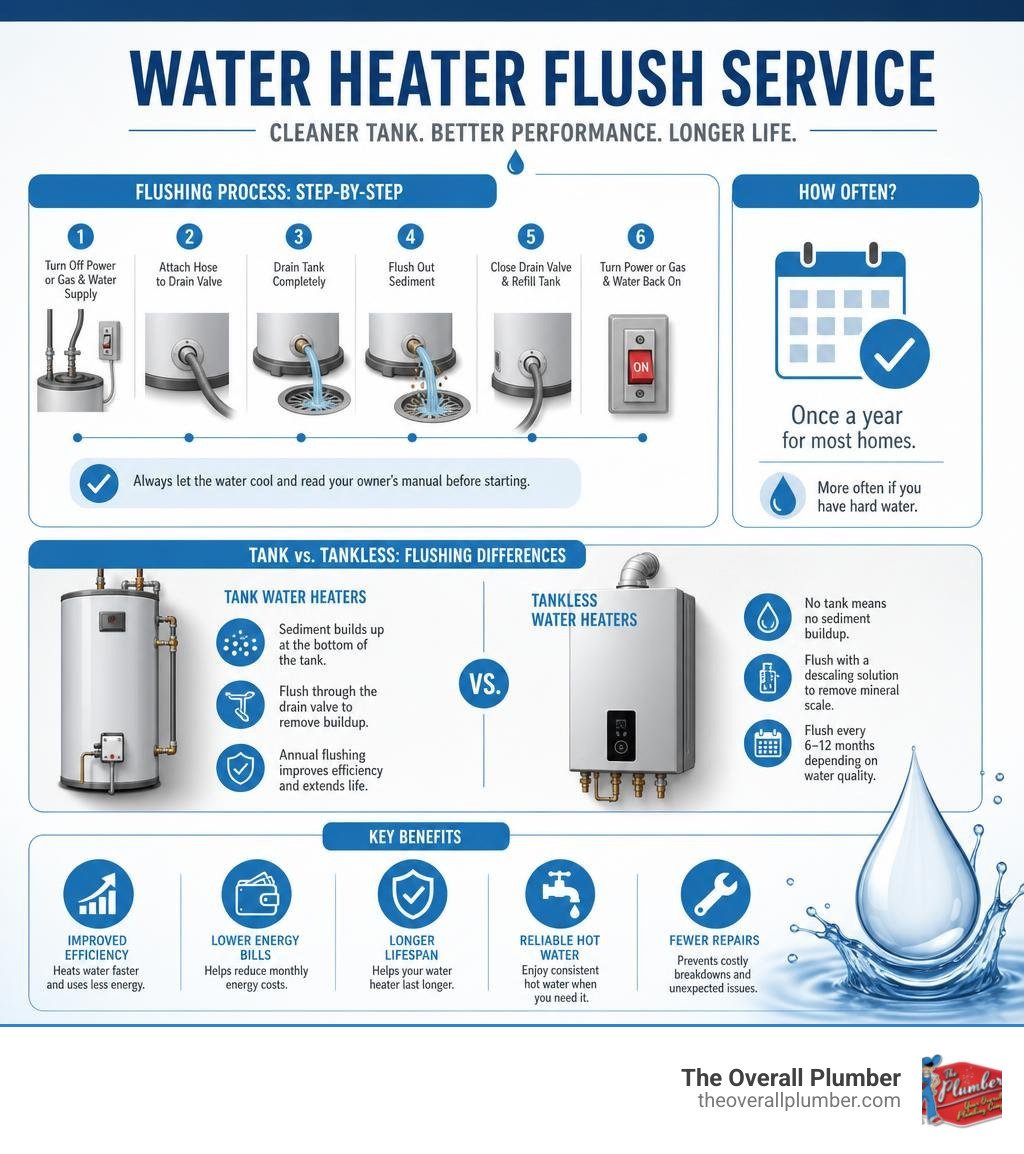
A water heater flush service is one of the simplest things you can do to keep your hot water running strong and your energy bills in check. Here’s what you need to know at a glance:
Quick answers:
- What it is: Draining your water heater tank to remove sediment, minerals, and buildup from the bottom
- How often: Once a year for most homes — more often if you have hard water
- Why it matters: Sediment buildup forces your heater to work harder, raises energy costs, and shortens the life of the unit
- DIY or pro: Basic flushing can be done yourself, but a professional service also includes a full inspection and condition report
- Time required: About 45 to 90 minutes from start to finish
Most water heaters hold 40 to 50 gallons of water. Every gallon that flows in brings dissolved minerals with it. Over time, calcium, rust, and sand settle at the bottom of the tank. Left alone, that layer acts like insulation between the burner and the water — meaning your heater burns more energy to do less work. Regular flushing clears that buildup before it becomes a real problem.
Without annual maintenance, a water heater typically lasts 8 to 12 years. With it, that lifespan can stretch to 15 years or more.
I’m Dayton Whitworth, a second-generation plumber serving the Greater Houston area and Gulf Coast communities, and I’ve seen how skipping a routine water heater flush service leads to costly repairs that could have been avoided for less than the price of a dinner out. Let’s walk through exactly how to do this safely — without turning your utility room into a swimming pool.
Learn more about water heater flush service:
- cost of a 50 gallon electric water heater
- cost to have water heater installed
- water heater installation
What is a Water Heater Flush Service and Why Do You Need It?
To put it simply, a water heater flush service is the process of draining the water from your heating unit to wash out accumulated debris. When water enters your home, it carries tiny amounts of dissolved minerals, mainly calcium and magnesium. While these minerals are perfectly safe to drink, they do not stay dissolved when heated. Instead, they crystallize, fall out of solution, and settle at the bottom of your tank as sediment.
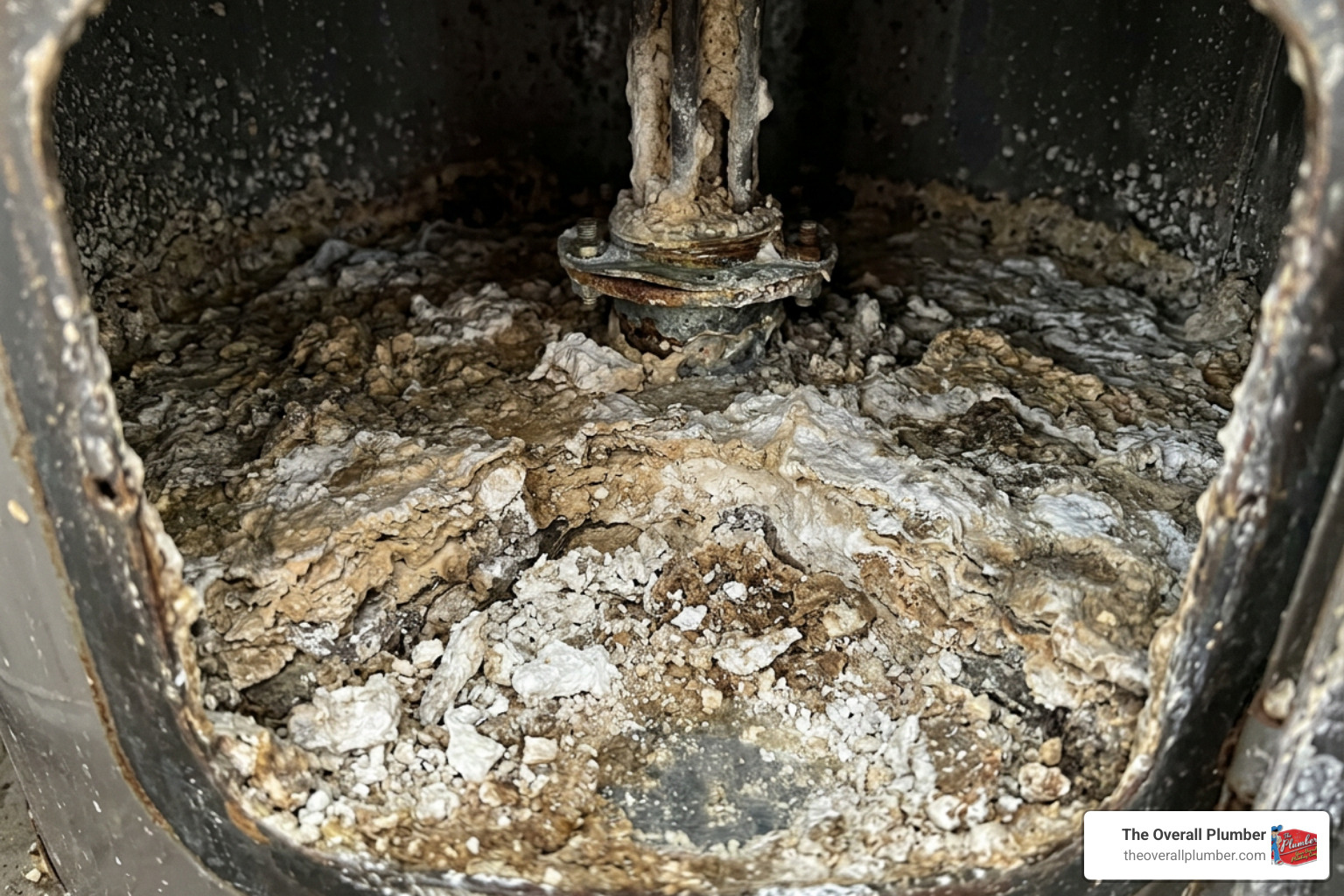
Over months and years, this sediment forms a thick, crusty layer. If you have ever boiled water in a kettle and noticed a white ring left behind, you have seen this process in action on a small scale. Inside a 50-gallon tank, however, this buildup can grow several inches deep.
This mineral layer acts as an insulating blanket over the heating element (in electric models) or the gas burner (in gas models). Instead of directly heating the water, the burner has to heat the thick layer of rock first. This causes your system to run longer and hotter, driving up your monthly energy bills and placing immense thermal stress on the steel tank. The U.S. Department of Energy’s Energy Saver guide to water heating also notes that water heating is a major part of home energy use, which is why keeping the system efficient matters. Over time, the tank can overheat, warp, or crack, leading to catastrophic leaks. Regular maintenance keeps your system running efficiently. You can learn more about our full range of preventative care by visiting our Water Heater Services page.
Signs Your System Needs a Water Heater Flush Service
Your water heater will rarely suffer in silence; it usually drops several hints when sediment has taken over. If you notice any of the following signs, your system is overdue for a flush:
- Knocking or popping noises: When water gets trapped beneath the heavy layer of sediment at the bottom of the tank, it boils and turns to steam. As the steam bubbles burst through the mineral crust, they create loud knocking, rumbling, or popping sounds. If your closet sounds like it is hosting a popcorn party, sediment is the culprit.
- Inconsistent water temperature: If your morning shower starts warm, turns icy, and then gets scalding hot, sediment may be blocking the heat transfer or interfering with the thermostat sensors.
- Discolored or rusty water: Mineral scale and rust can flake off the tank walls, turning your hot water a muddy yellow or light brown.
- Rising energy bills: When your system has to work twice as hard to heat the same amount of water, you will see a noticeable spike in your gas or electric bills.
If you are experiencing these issues and want to try handling the initial drain yourself, check out our How to Drain a Water Heater Safely guide.
The Risks of Neglecting Your Water Heater Maintenance
Ignoring your water heater’s maintenance needs can lead to serious household headaches. When sediment is allowed to sit at the bottom of the tank indefinitely, it traps moisture against the steel walls. This accelerates tank corrosion, which eventually eats through the protective lining.
For electric water heaters, heavy sediment can completely bury the lower heating element, causing it to burn out prematurely. In gas heaters, the constant overheating of the tank bottom weakens the steel. Eventually, this thermal stress can cause the tank to burst, resulting in a sudden, devastating flood of up to 50 gallons of scalding water inside your home.
Furthermore, a clogged flue pipe on a gas unit can allow toxic carbon monoxide to backdraft into your living space, while loose, neglected wiring can spark electrical fires. Investing in timely Water Heater Repair & Maintenance is the best way to prevent these dangerous and expensive emergencies.
Tank vs. Tankless: How Flushing Differs
While both traditional tank water heaters and modern tankless units require regular flushing, the actual maintenance process is entirely different. Traditional tanks accumulate loose, sandy sediment at the bottom of a large reservoir, whereas tankless units suffer from mineral scale sticking directly to the narrow copper tubes of the heat exchanger.
| Feature | Traditional Tank Water Heater | Tankless Water Heater |
|---|---|---|
| Primary Issue | Sandy sediment, mud, and loose rust | Hard mineral scale (limescale) coating |
| Method | Gravity drain and high-pressure flush | Active chemical circulation under pressure |
| Cleaning Agent | Clean municipal water | Food-grade citric acid or white vinegar |
| Required Equipment | Garden hose, flathead screwdriver | Circulation pump, utility hoses, bucket |
| Service Valves | Standard bottom drain valve | Dedicated isolation valves required |
| Warranty Requirement | Highly recommended | Mandatory by most manufacturers |
If you are currently using an older tank model and are considering upgrading to a highly efficient, space-saving unit, take a look at our selection of Tankless Water Heaters on Sale to find the perfect fit for your home.
Traditional Tank Water Heater Flushing
Flushing a traditional tank water heater relies on gravity and municipal water pressure. The goal is to open the drain valve at the bottom of the tank and let the water sweep the loose sediment out through a connected hose.
During this service, we also inspect the sacrificial anode rod. This rod is made of magnesium or aluminum and is designed to attract corrosive elements in the water, rusting away so your steel tank doesn’t have to. We also test the Temperature and Pressure (T&P) relief valve, which is the primary safety mechanism designed to prevent the tank from exploding if pressure builds too high. If you want to understand how these components affect your operating budget, read through our Electric Water Heater Costs: A 50 Gallon Guide for an in-depth breakdown.
Tankless Water Heater Descaling
Because tankless water heaters do not store water, they do not accumulate loose piles of sand. Instead, the intense heat generated inside the compact heat exchanger causes dissolved calcium to bake directly onto the copper walls. This process is known as scaling. Over time, this scale narrows the water pathways, restricting flow and triggering system error codes (such as codes 11, 12, or 16 on common brands like Rinnai, Navien, and Noritz).
To descale a tankless unit, we must close the isolation valves to separate the heater from your home’s plumbing. We then connect a small submersible utility pump to the service ports, placing it inside a bucket filled with a food-grade citric acid solution. The pump circulates this mild acid through the heat exchanger for 60 to 90 minutes, safely dissolving the hardened scale without damaging the copper components.
Step-by-Step Guide to Safely Flushing Your Water Heater
If you are a handy homeowner, you can perform a basic flush on a traditional tank water heater yourself. However, you must follow the steps carefully to avoid damaging your equipment or flooding your home.

Essential Tools and Safety Precautions
Before you begin, gather the following tools:
- A heavy-duty garden hose (standard thread)
- A flathead screwdriver (to open the drain valve)
- A bucket or towels (to catch minor drips)
- Heavy-duty work gloves (to protect your hands from hot pipes and water)
Critical Safety Steps:
- Turn off the power source first. If you have an electric water heater, turn off the dedicated breaker in your main electrical panel. If you leave the power on while the tank is empty, the heating elements will burn out in seconds. For gas water heaters, turn the gas control valve to the “Pilot” or “Vacation” setting.
- Let the water cool. If possible, turn off the heater several hours before flushing so you are not working with scalding 120-degree water.
- Route the hose carefully. Ensure the discharge end of your garden hose is directed to a safe location lower than the water heater’s drain valve, such as a floor drain, driveway, or lawn. Be aware that hot, heavily mineralized water can kill grass, so choose your drainage spot wisely.
How to Drain and Flush the Tank Safely
Once your tools are ready and the power is safely turned off, follow these steps to drain and flush your tank:
- Shut off the cold water supply. Locate the shutoff valve on the cold water pipe entering the top of your water heater and turn it off completely.
- Connect the garden hose. Securely screw your garden hose onto the drain valve located near the bottom of the water heater tank. Place the other end of the hose at your designated drain site.
- Open a hot water faucet. Go inside your home and turn on the hot water faucet in a nearby sink or bathtub. This allows air to enter the plumbing system, breaking the vacuum and letting the water drain smoothly out of the tank.
- Open the drain valve. Use your flathead screwdriver to slowly open the drain valve. Water should begin flowing through the garden hose. If the water stops or flows slowly, sediment may be clogging the valve.
- Flush with fresh water. Once the tank is empty, turn the cold water inlet valve back on for a few minutes while leaving the drain valve open. This sends a high-pressure blast of fresh water through the bottom of the tank, stirring up and washing away any remaining stubborn sediment. Repeat this step until the water running out of the hose is perfectly clear.
- Close up and refill. Close the drain valve, disconnect your garden hose, and turn the cold water inlet valve back on to refill the tank. Keep the hot water faucet inside your home open during this process; it will sputter and hiss as air is pushed out of the system. Once a steady stream of water flows from the faucet, turn it off.
- Restore power. Only after the tank is completely full of water should you turn the electrical breaker back on or turn your gas valve back to its normal operating temperature.
Professional Water Heater Flush Service vs. DIY
While a DIY flush is a great weekend project, hiring a professional water heater flush service offers several key advantages. Professional plumbers do not just drain the water; we perform a comprehensive diagnostic check of your entire system.
Our team inspects the safety mechanisms, tests the electrical thermostats with a multimeter, checks for tiny micro-leaks that could lead to mold growth, and provides an honest condition report. If you want to understand the long-term value of professional oversight, check out A Comprehensive Guide to Water Heater Installation to see how proper maintenance protects your initial investment.
When to Call a Professional Water Heater Flush Service
There are several scenarios where attempting a DIY flush can quickly turn into a plumbing nightmare:
- A stuck drain valve: Many standard water heaters come equipped with cheap plastic drain valves. Over time, these plastic valves become brittle. If you try to force a stuck valve open with a screwdriver, it can easily snap off in your hand, resulting in an uncontrollable flood of hot water.
- An older, unmaintained heater: If your water heater has not been flushed in five or more years, a DIY flush can actually cause problems. Flushing can disturb large chunks of rust and scale, which can then get stuck in the drain valve, preventing it from sealing shut when you are finished.
- Electrical or gas hesitation: If you are uncomfortable working around high-voltage electrical panels or gas supply lines, it is always safest to leave the job to licensed professionals.
Cost, Warranties, and Hard Water Considerations
The water across our Texas service areas — from the historic streets of Galveston to the bustling neighborhoods of Houston and League City — contains varying levels of mineral hardness. In areas with high mineral content, sediment accumulates much faster. Hard water inflicts significant wear and tear on local appliances, meaning local water quality directly dictates your maintenance schedule.
Neglecting this service does more than just lower your heater’s efficiency; it can void your manufacturer warranty. Most major tank and tankless manufacturers explicitly state that damage caused by mineral scale or sediment buildup is not covered under warranty. Keeping written records of a professional water heater flush service is your best insurance policy if you ever need to file a warranty claim.
Frequently Asked Questions About Water Heater Flushing
How often should I flush my water heater?
For the majority of homes in our service area, we recommend scheduling a water heater flush service once a year. However, if you live in an area with exceptionally hard water or have a large family with high hot water demands, flushing your system every six to nine months will help maintain peak performance.
Does flushing a water heater void the manufacturer warranty?
No. In fact, the exact opposite is true. Regular flushing protects your warranty. Manufacturers like Rinnai, Navien, Rheem, and A.O. Smith require regular, documented maintenance to keep your warranty valid. If your tank fails due to scale buildup and you cannot provide proof of regular flushing, the manufacturer may deny your replacement claim.
How long does a professional water heater flush take?
A standard, well-maintained tank water heater flush typically takes 45 to 60 minutes from start to finish. If your unit is older or has heavy sediment clogs, it may take 60 to 90 minutes. A professional tankless descaling service generally takes 60 to 90 minutes to allow the cleaning solution to thoroughly dissolve all scale inside the heat exchanger.
Schedule Your Water Heater Maintenance Today
At The Overall Plumber, we make maintaining your home simple and stress-free. We proudly serve homeowners across Brazoria County, Houston, Clear Lake, Santa Fe, League City, Texas City, La Porte, Friendswood, Pearland, Pasadena, Galveston, Harris County, and Galveston County.
When you choose us for your plumbing needs, you benefit from our robust plumbing protection plans, satisfaction guarantees, priority scheduling, and a strict policy of no trip charges and no overtime fees. Whether your system needs a routine tune-up or you are looking into a complete Hot Water Heater Replacement, our licensed technicians are here to help.
To protect your home from water damage and keep your hot water flowing reliably, contact our expert team today or call us at (281) 668-8055 to schedule your professional water heater flush service!