

What Sewer Line Service Can Do for Your Home
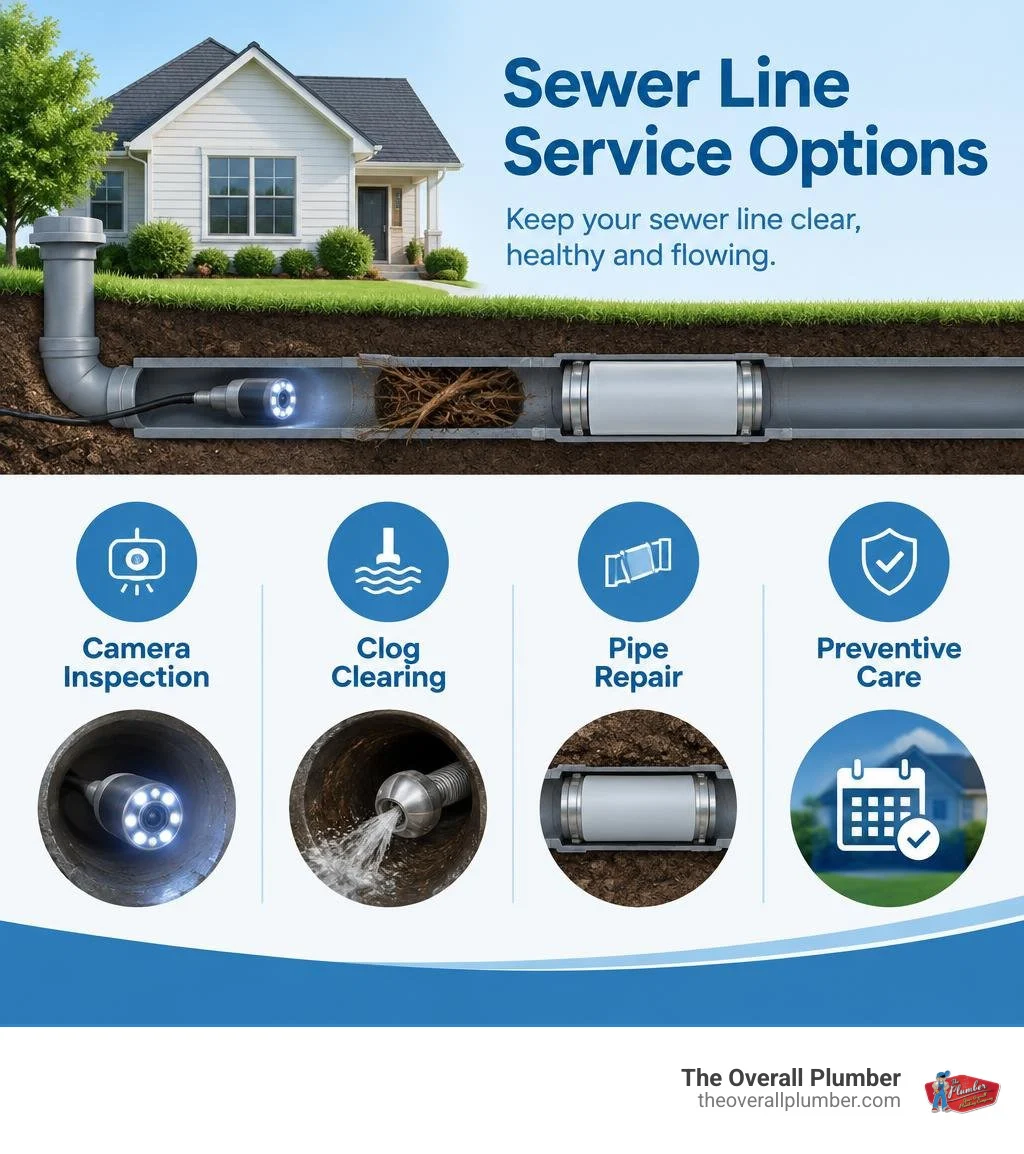
Sewer line service helps you find and fix problems in the pipe that carries wastewater away from your home. A camera inspection can show whether the line needs a clog cleared or a damaged section repaired. If several drains back up at once, stop using water and call a plumber. One slow drain is more likely to have a clog near that fixture.
Tree roots, aging pipes, and shifting soil can all cause trouble underground. Finding the cause early helps you choose the right repair instead of clearing the same backup again and again.
I’m Dayton Whitworth, a second-generation plumber serving homeowners across Greater Houston and the Gulf Coast. My experience with routine maintenance and emergency repairs shapes how I explain sewer line service and the choices homeowners face.
Recognizing Warning Signs and Causes of Sewer System Failure
Your underground sewer lateral is out of sight, but it sends clear distress signals when structural failure or blockages develop. Knowing how to interpret these warnings prevents extensive property damage, foul biohazard backups, and costly foundation issues.
Isolated Drain Blockage vs. Main Lateral Failure
Understanding whether your plumbing issue is isolated or system-wide is the first step in troubleshooting:
- Isolated Drain Blockage: Affects only a single fixture (such as one sluggish bathroom sink or a clogged toilet). Running water elsewhere in the home does not cause wastewater to rise in nearby fixtures.
- Main Lateral Failure: Affects multiple fixtures simultaneously throughout the entire house. When wastewater cannot escape to the municipal main, hydrostatic pressure forces sewage backward into your home’s lowest gravity points, such as bathtubs, shower pans, and floor drains.
If running the washing machine causes your ground-floor toilet to gurgle or water to rise inside the adjacent bathtub, your main lateral is obstructed. Locating and inspecting your cleanout access provides immediate insight into the line’s condition.
Common Symptoms Requiring Urgent Sewer Line Service
When multiple fixtures act up simultaneously, schedule a professional evaluation immediately. Key symptoms include:
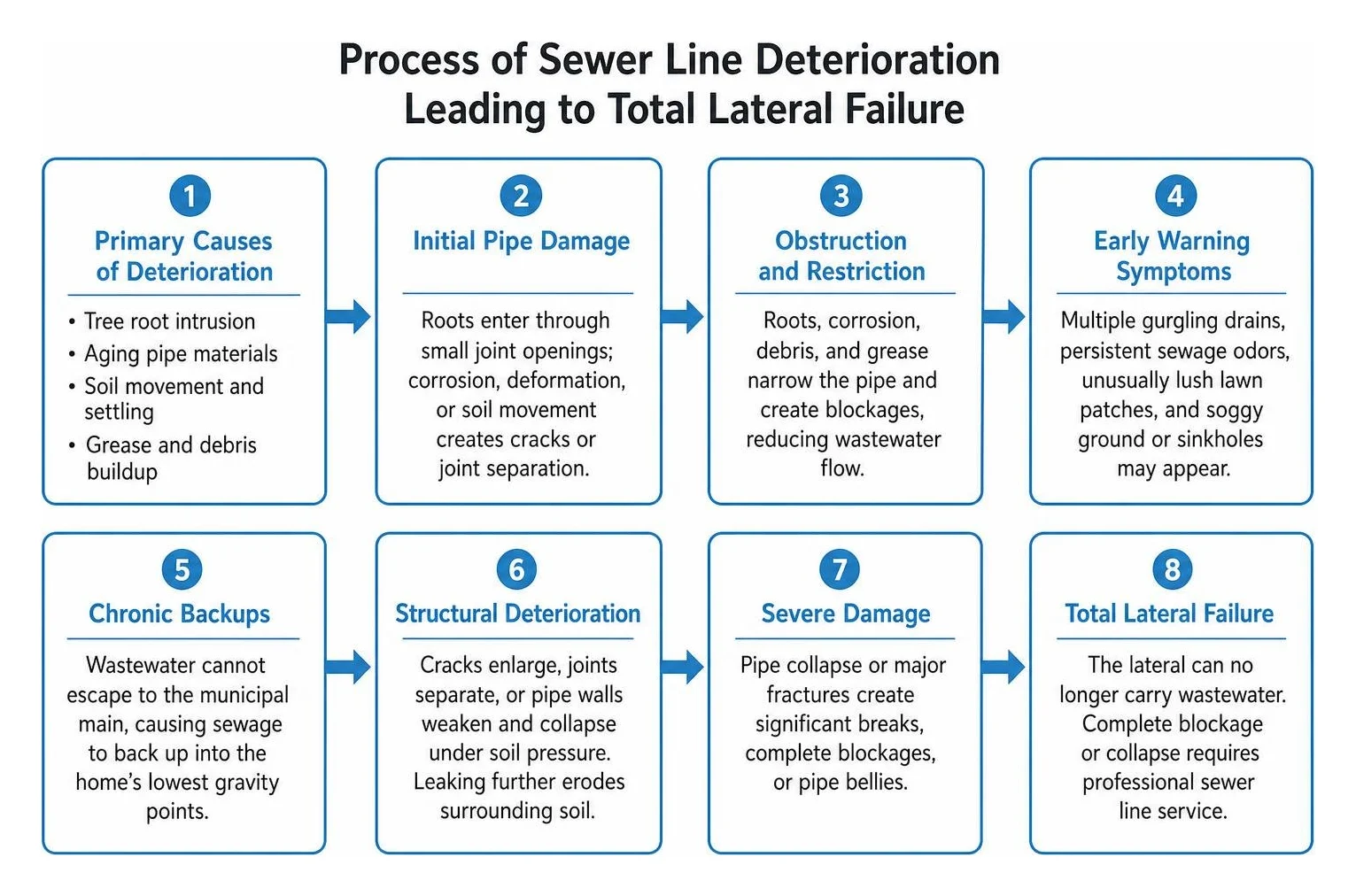
- Persistent Sewage Odors: Cracked underground pipes allow dangerous sewer gases to escape and migrate into your living spaces or yard.
- Multiple Gurgling Drains: Trapped air bubbles in an obstructed main line burp back through fixture traps whenever water is drained.
- Unusually Lush Lawn Patches: Leaking subterranean wastewater acts as an unintended fertilizer, causing localized patches of grass to grow rapidly and appear bright green.
- Soggy Ground or Sinkholes: Severe pipe fractures erode surrounding soil, creating saturated depressions in your yard or near your foundation.
- Chronic Backups: If your system experiences sewer line backing up days after snaking, a mechanical obstruction, pipe collapse, or structural defect is preventing normal flow.
Primary Causes of Underground Pipe Deterioration
Underground drainage pipes encounter harsh conditions over time. The primary causes of lateral failure include:
- Tree Root Intrusion: Tree and shrub roots seek underground moisture, infiltrating tiny joint imperfections and expanding until they break the pipe.
- Aging Pipe Materials: Mid-20th-century Orangeburg (wood-fiber conduit) pipes deform and collapse under soil pressure, while vintage cast-iron pipes corrode from the inside out, snagging solid waste.
- Soil Movement and Settling: Shifting soil creates “pipe bellies” (low sagging spots where waste pools) or complete joint shear.
- Grease and Debris Buildup: Solidified fats, oils, and non-flushable wipes bind together inside the pipe, forming impenetrable blockages.
Diagnostic and Repair Methods in Modern Sewer Line Service
Modern diagnostic and rehabilitation technologies eliminate traditional guesswork, enabling precise evaluation and repair with minimal landscape disruption. Local guidelines, such as municipal standards for line repair in League City and regional wastewater utilities in Friendswood, outline property owner responsibilities from the private cleanout to the city connection.
Advanced HD Video Camera Inspections
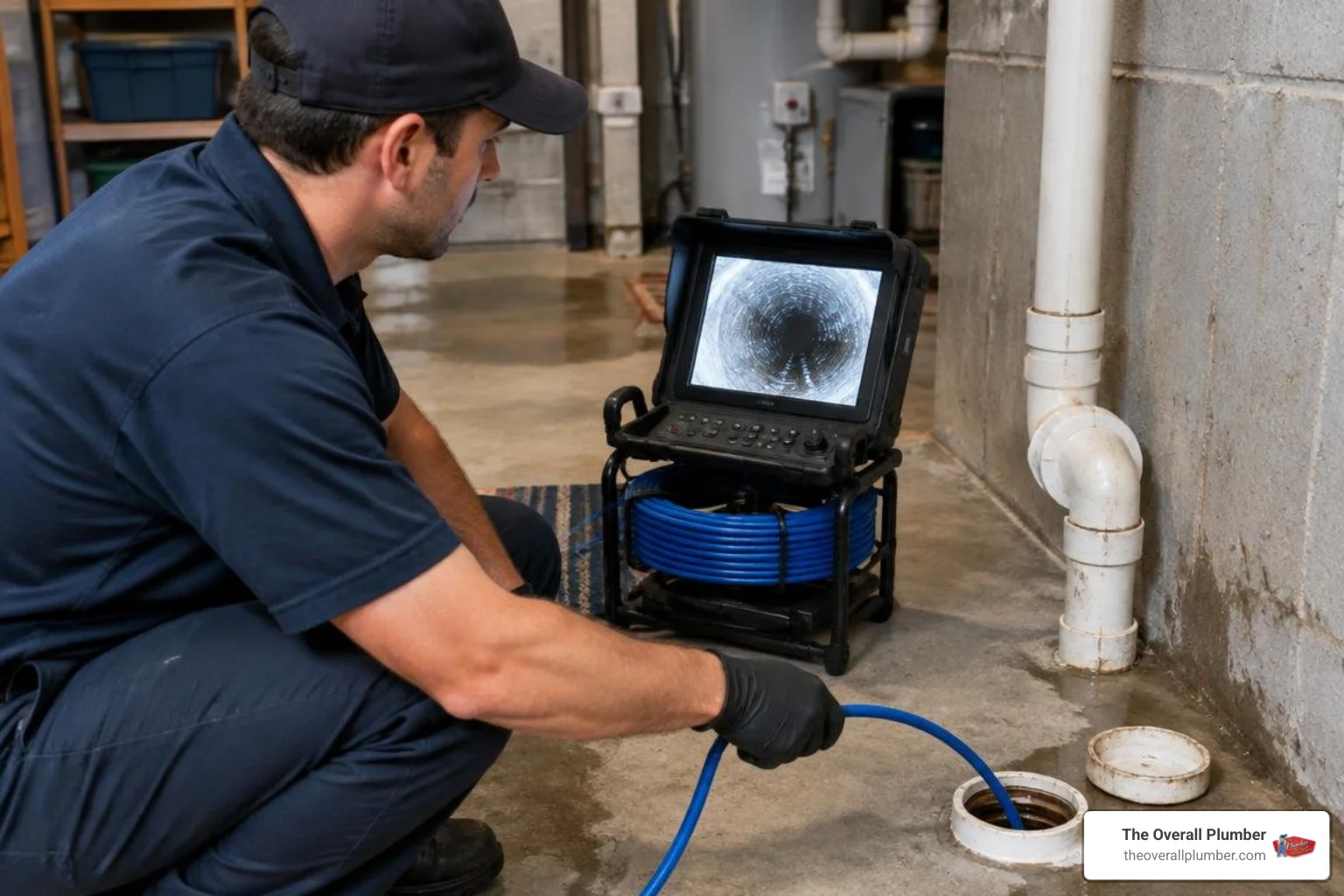
A high-definition video camera sewer line inspection is the gold standard for diagnosing hidden subterranean problems. A high-resolution waterproof camera attached to a flexible fiber-optic rod travels through the lateral pipe.
Equipped with sonde radio transmitters, these cameras allow technicians to pinpoint the exact depth, underground path, and physical condition of the pipe above ground. This non-invasive diagnostic reveals hairline fractures, root penetration, corrosion, joint misalignments, and physical collapses. For a comprehensive overview of how diagnostics work, read the homeowner’s guide to sewer camera inspections.
Choosing the Right Sewer Line Service: Trenchless vs. Traditional Excavation
Depending on the depth, location, and structural integrity of the line, repairs generally fall under trenchless restoration or open-trench excavation. Understanding the benefits of trenchless sewer replacement helps homeowners protect expensive driveways, patios, and landscaping.
| Feature / Method | Cured-in-Place Pipe (CIPP) Lining | Pipe Bursting | Traditional Open-Trench Excavation |
|---|---|---|---|
| Digging Required | Minimal (1 small entry pit) | Moderate (entry and exit pits) | Extensive (continuous trench along pipe) |
| Landscape Impact | Negligible | Low | High (driveways/lawns excavated) |
| Project Duration | Typically 1 day | 1 to 2 days | 2 to 5+ days |
| Best Suited For | Cracked, intact host pipes | Severely damaged or undersized lines | Completely collapsed, back-pitched pipes |
| Material Lifespan | 50+ years | 50+ to 100 years | 50+ to 100 years (modern PVC/HDPE) |
Determining Spot Repair vs. Complete Lateral Replacement
Not every sewer problem requires a complete lateral replacement. Homeowners can explore various sewer line repair and replacement options based on physical findings:
- Spot Repair: Ideal when damage is confined to an isolated section (such as a single joint broken by an aggressive tree root) while the rest of the pipe remains structurally sound and aligned.
- Complete Replacement: Necessary when aging cast-iron or Orangeburg lines exhibit widespread thinning, severe channel rot, multiple sagging bellies, or repeated structural collapses across the entire run. For practical steps on dealing with damaged lines, review this practical guide to sewer line repair.
Emergency Protocols, Pricing Structures, and Warranty Protection
A sudden sewer line failure requires fast action to protect living areas from hazardous contamination and manage repair expenses.
Immediate Action Plan for a Sewage Backup Emergency
If raw sewage backs up into your home, follow these steps:
- Stop All Water Usage Immediately: Turn off all indoor water fixtures, dishwashers, and washing machines. Do not flush toilets.
- Shut Off the Main Water Supply: If you cannot pinpoint where water is running, turn off the home’s main water shutoff valve.
- Avoid Contaminated Areas: Raw sewage contains harmful pathogens. Keep children and pets away from standing wastewater.
- Mitigate Electrical Hazards: If standing water approaches electrical outlets or appliances, safely turn off power to those zones at the main breaker panel.
- Call for Professional Service: Contact our licensed team for prompt emergency sewer line repair.
Understanding Pricing Factors and Project Cost Breakdown
Sewer line service costs depend on several key factors:
- Diagnostic Camera Inspection: Typically ranges from $199 to $399.
- Main Line Mechanical Clearing / Snaking: Usually ranges between $249 and $449.
- Trenchless Pipe Lining / Pipe Bursting: Quoted per foot after inspection, balancing material investment against the cost of yard and concrete restoration.
- Traditional Excavation: Varies based on pipe burial depth, accessibility, surface obstacles, and city permitting fees.
For in-depth budgeting guidance, see our guide on budgeting for a sewer line replacement and review what camera inspections cost.
Homeowners Insurance and Plumbing Protection Plans
Standard homeowner insurance policies generally exclude damage caused by normal wear and tear, age-related corrosion, or root intrusion in underground lateral lines. Homeowners are solely responsible for maintaining and repairing the lateral pipe from their foundation out to the municipal connection point.
To bridge this financial gap, specialized plumbing protection plans and exterior utility line warranties offer dedicated coverage for unexpected subterranean repairs, shielding homeowners from surprise out-of-pocket costs.
Long-Term Maintenance and Preventative Sewer Care
Proactive maintenance protects underground plumbing lines, helping prevent messy backups and extending pipe life.
Mechanical Augering and Root Removal
Mechanical drain augering uses heavy-duty cables and specialized cutting blades to clean the interior of sewer pipes. Professional augers scour pipe walls, clearing accumulated debris, heavy sludge, and invasive tree roots to restore normal wastewater flow. For persistent root growth, technicians can use mechanical augers for tree roots to slice through intrusive root masses and keep lines flowing freely.
Best Practices to Protect Your Main Sewer Pipe
Protect your sewer system with these daily habits:
- Never Flush Non-Dispersible Items: Only human waste and standard toilet paper belong in toilets. Avoid flushing “flushable” wipes, paper towels, facial tissues, and hygiene products.
- Keep Grease Out of Drains: Never pour cooking fats, oils, or grease down kitchen sinks; collect them in containers for trash disposal.
- Avoid Caustic Chemical Drain Cleaners: Over-the-counter chemical cleaners generate extreme heat that corrodes older pipes and softens PVC joints without clearing deep obstructions.
- Plan Landscape Trees Wisely: Plant large, fast-growing trees well away from underground sewer lateral pathways.
Frequently Asked Questions About Main Sewer Line Care
How often should a residential sewer line be inspected?
We recommend an HD video camera inspection every 18 to 24 months for homes older than 20 years, or whenever you purchase a new property, to catch small root intrusions and ground settlement before an emergency backup occurs.
Can tree roots be permanently eliminated from sewer lines without digging?
While mechanical cutting and augering clear existing root intrusions, roots will regrow through open joints over time. Installing a seamless, epoxy-saturated trenchless pipe liner creates a jointless barrier that stops roots from penetrating the pipe.
Does standard homeowners insurance cover a collapsed sewer lateral?
Most standard homeowners insurance policies exclude coverage for sewer pipe deterioration caused by age, corrosion, or tree roots. Coverage typically requires an optional water and sewer line endorsement or a dedicated plumbing protection plan.
For prompt, professional sewer diagnostics and repairs across Greater Houston, contact our team to schedule an inspection today.