


Why the Cost for Sewer Inspection Is Worth Knowing Before You Have a Problem
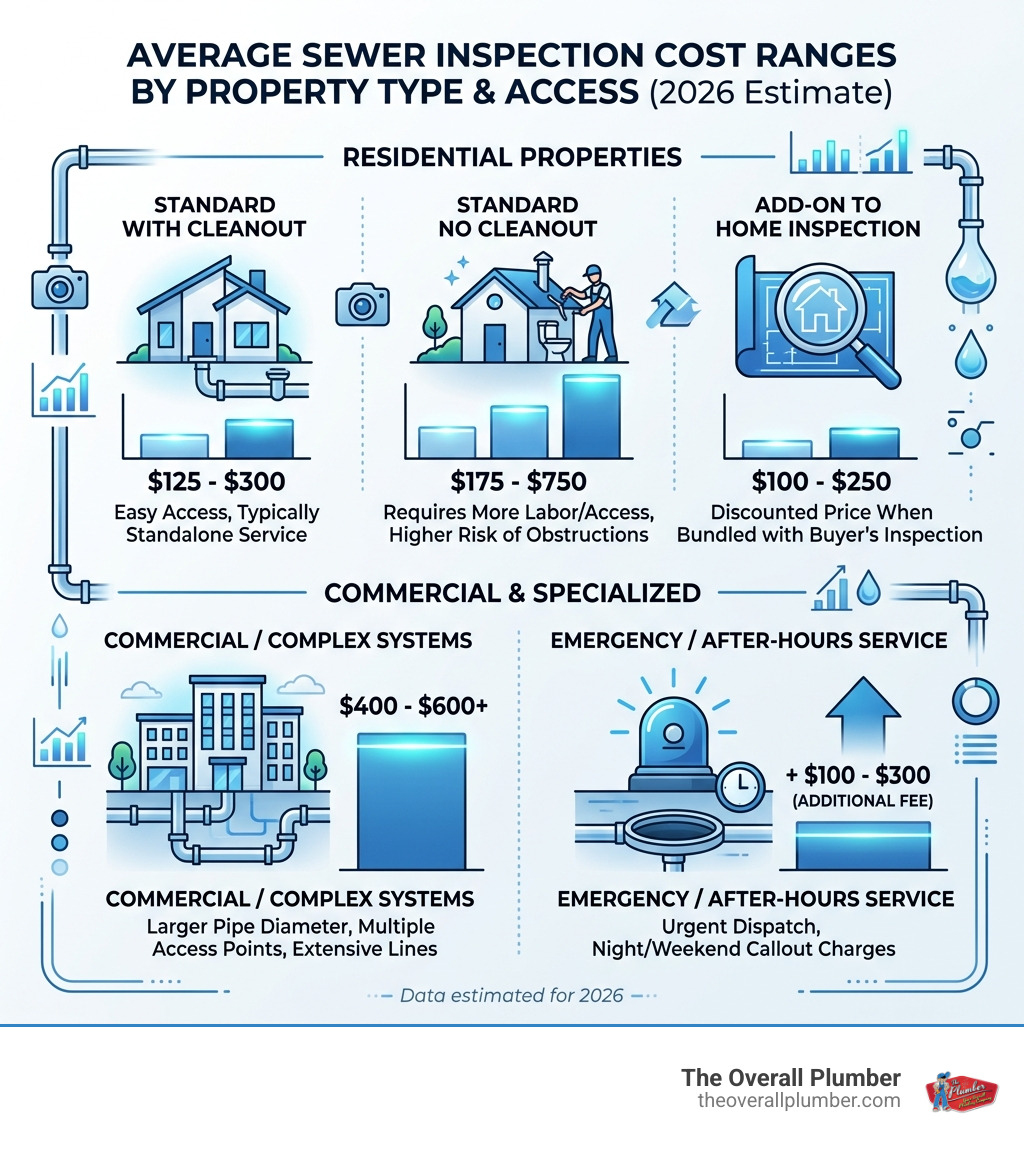
The cost for sewer inspection typically runs between $125 and $500 for most residential properties, with a national average around $280.
Here’s a quick breakdown:
| Inspection Type | Typical Cost Range |
|---|---|
| Standard residential (with cleanout) | $125 – $300 |
| Standard residential (no cleanout) | $175 – $750 |
| Add-on to home inspection | $100 – $250 |
| Commercial / complex systems | $400 – $600+ |
| Emergency / after-hours service | Add $100 – $300 |
Your sewer line does a lot of quiet, unglamorous work every single day. And like most things you can’t see, it tends to get ignored — right up until it backs up into your basement or kills a patch of your yard.
A camera inspection is how plumbers look inside that line without digging anything up. It’s fast, it’s accurate, and it’s far cheaper than finding out about a collapsed pipe the hard way.
I’m Dayton Whitworth, a second-generation plumber serving Greater Brazoria County, Galveston County, Houston, and the surrounding Gulf Coast — and understanding the real cost for sewer inspection is something I help homeowners navigate every week. In the sections ahead, I’ll walk you through exactly what drives the price up or down, so you know what to expect before anyone shows up at your door.
Understanding the Cost for Sewer Inspection in 2026
As we move through 2026, the technology behind sewer cameras has become more advanced and accessible, yet the cost for sewer inspection remains a significant variable for many property owners. While the national average sits comfortably at $280, the range is broad because no two plumbing systems in the Houston or Galveston area are exactly alike.
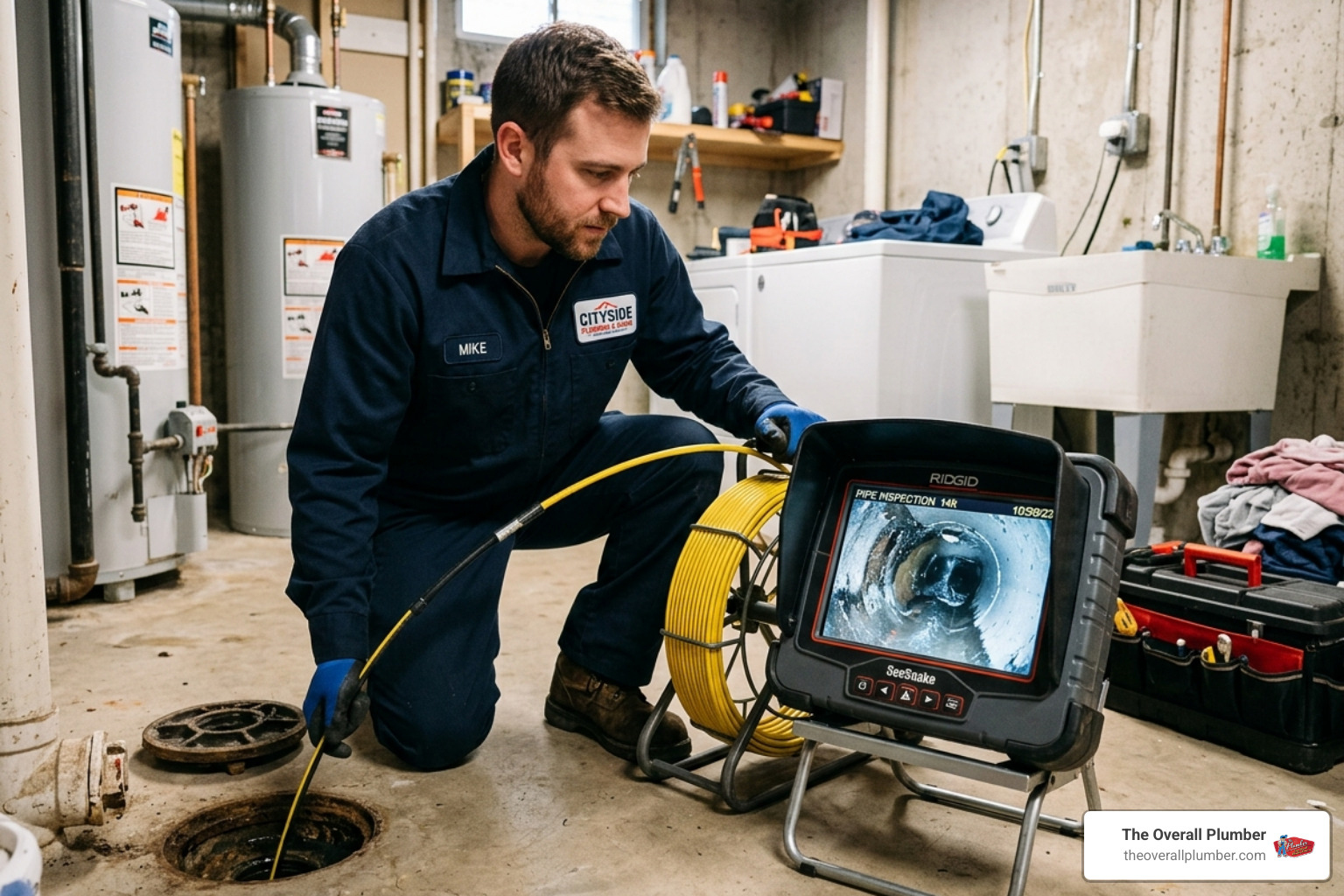
A sewer line camera inspection involves feeding a high-definition, waterproof camera attached to a flexible fiber-optic cable through your waste pipes. This “sewer scope” allows us to see the internal condition of the line in real-time, identifying cracks, clogs, or root intrusions that would otherwise require expensive “guesswork” digging. According to Sewer Scope Inspection Cost 2026: What to Expect ($125-$500), most homeowners should budget within that mid-range for a standalone service.
At The Overall Plumber, we emphasize that this is a diagnostic tool—much like an X-ray for a broken bone. You can learn more about the technical side of this process in our guide to Video Camera Sewer Line Inspection.
Average Cost for Sewer Inspection by Property Type
The type of building we are inspecting plays a massive role in the final bill. Residential homes are typically straightforward, but multi-unit or commercial properties introduce layers of complexity.
- Single-Family Homes: These are the most common inspections we perform in areas like Pearland and League City. If there is easy cleanout access, the cost stays on the lower end ($125–$300).
- Multi-Unit Properties (Duplexes/Townhomes): These may require checking multiple branches that feed into a main lateral line, which can increase the time spent on-site.
- Commercial Systems: These inspections average around $525, but can easily exceed $600 depending on the size of the facility. Commercial lines are often longer, larger in diameter, and may have more complex configurations than residential setups. For more on how local infrastructure impacts these costs, see our page on Sewer Lines in Houston.
Regional Pricing and Timing Variations
Geography matters. In the Houston market, the local average for a sewer camera inspection is approximately $420. This is slightly higher than the national average due to the specific soil conditions in our region—the heavy clay in Brazoria and Harris Counties can cause pipes to shift and belly more frequently, leading to more complex diagnostic needs.
Timing is the other major factor. Routine maintenance scheduled during standard business hours is your most cost-effective option. However, if you are dealing with a midnight backup in Friendswood, an emergency inspection fee will likely apply. Emergency premiums typically add $100 to $300 to the base price, bringing late-night or holiday totals into the $450 to $750 range. As noted in the Sewer Camera Inspection Cost – 2026 Report | NJ Pipe Doctor, being proactive can save you nearly 50% on labor costs alone.
Key Factors That Influence Sewer Camera Pricing
When you call us for a quote, we’ll ask a few questions to determine where your project falls on the price scale. The biggest influencers are:
- Pipe Length: Most residential cameras have a reach of about 200 to 330 feet. If your home sits far back from the city main, or if we are inspecting a large commercial lot, the extra time and specialized equipment will increase the cost.
- Depth of Line: Deeper lines sometimes require more powerful signal transmitters (sondes) to locate the camera head from above ground.
- Accessibility: This is the “make or break” factor for your budget.
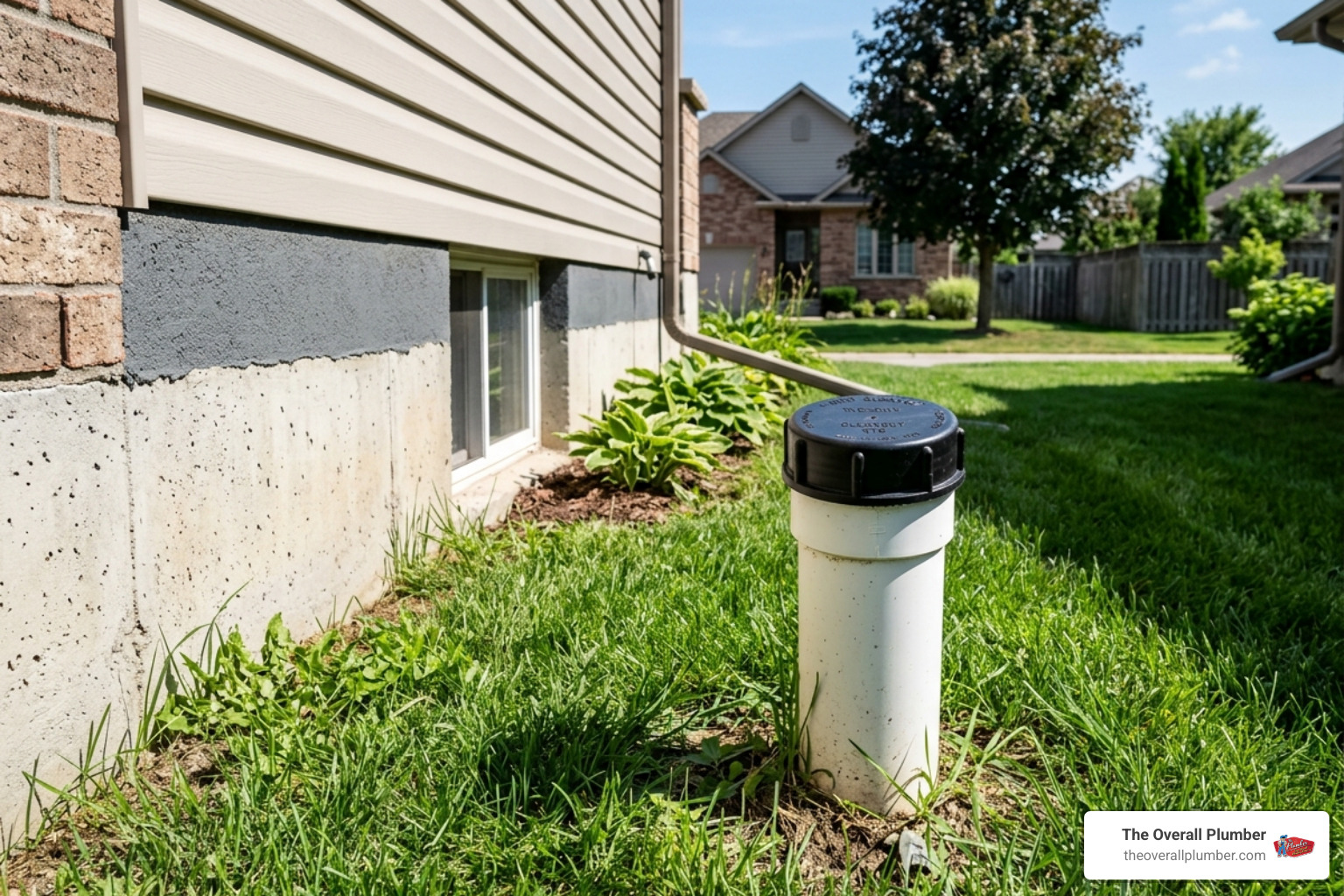
If your home has a “cleanout”—a capped pipe usually located outside near the foundation or in the garage—the job is simple. If we have to remove a toilet or climb onto your roof to go down a vent stack, the labor costs will climb. For help finding your access point, check out The Ultimate Guide to Finding Your Sewer Line Without Making a Mess.
How Pipe Material Affects the Cost for Sewer Inspection
The material your pipes are made of dictates how carefully we have to move the camera and what kind of wear and tear we expect to find.
- PVC ($175–$300): Modern plastic pipes are smooth and easy to navigate, making them the cheapest to inspect.
- Cast Iron ($250–$450): Older cast iron pipes often have “scale” or rust buildup that can snag a camera or obscure the view, requiring more time.
- Clay Tile ($300–$550): Common in older Houston homes, clay is prone to root intrusion at every joint.
- Orangeburg ($400–$800): This is the “nightmare” material. Made of tar-impregnated wood pulp, it is incredibly fragile. Because it can collapse under the slightest pressure, we have to use extreme caution, which drives up the price.
Using high-tech cameras helps us Stop the Guesswork with a Camera Line Inspection in Texas City regardless of the pipe material.
Additional Fees and Service Add-ons
A basic inspection tells us what’s wrong, but you might need extra documentation or immediate action:
- Video Reports & Documentation: While we always let you watch the live feed, a digital copy for insurance or real estate negotiations usually costs an extra $75–$175.
- Locating and Marking: If we find a break, we use a locator to mark the exact spot in your yard and tell you how deep it is. This is essential for a Repair Broken Sewer Line Houston.
- Hydro-jetting Bundles: Often, a line is too full of grease or debris for the camera to see anything. In these cases, we may bundle the inspection with hydro-jetting (high-pressure water cleaning) for a total cost of $300–$600.
Comparing Professional Services vs. DIY Inspection Costs
We often get asked if you can just rent a camera at a big-box store in Pasadena or Galveston and do it yourself. While it’s possible, it’s rarely the bargain it seems.
- Rental Fees: A pro-grade sewer camera rental usually costs $100–$200 per day.
- Purchase Costs: You can buy “snake cameras” online for $300, but these are often too short or lack the resolution to see micro-cracks. Professional rigs cost between $5,000 and $10,000.
- The “Expert” Factor: The real value isn’t just the camera; it’s the person looking at the screen. A homeowner might see a smudge and think it’s a crack, or miss a “belly” (a sag in the pipe) that will cause a backup next month.
Professionals provide warranty protection and expert interpretation that a rental simply can’t match. For a deeper dive into why the pro route is safer, see The Ultimate Guide to Sewer Camera Inspections.
When to Schedule an Inspection and How to Save
You shouldn’t wait for a geyser in your front yard to call us. We recommend an inspection if you notice:
- Lush Grass Patches: If one part of your lawn is greener and faster-growing than the rest, it might be getting “fertilized” by a leaking sewer line.
- Recurring Backups: If you have to snake your drain every few months, there is a structural problem the snake isn’t fixing.
- Slow Drains: When multiple sinks or tubs drain slowly, the problem is in the main line, not the individual pipes.
To save money, try bundling services. If you’re already having a drain cleaned, adding a camera scope is often much cheaper than a standalone visit. Also, scheduling during off-peak times (avoiding Mondays or the days after a major storm) can sometimes result in better pricing. Catching a problem early might even allow for Why Trenchless Sewer Line Replacement is the Best Way to Save Your Yard, which is much cheaper than traditional trenching.
Why Pre-Purchase Inspections Save Money
If you are buying a home in League City or Santa Fe, a sewer scope is the best $250 you will ever spend. Standard home inspections do not include underground sewer lines. We have seen buyers save over $10,000 in future repairs by discovering a collapsed line during the due diligence period. This gives you massive negotiation leverage—you can ask the seller to fix it or lower the price accordingly. As Clever Real Estate points out, failing to inspect the sewer line is one of the most common mistakes new buyers make.
Frequently Asked Questions about Sewer Scopes
Is a sewer scope included in a standard home inspection?
No. Standard home inspection associations like ASHI and InterNACHI specifically exclude underground waste lines from their requirements. It is considered a specialized “ancillary” service that requires its own equipment and expertise.
How long does a sewer camera inspection take?
A typical residential inspection in our service area takes 30 to 60 minutes. If we have easy access through a cleanout, we can often be in and out in half an hour. If we have to remove a toilet or navigate a complex commercial layout, it may take up to 90 minutes.
What common problems do sewer cameras detect?
- Tree Root Intrusion: Roots love the moisture in sewer lines and can break through joints.
- Bellied Pipes: When the ground shifts (very common in Texas clay), a section of pipe can sink, creating a pool where debris collects.
- Offset Joints: This is where two sections of pipe no longer line up, causing snags and leaks.
- Corrosion: Especially in older cast iron or galvanized pipes.
- Blockages: Grease, “flushable” wipes, and foreign objects.
If you’re dealing with recurring backups, buying a home, or just want answers before a small issue becomes a major repair, contact The Overall Plumber or call us at 281-668-8055 to schedule a sewer camera inspection.