


The Homeowner’s Guide to Sewer Camera Inspections
What It Really Means to Camera Locate a Sewer Line
Camera locate sewer line technology lets you see inside your pipes and pinpoint exactly where they run underground — without digging a single hole.
Here’s how it works in plain terms:
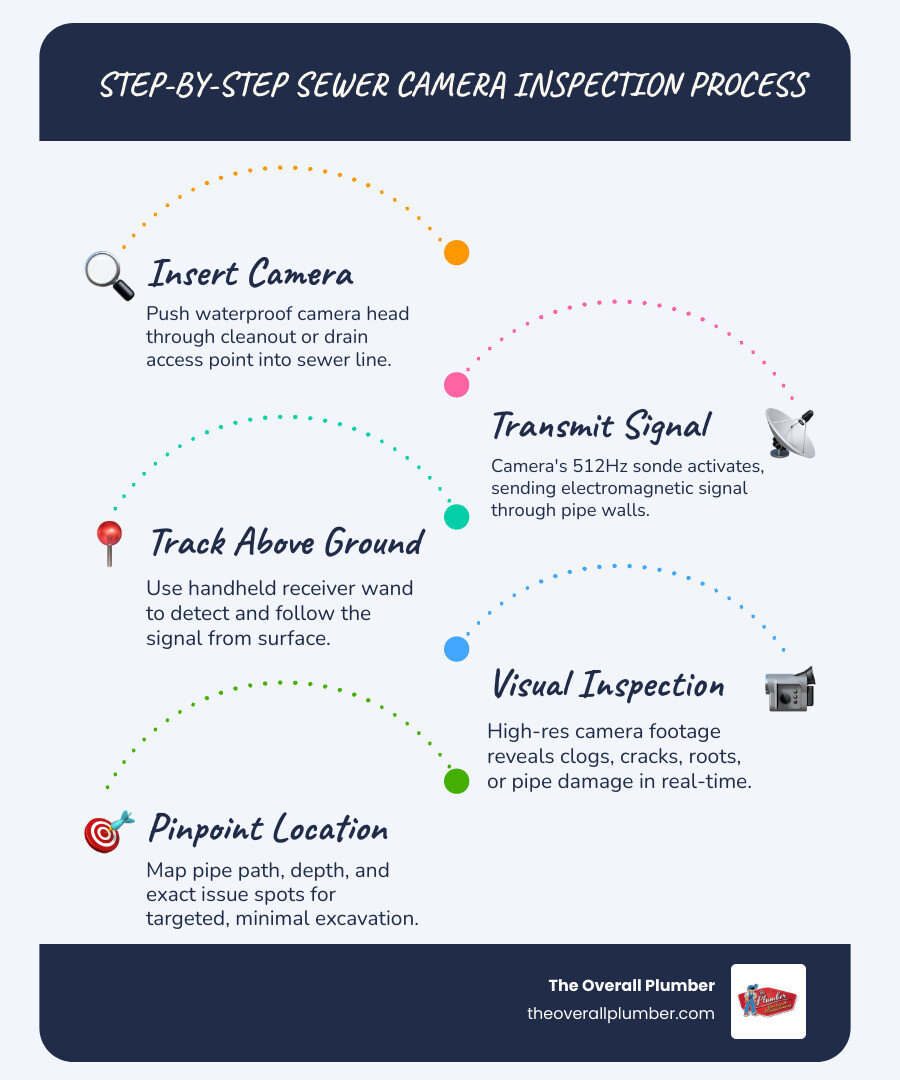
- A camera is pushed through your sewer line via a cleanout or drain opening
- The camera head transmits a signal (usually 512Hz) as it travels through the pipe
- A receiver wand is used above ground to track that signal and mark the pipe’s location
- Depth and direction are identified so any repairs can be made with precision
This process is non-invasive, fast, and far more accurate than guessing where a problem might be.
For homeowners dealing with slow drains, recurring clogs, or mysterious wet spots in the yard, a sewer camera inspection can reveal exactly what’s going on — whether it’s tree root intrusion, a cracked pipe, or a stubborn blockage — before it becomes a costly emergency.
I’m Dayton Whitworth, a second-generation plumber serving Greater Houston and the Gulf Coast, and I’ve used camera locate sewer line technology on hundreds of residential jobs to help homeowners avoid unnecessary digging and guesswork. In this guide, I’ll walk you through everything you need to know to understand the process, choose the right equipment, and know when to call a pro.
How a Camera Locate Sewer Line System Works
When we talk about using a camera locate sewer line system, we aren’t just talking about taking pretty pictures of the inside of a pipe. We are talking about a sophisticated dual-purpose technology. One part is the visual inspection (seeing the crack or the clog), and the other is the utility locating (finding exactly where that crack sits under your driveway or flower bed).
The Heart of the System: The 512Hz Sonde
Inside the camera head of professional-grade equipment is a small device called a “sonde.” This is a transmitter that emits electromagnetic waves at a specific frequency—most commonly 512Hz. This frequency is the industry standard because it is low enough to penetrate through various soil types and even some metallic pipe walls, yet strong enough to be picked up by a receiver on the surface.
Signal Transmission and Tracking
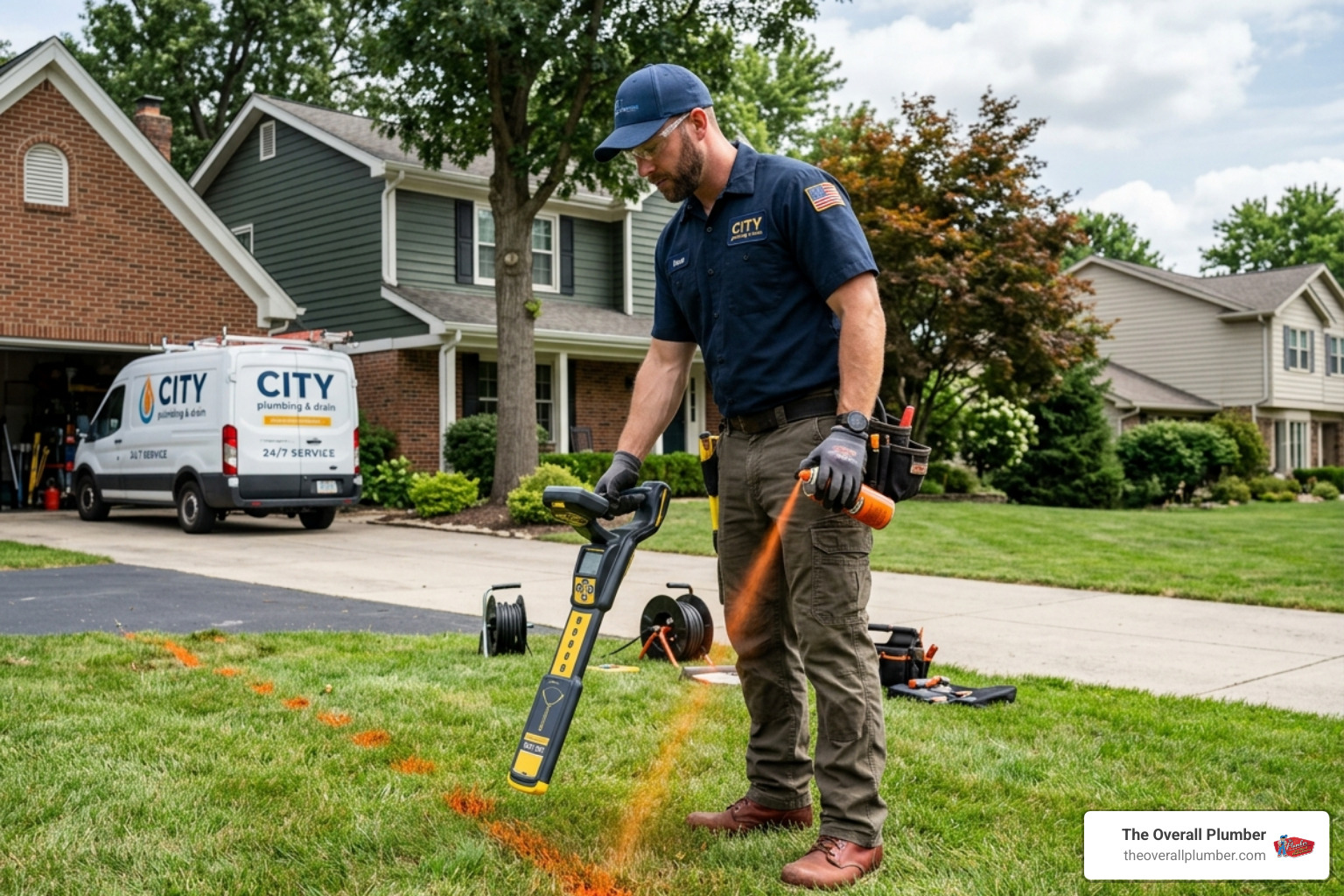
As we push the camera through the line during a Video Camera Sewer Line Inspection, the sonde continuously broadcasts its position. Above ground, we use a receiver wand, such as the Leica ULTRA Advanced Utility Locator, to “listen” for that signal.
The receiver wand features an LCD screen that shows signal strength. As we move the wand over the ground, the signal gets stronger the closer we get to the pipe. By sweeping the wand back and forth, we can create an underground map of your sewer line’s path.
Depth Estimation and Mapping
Modern locators don’t just tell us where the pipe is; they tell us how deep it is. By measuring the signal’s intensity and angle, the receiver can estimate the depth of the camera head with surprising accuracy—often within a few inches. This is vital for Sewer Lines in Houston, where soil shifting and deep installations are common.
However, we always have to watch out for signal interference. Things like nearby power lines, rebar in concrete, or even other buried utilities can sometimes “bend” the signal, which is why having an experienced technician at the helm is so important.
Key Features of Modern Pipe Inspection Technology
If you are looking into buying or renting a camera, or just want to know what your plumber is bringing to the house, there are a few “must-have” specs. In the humid, often swampy conditions of the Texas Gulf Coast—from League City to Galveston—durability is everything.
- IP68 Waterproof Rating: This is the gold standard. It means the camera can be submerged in water for extended periods without failing. Since sewer lines are rarely bone-dry, this isn’t optional.
- Sapphire Lens: Sewer pipes are full of grit, sand, and sharp debris. A sapphire lens is scratch-resistant, ensuring the image doesn’t get blurry after just a few uses.
- Self-Leveling Camera Head: Have you ever watched a video that was upside down or sideways? It’s disorienting. A self-leveling head uses internal weights or digital sensors to ensure the “top” of the pipe is always at the top of the screen.
- High-Intensity LEDs: It is pitch black inside a pipe. High-quality systems like the SeeSnake® Standard Camera with TruSense® use adjustable LEDs to flood the pipe with light without causing “washout” on the screen.
Comparing Cable Lengths
The length of the push cable (the “snake”) determines how much of your line we can see. Here is a quick breakdown of common lengths:
| Cable Length | Best Use Case | Pipe Compatibility |
|---|---|---|
| 100ft | Standard residential main lines to the curb. | 2″ to 4″ pipes |
| 200ft | Large properties or homes with long “runs” to a septic tank. | 3″ to 6″ pipes |
| 300ft+ | Commercial properties or deep municipal connections. | 4″ to 10″ pipes |
Digital Meter Counters and DVR
A “meter counter” displays exactly how many feet of cable have been pushed into the pipe. When combined with a DVR (Digital Video Recorder) and SD card storage, it allows us to give you a recorded copy of the inspection. This documentation is essential if you need to Repair Broken Sewer Line Houston and want to prove the damage to an insurance company or a home buyer.
Using a 512Hz Sonde to Camera Locate Sewer Line
The 512Hz frequency is specifically chosen because it handles different pipe materials differently.
- PVC/Plastic: The signal passes through easily with almost no loss of strength.
- Cast Iron: This is tougher. Cast iron can “shield” the signal, reducing the effective depth at which we can detect the sonde. We often use more powerful transmitters for older Houston homes with original cast iron stacks.
- Clay: Common in older areas like Pasadena or La Porte, clay pipes allow for excellent signal penetration.
By pinpointing the exact spot where the camera stops (due to a blockage or break), we can mark the ground with paint or a flag. This ensures that if we have to dig, we are only digging a small hole exactly where the problem is, rather than trenching your entire yard.
Professional vs. DIY Sewer Inspection Equipment
With the rise of online marketplaces, many homeowners in Pearland or Friendswood wonder if they should just buy a “cheap” camera and do it themselves. While DIY models have come a long way, there is still a massive gap between a $400 Amazon special and a $10,000 professional rig.
Resolution and Clarity
Most DIY models offer 480p resolution. While that sounds okay, inside a dark, wet pipe, it often looks like a blurry mess. Professional systems provide 1080p HD resolution with High Dynamic Range (HDR). This allows us to see the tiny hairline cracks or the very beginning of root intrusion that a lower-quality camera would miss entirely.
Equipment Durability
Professional cables are made of specialized fiberglass with a “tough skin” to resist kinking. DIY cables are often too flimsy to push past a second 90-degree bend or too stiff to navigate tight turns. If a cheap camera gets stuck or the cable snaps inside your line, you’ve just turned a simple inspection into a very expensive emergency.
Cost-Benefit Analysis
- DIY Purchase: $300 – $800. Good for basic “is there a clog?” questions, but lacks precision for locating.
- Professional Rental: $150 – $300 per day. You get better gear, but you still need the skill to interpret what you’re seeing.
- Professional Service: Usually pays for itself by preventing “exploratory digging.” Plus, you get a satisfaction guarantee and expert diagnosis.
When to Hire a Pro to Camera Locate Sewer Line
There are certain scenarios where DIY just won’t cut it:
- Complex Collapses: If the pipe has completely collapsed, a DIY camera won’t be able to tell you if the pipe is gone or just full of dirt.
- Deep Line Detection: If your sewer line is more than 5-6 feet deep (common in some parts of Brazoria County), consumer-grade locators often lose the signal.
- Insurance Documentation: Most insurance companies require a professional report with a high-res video and timestamp to approve a claim.
- Precision Mapping: If you are planning to build a pool or an addition, you need to know exactly where that line is to avoid a catastrophic “hit” during excavation.
- Identifying Bellies and Offsets: A “belly” is a sag in the pipe where water sits. These are hard to diagnose without a self-leveling camera and a digital pitch indicator (like TiltSense technology).
Frequently Asked Questions about Sewer Locating
How deep can a sewer camera locator detect a pipe?
In ideal soil conditions (like dry sand), a professional sonde can be detected up to 15 feet deep. However, in the heavy, wet clay soil common in Houston and Harris County, that range often drops to 8-10 feet. Soil density and moisture act as a muffler for the signal. If the pipe is cast iron, the range might be further reduced.
Can a sewer camera see through thick blockages or roots?
A camera can only see as far as the lens allows. If the pipe is completely “backed up” with standing sewage, the camera will be “underwater,” and the visibility will be zero. In these cases, we usually have to run an auger or hydro-jetter first to clear the standing water so the camera locate sewer line process can actually show us the pipe walls.
What maintenance do these cameras require?
To keep our gear in top shape for our neighbors in Santa Fe and Texas City, we follow a strict maintenance schedule:
- Lens Cleaning: Using specialized non-abrasive cleaners to prevent scratches.
- Cable Inspection: Checking for “kinks” or abrasions that could lead to a break.
- O-Ring Lubrication: Ensuring the waterproof seals stay supple and don’t leak.
- Battery Cycling: Ensuring the lithium-ion batteries are charged and discharged properly to maintain a 6-12 hour run time.
Conclusion
At The Overall Plumber, we believe that you shouldn’t have to guess what’s happening under your home. Whether you’re in Friendswood, Pearland, or anywhere across the Greater Houston area, our goal is to provide clarity. By using the latest camera locate sewer line technology, we can find the problem, show it to you on the screen, and mark exactly where the repair needs to happen.
We pride ourselves on our transparency and customer service. That’s why we offer:
- Satisfaction Guarantees: We aren’t happy until the job is done right.
- Priority Scheduling: Because a sewer issue won’t wait.
- No Trip Charges & No Overtime Fees: You pay for the work, not the clock.
If you suspect your sewer line is acting up, don’t wait for a backup to flood your home. Protect your home with a plumbing protection plan or give us a call today for a professional camera inspection. We’ll help you see the problem and save you money in the long run.