


The Ultimate Guide to Finding Your Sewer Line Without Making a Mess
Why Knowing Where Your Sewer Line Is Matters More Than You Think
Locating your sewer line in your yard is something most homeowners never think about — until something goes wrong.
Here’s a quick answer to get you started:
How to locate a sewer line in your yard:
- Find your sewer cleanout pipe (a capped pipe near your home’s foundation, usually within 5-10 feet)
- Check property records, blueprints, or as-built drawings from your local building department
- Call 811 before any digging to have public utilities marked for free
- Trace the line from your indoor plumbing fixtures toward the street
- Use a probe rod, pipe locator, or metal detector (for metal pipes) to confirm the path
- Call a licensed plumber for a camera inspection if DIY methods don’t give you a clear answer
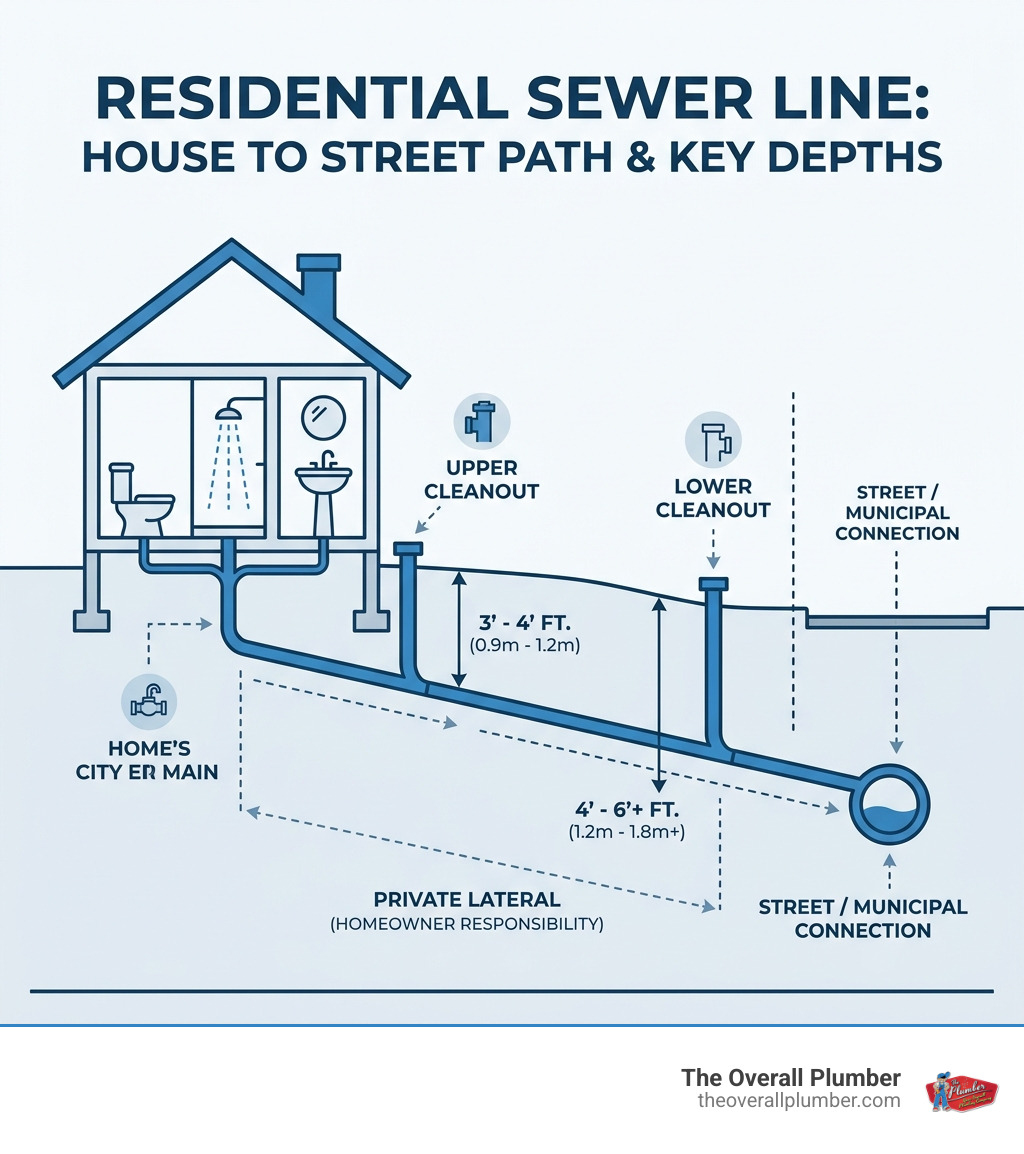
Your home’s main sewer line quietly carries all wastewater from every drain, toilet, and appliance to the city sewer or your septic tank. It runs underground — often buried 4 to 6 feet deep — from your house all the way to the street. You can’t see it, and most of the time, you don’t need to. But the moment you plan a landscaping project, dig a fence post, or deal with a slow drain that won’t quit, knowing exactly where that pipe runs can save you from an expensive and very unpleasant surprise.
There are over 500,000 miles of private sewer laterals on residential properties across the U.S. — and 65% of all underground utility lines sit on private property, meaning no one is automatically keeping track of them for you. That lot of pipe that homeowners are responsible for but rarely think about until there’s a problem.
I’m Dayton Whitworth, a second-generation plumber serving Houston, Brazoria County, Galveston County, and the surrounding Gulf Coast — and helping homeowners locate sewer lines in their yards before a shovel causes a costly mistake is one of the most common calls we get. In the guide below, I’ll walk you through every method, from free DIY steps to professional tools, so you can find your line safely and confidently.
Why You Need to Locate Sewer Line in Yard
At first glance, your yard is just grass and landscaping. But beneath that surface lies a complex network of infrastructure. In the Houston and Gulf Coast areas, we see a wide variety of soil conditions—from heavy gumbo clay to sandy coastal stretches—all of which affect how your pipes settle over time.
Knowing how to locate sewer line in yard spaces is vital for several reasons:
- Landscaping Safety: If you are planting a large oak tree or installing a new fence, you need to know where the pipes are. Tree roots are the number one cause of sewer line failures. They seek out the moisture in the pipes and can eventually crush or clog them.
- Preventing “The Big Mess”: Accidentally hitting a sewer lateral with a power auger while digging fence post holes is a nightmare. It’s not just the repair cost; it’s the biohazard cleanup in your beautiful yard.
- Home Additions: If you’re planning to add a deck, a pool, or a detached garage, the city will require you to know exactly where your Sewer Lines in Houston are located to ensure you aren’t building over them.
Identifying Common Sewer Pipe Materials
The material of your pipe dictates how easy it is to find. In our service areas like League City and Pearland, the age of your home usually tells us what’s under the grass.
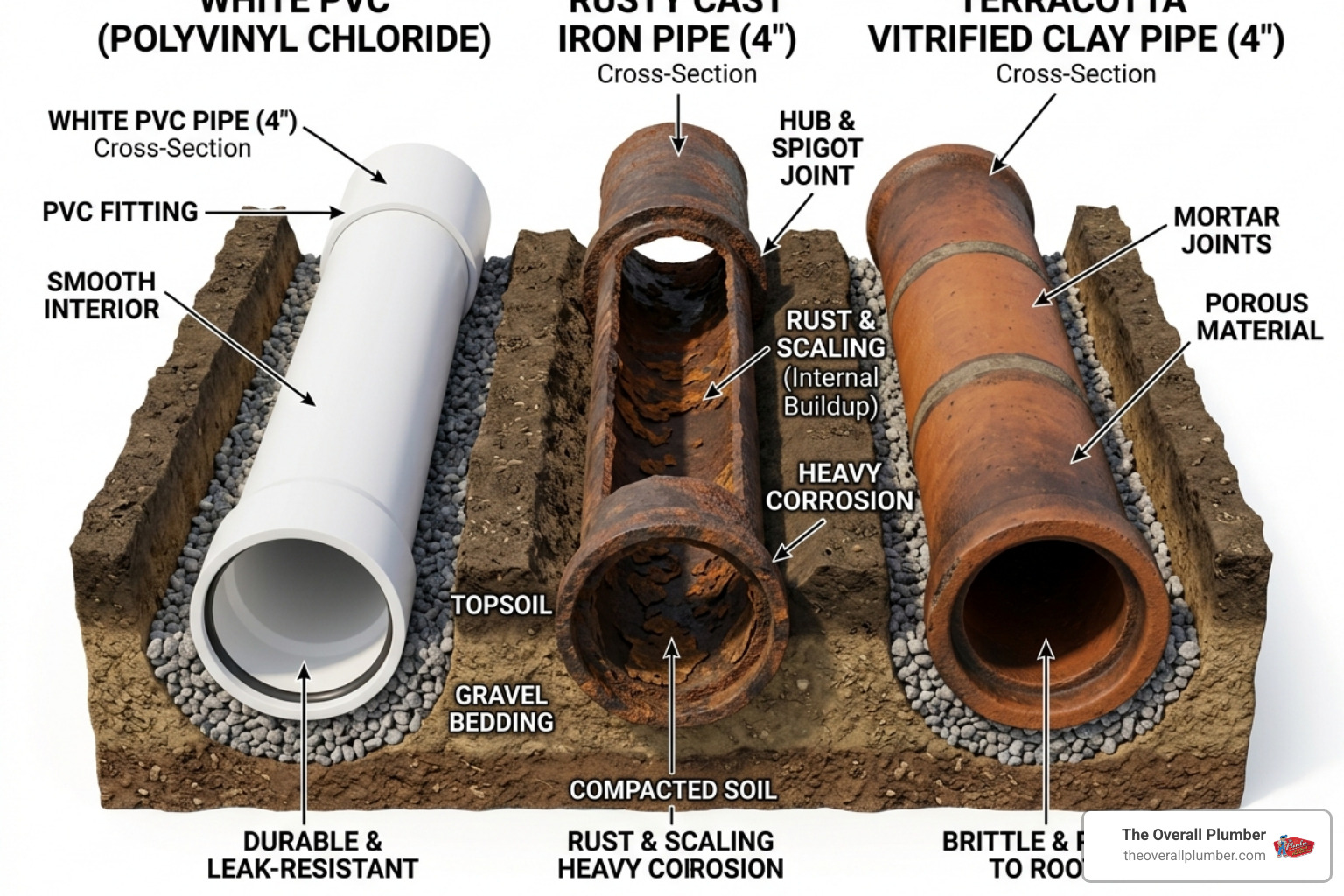
- PVC (Polyvinyl Chloride): Most modern homes (built after 1980) use white or gray plastic PVC. It’s durable and smooth, but because it’s non-metallic, a standard metal detector won’t pick it up.
- Cast Iron: Found in older homes in places like Galveston or Pasadena. These are heavy and durable but prone to internal scaling. Because they are metal, they are much easier to find with basic DIY tools.
- Vitrified Clay: Common in very old municipal systems. These pipes come in short sections. While they last a long time, the joints are weak points where roots love to enter.
- ABS Plastic: Similar to PVC but black. Usually found in residential DWV (drain, waste, vent) systems.
- Orangeburg Pipe: This is the “bad news” pipe. Made of wood pulp and tar, these were used mid-century and are essentially “bituminized fiber.” If you have these, they are likely failing and are very difficult to locate because they lack structural integrity.
Step-by-Step Guide to Finding Your Sewer Cleanout
The easiest way to locate sewer line in yard areas is to find the “cleanout.” This is the access point we plumbers use to clear clogs. It is typically a 3, 4, or 6-inch diameter pipe with a screw-on cap.
Here is how we recommend you look for it:
- Check the Perimeter: Start within 3 to 10 feet of your home’s foundation. Look for a plastic or metal cap sticking up an inch or two from the ground.
- Look Near Bathrooms: The cleanout is often located on the side of the house where the main bathroom or kitchen is situated, as the line usually takes the shortest path to the street.
- Search Landscaping: Many homeowners find cleanouts unsightly and hide them under “fake rocks,” birdbaths, or thick bushes.
- Check the Curb: In some cities like Friendswood or Texas City, you might find a “S” stamped into the concrete curb, indicating where the lateral line meets the city main.
If you find the cleanout, you’ve found the “starting line.” Usually, the pipe runs in a straight shot from that cap to the city’s manhole or main line in the street. If you suspect a clog once you find it, our Houston Auger Service can get things moving again quickly.
Tracing the Line from Indoor Fixtures
If you can’t find an outdoor cleanout, go inside. Most homes have a “main stack”—the large vertical pipe that collects waste from all your toilets and sinks.
- Basements and Crawl Spaces: If you have a crawl space (common in older Galveston homes), look for the largest pipe (usually 4 inches) exiting the foundation wall. That is your exit point.
- Slab Foundations: In modern Houston slab homes, you can’t see the pipes. However, you can look at the roof. The large vent pipes sticking out of your shingles usually sit directly above the main vertical drains. Draw a mental line between those vents and the street to estimate the pipe’s path.
- Gravity Flow: Sewer lines must slope downward—typically 1/4 inch per foot. They will almost always take the path of least resistance toward the lowest point on the property.
DIY Methods and Records for Homeowners
Before you start poking holes in your lawn, do some “paperwork” detective work.
- Blueprints and As-Builts: When your home was built, the contractor filed plans with the local building department (like Harris County or Brazoria County). Ask for the “as-built” drawings. Note: Pros often call these “as-intendeds” because the actual pipe might have been shifted during construction to avoid a big rock or tree root!
- City Sewer Maps: Your local municipality maintains maps of where the public main is. While they won’t show your private lateral line in detail, knowing where the “tap” is at the street gives you a target to aim for.
- Texas 811: Always call Texas811 before you dig. This is a free service where utility companies mark their lines (gas, electric, water). While they often don’t mark private sewer laterals, knowing where the gas line is prevents a life-threatening mistake while you search for your sewer.
| Method | Cost | Accuracy | Best For |
|---|---|---|---|
| Visual Search | Free | Low-Medium | Finding cleanouts |
| Property Records | $0 – $50 | Medium | General path estimation |
| 811 Call | Free | High (Public) | Safety and avoiding gas/electric |
| Probe Rod | $20 – $40 | Medium | Confirming depth in soft soil |
| Pro Camera/Sonde | $200 – $400 | Very High | Exact location and condition |
Best DIY Tools to Locate Sewer Line in Yard
If you want to be a weekend warrior, there are a few tools that can help you locate sewer line in yard spaces:
- Probe Rod: A thin metal rod with a T-handle. You gently push it into the soil every few inches until you hit something solid. Caution: Don’t push too hard, or you might crack an old clay pipe!
- Metal Detector: Great for finding cast iron pipes or the metal “tracer wire” sometimes buried with newer PVC pipes.
- Utility Flags: Once you find a spot, mark it! Use green flags (the universal color for sewer) so you don’t lose your progress.
- Marking Paint: Use “upside-down” spray paint to trace the line on the grass.
If you’re in an area like Pearland or Santa Fe and find that your line is deeply buried or clogged, our Brazoria County Auger Service is equipped to handle those tougher DIY challenges.
The Importance of Calling 811 vs Private Locators
One of the biggest mistakes homeowners make is assuming 811 will find everything.
811 (Public Locators): They mark the lines owned by the utility companies. This usually ends at your property line or the water meter. Private Locators/Plumbers: We mark the “laterals”—the pipes you actually own. Since 65% of utilities are on private property, 811 leaves a lot of blanks on the map. If you are doing major excavation in La Porte or League City, you need a private locate to be 100% safe.
Advanced Technology for Non-Invasive Detection
Sometimes, the “old school” methods just don’t work. Maybe your cleanout was paved over by a previous owner, or the pipe takes a weird turn under a rose garden. This is where we bring in the “big guns.”
Modern technology allows us to locate sewer line in yard areas without digging a single exploratory trench.
- Electromagnetic Locators: We can “energize” a metal pipe or a tracer wire with a specific frequency and then follow the signal on the surface with a receiver wand.
- Ground Penetrating Radar (GPR): This sends radio pulses into the ground. It’s excellent for finding non-metallic pipes like PVC or clay, even through concrete driveways.
- Sonde Transmitters: This is our favorite method. We attach a small “pinging” device (a sonde) to the end of a drain cable. As we push it through the pipe, we follow the “ping” from above ground.
Professional Services to Locate Sewer Line in Yard
When accuracy is non-negotiable, a professional inspection is the way to go. We don’t just find the pipe; we see inside it.
Our Video Camera Sewer Line Inspection involves feeding a high-definition, waterproof camera into your line. This allows us to:
- Map the exact path: Using a built-in sonde to mark the surface.
- Determine Depth: Our locators tell us exactly how many feet down the pipe is.
- Check Condition: We look for cracks, bellies (low spots), and root intrusions.
If we find a problem during the location process, we can move straight to a Repair Broken Sewer Line Houston plan, often using trenchless methods that keep your yard looking great.
Frequently Asked Questions about Sewer Lines
How deep are sewer lines usually buried?
In the Houston and Gulf Coast regions, sewer lines are typically buried 4 to 6 feet deep. This depth protects them from the weight of vehicles and fluctuations in soil temperature. However, private laterals can be as shallow as 18 inches near the house, while city mains at the street can be 12 to 18 feet deep!
What are the signs of a sewer line problem?
You might need to locate sewer line in yard areas urgently if you notice:
- Gurgling Drains: If your toilet bubbles when you run the sink, there’s a blockage.
- Lush Green Grass: A specific strip of grass that is greener and faster-growing than the rest of the yard often indicates a leak (sewage is a “great” fertilizer, unfortunately).
- Soggy Patches: Wet spots in the yard when it hasn’t rained.
- Sewage Odors: If your backyard smells like a rotten egg, you likely have a break in the line.
Why call 811 before searching for your line?
Even if you’re just using a probe rod, hitting a buried electrical line or a high-pressure gas line is extremely dangerous. 811 is a free service and it’s the law in Texas to call at least 48 hours before you dig. It protects you from liability and, more importantly, keeps you safe.
Final Steps: Marking and Protecting Your Line
Once you’ve successfully managed to locate sewer line in yard spaces, don’t let that knowledge go to waste!
- Map It: Draw a simple map of your property and mark the distance of the pipe from the foundation and the fence line.
- Permanent Markers: You can buy small plastic “utility markers” that sit flush with the ground. These are great for future reference without ruining your curb appeal.
- Update Records: Keep a copy of your Sewer Lines in Houston camera inspection footage. It’s a great selling point if you ever list your home!
Avoiding Common DIY Mistakes
We’ve seen it all in Harris and Galveston Counties. Here are the pitfalls to avoid:
- Assuming the Line is Straight: Pipes often swerve to avoid old trees or utility poles. Never assume it’s a “beeline” to the street.
- Over-probing: Poking the ground too aggressively can puncture thin-walled pipes or damage irrigation lines.
- Ignoring the Cleanout: If you have a clog, always start at the cleanout. Never try to “dig up” a clog without seeing it on a camera first.
If you are struggling to find your underground utilities or suspect a hidden leak, don’t risk a messy dig. Contact the experts at The Overall Plumber for a professional camera inspection and precision locating today at 281-668-8055.