

What You Need to Know About Sewer Line Replacement
Sewer line replacement is one of the most significant home repairs a homeowner can face — and knowing when you need it, what it costs, and who is responsible can save you thousands of dollars.
Here is a quick overview of what this guide covers:
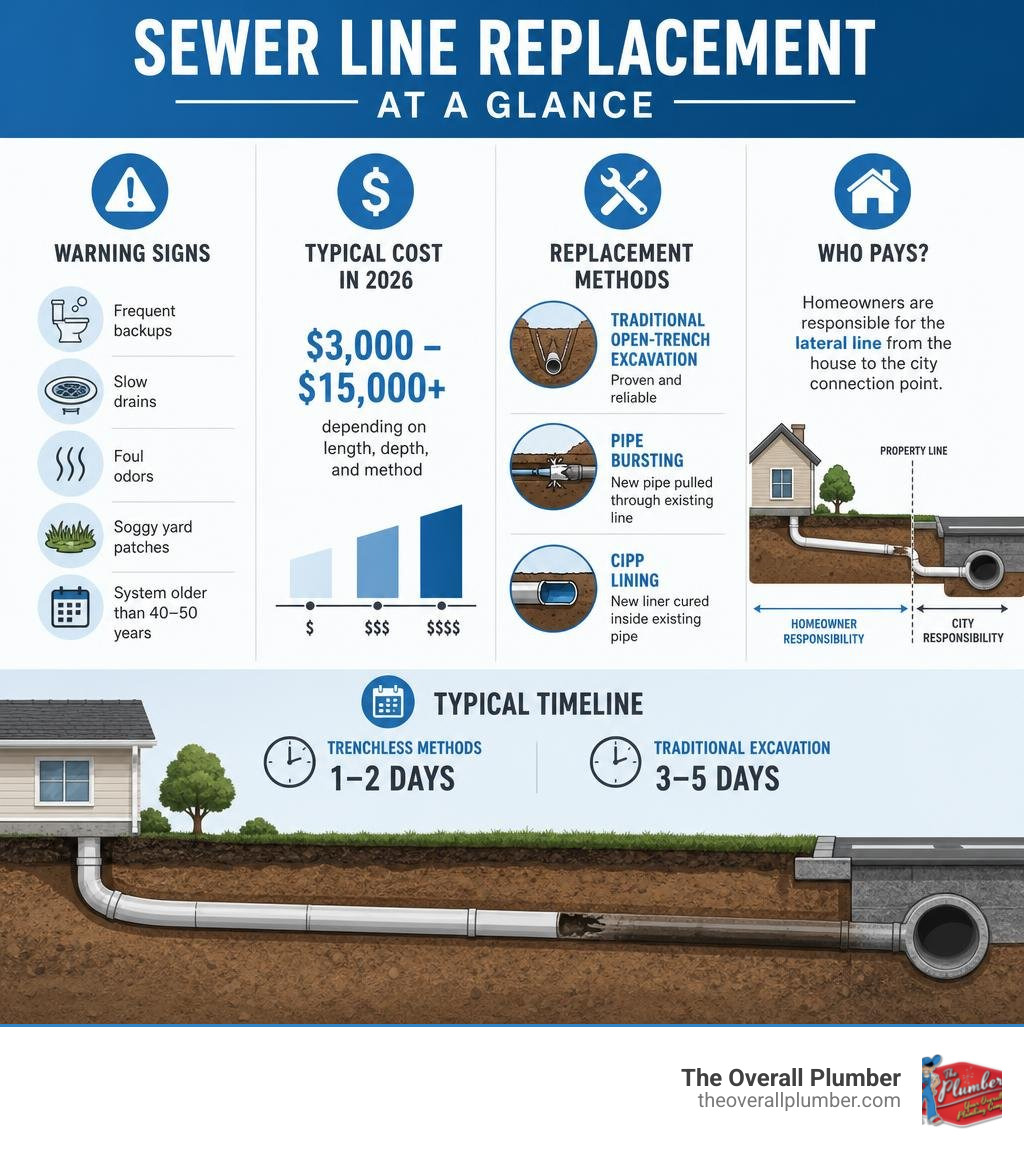
- Signs you need replacement: Frequent backups, slow drains, foul odors, soggy yard patches, or a system older than 40-50 years
- Replacement methods: Traditional open-trench excavation or trenchless options (pipe bursting, CIPP lining)
- Typical cost in 2026: $3,000 to $15,000+ depending on length, depth, and method
- Who pays: Homeowners are responsible for the lateral line from the house to the city connection point
- Timeline: Trenchless jobs take 1-2 days; traditional excavation takes 3-5 days
Most homeowners never think about their sewer line — until something goes wrong. A gurgling toilet, a drain that backs up every few weeks, or a mysteriously lush patch of grass in the yard can all be early warnings of a failing pipe underground. Left too long, a small problem becomes a very expensive one.
I’m Dayton Whitworth, a second-generation plumber serving the Greater Houston area and Gulf Coast communities, with hands-on experience diagnosing and completing sewer line replacements across a wide range of residential properties. In this guide, I’ll walk you through everything you need to know — from spotting the warning signs early to choosing the right replacement method for your home and budget.
Key Signs You Need a Sewer Line Replacement
Determining whether your main waste pipe is simply experiencing a temporary clog or is headed for a total structural failure is the first step in avoiding a household disaster. Because these pipes are buried deep underground, we often miss the early warning signs until raw sewage begins backing up into our showers and bathtubs.
If you are dealing with persistent drainage issues, it is essential to understand the difference between a simple blockage and a structural failure. You can learn more about how to identify these issues in our guide on Sewer Line Problems and How to Avoid a Total Washout.
Here are the most common indicators that your home requires a full sewer line replacement rather than a quick repair:
- Persistent, Recurring Backups: If you find yourself clearing your main line every few months, you are likely dealing with more than a basic clog. A sewer line backing up days after snaking is a clear indicator of structural damage, such as a collapsed pipe section or severe root intrusion that cannot be resolved with standard drain cleaning.
- Intrusive Tree Roots: Tree roots are drawn to the moisture and nutrients inside your sewer pipes. Once they find a tiny crack or joint gap, they grow inside, creating massive blockages and eventually fracturing the pipe. This is incredibly common in older neighborhoods across Galveston County and Harris County, where mature oak trees have extensive root systems.
- Foul Sewer Odors: A properly functioning sewer system is completely airtight. If you start noticing a persistent sewer gas smell (resembling rotten eggs) inside your home or around your yard, it means there is a crack or opening in your main line.
- Soggy, Sunken, or Excessively Green Patches in the Yard: When a buried sewer line leaks, the surrounding soil absorbs the wastewater. This creates localized wet spots, sinkholes, or patches of grass that are suddenly much greener and faster-growing than the rest of your lawn. While a lush yard sounds nice, it is often a sign that leaking sewage is acting as an accidental fertilizer.
- Slow Drains Throughout the House: If only one sink is slow, it is a localized clog. But if your toilets, showers, and sinks are all draining slowly at the same time, the restriction is deep within your main lateral line.
If you are experiencing these symptoms, you may want to check out our breakdown of sewer snakes and drain snakes pricing to see if a temporary mechanical clearing is a viable first step, or if it is time to transition to a permanent replacement.
Traditional Excavation vs. Trenchless Methods
When it comes to executing a sewer line replacement, modern plumbing technology offers two primary pathways: traditional open-trench excavation or advanced trenchless replacement methods.
Historically, replacing a buried pipe meant performing “open yard surgery” — digging up your entire lawn, driveway, or patio to physically reach and extract the damaged line. Today, trenchless technology allows us to replace or rehabilitate underground pipes with minimal surface disruption.
To understand why so many homeowners are shifting toward modern methods, take a look at our detailed article on Why Trenchless Sewer Line Replacement Is the Best Way to Save Your Yard.
Here is how the two approaches compare:
Traditional Open-Trench Replacement
This method involves using heavy machinery, such as backhoes and mini-excavators, to dig a continuous trench along the entire path of your sewer line.
- Pros: It is a highly reliable method that allows technicians to physically inspect the pipe installation, correct severe pipe sags (bellies), and navigate around complex utility crossings.
- Cons: It is incredibly disruptive. Traditional trenching can destroy manicured landscaping, ruin concrete driveways, and tear up sidewalks. The cost of restoring your property afterward can sometimes equal or exceed the plumbing bill itself.
Trenchless Sewer Replacement
Trenchless technology replaces or repairs the pipe from the inside out, requiring only small access pits rather than a long trench. The two most common trenchless methods are:
- Pipe Bursting: A specialized, high-strength bursting head is pulled through your existing clay, cast iron, or old plastic pipe. As it moves, it shatters the old pipe and pushes the fragments into the surrounding soil while simultaneously pulling a brand-new, seamless HDPE (High-Density Polyethylene) pipe into place behind it.
- Cured-in-Place Pipe (CIPP) Lining: This is a pipe restoration method where a flexible, resin-saturated felt liner is inserted into the existing pipe. Once in place, the liner is inflated and cured using steam, hot water, or UV light. This creates a smooth, jointless “pipe-within-a-pipe” that seals all cracks and prevents future root intrusion.
For homeowners in heavily developed urban and suburban areas like Pasadena, Pearland, or Houston, utilizing trenchless options is often the most practical way to protect expensive hardscaping.
The Process of Trenchless Sewer Line Replacement
Understanding the step-by-step mechanics of trenchless technology can demystify how we replace a pipe without digging up your entire property. Here is how the typical pipe bursting process unfolds:
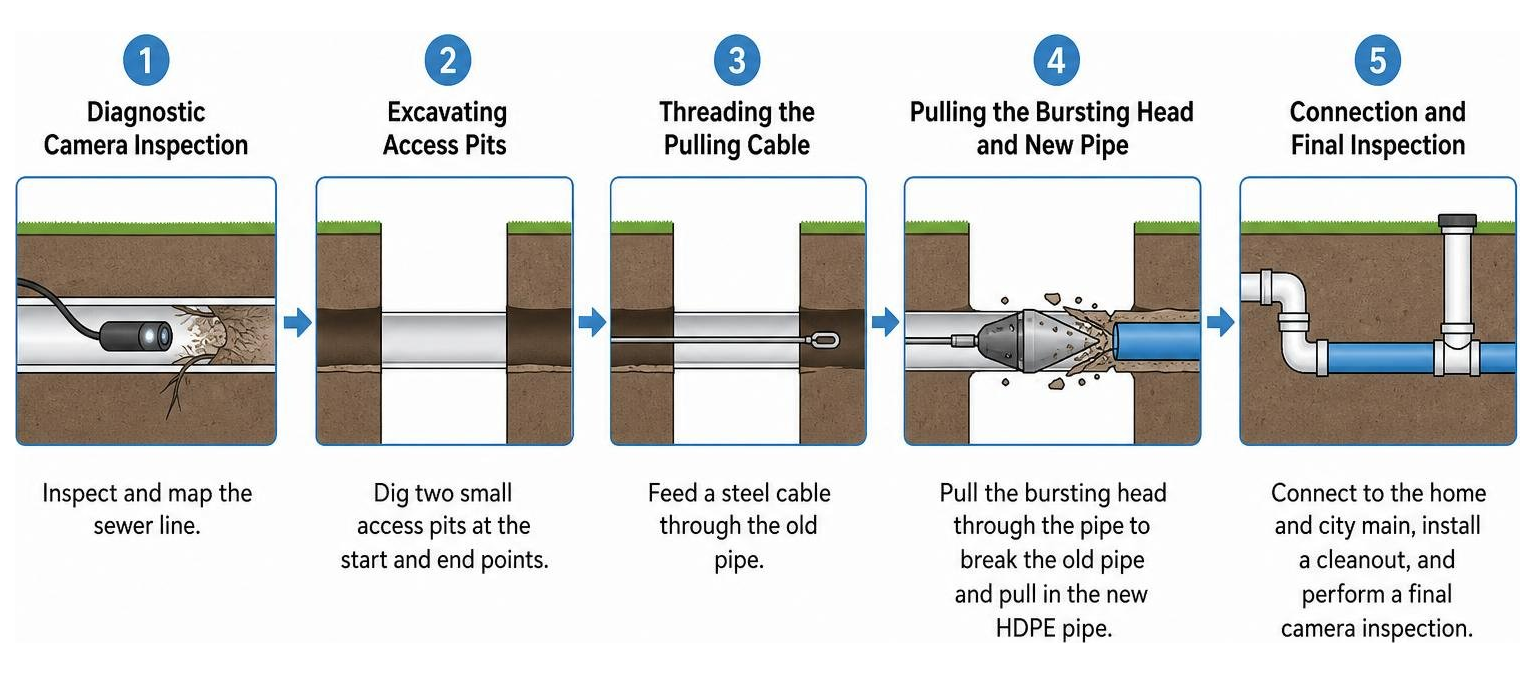
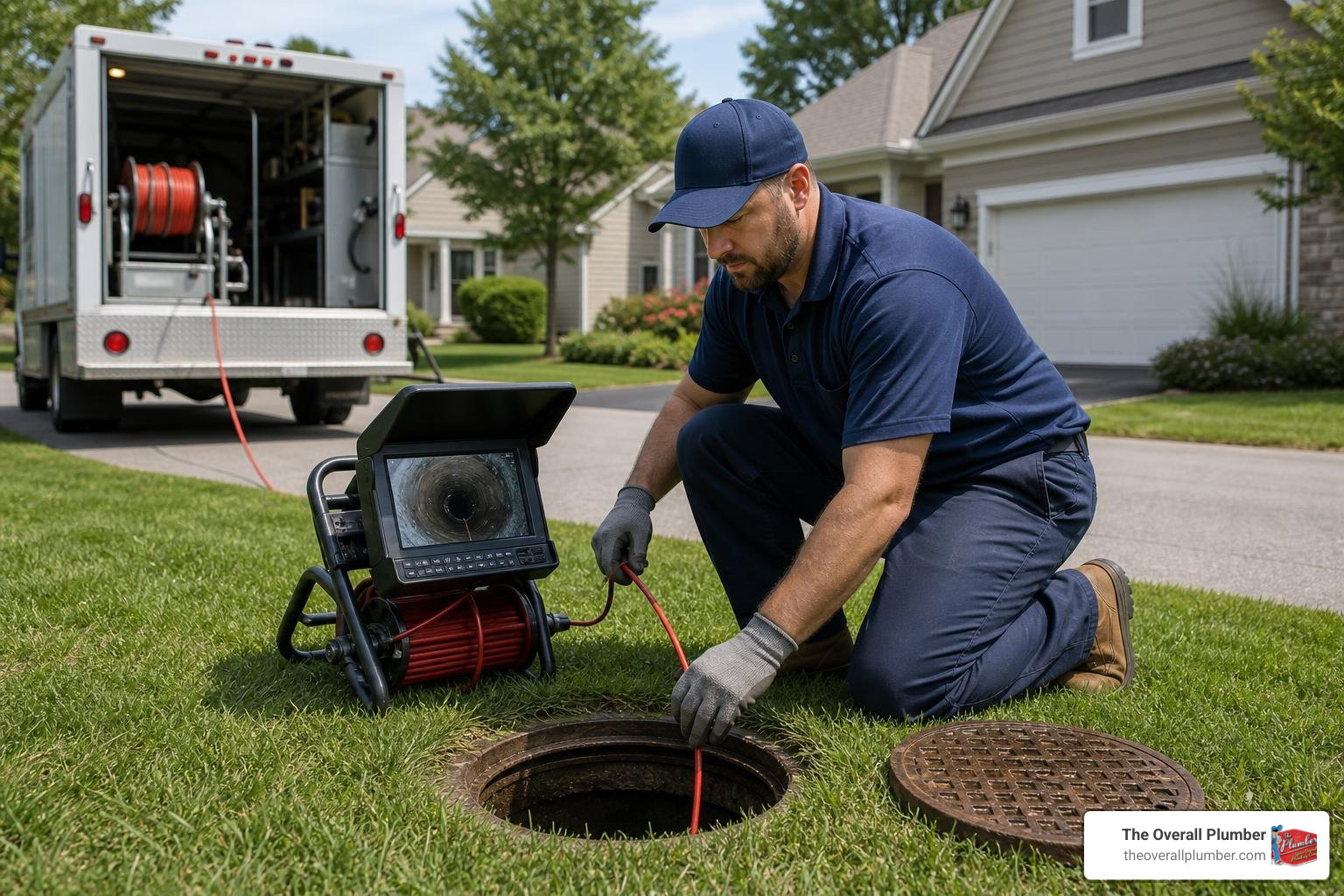
- Step 1: Diagnostic Camera Inspection: We begin by running a high-resolution camera through your sewer line to map out the pipe’s path, locate structural collapses, and confirm that the pipe is a viable candidate for trenchless replacement.
- Step 2: Excavating Access Pits: Instead of digging a 100-foot trench, we excavate two small access pits (typically 3×3 feet) — one at the start of the sewer line near your home’s foundation, and one where the lateral connects to the municipal main or property boundary.
- Step 3: Threading the Pulling Cable: A heavy-duty steel cable is fed through the old pipe from one access pit to the other.
- Step 4: Pulling the Bursting Head and New Pipe: The steel cable is attached to a cone-shaped bursting head. Behind this bursting head is the new, continuous HDPE pipe. A powerful hydraulic pulling machine located in the receiving pit pulls the cable, drawing the bursting head through the old line. The head breaks apart the old pipe while laying the new, highly durable pipe in its place.
- Step 5: Connection and Final Inspection: We connect the new line to your home’s internal plumbing and the city main, install a modern sewer cleanout, and run a final camera inspection to verify that the slope is perfect and the line is completely secure.
How Much Does Sewer Line Replacement Cost in 2026?
As of July 2026, the national average cost for a residential sewer line replacement ranges from $3,000 to $7,000, though highly complex projects involving deep excavation, street work, or extensive runs can exceed $10,000 to $20,000.
For a standard 100-foot residential run, traditional open-trench replacement typically ranges from $8,000 to $30,000+ once surface restoration is factored in, while trenchless methods generally fall between $6,000 and $25,000+. On a per-foot basis, traditional trenching runs roughly $80 to $300+ per linear foot, whereas trenchless methods range from $60 to $250 per linear foot.
To get a highly accurate estimate tailored to your specific project parameters, you can utilize the Sewer Line Replacement Cost (2026) | Trenchless & Trench interactive tool.
Several key factors influence your final invoice:
- Sewer Camera Inspection: Before any digging begins, a professional diagnostic inspection is required. A sewer camera inspection typically costs $200 to $400. This is a critical step to visually verify the pipe’s condition, as detailed in The Homeowner’s Guide to Sewer Camera Inspections. You can also schedule a professional Video Camera Sewer Line Inspection directly through our team.
- Pipe Depth and Accessibility: The deeper your pipe is buried, the more labor and safety equipment (like OSHA-compliant shoring systems) are required. If your line is buried deeper than 5 feet, labor costs can increase by 25% to 40%.
- Permits and Inspections: Every municipality in our service area — whether you are in League City, Texas City, or Santa Fe — requires a plumbing permit for sewer line replacements. Residential permits generally cost $250 to $600, while working within the public right-of-way can require specialized permits costing $500 to $1,500.
- Surface Restoration: Traditional trenching quotes rarely include the cost of rebuilding your yard. Restoring a lawn can cost $4 to $7 per square foot, while repaving concrete driveways or patios can add $11 to $18 per square foot to your overall project expenses.
| Replacement Method | Average Cost Per Foot | Typical 50-Foot Project Cost | Property Disruption Level |
|---|---|---|---|
| Traditional Open-Trench | $80 – $300+ | $8,900 – $16,300 | High (requires full excavation) |
| Trenchless Pipe Bursting | $60 – $250 | $6,000 – $13,000 | Low (requires 2 small access pits) |
| Trenchless CIPP Lining | $80 – $250 | $7,000 – $15,000 | Minimal (uses existing cleanouts) |
Homeowner vs. City Responsibility & Pipe Materials
A common source of confusion for homeowners is determining exactly where their financial and maintenance responsibility ends and where the city’s responsibility begins.
In almost all Texas Gulf Coast municipalities, the homeowner is responsible for the lateral sewer line — the pipe that runs from your home’s internal plumbing out to the connection point at the municipal main sewer line, which is usually located in the street, alley, or public easement.
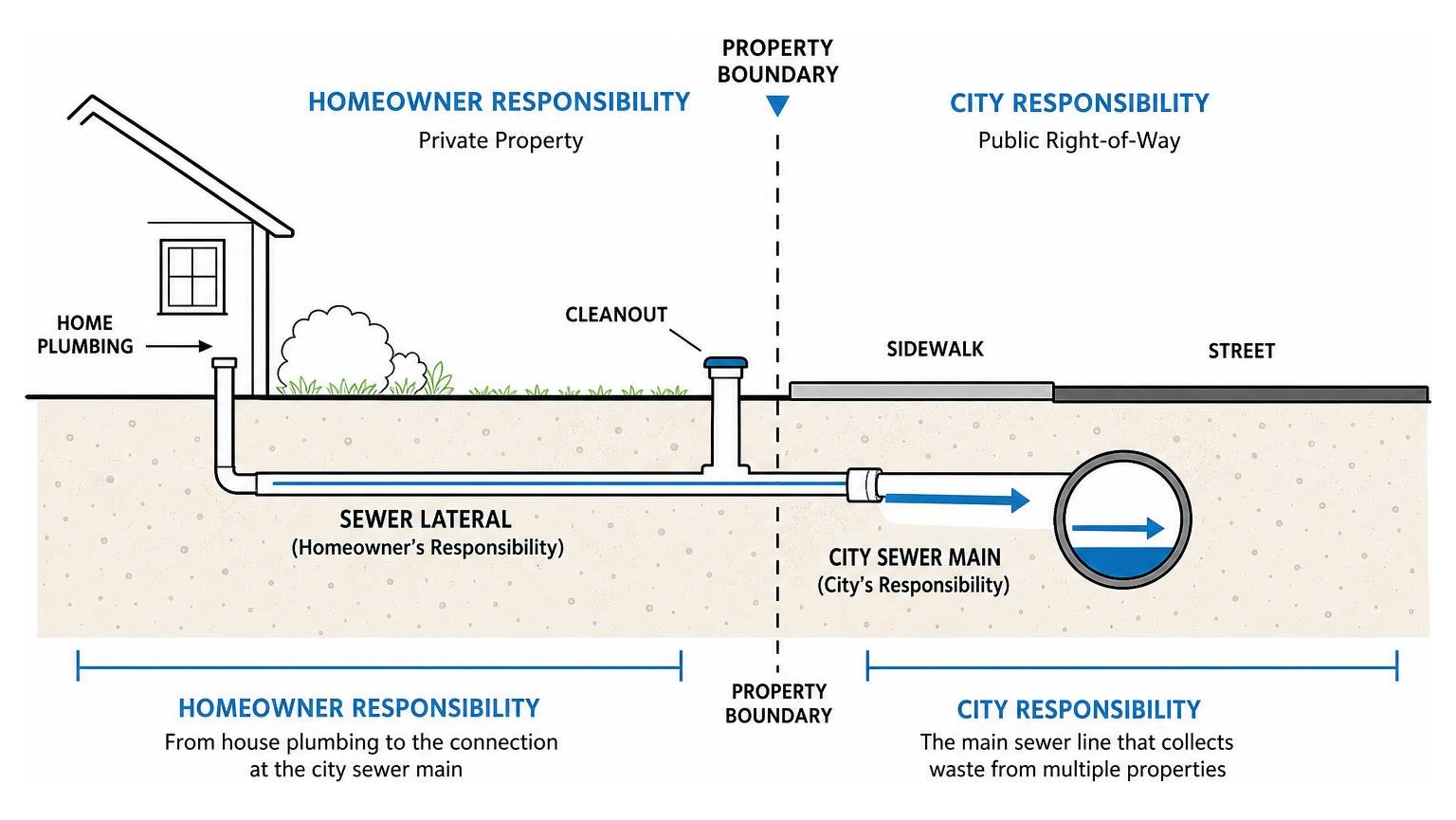
This means that even if a pipe failure or root intrusion occurs underneath the public sidewalk or parkway, if it is on your lateral line, you are responsible for the repair. The city is only responsible for the main trunk line that collects waste from multiple homes. For more detailed municipal clarifications, you can refer to general municipal wastewater guidelines.
To avoid making a mess of your yard while trying to locate your boundaries, check out our guide on Sewer Lines 101: How to Locate Them and The Ultimate Guide to Finding Your Sewer Line Without Making a Mess.
Choosing the Right Material for Your Sewer Line Replacement
If you are replacing your main waste line, choosing a highly durable material that can withstand local soil conditions is essential. In the Texas Gulf Coast region, our highly expansive clay soil shifts dramatically between wet and dry seasons, placing immense structural stress on buried pipes.
Here are the primary pipe materials available for your sewer line replacement:
- PVC (Polyvinyl Chloride) Pipe: PVC is the modern gold standard for residential sewer lines. It is lightweight, highly affordable, completely resistant to corrosion, and has incredibly smooth interior walls that prevent clogs. Most importantly, its glued joints are completely airtight, making it virtually immune to tree root intrusion. Properly installed PVC can last 100 years or more.
- HDPE (High-Density Polyethylene): Used primarily in trenchless pipe bursting, HDPE is a thick, flexible plastic pipe that is fused together using heat. This creates a continuous, joint-free line that can bend and shift with soil movement without cracking or leaking. It is incredibly durable and boasts a lifespan of 50 to 100 years.
- Cast Iron Pipe: Historically valued for its strength and quiet operation, cast iron is rarely used for modern lateral lines. Over time, cast iron rusts internally, leading to scale buildup, snagged waste, and eventual structural collapse.
- Clay Pipe: Common in homes built before 1970, clay is highly brittle. While clay itself does not corrode, the joints between clay pipe sections are easily breached by tree roots, and soil shifting frequently causes the pipes to crack or offset.
For most residential applications in our region, we highly recommend modern PVC or HDPE (SDR-17) pipes to ensure a permanent, root-proof solution that will protect your home for decades.
Frequently Asked Questions
Can an old sewer line be repaired instead of replaced?
Yes, in some cases. If only a small, localized section of an otherwise healthy PVC or cast iron pipe has been damaged by a shifting soil event or a single tree root, a localized spot repair or sectional pipe lining can resolve the issue.
However, if your pipe is made of failing materials like clay or Orangeburg (compressed wood pulp), or if the pipe has systemic cracks and structural collapses along its entire run, investing in temporary repairs is often a waste of money. In those scenarios, a full replacement is the most cost-effective long-term investment. If you are dealing with a localized break, you can read more about our Broken Pipe Repair services.
How long does a sewer line replacement take?
The timeline depends heavily on the method used:
- Trenchless CIPP Lining: Typically takes 1 day to complete, as there is no major digging or backfilling required.
- Trenchless Pipe Bursting: Usually takes 1 to 2 days to excavate the access pits, pull the new pipe, and restore the small connection areas.
- Traditional Open-Trench Excavation: Generally takes 3 to 5 days of active work, plus additional time for municipal inspections and extensive landscaping restoration.
Does homeowners insurance cover sewer line replacement?
Standard homeowners insurance policies typically do not cover sewer line replacements if the damage is caused by gradual wear and tear, age-related deterioration, or tree root intrusion.
However, your policy may cover the repairs if the damage is the result of a sudden, accidental event (such as a lightning strike or third-party excavation accident), or if you carry a specific service-line endorsement or sewer backup rider on your policy. We always recommend checking with your insurance provider to verify your specific coverages.
Schedule Your Professional Sewer Line Inspection
If you are experiencing slow drains, recurring clogs, or suspect your aging sewer line is failing, do not wait for a catastrophic backup to occur. Taking proactive action today can save you thousands of dollars in emergency cleanup and property restoration costs.
At The Overall Plumber, we provide comprehensive drain cleaning, advanced camera diagnostics, and complete sewer line replacement services across Brazoria County, Harris County, and Galveston County. We are proud to serve our neighbors in Houston, Clear Lake, Santa Fe, League City, Texas City, La Porte, Friendswood, Pearland, Pasadena, and Galveston.
When you choose us, you benefit from our industry-leading service standards:
- Satisfaction Guarantees: We stand behind our workmanship on every single project.
- No Trip Charges & No Overtime Fees: You receive transparent, upfront pricing without hidden surprises.
- Priority Scheduling: We work around your schedule to resolve your plumbing issues quickly and efficiently.
Whether you need a routine diagnostic check, an emergency repair, or a modern trenchless replacement, our licensed team is ready to help. If you are dealing with an urgent issue, you can reach our 24 Hour Emergency Plumbers at any time.
For more information on our main line services, explore our dedicated resource on Sewer Lines in Houston or learn about our specialized options for repairing broken sewer lines in Houston.
Contact our team today at (281) 668-5056 to schedule your professional sewer line camera inspection and get a detailed, honest assessment of your system’s health.