


Understanding Root Incursions and Root Cutters
To safely clear tree roots with a sewer auger, access the main sewer line through an exterior cleanout, wear heavy-duty leather gloves, and use a 5/8-inch or 3/4-inch cable controlled with a pneumatic foot pedal. Begin by feeding a small pilot cutter in clockwise forward rotation to bore an initial opening through the root mass using a rhythmic back-and-forth motion. Next, run a full-size C-cutter or root saw matching the pipe diameter to shear root tails flush against the interior pipe walls, and finish by flushing the line with water.
Subterranean tree roots constantly hunt for two vital resources: moisture and nutrients. Your home’s main sewer line is an underground oasis rich in warm water, oxygen, and organic material. Microscopic root hairs—some only a few cells wide—can detect the physical vibrations and thermal warmth of water moving through underground drainpipes. When pipes shift over decades, settling soil leaves tiny microscopic fissures in pipe joints, clay tile seals, or rubber boot transitions between dissimilar materials.
Once a single hair-thin root penetrates a microscopic crack, it feeds on the steady wastewater flow and expands rapidly. As the root expands, it acts like a hydraulic wedge, widening the joint and fracturing the pipe wall. Within months, a dense, web-like root mass develops inside the pipe lumen. This fibrous basket snags toilet paper, wet wipes, and cooking grease, eventually causing a severe structural backup across every ground-floor fixture in your home.

A dedicated root cutter is engineered specifically to tackle these structural blockages, unlike a standard light-duty plumbing snake. Conventional drain snakes are intended to bore a simple hole through soft clogs (like hair, soap scum, or grease) or hook debris to retrieve it. When a light-duty snake meets a dense, fibrous root ball, the fine roots merely deform around the flexible wire, twirling the head without cutting the obstruction.
In contrast, an industrial root-cutting auger utilizes heavy high-carbon steel blades—such as serrated C-cutters, saw blades, or root saws—driven by high-torque motors. These attachments rotate with enough force to physically shear tough woody roots flush against the interior pipe wall, chewing dense root masses into small, passable fragments.
Selecting the Right Sewer Auger for Tree Roots
Clearing tree roots requires matching the right machine architecture to your specific drain run. Tree root masses create extreme rotational resistance; using underpowered equipment risks snapping the cable or burning out the motor. Commercial drain machines generally fall into two primary mechanical categories: drum-style machines and sectional machines.
Drum-type machines store a continuous length of heavy steel cable inside a single rotating drum. Many drum units feature variable-speed auto-feed mechanisms capable of advancing and retracting cable at speeds up to 20 feet per minute. Because the entire unit is self-contained on a wheeled cart, setup is fast, and wastewater splatter is largely contained within the drum. However, a 100-foot continuous cable drum can easily weigh between 85 and 160 pounds, making it cumbersome for a single person to navigate over landscape steps or tight access corridors.
Sectional drain machines break the cable into individual, modular lengths (usually 8-, 10-, or 15-foot sections) that snap together as you advance down the line. Sectional machines utilize open-wound, stiff cable designs that rotate at higher RPMs (often around 500 to 700 RPM) and naturally help corkscrew the cable deep into the drainpipe. The major advantage of sectional equipment is portability: you carry light 10-foot cable sections individually, and if a section ever binds or suffers damage, you replace only that single section rather than a 100-foot continuous spool.
| Feature / Metric | Drum-Type Sewer Machines | Sectional Sewer Machines |
|---|---|---|
| Cable Configuration | Continuous spool (50 ft – 100 ft) | Modular interconnected sections (8, 10, 15 ft) |
| Weight & Transport | Single heavy unit (85 to 160+ lbs) | Lightweight power unit + modular cable carriers |
| Feed Mechanism | Manual guide or Auto-Feed (up to 20 ft/min) | Manual push-feed with instantaneous safety clutch |
| Operational RPM | Typically 150 to 300 RPM | Higher operational speed (500 to 700 RPM) |
| Best Suited For | Fast cleanout runs with direct roll-in access | Confined spaces, stairs, or distant cleanouts |
| Cable Replacement | Full reel replacement required upon kink | Single damaged modular section replaced easily |
Choosing the Proper Sewer Auger for Tree Roots Cutter Head
Selecting the correct cutting head is just as critical as selecting the machine. Deploying the wrong blade profile can cause the auger to ride over tough root knuckles or wedge itself permanently inside an offset pipe joint.
- Spiral Saw Cutters & Root Saws: These heavy-toothed circular blades are designed to chew directly into dense, intertwined root balls. They act as the initial spearhead to penetrate compacted root blockages.
- C-Cutters and Grease/Root Scrapers: Shaped like an open “C” with sharpened peripheral edges, C-cutters are ideal for cutting along the circular perimeter of 3-inch and 4-inch pipes, cleanly shaving root tails flush with the pipe wall without catching on rough joints.
- Spade & Arrow Blades: These pointed heads are designed to lead the cable through heavy sludge, secondary grease accumulations, and sediment after the main root mass has been breached.
- Coated Cutters for Lined Pipes: If your residential sewer lateral has previously undergone trenchless rehabilitation (such as epoxy cured-in-place pipe lining), bare high-carbon steel blades can gouge or delaminate the liner. In these cases, specialized epoxy-shielded cutting tools—like a Coated Auger for Lined Pipe engineered with high-tensile coatings—allow mechanical root removal without damaging the protective internal liner.
Sizing Your Sewer Auger for Tree Roots Machine and Cable
Using an undersized cable to clear tree roots is one of the most dangerous and expensive DIY plumbing mistakes. Residential main sewer laterals leading from your home to the municipal sewer or septic tank are typically 4 inches to 6 inches in diameter. Navigating pipes of this size requires a robust cable with sufficient structural rigidity.
A 1/2-inch cable is engineered exclusively for secondary household drain lines (such as 2-inch to 3-inch laundry lines, tub drains, or sink branches) to tackle food waste, soap buildup, and lint. When a 1/2-inch cable meets an anchored tree root in a 4-inch sewer main, the cable lacks the structural diameter to prevent rotational twisting. Instead of slicing the root, the cable twists in on itself, forming an internal loop (flipping over) that can kink, snap, or whip violently.
For reliable tree root removal in standard 3-inch to 6-inch residential main drains, use a heavy-duty 5/8-inch or 3/4-inch solid core steel cable (or wire-rope inner core cable). These large-diameter cables deliver the torque needed to spin heavy root blades through wood without twisting inside the pipe. When dealing with deep main line clogs, understanding that Size Matters: Why You Need a Long Snake for Plumbing’s Deepest Clogs ensures you arrive with the reach, torque, and cable strength necessary to complete the job safely.
Step-by-Step Guide: How to Safely Clear Tree Roots with an Auger
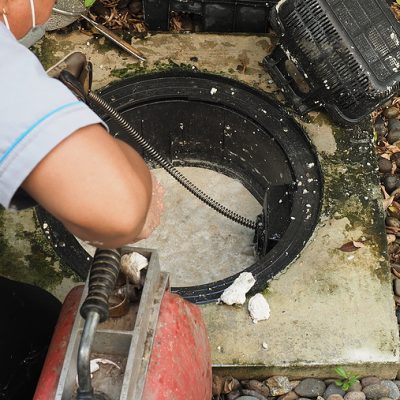
Operating a motorized sewer auger requires methodical technique and strict safety protocols. These machines generate high torque; an unseated cable or loose grip can cause serious hand, wrist, or facial injuries.
Essential Personal Protective Equipment (PPE)
- Heavy-Duty Leather Gloves: Never use loose cloth gloves, rubber dish gloves, or knit utility gloves. Rotating steel coils can instantly catch loose cloth fibers, twisting your fingers into the cable. Heavy-duty cowhide leather gloves allow the spinning steel cable to slide safely through your palms.
- ANSI-Rated Eye Protection and Face Shield: Sewer lines contain biohazards, pressurized wastewater, and rotating metal debris.
- Pneumatic Foot Pedal & GFCI Protection: Always plug electric drain machines into a Ground Fault Circuit Interrupter (GFCI) outlet to prevent electrical shock in damp environments. Ensure the machine is controlled via an air-actuated pneumatic foot pedal, allowing you to cut power instantly by lifting your foot if the cable binds.
Inspecting the Main Line Before Clearing
Before feeding heavy cutting blades into an underground sewer lateral, locate your main exterior cleanout. This threaded PVC, ABS, or cast-iron fitting is typically found in the ground near your home’s foundation or front landscaping.
Never attempt to run a commercial 5/8-inch or 3/4-inch root cutter through indoor fixture drains or toilet flanges. The tight 90-degree internal bends beneath indoor plumbing fixtures can jam heavy sewer cables or crack porcelain fittings. Always introduce heavy augers through an exterior cleanout that provides direct, straight access to the main sewer line.
Whenever possible, conduct a video camera inspection before running the auger. Reviewing The Homeowner’s Guide to Sewer Camera Inspections highlights how visual diagnostics identify the exact distance of the obstruction and assess structural pipe integrity. If an aging clay, Orangeburg, or corroded cast-iron pipe has fully collapsed or suffered large section offsets, running an aggressive mechanical root cutter can catch on broken pipe edges, breaking the pipe further or trapping the auger head underground.
Operating the Auger Cable and Cutting Blockages
- Position the Machine: Set the sewer auger drum within 2 to 3 feet of the outdoor cleanout opening. Minimizing the exposed cable between the machine drum and the pipe entry point prevents the cable from whipping, arching, or buckling under rotational torque.
- Attach a Smaller Starter Blade: Begin with a smaller lead cutter—such as a 2-inch spade or spiral saw cutter—to establish an initial pilot hole through the center of the root mass.
- Initiate Clockwise Rotation: Depress the pneumatic foot pedal to engage forward (clockwise) rotation. The motor should remain in forward rotation during both insertion and retrieval. Never run the machine in reverse (counter-clockwise) to force progress. Reverse rotation should be used for only 2 to 3 seconds at a time to back the blade out if the cutter head becomes physically wedged.
- Feed the Cable Slowly: Grip the cable with your leather-gloved hands, holding it firmly between the drum and the cleanout. Feed the spinning cable into the pipe inch by inch. When you hit the root blockage, you will feel resistance and hear the motor pitch drop as torque builds.
- Work the Obstruction Rhythmically: As detailed in industry analyses on the Top Five Ways of Dealing with Root Incursions, you must allow the rotational speed of the cutting blades to slice through the wood. Advance the head against the roots, pull back 6 to 12 inches, and gently advance again. This rhythmic back-and-forth action prevents the blade from burying itself too deeply and jamming in fibrous root strands.
- Step Up to a Full-Size Root Cutter: Once the initial pilot hole is bored and wastewater begins draining, retrieve the cable. Swap the starter head for a full-size C-cutter or expander blade matching the pipe’s interior diameter (e.g., a 3.5-inch or 4-inch cutter for a 4-inch line) to shave the remaining root knuckles flush with the pipe walls.
Flushing and Verifying Line Integrity
Once the root mass is sheared, run sustained hot water from multiple indoor fixtures or insert a garden hose into the exterior cleanout to flush downstream debris. The moving water carries loosened root fragments, toilet paper, and suspended sludge toward the municipal sewer main, preventing secondary blockages downstream.
After clearing and flushing the line, perform a follow-up camera inspection. Taking time to Stop the Guesswork With a Camera Line Inspection in Texas City confirms whether the root mass was completely cut away flush with the pipe wall or if stubborn root tails remain. More importantly, the camera reveals the exact joint fractures, cracked hubs, or pipe misalignments that allowed the roots to enter in the first place.
Common Mistakes, Pipe Maintenance, and Chemical Treatments
Operating a commercial sewer auger carries inherent mechanical risks if standard procedures are overlooked. Here are the most common pitfalls:
- Forcing the Cable Past Solid Obstacles: Pushing hard against heavy root knuckles when the motor strains will quickly buckle a 100-foot cable. Let the blade spin and work at its own pace.
- Running the Machine in Reverse: Operating in reverse loosens threaded cutter attachments, unravels the tight steel winding of the cable, and weakens its tensile core.
- Failing to Address the Root Entry Points: Homeowners often celebrate when water rushes down the drain, assuming the issue is resolved permanently. Understanding why a Sewer Line Backing Up Days After Snaking? Here is the Dirty Truth reveals that mechanical augering acts as a temporary haircut for the roots; it does not seal the pipe fractures.
Integrating Chemical Root Killers
Pairing mechanical augering with EPA-approved chemical root treatments helps slow recurring root growth:
- Copper Sulfate Crystals: Copper sulfate leaches copper ions into the pipe invert, creating an environment hostile to root growth without killing the tree above ground. However, copper sulfate only travels along the bottom half of the pipe, meaning roots hanging from the pipe crown (top) remain unaffected.
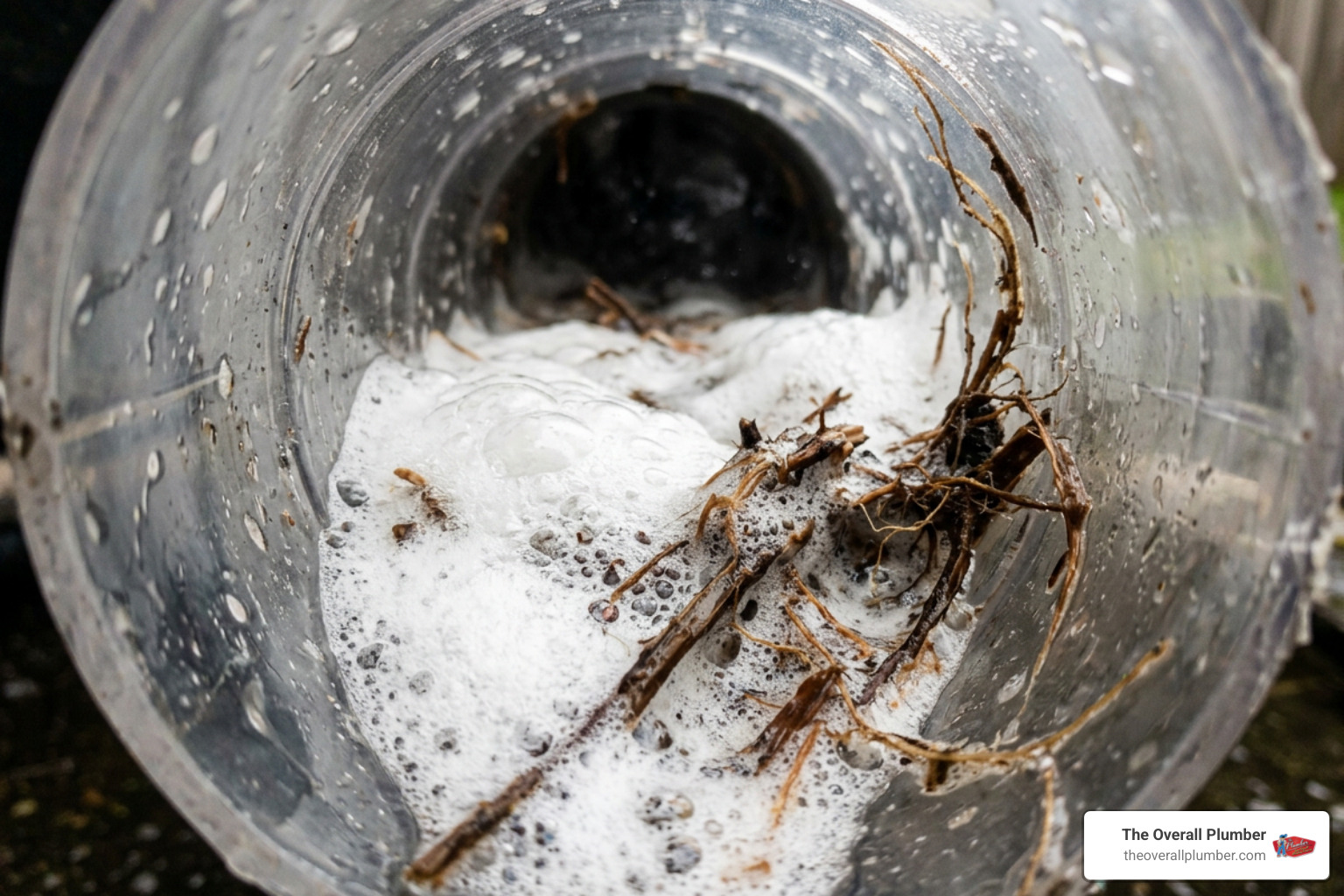
- Foaming Root Killers (Dichlobenil): Foaming root inhibitors mix with water to create a thick foam that expands across the entire internal circumference of the pipe. This coats root entry points at the top, sides, and joints.
- Application Timing: Chemical root killers are most effective when applied either within 1 hour of mechanical cutting (when fresh cuts allow maximum herbicide absorption) or after 8 weeks (when new, tender root shoots emerge that are highly susceptible to root-killing agents).
Post-Clearing Equipment Care and Rust Prevention
Sewer machine cables endure harsh wastewater, abrasive scale, and biological contaminants. Proper tool maintenance protects your investment and ensures safe operation:
- Drain Wastewater from the Drum: Open-case and enclosed drum machines collect contaminated water during retrieval. Pull the rear drum drain plug immediately after use to discharge standing water.
- Wash and Disinfect the Cable: Fully pull the cable out on a clean driveway or wash station and rinse it thoroughly with a disinfectant wash or warm water spray to remove grease, sewer debris, and biological matter.
- Lubricate with Cable Preservative: Once clean and dry, apply a generous coating of cable oil or rust-inhibiting lubricant over the entire coil before reeling it back into the drum. This prevents oxidation and micro-fractures during storage.
Frequently Asked Questions About Sewer Augers and Tree Roots
Can a 1/2-inch drain snake cut through tree root intrusions?
No. Standard 1/2-inch drain snakes are designed for 2-inch to 3-inch secondary residential drain lines tackling soft blockages like grease and soap scum. They lack the torsional stiffness and motor power to shear woody tree roots in a 4-inch main sewer lateral. Attempting to clear root masses with a 1/2-inch cable can cause the cable to flip over, kink, or snap, creating a severe hazard for the operator.
Will augering out tree roots permanently fix a clogged sewer line?
No. An auger mechanically shears off root intrusions to immediately restore drainage, but it cannot seal pipe cracks or joint offsets. Because the fractured pipe remains open to nutrient-rich water flow, tree roots will grow back—often within 6 to 18 months—unless the pipe is sealed using trenchless pipe lining or permanently excavated and replaced.
Can foaming chemical root killers replace mechanical root cutting?
No. Chemical treatments are designed as preventative maintenance or regrowth suppressors, not emergency clearing tools. If a sewer line is fully blocked with a dense root mass, chemical herbicides cannot circulate effectively and take weeks to slowly decay dead wood. You must first mechanically clear the line with a root-cutting auger to restore baseline flow before applying foaming root killers.
Long-Term Root Prevention and Professional Plumbing Solutions
While renting or owning a sewer auger can provide emergency relief during a weekend backup, persistent tree root incursions eventually demand permanent structural solutions. Recurring mechanical snaking can wear down aged clay or brittle cast-iron pipes over time, turning hairline joint separations into catastrophic structural collapses.
At The Overall Plumber, we deliver complete sewer diagnostics and permanent remediation across Houston, Brazoria County, and Galveston County. Our services include:
- High-Resolution Video Camera Inspections: Pinpointing the exact location, depth, and severity of root incursions without destructive guesswork.
- Hydro Jetting: Utilizing specialized high-pressure water nozzles that spin at high speeds to scour the entire pipe wall clean of root fibers, mineral scale, and grease.
- Trenchless CIPP Pipe Lining: Installing cured-in-place epoxy liners that create a seamless, jointless “pipe within a pipe,” permanently locking roots out without tearing up your lawn or driveway.
We believe in upfront, stress-free service:
- No Trip Charges: We arrive at your property across greater Houston, Pearland, Friendswood, League City, and Galveston without diagnostic travel fees.
- No Overtime Fees: Honest, straightforward rates whether you need assistance on a weekday afternoon or a weekend emergency.
- Priority Scheduling & Satisfaction Guarantees: Backed by our ironclad commitment to doing the job right the first time.
If you are dealing with recurring gurgling drains or suspect tree roots are invading your main line, schedule your priority service through our Houston Auger Service or contact The Overall Plumber.