

When a Regular Plunger Just Won’t Cut It: The Case for a Long Snake for Plumbing
A long snake for plumbing is the right tool when a clog sits too deep for a plunger or a short hand snake to reach. Here is a quick guide to help you choose the right one:
Quick Answer: Choosing a Long Plumbing Snake
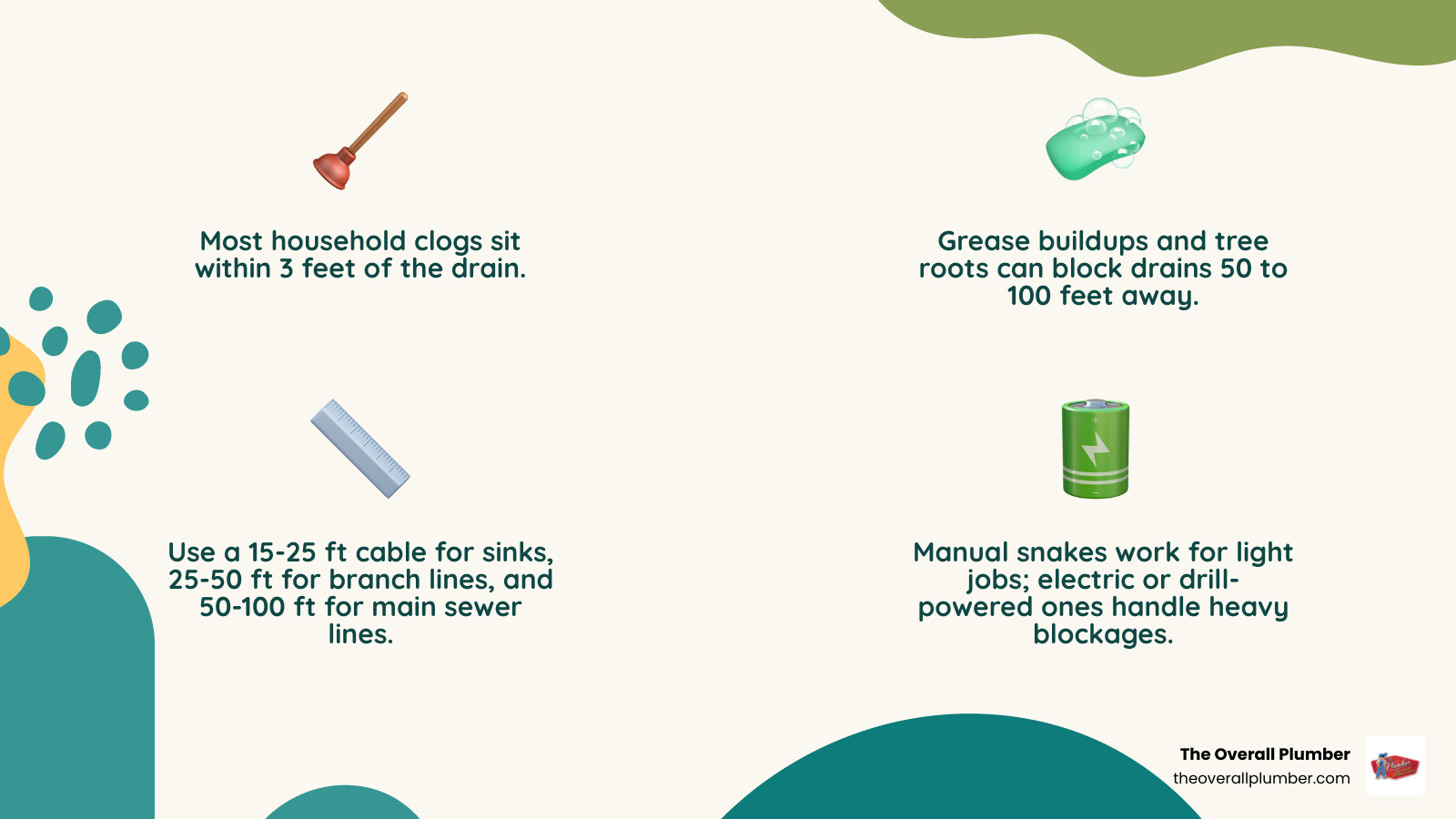
- Sink or shower drain: Use a 15-25 ft snake with a 1/4 in. cable
- Toilet clog: Use a 3-6 ft closet auger with a protective sleeve
- Branch drain lines: Use a 25-50 ft snake with a 3/8 in. cable
- Main sewer line: Use a 50-100 ft snake with a 1/2 in. cable
- Power source: Manual for light jobs, drill-powered or electric drum for heavy blockages
Most household hair clogs sit within the first 3 feet of the drain. But grease buildups, tree root intrusions, and main line blockages can sit 50 to 100 feet away — or more. A short snake simply cannot reach them.
That is where a long plumbing snake comes in. Whether you are renting a tool or buying one, understanding cable length, diameter, and power source will save you time, money, and a lot of frustration.
I’m Dayton Whitworth, a second-generation plumber serving Greater Houston and the Gulf Coast, and I have used long snakes for plumbing on everything from clogged kitchen lines to deep sewer laterals packed with roots. In the sections below, I will walk you through everything you need to know to pick the right tool for the job.
Long snake for plumbing helpful reading:
What is a Long Snake for Plumbing and How Does It Work?
When household plungers fail to move a stubborn blockage, a plumbing snake is your next line of defense. Unlike a plunger, which uses pressure and suction to displace a clog, a plumbing snake uses physical mechanical clearing to resolve the issue. It is a flexible steel cable that travels deep into your home’s pipe network, allowing for direct clog extraction or break-up.
If you have ever wondered about the differences between various residential tools, you can read our Unclog Your Life with This Ultimate Plumbing Snake Guide to see how these devices operate. In simple terms, a plumbing snake navigates the twists and turns of your pipes to reach deep-seated blockages that standard household tools cannot touch.
Understanding the Mechanics of a Long Snake for Plumbing
The basic physics of a drain snake are simple but incredibly effective. As the steel cable is fed down the drain, it is rotated either by hand or by a motor. This rotation creates torque, allowing the cable to bend around P-traps and elbow joints without getting stuck.
At the end of the cable is a specialized corkscrew tip (often called a bulb head or cutter). When this rotating tip makes contact with a blockage, it does one of two things:
- Hooks and retrieves: For hair, wipes, or fabric, the corkscrew grabs onto the material so you can pull it out.
- Breaks apart: For grease, soap scum, or food debris, the rotating tip pulverizes the clog so it can safely wash down the line.
Using a heavy manual snake can cause significant physical strain on your hands, wrists, and arms. That is why motorized options are highly favored for lines longer than 25 feet.
Mechanical Snaking vs. Chemical Drain Cleaners
It can be tempting to pour a bottle of chemical drain cleaner down a slow-moving sink, but as professional plumbers, we strongly advise against this. Chemical cleaners rely on harsh, caustic acids to dissolve blockages. Here is why mechanical snaking is superior:
- Avoids Pipe Corrosion: Caustic chemicals generate intense heat. If they sit in your pipes—especially older cast iron or thin plastic PVC lines common in older homes across Houston and League City—they can actually melt or corrode your plumbing.
- Eliminates Chemical Burn Risks: If a chemical cleaner fails to clear the clog, your pipes will remain filled with toxic acid. When a plumber eventually has to disassemble the pipe or run a snake, that acid can splash and cause severe chemical burns.
- Eco-Friendly and Effective: Mechanical snaking physically removes the blockage without introducing harmful chemicals into our local Texas waterways.
Once the physical blockage is cleared with a mechanical snake, we recommend doing a thorough hot water flush to wash away any remaining grease or soap film.
Types, Lengths, and Diameters of Long Drain Snakes
Plumbing snakes are not one-size-fits-all tools. They range from simple plastic hair pullers to heavy-duty industrial machines. Selecting the wrong type can result in damaged pipes or a cable that gets permanently stuck in your line. If you are deciding between different power sources, you should review our guide on Electric vs Manual: Choosing the Best Heavy Duty Drain Auger.
Here is a quick breakdown of the main types of drain snakes you will encounter in 2026:
- Manual Hand-Crank Snakes: Best for simple, shallow household clogs (like kitchen sinks and bathtubs). You manually feed the cable and turn a hand crank to rotate it.
- Drill-Powered Hybrid Snakes: These allow you to attach a standard cordless drill to the back of the drum, using the drill’s motor to spin the cable. It is a fantastic, budget-friendly option for homeowners.
- Electric Drum Machines: These are heavy-duty, motorized units where the cable is stored in a rotating drum. They feature automatic feed systems that push and pull the cable with the flip of a switch, taking the physical labor out of the job.
- Cordless Battery Augers: High-end, portable, and incredibly convenient. Brands like Milwaukee and Ryobi offer cordless drain snakes that run on standard tool batteries, making them easy to maneuver in tight crawlspaces or attics.
To help you choose, here is a reference table matching cable specifications to common household plumbing fixtures:
| Pipe Type | Recommended Cable Length | Recommended Cable Diameter | Best Tool Type |
|---|---|---|---|
| Bathroom Sink / Tub | 15 to 25 Feet | 1/4 Inch | Manual or Drill-Powered |
| Kitchen Sink | 25 to 35 Feet | 5/16 to 3/8 Inch | Drill-Powered or Small Electric |
| Toilet | 3 to 6 Feet | 1/2 Inch (with sleeve) | Specialized Toilet Auger |
| Branch Drain Lines | 50 Feet | 3/8 Inch | Electric Drum Machine |
| Main Sewer Line | 75 to 100+ Feet | 1/2 to 5/8 Inch | Heavy-Duty Sewer Machine |
Matching Cable Length to the Clog Depth
Choosing the correct cable length is vital. If your cable is too short, you simply won’t reach the blockage. If it is too long and heavy, it will be incredibly difficult to manage.
For minor branch lines—like the pipe running from your kitchen sink to the main stack—a 25-foot to 35-foot cable is usually plenty. For example, the General Pipe Cleaners 35HE2 Flexicore Snake 35ft. x 3/8in. 3201D – Monument Masters is an excellent mid-length option designed to clear residential branch lines with ease.
However, if you have a main sewer lateral clog (the large pipe that carries all waste from your home out to the city sewer main or septic tank), you will need a cable that is 50, 75, or even 100 feet long. Main line clogs often occur near the street or under your yard due to tree root intrusions, requiring maximum reach.
Selecting the Correct Cable Diameter for Your Pipes
Using a cable that is too thick for a pipe can ruin your day. If you force a 1/2-inch cable down a small 1-1/2-inch kitchen sink drain, it can easily get wedged in a tight P-trap, forcing you to cut the pipes to retrieve it.
Conversely, if you use a thin 1/4-inch cable in a wide 4-inch sewer line, the cable will not have enough structural integrity. Under torque, it will simply twist and loop inside the large pipe instead of breaking through the clog.
- 1/4-Inch Cables: Perfect for 1-1/4 to 2-inch pipes. These are highly flexible and can easily navigate tight bends. A great example of this is the General Pipe Cleaners 25HE1 Flexicore Snake 25ft. x 1/4in. 3193Y – Monument Masters, which is the industry standard for clearing bathroom sinks and tubs.
- 3/8-Inch Cables: The “sweet spot” for kitchen sinks, laundry lines, and 2 to 3-inch pipes.
- 1/2-Inch to 5/8-Inch Cables: Reserved strictly for 3 to 4-inch main sewer lines. These cables are heavy and stiff, providing the raw power needed to cut through heavy grease and tree roots.
Key Features to Look For in a Professional-Grade Snake
If you are planning to purchase or rent a long snake for plumbing, do not just grab the cheapest option on the shelf. Look for these key features to ensure the tool is safe, durable, and effective:
- Kink-Resistant Cable: Cheap steel cables can easily kink or twist into a knot inside the pipe, ruining the cable. Look for “Flexicore” or wire-rope center cables, which feature wire wrapped tightly around an aircraft-grade wire rope core for maximum strength and flexibility.
- Downhead / Bulb Head Fitting: A downhead fitting is a hinged or angled tip that helps the cable navigate downward at tee-junctions rather than climbing up the vent stack.
- Auto-Feed Trigger: On motorized machines, an auto-feed lever allows you to advance or retract the cable automatically, keeping your hands clean and reducing physical fatigue.
Navigating Tight Bends with a Long Snake for Plumbing
One of the hardest parts of drain cleaning is getting a metal cable around tight 90-degree elbows. This is especially true in narrow specialized lines, such as AC condensate lines. AC drain lines are typically only 3/4 inches in diameter and feature multiple sharp turns, which quickly clog with gelatinous bacterial slime (Zoogloea).
Standard metal plumbing snakes are far too stiff for these delicate lines. That is why specialized tools like the ZoogSnake exist. Engineered specifically for 3/4-inch AC lines, it balances flexibility and rigidity to navigate multiple 90-degree bends without cracking the plastic pipes.
Specialized Tools: Toilet Augers vs. Sink Snakes vs. Sewer Hoses
Never use a standard plumbing snake in a toilet! The exposed metal cable will scrape, scratch, and leave ugly grey track marks all over the porcelain bowl.
For toilets, you must use a specialized closet auger. These feature a short, rigid steel rod with a rubber or plastic protective sleeve at the bend to shield the porcelain.
If you are dealing with massive industrial or municipal blockages, professionals often bypass mechanical steel cables entirely in favor of high-pressure water. For instance, the heavy-duty Kuriyama Piranha® 200 ft. x 3/8 in. Drain Snake – LLGR-MM06X200 – Pollardwater is actually a high-pressure thermoplastic sewer jetting hose. It uses water pressurized up to 4000 PSI to blast away grease and roots, scrubbing the pipe walls completely clean.
Safe Use of a Long Drain Snake for Deep Blockages
Operating a long, motorized plumbing snake can be dangerous if you do not respect the tool. A spinning metal cable has immense torque; if it binds up on a clog while the motor is spinning, the cable can whip, twist, and easily break fingers or catch loose clothing.
Before you start, make sure you have the proper safety gear:
- Heavy-duty leather gloves: Never use thin fabric or rubber gloves, as the spinning metal cable can easily grab them and twist your hand.
- Safety glasses: To protect your eyes from any dirty water or bacteria splashing out of the drain.
- GFCI Protection: Ensure any electric machine is plugged into a Ground Fault Circuit Interrupter outlet, as you are working around water.
For more detailed safety tips, read our complete guide on how to Snake Your Way to Success with Auger Drain Cleaning.
Step-by-Step Guide to Snaking a Main Line
If you have a major blockage backing up multiple fixtures in your home, you will need to snake the main sewer line. If you want to understand why these clogs happen, check out our article on Main Drain Clogs: Why You Need a Priority Auger Service.
Use these basic steps to safely clear a main line using a long sewer snake:
- Locate the Main Cleanout: This is usually a 3 or 4-inch PVC or cast-iron pipe with a threaded cap located outside your home (often near the foundation or sidewalk).
- Loosen the Cap Slowly: If the main line is backed up, there may be standing water under pressure behind the cap. Loosen it slowly and stand to the side to avoid a messy splash.
- Position the Machine: Place your drum machine within 2 to 3 feet of the cleanout opening. If the distance is too great, the exposed spinning cable can whip around and cause injury.
- Feed the Cable Manually: Slide the first few feet of the cable into the cleanout by hand until it resists.
- Start the Motor: Turn on the machine (using the forward setting) and slowly feed the cable into the pipe. Let the rotation of the cable do the work; never force or violently shove it.
- Feel for the Clog: When the cable slows down or starts to resist, you have hit the blockage. Let the cable spin in place for a few moments to chew through the clog.
- Retrieve and Flush: Put the machine in reverse (or use the auto-retract) and slowly retrieve the cable. Once the line begins to drain, run plenty of water down the closest household fixture to flush out the loosened debris.
When to Put Down the Snake and Call a Professional
While DIY drain cleaning is great for minor sink clogs, there are times when you must put down the snake and call in the professionals:
- Tree Root Intrusions: If massive tree roots have cracked and filled your sewer lateral, a standard DIY snake will only punch a temporary hole. You need a commercial-grade machine with heavy cutting blades to clear the pipe.
- Collapsed or Broken Pipes: If your home is older and situated in clay-heavy soil (like many properties in Pearland, Pasadena, or Galveston), the ground can shift, causing clay or cast-iron pipes to collapse. Running a metal snake into a collapsed pipe can cause the cable to get permanently stuck underground.
- Sewer Camera Inspection Needed: If your drains clog repeatedly, there is an underlying structural issue. We use high-definition sewer cameras to inspect the inside of your pipes, pinpointing the exact location of breaks, sags, or root blockages without any digging.
Frequently Asked Questions About Long Plumbing Snakes
What is the difference between a toilet auger and a regular drain snake?
A standard drain snake features an exposed metal cable with a corkscrew tip designed to navigate small sink and tub lines. If you use this inside a toilet, the bare metal will permanently scratch and stain the porcelain bowl.
A toilet auger (or closet auger) features a short, rigid steel tube with a protective rubber sleeve at the bottom bend. This sleeve sits directly in the toilet throat, protecting the porcelain while a heavy-duty cable is pushed through to clear the blockage. If you are dealing with a toilet emergency, you can read our guide on How to Unclog Toilet with a Snake.
How do I clean and maintain a long drain snake cable after use?
Sewer cables are made of steel and will rust quickly if stored wet. After each use, wipe down the cable with a rag as you retrieve it from the drain. Once dry, spray the cable with a rust-inhibitor lubricant (or WD-40) before winding it back into the drum. Store the machine in a dry, ventilated area to prevent moisture buildup.
What is a fair price to pay for a long drain snake?
For a simple 15 to 25-foot manual hand snake, you can expect to pay between $15 and $30 at local hardware stores. Drill-powered drum augers typically cost between $30 and $60.
If you are looking at professional-grade electric drum machines (50 to 100 feet), prices range from $200 to over $1,000 to purchase. Renting a commercial drum machine from a local home center usually costs between $50 and $90 for a half-day. For a full breakdown of costs, check out our pricing guide on Sewer Snakes and Drain Snakes: What is a Fair Price to Pay.
Professional Drain Cleaning Services in Houston
Sometimes, a clog is simply too deep, too stubborn, or too risky to handle on your own. If you are dealing with a severe main line backup, the team at The Overall Plumber is here to help.
We proudly serve homeowners across Brazoria County, Houston, Clear Lake, Santa Fe, League City, Texas City, La Porte, Friendswood, Pearland, Pasadena, Galveston, Harris County, and Galveston County, Texas. We provide professional Houston Auger Service using state-of-the-art motorized drain machines and high-definition sewer camera inspections to locate and clear your clogs safely.
When you choose us, you get the peace of mind that comes with our satisfaction guarantees, priority scheduling, and absolutely no overtime fees. If you are dealing with a stubborn, deep clog that a standard DIY snake cannot safely clear, contact The Overall Plumber today at call us now for professional auger and camera inspection services.