

Snake Your Way to Success with Auger Drain Cleaning
Why Sink Drain Cleaning Belongs on Your Regular Home Maintenance List
Sink drain cleaning is the process of removing buildup — like hair, grease, soap scum, and food scraps — from your drain pipes to restore flow and prevent clogs.
Quick answers for common sink drain problems:
- Slow draining water — Usually caused by grease, hair, or soap scum buildup in the trap
- Foul odors — Food particles and bacteria breaking down inside the drain
- Gurgling sounds — Trapped air from a partial clog or blocked vent
- Standing water — A full or near-full blockage in the P-trap or drain line
- Drain flies — Organic matter buildup creating a breeding ground inside the pipe
Most homeowners don’t think about their sink drains until something goes wrong. But by then, the problem has usually been building for weeks or months.
Here’s a surprising fact: your kitchen sink is likely dirtier than your bathroom. Research shows that 45% of kitchen sink swabs test positive for coliform bacteria — including salmonella and E. coli — compared to just 9% of bathroom faucet handles. Salmonella can survive on sink surfaces for up to 32 hours. Regular drain cleaning isn’t just about water flow — it’s about keeping your home safe.
Whether you’re dealing with a stubborn clog or just want to stay ahead of buildup, this guide walks you through everything from simple DIY fixes to knowing when it’s time to call in a pro.
I’m Dayton Whitworth, a second-generation plumber serving the Greater Houston and Gulf Coast area, and sink drain cleaning is one of the most common issues I help homeowners tackle every day. Let’s get your drains flowing freely again.
Identifying the Need for Sink Drain Cleaning
Recognizing the early warning signs of a troubled drain can save you from a messy midnight plumbing emergency. In our experience servicing homes from Galveston to Houston, we’ve seen that clogs rarely happen overnight. They are the result of a slow accumulation of daily debris.
The Science of Sink Germs
It’s easy to assume that because we use soap in the sink, the sink is clean. However, scientific research on kitchen germs reveals a different story. The kitchen sink drain is often the third germiest item in a home. Because foodborne illness-causing bacteria like salmonella can remain on kitchen surfaces for up to 32 hours, a dirty drain isn’t just an inconvenience—it’s a health hazard. In fact, 45% of kitchen sinks tested positive for coliform bacteria, which is significantly higher than the 27% found on toothbrush holders.
Common Symptoms of a Clog
If you notice any of the following, it’s time to consider a thorough sink drain cleaning:
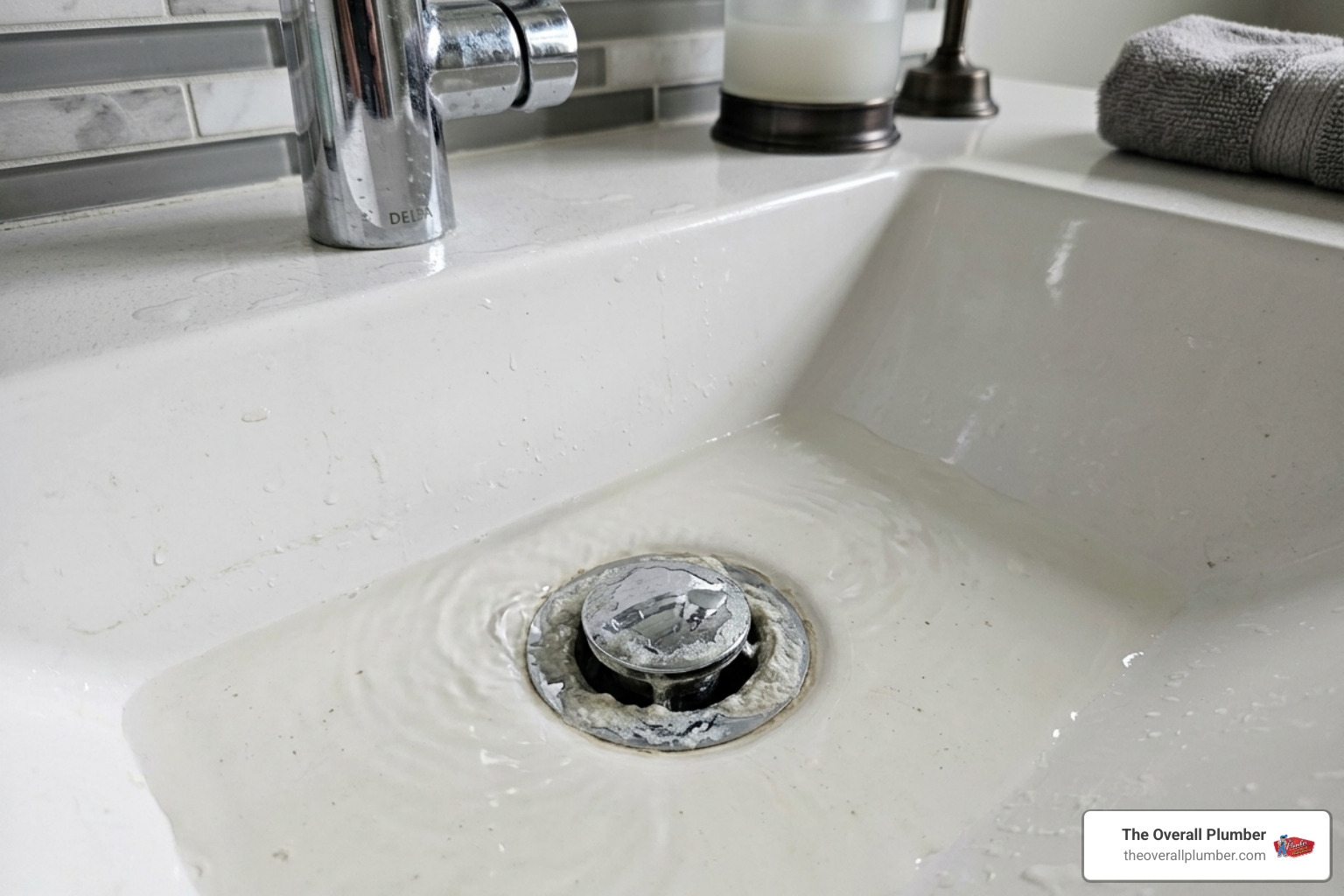
- Slow Drainage: If water lingers in the basin long after the faucet is off, you likely have a buildup of hair, soap scum, or grease.
- Foul Odors: That “rotten egg” or “garbage” smell is usually decaying organic matter or biofilm trapped in the P-trap.
- Gurgling Sounds: This is the sound of air bubbles struggling to pass through a partial obstruction. It can also indicate an issue with your plumbing vent.
- Drain Flies: These tiny pests breed in the decomposing organic “gunk” that lines dirty pipes.
In bathroom sinks, the primary culprits are usually hair and toothpaste. In kitchen sinks, the villains are fats, oils, and grease (FOG), along with starchy food scraps like pasta or potato peels. Over time, these materials bind together, creating a thick, waterproof barrier. If you’re seeing these signs across multiple fixtures, you might need more info about clogged drain services to address a deeper mainline issue.
Natural DIY Methods and Chemical Safety
When the drain slows down, many homeowners reach for a bottle of liquid “magic” from the hardware store. We strongly advise against this. Harsh chemical cleaners often contain lye or sulfuric acid, which generate intense heat. This heat can soften PVC pipes, damage the glue at the joints, and even crack porcelain. Plus, if the chemical doesn’t clear the clog, you’re left with a sink full of toxic, caustic water that makes the job much more dangerous for a plumber.
Instead, we recommend starting with natural, non-toxic methods that are safer for your pipes and the environment.
The Power of the Pantry
- Baking Soda and Vinegar: This classic duo relies on an acid-base reaction. The resulting CO2 bubbles create a physical “fizzing” action that helps break up loose debris.
- Dish Soap: For kitchen grease clogs, a degreasing dish soap is a secret weapon. It helps emulsify fats so they can be flushed away.
- Borax and Salt: Mixing 1/4 cup of salt and 1/4 cup of borax with 1/2 cup of vinegar creates a potent paste that can tackle tougher organic buildup.
- Lemon Juice: If odors are your main concern, lemon juice provides a fresh scent and mild acidity to help dissolve soap scum.
A Note on Boiling Water: While how to flush a drain safely often suggests boiling water, use caution. If you have PVC (plastic) pipes, boiling water (212°F) can warp the pipe or melt the seals. Use very hot tap water instead if you aren’t 100% sure about your pipe material.
Step-by-Step Sink Drain Cleaning with Baking Soda
For a monthly maintenance routine that keeps odors at bay and prevents clogs from forming, follow these steps:
- Prep: Pour a pot of hot (but not boiling) water down the drain to loosen surface grease.
- Apply: Pour 1 cup of dry baking soda directly into the drain.
- React: Follow the soda with 1 cup of white vinegar.
- Wait: Cover the drain with a stopper or a rag to keep the fizzing action inside the pipe. Let it sit for 15 to 30 minutes.
- Flush: Finish by flushing the drain with another pot of hot water.
Essential Tools for Clearing Blockages
If the baking soda method doesn’t do the trick, it’s time to bring out the tools. You don’t need a professional van full of gear to handle minor clogs in Brazoria County or League City.
The Plunger (The Right Way)
Most people use a plunger incorrectly on a sink. To get the best results:
- Use a Cup Plunger: Unlike the flange plungers used for toilets, sinks require a simple cup-shaped plunger.
- Create a Seal: Fill the sink with 3-4 inches of water. This ensures you are pushing water, not air, against the clog.
- The “Roll” Technique: How to unclog a sink with a plunger involves rolling the plunger into the water to avoid trapping a big air bubble inside the cup.
- Block the Overflow: If you’re working on a bathroom sink, plug the overflow hole with a wet rag. If you don’t, the pressure you create will just escape through the hole instead of hitting the clog.
Zip Sticks and Snakes
For bathroom sinks where hair is the main issue, a “zip stick” or plastic hair removal tool is invaluable. These are thin, barbed plastic strips you slide into the drain to “fish out” hair clogs. For deeper blockages, a hand-cranked drain snake (or drum auger) can reach up to 25 feet into the pipe to break up obstructions.
Garbage Disposal Care
Kitchen clogs often start in the disposal. You can clean this effectively using ice and salt. The ice helps knock debris off the blades, while the salt acts as an abrasive. Adding citrus peels (lemon or orange) provides a natural deodorizer. For more complex issues, check out our more info about garbage disposals page.
Advanced DIY: P-Trap and Auger Techniques
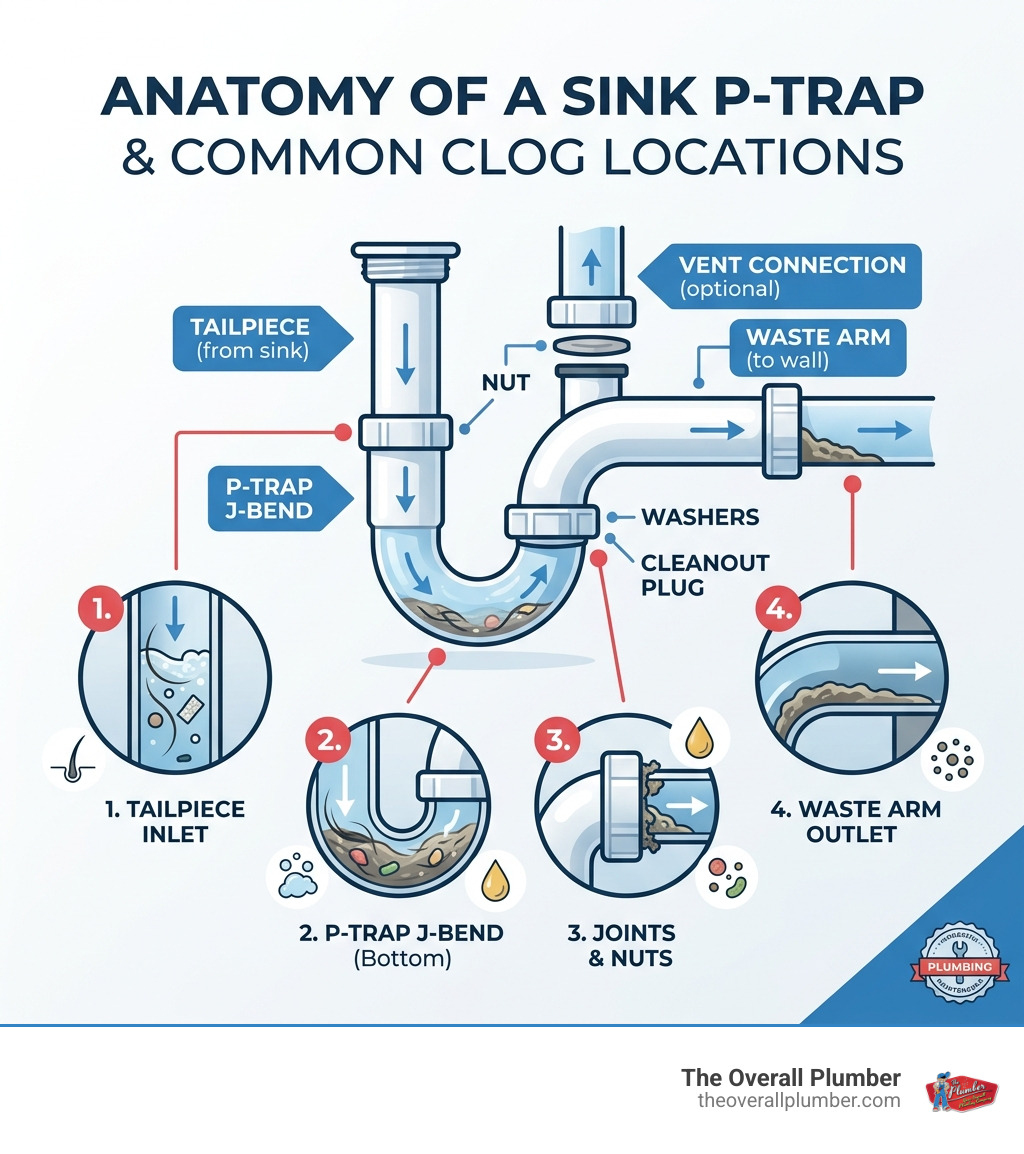
Sometimes, the clog is so dense that no amount of plunging will move it. This is usually when the P-trap—the U-shaped pipe under your sink—is completely full of “gunk.”
Cleaning the P-Trap
The P-trap is designed to hold a small amount of water to block sewer gases from entering your home. It’s also where heavy objects (like rings) and thick clogs tend to settle.
- Get Ready: Place a bucket under the trap to catch the water that will inevitably spill out.
- Loosen: Unscrew the slip nuts on both ends of the “U” bend. You can usually do this by hand, but you might need pliers for older metal pipes.
- Clean: Remove the trap and dump the contents into the bucket. Use a bottle brush to scrub the inside of the pipe.
- Inspect: Check the “trap arm” (the pipe going into the wall) for further blockages.
- Reassemble: Slide the pieces back together, ensuring the washers are seated correctly. Hand-tighten the nuts—over-tightening can crack plastic fittings.
Using a Manual Auger
If the P-trap is clear but the sink still won’t drain, the clog is further down the line. This is where a drain auger comes in. You feed the cable into the wall pipe, cranking the handle when you feel resistance to “chew” through the clog. This is highly effective for fibrous clogs or thick grease. Always wear gloves and eye protection, as the cable can flick dirty water when it’s retracted.
When to Call a Professional for Sink Drain Cleaning
While we love a good DIY success story, some plumbing problems require professional-grade equipment and expertise. If you’ve tried snaking the drain and the water still backs up, or if you notice water rising in the sink when the laundry machine runs, you’re likely dealing with a mainline blockage.
At The Overall Plumber, we serve residents across Pearland, Pasadena, Friendswood, and Galveston County. We don’t just “poke a hole” in the clog; we use advanced diagnostic tools to ensure the problem is gone for good.
Why Choose Professional Service?
- Camera Inspections: We can run a waterproof camera down your lines to see exactly what is causing the problem — whether it’s tree roots, a collapsed pipe, or a “fatberg” of grease.
- Motorized Augers: Our professional-grade augers are much more powerful than hand-cranked versions, capable of clearing heavy-duty obstructions deep in your plumbing system.
- Hydro-Jetting: For pipes choked with grease or scale, we use high-pressure water to “pressure wash” the issue, restoring them to like-new condition.
- No Overtime Fees: We believe in fair pricing, which is why we offer priority scheduling and no overtime fees.
- Protection Plans: We offer plumbing protection plans to help you stay ahead of maintenance and avoid costly repairs.
If you suspect your slow drain might actually be a hidden leak, we also provide professional leak detection and repair to protect your home’s foundation and walls.
Professional Sink Drain Cleaning vs. DIY
The biggest difference between DIY and professional sink drain cleaning is the long-term result. DIY methods often clear enough of the clog to get water moving again, but they leave a residue behind that quickly catches new debris. Our professional tools clean the entire diameter of the pipe, meaning you won’t be dealing with the same clog again in two weeks. Plus, we offer satisfaction guarantees, so you can have peace of mind that the job was done right.
Frequently Asked Questions
Is it safe to use boiling water in PVC pipes?
No, we do not recommend pouring boiling water (212°F) down PVC pipes. Most residential PVC is rated for temperatures up to 140°F. Boiling water can soften the plastic, cause the pipe to lose its shape, or weaken the glue joints, leading to leaks behind your walls or under your floors. Stick to hot tap water for a safer flush.
How often should I perform sink drain cleaning?
For the best results, we recommend a “light” cleaning once a week by flushing your drains with hot water and dish soap. A “deep” cleaning with the baking soda and vinegar method should be done once a month. This routine helps control bacteria, prevents odors, and stops small buildups from turning into major blockages.
Why does my sink smell like rotten eggs?
This smell is usually caused by one of two things: bacteria growing on organic matter (food and hair) trapped in the P-trap, or a “dry trap.” If a sink hasn’t been used in a while, the water in the P-trap can evaporate, allowing sewer gases to drift up into your home. If you use the sink regularly and it still smells, it’s time for a thorough sink drain cleaning to remove the decomposing biofilm inside the pipes.
If your sink is still slow, smells foul, or keeps clogging, contact The Overall Plumber today or call us at 713-252-3620 to schedule an appointment.