

When a Plunger Isn’t Enough: What You Need to Know About Snake Plumbing
Learning snake plumbing how to use correctly is the fastest way to clear a stubborn drain clog without calling a plumber. Here’s a quick overview of the process:
- Choose the right snake – hand auger for sinks and showers, toilet auger for toilets, electric snake for deep clogs
- Prepare the drain – remove the stopper, strainer, or overflow plate
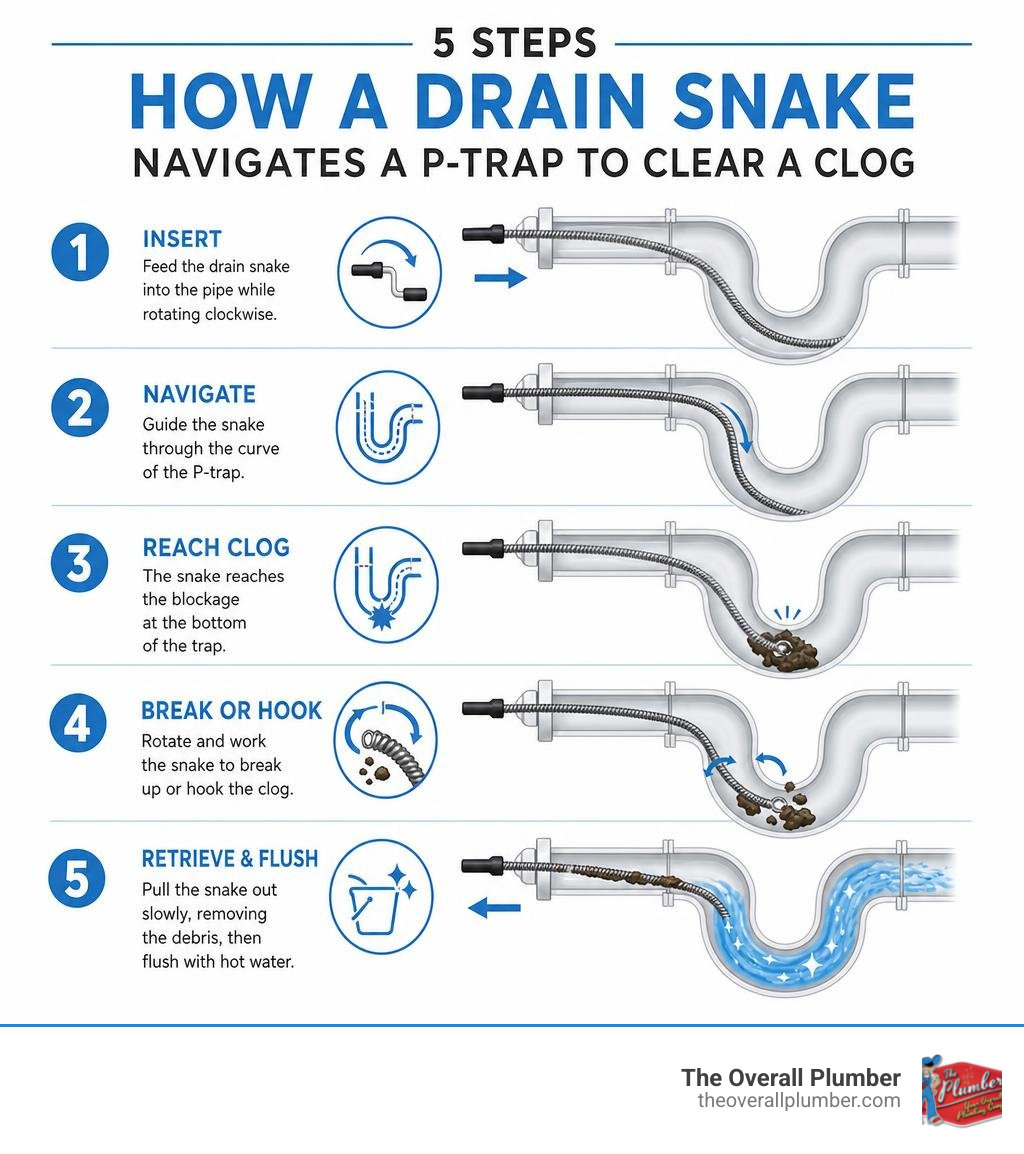
- Feed the cable – insert slowly while rotating the handle clockwise
- Work the clog – rotate steadily when you feel resistance to break it up or hook it
- Retrieve and clean – pull the cable out slowly, wipe off debris, and flush with hot water
Clogged drains are one of the most common headaches homeowners face. A plunger works fine for simple blockages, but when the water just won’t move, you need something with more reach and mechanical force. That’s exactly what a drain snake delivers — a long, flexible metal cable that travels deep into your pipes to physically break apart or pull out whatever is causing the blockage.
Unlike chemical cleaners that can corrode your pipes over time, a drain snake tackles the problem mechanically. No harsh chemicals, no waiting, no pipe damage from corrosive agents.
I’m Dayton Whitworth, a second-generation plumber serving Greater Brazoria County, Galveston County, Houston, and the Gulf Coast, with hands-on experience using drain snakes on everything from hair-clogged shower drains to serious main line blockages. In this guide, I’ll walk you through exactly how to use snake plumbing tools the right way, so you can handle most household clogs with confidence.
Basic snake plumbing how to use terms:
What is a Drain Snake and How Does It Work?
A drain snake, also known as a plumbing auger, is a flexible metal cable housed inside a drum or spool. It features a corkscrew-like spring or hook at the end, designed to navigate the tight bends of your household pipes to physically clear blockages.
When you feed the snake into a clogged pipe, the cable bends around the pipe’s curves, including the P-trap. The magic happens when you rotate the cable. By turning the handle, you rotate the coiled metal head, allowing it to drill into solid blockages like grease, food particles, or tree roots. Depending on the type of clog, the snake head will either break the material into tiny pieces that wash away safely or hook onto fibrous materials (like hair or wet wipes) so you can pull them completely out of the drain.
Using a physical tool is highly recommended over pouring chemical drain cleaners down your sink. Chemical cleaners rely on harsh acids or bases that generate heat to melt clogs. This heat and chemical action can soften modern PVC pipes or eat through older cast iron and galvanized metal pipes, leading to costly leaks. Learn more about auger drain cleaning and why mechanical clearing is the safest choice for your plumbing system.
Types of Drain Snakes and When to Use Them
Before you start cranking, you need to understand that not all drain snakes are created equal. Using the wrong tool can result in scratched porcelain, damaged pipes, or a kinked cable. Here are the main types of snakes you’ll encounter:
- Manual Hand Snake (Drum Auger): This is the classic household tool. It features a flexible cable (usually 15 to 25 feet long) stored inside a plastic drum. You feed the cable by hand and rotate it using a manual hand crank. It is the perfect tool for kitchen sinks, bathroom vanities, and tub drains.
- Toilet Auger (Closet Auger): A toilet auger is specifically designed for toilets. It has a short, rigid metal rod with a bend at the bottom encased in a protective plastic sleeve. This sleeve prevents the metal cable from scratching the delicate porcelain of your toilet bowl. It usually features a 3-to-6-foot cable, which is plenty of length to reach past the toilet’s internal trapway.
- Electric or Power Snake: These are heavy-duty, motorized versions of the drum auger. Powered by electricity or batteries, they automatically rotate and feed the cable. They are ideal for deep, stubborn clogs or main sewer lines where manual cranking would be too exhausting.
| Snake Type | Ideal Fixtures | Average Cable Length | Best For |
|---|---|---|---|
| Manual Hand Snake | Sinks, Showers, Bathtubs | 15 – 25 feet | Hair, minor soap scum, food scraps |
| Toilet Auger | Toilets Only | 3 – 6 feet | Excess toilet paper, organic waste, small objects |
| Electric/Power Snake | Main sewer lines, basement drains | 50 – 100+ feet | Heavy grease, thick root intrusion, deep clogs |
Snake Plumbing: How to Use a Drain Snake

Before you begin, proper preparation is key. Snaking a drain can get messy, and protecting yourself and your home will make the cleanup process much easier.
First, gather your safety gear. Always wear heavy, tight-fitting work gloves. Avoid thin latex or rubber cleaning gloves, as they can easily get caught in the rotating metal coils of the cable, pinching your fingers or tearing. Put on safety goggles to protect your eyes from any dirty water or debris that might splash back out of the drain.
Next, prepare your workspace. Lay down old towels or plastic garbage bags around the base of the sink or fixture to catch any dripping water or sludge. Keep a bucket and a roll of paper towels nearby so you have a place to deposit the clog material once you pull it out.
If you’ve recently poured chemical drain cleaners down the sink, do not attempt to snake the drain. The snake can splash these caustic chemicals back onto your skin or into your eyes, causing severe burns. If chemicals are present, flush the line thoroughly with water first, or wait for a professional to handle it safely. For more general tips on using these tools, check out this guide on How to Use a Drain Snake.
Step 1: Preparing the Drain and Choosing Your Tool
To get the snake cable into the pipe, you must first remove any physical barriers.
For bathroom sinks, you’ll need to remove the pop-up drain stopper. This usually requires crawling under the sink, loosening the nut holding the horizontal pivot rod to the drain tailpiece, and pulling the rod back to release the stopper. For tub drains, remove the metal strainer or the overflow plate on the tub wall. For shower drains, pry off the metal grate using a flathead screwdriver.
In some cases, especially with stubborn kitchen sink clogs, the easiest way to access the clog is by removing the P-trap (the U-shaped pipe beneath the sink) entirely. Place a bucket under the trap, unscrew the slip nuts by hand or with channel lock pliers, and pull the trap off. This allows you to insert the snake directly into the waste pipe leading into the wall, bypassing the tightest bends. Compare electric vs manual augers to decide which tool is best suited for your specific drain access point.
Step 2: Snake Plumbing: How to Use the Tool to Navigate Bends
With the drain prepped, pull about 6 to 12 inches of cable out of the drum. Loosen the thumbscrew on the collar of the drum to let the cable slide free, insert the end into the drain opening, and tighten the thumbscrew back down.
Hold the drum close to the drain opening—ideally within 6 inches. If you leave too much slack cable exposed between the drum and the drain, the cable will loop, twist, or kink on itself when you start rotating it, which can damage the tool or hurt your hands.
Slowly rotate the drum handle clockwise while applying gentle forward pressure. As the cable moves through the pipe, it will eventually hit the P-trap or a sharp pipe bend. When this happens, the cable will resist moving forward. Do not force it. Instead, keep cranking the handle clockwise. The continuous rotation helps the tip of the cable “walk” its way around the curve of the pipe. Once it clears the bend, loosen the thumbscrew, pull out another 6 inches of cable, tighten the screw, and continue.
Step 3: Snake Plumbing: How to Use the Cable to Hook and Retrieve Clogs
You will know you have reached the blockage when the cable stops advancing and you feel firm resistance. The handle will become significantly harder to turn.
At this point, stop trying to push the cable forward aggressively. If you ram the cable into the clog, you risk compacting the debris further, making it harder to remove, or pushing the clog deeper into the sewer system.
Instead, keep the cable tight and rotate the handle slowly clockwise. This action allows the corkscrew tip of the snake to drill directly into the obstruction.
- If it’s a soft clog (like hair or wet wipes): The rotating tip will hook onto the fibers. Once you feel the cable grab hold, slowly retrieve the snake by pulling the cable out of the pipe, wiping it down with a rag as you pull, and depositing the retrieved debris directly into your bucket.
- If it’s a hard clog (like grease or food buildup): The rotating action will grind and break the blockage into small pieces. Keep rotating the handle back and forth against the resistance until you feel the tension ease, indicating the cable has successfully punched through.
Snaking Specific Fixtures: Sinks, Tubs, and Toilets

Different household fixtures require slightly different approaches when using a plumbing snake:
- Bathroom Sinks: These are usually clogged with a mixture of hair, soap scum, and toothpaste. The blockage is almost always located within the first 3 to 5 feet of the drain. Removing the pop-up stopper or the P-trap is the most effective way to clear these.
- Shower Drains: Hair is the primary culprit here. Remove the drain grate and feed a manual hand snake or even a simple plastic zip-it tool down the drain. Because shower drains don’t have a removable trap under the floor, you must snake directly through the drain opening.
- Bathtubs: Snaking through the tub drain hole is difficult because of the built-in drain mechanism. Instead, unscrew the overflow plate on the wall of the tub and pull out the linkage assembly. Feed your snake directly down through the overflow tube. This bypasses the tub’s P-trap and leads straight to the main drain line.
- Toilets: Never use a standard manual sink snake in a toilet. The exposed metal coil will leave ugly, permanent black scratches on the porcelain bowl. Learn the proper technique by reading How to Unclog a Toilet with a Snake.
Snake Plumbing: How to Use a Toilet Auger Safely
To safely clear a toilet clog, pull the handle of your toilet auger all the way up so the cable retracts inside the metal tube, leaving only the hook exposed at the bottom.
Place the curved, plastic-coated end of the auger tube directly into the bottom of the toilet bowl, pointing up into the trapway. The plastic sleeve must rest firmly against the porcelain to protect it from the rotating metal cable.
Hold the outer tube firmly with one hand while using your other hand to push down on the handle while turning it clockwise. Feed the cable slowly through the toilet’s internal trapway. Once you hit the clog, continue cranking clockwise to snag or break up the blockage. Once cleared, pull the handle straight back up to retract the cable before removing the tool from the bowl. Flush the toilet to ensure the water flows freely.
Cleaning, Maintenance, and Avoiding Common Mistakes
Using a drain snake is only half the battle; maintaining the tool afterward is crucial to ensure it doesn’t rust or fail during your next plumbing emergency.
After you pull the cable out of the drain, it will be covered in highly corrosive dirty water, bacteria, and grime. If you retract the wet cable directly back into the drum, it will rust and weaken, causing it to snap the next time you use it.
Always wipe down the entire length of the cable with an old rag and a disinfectant cleaner as you pull it out of the pipe. Once fully retrieved, pull the cable back out onto a lawn or driveway, rinse it thoroughly with a garden hose, and let it dry completely in the sun. Spraying the dry cable with a light coat of WD-40 or machine oil before winding it back into the drum will prevent rust and keep the mechanism moving smoothly.
Common Mistakes to Avoid:
- Forcing the cable: If the cable stops moving, do not force it. Pushing too hard can cause the cable to kink, loop back on itself inside the pipe, or even puncture older, fragile pipes.
- Over-rotating: Turning the handle too many times without advancing the cable can cause the metal to twist and snap.
- Using chemical cleaners beforehand: As mentioned, snaking a pipe filled with caustic chemicals is a major safety hazard for your eyes and skin.
When to Put Down the Snake and Call a Professional
While a manual drain snake is an incredibly effective DIY tool, some plumbing problems require professional-grade equipment and expertise.
If you have tried snaking the drain twice and the water still won’t budge, stop. Continuing to force the tool can damage your pipes. Furthermore, if you notice multiple drains backing up at the same time—for example, your shower fills with water when you flush the toilet, or your washing machine drain causes the kitchen sink to overflow—you are dealing with a main sewer line blockage.
Main sewer lines are located deep underground and are often clogged by thick tree root intrusions, collapsed pipes, or years of heavy grease buildup. Clearing these requires heavy-duty commercial equipment, high-pressure hydro-jetting, and sewer camera inspections to locate the exact source of the damage. For major issues along the Texas Gulf Coast, consult Galveston’s Guide to Professional Drain Snaking to understand what professional clearing entails.
If you find yourself dealing with a stubborn clog, our team at The Overall Plumber is here to help. Call us today at (281) 668-8055 to schedule your service. We proudly serve homeowners across Houston, Galveston, Pearland, League City, Friendswood, Pasadena, and surrounding areas. We offer comprehensive drain cleaning with advanced augers and sewer camera inspections, backed by our satisfaction guarantees, priority scheduling, and absolutely no overtime fees or trip charges.
Frequently Asked Questions about Drain Snaking
Can snaking a drain damage my pipes?
Yes, if used incorrectly. While modern PVC pipes are relatively durable, aggressive snaking or using a power snake with too much torque can crack or puncture plastic joints. Older homes in Galveston and Houston often have aging cast iron or galvanized steel pipes. These pipes can become thin and fragile over time due to corrosion. Forcing a heavy metal snake through these delicate lines can easily puncture the pipe walls, turning a simple clog into a major under-slab leak.
How do I get a plumbing snake past a tight P-trap?
The P-trap under your sink has a very sharp bend designed to hold water and block sewer gases. To get past it, pull the cable tight, hold the drum close to the drain, and rotate the handle clockwise while applying gentle, steady forward pressure. If the cable simply won’t budge, the safest and easiest solution is to remove the P-trap slip nuts by hand, take the trap off, and feed the snake directly into the wall pipe.
What is the difference between a drain snake and a sewer snake?
The main differences are cable length, cable diameter, and the size of the pipe they are designed to clear. A standard household drain snake is designed for small 1.5-inch to 2-inch pipes, featuring a thin, highly flexible 15-to-25-foot cable. A sewer snake (or sewer rod) is a heavy-duty machine designed for 3-inch to 6-inch main sewer lines. It features a much thicker, stiffer cable that can extend up to 100 or 200 feet, often equipped with sharp cutting blades to slice through tree roots. To learn more about the cost differences between these tools, read Sewer Snakes and Drain Snakes: What Is a Fair Price to Pay?.