

Electric vs Manual: Choosing the Best Heavy Duty Drain Auger
When a Plunger Just Won’t Cut It: Your Guide to Heavy Duty Drain Augers
A heavy duty drain auger is the tool you reach for when a plunger fails and the clog is deep, stubborn, or buried in your main sewer line.
Quick answer — here’s what you need to know:
| Question | Answer |
|---|---|
| What is it? | A long, flexible steel cable with a rotating head that breaks up or pulls out tough clogs |
| How is it different from a basic snake? | Heavier cable (up to 1/2 in.), longer reach (up to 100 ft.), more torque, drum housing |
| What can it clear? | Kitchen sinks, showers, tubs, floor drains, main sewer lines |
| Manual or electric? | Manual for light jobs; electric for deep or recurring clogs |
| Can it damage pipes? | Yes, if used incorrectly — especially on toilets or fragile PVC |
| Best for homeowners under $100? | A 50 ft. steel drum auger with 1/4 in. cable covers most household jobs |
Most homeowners try a plunger first. Then liquid drain cleaner. Then they call a plumber — sometimes before they need to. A heavy duty drain auger sits right in the middle: powerful enough to clear clogs 40 to 50 feet deep, but still manageable for a motivated DIYer.
The difference between a basic $15 drain snake and a heavy duty model isn’t just price. It’s cable thickness, torque, reach, and whether the tool can handle a real blockage — not just push it further down the pipe.
I’m Dayton Whitworth, a second-generation plumber serving the Greater Houston and Gulf Coast area, and I’ve used heavy duty drain augers on everything from grease-packed kitchen lines to root-invaded sewer mains. In this guide, I’ll walk you through how to choose and use the right one so you can tackle tough clogs confidently — and know when it’s time to call in a pro.
What Defines a Heavy Duty Drain Auger?
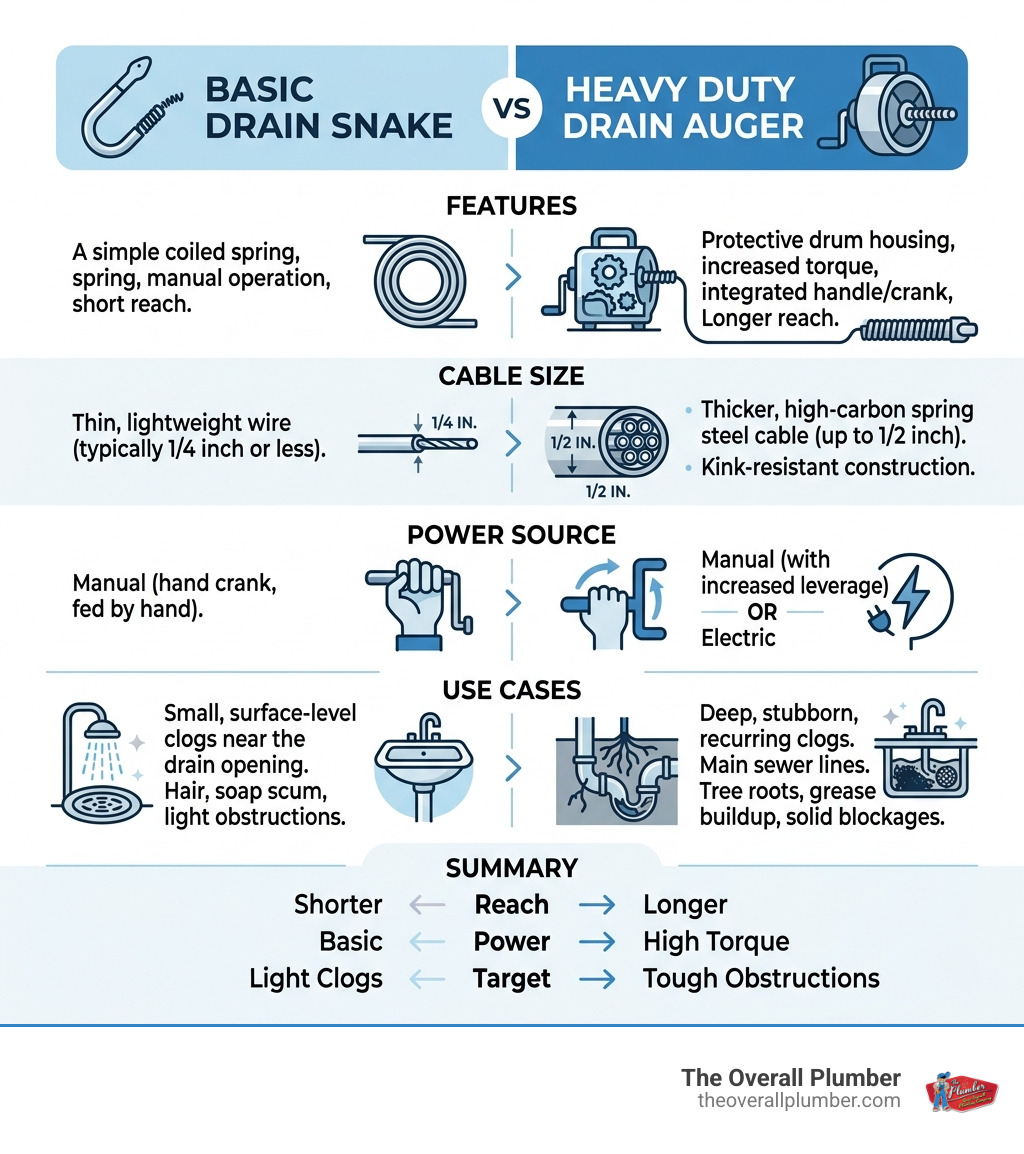
When we talk about a heavy duty drain auger, we aren’t talking about that little plastic zip-strip you use to pull hair out of a sink pop-up. We are talking about a serious piece of plumbing equipment. While a basic drain snake is usually a thin, hand-fed wire meant for clogs within the first few feet of a pipe, a heavy-duty model is designed to travel deep into your plumbing system—sometimes up to 100 feet—to break through solid obstructions.
The primary difference lies in the construction. A heavy duty drain auger typically features a drum housing that contains the cable, preventing it from flopping around and making a mess. The cables themselves are often made of high-carbon spring steel, sometimes with a nylon or braided inner core to provide “kink-resistance.” This is vital because if a cable kinks inside your pipe, you’re looking at a very expensive extraction bill.
| Feature | Basic Drain Snake | Heavy Duty Drain Auger |
|---|---|---|
| Cable Diameter | 1/8″ to 1/4″ | 1/4″, 3/8″, to 1/2″ |
| Reach | 10 to 15 feet | 25 to 100 feet |
| Housing | Often none (exposed wire) | Enclosed drum (manual or power) |
| Best Use | Surface hair clogs in sinks | Main lines, deep grease, root intrusion |
| Torque | Very low | High (can break through solid debris) |
If you are looking for professional-grade options, you can find a wide variety of Augers, Plungers & Drain Openers — Plumbing that range from simple hand-cranked drums to motorized machines.
Key Features of a Heavy Duty Drain Auger
If you’re shopping for one of these tools in Pearland or League City, don’t just grab the cheapest one on the shelf. Look for these specific features that define “heavy duty”:
- Kink-Resistance: Look for cables with a “braided inner core” or “solid core.” These are much harder to twist into a knot when they hit a tough blockage.
- Cable Diameter: For most indoor sinks and tubs, a 1/4-inch cable is standard. However, for 2-inch to 4-inch main lines, you’ll want a 1/2-inch diameter cable to provide enough “muscle” to clear the pipe.
- Reach: A 25-foot cable is fine for a bathroom sink, but if your clog is in the main line under your Houston home’s slab, you might need a 50-foot or even a 100-foot reach.
- Reinforced Thumbscrews: This is the part that locks the cable in place. On cheap models, these strip easily. Heavy-duty versions use high-impact poly or steel thumbscrews.
- Included Accessories: Quality kits often come with work gloves and storage bags. Trust us—after pulling a snake out of a sewer line, you’ll want a dedicated bag to keep that mess contained!
Manual vs. Electric: Which Should You Choose?
This is the big debate for DIYers in Galveston and Harris County. Do you go with the “arm-strong” method or let a motor do the work?
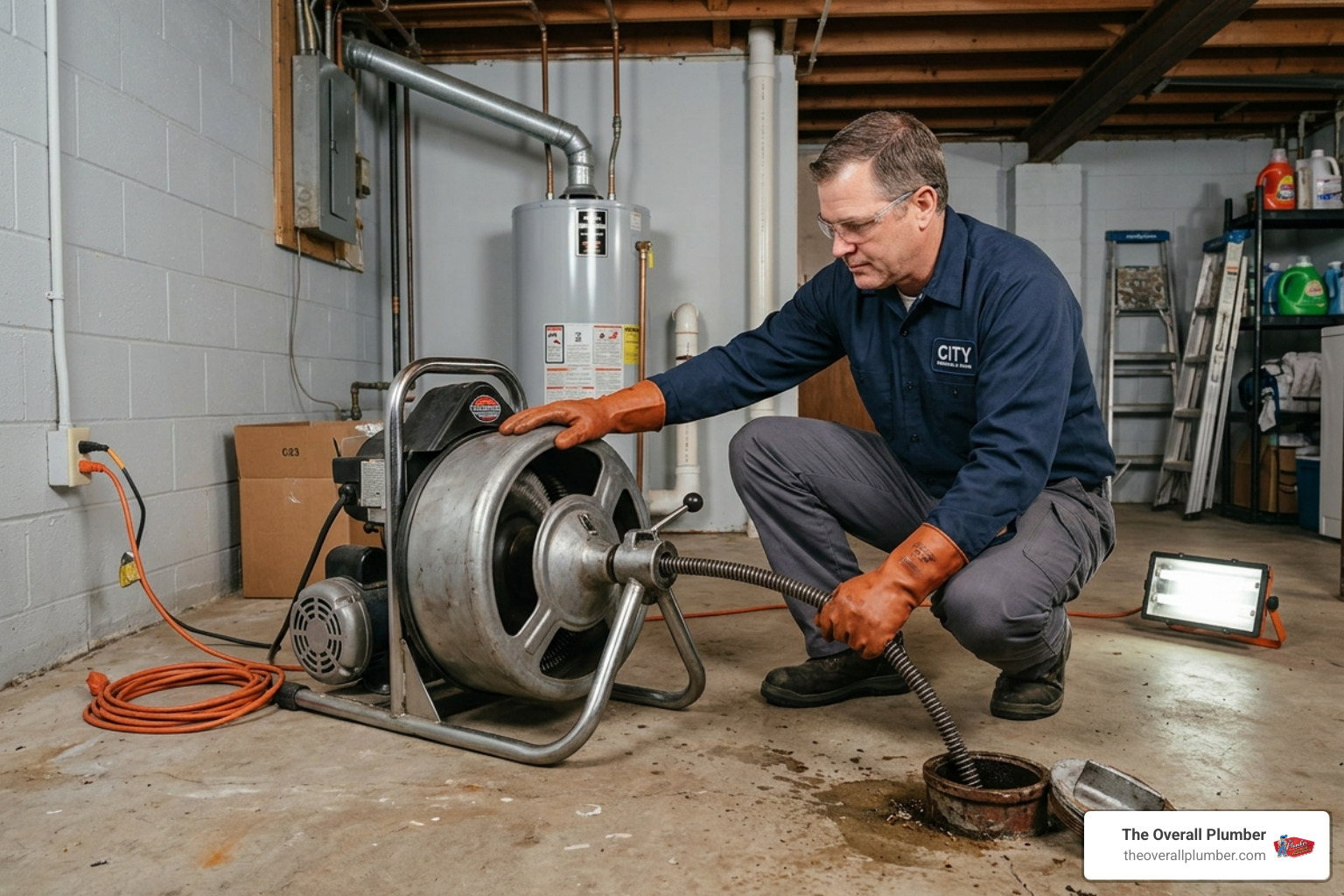
Manual Drum Augers are powered by a hand crank. You feed the cable in, lock the thumbscrew, and turn the handle. They are lightweight, portable, and require no electricity. They are excellent for homeowners who want a reliable tool “just in case.”
Electric or Drill-Powered Augers take the physical strain out of the job. Some models, like the BAUER 1/2 in. x 50 ft. Manual-Feed Drain Cleaning Drum Machine, utilize high-torque motors to spin the cable at speeds up to 220 RPM. Others are “drill-capable,” meaning you can attach your own cordless drill to a shank on the back of the drum.
The advantage of electric is sheer power. If you are dealing with a 10-year buildup of grease in a kitchen line or a small root ball in a sewer pipe, a manual crank might not provide enough torque to break through. However, electric models are heavier (some weigh over 60 lbs) and require a nearby GFCI-protected outlet for safety.
When to Use a Manual Heavy Duty Drain Auger
Don’t think manual means “weak.” A high-quality manual 25 ft. Drum Auger Steel Plumbing Drain Snake with Drain Cleaning Cable is often the best choice for:
- Small Indoor Drains: If the clog is in a 1-1/2 inch sink or tub pipe, a massive electric machine is overkill and could actually damage the smaller pipes.
- Budget-Friendly Maintenance: You can get a very capable manual drum auger for under $30, whereas electric machines often start at $250+.
- Tight Spaces: If you’re squeezed under a crawlspace in Santa Fe or a tight bathroom in Friendswood, the lightweight design and pistol grip of a manual auger make it much easier to maneuver.
How to Use a Heavy Duty Drain Auger Safely
Using a heavy duty drain auger isn’t just about shoving wire down a hole. If you do it wrong, you can hurt your hands or, worse, break your pipes.
Step 1: Preparation Always wear heavy-duty work gloves (leather or thick rubber) and eye protection. Drain gunk is not something you want in your eyes. If you are using an electric model, ensure the area is dry to avoid electrical shock.
Step 2: Feeding the Cable Loosen the thumbscrew on the drum and pull out enough cable to feed it manually into the drain. Keep feeding until you feel resistance. This is either a bend in the pipe or the clog itself.
Step 3: Engaging the Clog Once you hit resistance, leave about 4-5 inches of cable sticking out of the drain. Tighten the thumbscrew. Now, begin rotating the drum clockwise. If you are using a manual auger, turn the knob steadily. If using a drill-powered version, use a variable speed trigger and keep the RPMs low (usually under 200-500 RPM).
Step 4: Breaking Through As you turn, apply slight forward pressure. You should feel the cable “bite” into the clog. Once it moves forward, loosen the thumbscrew, feed more cable, and repeat.
Step 5: Retracting Once the water starts flowing, don’t just yank the cable out. Continue rotating (still clockwise!) while slowly pulling the cable back. This helps the head of the auger “chew” through any remaining debris on the way out.
Precautions for Toilets and PVC Pipes
Here is a pro tip from us at The Overall Plumber: Never use a standard drum auger on a toilet.
The steel cable will leave permanent, ugly grey scratches on the porcelain that you can’t scrub off. For toilets, you need a specific tool called a “closet auger,” which has a protective rubber sleeve.
Additionally, be careful with PVC pipes. While modern Schedule 40 PVC is quite tough, older, thinner pipes can be brittle. Excessive downward pressure or high-speed spinning with a heavy-duty cable can actually “drill” right through the side of a plastic elbow. If you feel the cable get stuck, stop spinning immediately. Don’t force it, or you might end up needing a major pipe replacement.
Maintenance and Troubleshooting Common Issues
A heavy duty drain auger is an investment. If you throw it back in the garage while it’s still wet with “drain juice,” it will be a rusted, useless mess within a month.
Cleaning After Use: After you finish the job, pull the entire cable out of the drum. Spray it down with a garden hose to remove hair, grease, and debris. Let it air dry completely.
Rust Prevention: Once dry, wipe the cable down with a rag soaked in light machine oil or WD-40. This creates a barrier against moisture. Many professional-grade cables come with “Rust Guard” plating, but a little extra oil never hurts.
Common Issues and Fixes:
- Kinked Cables: If the cable develops a sharp bend, it’s compromised. It will likely kink again in the same spot. You can sometimes cut off the damaged end and attach a new tip, but often it’s safer to replace the cable entirely.
- Handle Durability: Users often report handles breaking on cheaper models. If your handle feels flimsy, don’t force it. The weight distribution on 50-foot manual augers can be tricky; try “tethering” the drum with a cord to take the weight off your wrist.
- Cable Won’t Feed: This usually means the thumbscrew isn’t tight enough or the internal feed bearings are clogged with grease. Clean the drum regularly to keep parts moving smoothly.
Frequently Asked Questions
When should I call a professional plumber instead of using an auger?
While a heavy duty drain auger can handle a lot, it has limits. You should call us if:
- Main Line Backups: If every drain in the house is backing up at once, the problem is likely deep in the sewer main.
- Tree Root Intrusion: Standard homeowner augers usually just poke a hole through roots; they don’t remove them. We use industrial-strength cutters to clear roots completely.
- Recurring Clogs: If you have to snake the same drain every month, there’s a structural issue like a pipe collapse or a “bellied” line that requires a camera inspection.
- Strange Noises: If you hear gurgling in the toilet when you run the sink, that’s a venting or deep mainline issue.
What is the best value heavy duty drain auger under $100?
For most homeowners in the Texas City and Pasadena area, a 50-foot steel drum auger with a 1/4-inch or 5/16-inch cable is the “sweet spot.” Look for models that are “drill-capable.” This allows you to use it manually for easy clogs but gives you the option to attach a power drill for the tough ones. Brands found at Harbor Freight or Home Depot often offer these for $40-$80.
Can a heavy duty auger damage my plumbing?
Yes. Aside from the porcelain scratching mentioned earlier, using the wrong size cable can be an issue. Using a 1/2-inch “main line” cable in a small 1-1/4 inch bathroom sink drain can crack the pipe or get the cable permanently stuck in a tight P-trap. Always match the cable size to the pipe diameter.
Conclusion
Tackling a major clog can be intimidating, but with the right heavy duty drain auger, you can save hundreds of dollars in plumbing fees. Whether you choose a manual drum for light maintenance or a power-assisted machine for deep clogs, patience and safety are your best tools.
At The Overall Plumber, we want you to feel empowered to handle basic home maintenance. However, we also know that some clogs are just too big for a DIY fix. If you’ve tried the auger and the water still won’t budge, or if you’re worried about damaging your pipes, give us a call.
We provide expert drain cleaning with high-end augers and professional camera inspections throughout Brazoria, Galveston, and Harris Counties. We offer a satisfaction guarantee, priority scheduling, and we never charge overtime fees.
Protect your home with an overall plumbing protection plan to ensure your pipes stay clear year-round!