

Act Fast When a Basement Floor Drain Backs Up
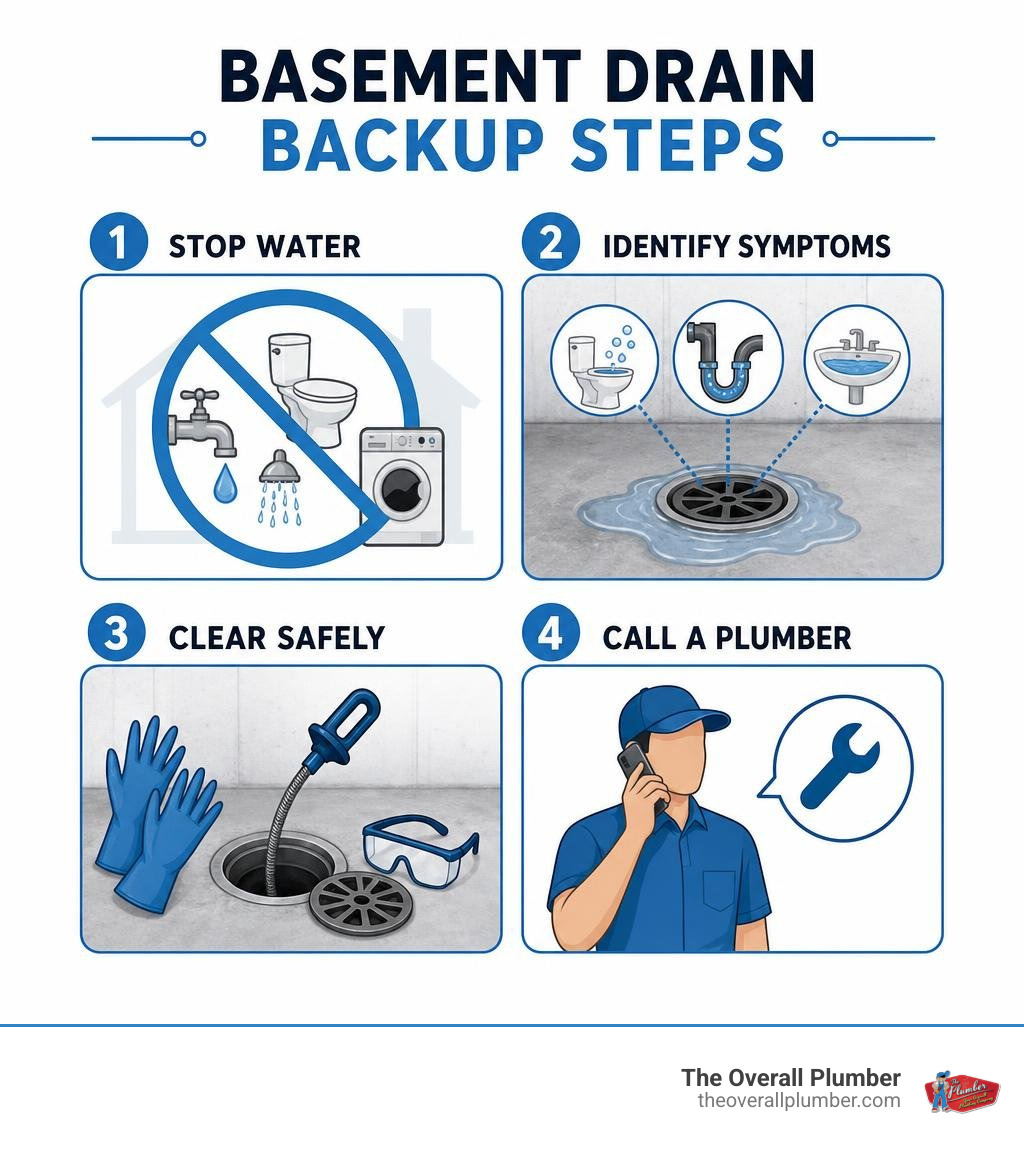
If you have a main drain clogged in basement, stop using water throughout the house right away. Do not flush toilets, run the washer, shower, or use sinks. Put on gloves, keep children and pets away, and check whether water rises in the floor drain when another fixture drains. If several fixtures gurgle, drain slowly, or back up, treat it as a main sewer problem and call a licensed plumber.
A basement floor drain is often the lowest opening in your home’s drain system. That means a clog farther down the main line can force wastewater back up through this drain first. A small amount of lint, sediment, or debris may be a local floor-drain clog. But sewage odors, repeated backups, bubbling toilets, or wastewater after using upstairs plumbing can point to roots, grease, wipes, or a damaged sewer pipe.
I am Dayton Whitworth, a second-generation plumbing professional serving Greater Brazoria County, Galveston County, Houston, and nearby Gulf Coast communities. I help homeowners diagnose and clear a main drain clogged in basement, from urgent backups to long-term sewer line protection.
Main drain clogged in basement terms at a glance:
Identifying the Scope: Localized Blockage vs. Main Drain Clogged in Basement
When standing water appears around your basement floor drain, the first step is determining whether the blockage is confined to that specific fixture or trapped deep within your primary sewer lateral. A localized clog involves a physical obstruction resting in the shallow P-trap directly under the drain grate. A main sewer line clog, by contrast, stops the entire outflow of your residence, turning your basement floor into an overflow reservoir for every fixture used upstairs.
To isolate the issue, follow a structured diagnostic sequence:
- The Single-Fixture Flow Test: Pour a five-gallon bucket of clean water directly down the basement floor drain. If the water drains away effortlessly without bubbling, the local trap is open.
- The High-Volume Appliance Check: Run an upstairs washing machine through a discharge cycle or flush two upper-level toilets back-to-back. If wastewater immediately surges out of the basement floor drain or nearby low-point fixtures, the building lateral is obstructed downstream.
- The Multi-Fixture Audit: Check all basement-level fixtures. If you notice your basement shower pan filling when someone runs the kitchen sink, or the basement toilet bubbles and emits sewer gas, the primary drain-waste-vent (DWV) stack is compromised.
| Diagnostic Factor | Localized Branch Clog | Main Sewer Line Blockage |
|---|---|---|
| Affected Fixtures | Single floor drain or isolated sink | Multiple low-point fixtures across the home |
| Reaction to Upstairs Use | Water level remains unchanged | Wastewater surges out of basement drains |
| Trap Seal Behavior | Holds water normally | Siphons dry, gurgles, or emits foul gas |
| Primary Physical Cause | Lint, sediment, loose dirt, soap scum | Tree roots, heavy grease, collapsed lateral pipe |
| Wastewater Classification | Gray water (localized wash debris) | Category 3 Black Water (raw municipal sewage) |
| Resolution Method | Wet/dry vac extraction or light snaking | Heavy motorized augering or hydro-jetting |
How Branch Lines Differ from Whole-House Sewer Pipes
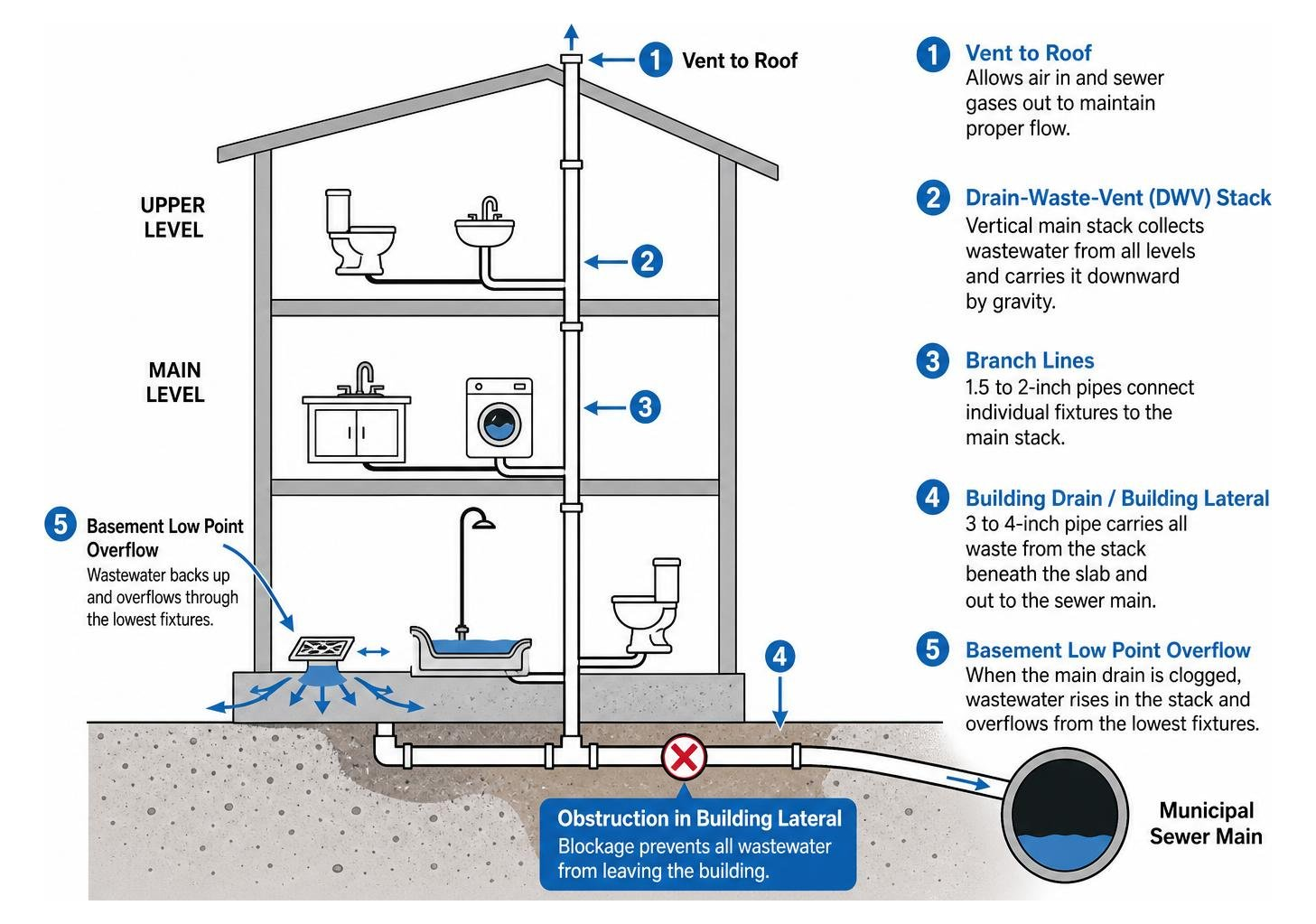
Your home relies on an interconnected drain-waste-vent network designed to transport wastewater using gravity. Individual branch lines-measuring between 1.5 to 2 inches in diameter-connect isolated fixtures like sinks, laundry tubs, and basement floor drains to secondary horizontal runs. When one of these smaller pipes becomes restricted, our detailed guide on dealing with a backed up drain helps identify local trap obstructions before you assume the worst.
These secondary branch lines eventually feed into a 3- to 4-inch primary soil stack. The primary stack collects all discharge from kitchen drains, bathrooms, and utility connections, funneling the volume into the main underground building drain beneath your concrete slab. While a blocked 2-inch branch line simply renders a single sink or utility tub unusable, a blockage inside the 4-inch main sewer pipe traps hundreds of gallons of wastewater inside the building lateral.
Why a Main Drain Clogged in Basement Threatens the Lowest Fixtures
Wastewater follows the path of least mechanical resistance. Under normal operation, gravity channels liquid waste down your primary stack, past your building foundation, and into the municipal sewer main. When an obstruction blocks the underground lateral line, all outgoing water hits a structural dead end.
Because water naturally seeks its lowest hydrostatic level, it fills the vertical stack from the bottom up. The basement floor drain and low-profile basement shower pans sit at the lowest physical elevation in the entire plumbing system. As hydrostatic head builds within the vertical piping, wastewater pushes through the floor drain trap seal, spilling contaminated effluent across the basement slab.
Under the IICRC S500 Standard for Professional Water Damage Restoration, sewage backups from main drainage lines are classified as Category 3 black water. This wastewater contains dangerous pathogenic microorganisms, raw human waste, bacteria, and chemical residues. When sewage emerges through a floor drain, immediate containment is critical to protect your household from severe biological hazards and structural damage.
What Causes Deep Sewer Backups in Basements?
Deep drainage blockages rarely develop overnight. They are typically the result of gradual structural decay, environmental factors, or severe debris accumulation inside the buried lateral pipe beyond the basement walls.
Tree Root Infiltration, Grease, and Aging Foundation Pipes
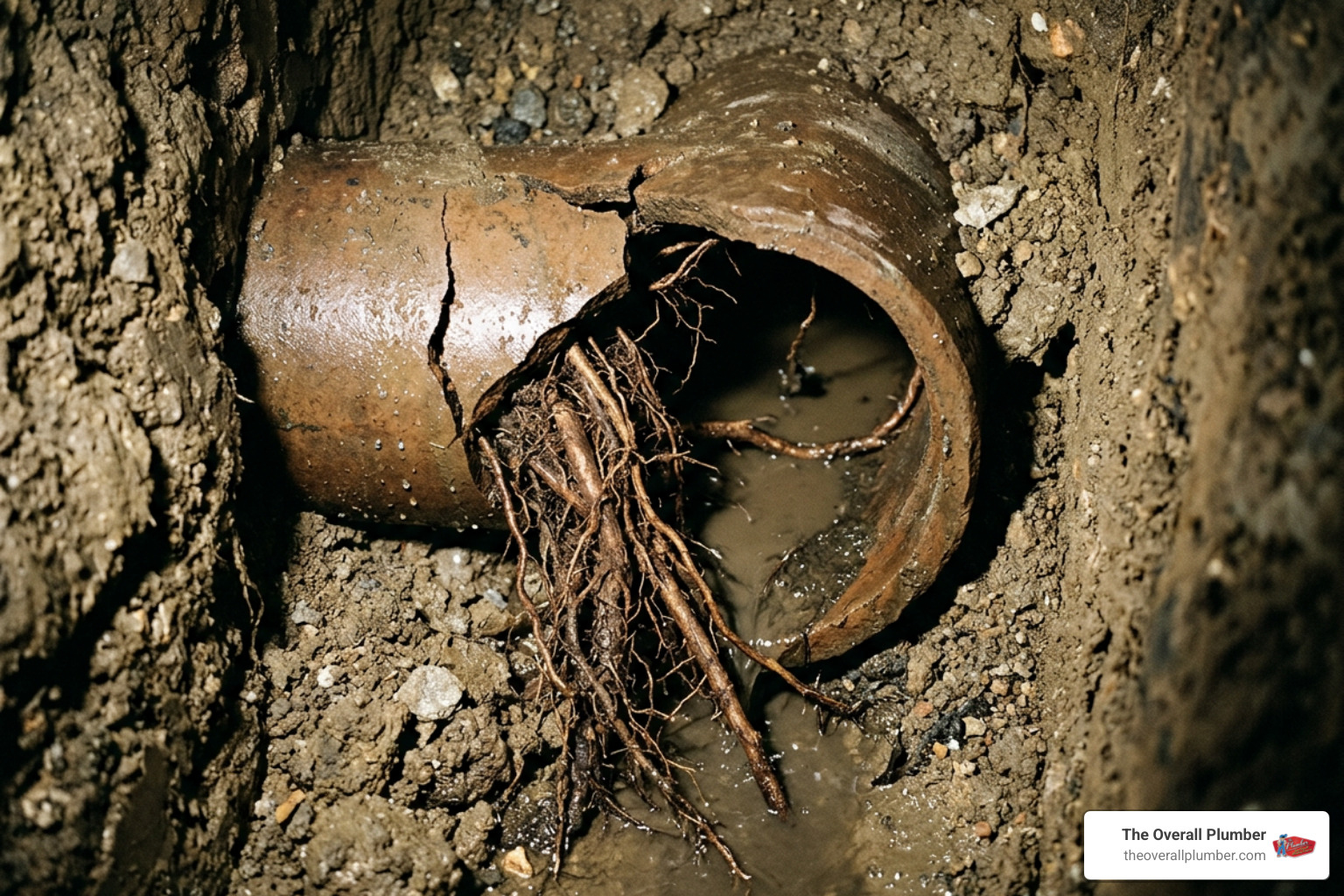
Subterranean tree roots represent the single most common cause of recurring sewer line blockages in properties older than 30 years. Root systems naturally seek out moisture and thermal warmth, entering tiny micro-fissures or unsealed joints in clay and cast iron pipes. Once inside, roots act as a living filtration net, catching toilet paper, solid waste, and suspended debris until the line is completely choked.
In aging properties across Houston, Pasadena, and surrounding Gulf Coast areas, underground cast iron piping is also prone to severe interior calcification and channeling. When scale builds up or pipes crack, knowing how to repair a cracked basement cast iron drainpipe becomes critical before jagged interior scale catches non-flushable wipes and congealed fats. Saponified cooking grease creates thick, rock-hard obstructions along pipe bellies (low-hanging dips in the run), completely sealing the 4-inch channel.
Recognizing When a Main Drain Clogged in Basement Signals Sewer Pipe Failure
A chronic floor drain backup is frequently an early warning sign of severe structural sewer failure beneath the ground. If an underground pipe has fractured, shifted, or completely collapsed under shifting coastal soils, wastewater cannot flow out, and running water from the house quickly backs up into the lowest drains.
Pay close attention to these critical warning signs of structural failure:
- Persistent Gurgling and Bubbling: Air displaced by trapped wastewater is forced upward through fixture traps, producing distinct bubbling sounds in toilets and floor drains.
- Sewer Gas Smells: Persistent hydrogen sulfide odors lingering near floor grates indicate that trap seals are being pulled dry by improper venting or deep main-line restrictions.
- Soggy Yard Depressions and Sinkholes: A cracked or separated lateral pipe leaches wastewater into the surrounding soil, creating unusually green patches of grass, damp soil depressions, or localized sinkholes.
- Chronic, Unresolved Backups: If a drain backs up repeatedly within days of being mechanically cabled, an underlying structural fault or heavy root mass has compromised the pipe.
Our comprehensive overview on avoiding a total washout from sewer line problems explains how structural degradation and heavy seasonal rains can overload compromised lateral lines. During major storms, municipal storm surcharges can create extreme backpressure, turning your basement floor drain into a geyser if structural protections are not in place.
Step-by-Step Plan to Unclog and Restore Flow
If you are dealing with a basement floor drain backup, clearing it safely requires a systematic approach. Do not jump straight to blind mechanical drilling without taking the necessary safety precautions and diagnostic steps.
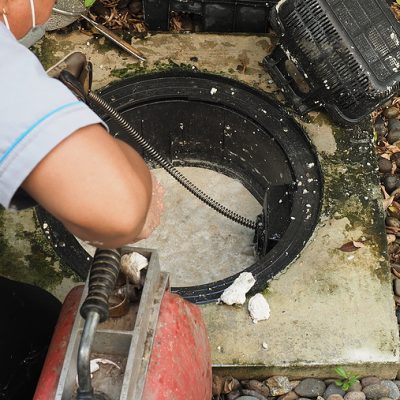
Step 1: Immediate Safety Precautions and Water Shutoff
Before touching any plumbing equipment, take control of the environment to prevent electrical shock, property damage, and biological exposure:
- Cease All Water Usage: Instruct everyone in the house to stop running water, flushing toilets, or operating washing machines and dishwashers.
- Kill Power to Low-Lying Outlets: If standing wastewater reaches basement electrical outlets, extension cords, or floor-mounted appliances, shut off the appropriate circuit breakers at your main panel.
- Suit Up with PPE: Put on heavy-duty waterproof rubber boots, thick nitrile or leather work gloves, and eye protection. Avoid all skin contact with standing sewage.
- Review Emergency Action Protocols: Review our baseline steps on what to do when your main drainage pipe is clogged to keep family members and pets safely quarantined away from the affected area.
Step 2: Clearing Surface Sediments and Trapped Floor Debris
Many basement floor drains accumulate sand, flaking concrete dust, pet hair, and laundry lint in their shallow P-traps. These heavy, dense materials will not respond to standard plunging or drain snakes.
- Remove the Grate: Unscrew or pry off the surface floor drain strainer with a flathead screwdriver.
- Extract Trapped Sediment: Insert the rigid nozzle of a wet/dry shop vac directly over the drain throat. Vacuum out all standing water, loose grit, and sludgy sediment.
- Agitate Dense Sand: If heavy sediment remains packed tightly in the trap curve, loosen it using a stiff wire or screwdriver, alternating between mechanical scraping and wet/dry vacuum suction.
- Trap Flushing: Pour hot water into the trap to test the flow. While a 1:1 mixture of baking soda and vinegar can help dissolve light organic films, it lacks the mechanical pressure needed to clear deep lateral clogs or compacted tree roots.
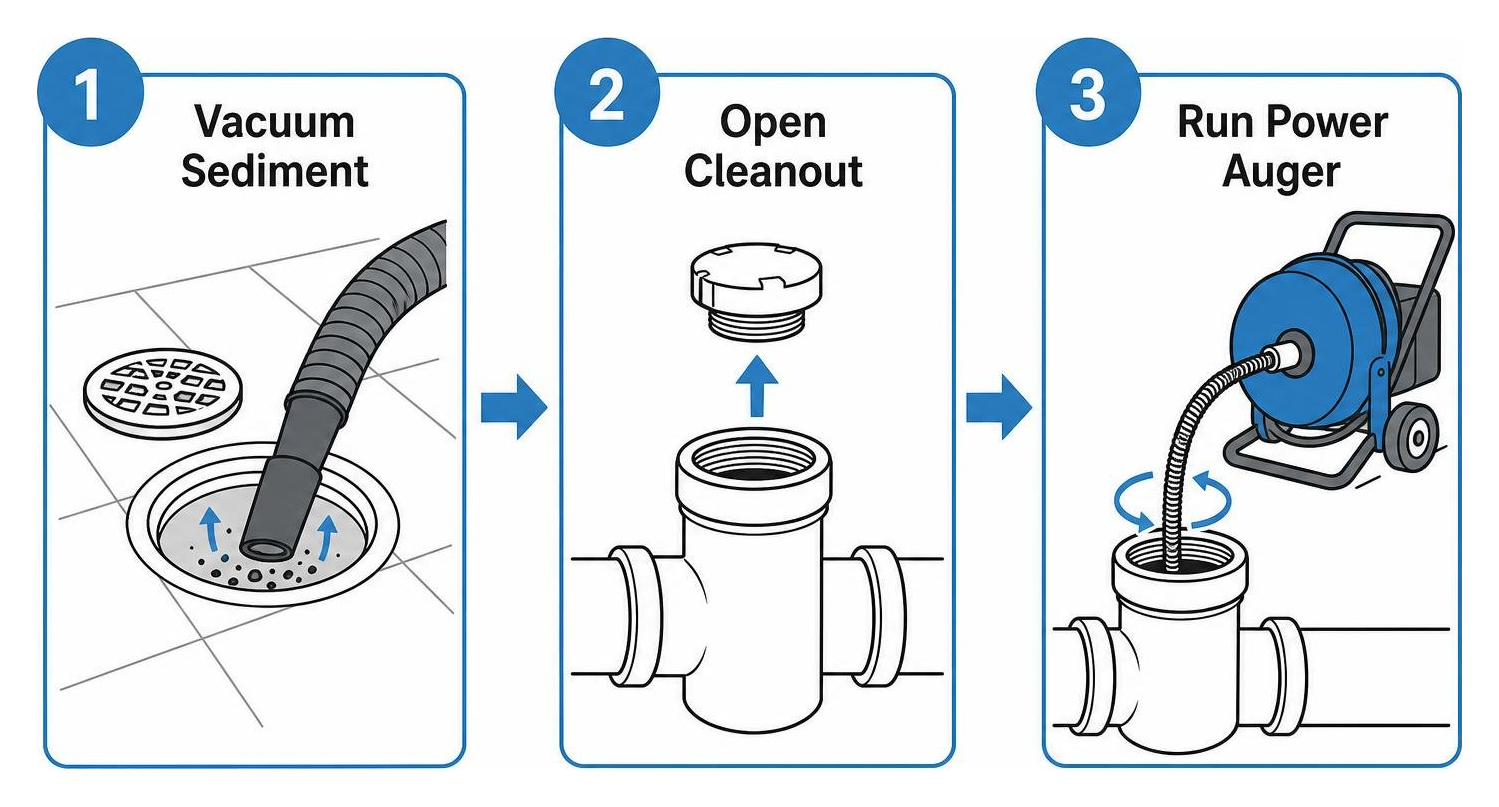
Step 3: Accessing the Cleanout and Operating a Motorized Sewer Auger
If clearing the local floor trap fails to restore flow, you must access the main line through the cleanout port. If you are unsure where your cleanout fittings are buried, refer to our guide on how to locate sewer lines to find the access point in your basement slab, utility room, or exterior foundation wall.
Before proceeding, review the layout details in demystifying your basement drain cleanout to ensure you are opening the correct lateral access fitting.
- Controlled Plug Removal: The main cleanout cap seals backpressure inside the pipe. Place large buckets and absorbent towels beneath the cleanout fitting. Use a pipe wrench to slowly loosen the square-head plug counter-clockwise. If wastewater begins to seep through the threads, stop and allow the hydrostatic pressure to bleed off gradually into your containers.
- Selecting the Correct Cable: Never attempt to clear a 4-inch main sewer line using a thin, 1/4-inch sink snake. Narrow cables easily loop, kink, and snap inside large pipes. You need a dedicated motorized drum auger fitted with a 3/4-inch continuous inner-core cable, as detailed in our guide on choosing the right basement sewer cleanout kit.
- Position the Machine: Place the motorized sewer snake no more than two feet away from the cleanout opening. This close positioning prevents the rotating cable from whipping wildly and causing severe injury.
- Feed and Rotate: Wearing heavy-duty leather drain gloves, feed the cable into the line toward the street. Depress the foot switch to engage rotation, feeding the head slowly into the pipe.
- Read Rotational Resistance: When the cutting head hits an obstruction, you will feel the cable stiffen and bow. Do not force the cable forward. Ease the feed back slightly, allowing the cutting blades to slice through the roots, grease, or debris mass.
- Complete the Run and Retrieve: Advance the cable the entire length of your lateral line to the municipal main connection, then retrieve the cable under slow, continuous rotation.
Professional Diagnostic and Permanent Restoration Solutions
When heavy root intrusion, structural pipe collapse, or thick mineral scaling resists standard mechanical augers, professional diagnostic tools and high-capacity equipment are required.
High-Definition Sewer Camera Inspections and Hydro-Jetting
We utilize self-leveling, high-definition fiber-optic sewer cameras equipped with radio-frequency sondes to pinpoint the exact depth and nature of subsurface obstructions. By feeding an optical line directly through your cleanout, we inspect the entire length of your pipe, identifying root intrusions, bellies, cracks, and offset joints without cutting into your basement floor.
When lines are packed with heavy grease, sand, or stubborn tree root systems, hydro-jetting is the gold standard for restoration. Unlike mechanical snakes that simply punch a narrow hole through an obstruction, our hydro-jetting systems pump specialized water streams at 3,500+ PSI. This extreme pressure shears through intrusive roots, scours scale from old cast iron, and flushes sludge completely out to the city main.
If you are dealing with a severe or recurring blockage, learn more about scheduling a priority auger service for main drain clogs to clear the emergency quickly and prevent widespread wastewater contamination.
Long-Term Flood Prevention: Backwater Valves and Maintenance
Preventing future basement drain disasters requires reliable physical safeguards and routine maintenance:
- Backwater Check Valve Installation: A backwater valve installed on your main building drain allows sewage to flow outward while automatically locking shut if municipal sewers surge backward during heavy coastal downpours.
- Protective Drain Strainers: Fit all basement floor drains and utility sinks with stainless steel mesh strainers to stop debris, hair, and construction dust from entering the trap.
- Foaming Root Inhibitors: If your property is surrounded by mature trees, apply an EPA-approved foaming root inhibitor (such as Dichlobenil) annually. The foam expands to coat the top crown of the pipe, stopping root re-entry without harming surface vegetation.
- Annual Camera Scoping: Schedule an annual optical sewer inspection to catch shifting pipes or scale buildup before an emergency backup occurs.
Frequently Asked Questions About Basement Drain Clogs
Can I use chemical drain cleaners to dissolve a basement sewer clog?
No, you should never pour caustic chemical drain cleaners (such as sulfuric acid or sodium hydroxide) into a backed-up basement floor drain. In a 4-inch main sewer line holding dozens of gallons of standing wastewater, chemical cleaners become diluted and completely ineffective against heavy roots, grease, or collapsed pipes.
Furthermore, these chemicals generate extreme heat that softens PVC connections and accelerates internal corrosion in older cast iron pipes. They also create a severe chemical burn hazard for plumbers who must later cable the line.
How much does professional main sewer line clearing cost?
Professional main sewer line clearing typically ranges from $200 to $600 for standard mechanical snaking, depending on the severity of the blockage, accessibility of cleanouts, and equipment requirements.
Comprehensive solutions—such as high-pressure hydro-jetting paired with a full-color video camera inspection—may fall slightly higher depending on line length and root density. Investing in early professional clearing is far more economical than repairing thousands of dollars in water damage caused by a major sewage backup.
Does heavy rainfall cause main basement drains to back up?
Yes. During periods of intense rainfall across coastal Texas communities, municipal storm and sanitary sewer systems can become completely overwhelmed by stormwater runoff. This saturation creates severe hydrostatic pressure that pushes municipal wastewater backward into residential laterals. Because your basement floor drain sits at the lowest physical elevation in the plumbing layout, it is the first fixture to back up when city systems surcharge.
Protecting Your Home from Severe Sewer Backups
The Overall Plumber delivers dependable, long-term drainage solutions for homeowners across Houston, Clear Lake, League City, Friendswood, Pearland, Pasadena, Galveston, and surrounding areas. We provide complete drain cleaning with heavy-duty augers, high-definition camera inspections, hydro-jetting, and comprehensive plumbing protection plans-all backed by our ironclad satisfaction guarantees, priority scheduling, and no overtime fees or trip charges.
Don’t let a clogged drainage line threaten your home. Schedule your expert sewer line services with our dedicated team today.