

What to Do When You Have a Backed Up Drain
A backed up drain is one of the fastest ways a normal day turns into a full-blown home emergency. One minute you’re doing laundry. The next, dirty water is rising through your basement floor drain.
Here’s what to do right now:
- Stop using all water — no toilets, sinks, showers, or washing machines.
- Turn off the main water valve if water is still rising.
- Switch off electricity to any flooded areas before entering.
- Stay out of standing water — sewage is a biohazard.
- Call a licensed plumber if multiple drains are affected or sewage is present.
If only one drain is slow and there’s no sewage smell, you may have a localized clog you can clear yourself. But if several fixtures are backing up at once, you’re likely dealing with a main line blockage — and that needs a professional.
The rest of this guide walks you through causes, cleanup, fixes, and how to stop it from happening again.
I’m Dayton Whitworth, a second-generation plumber serving Greater Brazoria County, Galveston County, Houston, and the surrounding Gulf Coast, with hands-on experience clearing backed up drains from everything from grease buildup to tree root intrusions. Let’s get your drains flowing again.
Backed up drain word guide:
The Root Causes of a Backed Up Drain
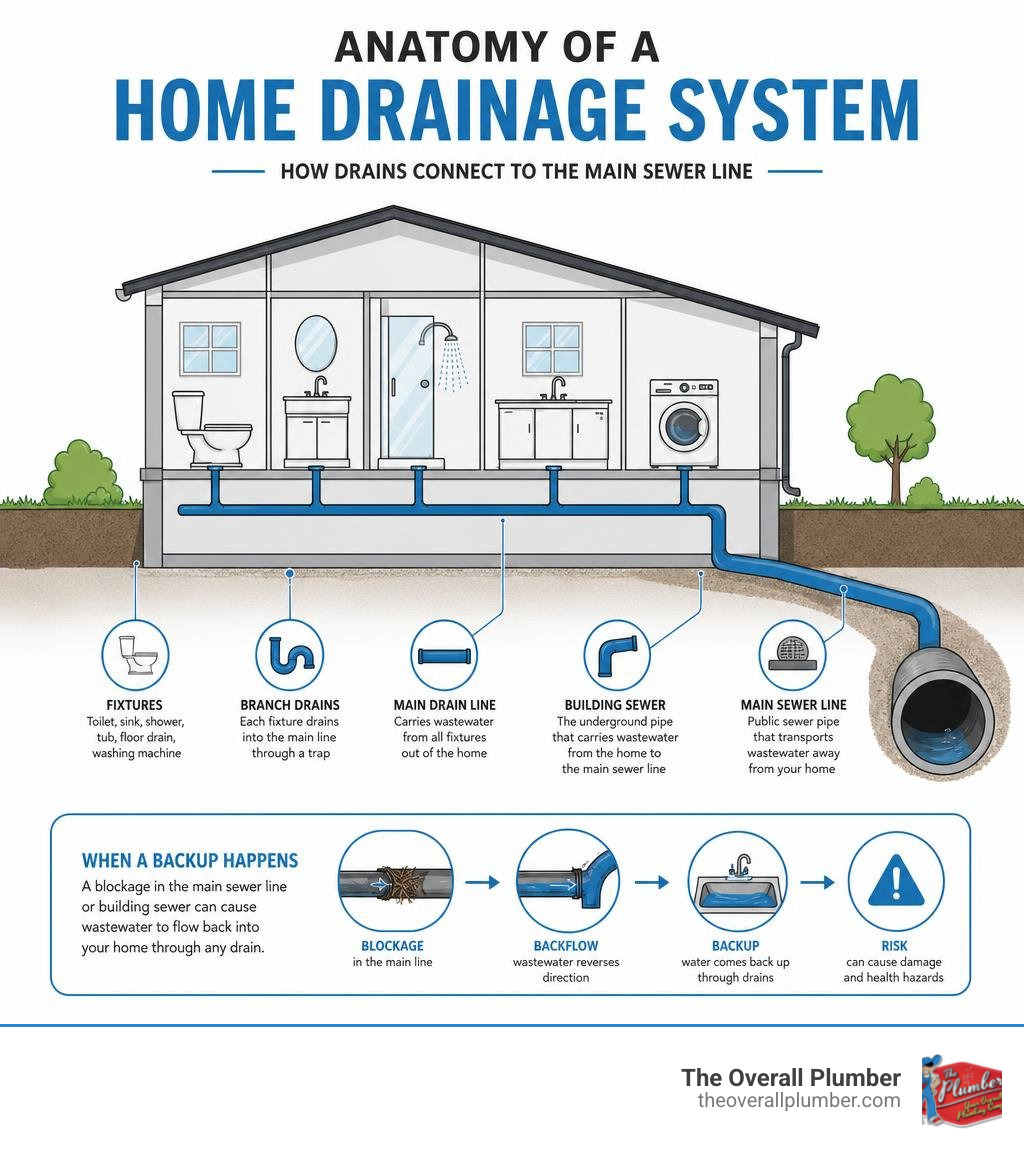
When wastewater reverses course and heads back up into your living space, it is trying to tell you something. A backed up drain is rarely a random act of plumbing defiance; it is almost always the result of a physical obstruction or structural failure somewhere along your home’s waste disposal highway.
In our years servicing homes from Pasadena to Galveston, we have seen that most main line backups boil down to five primary culprits: tree roots, aging pipes, grease buildup, heavy Gulf Coast rains, and pipe bellying. Understanding these causes is the first step toward reclaiming your peace of mind. For those utilizing kitchen disposals, you can read More info on grease traps and garbage disposals to see how these appliances impact your line’s overall health.
How Tree Roots and Aging Pipes Destroy Sewers
Many homes in older municipal areas like Galveston, La Porte, and historic parts of Houston still rely on original clay or cast iron sewer lines. While these materials were the gold standard decades ago, they do not last forever. Over time, cast iron pipes corrode internally, creating a rough, scaled surface that catches debris. Clay pipes, on the other hand, are highly susceptible to shifting soil and joint degradation.
This structural vulnerability invites the single most aggressive plumbing enemy: tree roots.
In the hot Texas climate, tree roots are constantly on the hunt for moisture and nutrients. Your sewer lateral pipe is essentially a buried buffet of warm, nutrient-rich water. Roots can detect even the microscopic condensation on the outside of a pipe or a tiny hairline crack in a clay joint. Once they find a way inside, they grow rapidly, weaving a dense, fibrous mat that acts like a net, catching toilet paper, waste, and grease. Eventually, the pipe collapses entirely under the pressure of the root growth, leading to a massive backed up drain that a simple plunger cannot hope to resolve.
The Danger of Pouring Grease Down a Backed Up Drain
We have all been tempted to pour warm cooking grease down the kitchen sink, thinking that a quick chase of hot water will flush it safely away. This is a costly misconception.
Once liquid fats, oils, and grease (known in the plumbing industry as FOG) enter your cold underground pipes, they rapidly cool and solidify. They cling to the pipe walls, slowly narrowing the passage like plaque in an artery. Over time, these grease deposits combine with flushed “flushable” wipes and hair to form solid, rock-like masses known as fatbergs.
If you already have a slow or partially backed up drain, pouring grease down the line is like throwing gasoline on a fire. The grease will collect at the point of restriction, sealing the pipe completely. If you are currently dealing with a sluggish drain, ignoring it will only lead to a messier, more expensive disaster later. Check out our guide on Why waiting for a clog to clear itself is a recipe for disaster to see why proactive action is always your cheapest option.
Early Warning Signs Your Main Line is Failing
A catastrophic sewer backup rarely happens without warning. Your plumbing system will usually try to warn you days or even weeks before raw sewage starts bubbling up into your bathtub. By recognizing these red flags early, you can schedule a professional inspection before an emergency occurs.
Keep an eye and an ear out for these common warning signs:
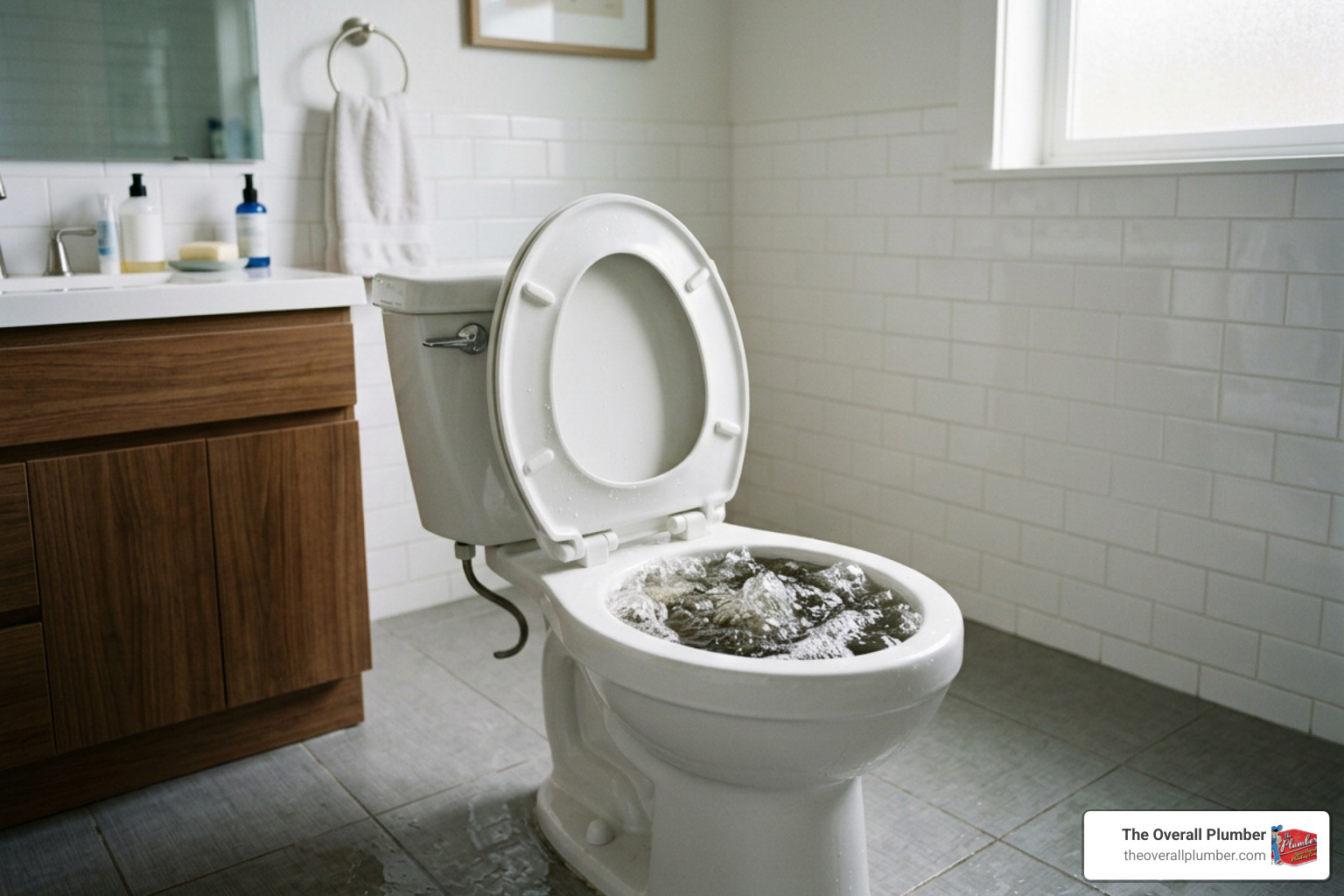
- Gurgling Drains and Bubbling Toilets: If you flush your toilet and hear a distinct wet gurgling sound coming from your bathroom sink or shower drain, your system is struggling to vent air because of an obstruction in the main line. Similarly, if your toilet bowl bubbles or rises when your washing machine drains, you have a systemic blockage.
- Multiple Slow Drains: A single slow sink usually means a localized clog of hair or soap scum. However, if your kitchen sink, guest bathroom shower, and laundry drain are all draining slowly at the same time, the blockage is deep in your main sewer lateral.
- Persistent Foul Odors: A healthy plumbing system keeps sewer gases trapped underground using P-traps. If you smell a constant, musty sewer gas odor around your home’s foundation, basement, or ground-floor drains, it means wastewater is pooling in the line instead of flowing to the municipal main.
- Water Backing Up in Unusual Places: If running your washing machine causes water to pool in your basement floor drain or lower-level shower, your main line is backed up.
If you notice these symptoms, do not wait for the system to fail completely. For more details on diagnosing sluggish lines before they overflow, read More info on slow drains.
What to Do Immediately During a Sewer Backup Emergency
When you realize your sewer line is actively backing up, panic is a natural reaction. However, taking swift, calculated steps can mean the difference between a minor cleanout bill and tens of thousands of dollars in structural home damage.
Follow this emergency checklist immediately:
- Stop All Water Use: This is the most crucial step. Any water you run down any sink, shower, or washing machine in your home will have nowhere to go but out of the lowest drain in your house (usually a basement floor drain or a ground-floor shower). Tell everyone in the household to stop flushing and running faucets immediately.
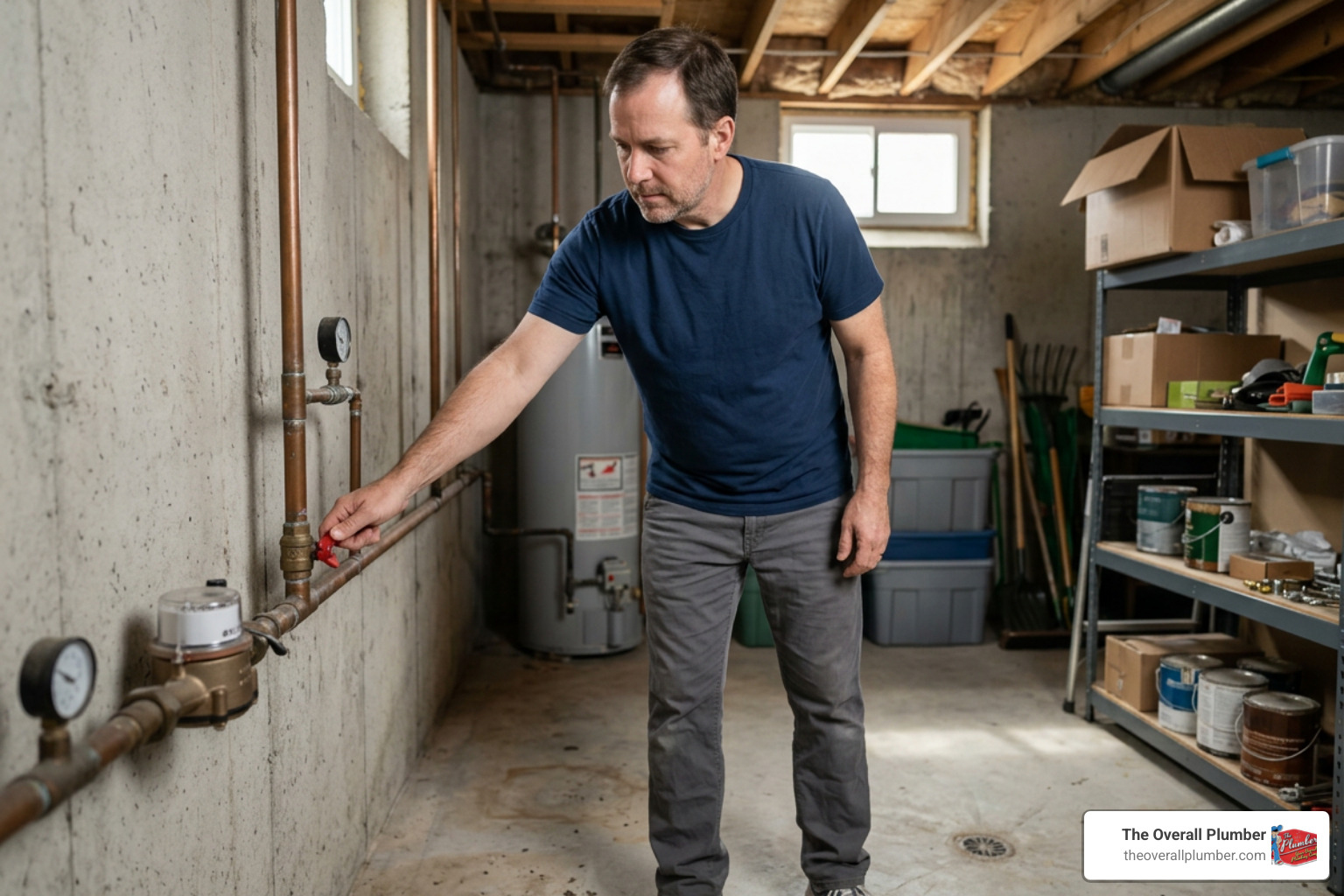
- Shut Off the Main Water Valve: To ensure no appliances or leaky faucets continue adding water to the system, locate your home’s main water shutoff valve and turn it off completely.
- Address Electrical Hazards: Standing water and electricity are a deadly combination. If sewage has flooded your basement or utility room near electrical outlets, breaker boxes, or appliances (like your water heater or washing machine), do not step into the water. Locate your electrical panel from a completely dry area and shut off power to the affected zones. If you cannot reach the panel safely, call your utility provider to pull the meter.
- Gear Up for Safety: If you must enter the area to assess the situation, protect yourself. Wear heavy-duty rubber boots, thick rubber gloves, protective goggles, and a face mask. Raw sewage is classified as Category 3 “black water” and is teeming with harmful pathogens.
If you find yourself in the middle of a plumbing crisis in Pearland, League City, or anywhere across Galveston County, do not wait. Reach out to our team for rapid, local Emergency plumbing services to get a technician to your door immediately.
How to Safely Clean Up After a Sewage Backup
Once the immediate blockage is cleared and the water level stops rising, you are left with the daunting task of cleanup. Because raw sewage contains dangerous bacteria, viruses, parasites, and fungi, you must treat the area as a biohazard zone.
Furthermore, mold can begin forming within 24 to 48 hours in a damp environment, making rapid drying essential.
If you are tackling a minor, non-porous surface cleanup yourself, follow these steps:
- Ventilate: Open windows and run heavy-duty fans to draw fumes out of the home, but do not turn on your central HVAC system, as this can spread airborne pathogens and mold spores throughout the house.
- Remove Wastewater: Use a wet/dry vacuum designed for water extraction to remove standing liquid. Discard the vacuum’s contents directly into a sanitary sewer cleanout, never into storm drains.
- Shovel and Discard Solid Waste: Carefully shovel up solid waste, place it in heavy-duty trash bags, and check local municipal regulations for disposal rules.
- Disinfect Everything: Scrub all hard, non-porous surfaces with hot, soapy water, followed by a professional-grade disinfectant or a bleach solution (typically 1 cup of household bleach mixed with 1 gallon of water). Let the solution sit on surfaces for at least 10 minutes before wiping.
- Discard Porous Materials: Any carpet, carpet padding, drywall, insulation, or upholstered furniture that has come into direct contact with raw sewage cannot be reliably sanitized. These items must be cut out and discarded to prevent severe mold growth and health risks.
| Cleanup Task | DIY Cleanup | Professional Restoration |
|---|---|---|
| Safety Equipment | Basic gloves, masks, and household boots | Industrial respirators, hazmat suits, and commercial air scrubbers |
| Wastewater Extraction | Standard wet/dry vacuums (slow, limited capacity) | Commercial truck-mounted extraction pumps |
| Disinfection Quality | Household bleach solutions (may miss hidden areas) | EPA-approved broad-spectrum sanitizers and thermal fogging |
| Structural Drying | Standard household fans and dehumidifiers | Industrial air movers and LGR dehumidifiers to prevent mold |
| Porous Material Salvage | Generally impossible; high risk of lingering pathogens | Advanced ultrasonic cleaning and specialized drying systems |
For a deeper dive into the health risks, structural considerations, and step-by-step restoration protocols associated with water damage, you can consult this comprehensive Guide to home sewer backups.
Professional Solutions for Main Line Blockages
While minor clogs in a single sink or toilet can sometimes be resolved with a plunger or a hand-cranked snake, a systemic backed up drain requires commercial-grade diagnostic and clearing equipment. Professional plumbers rely on three main tools to resolve mainline blockages:
- Sewer Camera Inspections: Before we ever attempt to clear a pipe, we need to see what we are dealing with. Using a high-resolution, waterproof camera attached to a flexible fiber-optic cable, we inspect the interior of your sewer line. This allows us to locate the exact position of the blockage, identify the pipe material, and determine if the pipe is cracked, collapsed, or bellied.
- Hydro Jetting: For stubborn grease buildup, scale, and soft blockages, hydro jetting is the ultimate solution. This process uses a specialized nozzle to blast water through your pipes at pressures up to 4,000 PSI. It literally scrubs the interior walls of your pipes clean, restoring them to their original diameter without damaging the pipe structure.
- Plumbing Augers (Sewer Snakes): For heavy tree root intrusions, a commercial motorized sewer auger is used. These heavy-duty machines spin a steel cable equipped with sharp cutting blades through the pipe, slicing through thick root masses and clearing the path for wastewater to flow freely again.
When your home’s main line is blocked, speed is of the essence. Learn more about how we utilize these advanced tools to resolve your emergency quickly by reading How clogged drain service can help you unclog fast.
When to Call a 24-Hour Emergency Plumber
Not every plumbing issue requires an emergency after-hours call, but a main sewer line backup is a clear exception. You should contact a professional immediately if you experience:
- Sewage backing up into your bathtub, shower, or floor drains when you flush a toilet or run water.
- Multiple fixtures backing up simultaneously.
- A strong, persistent sewage odor indoors accompanied by wet, soggy spots in your yard.
In these situations, waiting until morning can result in thousands of dollars in water damage and severe mold growth. If you are facing an active backup in Houston, Santa Fe, League City, or surrounding areas, reach out to our team of 24 hour emergency plumbers for immediate assistance.
Why Snaking a Backed Up Drain is Only a Temporary Fix
Many homeowners believe that once a plumber runs a snake through their line, their sewer worries are over. However, snaking is often just a temporary band-aid.
While a sewer snake is excellent for punching a hole through a clog to restore immediate flow, it rarely cleans the pipe completely. If your backup was caused by tree roots, those roots will begin growing back the moment the snake is withdrawn. If it was caused by grease, the snake will simply poke a hole through the grease, which will quickly seal up again as new debris passes through.
To understand why a line can back up again just days after being cleared, read our detailed analysis on a Sewer line backing up days after snaking.
How to Prevent Future Drain Backups
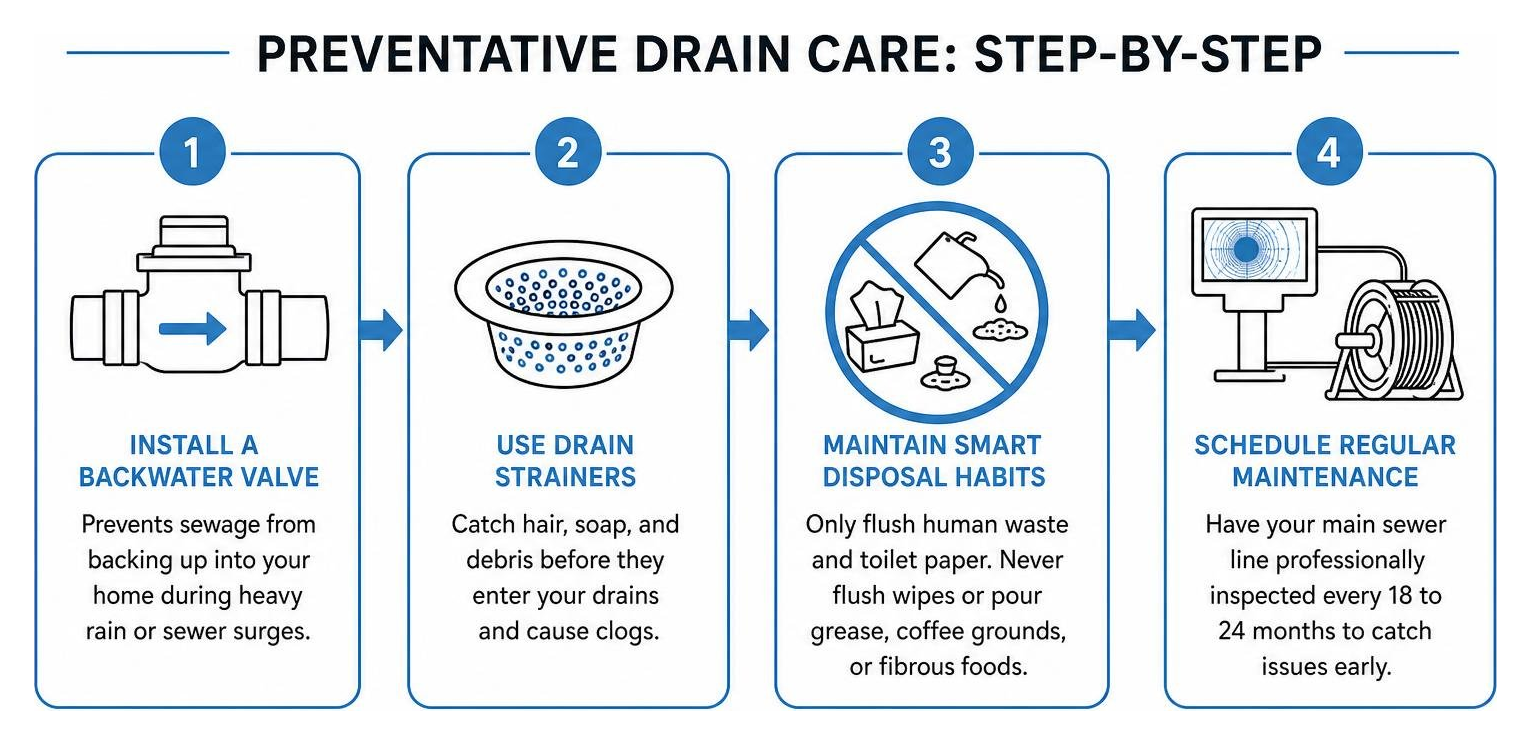
The best way to handle a backed up drain is to prevent it from ever happening in the first place. By adopting smart plumbing habits and investing in preventative maintenance, you can protect your home from future sewer disasters.
Implement these preventative strategies today:
- Install a Backwater Valve: If your home is located in a low-lying area or a region prone to heavy rain, a backwater valve is a smart investment. This one-way valve is installed on your main sewer line. It allows wastewater to flow out of your home but automatically seals shut if sewage from the municipal system tries to back up into your pipes.
- Use Drain Strainers: Install simple mesh strainers in all showers, tubs, and utility sinks to catch hair, soap chunks, and debris before they can enter your drainage system.
- Maintain Smart Disposal Habits: Never flush anything other than human waste and toilet paper. Even products labeled “flushable” wipes do not break down like toilet paper and are a leading cause of main line blockages. Additionally, never pour grease, coffee grounds, or fibrous foods down your kitchen sink.
- Schedule Regular Maintenance: Have your main sewer line professionally inspected with a camera every 18 to 24 months, especially if you live in an older home with mature trees nearby.
Taking these small steps now will save you from catastrophic cleanups later. For more practical tips on keeping your lines clear, read our guide on How to stop the clogging of drainage.
Frequently Asked Questions About Sewer Backups
Does homeowners insurance cover a backed up drain?
In most cases, standard homeowners or renters insurance policies do not cover water damage caused by a sewer or drain backup. This is a common and costly surprise for many homeowners. To protect yourself, you must typically purchase a specific “sewer backup endorsement” or rider. These riders are generally very affordable—often costing between $50 and $150 per year—and can cover thousands of dollars in cleanup, structural drying, and property replacement costs. We highly recommend reviewing your policy with your insurance agent before an emergency occurs.
Can a clogged sewer line make you sick?
Yes, absolutely. Raw sewage is a biohazard containing high concentrations of harmful pathogens, including E. coli, Salmonella, Hepatitis A, and various parasites. Exposure to sewage through direct contact, accidental ingestion, or even inhaling airborne pathogens from standing wastewater can cause severe gastrointestinal illness, skin infections, and respiratory issues. This is why professional restoration, proper protective gear, and thorough disinfection are absolutely non-negotiable when dealing with a backup.
How much does it cost to clear a main sewer line?
The cost to clear a main sewer line varies depending on the severity and location of the clog. A standard professional drain snaking or hydro jetting service typically costs between $200 and $400. However, if a camera inspection reveals that your pipes are collapsed, severely broken, or completely choked with tree roots, the damaged sections will need to be replaced. Excavating and replacing a sewer line can quickly scale into the thousands of dollars, which is why catching warning signs early is so important.
Need Immediate Help? Contact The Overall Plumber Today!
If you are currently staring down a backed up drain, don’t wait for the problem to get worse. At The Overall Plumber, we provide expert drain cleaning with professional-grade augers, high-resolution camera inspections, and comprehensive plumbing protection plans to keep your home safe.
We serve homeowners throughout Brazoria County, Houston, Clear Lake, Santa Fe, League City, Texas City, La Porte, Friendswood, Pearland, Pasadena, Galveston, Harris County, and Galveston County. When you choose us, you benefit from our industry-leading USPs:
- Satisfaction Guarantees on our work.
- Priority Scheduling to get your life back to normal fast.
- No Overtime Fees and No Trip Charges — ever.
Don’t let a clogged line ruin your home. Call us today at tel:281-668-8055 or Schedule a clogged drain service online to connect with a local plumbing expert right now!