

How to Stop the Clogging of Drainage Before Your House Becomes a Pool
Why the Clogging of Drainage Is a Bigger Problem Than You Think
The clogging of drainage is one of the most common and disruptive plumbing problems homeowners face. Here is a quick overview of what causes it and what to do:
Most common causes:
- Hair, soap scum, and grease buildup
- Non-flushable wipes and food particles
- Mineral scaling from hard water
- Tree root intrusion
- Sagging or damaged pipes (pipe bellies)
Quick action steps:
- Use drain strainers to catch hair and debris
- Avoid pouring fats, oils, or grease down the sink
- Try a plunger or baking soda and vinegar for minor clogs
- Call a licensed plumber if multiple drains are slow or clogs keep coming back
Most homeowners assume a slow drain just means something got stuck. But when the same drain clogs again two weeks after you cleared it, something deeper is usually going on. It could be buildup on pipe walls, a sagging section of pipe, tree roots, or aging pipes that are starting to fail. Ignoring it does not make it better — it makes it worse.
You might be standing in a slowly filling bathtub right now. Or watching your bathroom sink drain at a crawl while you brush your teeth. These are early warnings your drainage system is sending you. The good news: most of these problems are fixable once you know what you are actually dealing with.
I’m Dayton Whitworth, a second-generation plumber serving Greater Brazoria County, Galveston County, Houston, and the surrounding Gulf Coast communities, with hands-on experience diagnosing and resolving every form of clogging of drainage — from grease-packed kitchen lines to root-invaded sewer laterals. In this guide, I will walk you through the real causes, the warning signs, and the most effective solutions so you can stop the cycle for good.
Identifying the Culprits: Common Causes for the Clogging of Drainage
When we talk about the clogging of drainage, we aren’t just talking about a single “oops” moment. It is usually a slow-motion disaster. Most residential plumbing systems in areas like Pearland or League City are designed to handle water, human waste, and toilet paper—that’s it. Anything else is an intruder.
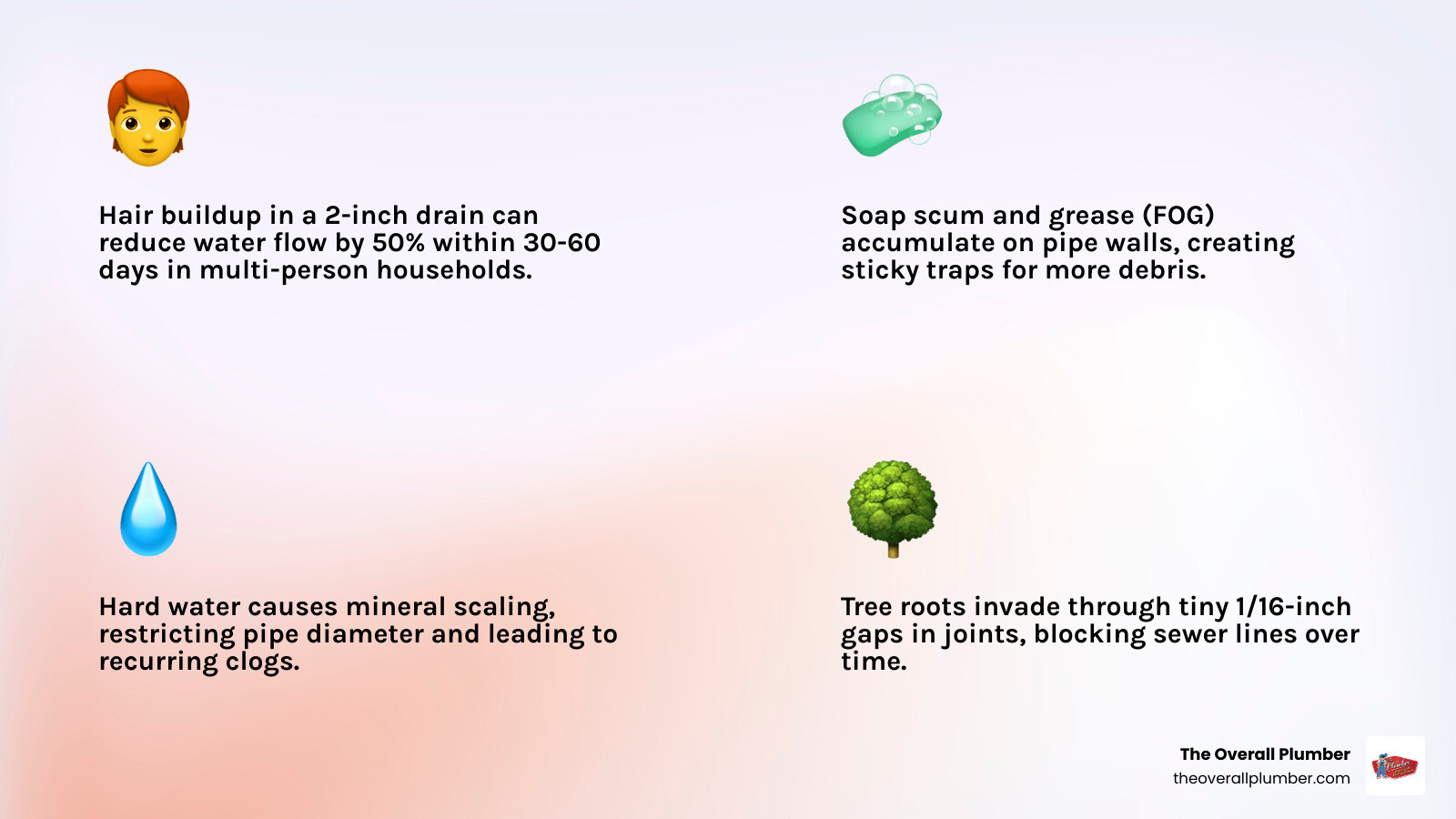
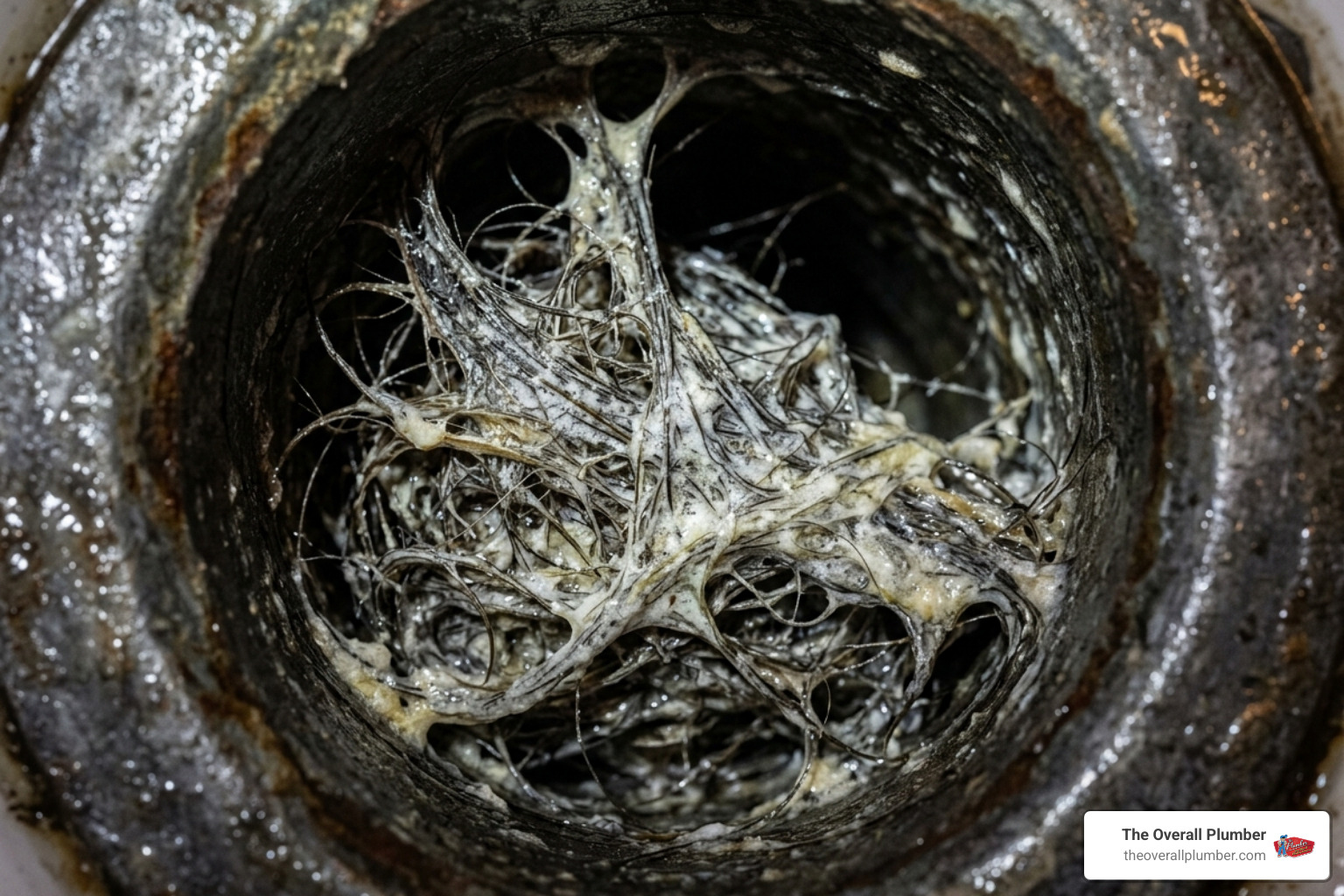
One of the most frequent offenders we see is hair. It sounds minor, but a single 2-inch-diameter drain can accumulate enough hair mass to reduce water flow by 50% or more before you even see a backup. In a multi-person household, a shower drain without a screen can develop a partial obstruction in as little as 30 to 60 days.
Then there is the “FOG” factor—Fats, Oils, and Grease. When you pour warm grease down the kitchen sink, it doesn’t just disappear. It cools and solidifies, often 6 to 18 inches downstream where the pipe hits the cooler air or soil outside. This creates a sticky, waxy lining that catches food particles, eventually leading to total clogging of drainage.
Other common culprits include:
- Soap Scum: This isn’t just bubbles; it’s a chemical reaction between soap and the minerals in our local water that creates a hard, film-like residue.
- Non-flushable Wipes: Even if the package says “flushable,” these wipes do not break down like toilet paper. They snag on pipe imperfections and create “fatbergs.”
- Food Particles: Starchy foods like pasta or rice expand in water, turning your pipes into a literal bowl of mush.
To protect your home and the city’s infrastructure, it is vital to follow the Protect Our Pipes – Houston Public Works guidelines, which emphasize keeping grease and wipes out of the system entirely.
Why Recurring Clogging of Drainage Signals a Structural Issue
If you find yourself reaching for a plunger every few weeks for the same sink, you aren’t just dealing with a “clog”—you’re dealing with a symptom. Recurring clogging of drainage (defined as a blockage that returns within 30 to 90 days) usually signals an underlying structural problem.
Over time, pipes develop what we call “biofilm” or “scale.” This is a layer of organic matter and minerals that coats the interior walls. As this layer thickens, the effective diameter of your pipe shrinks. A 4-inch pipe with just 20 percent sediment buildup actually loses about 36 percent of its hydraulic capacity. When the pipe is that narrow, even a small amount of toilet paper can trigger a total backup. If the clog keeps coming back, the pipe itself might be deteriorating or shifting.
The Impact of Hard Water and Mineral Scaling
In the Houston and Brazoria County areas, we deal with a lot of hard water. In fact, approximately 85 percent of U.S. households are supplied with hard water. This water is high in calcium and magnesium minerals.
As this water travels through your drains, these minerals “precipitate” or settle out, forming a rock-hard crust known as scale. This scale is particularly aggressive in older galvanized steel or cast iron pipes because it has a rough surface to latch onto. This mineral buildup restricts flow and creates a “velcro” effect for hair and grease. If you’re noticing white crusty buildup on your faucets, your pipes likely have the same issue inside. This is also a great time to check on your water heater’s health, as mineral buildup affects those units even more severely. For more details, see our info about water heater services.
Surface Clogs vs. Deep Structural Failures
Not all clogs are created equal. We generally categorize them into three tiers:
- Fixture-Level Clogs: These are “surface” clogs located in the P-trap (the U-shaped pipe under your sink) or the drain arm. These are usually easy to fix with a plunger or a small hand snake.
- Branch-Line Clogs: These occur in the horizontal pipes that serve multiple fixtures, like a bathroom where both the sink and the tub are slow.
- Main-Line Blockages: This is the big one. This is a clog in the primary sewer lateral that leads from your house to the city main or septic tank.
Deep structural failures often involve “pipe bellies” or sagging pipes. Because our soil in Texas moves so much, sections of pipe can lose their downward slope. Instead of waste flowing away at the required 1/4 inch of fall per linear foot, it pools in the sag. Solid waste settles there, sits, and eventually causes a massive backup.
Telltale Signs of a Serious Sewer Line Issue
How do you know if you have a simple clog or a structural nightmare? Your house will tell you if you listen:
- Gurgling Sounds: If your toilet bubbles when you run the bathroom sink, or your shower gurgles when the toilet flushes, air is being trapped by a blockage in the main line.
- Sewage Odors: A persistent smell of rotten eggs or “swamp gas” near your drains or in your yard is a major red flag.
- Multiple Slow Drains: If the kitchen, bathroom, and laundry room are all acting sluggish at once, the problem is deep in the system.
- Persistent Wet Spots: If a patch of your lawn in Houston or Galveston is always green and soggy even when it hasn’t rained, you likely have a broken sewer line.
If you suspect these issues, it is time to look into the state of your Sewer Lines in Houston to prevent a total system collapse.
The Houston Factor: Soil, Roots, and Regional Challenges
Living in the Gulf Coast region presents unique challenges for our plumbing. Our “expansive clay” soil is a primary driver of the clogging of drainage. When it rains, the clay expands; when it’s dry, it shrinks. This constant movement puts immense pressure on underground pipes, leading to “pipe bellies” or joint separation.
Once a joint separates even a tiny bit—we’re talking 1/16 of an inch—it becomes a beacon for tree roots. Roots grow toward moisture and nutrients. They enter through these tiny gaps and expand into dense, woody masses that act like a filter, catching every bit of waste that passes by. In our warm climate, roots can grow year-round, making root intrusion one of the leading causes of sewer overflows.
How to Prevent the Clogging of Drainage with Regular Maintenance
Prevention is always cheaper than a midnight emergency call. We recommend a “layered” approach to keeping your pipes clear:
- Passive Prevention: Install high-quality drain strainers in every shower and tub. This is the single most effective way to stop hair clogs.
- Active Habits: Follow a “no-pour-FOG” discipline. Scrape plates into the trash and pour cooking oils into a disposable container.
- Enzyme Cleaners: Instead of harsh chemicals, use monthly enzymatic treatments. These “good bacteria” eat away at the organic biofilm without damaging your pipes.
- Hot Water Flushes: Periodically flushing your kitchen sink with a gallon of very hot (not boiling) water can help keep grease moving.
For residents in specific areas, local municipalities provide great resources on Preventing Sewer Stoppages | Friendswood, TX, which are applicable across the entire Houston Bay Area.
Professional Diagnostic and Clearing Solutions
When DIY methods fail, we bring out the heavy hitters. Modern plumbing has moved far beyond just “poking a hole in the clog.”
The most important tool in our arsenal is the Video Camera Sewer Line Inspection. We feed a high-definition waterproof camera into your lines to see exactly what is happening. This takes the guesswork out of the equation. We can see the roots, the pipe belly, or the cracked joint in real-time. You can learn more about how this works on our Video Camera Sewer Line Inspection page.
For clearing the lines, we use two main methods:
- Traditional Snaking (Augers): Great for punching through a solid obstruction like a toy or a mass of wipes. You can see our Houston Auger Service for details on how we handle these.
- Hydro-jetting: This is the gold standard for clogging of drainage. It uses high-pressure water (up to 4,000 PSI) to literally scour the inside of the pipe, removing grease, scale, and even small roots.
| Feature | Traditional Snaking | Hydro-Jetting |
|---|---|---|
| Method | Mechanical metal cable | High-pressure water blast |
| Effectiveness | Punches a hole through the clog | Cleans pipe walls to “like new” |
| Grease Removal | Poor (just moves it around) | Excellent (washes it away) |
| Root Removal | Temporary (cuts them back) | Thorough (clears the line) |
| Best For | Solid objects, simple clogs | Recurring clogs, grease, scale |
When to Avoid Chemical Drain Cleaners
It is tempting to grab a bottle of liquid “drain opener” from the store, but we strongly advise against it. These chemicals work by generating heat through a caustic reaction.
In PVC pipes, this heat can exceed the 140°F thermal limit, causing the pipe to soften or joints to fail. In older metal pipes, the chemicals sit in the clog and eat away at the pipe itself, leading to pinhole leaks. Furthermore, these chemicals are terrible for our local environment and can actually worsen Sediment Clogging – Drainage issues by turning soft debris into a hardened sludge.
Frequently Asked Questions about Drainage Issues
Are DIY methods like baking soda and vinegar effective?
For minor, smelly drains, the baking soda and vinegar method is a safe, fun science experiment. The reaction creates carbon dioxide bubbles that can help loosen light organic matter. However, it doesn’t create enough pressure to move a “real” clog. It’s great for maintenance, but it won’t fix a root-filled main line.
How often should I have my drains professionally cleaned?
For most homes in the Houston area, we recommend a professional cleaning every 1 to 2 years. If you have a large family, do a lot of cooking, or live in a home with mature trees, you might benefit from an annual “check-up” to prevent unexpected backups.
What is a pipe belly and can it be fixed without digging?
A pipe belly is a sag caused by soil movement. While the sag itself usually requires some level of physical correction, we can often use “trenchless” methods like pipe lining to create a smooth, new interior pipe surface that resists clogging, even if the outer pipe has a slight dip.
Expert Help for Stubborn Blockages
At The Overall Plumber, we know that a clogged drain is more than just an inconvenience—it’s a threat to your home’s health and your family’s comfort. Whether you are in Brazoria County, Galveston, or right in the heart of Houston, we are here to help.
We don’t believe in band-aid fixes. We use advanced technology like camera inspections to find the root cause of your clogging of drainage. Plus, we offer:
- No Trip Charges: We show up ready to work without extra fees.
- No Overtime Fees: Plumbing emergencies don’t happen on a schedule, and you shouldn’t be penalized for that.
- Satisfaction Guarantees: We stand behind every job we do.
- Priority Scheduling: For our protection plan members, we ensure you are at the front of the line.
If you are tired of standing in a pool of water every time you shower, it’s time to call in the pros. We provide comprehensive Local Plumber Clogged Drain Service and are available as 24 Hour Emergency Plumbers for those moments when a clog just can’t wait. From simple snaking to full Residential Plumbing Services, we have the tools and the Texas-tough experience to get your home flowing again.
Contact the experts at The Overall Plumber today to restore your home’s flow at (281) 668-8055.