

When a Main Drainage Pipe Is Clogged, Act Fast
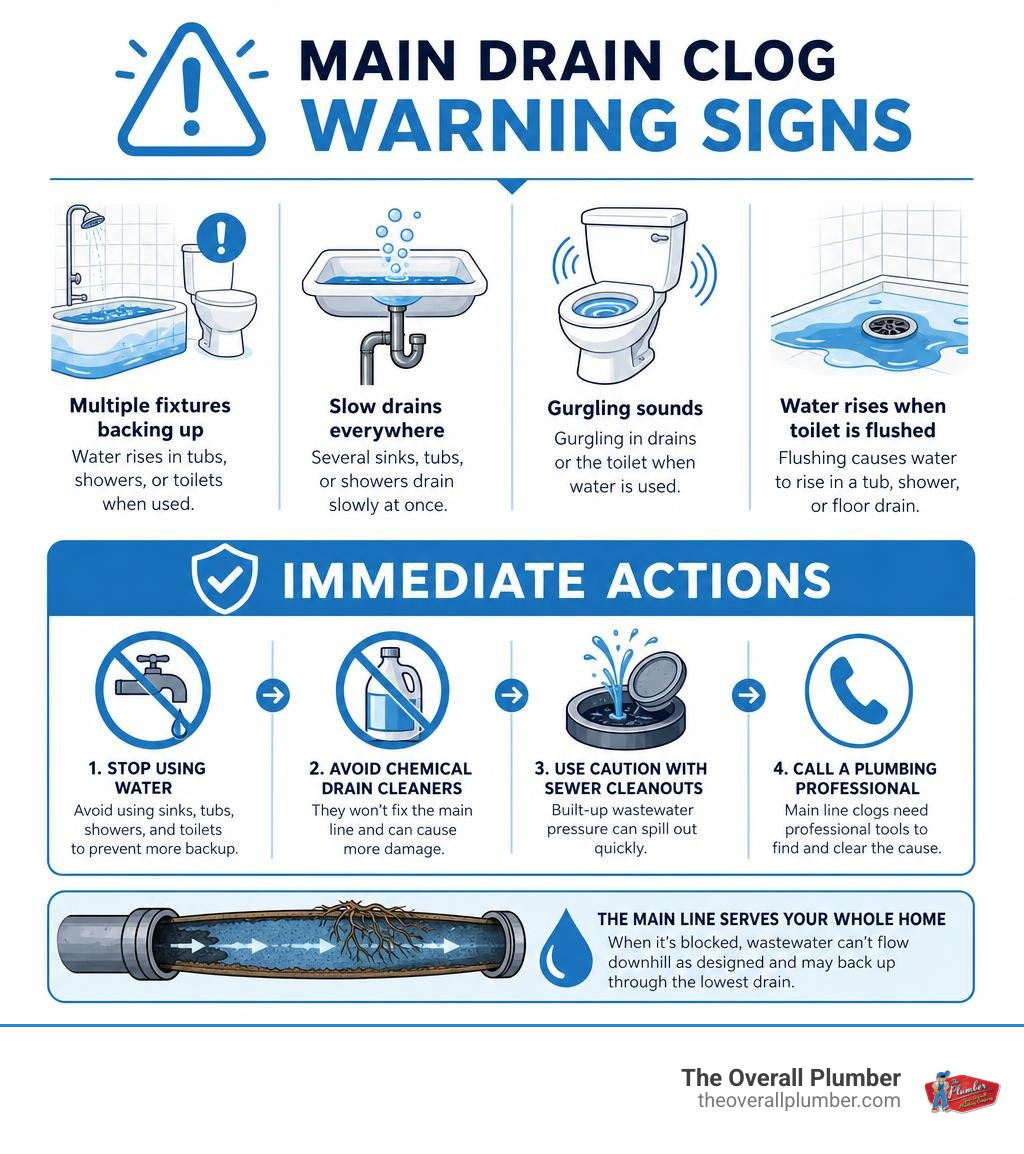
A main drainage pipe clogged problem can affect several fixtures at once and cause wastewater to back up through the lowest drain in your home, often a shower, tub, or basement floor drain. Stop using water right away, avoid chemical drain cleaners, and arrange professional help if you see sewage, multiple slow drains, or gurgling fixtures.
- A single sink or toilet that drains poorly usually points to a local branch-drain clog.
- Several fixtures backing up, bubbling, or draining slowly points to the main sewer line.
- Flushing a toilet that makes water rise in a tub or shower is a strong warning sign.
- Open a sewer cleanout only with care. Built-up wastewater pressure can spill out quickly.
The main line carries wastewater from every drain in the house to the public sewer or septic system. When flow is restricted, wastewater cannot move downhill as designed, so it seeks the lowest available opening instead. This can become a sanitation emergency, especially if sewage enters the home.
I am Dayton Whitworth, a second-generation plumbing professional serving the Greater Brazoria County, Galveston County, Houston, and Gulf Coast areas. My work with main drainage pipe clogged calls includes identifying backups, clearing drain lines, and helping homeowners find the root cause before a repeat clog becomes a larger repair.
Main drainage pipe clogged word guide:
Identifying Signs of a Main Drainage Pipe Clogged System
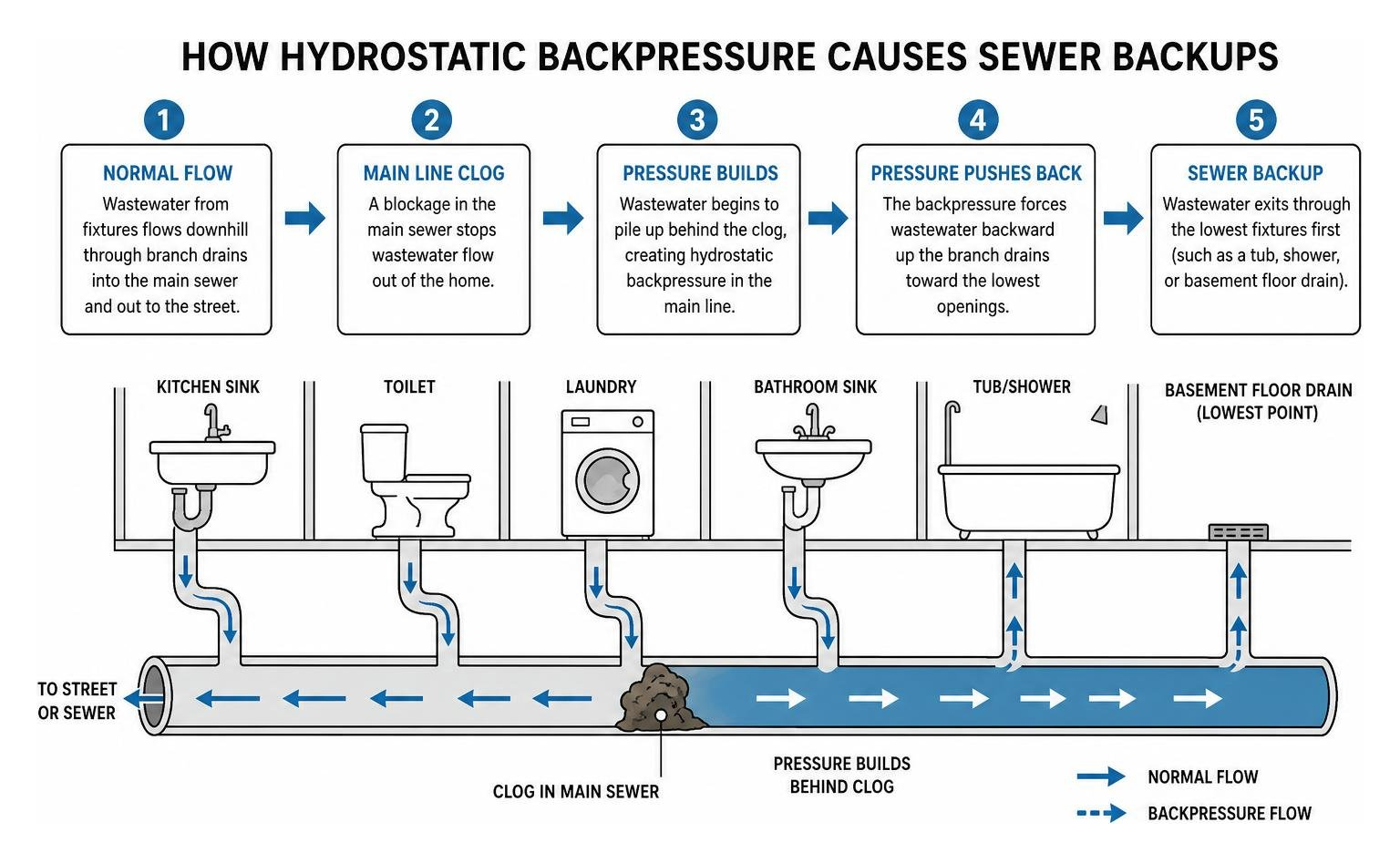
When a main drainage pipe clogged emergency occurs, your home’s entire Drain-Waste-Vent (DWV) system is compromised. Understanding how wastewater travels through your home helps explain why these signs appear so suddenly. Every sink, shower, and toilet connects to smaller branch drains that feed into one central main sewer lateral. Under International Plumbing Code (IPC) Section 710, this main building sewer must be at least 4 inches in diameter for residential properties.
When a restriction occurs in this 4-inch trunk line, wastewater has nowhere to go. Because water obeys gravity and physics, the resulting hydrostatic backpressure forces trapped sewage backward into the lowest available openings in your house.
Main Drainage Pipe Clogged vs Single Fixture Clogs
It is crucial to distinguish between an isolated branch drain blockage and a systemic main line failure. If your bathroom sink is draining slowly but the shower and toilet work perfectly, you are dealing with a local clog contained within that individual fixture trap or branch line.
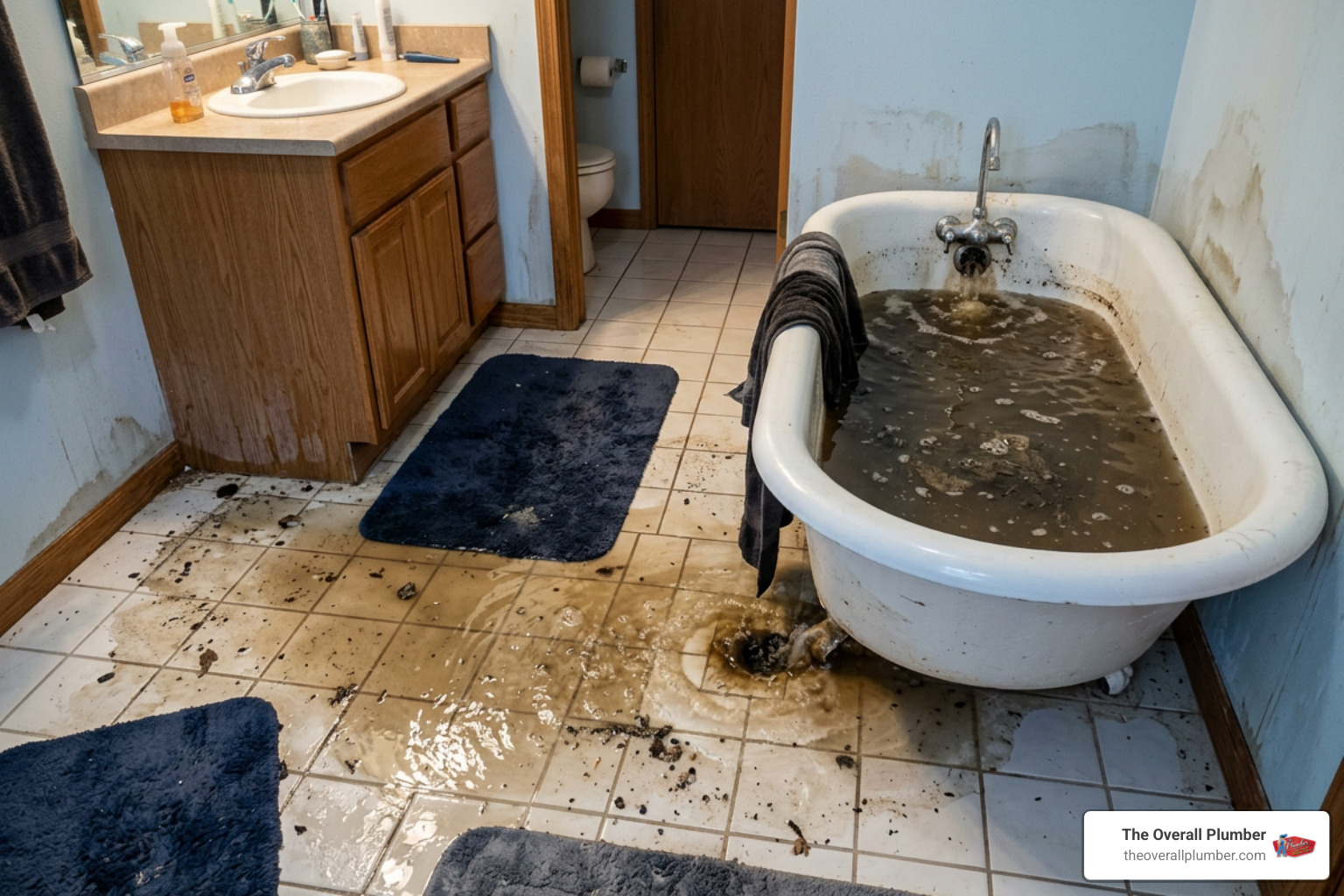
However, when you have a main drainage pipe clogged, the issue spans across multiple rooms and levels. The lowest fixtures in the house—such as ground-floor bathtubs, basement floor drains, or lower-level shower stalls—will always exhibit symptoms first. If running your washing machine causes greywater to bubble up into your hall shower, or if flushing your upstairs toilet forces dirty water into your downstairs bathtub, your main line is obstructed. For immediate step-by-step triage when sewage threatens your floors, check out The Oh Shit Guide to Dealing With a Backed Up Drain.
Early Warning Symptoms Homeowners Often Miss
Long before sewage spills over a shower threshold, your plumbing system sends clear signals that a major line blockage is forming. The most common early signs include:
- Gurgling Toilets and Drains: When a partial blockage reduces pipe capacity, air becomes trapped between the moving water and the obstruction. As water tries to force its way past, air pressure pushes back up through liquid trap seals, creating distinct bubbling or gurgling sounds in toilets and nearby sinks.
- Fluctuating Toilet Water Levels: If you notice the water level in your toilet bowl rising unusually high or dropping to near-empty without being flushed, downstream pressure changes in the main line are pulling or pushing water in the trap.
- Persistent Sewer Gas Odors: A main line restriction prevents toxic sewer gases (hydrogen sulfide and methane) from venting properly through your roof stack. These foul smells seep into living spaces through floor drains or dry traps.
- Sluggish Draining Across Multiple Rooms: If your kitchen sink, bathroom washbasin, and tub all drain noticeably slower on the same day, a main pipe blockage is restricting overall flow.
Common Causes Behind Main Sewer Line Blockages
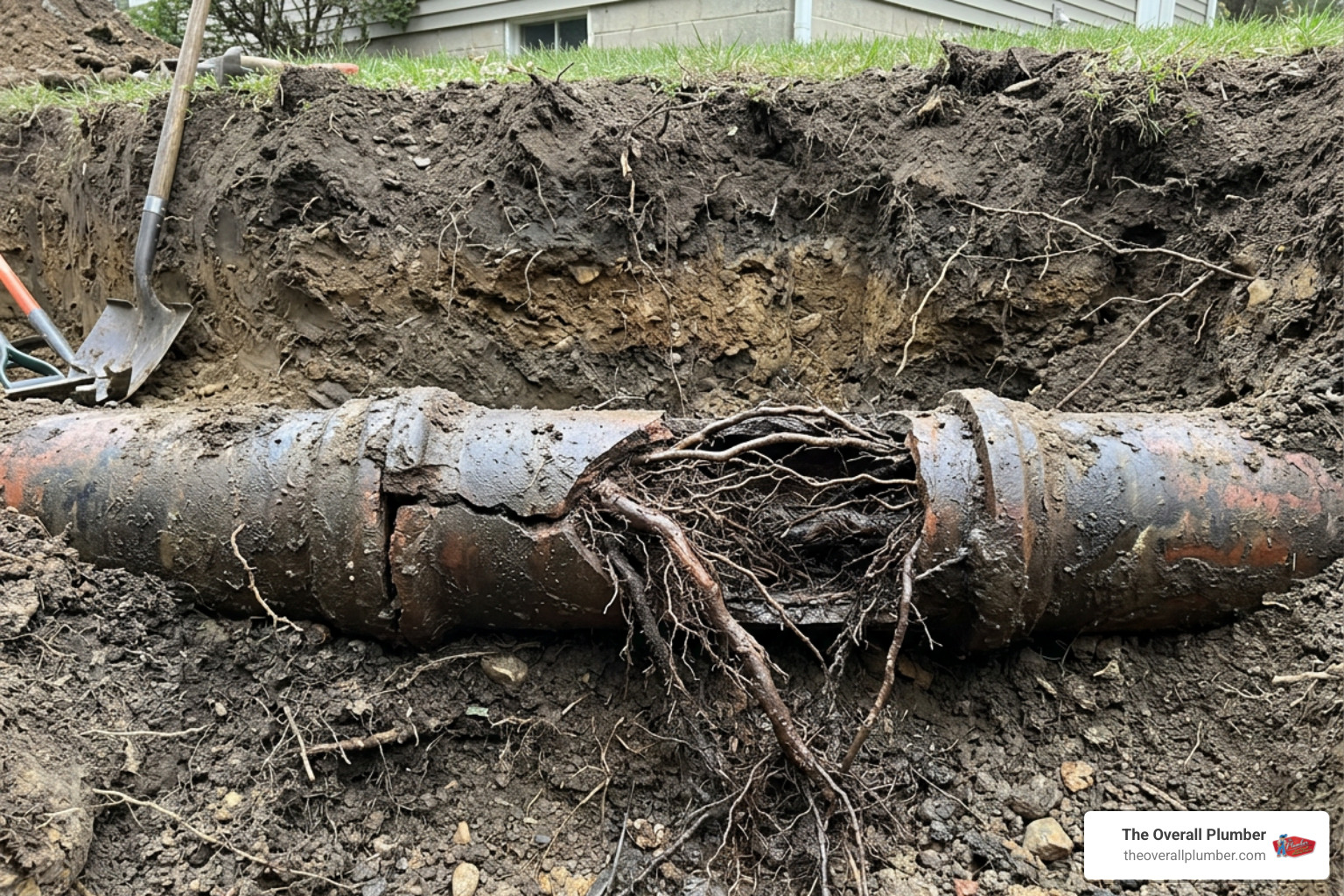
Main sewer line blockages rarely happen overnight; they are typically the result of gradual accumulation, environmental factors, or mechanical failures inside aging pipe materials.
Fat, Oil, and Grease (FOG) poured down kitchen drains is recognized by environmental agencies, including the U.S. Environmental Protection Agency, as a major contributor to sanitary sewer overflows and residential sewer backups. While hot grease flows easily down warm sink pipes, it cools rapidly once it hits cold underground laterals, solidifying into a concrete-like lining that grabs incoming debris. Combined with non-flushable hygiene products, paper towels, and wipes – even those falsely labeled as “flushable” – these materials build massive obstructions that throttle 4-inch drain lines down to pinholes.
Tree Root Intrusion in Older Plumbing Systems
Tree roots represent one of the most destructive natural hazards to underground sewer laterals. Roots are naturally attracted to the water vapor, warmth, and nutrient-rich organic waste flowing through underground sewer pipes. They enter through microscopic hairline cracks, pinhole leaks, or loose pipe joints.
Once inside, roots thrive, spreading into thick, brush-like masses that catch toilet paper and solid waste. Older homes in areas like Houston, Pasadena, and Galveston built before 1980 frequently feature clay tile or cast iron sewer laterals:
- Clay Tile Pipe: Dominant from 1900 through the 1970s, clay tile has a typical service lifespan of 50 to 100 years. However, its short 2-to-3-foot pipe sections rely on mortar or rubber joints that deteriorate over time, offering easy entry points for root tips.
- Cast Iron Pipe: Widely used through the mid-20th century, cast iron lasts 50 to 100 years but is highly susceptible to internal rust scaling (tuberculation), which creates rough surfaces that catch solid waste and crack under ground movement.
- Orangeburg Pipe: Manufactured from pitch-impregnated wood fiber from 1945 to 1972, Orangeburg pipe has a short lifespan of only 25 to 50 years. These pipes suffer from delamination, flattening into oval shapes, and total structural collapse under normal soil weight.
Without structural repair, root-infested lines often require recurring maintenance because root regrowth restores severe obstruction within 12 to 24 months. To learn how to protect your yard and line from total failure, review our detailed guide on Sewer Line Problems and How to Avoid a Total Washout.
Structural Pipe Damage and Pipe Bellies
Beyond root intrusion, structural pipe defects can stop wastewater flow even without solid foreign objects present:
- Pipe Bellies (Sagging Lines): Under International Plumbing Code standards, a 4-inch building sewer must maintain a uniform downward slope of approximately 1/4 inch per foot, or a 2% grade. This specific pitch ensures water flows at a self-scouring velocity, roughly 2 feet per second, keeping solid waste suspended in liquid. If soil shifts, settles, or erodes beneath a pipe, a sagging section known as a “belly” forms. Standing water accumulates in this low spot, causing solids to drop out of suspension and build a permanent dam.
- Offset Joints: Ground movement from shifting clay soils common in Southeast Texas can push adjoining pipe sections out of alignment. Water hits these exposed pipe edges, creating persistent turbulence and catching toilet paper.
- Collapsed Pipes: Broken or completely disintegrated pipes allow surrounding soil and mud to fall directly into the line, creating a total mechanical block that no snake can bypass.
Accessing Cleanouts and DIY Methods for a Main Drainage Pipe Clogged Line
When faced with a main drainage pipe clogged situation, homeowners often wonder if they can resolve the issue themselves before calling for professional reinforcement. While minor surface clogs can occasionally be managed, main sewer laterals require extreme caution due to hydrostatic pressure buildup and specialized mechanical requirements.
Locating and Unclogging the Sewer Cleanout
Your main sewer cleanout is a vertical pipe capped with a threaded plug or rubber cap that connects directly to your underground sewer lateral. On most modern homes built after 1978, exterior cleanouts are located in the yard within 3 to 5 feet of the exterior foundation wall, often disguised near flower beds or turf. Homes with basements or crawlspaces may feature cleanout stacks inside near the main stack connection.
Before touching a cleanout cap, understand the hazard: if your household pipes are filled with trapped sewage, the cleanout stack is pressurized under hydrostatic weight.
- Safety Gear First: Put on heavy-duty rubber gloves, eye protection, and protective boots.
- Loosen Cautiously: Stand to the side of the pipe—never directly above or in front of it. Slowly unscrew or loosen the cap plug using a pipe wrench or cleanout key.
- Control the Pressure: If sewage begins to seep or spray out around the threads, pause immediately. Relieving this head pressure outside is preferable to an indoor backup, but you must let it drain slowly into a bucket or contained area.
For detailed instructions on identifying indoor vs outdoor cleanout access points, explore our references on Demystifying Your Basement Drain Cleanout and Main Sewer Line and Sewer Lines 101: How to Locate Them.
DIY Limits and Why Chemical Cleaners Fail on Main Drainage Pipe Clogged Systems
Homeowners frequently reach for liquid chemical drain openers when drains slow down. However, pouring chemical drain cleaners down a main drainage pipe clogged system is not only useless—it is dangerous.
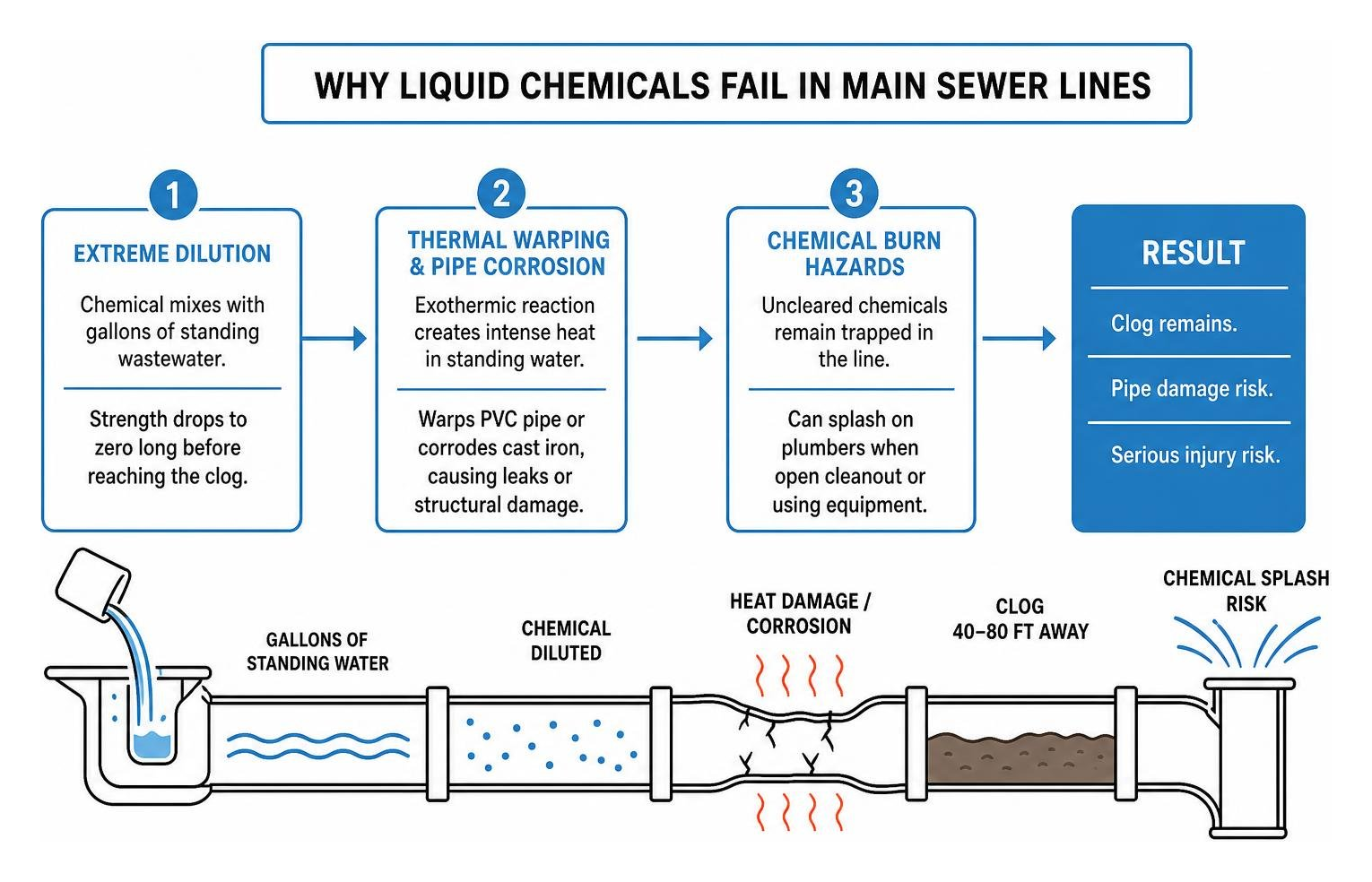
- Extreme Dilution: Liquid drain openers rely on concentrated sodium hydroxide or sulfuric acid to dissolve small hair or soap clogs near a single fixture trap. When poured down a drain with a main line blockage located 40 to 80 feet away, the chemical mixes with gallons of standing greywater, diluting its strength to zero long before reaching the obstacle.
- Thermal Warping and Pipe Corrosion: Liquid chemicals create intense exothermic (heat-generating) reactions. When trapped in standing water inside PVC pipes, this localized heat can warp plastic pipe walls or soften joints. In older cast iron systems, chemical acids eat away at worn metal bottoms, turning small pinhole leaks into catastrophic underground cracks.
- Severe Chemical Burn Hazards for Plumbers: When chemical drain openers fail to clear the line, gallons of toxic, caustic chemical water remain trapped in your plumbing. When a licensed plumber later opens the cleanout or uses a mechanical auger, this chemical solution can splash onto their hands, face, and eyes.
For minor soft obstructions near a single fixture, non-chemical alternatives like flushing hot water for 5 to 10 minutes or using equal parts baking soda and vinegar can help loosen soft grease. But for a main lateral failure, mechanical force or professional jetting is required.
Professional Diagnostics and Advanced Drain Cleaning
When DIY efforts reach their limits, professional intervention is necessary to restore long-term flow and protect your home from water damage. Licensed drain specialists possess heavy-duty equipment capable of clearing stubborn obstructions and diagnosing pipe damage hidden deep underground.
| Cleaning / Diagnostic Method | Tool Description | Best Suited For | Key Advantages | DIY or Professional |
|---|---|---|---|---|
| Hand Drain Snake | 1/4″ to 3/8″ thin manual cable (15–25 ft) | Single sink, tub, or trap clogs | Inexpensive, quick fix for minor local hair traps | DIY |
| Power Auger Rental | 1/2″ to 3/4″ motor-driven steel cable (50–100 ft) | Main line soft clogs near cleanout | Cuts soft waste, available at rental yards ($75–$150/day) | Intermediate DIY / Pro |
| Professional Priority Auger | Heavy-duty 3/4″ commercial cable with C-cutters | Thick root masses, heavy grease, solid toilet blockages | High torque force, specialized root-cutting heads, fast emergency relief | Licensed Plumber |
| Hydro-Jetting | High-pressure water stream (3,000–4,000 PSI) | Heavy FOG accumulation, mineral scale, sand/mud buildup | Flushes pipe walls completely clean to original 4″ inner diameter | Licensed Plumber |
| CCTV Sewer Camera | Fiber-optic HD camera with real-time locator sonde | Structural inspection, offset joints, collapsed pipe verification | Pinpoints exact depth, distance, and cause of recurring blockages | Licensed Plumber |
Fiber Optic Sewer Camera Inspections
Modern plumbing diagnostics no longer rely on guesswork or blind rodding. A professional high-resolution CCTV sewer camera inspection involves inserting a flexible fiber-optic camera head through your cleanout access point.
As the camera travels down the lateral, it broadcasts real-time video footage to a color monitor, allowing our plumbers to clearly distinguish between soft obstructions (like paper grease masses) and hard structural defects (such as cracked clay tile, severe root intrusion, or collapsed Orangeburg pipe). The camera head features a built-in radio sonde transmitter, allowing us to pinpoint the exact location and depth of a pipe break from above ground in your yard.
To learn more about how video diagnostic technology saves homeowners thousands in unnecessary digging, review our guide on Video Camera Sewer Line Inspection and The Homeowner’s Guide to Sewer Camera Inspections.
Priority Mechanical Augering Services
When a severe blockage strikes, rapid mechanical force is needed to restore flow. Commercial motorized drain augers utilize stiff 3/4-inch inner-core steel cables powered by high-torque electric motors. Specialized expanding steel blades attached to the cable end slice cleanly through thick root masses, breaking up compacted flushable wipes and dense grease blocks.
For heavy, recurring main line stoppages, relying on professional machinery ensures the job is done safely without twisting or snapping cables inside your underground lateral. Read more about fast mechanical response times in our article on Main Drain Clogs Why You Need a Priority Auger Service.
Frequently Asked Questions About Main Drain Line Clogs
How much does it typically cost to clear a main drain line clog?
The typical cost to hire a professional plumber or drain-cleaning service to clear a main line blockage starts around $200 to $500 for standard mechanical snaking or priority augering. Advanced high-pressure hydro-jetting or specialized root removal generally ranges from $350 to $1,000+, depending on line length and cleanout accessibility. Video camera inspections typically run between $200 and $500 when performed as a diagnostic service. If major structural failure requires digging up a yard or replacing an underground line, full sewer line replacements average between $3,000 and $10,000 depending on depth, soil conditions, and pipe length.
Can a clogged main sewer line resolve on its own over time?
No. Main drain line clogs will never clear themselves over time. Because main line obstructions consist of solid human waste, compacted wipes, dense grease, tree roots, or collapsed pipe debris, leaving the system untouched will only allow incoming wastewater to build additional pressure. Delaying action increases the risk of a full sewage backup into your home’s lowest living spaces.
What preventive steps stop main sewer lines from clogging?
The most effective preventative habits include:
- Strict Toilet Rules: Never flush paper towels, facial tissues, feminine hygiene products, cotton swabs, dental floss, or wet wipes, even if the package claims they are “flushable.”
- Keep Grease Out of Sinks: Collect cooking oils, bacon grease, and fats in an empty container, allow them to solidify, and toss them directly into the trash can.
- Monthly Drain Flushes: Fill your bathtub or large sink to the brim with water once a month and pull the stopper, allowing the rapid water mass to scour small debris down the line.
- Schedule Routine Inspections: Schedule a professional sewer camera check every 2 to 3 years, or every 6 to 12 months if you have mature trees near older clay or cast iron pipes.
For a complete breakdown of proactive home habits, read How to Stop the Clogging of Drainage Before Your House Becomes a Pool.
For main drain cleaning, priority augering, fiber-optic camera inspections, hydro-jetting, and sewer repair options throughout Brazoria County, Houston, Clear Lake, Santa Fe, League City, Texas City, La Porte, Friendswood, Pearland, Pasadena, Galveston, Harris County, and Galveston County, The Overall Plumber can help restore safe drainage without trip charges or overtime fees. For more information about lateral repair capabilities, visit Sewer Lines in Houston. If sewage is backing up, multiple fixtures are draining slowly, or your cleanout is holding water, request priority drain service and call The Overall Plumber.