

Find the Right Help Before Cast Iron Pipes Fail Further
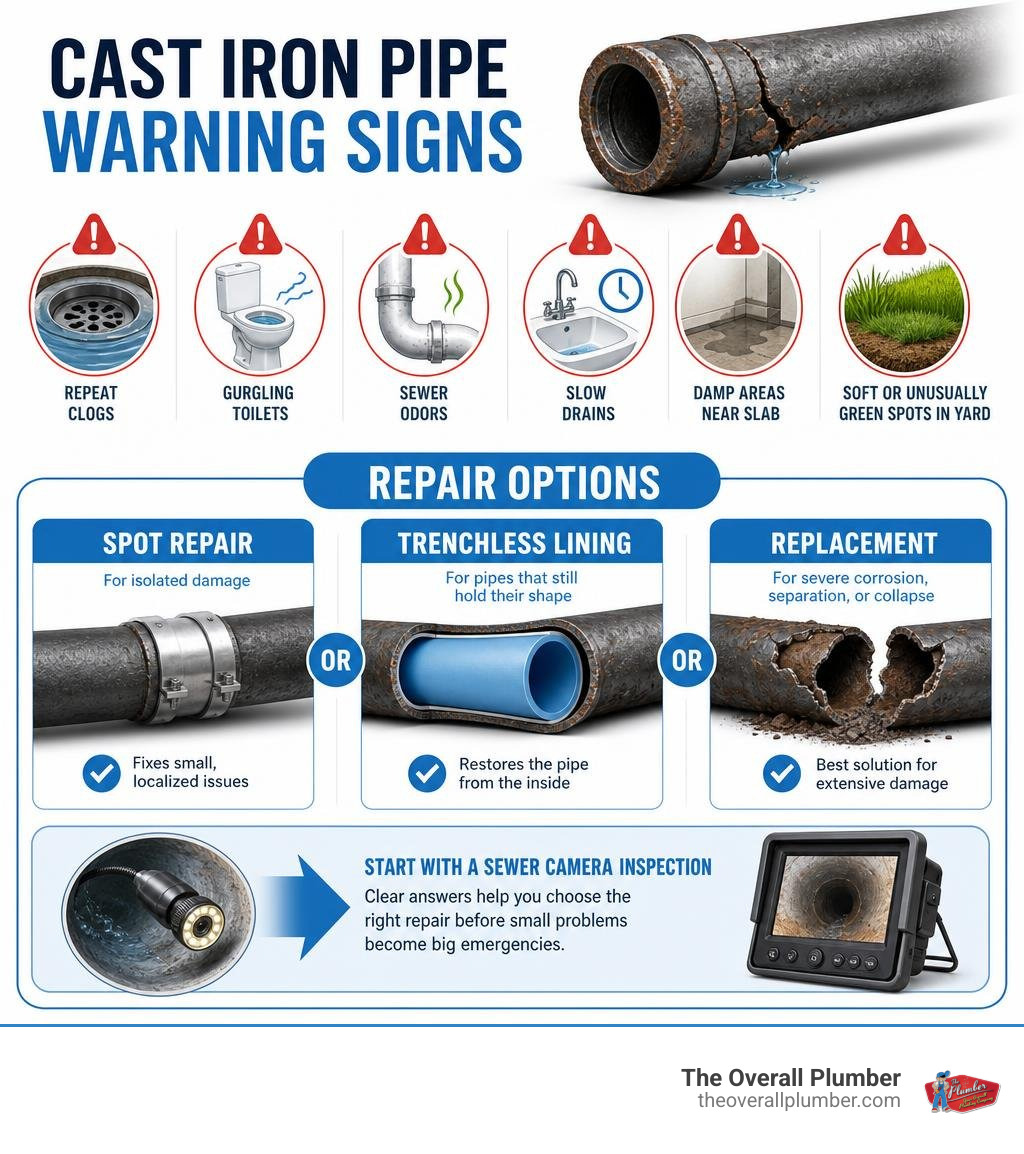
For cast iron pipe repair near me, call a licensed local plumber who can perform a sewer camera inspection before recommending a fix. Camera evidence helps you compare the right options: a small spot repair for isolated damage, trenchless lining for pipes that still hold their shape, or replacement when corrosion, channeling, separation, or collapse is severe.
Cast iron drain pipes often last 50 to 70 years, though some last longer. Warning signs include repeat clogs, gurgling toilets, sewer odors, slow drains, damp areas near the slab, and soft or unusually green spots in the yard. Acting early can help prevent sewage leaks, soil erosion, and damage beneath your home.
I am Dayton Whitworth, a second-generation plumbing professional serving Greater Brazoria County, Galveston County, Houston, and the Gulf Coast. When homeowners search for cast iron pipe repair near me, I help them start with clear diagnostics, practical repair choices, and dependable service before a small drain problem becomes an emergency.
Learn more about cast iron pipe repair near me:
Warning Signs You Need Cast Iron Pipe Repair Near Me
Cast iron was once the unquestioned gold standard for residential plumbing installations across Texas. Heavy, durable, and solid, it reliably served homes built before 1975 across Houston, Pearland, League City, and Pasadena. However, as we navigate August 2026, many of these plumbing systems have passed the 50-year mark. Even the best installations have an average lifespan of 50 to 70 years, and aging cast iron eventually begins to deteriorate from the inside out.
When cast iron fails, it rarely happens silently. In the early stages of decay, internal scaling and rust flakes snag debris, toilet paper, and grease. You might notice subtle red flags: drains that clear sluggishly despite plunging, mysterious gurgling sounds coming from the toilet when you run the shower, or a faint, rotten-egg sulfur odor wafting from your floor drains.
As cracks widen beneath the soil or your foundation slab, escaping sewage creates distinct warning signs outdoors. An unusually lush, green patch of grass in an otherwise dry Texas yard indicates that your lawn is secretly feeding on leaking wastewater. Left unaddressed, these subterranean voids and cracks create open pathways for pests and rodents to invade your home’s drainage network. Recognizing these early signs can save you thousands of dollars in emergency damage.
Structural Risks and Foundation Settlement
The most severe consequence of compromised cast iron plumbing is structural degradation. When underground sewer lines crack or disintegrate under a home’s concrete foundation, leaking wastewater washes away the supporting substrate. Over time, this erosion creates subterranean voids. Deprived of stable soil support, heavy concrete slabs begin to settle unevenly, causing cracked tiles, sticking doors, warped floorboards, and damp baseboards.
If you suspect hidden water intrusion beneath your property, you should read our guide on How to Repair a Cracked Basement Cast Iron Drainpipe to understand how moisture migration compromises concrete and subflooring over time.
Chronic Drainage Issues and Pinhole Leaks
Cast iron pipe degradation typically begins with bottom channeling. The bottom of the pipe—where water, acidic waste, and abrasive sediment constantly flow—thins out long before the top or sides show wear. Eventually, tiny pinhole leaks form along the invert of the line, allowing rust flakes to flake off and create chronic, recurring blockages.
If a sudden leak is causing localized damage while you wait for a technician, temporary triage methods can buy you precious time. You can learn simple containment tricks from our articles on Patching Cast Iron Pipe Leaks on a Budget and How to Fix a Leaking Pipe Quickly before professional intervention takes place.
Diagnostic Methods and What to Expect During Inspection
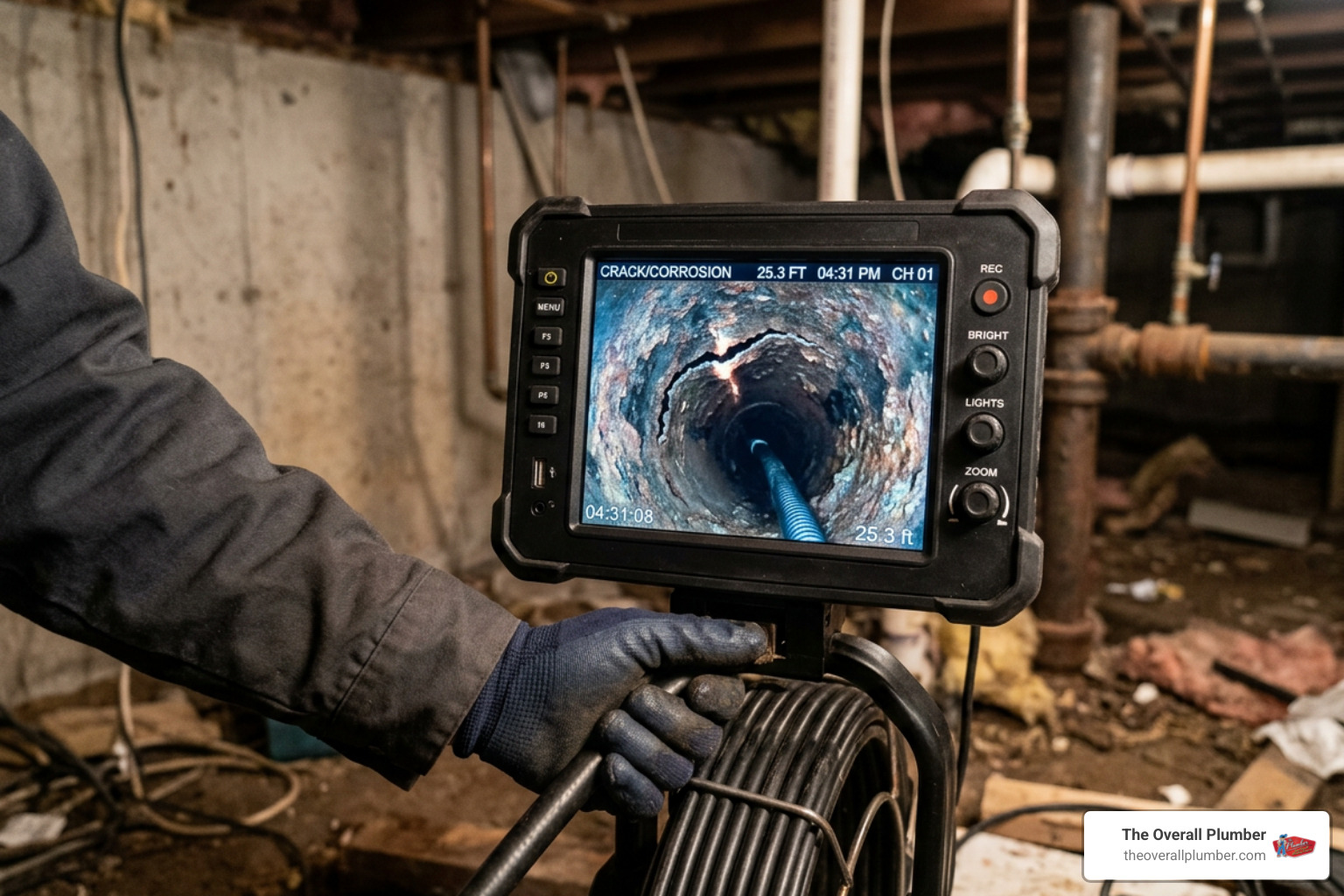
Guesswork has no place in modern plumbing diagnostics. When you suspect cast iron deterioration, professional plumbers rely on high-definition endoscopic sewer cameras to visualize every inch of your underground line. A camera snake is inserted through an accessible cleanout point, traveling down your main sewer pipe while providing real-time, color video feedback on a high-resolution field monitor.
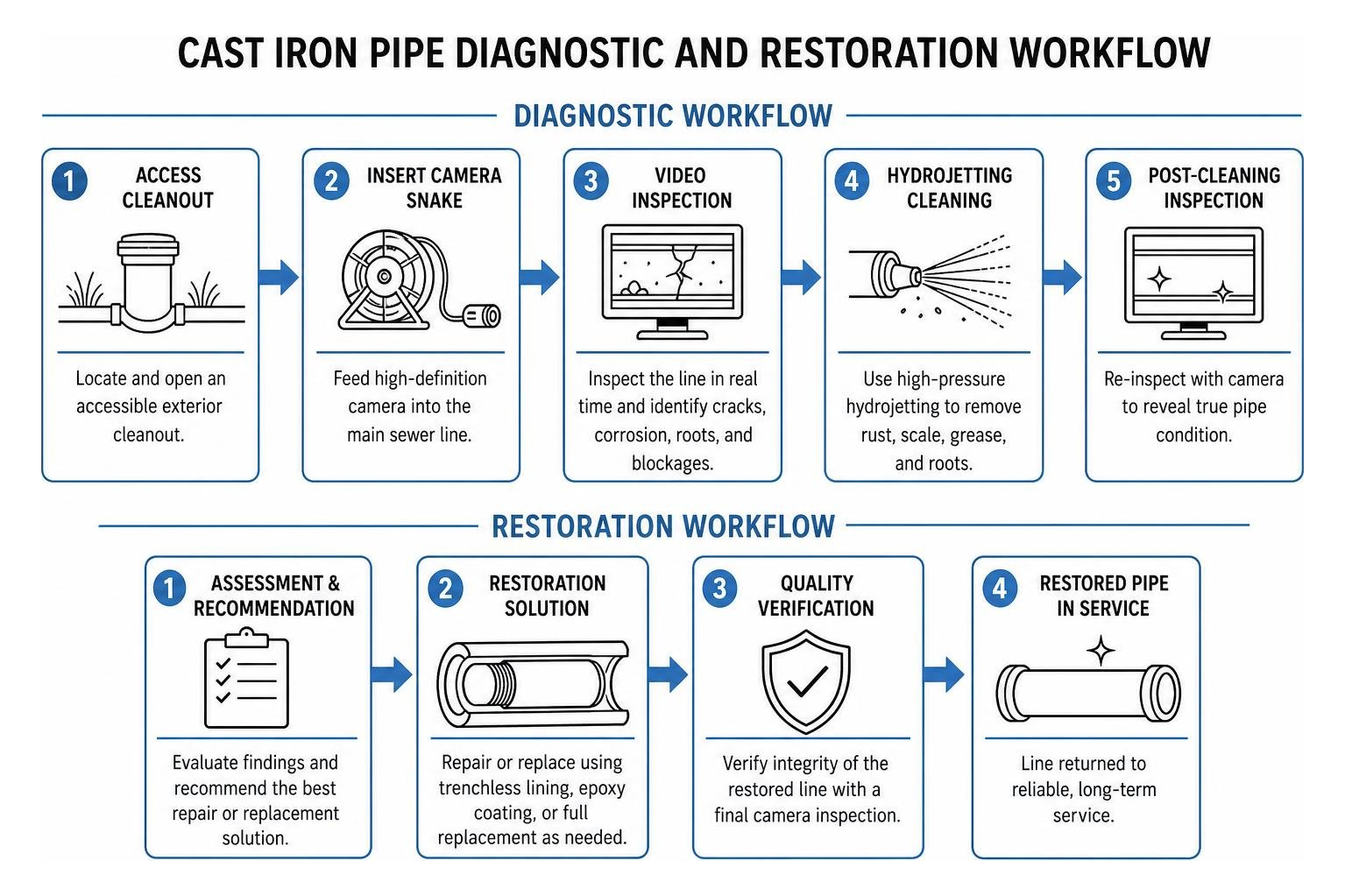
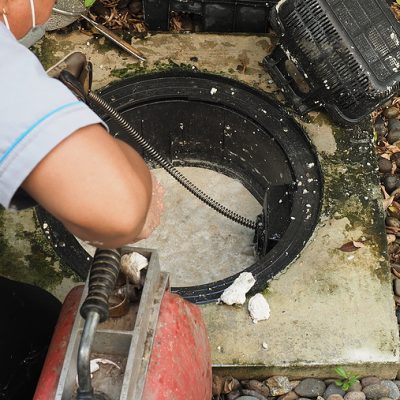
Before accurate repair recommendations can be made, your lines often require high-pressure hydrojetting or mechanical descaling. Cast iron builds up thick crusts of iron oxide and calcified grease over several decades. Hydrojetting utilizes specialized rotating nozzles to scrub away loose rust scaling and tree roots without damaging the host pipe. Once the pipe walls are clean, a secondary video diagnostic run reveals the true structural condition of the line.
Step-by-Step Diagnostic Process
A professional cast iron inspection follows a rigorous multi-step protocol:
- Access Point Identification: Technicians locate the primary exterior cleanout or establish access through a roof vent or pulled toilet flange.
- Video Navigation & Profiling: A self-leveling HD camera head is advanced through the drainage runs to identify bellies, offsets, tree root penetrations, and micro-fractures.
- Wall Thickness & Channeling Assessment: Plumbers evaluate the interior structural thickness, looking for severe bottom channeling where the base of the pipe has eroded completely into the dirt.
- Joint Integrity Verification: The connection points between pipe sections and branch lines are closely checked to ensure soil movement has not separated the fittings.
Evaluating Pipe Integrity for Restoration vs. Replacement
Not every old pipe requires complete excavation. A video inspection provides the critical data needed to decide whether a line can be rehabilitated or must be replaced:
- Viable for Restoration: The pipe maintains a round circular shape, has structural sidewalls intact, and exhibits isolated cracks or internal corrosion without massive structural collapses.
- Requires Replacement: The host pipe has completely collapsed, suffered extreme soil shifting that snapped the grade, or lost its bottom channel entirely across extensive distances.
Modern Repair, Restoration, and Replacement Options
Homeowners have multiple technological avenues for fixing failing cast iron drain lines, ranging from non-invasive trenchless methods to full system conversions.
| Repair Method | Invasiveness | Typical Longevity | Best Suited For |
|---|---|---|---|
| Spot Repair / Mechanical Sleeve | Low to Moderate | 10 to 20 Years | Isolated exterior cracks or localized joint leaks |
| Trenchless Pipe Lining (CIPP) | Minimal (No Digging) | 50+ Years | Corroded, channeled pipes retaining circular structure |
| Pipe Bursting | Low (Small Entry/Exit Pits) | 50+ Years | Severely fractured lines with clear pathways |
| Full Excavation Replacement | High (Trenching required) | 50 to 100 Years | Fully collapsed lines or severe back-pitched pipes |
Trenchless Pipe Lining (CIPP) and Drain Refinishing
Cured-In-Place Pipe (CIPP) lining represents one of the most significant advancements in modern plumbing. Instead of breaking up concrete foundation slabs with jackhammers or digging up manicured lawns, plumbers rehabilitate the pipe from the inside out.
A flexible, fabric-reinforced sleeve saturated with liquid epoxy resin is pulled or blown into the cleaned cast iron host pipe. Once in position, the liner is inflated and cured using hot water, steam, or ambient air. When hardened, it creates a seamless, joint-free, corrosion-resistant structural pipe within the old pipe. These modern resin liners resist future root intrusion, drastically improve flow velocity, and are often backed by a 25-year manufacturer warranty.
To explore this process further, read our guides on Cast Iron Pipe Repair 101 From Trenchless Lining to PVC Swaps and How to Save Your Cast Iron Downpipe Without Losing Your Mind.
Targeted Spot Repairs and Pipe Bursting
When damage is confined to a single accessible section, a localized spot repair using rubber shielded couplings or mechanical stainless-steel sleeves offers a reliable fix without replacing the entire sewer run. You can see practical examples of how targeted piping fixes are executed in How to Fix a Broken Pipe in 7 Easy Steps.
For lines that cannot support a resin liner but run under delicate landscaping, pipe bursting serves as an exceptional trenchless alternative. A heavy hydraulic expander head is pulled through the old cast iron line, fracturing the brittle metal outward into the surrounding soil while simultaneously pulling a seamless High-Density Polyethylene (HDPE) pipe directly behind it.
Full Sewer Line Replacement and PVC Conversion
When an underground line has fully collapsed or lost its slope, traditional excavation and replacement become necessary. This process involves trenching down to the damaged cast iron line, removing the decayed metal, and installing modern Schedule 40 PVC plumbing.
While open-cut excavation is more labor-intensive, it provides a clean slate, permanently resolving drainage issues with smooth, rust-proof materials. For whole-home considerations, review our detailed walkthrough in A Comprehensive Guide to House Repiping Costs and Process.
Cost Factors and Hiring the Right Local Plumbing Specialist
The overall cost of cast iron pipe repair depends on several critical variables:
- Depth and Accessibility: Shallow yard lines cost less to service than pipes buried deeply under concrete slabs.
- Method Selected: While trenchless lining carries advanced equipment costs, it frequently saves thousands of dollars in structural concrete repair, flooring replacement, and landscape reconstruction.
- Permits and Inspections: Municipal codes in areas like Harris County and Galveston County require proper plumbing permits and city inspections to verify code compliance.
- Insurance Coverage: While standard homeowner insurance policies rarely pay for natural pipe wear and tear, sudden accidental water damage resulting from a cracked line may qualify for coverage.
How to Choose Cast Iron Pipe Repair Near Me
Selecting the right contractor ensures your home is protected throughout the repair process. Keep these standards in mind when hiring a professional:
- Video Evidence: Never accept a major pipe replacement recommendation without watching clear, recorded video footage of the internal pipe defect.
- Transparent Pricing: Look for upfront, detailed estimates without hidden trip charges or surprise overtime fees.
- Warranty Backing: Choose technicians who stand behind their restoration work with robust, long-term warranties.
- Regional Experience: Select a plumber familiar with local soil conditions across Texas City, Friendswood, Santa Fe, and Clear Lake, where expansive clay soils place heavy shifting stresses on buried pipes.
Emergency Steps When Scheduling Cast Iron Pipe Repair Near Me
If a pipe fails suddenly, take these immediate actions while waiting for a professional service team:
- Shut Off Major Water Sources: If wastewater is backing up into tubs or showers, avoid running dishwashers, washing machines, or faucets.
- Apply Emergency Triage: For exposed, accessible leaks, apply two-part plumbing epoxy putty and a fiberglass wrap to contain drips temporarily.
- Avoid Chemical Drain Cleaners: Never pour caustic liquid drain cleaners down failing cast iron pipes; harsh chemicals accelerate acid erosion on thin cast iron walls and pose burn risks to responding plumbing technicians.
- Request Priority Scheduling: Contact a service team that provides prompt dispatching and emergency response capabilities.
Frequently Asked Questions About Cast Iron Pipe Repair
How long do repaired or relined cast iron pipes last?
Modern cured-in-place pipe (CIPP) epoxy liners have a design life expectancy of 50 or more years. Because epoxy is completely impervious to rust, moisture scaling, and root penetration, it provides a long-lasting, smooth drainage channel that carries manufacturer warranties of up to 25 years.
Can cast iron pipes be relined if they have already collapsed?
No. Trenchless CIPP lining requires an intact host pipe to hold the resin tube in place while it cures. If a cast iron pipe has fully collapsed or crushed inward, trenchless pipe bursting or traditional open-trench excavation must be performed to restore the drainage path.
Will fixing under-slab cast iron pipes ruin my interior flooring?
Not necessarily. By utilizing trenchless lining methods through exterior access cleanouts, technicians can rehabilitate failing cast iron lines underneath concrete foundations without breaking through interior tile, wood, or carpet flooring.
Protect Your Property with Professional Cast Iron Pipe Solutions
Whether you need precision drain cleaning with augers, advanced HD camera inspections, or lasting Broken Pipe Repair, our team is here to help. If you need cast iron pipe repair near you, contact The Overall Plumber to schedule priority service today.