


When to Repipe House Plumbing
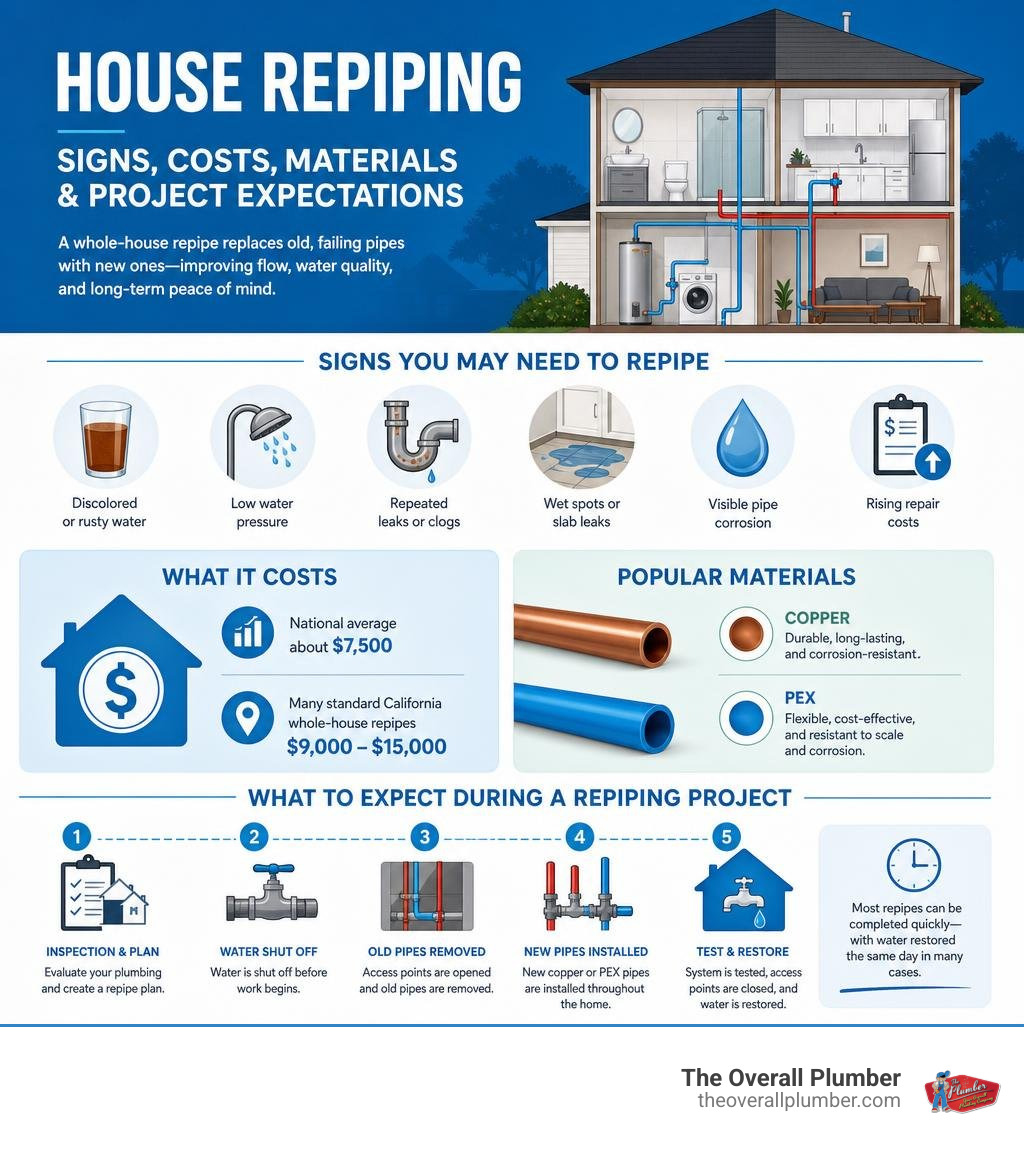
A repipe house project replaces old water supply pipes with new piping throughout the home. It is often the right next step when leaks keep returning, water looks rusty, pressure stays low, or an older home still has galvanized pipes that have reached the end of their useful life.
- Common warning signs: discolored water, weak flow, repeated leaks, slab leaks, wet spots, and rising repair bills.
- Typical cost: the national average is about $7,500; many standard California whole-house repipes cost $9,000 to $15,000.
- Main benefit: new copper or PEX lines can improve water flow and reliability while reducing the risk of future pipe failures.
- Timing: a professional repipe can often be completed quickly, with water restored by the end of the workday in many cases.
For homeowners dealing with pipe breaks, recurring clogs, or water damage, replacing a failing system can be easier to plan for than another emergency repair. This guide explains the signs, costs, materials, scope of work, and practical tradeoffs behind a whole-house repipe.
I am Dayton Whitworth, a second-generation plumbing professional serving homeowners across the Texas Gulf Coast. Through full-service plumbing work, I have helped homeowners assess when a repipe house project makes more sense than continuing to repair aging lines.
Key Indicators That You Need to Repipe House Plumbing
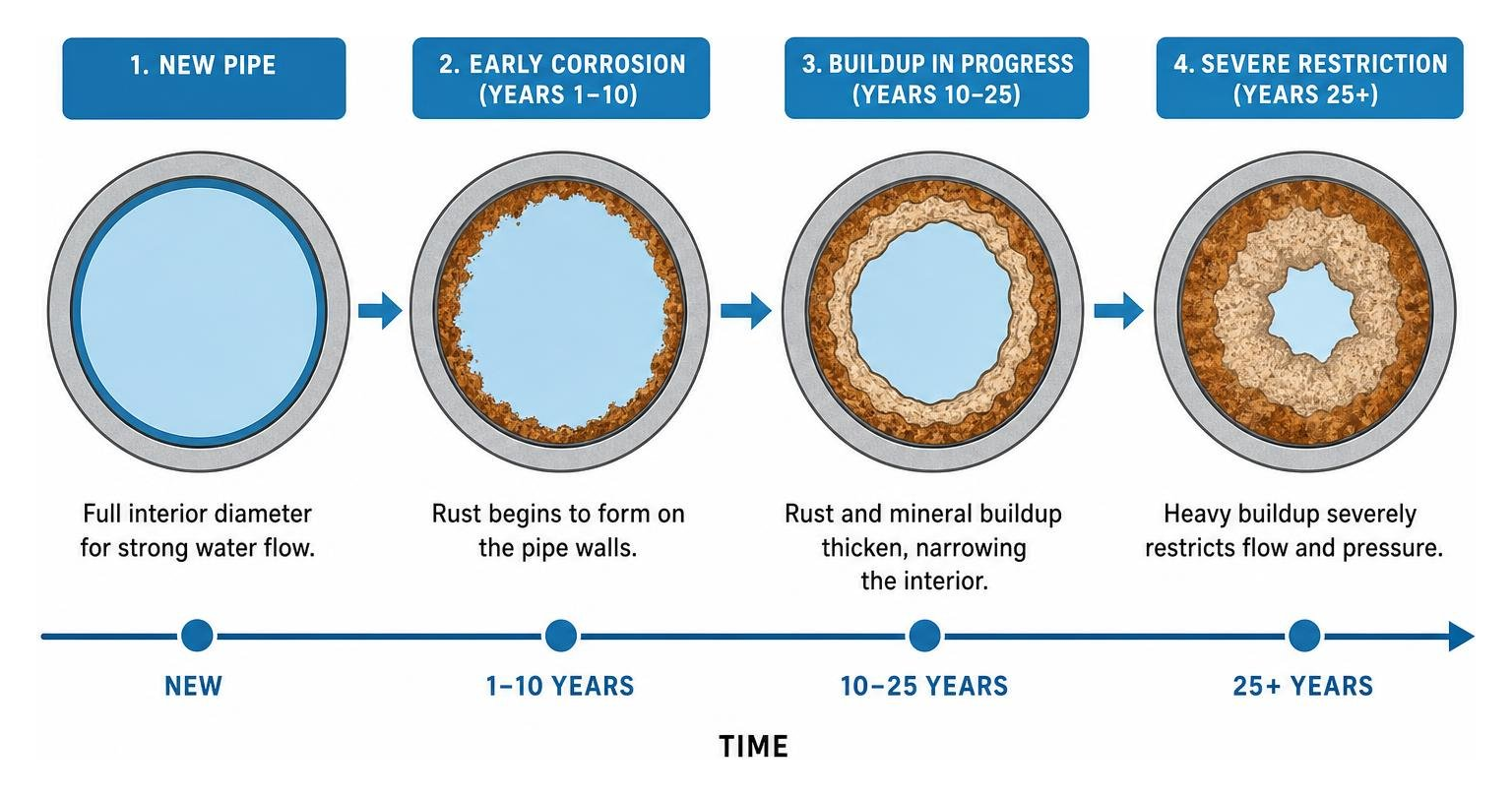
When you live in a home built several decades ago, plumbing issues rarely happen all at once out of nowhere. Instead, aging pipes slowly deteriorate over time until minor inconveniences transform into major household headaches. Galvanized steel pipes, which were standard across residential construction for decades, have an expected pipe lifespan of roughly 40 to 50 years. As these pipes age, zinc coatings wear away, causing internal rust, reduced water volume, and frequent localized pinhole leaks.
Ignoring the warning signs of degrading lines often leads to catastrophic water damage behind drywall, under foundation slabs, or inside ceiling cavities. Recognizing early symptoms gives you the opportunity to plan a controlled repipe house project rather than dealing with an panicked emergency cleanup.
Discolored Water and Low Flow: Warning Signs to Repipe House Plumbing
One of the most immediate indicators of declining water supply lines is discolored water trickling from your faucets. When you turn on your tap after the line has been sitting idle overnight and notice a yellowish, reddish, or brownish tint, you are looking directly at flaking rust and internal oxidation. This corrosion not only spoils drinking water quality but also deposits heavy sediment accumulation throughout your fixtures.
Over time, this ongoing mineral scale and rust build up inside supply lines, restricting the inner diameter of your pipes. You might notice this as a sudden or gradual drop in water pressure—such as when running the kitchen faucet while someone takes a shower causes water flow to drop to a mere trickle. While localized clogs can sometimes be cleared, widespread rust accumulation inside aging supply lines requires a systemic fix. For minor single-pipe leaks, reviewing a guide to fixing minor pipe issues can offer immediate relief, but chronic low flow across all fixtures points to complete pipe degradation.
Pre-1980s Homes and Galvanized Pipe Deterioration
Homes built prior to the 1980s—particularly 1960s homes—almost universally relied on galvanized iron or steel pipes. During manufacture, these pipes were dipped in molten zinc to resist corrosion. However, decades of exposure to minerals, water chemicals, and constant pressure wear down this protective zinc coating. Once raw iron is exposed to water, oxidation takes over rapidly, causing structural breakdown from the inside out.
Beyond structural failures and leaks, aging galvanized plumbing poses potential health and environmental risks. Older galvanized lines frequently incorporated lead-containing solder or lead-lined fittings, creating lead risk as internal surfaces break down. Additionally, persistent pinhole leaks inside enclosed wall spaces foster hidden mold growth, releasing airborne spores and toxins that compromise home air quality. When evaluating whether to restore or replace aging drain, waste, or supply systems, consulting a cast iron and old pipe replacement guide provides valuable technical context on structural plumbing lifespans.
Understanding Whole House Repiping Costs and Financial Return
Investing in a whole house repipe represents a significant financial decision, but context is crucial. Across the United States, the national average cost to repipe a home sits around $7,500. Depending on regional labor rates, municipal permitting, material choices, and local building codes, single-family home repiping prices often range between $9,000 and $15,000.
While these figures require an upfront commitment, continuing to pour money into patch repairs on a failing system usually costs significantly more in the long run. Replacing outdated plumbing protects your property valuation, restores buyer confidence during resale, and offers a strong financial return on investment through reduced utility costs and lower insurance risk.
Ongoing Spot Repairs versus Complete Replacement
Homeowners frequently fall into the financial trap of addressing plumbing problems reactively—fixing single leaks as they pop up. However, when an aging pipe network begins failing, fixing one isolated section simply transfers hydro-static pressure to the next weakest point in the line.
This cycle is especially costly when dealing with slab leaks under concrete foundations. In many regions, a single professional slab leak repair costs between $2,000 and $3,000. Experiencing three or four slab leaks over a couple of years quickly totals $6,000 to $12,000 in repair fees—all while leaving the remaining, vulnerable original piping embedded in your foundation. A strategic repipe house plan reroutes fresh water lines through wall and ceiling cavities, permanently abandoning old under-slab pipes.
| Service Approach | Typical Initial Cost | Expected Lifespan | Risk of Future Leaks | Overall Financial Value |
|---|---|---|---|---|
| Localized Spot Repair | $500 – $1,500 per patch | Months to 2 Years | High ( adjacent pipe failure) | Low ( temporary relief) |
| Slab Leak Repair (Jackhammering) | $2,000 – $3,000 per leak | Variable | High ( remaining slab lines remain weak) | Poor ( repetitive disruption) |
| Whole House Repipe (PEX or Copper) | $7,500 – $15,000 average | 50 to 100+ Years | Extremely Low | High ( permanent resolution) |
Reviewing a comprehensive whole house repipe cost breakdown can help you weigh these immediate repair expenses against long-term replacement equity.
Comparing Copper and PEX to Repipe House Plumbing
When organizing a repipe house project, choosing the right material is one of your primary decisions. Modern residential plumbing relies almost exclusively on two primary materials: rigid copper tubing and cross-linked polyethylene (PEX) flexible tubing.
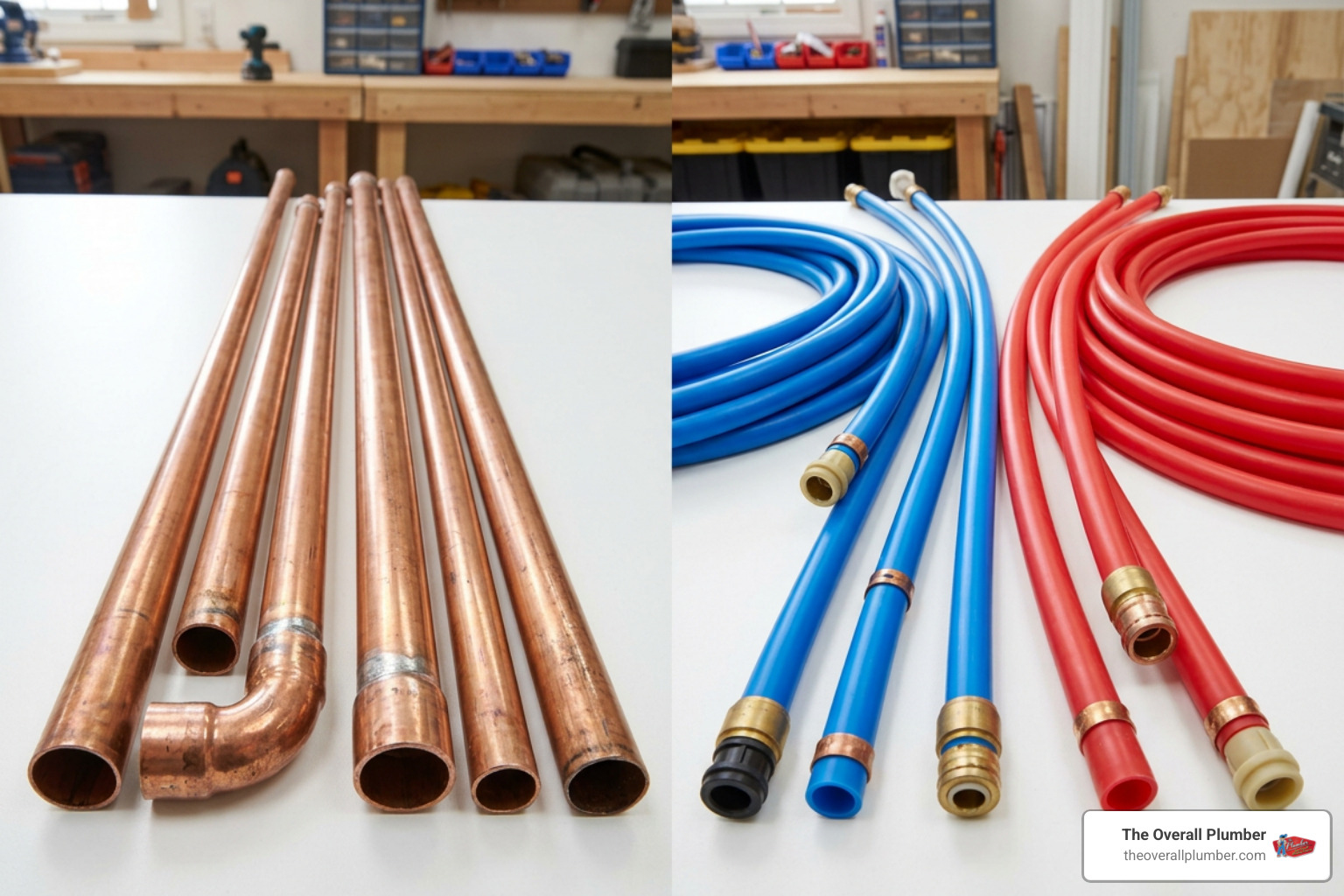
- Copper Piping: Long regarded as the traditional standard, copper offers a proven lifespan of 50 to 70 years. It naturally possesses antimicrobial properties, resists bacterial growth, and withstands intense ultraviolet light exposure outdoors. However, copper material costs are higher, installation requires specialized soldering torch skills, and rigid pipes can burst if frozen solid.
- PEX Flexible Tubing (PEX-A): PEX-A has emerged as the modern gold standard for whole house repiping. Rated for a 100+ year lifespan, PEX is highly flexible, allowing installers to snake long continuous lines through wall cavities without cutting extensive drywall openings. PEX resists scale buildup, exhibits superior freeze resistance (expanding slightly under frost before contracting), and significantly reduces material and labor costs.
To better understand modern piping materials, you can watch a visual demonstration on How To Repipe Your House Fast With PEX A or read our detailed PEX plumbing installation guide.
What a Complete Whole House Repipe Project Entails
A genuine whole house repipe involves much more than simply running synthetic tubes or copper rods behind your walls. It is a complete renewal of your home’s pressurized water distribution system from the incoming water supply meter up to every tap, showerhead, and appliance.
Professional repiping contractors handle end-to-end scope of work, ensuring all components adhere strictly to local plumbing codes. This comprehensive approach eliminates hidden weak links, giving you complete peace of mind across your entire water grid.
Components Included in a Full System Overhaul
When you hire experienced professionals to repipe your home, the installation project encompasses every critical water distribution fitting, including:
- Installing new main supply line connections and primary shut-off valves.
- Building structured manifold distribution hubs for equalized pressure balancing.
- Replacing all interior supply lines feeding sinks, toilets, showers, tubs, ice makers, and water heaters.
- Upgrading dedicated angle stops and flexible stainless-steel supply risers at every fixture.
- Installing frost-proof outdoor hose bibs (spigots) around the perimeter of the home.
- Opening precise wall access holes, followed by complete drywall patching and texture matching.
Upgrading these components delivers an immediate water quality boost and safeguards your property against accidental fitting blowouts. For detailed information on exterior supply connections, explore our main water line repiping guide.
Project Timeline, Daily Disruption, and DIY Risks
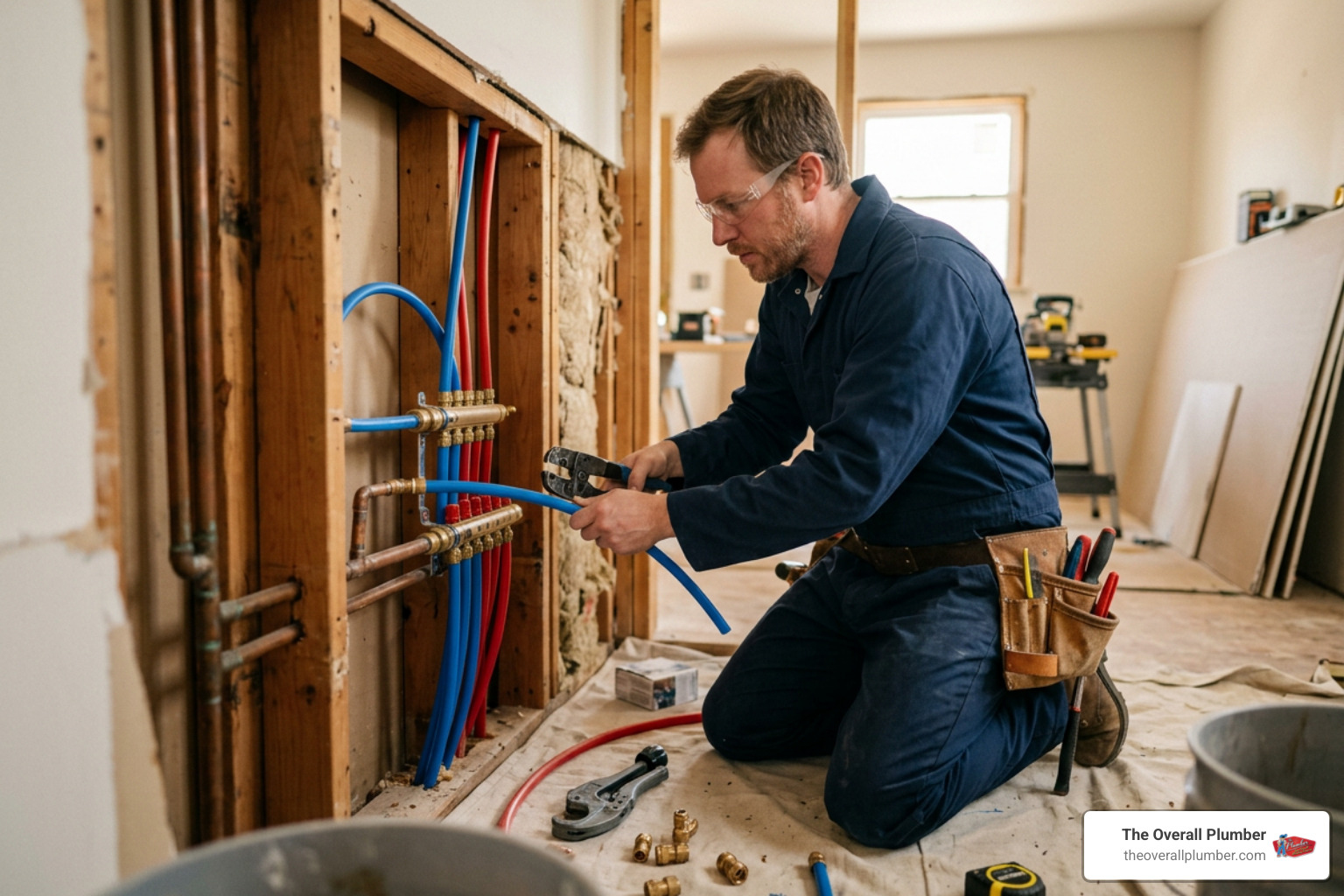
Homeowners often worry that repiping will force them out of their homes for weeks. In reality, modern installation techniques make the process remarkably efficient. Specialized teams often complete the pipe installation for standard single-family homes in as little as one to two days.
Plumbers shut off the main water valve in the morning to remove old pipes and install new lines, restoring full water service by the end of each workday. You do not need to check into a hotel or vacate your residence overnight. Drywall patching and wall texture matching typically follow immediately, restoring your living spaces within days.
Attempting a DIY whole-house repipe to save money carries severe risks. Professional repiping requires specialized tools like expansion crimpers, pipe cutters, and hydraulic press fittings. Furthermore, navigating wall cavities filled with high-voltage electrical cables and gas supply lines presents severe safety hazards. Improperly sealed connections can cause slow hidden leaks, leading to thousands of dollars in structural damage and voided homeowners insurance claims.
Frequently Asked Questions About Whole House Repiping
Homeowners frequently ask specific questions when considering whether to move forward with a whole-house repipe. Here are clear, detailed answers to common inquiries:
How much does a whole house repipe typically cost in California?
In high-cost markets like California, repiping costs range between $9,000 and $15,000 for standard single-family homes. Factors driving this price point include local labor costs, strict municipal permitting requirements, property square footage, and the total number of bathrooms. Smaller single-bathroom homes or open-crawlspace layouts sit at the lower end of that scale, whereas large multi-story residences with four or more bathrooms require greater material volume and labor time. You can examine a detailed breakdown of bathroom and home repipe prices to see how fixture counts impact overall job costs.
Do I need to vacate my home during a whole house repipe?
No, you do not need to relocate during the repiping process. Professional plumbers organize their work day so that interior wall access is conducted systematically. Water service is turned off during active working hours, but crews pressure test and restore functioning water supply by late afternoon or early evening each day. Once drywall patching and texture matching are finalized, your daily routine returns to normal with minimal disruption.
How can I find a reliable repiping specialist and avoid overpaying?
To protect yourself against inflated pricing, gather written estimates from licensed, insured plumbing contractors. Beware of outlier quotes that seem suspiciously low (which often indicate hidden extra charges for drywall patching or permit fees) or excessively high quotes. Look for itemized contracts that clearly outline warranty coverage, material specs, permitting responsibility, and wall repair commitments. Reviewing our guide to finding local repiping experts will give you actionable questions to ask during your consultation.
Partnering with Professionals for a Seamless Repipe
At The Overall Plumber, we specialize in comprehensive residential plumbing services across the Texas Gulf Coast—including Houston, Pearland, League City, Pasadena, Clear Lake, Friendswood, La Porte, Texas City, Santa Fe, Galveston, Brazoria County, Harris County, and Galveston County. We back our craftsmanship with satisfaction guarantees, priority scheduling, transparent pricing, and zero overtime fees.
If you are experiencing discolored water, persistent low water pressure, or recurring leak repairs, do not wait for an unexpected pipe break to flood your home. Call us directly at 713-555-0199 or explore our expert repiping services for your home to schedule a free, no-obligation inspection and transparent repiping quote.