


What to Do When You Have a Broken Pipe (Quick Answer)
Broken pipe repair starts the moment you notice a burst — and acting fast is the difference between a small fix and thousands of dollars in water damage.
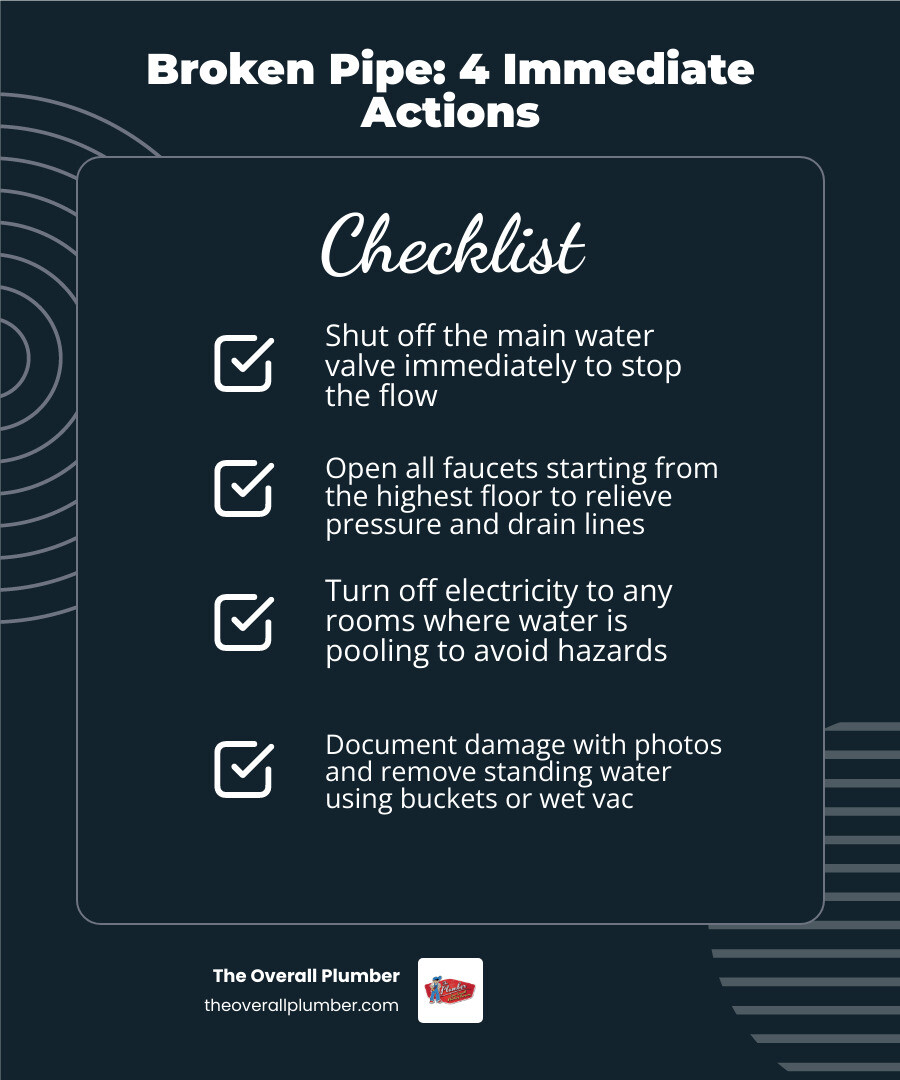
Here are the immediate steps to take right now:
- Shut off the main water supply at your home’s main valve
- Turn off your water heater to protect the heating elements
- Open all faucets to drain pressure from the system
- Turn off electricity in any areas where water is pooling
- Document the damage with photos for your insurance claim
- Remove standing water using buckets or a wet-dry vacuum
- Call a licensed plumber for assessment and repair
If the pipe is actively flooding your home, skip to step 1 right now — then come back and read the rest.
A burst pipe can release hundreds of gallons of water in a very short time. Water seeps into subfloors, behind walls, and into insulation — often without being immediately visible. If water sits for more than 24 to 48 hours, mold becomes a serious concern on top of the structural damage.
The average broken pipe repair costs around $500, but that number can climb to $20,000 or more once water damage and structural repairs are factored in. Catching it early — and knowing exactly what to do — keeps that number as low as possible.
I’m Dayton Whitworth, a second-generation plumber serving Greater Brazoria County, Galveston County, Houston, and the surrounding Gulf Coast, with hands-on experience handling everything from emergency broken pipe repair to full repiping jobs. In this guide, I’ll walk you through every step of the repair process so you know exactly what to do — and when to call in a pro.
Immediate Steps to Take When a Pipe Bursts
When a pipe fails, you are on a very tight clock. Water is a destructive force, and in the Gulf Coast’s humid climate, mold spores don’t wait around to start colonizing damp drywall.
First, locate your main water shut-off valve. It is usually found near the street in a meter box or where the main water line enters your home. Spin it clockwise to close it completely. Next, head inside and open your faucets — starting at the highest level of your home and moving down. This relieves the built-up pressure and drains the remaining water safely down the drains instead of letting it spill out of the break.
Don’t forget to shut off the power to your water heater. If the tank drains while the heating elements are still active, they will burn out quickly, turning a pipe repair into a much costlier water heater replacement.
Keep an eye out for electrical hazards. If water is pooling near outlets, your breaker box, or major appliances, do not step into the water. Turn off the electricity to those zones at your main electrical panel first.
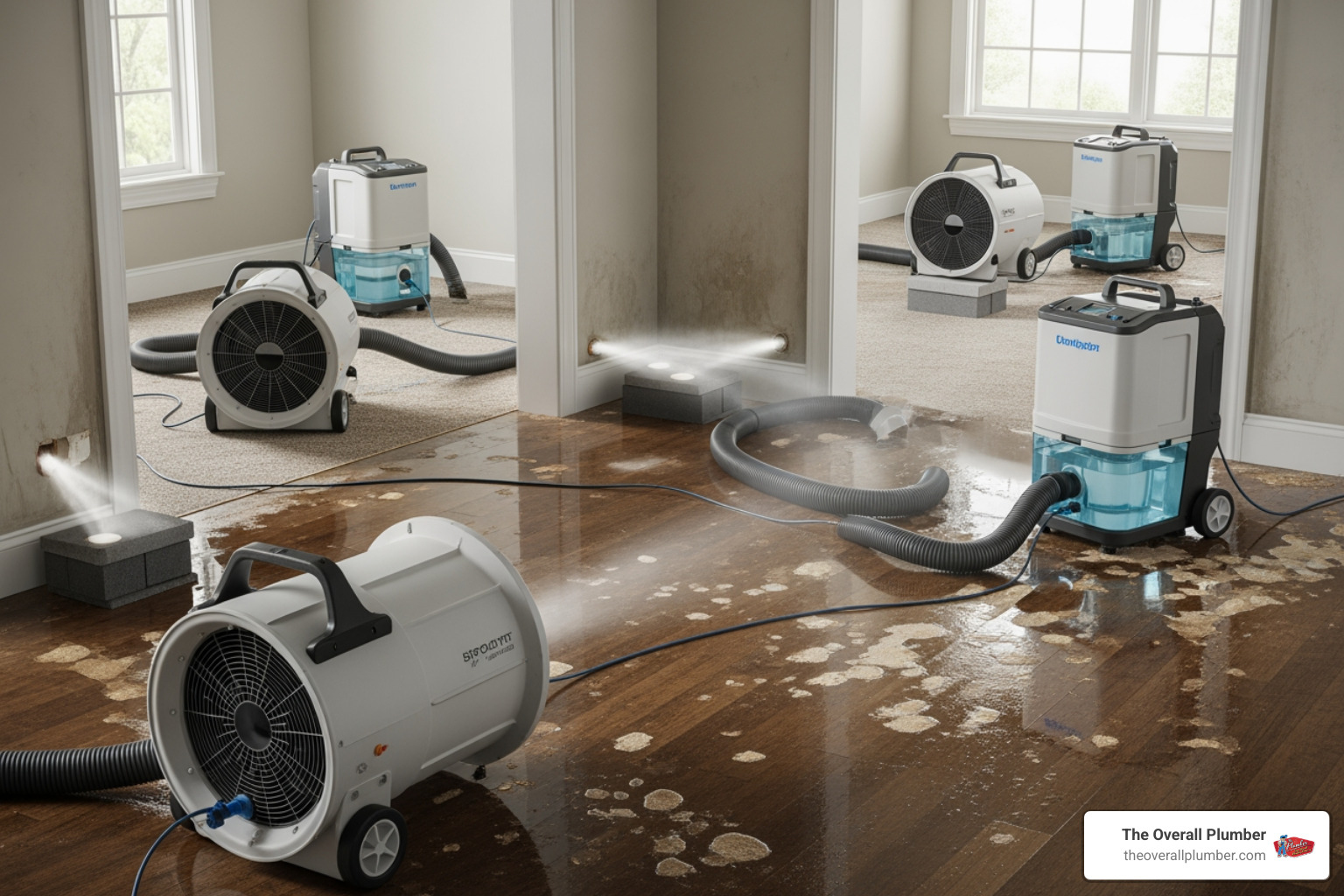
Once the immediate danger is stabilized, start drying the area out. Use fans, dehumidifiers, and wet-dry vacuums to remove moisture. If water has been present for more than 24 to 48 hours, you will want to have the area tested for mold. For a deeper dive into preventing cold-weather pipe disasters before they escalate, check out our guide on When to Call a Frozen Pipe Plumber Before Things Get Messy.
How to Fix a Broken Pipe in 7 Steps
If you are a handy DIYer, you might want to try tackling a minor, accessible leak yourself. Before you start, you need to identify your pipe material. Most modern homes use copper, PEX (flexible polyethylene), or PVC/CPVC.
If you are dealing with copper or PEX, having a quick-fix kit on hand is a lifesaver. Products like the 1/2 in. Push-to-Connect Brass Burst Pipe Repair Kit allow you to bridge a damaged section of pipe without soldering.
Here is how to execute a professional-grade repair in 7 steps.
Step 1: Shut Off the Water and Drain the System
We cannot stress this enough: do not cut into a pressurized line unless you enjoy indoor water parks. Shut off the main water valve, turn off the water heater’s power source, and open the lowest faucet on your property (usually an outdoor hose bib) to drain the system completely.
Step 2: Locate and Inspect the Damaged Section
Pinpoint exactly where the leak is occurring. Look for split seams caused by freeze damage, pinholes from pipe corrosion, or physical cracks. Wipe the pipe dry so you can clearly see the boundaries of the damage.
Step 3: Cut Out the Broken Pipe Section
Using a dedicated pipe cutter, cut out the damaged section. Make sure your cuts are perfectly square and even. A crooked cut will prevent fittings from sealing properly. We recommend cutting about 5 inches in both directions from the burst site — removing at least 10 inches of pipe in total — to ensure you have cut away all structurally weakened material.
Step 4: Deburr and Clean the Pipe Ends
After cutting, use a deburring tool or emery cloth to clean the inside and outside of the pipe ends. Any remaining metal shavings, burrs, or rough edges can damage the internal O-rings of your repair fittings and cause a slow, annoying leak later.
Step 5: Apply a Temporary Broken Pipe Repair Kit
If you need a fast, temporary fix while waiting for a permanent solution, you can use a specialized coupling. For instance, the Fernco QwikFix Broken Pipe Coupling Repair Kit for Plastic, Cast Iron and Steel Pipes in Black | Fernco – US is incredibly useful for waste, drain, and vent (DWV) lines. It uses flexible rubber couplings that slip over the pipe ends and tighten down with stainless steel bands.
Step 6: Install the Replacement Pipe and Fittings
Measure your replacement pipe carefully, allowing for the insertion depth of your fittings. Slide your slip couplings or push-to-connect fittings onto the existing pipe ends, align the new replacement section, and push or secure the connections firmly into place.
Step 7: Turn On the Water and Test for Leaks
Slowly turn your main water valve back on. Have a helper stand by the repair site to watch for immediate leaks. Let the system repressurize, bleed the air out of your faucets, and perform a thorough visual inspection of your new joints.
Understanding the Cost of Broken Pipe Repair
How much is this going to set you back? The average cost to repair a burst pipe is around $500, with typical ranges spanning from $100 to $5,000 depending on the complexity.
Nearly 80% of a standard repair bill goes toward labor. Local plumbers generally charge between $45 and $200 per hour, or they may charge a flat fee ranging from $100 to $1,250, plus a potential travel fee of $50 to $300. Emergency call-out services can range from $250 to $1,500.
If you live in League City, you will be glad to know that the local government sometimes steps in to help during widespread freezes; check out how the City Waives Permit Fees to Fix Broken Pipes during emergency recovery periods.
Here is a breakdown of the typical costs you can expect:
| Repair Category | Cost Range | Key Factors |
|---|---|---|
| Basic Pipe Repair | $150 – $250 per linear foot | Pipe material, accessibility (wall vs. open basement) |
| Emergency Plumbing Service | $250 – $1,500 | After-hours, holidays, severe accessibility issues |
| Water Extraction & Drying | $1,000 – $4,000 | Affected square footage, standing water depth |
| Structural Repairs & Drywall | $1,500 – $20,000+ | Extent of water damage to framing, flooring, and ceilings |
When it comes to materials, PVC is the most budget-friendly ($0.50 to $8 per foot), copper sits in the middle ($2 to $15 per foot), and older cast iron can cost up to $30 per foot to replace. For a comprehensive look at local plumbing costs and budgeting, read The Ultimate Guide to Plumbing Repair Houston Homeowners Need.
Many homeowners ask: Does homeowners insurance cover this? Typically, insurance covers the consequential water damage (ruined drywall, warped floors, mold remediation) if the burst was sudden and accidental. However, they rarely cover the plumbing bill to physically fix the pipe itself if it failed due to age, neglect, or lack of maintenance.
Advanced Solutions for Underground and Hidden Pipes
Not all broken pipes happen inside your warm, cozy walls. Sometimes, the break is buried deep beneath your concrete slab or lawn.
Underground leaks can be incredibly destructive. If you suspect you have a leak under your slab, check out our guide on Is There a Water Leak Under Concrete Slab Here Is How to Tell.
Signs of a Hidden Water Leak
- An unexplained jump in your monthly water bill
- Water stains on your ceilings, walls, or baseboards
- Low water pressure at your plumbing fixtures
- The sound of running water when all taps are closed
- Dripping or moisture pooling under cabinets
Trenchless Methods for Broken Pipe Repair
Fortunately, you do not always have to dig up your entire yard or jackhammer your living room floor to fix an underground line. Modern plumbing technology offers trenchless solutions:
- Pipe Relining (CIPP): We insert an epoxy-saturated sleeve into the damaged pipe, inflate it, and cure it using UV light or heat. This creates a brand-new, seamless pipe-within-a-pipe that resists root intrusion and leaks for 30 to 50 years.
- Horizontal Boring: This method allows us to install new lines with only a single access point, preserving your landscaping.
- Epoxy Coating: Perfect for restoring corroded metal lines internally without removing them.
When to Replace Your Pipes and How to Prevent Future Bursts
If your home is over 30 years old and still has galvanized steel or polybutylene pipes, you are playing a risky game. Galvanized pipes rust from the inside out, restricting water flow and eventually collapsing. Polybutylene pipes are highly prone to sudden, catastrophic joint failures.
Instead of paying for repeat spot repairs, it is often more cost-effective to invest in a whole-house repiping using modern, flexible PEX. PEX can expand and contract, making it highly resistant to freeze damage. For more tips on keeping your system running smoothly, read Don’t Let Your Plumbing Go Rogue.
To prevent future bursts:
- Keep your thermostat set to at least 55°F, even when you are out of town.
- Open under-sink cabinet doors during freezing weather to let warm indoor air circulate.
- Let your faucets drip slowly during hard freezes to keep water moving.
- Insulate exposed pipes in unheated crawl spaces or attics.
Schedule Professional Plumbing Services Today
At The Overall Plumber, we know that dealing with a broken pipe is stressful. That is why we offer comprehensive drain cleaning, advanced camera inspections, and emergency plumbing protection plans across Brazoria County, Harris County, and Galveston County.
We stand behind our work with outstanding satisfaction guarantees, priority scheduling, no overtime fees, and absolutely no trip charges. Whether you are in Houston, Pearland, Pasadena, Galveston, Clear Lake, Santa Fe, League City, Texas City, La Porte, or Friendswood, we are ready to help—call us now at (409) 925-1100.
Explore our dedicated Broken Pipe Repair service page, learn about our Local Residential Plumbing Services Emergency offerings, or connect with our 24 Hour Emergency Plumbers. Rest easy knowing you are covered by The Plumber Guarantee.