


When to Call a Frozen Pipe Plumber Before Things Get Messy
What to Do When Your Pipes Freeze (And When to Call a Pro)
A frozen pipe plumber can mean the difference between a quick fix and thousands of dollars in water damage. Here’s what you need to know right away:
Quick answers for frozen pipes:
- Signs your pipes are frozen: No water or a slow trickle from faucets, frost on exposed pipes, strange smells from drains, or bulging pipes
- Safe DIY first steps: Shut off the main water supply, open faucets to relieve pressure, and apply gentle heat with a hair dryer or warm towels
- Call a plumber immediately if: You can’t locate the frozen section, the pipe is behind a wall, you see visible cracks or bulging, or DIY thawing isn’t working after an hour
- If a pipe bursts: Turn off the main water valve right away and call an emergency plumber — a single crack can release more than 250 gallons of water in one day
Winter cold doesn’t announce itself politely. One morning you turn on the tap and get nothing — or just a weak sputter. If temperatures have dipped below freezing recently, there’s a good chance ice has formed somewhere in your plumbing. And the longer you wait, the worse it can get.
I’m Dayton Whitworth, a second-generation plumber serving Greater Brazoria County, Galveston County, Houston, and the surrounding Gulf Coast, with hands-on experience handling frozen pipe plumber calls across the region’s unpredictable cold snaps. Read on for everything you need to know — from spotting the warning signs early to knowing exactly when to call in a professional before a frozen pipe becomes a flooded home.
Understanding Why and When Pipes Freeze
In our part of Texas – from the humid streets of Houston to the coastal breezes of Galveston – we do not always think about winterizing our homes like folks up north do. However, as we have seen in recent years, when a cold snap hits the Gulf Coast, it hits hard.
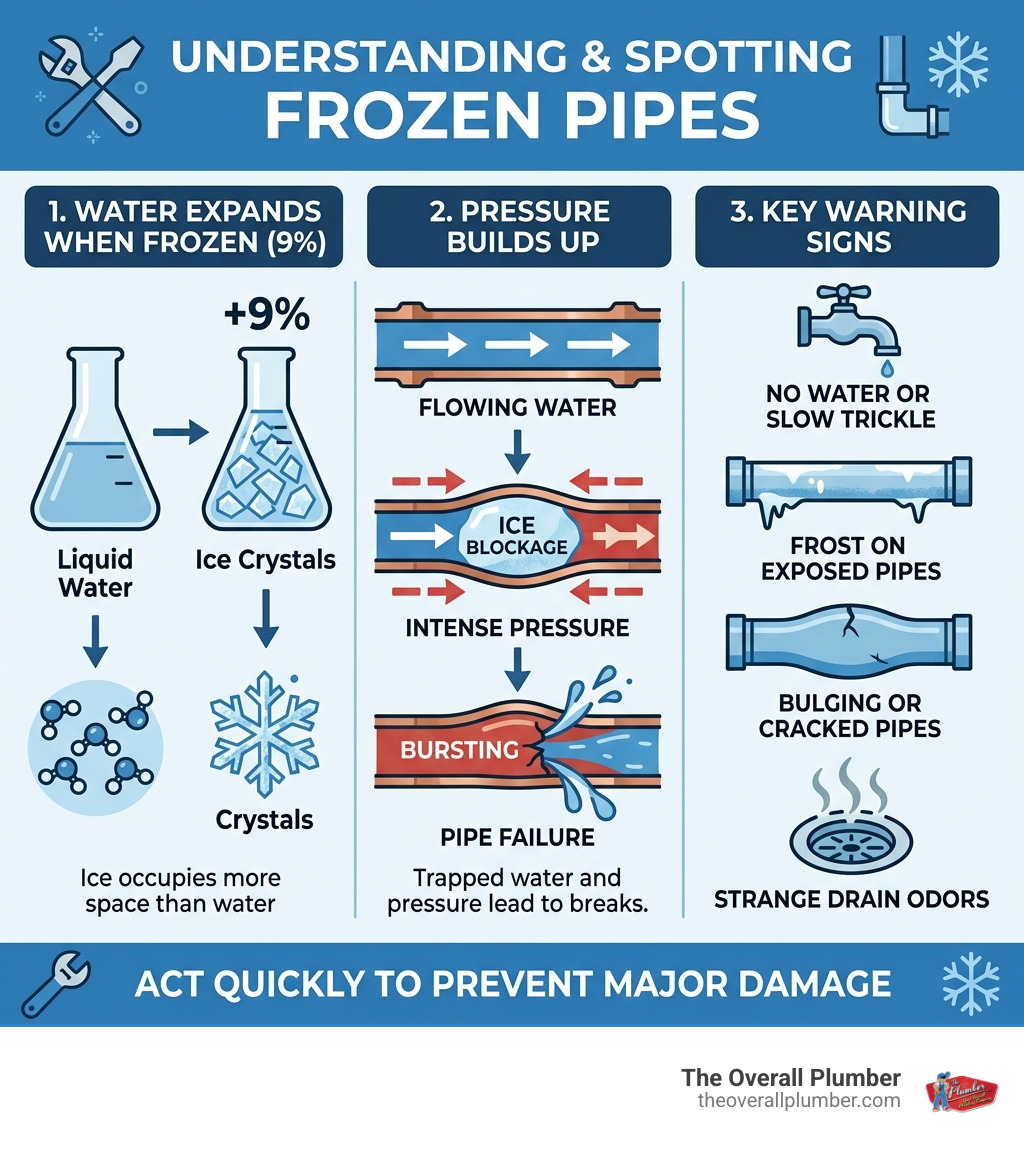
Scientifically speaking, pipes generally become a major concern when the outdoor temperature drops below 20 degrees Fahrenheit. While water freezes at 32 degrees, it often takes a sustained drop to that 20-degree threshold to overcome the residual heat inside your home’s walls. In fact, in 32-degree weather, it can take as little as 12 hours for a pipe to freeze solid.
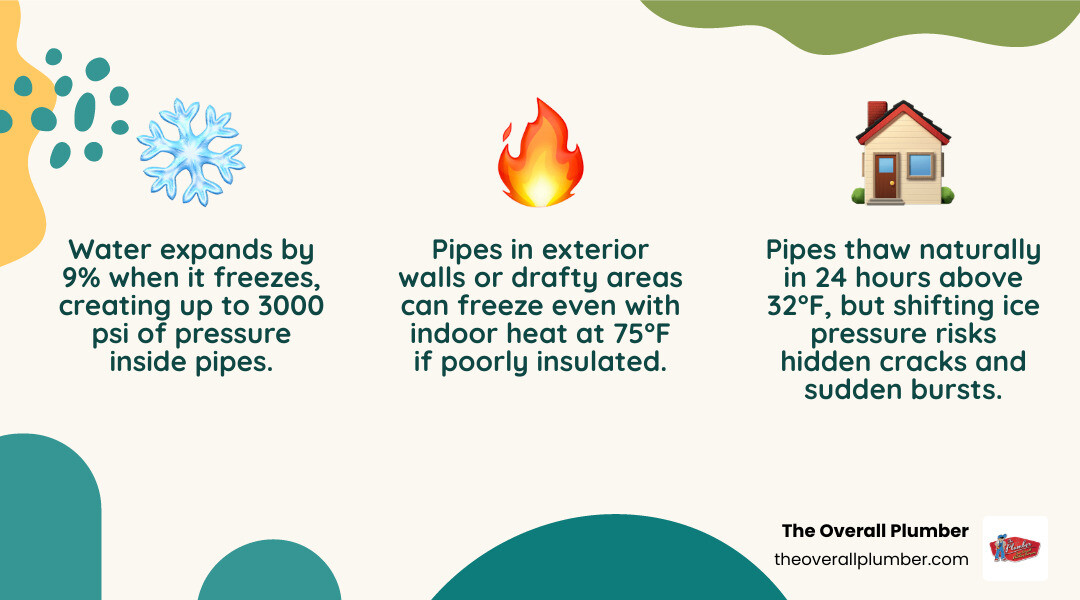
The real danger is not just the ice; it is the physics. When water freezes, it undergoes a 9% expansion in volume. This expansion creates an incredible amount of force – often exceeding 3000 psi (pounds per square inch) of pressure. To put that in perspective, most residential plumbing is designed to handle about 60 to 80 psi. When that ice expands, it acts like a hydraulic ram, pushing against the pipe walls until they split. The American Red Cross frozen pipe safety guide offers additional tips on protecting your home. For more technical details on how to get your home ready, check out this guide to frozen pipe preparation.
Vulnerable Pipe Locations
Not all pipes are created equal when the mercury drops. In our service areas like League City and Pearland, we often see the most trouble in specific “danger zones”:
- Exterior Walls: Pipes tucked inside walls that face the outside elements are often the first to go, especially if the insulation is thin or non-existent.
- Unheated Attics: Many Houston-area homes have HVAC units and plumbing lines running through the attic. Without heat, these pipes are sitting ducks.
- Crawl Spaces and Basements: If your home is on a pier-and-beam foundation, common in parts of Galveston County, the air circulating under your house can freeze pipes in hours.
- Garage Lines: If you have a utility sink or laundry room in the garage, those pipes are highly susceptible if the garage door is left open or is not insulated.
If you suspect a pipe has already given way under the pressure, you can learn more about our broken pipe repair services to see how we handle these high-pressure situations.
Identifying the Signs: When to Search for a Frozen Pipe Plumber
Knowing when to call a frozen pipe plumber is all about being a “plumbing detective.” You do not always need to see a block of ice to know you have a problem.
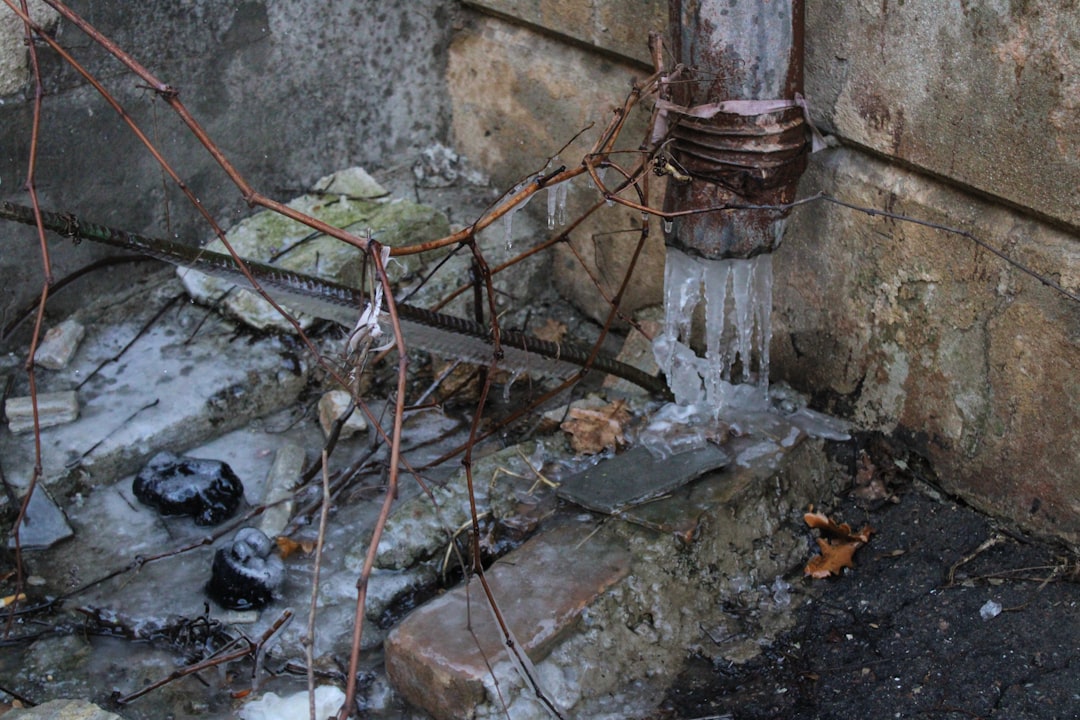
The most obvious sign is restricted flow. If you turn on the kitchen faucet and only get a weak dribble, or worse, nothing at all, you likely have an ice blockage. But there are other, subtler symptoms:
- Strange Smells: If a drainpipe freezes, it can trap sewer gases. If you notice a bad odor coming from a sink that will not drain, ice might be the culprit.
- Bulging Pipes: If you can see your pipes in the garage or attic, look for areas that look swollen. That is the 9% expansion trying to find a way out.
- Unusual Noises: Do you hear whistling, banging, or bubbling when you try to run the water? These are signs that air and water are trying to fight their way past an ice dam.
Why You Need a Frozen Pipe Plumber for Hidden Lines
While a frozen garden spigot is easy to spot, the real messy situations happen where you cannot see them. Wall cavities and hidden leaks are some of the biggest winter plumbing risks. If a pipe freezes and cracks behind your drywall, you might not know it until the ice thaws and turns into a high-pressure indoor fountain.
A professional frozen pipe plumber uses specialized tools to locate these hidden freezes without tearing your whole house apart. At The Overall Plumber, we often handle 24-hour emergency plumbers calls where a homeowner heard a pop behind the shower wall at 2 AM. In these cases, expert intervention is the best way to limit damage and restore service quickly.
Visual and Auditory Symptoms
Keep an eye out for frost accumulation on the outside of the pipe. If a pipe looks like it is sweating excessively or has a layer of white rime on it, it is dangerously cold. Also, listen for whistling sounds. As water is forced through a narrowing opening caused by ice buildup, it creates a high-pitched sound. If your pipes start making noise during a freeze, it is time to take action.
Immediate Steps and Safe Thawing Techniques
If you suspect a freeze, don’t panic, but do move quickly. The goal is to melt the ice before the pressure causes a burst.
- Shut Off the Main Water: This is the most important step. If the pipe is already cracked, shutting off the main water ensures that when the ice melts, you don’t have a flood.
- Open the Faucets: Open both the hot and cold handles. This relieves the pressure buildup between the ice blockage and the faucet.
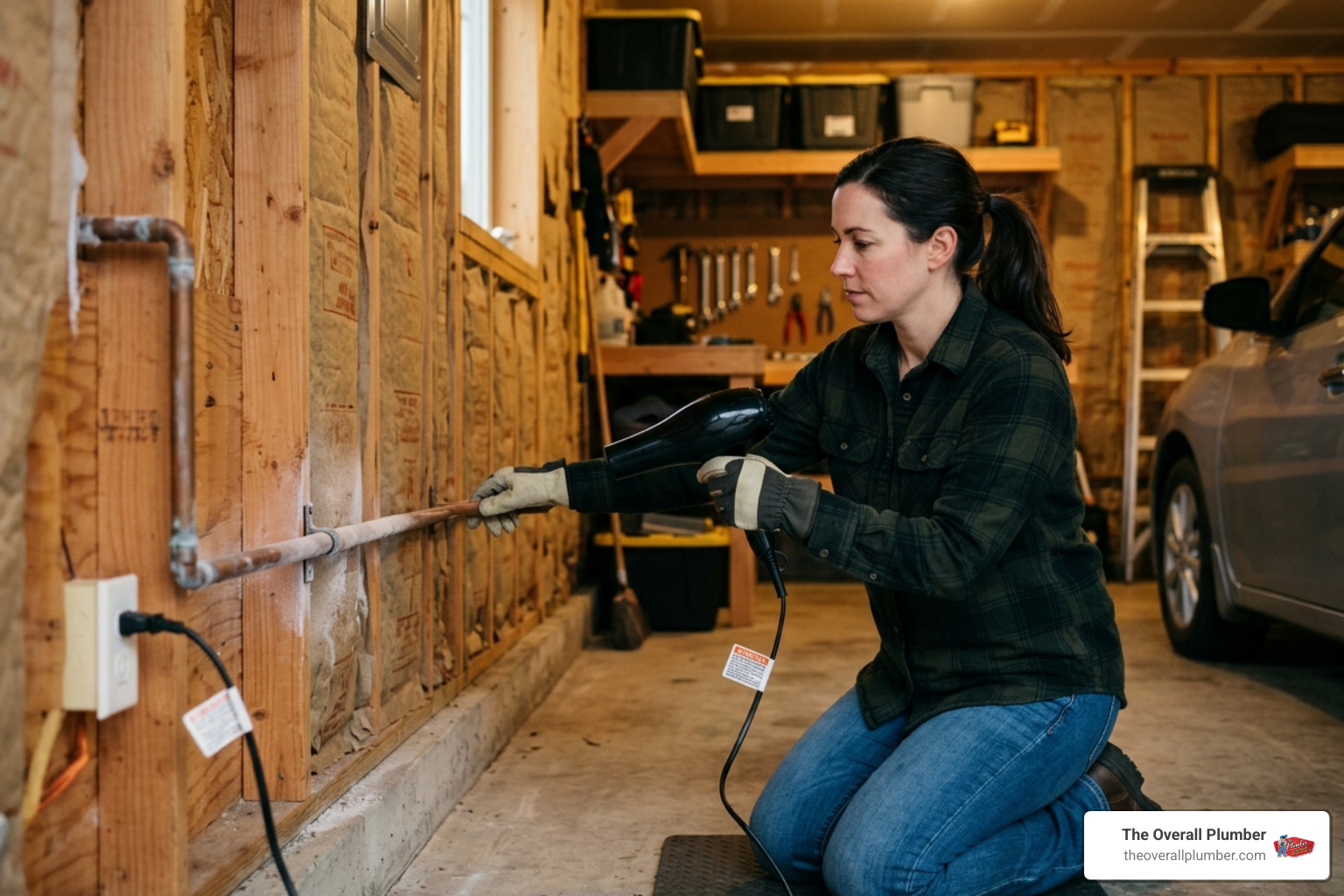
- Apply Gentle Heat: Use a hair dryer on a low setting, a portable space heater (kept at a safe distance), or wrap the pipe in towels soaked in hot water. Always start thawing from the faucet end and work your way toward the frozen area. This allows the melting water to actually drain out.
Dangers of Improper Thawing
We have seen some “creative” DIY attempts in places like Pasadena and Santa Fe that ended in disaster. Never use an open flame. Blowtorches, propane heaters, or charcoal stoves are massive fire hazards. Pipes are often located near flammable insulation, wood studs, and dust. A single spark can turn a plumbing problem into a house fire.
Furthermore, using excessive heat too quickly can cause the pipe to expand unevenly and crack. If the worst happens and you do experience a flood, you’ll need to look into water restoration to save your flooring and drywall.
What to Do if a Pipe Bursts
If you see water spraying or hear the dreaded sound of rushing water, every second counts. A tiny crack in a frozen pipe can unleash more than 250 gallons of water in a single day.
- Step 1: Immediately turn off the main water shut-off valve.
- Step 2: Call an emergency frozen pipe plumber.
- Step 3: Open all faucets to drain any remaining water in the system.
- Step 4: Start cleaning up the standing water to prevent mold and structural damage.
For more information on the full range of help available, visit our plumbing services page.
Professional Solutions: How a Frozen Pipe Plumber Saves Your Home
Sometimes, a hair dryer just will not cut it. When the freeze is deep or inaccessible, a professional frozen pipe plumber brings in the right equipment.
| Feature | DIY Thawing | Professional Thaw Machine |
|---|---|---|
| Heat Source | Hair dryer / Warm towels | High-amperage electrical current |
| Reach | Only visible sections | Up to 175 feet of pipe |
| Safety | Risk of fire if using torches | Controlled, low-voltage electricity |
| Speed | 30 minutes to several hours | Often less than 10 minutes |
| Effectiveness | Low for hidden pipes | High for copper and iron lines |
At The Overall Plumber, we use specialized equipment like infrared lamps to help identify cold spots and high-amperage thaw machines that pass a controlled current through the pipe itself to melt ice from the inside out. We also utilize electrical heating tape for long-term solutions on pipes that are prone to recurring freezes.
Repair Costs and Financial Impact
We believe in transparency. In April 2026, the costs for these services generally fall into these ranges:
- Standard Thawing Fee: If the pipes have not burst, a plumber might charge a flat fee of around $100 to $300 to professionally thaw the lines.
- Burst Pipe Repair: The average cost for a standard repair is about $500. This includes diagnosing the leak and replacing the damaged section of pipe.
- Mainline Bursts: If the main line coming into your house from the street bursts, expect an average cost of $1,100, though it can go higher depending on depth and location.
- Major Overhauls: In extreme cases where multiple lines have failed, some homeowners opt for repiping Houston homes to switch to more freeze-resistant materials like PEX.
Hiring a Frozen Pipe Plumber for Annual Maintenance
At The Overall Plumber, we do not just show up when things are leaking. We want to help you stay ahead of the weather. Our plumbing protection plans are designed to give you peace of mind before the first freeze hits.
We offer:
- Camera Inspections: To find weak spots or existing cracks in your lines.
- Drain Cleaning with Augers: To ensure your waste lines are clear.
- No Trip Charges: We do not believe in charging you just to show up at your door.
- No Overtime Fees: Because pipes do not wait for business hours to freeze.
- Priority Scheduling: Our protection plan members go to the front of the line during major freeze events.
- Satisfaction Guarantees: We stand behind every job we do, so you can trust that the work is done right the first time.
Long-Term Prevention and Winterization Strategies
The best way to deal with a frozen pipe plumber is to make sure you never need to call one for an emergency. Prevention is a weekend project that can save you thousands.
- Pipe Insulation: Wrap exposed pipes in foam sleeves or fiberglass insulation. This is especially important in attics and crawl spaces.
- The 55-Degree Rule: If you’re traveling during the winter, never set your thermostat lower than 55 degrees.
- Drip Your Faucets: When a freeze is predicted for Brazoria or Harris County, let your faucets drip. It’s not about the moving water keeping the pipe warm; it’s about relieving the pressure buildup so that if ice does form, the pipe won’t burst.
- Seal the Gaps: Use caulk or spray foam to seal cracks in exterior walls where cold air can whistle in and hit your pipes directly.
Outdoor Plumbing Preparation
Your outdoor fixtures are the most exposed.
- Hose Bibs: Disconnect all garden hoses. Even a “frost-proof” faucet will burst if a frozen hose is still attached to it.
- Foam Covers: Use those inexpensive styrofoam “faucet socks” to protect your outdoor spigots.
- Sprinkler Systems: Drain your irrigation lines and shut off the backflow preventer.
- Pool Lines: Ensure your pool pump runs continuously during a freeze to keep water moving through the heater and filter lines.
Frequently Asked Questions about Frozen Pipes
How long does it take for pipes to thaw naturally?
In our typical Texas weather, if the temperature rises above 32 degrees, pipes will usually begin to thaw on their own within 24 hours. However, “natural” thawing is risky. As the ice melts, the pressure inside the pipe shifts. If there is a crack you haven’t seen yet, the “natural” thaw is exactly when the flooding will begin. It is always safer to have a plumber inspect the lines before they fully unfreeze.
Will pipes thaw on their own without bursting?
Sometimes you get lucky. If the ice formation was “soft” or didn’t completely block the pipe, it might thaw without causing a break. However, because water expands by 9%, the structural integrity of the pipe is almost always compromised. Even if it doesn’t burst today, that pipe is now a “weak link” that is more likely to fail during the next cold snap or a high-pressure surge.
Can pipes freeze if the heat is on?
Yes. This is a common misconception. You can have your thermostat set to 75 degrees, but if a pipe is located inside an exterior wall with poor insulation, or in a drafty foundation area, the heat from your furnace might never reach it. This is why opening cabinet doors under your kitchen and bathroom sinks is so important—it allows the warm air from your home to circulate around the plumbing.
Schedule your frozen pipe repair in La Porte now or call us immediately at 281-668-8055.