


Is There a Water Leak Under Concrete Slab? Here is How to Tell
What a Water Leak Under Concrete Slab Actually Means for Your Home
A water leak under concrete slab is one of the most damaging plumbing problems a homeowner can face — and one of the easiest to miss until it’s too late.
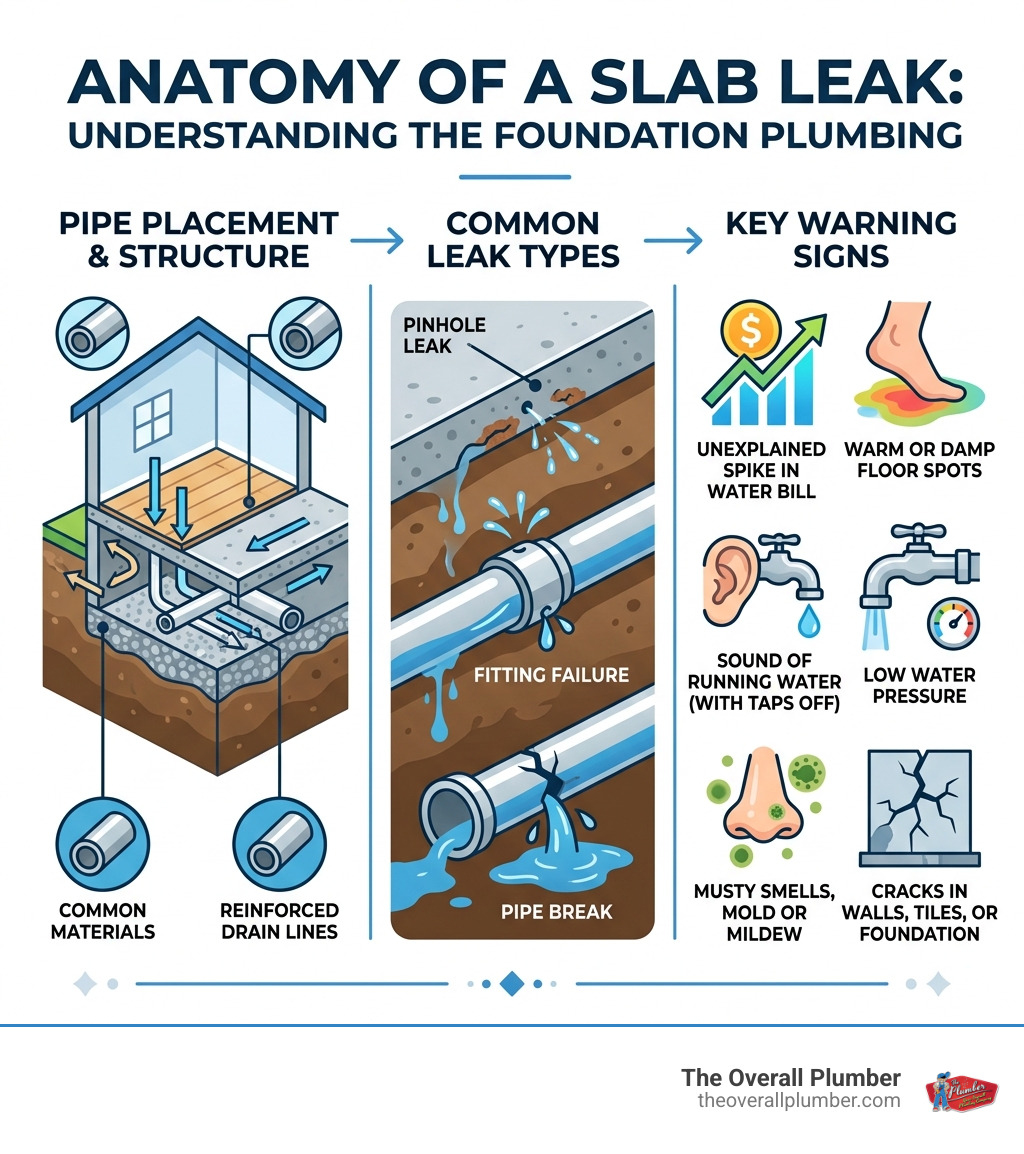
Here’s a quick summary of what to look for:
- Unexplained spike in your water bill with no change in usage
- Warm or damp spots on your floors, even with no spill
- Sound of running water when all taps and appliances are off
- Low water pressure throughout the home
- Musty smells, mold, or mildew near floors or walls
- Cracks forming in your walls, tiles, or foundation
If two or more of these apply to your home right now, there’s a good chance you have a slab leak.
Your home’s plumbing runs beneath the concrete foundation. When one of those pipes cracks, corrodes, or shifts, water escapes into the ground below your home — silently, and often for weeks before anyone notices. Over 63% of newly built single-family homes in the U.S. are built on slab foundations, and in states like Texas, that number climbs to nearly 96%. That means millions of homeowners are at risk.
The longer a slab leak goes undetected, the worse the damage gets — eroded soil, weakened foundations, mold growth, and thousands of dollars in repairs.
I’m Dayton Whitworth, a second-generation plumber serving Greater Houston, Brazoria County, and the Gulf Coast, and I’ve seen how a slow water leak under concrete slab can quietly destroy a home’s structural integrity before the owner even suspects a problem. In this guide, I’ll walk you through exactly how to spot one and what to do next.
Common Causes of a Water Leak Under Concrete Slab
Understanding why a water leak under concrete slab occurs is the first step in prevention. In our service areas like Pearland and Sugar Land, we see a variety of factors that contribute to these hidden plumbing nightmares.
Pipe Corrosion
If your home was built several decades ago, it likely uses copper or galvanized steel pipes. Over time, the minerals in our local water supply and the chemistry of the soil surrounding the pipes cause the metal to break down. This results in “pinhole leaks” that can spray water under high pressure directly into your foundation.
Soil Expansion and Shifting Clay
In Texas, our soil is famous (or infamous) for its high clay content. This soil acts like a sponge; it expands significantly when wet and shrinks when dry. This constant “heaving” puts immense physical stress on the pipes embedded in or beneath the slab. Eventually, the movement causes joints to separate or pipes to crack.
Electrolysis
This sounds like something out of a science lab, but it’s a real threat to copper pipes. Electrolysis occurs when a combination of soil chemistry and small electrical currents (often from poorly grounded home systems) causes a chemical reaction that eats away at the copper.
Hydrostatic Pressure
When the ground outside your home becomes oversaturated—perhaps due to heavy Gulf Coast rains or poor drainage—water pressure builds up against the outside of your foundation. This pressure can force its way through existing tiny cracks or stress the pipes until they fail.
Improper Pipe Installation and Abrasion
Sometimes the trouble starts on day one. If a pipe was nicked during construction or wasn’t properly wrapped, it may rub against the rough concrete or nearby rocks every time the water turns on and off. This constant friction, known as abrasion, eventually wears a hole through the pipe wall. If you suspect a major pipe failure, you may need Broken Pipe Repair to restore your home’s system.
Early Warning Signs of Foundation Plumbing Issues
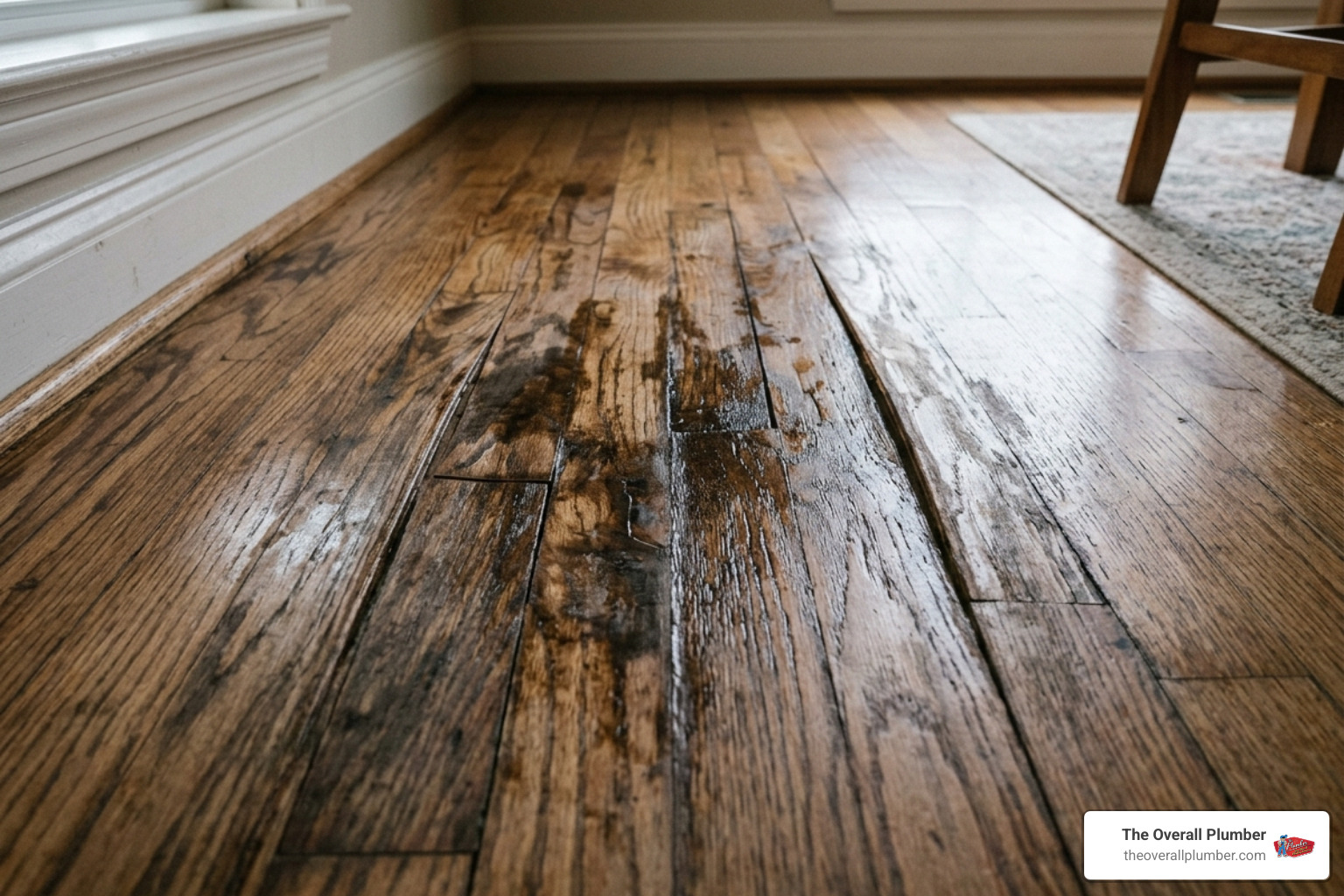
Because the pipes are buried under inches of reinforced concrete, you won’t see a puddle immediately. Instead, you have to play detective.
High Water Bills
This is often the first “loud” sign. If your bill jumps by 25% or 50% without you hosting a pool party or watering the lawn extra, that water is going somewhere. A small leak can waste thousands of gallons a month.
Running Water Sounds
When the house is quiet at night, listen closely. If you hear a faint hissing, whistling, or the sound of rushing water behind the walls or under the floor—and you know the toilets aren’t running—you likely have a pressurized leak.
Low Water Pressure
If your morning shower suddenly feels more like a light drizzle, it could be because a significant portion of your water is escaping through a hole in the main line before it ever reaches your faucet.
Musty Odors and Foundation Cracks
Water trapped under the slab creates a breeding ground for mold. You might notice a “basement smell” in a house that doesn’t have a basement. Furthermore, as the water erodes the soil, the slab may settle unevenly, leading to cracks in your drywall or flooring. For residents in the southern part of our service area, League City Texas Leak Detection Repair is essential to catch these signs before they compromise the structure.
Identifying a Hot Water Leak Under Concrete Slab
Hot water leaks are particularly common because the heat causes the pipes to expand and contract more frequently than cold lines.
- Warm Floor Spots: If you walk barefoot across your kitchen or bathroom and suddenly feel a “hot spot” on the tile, there is likely a hot water line leaking directly underneath.
- Water Heater Activity: If your water heater seems to be running constantly, it’s trying to keep up with the demand of a leak that never stops.
- Unusual Pet Behavior: We’ve had many customers tell us their dog or cat started sleeping in a very specific, unusual spot on the floor. Pets love the warmth provided by a leaking hot water line!
- Pinhole Copper Leaks: Copper is especially susceptible to thermal expansion stress. If you live in the Pasadena area, Pasadena Texas Leak Detection Repair can help pinpoint these specific hot-line failures.
DIY Methods to Confirm a Water Leak Under Concrete Slab
Before you call us, you can perform a few simple tests to confirm your suspicions.
- The Water Meter Test: Turn off every single faucet, shower, and water-using appliance (including the ice maker). Go out to your water meter and look at the “leak indicator”—usually a small red or silver triangle or dial. If it’s spinning while no water is being used in the house, you have a leak.
- The Shut-Off Valve Check: Turn off the main water shut-off valve to the house. If the meter stops spinning, the leak is inside the home’s plumbing. If it keeps spinning, the leak might be in the service line between the meter and the house.
- Visual Inspection: Walk the perimeter of your home. Look for unusually green patches of grass near the foundation or standing water where there shouldn’t be any. For those in Brazoria County, Angleton Texas Leak Detection Repair experts can help interpret these outdoor signs.
Professional Detection and Repair Strategies
Once you’ve confirmed a leak exists, the next step is locating it without turning your home into a construction zone. Gone are the days when plumbers had to guess and jackhammer up the entire floor.
| Method | Cost | Duration | Disruption Level |
|---|---|---|---|
| Electronic/Acoustic Detection | Low-Medium | 1-3 Hours | Very Low |
| Infrared/Thermal Imaging | Medium | 1-2 Hours | Very Low |
| Video Pipe Inspection | Medium | 2-4 Hours | Low |
| Direct Access (Jackhammering) | High | 1-3 Days | Very High |
| Tunneling | Very High | 3-5 Days | Medium (Outside only) |
We utilize specialized equipment to find the exact “heartbeat” of the leak. Acoustic listening devices amplify the sound of the leak, while infrared cameras help us see the heat signatures of escaping hot water through the concrete. If you are in the metro area, our Local Leak Detection and Repairs Houston Plumber team uses these non-invasive tools every day.
For residents in the Friendswood area, Friendswood Texas Leak Detection Repair services ensure that we find the problem quickly, saving you from unnecessary demolition.
Repairing a Water Leak Under Concrete Slab Without Breaking Concrete
Many homeowners fear that a slab leak means their beautiful hardwood or tile floors are doomed. That isn’t always the case. We have several “trenchless” or non-invasive options:
- Pipe Rerouting: This is often the smartest long-term fix. Instead of fixing the broken pipe under the slab, we abandon it entirely and run a new, modern PEX line through your walls or attic. This ensures the leak never happens in that spot again.
- Trenchless Epoxy Lining: For certain types of leaks, we can coat the inside of the existing pipe with a durable epoxy resin, essentially creating a “pipe within a pipe” without any digging.
- Under-Slab Tunneling: If we must reach the pipe directly but want to save your floors, we can tunnel underneath the house from the outside. This is more labor-intensive but keeps the mess out of your living room.
- PEX Repiping: Replacing old metal pipes with flexible, corrosion-resistant PEX is a great way to future-proof your home. For coastal residents, Galveston Texas Leak Detection Repair often involves these modern materials to combat the salty, corrosive air.
Frequently Asked Questions about Slab Leaks
Is a slab leak covered by homeowners insurance?
This is the most common question we get. The answer usually depends on two words: Sudden vs. Gradual.
Most standard policies cover “sudden and accidental discharge” of water. This means if a pipe bursts and floods your home, the damage to your floors and the cost of the “tear out” (accessing the pipe) is often covered. However, “gradual” damage—like a slow leak that has been dripping for six months—is often excluded.
It is vital to check your policy for “Foundation Repair” or “Water Backup” riders. We often work with homeowners in Missouri City, and we recommend looking into Missouri City Texas Leak Detection Repair specialists who can provide the documentation your insurance adjuster will need.
How much does it cost to fix a leak under the slab?
Costs can vary wildly based on the location and the repair method.
- Detection: Usually ranges from $150 to $400.
- Repair: A simple direct-access repair might cost $2,000 to $4,000, while a full-house reroute can range from $5,000 to $15,000. Don’t forget to factor in the cost of restoring flooring or cabinetry if the slab had to be cut. In areas like Dickinson, Dickinson Texas Leak Detection Repair costs are influenced by the depth of the slab and local soil conditions.
Should I repipe my whole house or just fix the leak?
If your home is over 40 years old and this is your second slab leak in two years, repipe the house. Fixing one hole in a corroded pipe is like putting a Band-Aid on a sinking ship; another leak will likely pop up a few feet away within months.
Repiping adds long-term value to your property and provides peace of mind. For those in smaller communities like El Lago, El Lago Texas Leak Detection Repair consultations can help you weigh the cost of a single fix versus a total system upgrade.
Conclusion
A water leak under concrete slab doesn’t have to be a catastrophe if you catch it early. By staying vigilant for high water bills, warm spots, and the sound of running water, you can protect your home’s foundation and your wallet.
To prevent future issues:
- Regulate your water pressure: Keep it between 40 and 65 PSI. High pressure is the leading cause of pipe stress.
- Maintain soil moisture: Use a soaker hose around your foundation during dry Texas summers to prevent the soil from shrinking away from your pipes.
- Schedule annual inspections: Catching a tiny drip today prevents a foundation collapse tomorrow.
At The Overall Plumber, we are committed to providing the highest quality leak detection and repair services throughout Houston, Galveston, and the surrounding counties. We offer a satisfaction guarantee, priority scheduling, and no overtime fees. Whether you are in Santa Fe, Texas City, or La Porte, we are here to help.
If you suspect your home has a hidden leak, don’t wait for the floor to buckle. Contact our Local Leak Detection and Repairs Houston Plumber team today for a professional camera inspection and an honest evaluation. We’ll get your home back on solid ground.