


What to Do When You Have a Leaking Pipe
Pipe repair is something most homeowners will face at least once. Acting fast can save you from serious water damage and costly repairs.
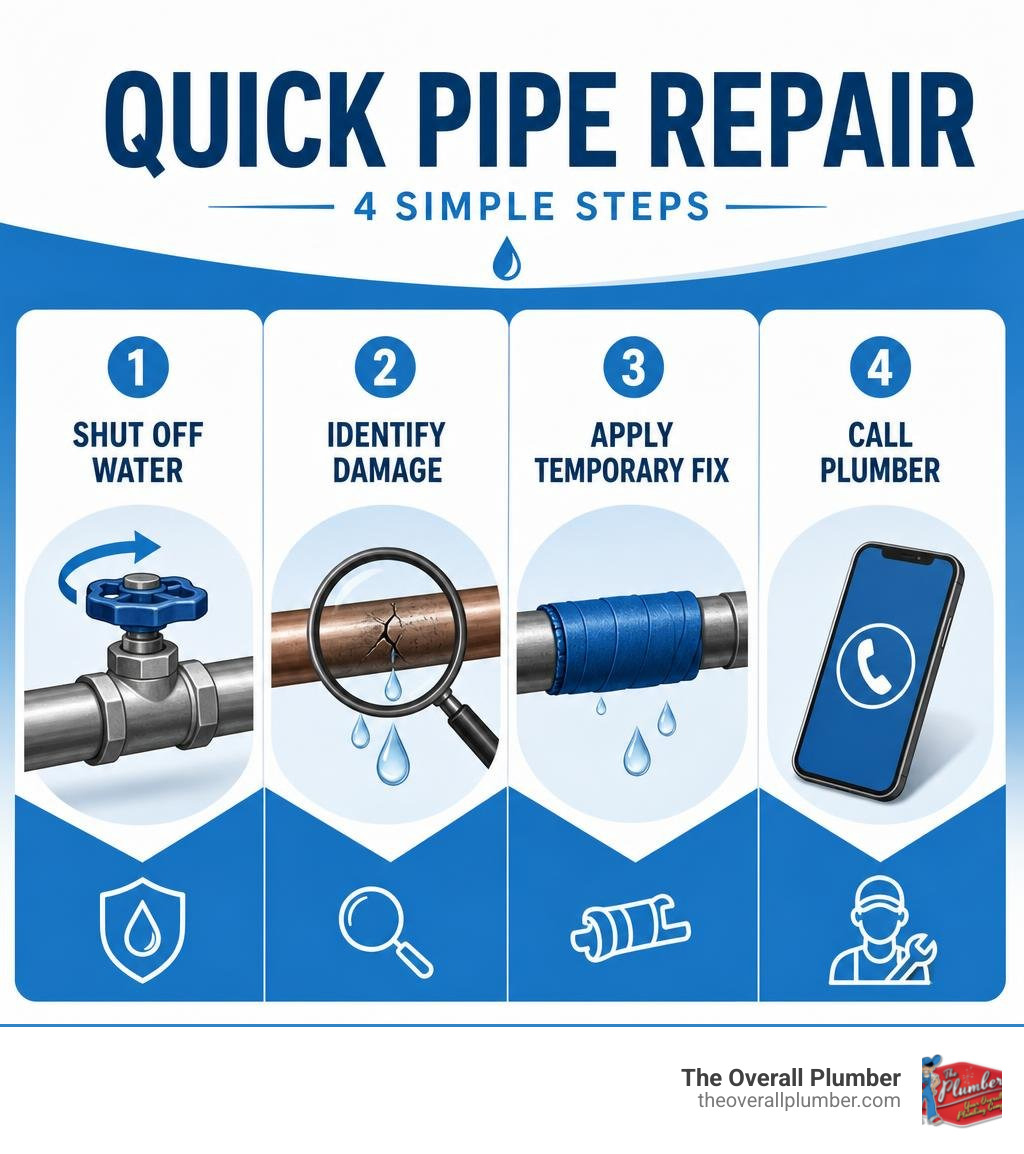
Quick answer — how to fix a leaking pipe:
- Shut off the water at the nearest shutoff valve
- Identify the damage — pinhole, crack, joint leak, or burst section
- Apply a temporary fix — use a repair clamp, silicone wrap, or fiberglass tape to stop the flow
- Call a plumber for a permanent repair, especially for underground or hidden pipes
- Document the damage for insurance if needed
Pipes fail for many reasons — corrosion, tree root intrusion, freezing temperatures, high water pressure, and simple old age. Some leaks are small and easy to handle yourself. Others point to a bigger problem inside your walls or underground.
Knowing the difference between a quick DIY patch and a job that needs a professional can save you time, money, and a lot of stress.
I’m Dayton Whitworth, a second-generation plumber serving the Greater Houston and Gulf Coast area, and pipe repair is one of the most common calls our team handles every day. Read on for a straightforward breakdown of your options, from emergency fixes to permanent solutions.
Common Causes of Pipe Damage
To fix a pipe permanently, we first have to understand what went wrong. Down here in the Houston area—from the humid breezes of Galveston and Texas City up to the busy suburbs of Pearland and Pasadena—our plumbing systems face unique environmental stresses.
Here are the most common culprits behind damaged lines:
- Corrosion: Older homes in historic parts of Galveston or older neighborhoods in Houston often still have galvanized steel or copper pipes. Over time, oxygen, minerals, and chemical reactions eat away at the metal, causing rust, pitting, and pinhole leaks.
- Tree Root Intrusion: Tree roots are incredibly strong and constantly searching for moisture. If you have a tiny crack in an underground sewer line, roots from live oaks or pines will find it, squeeze inside, and expand until the pipe breaks.
- Shifting Soil: The clay-heavy soil across Harris County and Brazoria County swells when wet and shrinks when dry. This constant movement puts immense physical pressure on underground lines, causing them to bend, crack, or shear completely.
- Excessive Water Pressure: While high pressure feels great in the shower, anything over 80 PSI acts like a wrecking ball on your joints, valves, and pipe walls. Over time, it leads to pinhole leaks and failed connections.
- Thermal Expansion: Rapid temperature swings can cause pipes to expand and contract. While South Texas is famous for its heat, unexpected winter freezes can catch homeowners off guard. When water freezes inside a pipe, it expands with enough force to split metal or plastic wide open. When that happens, you need to know When to Call a Frozen Pipe Plumber Before Things Get Messy to avoid a flooded home.

Choosing the Right Pipe Repair Method
Not all leaks are created equal. A pinhole leak on an exposed laundry room pipe requires a very different approach than a collapsed sewer line running underneath your driveway in League City. Choosing the right pipe repair method depends on the pipe’s material, the severity of the damage, where the pipe is located, and your budget.
| Repair Method | Best For | Durability | Access Required | Relative Cost |
|---|---|---|---|---|
| Silicone Tape / Wraps | Emergency pinhole leaks, temporary joint seals | Temporary (days to weeks) | Fully exposed | Very Low |
| Mechanical Clamps | Small punctures, cracks in straight metal/plastic runs | Temporary to Semi-Permanent | Fully exposed | Low |
| Push-to-Connect Fittings | Section replacement in copper, PEX, or CPVC | Permanent (when installed right) | Exposed / Cut-out space | Moderate |
| Slip Couplings / Fernco | Drain, waste, and vent (DWV) line repairs | Permanent | Exposed / Cut-out space | Moderate |
| Trenchless Pipe Lining | Underground sewer and drain lines | Permanent (50+ years) | Minimal (small access ports) | High upfront, low restoration |
| Traditional Excavation | Severely collapsed or back-pitched underground pipes | Permanent | Full trench digging | High |
Before rushing into a repair, it is critical to locate the exact source of the water. If you suspect a leak but cannot find it, professional Local Leak Detection and Repairs Houston Plumber services can pinpoint the issue behind your walls or under your foundation without unnecessary demolition.
Emergency Temporary Pipe Repair Solutions
When water is spraying everywhere, you do not have time to wait for a full system repipe. You need to stop the bleeding immediately. Fortunately, several excellent emergency pipe repair products can save the day.
- Silicone Repair Wraps: Products like Weld-On® Pipe Repair Wrap are self-fusing, non-adhesive silicone tapes. Because they do not rely on glue, they can be wrapped tightly around wet, dirty, or oily pipes. As you stretch the tape, it fuses to itself to create a watertight seal that can handle high temperatures up to 500°F.
- Fiberglass Repair Tapes: Water-activated fiberglass wraps, such as the Quick Seal Pipe Repair Nu-Calgon or the WEICON Pipe Repair-Kit, are incredible for fast field repairs. These kits feature a knitted fiberglass tape impregnated with a polyurethane resin. You simply soak the tape in water for about 20 seconds, wrap it tightly around the damaged area (aiming for at least 15 layers or a 1/2-inch thickness), and let it cure. It hardens in minutes and is fully cured in 30 minutes, working on PVC, copper, steel, and cast iron.
- Emergency Clamps: If you have a localized puncture or crack, a mechanical clamp like the PIG PipeRescue Repair Clamp is a lifesaver. This clamp can be installed while the leak is still flowing at full pressure, providing an instant seal on metal, plastic, or multilayer pipes up to 150 PSI.
- Push-to-Connect Kits: For a slightly more robust but still DIY-friendly fix, the SharkBite Burst Pipe Repair Kit allows you to cut out a damaged section of 1/2-inch copper or PEX pipe and slide a slip coupling repair fitting into place without any soldering, glue, or special tools.
- All-In-One Coupling Kits: For drain, waste, and vent lines, the Fernco QwikFix Kit provides two flexible, leak-proof elastomeric couplings and a 12-inch section of Schedule 40 PVC. It is designed to fit perfectly within standard 16-inch on-center wall framing, making it the perfect solution for repairing pipes inside walls or ceilings.
Permanent Professional Pipe Repair Options
While wraps and clamps are perfect for getting you through the weekend, they are not designed to last forever. For a permanent fix, you will eventually need to look at professional replacement options.
If your home has old, failing galvanized steel or polybutylene pipes that leak constantly, patching individual spots is like playing whack-a-mole. In these cases, the most cost-effective long-term solution is a whole-house repiping. You can consult The Ultimate List of Local Repiping Experts to find professional assistance, or learn more about the process of Repiping Houston Homes to protect your property’s value and water quality.
How Trenchless Pipe Repair Works
Historically, fixing a broken sewer or water line under your yard, driveway, or patio meant bringing in heavy excavators, digging a massive trench, and destroying your landscaping. Today, modern trenchless (no-dig) technology has completely changed the game.
Trenchless pipe repair works by using existing access points (or small, targeted entry holes) to fix the pipe from the inside out. There are two primary methods:
- Cured-in-Place Pipe (CIPP) Lining: We insert a flexible, resin-saturated felt tube into the damaged pipe. Once in place, the lining is inflated and cured using hot water, steam, or UV light. This creates a brand-new, seamless, jointless plastic pipe inside the old one.
- Pipe Bursting: A heavy-duty pulling machine drags a bursting head through the old, damaged pipe. This head breaks the old pipe apart and pushes the fragments into the surrounding soil while simultaneously pulling a brand-new, highly durable HDPE pipe into place behind it.
The advantages of trenchless repairs are massive:
- Cost Savings: It can reduce overall project costs by up to 50% compared to traditional excavation because you do not have to pay to rebuild concrete driveways, patios, or expensive landscaping.
- Speed: Trenchless repairs can be completed up to 75% faster than traditional open-trench digging, often taking only a single day.
- Disruption: Surface disruption is reduced by up to 90%, meaning your daily life in Santa Fe or Friendswood is barely interrupted.
- Longevity: Materials like CIPP lining can extend the life of your existing pipes by 50 years or more, resisting future root intrusion and corrosion.
To see if your home’s sewer lines are a good candidate for this modern method, check out our specialized services for Broken Pipe Repair.
Step-by-Step Guide to Fixing a Leaking Pipe
If you have a visible, accessible pipe leak and want to attempt a quick DIY repair before calling us in, here is the standard process to do it safely:
- Shut Off the Water: Never attempt to work on a pressurized pipe. Shut off the main water valve to your home or the localized valve under the sink or toilet. Turn on a nearby faucet to drain any remaining water out of the line.
- Clean and Prep the Surface: Use sandpaper, a wire brush, or a file to clean rust, dirt, scale, or grease off the pipe. For wraps and tapes to bond properly, the surface must be as smooth and clean as possible.
- Apply the Repair Material:
- If using silicone tape: Wrap it tightly around the leak, stretching it to its maximum capacity to ensure a tight, self-fusing compression seal. Overlap each turn by 50%.
- If using water-activated fiberglass tape: Put on the protective gloves, soak the tape in water for 20 seconds, and wrap it tightly around the pipe, smoothing the foaming resin as you go.
- If using a mechanical clamp: Position the rubber gasket directly over the hole or crack, place the metal clamp housing over the gasket, and tighten the bolts evenly.
- Allow to Cure: If you used a resin-based wrap, wait at least 30 to 60 minutes for the material to cure completely.
- Turn the Water Back On and Test: Slowly turn the water supply back on. Watch the repaired area closely for several minutes to ensure no moisture is seeping through.
If you notice even a tiny bead of water forming, the repair did not hold, and it is time to call in a professional for a proper Broken Pipe Repair.
Frequently Asked Questions About Pipe Repair
How long do pipe repairs typically last?
A temporary fix—like silicone tape, epoxy putty, or a basic emergency clamp—is only designed to buy you time. These patches typically last anywhere from a few days to a few months.
Permanent professional repairs, such as replacing the damaged section with new copper or PEX, or using Cured-in-Place Pipe (CIPP) lining, are designed to last for decades. CIPP lining, for example, has a design life of over 50 years and is highly resistant to chemical wear and tree root intrusion.
Are there environmental or safety risks with pipe repairs?
Yes, especially when dealing with drinking water. If you are repairing a potable water line, any tape, epoxy, or sealant you use must be certified safe for drinking water. Look for products that are classified under ANSI/NSF Standard 61.
Additionally, older sewer lines may contain hazardous wastewater or sewer gases. Traditional deep excavation also carries risks of striking underground utility lines, which is why trenchless methods are generally considered much safer for both the environment and the workers.
How can I prevent future pipe damage and leaks?
Prevention is always cheaper than repair! To keep your plumbing system in top shape:
- Monitor Your Water Pressure: Install a pressure gauge on an outdoor hose bib. If your pressure is above 80 PSI, have a plumber install or replace your pressure-reducing valve (PRV).
- Soften Hard Water: High mineral content can build up inside your pipes, accelerating corrosion and scale. A water softener can protect your plumbing system.
- Winterize Your Home: Before a winter freeze hits the Houston area, wrap exposed outdoor pipes with insulation sleeves and keep your indoor faucets dripping.
- Get Regular Inspections: Annual drain cleanings using professional augers and camera inspections can catch tiny cracks, joint separations, or minor root intrusions before they turn into major pipe failures.
Schedule Professional Pipe Repair Services Today
If you are dealing with a stubborn leak or need a permanent, professional solution, don’t wait for water damage to ruin your property. At The Overall Plumber, we proudly serve homeowners across Brazoria County, Houston, Clear Lake, Santa Fe, League City, Texas City, La Porte, Friendswood, Pearland, Pasadena, and Galveston.
We offer professional drain cleaning with augers, camera inspections, and comprehensive plumbing protection plans. Plus, our services come with no trip charges, satisfaction guarantees, priority scheduling, and absolutely no overtime fees.
For reliable, expert Broken Pipe Repair, contact our team today to schedule your inspection and repair.