

Choose the Right Plumbing Snake for Clogged Drains
A plumbing snake for clogged drains is a flexible tool that reaches into a pipe to break up, hook, or pull out a blockage. It can be a simple plastic hair-removal wand for a shower drain or a steel cable auger for a deeper kitchen, sink, or bathroom line clog.
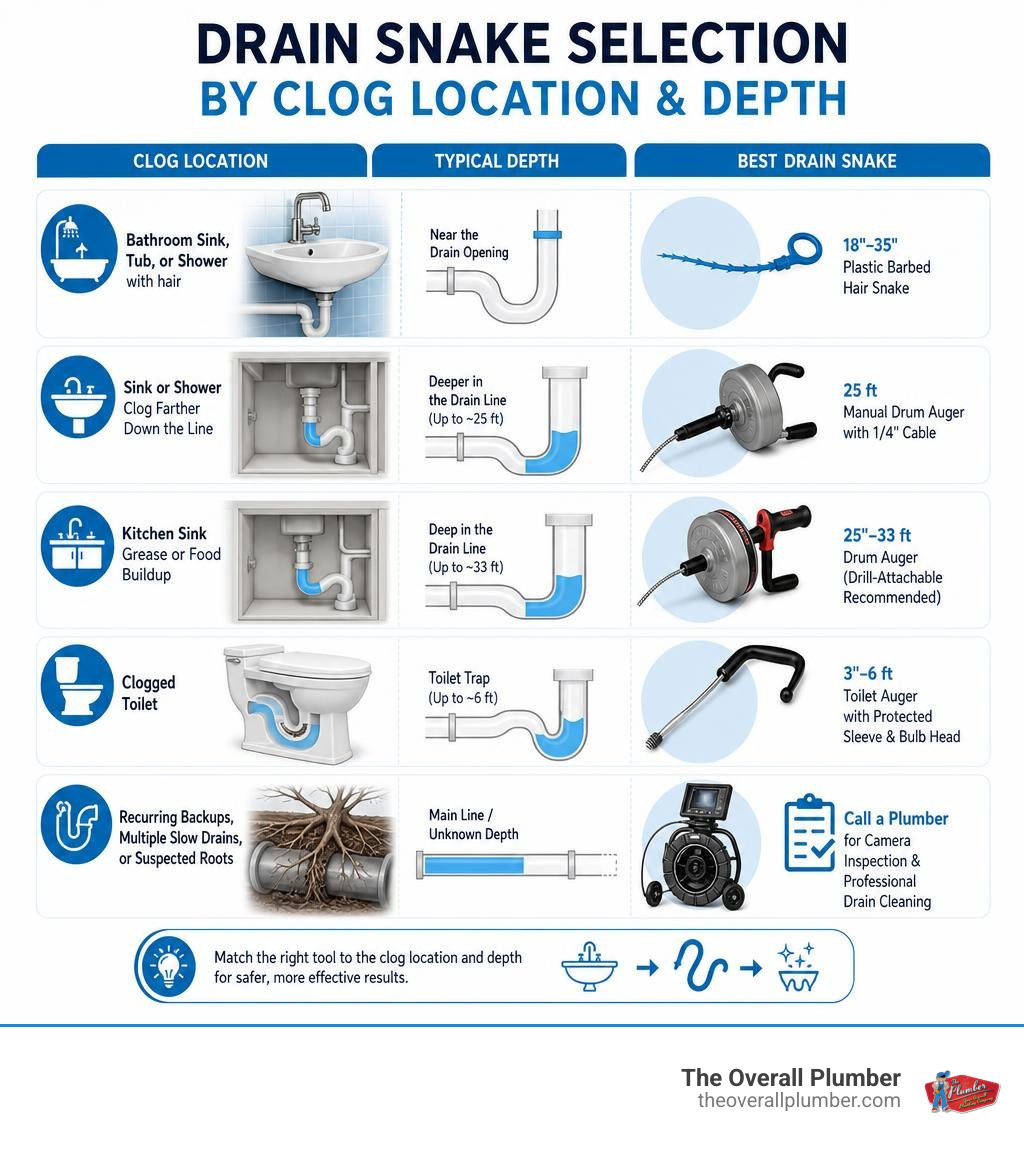
For a quick match, choose the snake based on where the clog is and what is likely blocking it:
| Clog location | Best starting tool |
|---|---|
| Bathroom sink, tub, or shower with hair | 18- to 35-inch plastic barbed hair snake |
| Sink or shower clog farther down the line | 25-foot manual drum auger with a 1/4-inch cable |
| Kitchen sink grease or food buildup | 25- to 33-foot drum auger; a drill-attachable model can help |
| Clogged toilet | 3- to 6-foot toilet auger with a protected sleeve and bulb head |
| Recurring backups, multiple slow drains, or suspected roots | Call a plumber for a camera inspection and professional drain cleaning |
The right tool matters. A small plastic wand can pull hair from near the drain opening, while a long cable used in the wrong pipe can scratch porcelain, kink, or get stuck. A plumbing snake also is not the right answer for every backup, especially when tree roots, broken pipes, or a main sewer blockage may be involved.
I’m Dayton Whitworth, a second-generation plumbing professional serving Greater Brazoria County, Galveston County, Houston, and the Gulf Coast. I have helped homeowners assess when a plumbing snake for clogged drains is a practical first step and when recurring clogs need professional diagnosis instead.
Important plumbing snake for clogged drains terms:
How a Plumbing Snake for Clogged Drains Works
Understanding how a plumbing snake for clogged drains works starts with physics and mechanics. Unlike plungers, which rely on air and water pressure to push a obstruction forward, a drain snake travels inside the pipe directly to the source of the blockage.
At its core, a drain snake consists of a flexible metal wire or spring cable housed in a drum or handle mechanism. As you feed the cable down the drain line, its flexibility allows it to follow the natural contours of the plumbing line, navigating sharp bends and P-traps. The end of the cable features a specialized tip—often a corkscrew cork-like coil, a bulb head, or micro-hooks—designed to make contact with whatever is blocking your wastewater.
Once the head reaches the clog, rotating the cable creates a corkscrew action. This rotational motion does two things:
- It bores through dense blockages like compacted grease, food scraps, or paper product buildup, breaking the mass into smaller pieces that can safely wash down the line.
- It entangles fibrous material like hair, wet wipes, or stringy debris so you can pull the obstruction back out through the drain opening.
If you are dealing with water backing up into your fixtures, learn how to deal with backed-up drains before attempting any mechanical work to prevent unnecessary property damage.
Types of Drain Snakes
Not all drain snakes are built alike. Plumbing snakes come in several configurations designed for specific pipe sizes, locations, and clog severities:
- Plastic Barbed Hair Wands: These 18- to 35-inch flexible plastic strips feature directional barbs or micro-hooks along their sides. They are extremely economical, usually costing between $2.97 and $6.98. They require no disassembly of drain stoppers and are ideal for pulling hair and soap scum out of shallow bathroom sink pop-ups and shower drains. Popular consumer choices include the Zip-It tool and the FlexiSnake Drain Weasel, which utilizes disposable rotating wands to collect hair quickly.
- Manual Drum Augers: Designed for household branch drain lines, these tools feature a flexible steel spring cable (typically 1/4-inch or 5/16-inch thick and 25 to 33 feet long) enclosed inside a hand-cranked canister or drum. They protect your floors and counters from wastewater splatter while giving you control to clear kitchen sinks, laundry tubs, and shower drains.
- Toilet Closet Augers: Built specifically for porcelain commodes, toilet augers consist of a rigid metal rod, a protective rubber or plastic vinyl sleeve, and a 3- to 6-foot cable equipped with a bulb tip. The sleeve protects the toilet bowl from permanent scratches while guiding the cable directly into the trapway.
- Cordless Battery-Powered Augers: Professional-grade power snakes, such as the Milwaukee M12 and M18 FUEL lines or POPULO 20V augers, feature variable-speed brushless electric motors operating from 0 to 500 RPM. Outfitted with automatic cable feeding mechanisms (like Milwaukee’s CABLE DRIVE), these cordless tools comfortably handle drain lines up to 2.5 to 3 inches in diameter without manual cranking.
- Commercial Sewer Machines: Designed for main sewer lines and severe external blockages, these heavy-duty electric machines feature 1/2-inch to 3/8-inch inner core steel cables extending 50 to 100 feet. Mounted on wheels and equipped with air-activated foot switches and interchangeable cutting blades, they chop through tree roots and thick sludge in 2-inch to 6-inch main pipes.
If you are looking for a reliable household workhorse, you can explore standard 25-foot drum augers to handle everyday domestic plumbing tasks.
Manual vs. Drill-Attachable Plumbing Snake for Clogged Drains
When shopping for a plumbing snake for clogged drains, you will often choose between traditional manual hand-crank models and hybrid drill-attachable augers.
Manual augers rely entirely on human effort. You turn a rear crank wheel or handle while holding the drum steady to spin the cable. Manual drum augers give you tactile feedback; you can feel when the cable tip encounters a firm obstruction or hits a sharp pipe fitting. They are lightweight, budget-friendly, and perfect for light hair or soft soap clogs in smaller pipes.
Hybrid drill-attachable models, such as the RIDGID Power Spin+ or Husky 1/4-inch x 25-foot drum auger, feature a hex shank adapter on the back of the housing. By sliding off the manual hand crank and locking your standard cordless driver onto the shank, you convert the hand tool into a powered drain cleaner.
Key advantages of drill-attachable models include:
- Consistent Torque: Electric drills deliver steady rotational force that breaks through stubborn grease plugs or compacted food waste much faster than manual cranking.
- Variable Speed Control: Utilizing your drill’s trigger allows you to adjust RPM smoothly (keeping speeds under 500 RPM prevents cable binding).
- Reduced Effort: Eliminates wrist and arm fatigue when navigating longer 25- to 33-foot pipe runs.
To weigh the differences in torque, control, and cost for your household, read about choosing electric vs manual drain augers.
Selecting the Right Cable Length, Diameter, and Price Range
Selecting the wrong plumbing snake for clogged drains can leave you with an underpowered tool or damage your plumbing system. The two critical cable specifications to evaluate are diameter (thickness) and length.
Cable thickness dictates the tool’s strength and structural stiffness:
- 1/4-inch Cable: Highly flexible and lightweight. Best suited for 1-1/4-inch to 1-1/2-inch pipes found in bathroom sinks, bathtubs, and shower drains. It negotiates sharp 90-degree elbows easily but can kink if forced into larger pipes under heavy resistance.
- 5/16-inch Cable: The versatile middle ground for residential plumbing. Excellent for 1-1/2-inch to 2-1/2-inch lines, including kitchen sinks, laundry standpipes, and floor drains.
- 3/8-inch to 1/2-inch Cable: Heavy-duty cables designed for 2-inch to 4-inch branch lines and main drains. These cables offer high torsional strength to cut through sludge and minor roots without twisting over themselves inside wide pipes.
In terms of pricing, plumbing snakes span a broad commercial spectrum:
- Shallow plastic wands: $3 to $10.
- Manual 25-foot drum augers: $15 to $35.
- Hybrid drill-attachable 25- to 33-foot augers: $35 to $70.
- Specialty toilet augers: $15 (manual 3-foot) to $65 (hybrid 6-foot telescoping models).
- Cordless battery-powered commercial auger kits: $250 to $485+.
Before buying, review our guide on understanding fair prices for drain snaking tools to make sure you get the right value.
Matching Cable Specs to Your Plumbing Fixtures
Matching your cable to the specific plumbing fixture ensures effective clearing while preventing pipe damage:
| Fixture Type | Pipe Size | Recommended Cable Diameter | Ideal Cable Length |
|---|---|---|---|
| Bathroom Vanity Sink | 1-1/4 in. | 1/4 in. | 15 to 25 ft. |
| Bathtub & Shower Drains | 1-1/2 in. | 1/4 in. | 15 to 25 ft. |
| Kitchen Sink & Laundry Line | 1-1/2 in. to 2 in. | 5/16 in. | 25 to 35 ft. |
| Toilet Trapway | 2 in. to 3 in. | Specialized 1/2 in. wrapped cable | 3 to 6 ft. |
| Main Sewer Line / House Cleanout | 3 in. to 4 in.+ | 3/8 in. to 1/2 in. inner core | 50 to 100 ft. |
Using too thick of a cable in a small sink drain can break plastic trap fittings, while using a flimsy 1/4-inch cable in a 4-inch main pipe causes the cable to double over and knot inside the line. To see why matching cable dimensions matters for severe obstructions, discover why long cables are essential for deep pipe clogs.
Toilet Augers vs. Standard Drain Snakes
Never use a standard sink drain snake to unclog a toilet! Standard drain snakes feature exposed metal coils and raw spring ends. Inserting an exposed metal cable into a vitreous china toilet bowl will leave permanent black metal scratches across the visible porcelain finish.

A dedicated toilet closet auger is specifically engineered to protect porcelain fixtures:
- Protective Sleeve: A sturdy vinyl or rubber guard encases the lower curve of the rigid guide tube, insulating the porcelain bowl from metal contact.
- Bulb Auger Head: The cable terminates in a smooth, rounded bulb coil designed to catch masses of toilet paper or organic matter without snagging the internal clay trapway.
- Telescoping Reach: Standard toilet augers extend 3 feet to reach through the internal trap into the floor closet flange. Premium hybrid models feature a quick-release button that extends the cable up to 6 feet to clear blockages situated past the closet bend.
For step-by-step instructions on resolving commode blockages safely, check out our complete guide to using toilet augers for stubborn blockages.
Step-by-Step Guide to Using a Drain Snake Safely
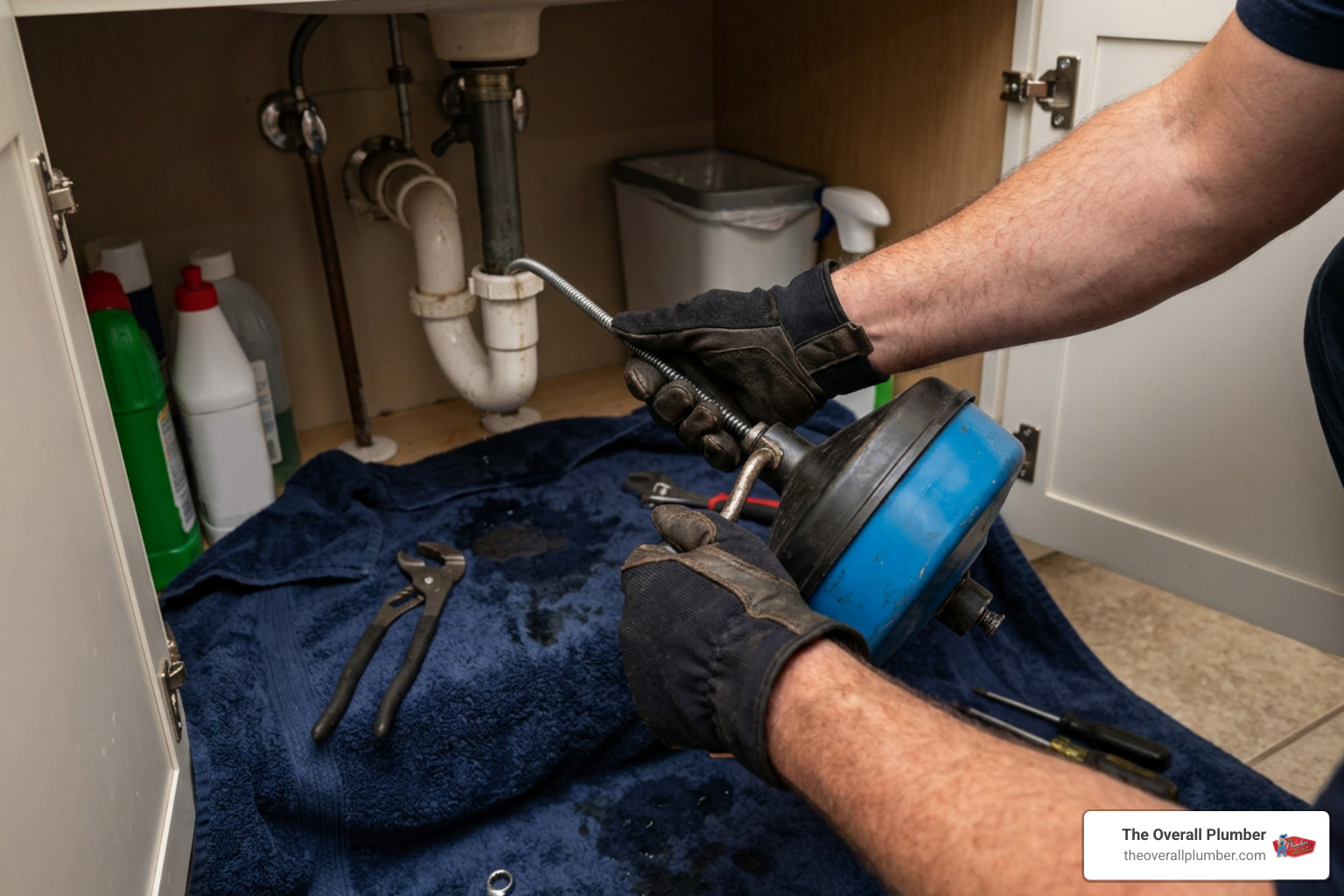
Using a plumbing snake for clogged drains safely requires proper technique and preparation. Follow these step-by-step instructions to clear household lines without damaging your pipes or making a mess:
- Prepare Your Workspace: Clear away personal items under the sink or around the fixture. Lay down thick towels or plastic sheeting beneath the drain area to catch standing water or wastewater residue.
- Put on Personal Protective Equipment: Wear heavy leather or rubber-coated work gloves. Never use thin surgical latex or cloth gloves, as rotating spring cables can catch, twist, and tear loose fabric, pulling fingers into the drum. Put on safety glasses to guard against wastewater splashes.
- Remove Drain Fixture Stopper: Remove the sink pop-up stopper, shower grate, or strainer so you have direct access to the pipe entrance.
- Extend and Feed Cable Manually: Pull out roughly 6 to 12 inches of cable from the drum canister. Lock the cable thumb-screw or collet mechanism. Manually push the cable tip into the drain opening until you meet resistance.
- Rotate and Advance: Unlock the slide mechanism. Hold the tool drum close to the drain entrance (no more than 3 to 4 inches away from the pipe opening). Rotate the drum clockwise using the hand crank or variable-speed drill while exerting steady forward pressure.
- Hook or Break Up the Clog: When you feel solid resistance, do not force the cable violently. Keep rotating clockwise at a slow speed so the corkscrew tip bores into the blockage or binds tightly into hair and fibrous material.
- Retrieve the Blockage: Shift the drum rotation to low gear or maintain gentle clockwise spinning while pulling the cable back out of the drain. Pulling while rotating clockwise keeps the retrieved mass hooked onto the cable head.
- Flush the Pipe Thoroughly: Once the clog is pulled clear, reassemble the drain fittings and run hot tap water down the sink for 3 to 5 minutes to wash away any remaining loose debris.
Operating a Plumbing Snake for Clogged Drains Safely
Safety during operation boils down to tension control, feed speed, and drum position:
- Keep Gap Short: Always keep the tip of the drum tool within 3 to 4 inches of the pipe entrance. Leaving a long section of exposed cable between the drum and the pipe causes the cable to bow, twist, or whip violently under torque, which can crush fingers or crack plastic drain necks.
- Never Force the Feed: If the cable stops moving forward, stop pushing. Rotate the drum to let the auger head work its way through the fitting or blockage gradually.
- Manage Torque Carefully: If using a drill-attachable model or battery power tool, keep the clutch set low and speed under 500 RPM. High rotational speed can snap thin 1/4-inch cables inside the wall.
When selecting gear for home maintenance, take time to browse drain cleaning tools and accessories that fit your skill level and plumbing layout.
Common Snaking Mistakes to Avoid
Avoiding operational pitfalls keeps your plumbing safe and prevents tool damage:
- Snaking After Pouring Chemical Drain Openers: This is a major safety hazard! Liquid chemical openers contain caustic sodium hydroxide or sulphuric acid. If you attempt to snake a line full of standing chemical cleaner, the spinning cable will fling caustic liquid onto your skin and eyes. Additionally, chemical splashback can cause severe chemical burns.
- Using Too Much Force: Forcing a cable around tight 90-degree pipe bends can buckle the steel spring, creating a permanent kink that ruins the cable.
- Spinning in Reverse: Only use counter-clockwise (reverse) rotation when attempting to back an auger head out of a tight obstruction. Running the tool continuously in reverse while pushing forward uncoils spring cables and destroys their structural strength.
- Forgetting Cable Maintenance: Storing a wet steel cable inside a sealed drum canister causes rapid rust buildup. Rust weakens spring coils, leading to sudden cable snapping during future uses.
Comparing Drain Snakes to Other Unclogging Methods
When water pools in your sink or shower, you have several tools at your disposal. Choosing the right method depends on the clog’s location and severity:
| Method | Best For | Pros | Cons / Limitations |
|---|---|---|---|
| Plunger | Fresh, minor surface blockages in toilets, sinks, or tubs | Low cost, simple, zero risk to pipes | Cannot clear deep line clogs; ineffective on tree roots or grease plugs |
| Chemical Cleaners | Standing organic matter in metal pipes | Easy application | Caustic chemicals damage PVC/older pipes, harm septic systems, splash hazard |
| Plastic Hair Snake | Shallow hair clogs in vanity sinks & shower drains | Very inexpensive, disposable, easy to use | Restricted to 18-35 inches; cannot reach branch lines |
| Plumbing Snake / Auger | Medium-depth blockages, hair plugs, food waste | Directly retrieves or breaks up solid obstacles | Requires physical effort; wrong size can scratch porcelain or kink |
| Hydro-Jetting | Heavy grease accumulation, scale, sand, tree roots | Restores pipes to near-new inner diameter | Professional equipment required; high pressure requires sound pipes |
When to Call a Professional Plumber
While a DIY plumbing snake for clogged drains handles simple fixture blockages, certain scenarios demand licensed professional intervention:
- Multiple Clogged Fixtures: If running your washing machine causes water to back up into your shower, or flushing the toilet causes water to surge into your bathtub, the blockage lies deep in your main sewer line.
- Recurring Clogs: If a sink or shower clogs up again days after snaking, mechanical augering alone is not clearing the root cause—such as heavy grease coats, belly in the line, or pipe pipe scale.
- Tree Root Intrusion: Tree roots entering underground sewer lines cannot be removed by lightweight consumer augers. They require heavy commercial cutting blades or hydro-jetting.
- Unusual Noises or Foul Odors: Gurgling sounds coming from nearby pipes or persistent sewage smells indicate venting issues or main line sewer blockages.
When confronted with complex sewer line issues, learn more about video camera sewer line inspections to visually pinpoint pipe cracks, root invasions, or line separations before digging.
Frequently Asked Questions About Drain Snakes
Can a plumbing snake damage PVC or older pipes?
Yes, if used incorrectly. Flexible Schedule 40 PVC pipes are resilient, but aggressive snaking with high-torque power augers or stiff cables can scratch plastic walls or punch through thin ABS trap fittings. On older galvanized iron or fragile cast iron pipes, heavy auger heads can catch on inner rust scale, cracking brittle sections. Always match cable diameter to pipe size, keep rotation speeds low, and stop cranking if you encounter solid, immovable resistance.
What cable length is best for standard indoor sink and shower clogs?
A 25-foot cable is the ideal length for almost all indoor residential sink, bathtub, and shower clogs. Most household fixture traps connect to secondary wall branch lines within 5 to 15 feet of the drain opening. A 25-foot drum auger gives you plenty of reach to navigate past the trap and clear the branch line before it connects to the primary vertical drain stack.
How do you properly clean and maintain a drain snake cable after use?
Proper maintenance prevents cable rust and extends tool life:
- As you pull the cable out of the drain, wipe it down with a rag soaked in warm soapy water and disinfectant.
- Fully extend the cable on an outdoor surface or tarp and wipe it thoroughly dry with shop towels.
- Apply a light coat of general-purpose machine oil or rust-inhibitor spray across the entire length of the metal coil.
- Reel the lubricated cable back into the clean, dry drum for storage.
Need Professional Drain Cleaning?
Need help with a drain clog that keeps coming back? Schedule expert drain cleaning with Houston Auger Service or call (832) 900-5490.