

When to Auger a Clogged Toilet (And How to Do It Right)
If you need to auger a clogged toilet, here is the short version:
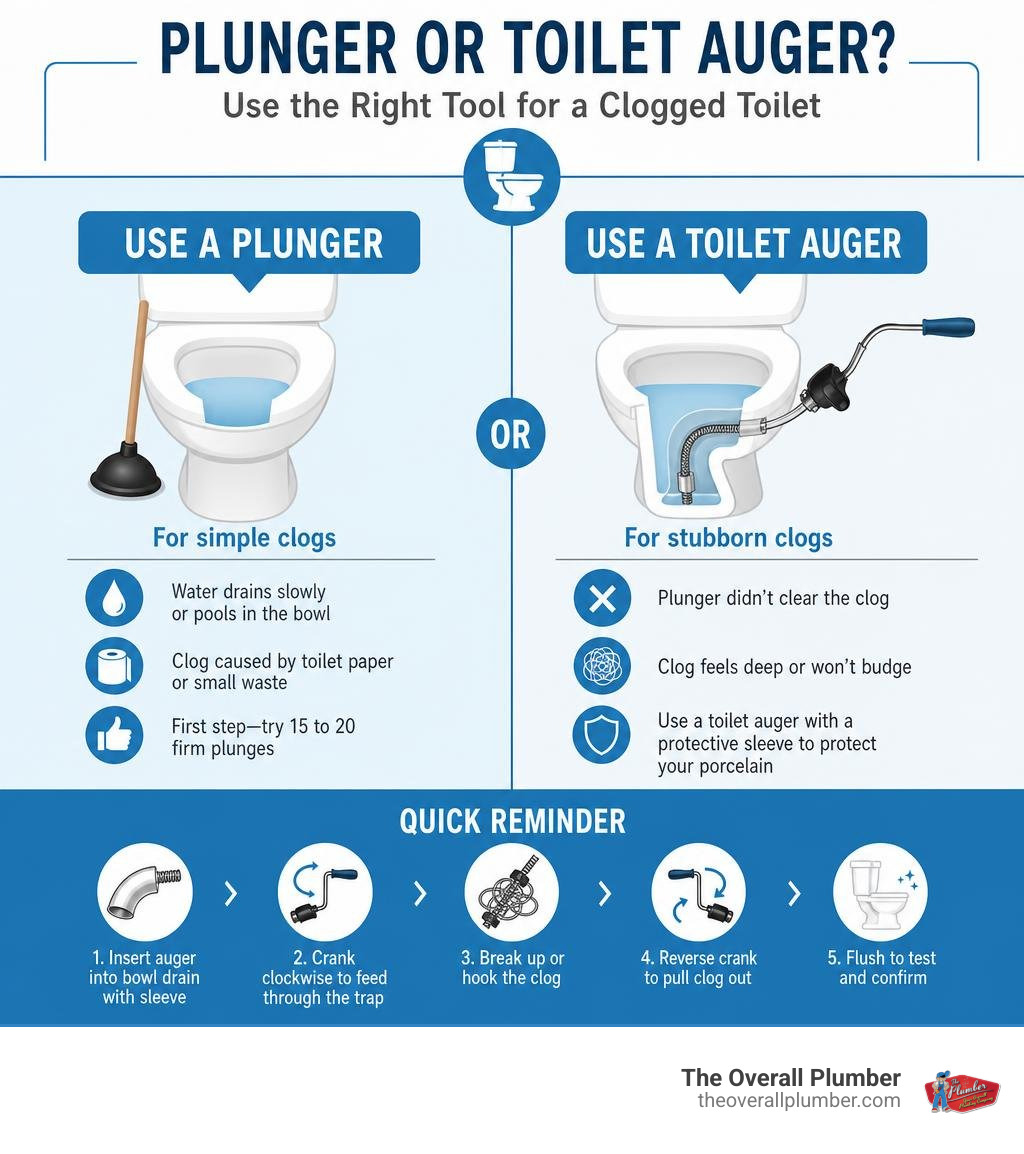
- Try a flange plunger first — give it 15 to 20 firm plunges.
- If the clog does not clear, use a toilet auger (also called a closet auger), not a regular drain snake.
- Insert the auger’s protective elbow sleeve into the bowl drain opening.
- Crank the handle clockwise to feed the cable through the trap.
- Reverse the crank to pull the clog out, then flush to test.
A toilet auger costs $30 to $64 and can save you the $300 to $400 it typically costs to call a professional plumber for a blocked toilet.
Most clogged toilets start the same way — the plunger comes out, nothing happens, and suddenly you are standing in a bathroom wondering what to do next. The answer for most stubborn clogs is a toilet auger. But grab the wrong tool, like a standard drain snake, and you risk scratching your porcelain or making the blockage worse.
This guide walks you through exactly what a toilet auger is, how to use it safely, and when to stop and call a pro.
I’m Dayton Whitworth, a second-generation plumber serving Greater Houston and the Gulf Coast, and I’ve used a toilet auger to clear hundreds of stubborn clogs that plungers simply couldn’t touch. In the sections below, I’ll share the same straightforward approach I use on the job so you can auger a clogged toilet with confidence.
Basic auger a clogged toilet terms:
Toilet Auger Basics: How Closet Augers Protect Your Plumbing
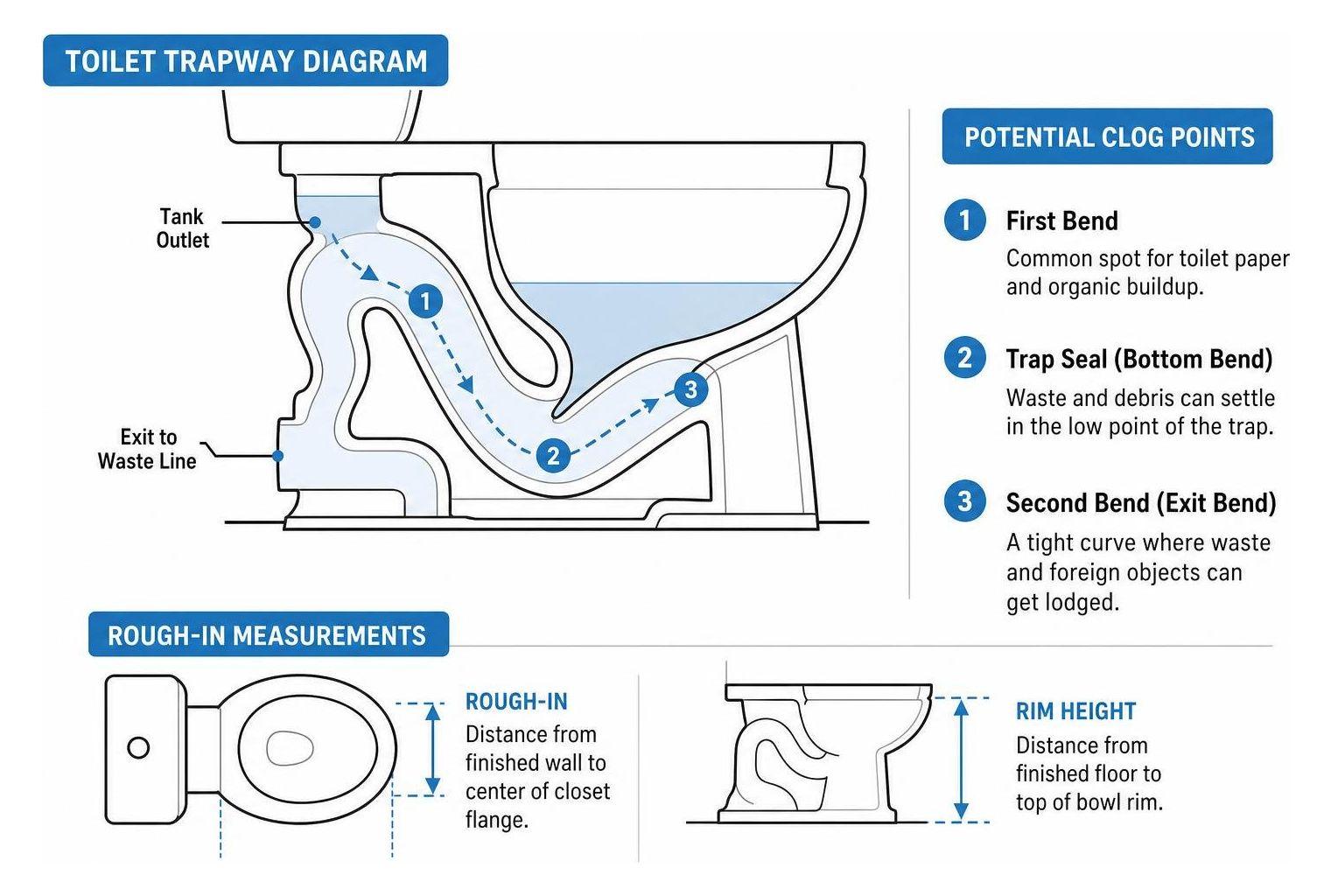
A toilet auger, often called a closet auger, is a specialized plumbing tool engineered specifically to navigate the tight curves of a toilet bowl without causing damage. Unlike sink or shower drains, toilets feature an internal porcelain waste path known as the trapway (or U/P-trap). This trapway has about three sharp bends designed to hold standing water and prevent foul sewer gases from entering your home.
Because the trapway is lined with glazed porcelain, inserting bare metal plumbing equipment can gouge the finish or cause hairline fractures. A proper closet auger features a rigid metal tube surrounded by a thick rubber boot guard or protective elbow sleeve at the bottom. This sleeve rests directly against the drain throat, acting as a shield so the metal cable never rubs against the visible porcelain bowl.
To better understand what a toilet auger is and how to use it, let’s break down how it operates. The inner cable has a bulb-head or hook coil at the tip. When you turn the upper crank handle, the flexible spring cable extends past the protective sleeve, following the S-bend geometry of the trapway to either break apart organic blockages or hook foreign objects so they can be retrieved.
It is equally critical to understand why chemical drain cleaners should never be used as a substitute. Chemical openers rely on harsh, heat-generating reactions. In a toilet, chemical drain cleaners pool in the bowl water, dilute rapidly, fail to reach deep obstructions, and generate localized heat that can permanently etch porcelain or shatter the bowl. For a full breakdown of safer mechanical unclogging methods, review our complete guide on how to unclog toilet with a snake and explore what a toilet auger is and how to use it for fixture care.

| Tool | Primary Purpose | Porcelain Safety | Ideal Clog Type | Cost Range |
|---|---|---|---|---|
| Toilet (Closet) Auger | Clearing toilet trapway & branch line blockages | Very High (includes rubber boot guard) | Deep paper buildup, hard foreign objects | $30 – $64 |
| Standard Drain Snake | Clearing narrow sink, tub, or shower pipes | Very Low (bare cable scratches bowl) | Hair, soap scum, grease in small pipes | $15 – $30 |
| Flange Toilet Plunger | Pushing minor soft clogs through trap entrance | High (soft rubber construction) | Soft organic waste, light toilet paper | $10 – $20 |
Standard Drain Snake vs. Toilet Closet Auger
A common temptation when facing a stubborn blockage is reaching for a standard handheld drum auger or sink snake. Can you use a standard drain auger on a toilet clog? The answer is an emphatic no.
Standard drain snakes consist of bare coiled wire wrapped around an exposed shaft without a protective guide sleeve. Feeding bare metal over glazed ceramic leaves dark metal transfer marks and severe scratches across the bottom of the bowl.
Furthermore, general drain snakes use thinner, highly flexible cables designed for 1.5-inch or 2-inch drain lines. A toilet trapway has a wider diameter (typically 2 to 2.125 inches). When a thin drain cable enters this wide space, it lacks structural rigidity. Instead of advancing through the three major trap bends, the loose cable coils back on itself, kinks, or double-backs inside the trap. This can jam the snake completely inside the toilet, risking broken cables or a cracked porcelain fixture.
Ideal Cable Lengths for Residential Toilet Clogs
Residential toilet augers are manufactured with precise cable lengths to prevent structural pipe damage:
- 3-Foot Augers: A 3-foot cable (costing roughly $30) is long enough to pass through all bends of a standard toilet trapway and reach the closet flange at the floor level. This clears approximately 80% to 90% of routine household toilet obstructions.
- 6-Foot Telescoping Augers: A 6-foot auger (costing around $50 to $64) features a drop-head push button or telescoping rod that allows you to extend an extra 3 feet of cable beyond the toilet base into the branch drain line leading to the soil stack.
Why are toilet augers capped at 6 feet? Feeding long cables (such as 25-foot handheld drum snakes or 50-foot commercial cables) directly through a mounted toilet bowl creates immense kinetic friction. Beyond 6 feet, cables can bind inside the main line, loop into vent stacks, or crack the toilet base from internal pressure. If a blockage lies further than 6 feet down the pipe, the correct plumbing procedure is to unbolt the toilet from the floor flange to snake the bare drain pipe directly.
Step-by-Step Guide: How to Auger a Clogged Toilet
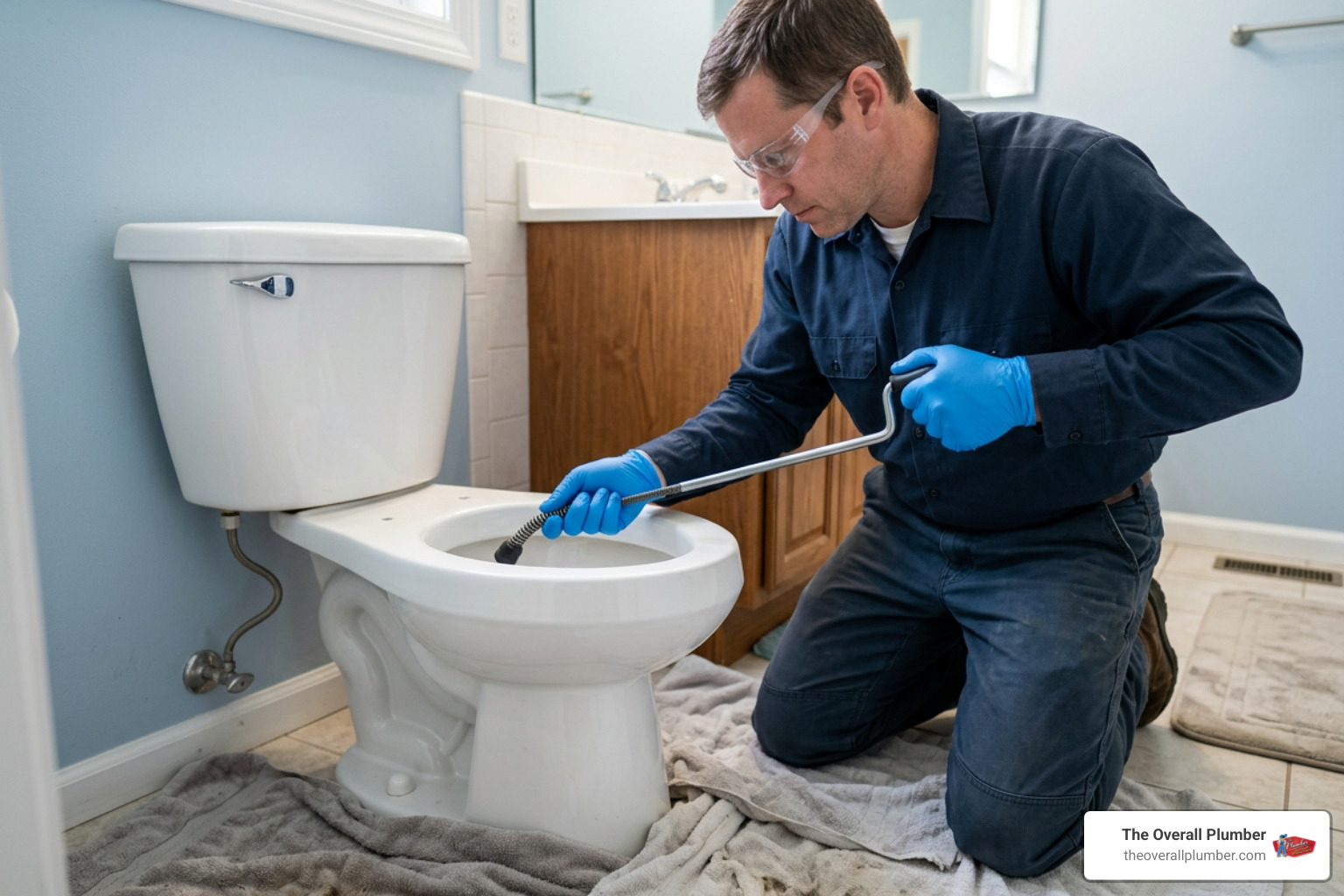
Before you attempt to auger a clogged toilet, gather fluid-resistant rubber gloves, safety glasses, a bucket, and old towels. Always set down towels around the base of the toilet to protect your flooring from splashing water.
Follow these clear steps to safely clear your toilet:
- Shut Off the Water Supply: Turn the oval chrome shut-off valve located behind the toilet clockwise until tight. If the bowl is full to the brim, bail out half of the water into your bucket using a cup to prevent overflowing during operation. If an active overflow starts while working, immediately press down the flapper valve inside the tank.
- Retract the Auger Cable: Pull the crank handle fully upward so the coiled tip recedes inside the bottom elbow of the guide tube.
- Position the Protective Sleeve: Place the curved, rubber-protected end of the guide tube directly into the bottom throat of the toilet bowl drain opening. Press the sleeve down firmly against the ceramic opening so no bare wire contacts the bowl.
- Feed and Crank the Cable: Hold the rigid housing tube firmly with one hand to keep the protective sleeve anchored. With your other hand, turn the crank handle clockwise while pushing downward slowly.
- Navigate the Bends: Rotate the handle steadily as the cable moves through the trap’s three major curves. If you hit resistance, rotate clockwise and counter-clockwise gently while maintaining steady downward pressure to work past the corner.
- Hook or Break the Clog: Once the cable reaches full extension (or feels solid resistance from the obstruction), crank the handle several times in a continuous clockwise motion to hook solid debris or pulverize soft waste.
- Retract the Auger: Crank the handle in reverse (counter-clockwise) while pulling the upper handle upward to draw the cable and attached debris back into the protective guide tube.
- Test the Flush: Remove the auger tool from the bowl and set it in your bucket. Turn the shut-off valve counter-clockwise to restore water, then perform a test flush.
For additional step-by-step guidance, refer to Ace Hardware’s guide on using an auger to clear a clogged toilet alongside our practical tips for how to fix a clogged toilet fast.
How to Auger a Clogged Toilet When the Cable Feels Stuck
What should you do if the auger won’t go into the drain or feels stuck halfway through? When an auger meets stiff resistance, applying brute force is the worst approach. Forcing the handle causes the flexible spring wire inside the trapway to buckle, recoil, or double back, locking the cable in place.
If the auger stops advancing:
- Light Handle Rotation: Stop pushing down. Rotate the crank handle clockwise 3 to 4 turns, back off slightly, and turn it counter-clockwise while lifting up lightly. This changes the angle of the bulb head, allowing it to slip past hard internal porcelain ridges.
- Check for Hard Foreign Objects: If the tool hits an impenetrable wall after 12 to 18 inches, you may be striking a hard plastic object like a toy, bottle cap, or toothbrush. For solid retrieval, tools like a 50-inch grabber claw auger (such as the Gulrear model, priced around $25.99) use a 4-jaw claw mechanism to grip and pull objects out rather than wedging them tighter into the trap.
- Avoid Cable Binding: Never force an auger handle with both hands or use mechanical cheater bars. If gentle cranking and slight backward pulls do not advance the tool, the obstacle is either too hard or located beyond a tight cast-iron elbow.
Cleaning, Drying, and Storing Your Closet Auger
Because drain tools come into contact with bacteria and human waste, proper post-job care is essential for sanitary hygiene and rust prevention.
- Disinfect the Tool: Submerge the lower portion of the cable and guide tube in a bucket filled with warm water and a disinfectant cleaner (or bleach solution) for up to 5 minutes. Do not leave metal cables submerged longer than 5 minutes to prevent corrosion.
- Scrub and Rinse: Use a stiff nylon brush to scrub away residual debris from the coiled tip, then rinse thoroughly with clean water.
- Dry Thoroughly: Wipe the entire length of the cable and housing tube with old rags until completely dry. Storing a damp steel cable leads to immediate surface oxidation, weakening the spring coil and staining your porcelain with orange rust during the next use.
- Apply Anti-Rust Oil: Wipe down the exposed spring wire with a rag lightened with general-purpose machine oil or WD-40 to preserve the metal.
- Storage: Retract the clean cable fully inside the tube shaft and store the tool inside a dry storage bag or hanging bracket in your garage or utility room.
Troubleshooting Persistent Clogs and Misalignments
Sometimes you successfully auger a clogged toilet, the water drains away, but the clog returns two days later. What causes a toilet clog to return repeatedly? Recurring obstructions typically point to issues deeper than simple paper buildup.
Common hidden causes include:
- Foreign Objects Trapped inside Porcelain: Hard items like small plastic toys, comb handles, or travel shampoo bottles can slip halfway through the trapway and become wedged horizontally. Toilet paper and organic waste pass through temporarily, but accumulate against the object over 24 to 48 hours, causing a brand-new blockage.
- Rough-in and Flange Misalignment: Standard residential plumbing calls for a 12-inch rough-in measurement (distance from the finished wall to the center of the floor flange bolts). In older homes across Texas (built in the 1970s or earlier), 10-inch rough-in dimensions were sometimes used. If a standard 12-inch toilet bowl was forced onto a 10-inch rough-in flange during a quick remodel, the discharge horn of the toilet will sit misaligned over the floor pipe. This offset lip creates a permanent ledge where waste catches continuously.
- Mineral Jet Buildup: Hard water deposits clogging the small rim jets under the inner bowl lip reduce flush velocity, leaving behind insufficient push force to carry waste past the trapway.
When facing deep or repeated line issues, reading our analysis on why you need a long snake for plumbing’s deepest clogs helps clarify when standard residential tools reach their structural limits.
When to Auger a Clogged Toilet Versus Using a Plunger
Knowing when to switch from a plunger to a closet auger prevents unnecessary labor and protects your pipes.
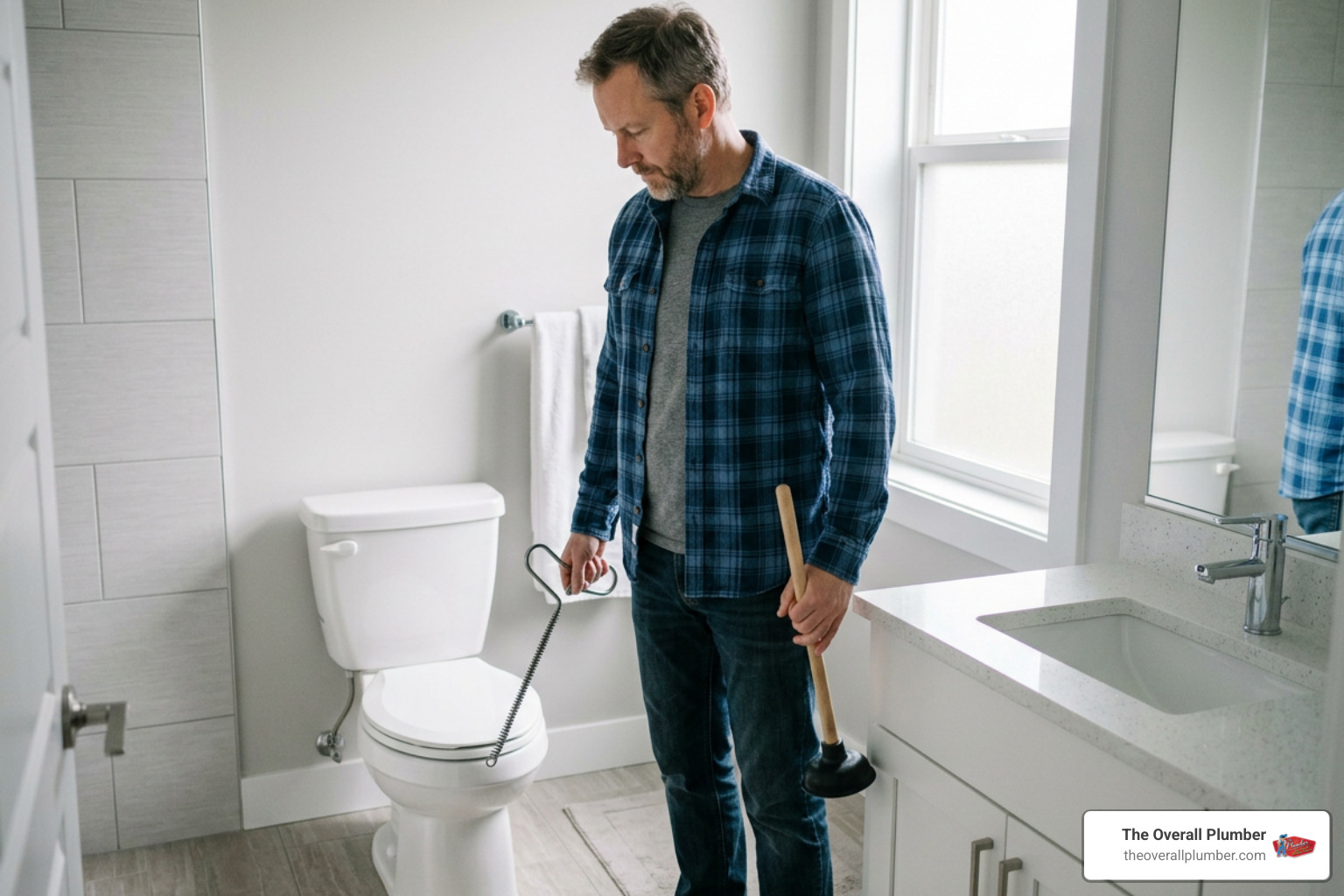
- Start with a Plunger: Always use an accordion or flange plunger (which has an fold-out rubber lip engineered to seal toilet drain contours, unlike flat cup sink plungers). Submerge the rubber head completely, form a tight seal over the opening, and perform 15 to 20 firm, rapid plunges. The up-and-down suction creates hydraulic pressure that dislodges soft organic waste and light toilet paper clogs located in the upper trap entrance.
- Switch to a Closet Auger: If 15 to 20 plunges produce no movement, stop plunging immediately. Continuing to plunge when a solid object (like a toy or wipe) is trapped applies hydraulic force that wedges the object deeper into the narrow bend or forces waste out from beneath the toilet’s wax ring seal. Switch to an auger when plunging fails, or immediately if you suspect a non-flushable object fell into the bowl.
Risks of Excessive Force and Porcelain Scratching
While toilet augers are designed for safety, incorrect technique or brute force can damage your bathroom fixtures. Modern and vintage toilet ceramic is brittle under extreme lateral pressure.
Primary risks of improper auger usage include:
- Porcelain Metal Staining & Etching: If you fail to keep the protective rubber boot firmly seated against the drain throat, the spinning steel wire will grind against the visible bowl, leaving dark metallic streaks that require specialized polishing compounds to reduce.
- Cracking the Bowl Base: Jamming an auger violently into a tight corner can crack the ceramic trapway internally. An internal crack leads to hidden leaks under the floorboard every time the toilet is flushed.
- Cable Kinking and Snap: Cranking a jammed handle with high pressure causes torque buildup. The spring wire can kink permanently or snap inside the drain pipe, leaving a sharp piece of metal locked inside your plumbing line.
- Wax Ring Failure: Pushing heavy cables downward with extreme force can blow out the soft wax seal underneath the toilet base, resulting in water damage across your bathroom floor.
When to Call a Professional Plumber
While an auger is an outstanding DIY tool, certain plumbing scenarios require commercial equipment and licensed expertise.
You should call a professional plumber if:
- The Auger Reaches Full Extension Without Clearing the Clog: If a 6-foot auger passes entirely into the pipe without breaking the blockage, the obstruction lies deeper in the main sewer line.
- Multiple Fixtures Are Backed Up Simultaneously: If flushing the toilet causes raw sewage to back up into your shower drain or bath tub, or if running the bathroom sink causes the toilet to gurgle and bubble, the clog is in your main sewer stack, not the toilet fixture.
- Gurgling Drain Vents: Atmospheric gurgling sounds coming from nearby sinks during a flush indicate a blocked roof vent pipe or a main sewer main obstruction.
- Suspected Tree Root Intrusion: Underground sewer lines in coastal and wooded areas across Houston, Pasadena, and League City often suffer from invasive tree roots seeking moisture through pipe joints. Mechanical hand augers cannot cut through dense root masses.
- Retrieving Flush Objects Requires Toilet Removal: If a solid plastic item is jammed in the lower horn of the toilet, the fixture must be unbolted from the floor, turned upside down, and cleared from the underside before installing a brand-new wax ring seal.
For complex main line problems, review our comprehensive guides on handling a backed up drain and detailed insights in our ultimate plumbing snake guide.
Frequently Asked Questions About Toilet Augers
Can I use chemical drain cleaners to unclog a toilet instead of an auger?
No, you should never use chemical drain cleaners in a toilet. Chemical drain openers rely on heavy dense lye or acid formulations that sink to the bottom of the bowl and generate intense heat. Because of the large volume of standing water in a toilet bowl, the chemical dilutes rapidly, rendering it ineffective against deep trap blockages.
Simultaneously, the localized heat generated by the chemical reaction can crack the cold porcelain bowl or melt internal rubber wax ring seals, leading to hazardous leaks. Furthermore, if the chemical fails to clear the clog, you are left with a toilet bowl full of toxic, caustic water that risks burning your skin or eyes when you later try to plunge or auger a clogged toilet.
How do I know if my clog is in the toilet trap or the main sewer line?
You can identify the location of the clog by checking other plumbing fixtures in the bathroom:
- Isolated Toilet Trap Clog: If only the toilet overflows while the adjacent bathroom sink, shower, and tub drain quickly without gurgling, the blockage is isolated inside the toilet’s internal S-trap or immediate branch line (within reach of a 3 to 6-foot closet auger).
- Main Sewer Line Clog: If flushing the toilet causes water to surge upward into the shower floor drain, or if running water in the bathroom sink produces loud gurgling bubbles in the toilet bowl, the obstruction lies down in the main sewer line or stack. In this scenario, using a small toilet auger will not solve the issue, and an main line auger cleanout or sewer camera inspection is required.
Can using a toilet auger crack or ruin my toilet bowl?
A toilet auger will not crack or ruin your toilet bowl as long as it is used correctly with proper technique. Toilet augers feature a rubber or plastic boot sleeve specifically designed to cover the metal cable where it touches the bowl opening.
To prevent damage:
- Ensure the rubber elbow sleeve remains pressed flush against the drain entrance throughout the entire cranking process.
- Never force or slam the auger handle downward when encountering hard resistance.
- Do not substitute a bare metal sink snake or standard drain auger for a dedicated closet auger.
Need Expert Assistance with a Stubborn Toilet Clog?
When a stubborn toilet blockage refuses to clear after plunges and auger attempts, the expert team at The Overall Plumber is ready to step in. We deliver complete drain cleaning solutions, heavy-duty power auger service, and full sewer line camera inspections to locate deep tree roots or main pipe collapses.
We proudly serve homeowners across Houston, Brazoria County, Clear Lake, Santa Fe, League City, Texas City, La Porte, Friendswood, Pearland, Pasadena, Galveston, Harris County, and Galveston County, Texas. With our commitment to priority scheduling, no overtime fees, no trip charges, and complete satisfaction guarantees, you can count on quick, transparent plumbing solutions. Learn more about our regional work on our dedicated Houston Auger Service page.
If your toilet clog persists after augering or you suspect a deeper sewer line obstruction, contact The Overall Plumber today at (281) 668-8055.