

What to Do When You Have a Clogged Toilet
Clogged toilet repair is something 1 in 5 homeowners deal with on a regular basis — and when it happens, you need answers fast. Here’s a quick overview of how to fix it:
- Stop the water — Turn the shut-off valve behind the toilet clockwise to prevent overflow.
- Try a flange plunger — This clears about 80% of clogs in under 5 minutes.
- No plunger? — Pour dish soap and hot water into the bowl and wait a few minutes.
- Stubborn clog? — Use a toilet auger ($25–$60 at any hardware store) to break it up.
- Call a plumber — If other drains are backing up, or the clog keeps coming back, it’s time for professional help. Expect to pay $110–$320 for a standard visit.
A clogged toilet almost always happens at the worst possible time. The water starts rising, and that sinking feeling sets in. The good news: most clogs are fixable in minutes without calling anyone. But some clogs are a sign of something bigger happening deep in your pipes — and knowing the difference can save you hundreds of dollars and a lot of stress.
I’m Dayton Whitworth, a second-generation plumber serving Houston, Galveston County, and the surrounding Gulf Coast, with hands-on experience handling clogged toilet repair across hundreds of homes. In this guide, I’ll walk you through everything — from stopping an overflow in the next 30 seconds to knowing when it’s time to pick up the phone.
How to Safely Unclog a Toilet and Prevent Overflows
When you walk into a bathroom and see water rising toward the rim, panic is a completely natural response. However, taking the wrong steps can turn a simple plumbing inconvenience into a major household disaster. Before you grab any tools, you must secure the area and ensure that a single flush does not ruin your bathroom flooring.

Immediate Steps to Stop an Overflow
If the water in the bowl is actively rising and looks like it is about to spill over, do not flush again. Flushing a second time is the single most common mistake homeowners make, and it almost guarantees an overflow. Instead, act fast to cut off the water supply.
First, locate the toilet’s shut-off valve. This is the small metal valve located on the wall behind the toilet, usually near the base. Turn this valve firmly clockwise (to the right) to cut off the water supply to the tank. If you live in an older home in areas like Galveston or Pasadena, hard water mineral deposits can sometimes cause these valves to become stuck or frozen. If the valve refuses to turn, do not force it to the point of breaking, as this can cause a major leak.
Instead, quickly take off the toilet tank lid. Reach inside the tank and find the float cup or float ball (the device that rises and falls with the water level). Manually lift the float up and hold it. This tricks the toilet mechanism into thinking the tank is full, stopping any more water from entering the bowl. If you are dealing with an older or faulty valve, you may want to read our comprehensive guide, Stop the Flow: A Guide to Installing Your New Toilet Shut-Off Valve, to ensure your home is protected against future emergencies.
The Flange Plunger Technique
Once the water level is stable, it is time to clear the blockage. Statistics show that a flange plunger clears 80% of toilet clogs in under 5 minutes without any additional tools or harsh chemicals. However, you must use the correct tool and technique.
Many homeowners mistakenly use a standard cup plunger (which has a flat bottom and is designed for flat surfaces like sinks and bathtubs). For a toilet, you must use a flange plunger. A flange plunger has an extended rubber sleeve or “collar” on the bottom that is specifically designed to fit snugly inside the curved toilet drain opening, creating a tight rubber seal.
To plunge effectively, follow these steps:
- Prepare the area: Lay down old towels around the base of the toilet to catch any accidental splashes. Put on a pair of heavy-duty rubber gloves.
- Check the water level: The plunger cup must be fully submerged in water to create proper suction. If the bowl is empty, add a small bucket of water. If it is completely full to the rim, bail some water out into a bucket first to avoid splashing.
- Insert the plunger at an angle: This allows the plunger cup to fill with water rather than trapping a large pocket of air, which would reduce suction and cause messy splashing.
- Establish the seal: Press the flange firmly into the drain opening until you feel a secure seal.
- Plunge with steady strokes: Push down gently at first to push out any remaining air. Then, use firm, rapid, up-and-down strokes. The upward pull is just as important as the downward push because it helps break up the clog and dislodge it from the trap.
- Break the seal and check: After 10 to 15 strokes, pull the plunger up quickly to break the seal. If the water drains out of the bowl, you have successfully cleared the blockage.
For more detailed strategies on handling tricky clogs, you can also explore this external guide on How to Fix a Clogged Toilet: 3 Methods That Actually Work – solvehacks.com.
Common Causes of Toilet Blockages
Toilets are designed to handle only two things: human waste and standard toilet paper. Unfortunately, many households treat their toilets like trash cans, leading to frequent blockages and the eventual need for professional clogged toilet repair.
Some of the most common culprits behind toilet clogs include:
- Excessive Toilet Paper: While toilet paper is designed to dissolve in water, flushing large wads of thick, multi-ply paper all at once can easily overwhelm the narrow 3-inch trapway of a standard toilet.
- Foreign Objects: Toys, dental floss, cotton swabs, feminine hygiene products, and band-aids do not dissolve and will quickly catch on the bends of the pipe.
- Low-Flow Toilets: Many early low-flow toilets manufactured in the mid-1990s lack the flushing power of modern fixtures, struggle to clear heavy waste, and are highly prone to recurring clogs.
- Hard Water and Mineral Buildup: In many parts of Texas, hard water causes mineral scale to accumulate inside the toilet’s siphon jet and rim holes over time. This reduces the speed and volume of water entering the bowl during a flush, resulting in a weak, ineffective flush that cannot clear waste properly.
Why Flushable Wipes Lead to Clogged Toilet Repair
One of the single biggest threats to modern residential plumbing systems is the “flushable” wipe. Despite what the packaging claims, flushable wipes do not break down in water.
While standard toilet paper is engineered to disintegrate within seconds of hitting water, flushable wipes are made of synthetic fibers that can remain fully intact for days, weeks, or even months. They catch on minor imperfections or pipe joints inside your plumbing system, creating a net that traps hair, grease, and organic waste. This quickly leads to severe sewer line blockages.
| Material Type | Dissolution Time in Water | Risk Level to Pipes | Action in Sewer System |
|---|---|---|---|
| Standard Toilet Paper | 10 to 30 seconds | Extremely Low | Disintegrates completely |
| Ultra-Soft Multi-Ply Paper | 1 to 3 minutes | Low to Moderate | Expands significantly before dissolving |
| “Flushable” Wipes | Days to months | Extremely High | Remains intact, catching other debris |
| Baby Wipes / Paper Towels | Never | Critical | Causes immediate blockages |
Additionally, a blocked plumbing vent stack on your roof can also cause recurring toilet clogs. The vent stack allows sewer gases to escape and lets air into the plumbing system so waste can flow smoothly. If birds’ nests, leaves, or debris block this vent, the lack of air pressure creates a vacuum, weakening your toilet’s flush and causing nearby drains to gurgle.
How to Prevent Future Toilet Clogs
Preventing a clogged toilet is far easier and less expensive than dealing with the aftermath of an overflow. By implementing a few simple daily habits and routine maintenance steps, you can keep your bathroom plumbing running smoothly:
- The “Waste and TP Only” Rule: Establish a strict household rule that nothing other than human waste and toilet paper goes down the drain. Keep a small wastebasket next to the toilet for wipes, tissues, and hygiene products.
- Flush in Stages: If you must use a significant amount of toilet paper, perform a “light flush” halfway through, rather than attempting to flush a massive pile of paper all at once.
- Keep the Rim Jets Clean: During your regular bathroom cleaning, use a stiff brush to clean under the rim of the toilet bowl to clear away mineral deposits from the water jets.
- Inspect the Toilet Seal: A failing wax ring at the base of your toilet can cause slow leaks, sewer odors, and loss of flushing pressure. If you notice water pooling around the base of your fixture, check out our guide on how to Stop the Swamp with a New Toilet Seal to prevent structural water damage to your subfloor.
DIY Methods and Tools for Stubborn Clogged Toilet Repair
If a plunger fails to clear a stubborn clog, you do not have to give up and call a professional just yet. There are several highly effective tools and household methods you can try first to resolve the issue yourself.
Using a Toilet Auger for Deep Blockages
When a clog is located deep within the toilet’s curved porcelain trapway or just beyond it in the drain line, a plunger may not be able to generate enough force to move it. In these situations, a toilet auger (also known as a closet auger or plumber’s snake) is the correct tool for the job. You can purchase a high-quality toilet auger for $25 to $60 at any local hardware store.
Unlike a standard drain snake used for sinks, a toilet auger features a rigid metal shaft with a vinyl or rubber sleeve at the bend. This sleeve is designed to protect the delicate porcelain of your toilet bowl from being scratched or permanently marked by the metal cable.
To use a toilet auger safely:
- Pull the cable handle all the way up so that the spring coil end of the snake is pulled tight against the vinyl safety guard at the bottom of the shaft.
- Place the curved vinyl guard into the bottom of the toilet bowl, pointing directly down into the drain opening.
- Hold the outer tube firmly with one hand while slowly cranking the handle clockwise with your other hand.
- Push the handle down to feed the metal cable through the trapway. If you feel resistance, do not force it. Instead, reverse the cranking direction while continuing to push gently to help the tip navigate the tight bends of the trapway.
- Once you reach the obstruction, crank the handle to hook onto the clog (such as a toy or bundle of wipes) so you can pull it back out, or break it up so it can pass safely down the line.
If you are unsure of how to handle this tool, we have put together a step-by-step tutorial on How to Unclog Toilet with a Snake to help you navigate the process without damaging your fixtures.
Household Hacks Without a Plunger
If you do not own a plunger or an auger, there are several clever household hacks that can help break down organic clogs using items you likely already have in your pantry or kitchen.
- The Dish Soap and Hot Water Method: Pour about half a cup of liquid dish soap directly into the toilet bowl and let it settle to the bottom for 10 to 15 minutes. The soap acts as a lubricant, coating the porcelain trapway and the clog itself. Next, pour a bucket of hot tap water (never use boiling water, as the extreme heat can crack the cold porcelain of the bowl) into the toilet from waist height. The combination of the lubricating soap, heat, and the weight of the water can often push the clog through.
- The Baking Soda and Vinegar Reaction: Pour one cup of baking soda into the toilet bowl, followed by two cups of white vinegar. The chemical reaction will cause the mixture to fizz and bubble rapidly. Let it sit for 30 minutes to help break down organic waste and toilet paper, then flush with hot water.
A Word of Warning on Chemical Drain Cleaners: We strongly advise against using chemical drain cleaners (like liquid bleach or commercial acid-based clearers) to fix a clogged toilet. These chemical products are highly ineffective in standing water because they sit in the bowl and rarely reach the actual clog.
More importantly, the intense chemical reaction generates high heat that can easily crack the porcelain bowl or corrode the wax ring seal beneath your toilet, leading to hidden leaks and expensive subfloor repairs.
When to Stop DIY and Call a Professional Plumber
While tackling minor clogs on your own can be satisfying, there comes a point where continuing to plunge or snake a drain can do more harm than good. Forcing a stubborn clog can push it deeper into your home’s main sewer line or damage your plumbing pipes.
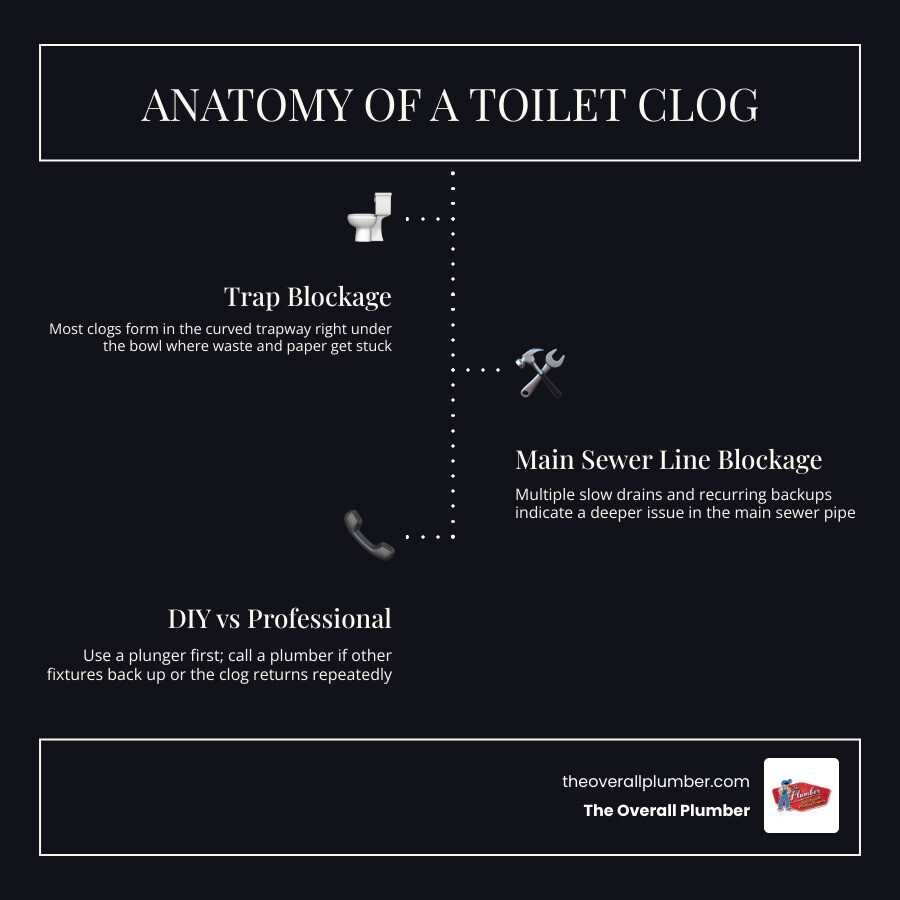
Toilet Trap vs. Main Sewer Line Clog
It is crucial to understand whether your clog is isolated to the toilet trapway or if it is part of a larger issue within your home’s main sewer line.
If only one toilet is clogged, the issue is almost certainly a localized blockage in that specific fixture’s trapway. However, if you notice any of the following warning signs, you are likely dealing with a main sewer line blockage:
- Multiple Fixture Backups: When you flush the toilet, water backs up into the nearby shower, bathtub, or bathroom sink.
- Gurgling Drains: You hear bubbling or gurgling noises coming from your bathroom drains or kitchen sink when the washing machine drains or the toilet is flushed.
- Sewer Odors: A persistent, foul smell of sewer gas is present throughout your home.
- Water Pooling in the Yard: Slow drains inside are accompanied by wet, soggy patches of grass or pooling water directly above your buried sewer line outside.
Main sewer line blockages are often caused by deep grease buildup, collapsed pipes, or invasive tree roots that have entered the pipe joints. In these cases, standard DIY methods will not work. Waiting to address these issues can lead to severe water damage and unsanitary conditions. To understand the risks of delaying repairs, read our article on Why Waiting for a Clog to Clear Itself Is a Recipe for Disaster.
If you live in Houston, Harris County, or Galveston County, sewer line issues require highly specialized diagnostic equipment. For a complete look at how we identify and resolve these deep-line plumbing issues, check out The Ultimate Guide to Plumbing Repair Houston Homeowners Need.
Professional Clogged Toilet Repair Costs
If you need to call a professional plumber to clear a clogged toilet, understanding what to expect in terms of pricing can help you plan your budget.
On average, hiring a professional plumber to clear a standard toilet clog costs between $110 and $320. If the clog occurs late at night, over the weekend, or during a holiday, emergency service calls typically range from $150 to $400.
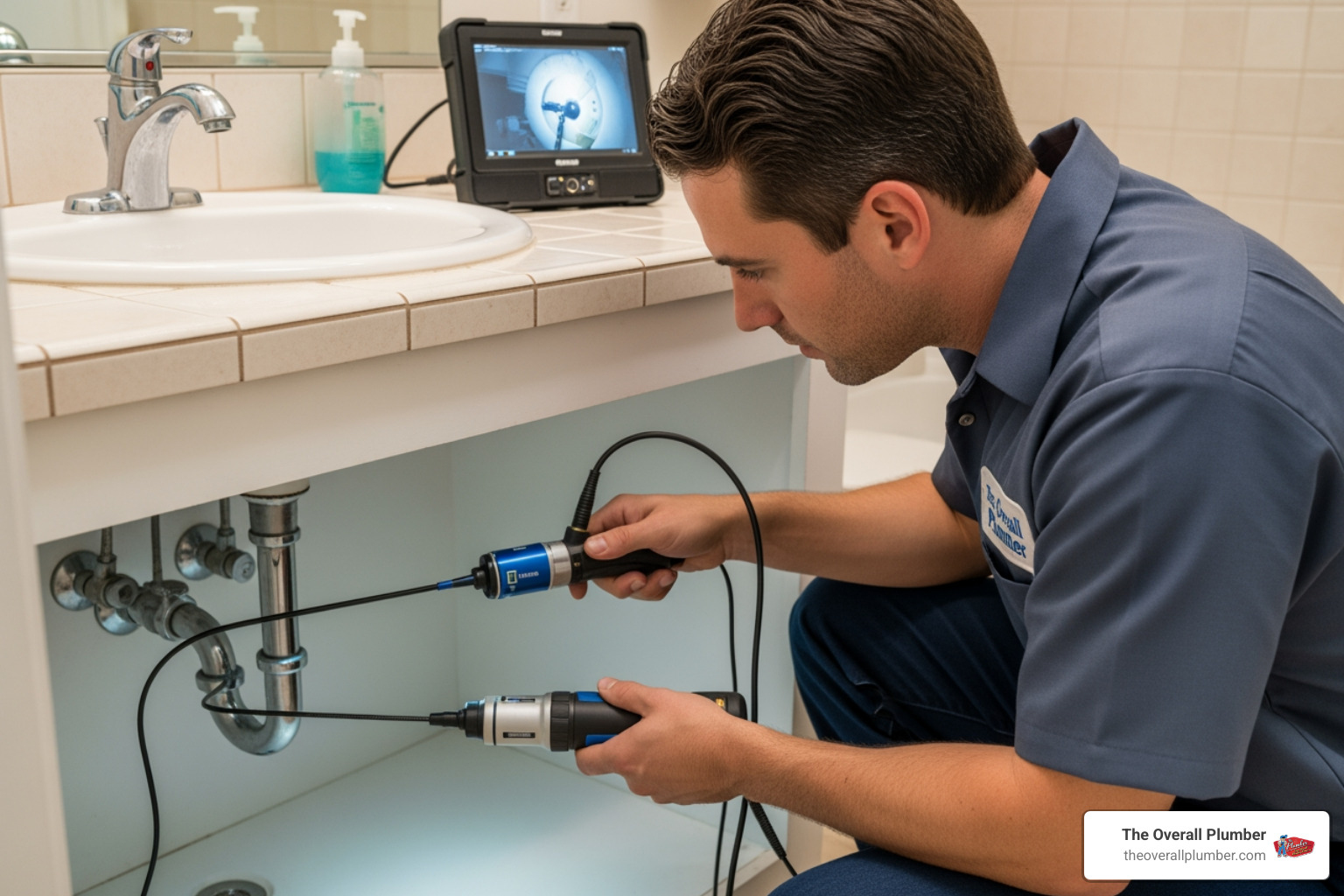
If the plumber discovers that the blockage is deep within the main sewer line, they may need to perform a high-definition sewer camera inspection to locate the blockage and check the structural integrity of your pipes. If your toilet is old, cracked, or constantly malfunctioning, replacing the unit entirely is often more cost-effective than paying for repeated repairs. To compare your options, take a look at our comprehensive Toilet Installation Cost Guide for Every Budget.
Schedule Your Professional Toilet Repair Today
At The Overall Plumber, we understand that a clogged toilet is a stressful emergency that requires a fast, reliable, and professional response. We proudly serve homeowners across Brazoria County, Houston, Clear Lake, Santa Fe, League City, Texas City, La Porte, Friendswood, Pearland, Pasadena, and Galveston with top-tier residential plumbing services.
Our team of fully licensed and insured plumbers provides comprehensive drain cleaning services using professional-grade augers, hydro-jetting equipment, and high-definition camera inspections to get to the root cause of your plumbing issues. We stand behind our work with outstanding satisfaction guarantees, priority scheduling, and a strict no-overtime-fees policy, ensuring you receive honest, transparent pricing no matter when you call.
If your toilet is backed up, leaking, or in need of a complete upgrade, visit our Toilet Replacement Services page to explore your options.
Don’t let a stubborn clog disrupt your home. Contact us today at (281) 555-0199 to schedule your service with our friendly, local experts.