


Why Toilet Bowl Seal Replacement Matters More Than You Think
Quick Answer: How to Replace a Toilet Bowl Seal
- Turn off the water supply valve behind the toilet.
- Flush and empty the tank and bowl completely.
- Disconnect the water supply line.
- Remove the bolt caps, nuts, and washers at the base.
- Lift the toilet straight up and set it aside.
- Scrape off the old wax or gasket and plug the drain opening.
- Inspect the flange for damage and replace T-bolts if worn.
- Press the new wax ring or waxless seal onto the flange.
- Lower the toilet straight down onto the bolts and press firmly.
- Tighten bolts, reconnect the water line, and test for leaks.
A toilet bowl seal replacement is one of those repairs that sounds intimidating but is very manageable for most homeowners. The seal between your toilet and the floor — or between the tank and bowl — is what keeps water and sewer gas where they belong. When it fails, you might notice water pooling at the base, a persistent sewage smell, or a toilet that rocks when you sit on it. Left alone, even a slow leak can quietly rot your subfloor and drive up your water bill.
The good news? In most cases, you do not need to buy a new toilet or call in a specialist. The right seal, a few basic tools, and a clear set of steps are all it takes.
I’m Dayton Whitworth, a second-generation plumber serving Houston and the greater Gulf Coast area, and toilet bowl seal replacement is one of the most common repairs I handle for homeowners across Brazoria County, Galveston County, and beyond. Whether it’s a failed wax ring or a leaking flush valve seal, I’ll walk you through exactly what to do.
Diagnosing Your Toilet Seal Issue
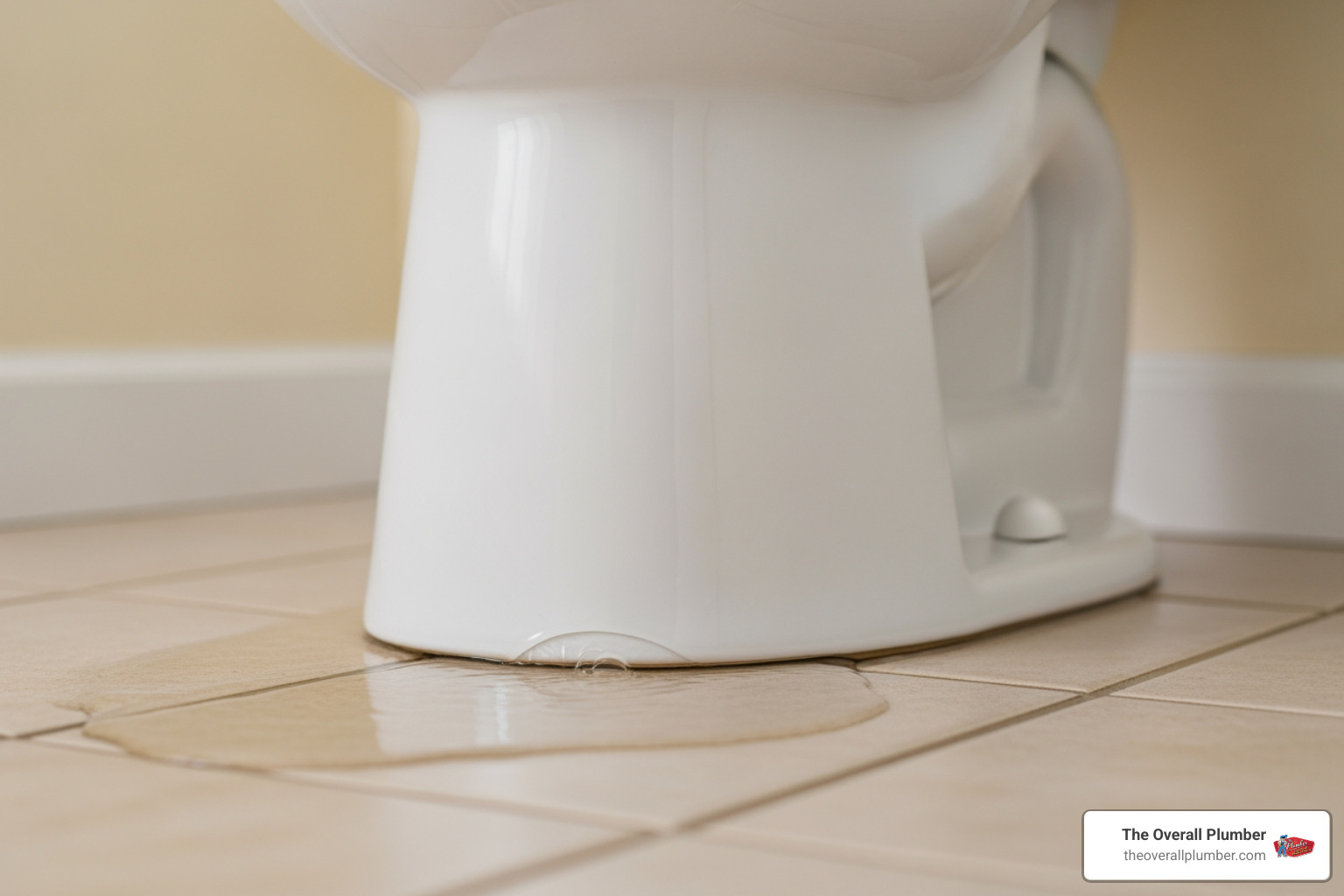
Before you start tearing things apart in May 2026, we need to figure out exactly which seal has given up the ghost. A toilet actually has several different seals, and “leaking at the bottom” doesn’t always mean the wax ring is the culprit. Sometimes, water from a higher leak—like a tank-to-bowl gasket—drips down the back of the porcelain and pools on the floor, making it look like a base leak.
Start by drying the entire toilet with a towel. Wait a few minutes and then check where the moisture reappears. If you see water pooling specifically around the floor bolts or coming from under the porcelain base, you’re likely looking at a wax ring failure. If the water is dripping from the bolts holding the tank to the bowl, it’s a gasket issue.
Another sneaky sign of a bad seal is the “ghost flush.” This is when you hear the toilet tank refilling even though no one has used it. This usually points to a failing flush valve seal or flapper. Lastly, if your bathroom has a persistent sewer odor that won’t go away no matter how much you clean, that’s a classic sign that the airtight seal between the toilet and the drain pipe has been breached.
If the leak is external and small, you might wonder about how to caulk toilet bowls in no time. While caulk is important for hygiene and stability, it is not a substitute for a proper internal seal. In fact, we always recommend leaving a small gap in the caulk at the back of the toilet so that if the internal seal fails, the water has a way to escape and alert you to the problem. If you notice your toilet handle is loose, it’s a good time to inspect the rest of the tank components for wear and tear while you’re at it.
Identifying Which toilet bowl seal replacement You Need
There are three main “players” in toilet seals:
- The Wax Ring (Base Seal): This is located under the toilet. It seals the “horn” of the toilet to the floor flange. If this fails, you get water on the floor and sewer gases in the air.
- The Tank-to-Bowl Gasket: This is a large, spongy rubber ring that sits between the tank and the bowl on two-piece toilets. If this fails, water will leak every time the toilet is flushed.
- The Flush Valve Seal: This is inside the tank. It’s a small rubber ring (often specific to brands like American Standard Champion or Kohler) that prevents water from leaking from the tank into the bowl. When it fails, the toilet “runs” constantly. For a deep dive on the internal tank seals, check out this toilet flush valve seal replacement guide.
Signs of a Failing Wax Ring
The wax ring is a simple but vital component. It’s literally a ring of molded wax that creates a permanent, mold-resistant barrier. However, it is a “one-and-done” item. If the toilet ever wobbles or is lifted, the seal is broken.
- Water around the base: This is the most obvious sign.
- Wobbling: If the toilet rocks, it will eventually pinch or break the wax seal.
- Sewer Smells: The wax ring’s job is to block methane and other gases. If you smell “rotten eggs,” the seal is gone.
- Floor Damage: If your tile is coming loose or your linoleum is bubbling near the toilet, the subfloor is likely absorbing moisture.
Essential Tools and Materials for toilet bowl seal replacement
You don’t need a truck full of tools for a toilet bowl seal replacement, but having the right ones on hand will prevent a mid-repair trip to the hardware store in Pearland or League City.
| Tool/Material | Purpose |
|---|---|
| New Seal | Either a traditional wax ring or a waxless rubber seal. |
| Adjustable Wrench | For removing the supply line and base bolts. |
| Putty Knife | Essential for scraping away old, sticky wax. |
| Shop Vac or Sponge | To remove every last drop of water from the bowl/tank. |
| New T-Bolts | We always recommend replacing the floor bolts. |
| Rags/Gloves | It’s a messy job; you’ll want protection. |
When you’re ready to install new fixtures, we recommend using high-quality parts like the Fluidmaster Better Than Wax seal for a mess-free experience.
Choosing Between Wax and Waxless Seals
This is the age-old debate in the plumbing world. Traditionalists love wax because it has worked for over a century. It’s cheap, resists mold, and lasts as long as the toilet stays still. However, wax is messy and cannot be reused if you set the toilet down incorrectly.
Waxless seals, like the rubber toilet seals found at most hardware stores, are becoming more popular. They are made of foam or rubber and can be repositioned. This is a huge advantage for DIYers. If you drop the toilet and it’s not perfectly aligned, you can just lift it up and try again—something you can’t do with wax.
Step-by-Step Guide to Replacing a Wax Ring
Ready to dive in? Follow these steps for a successful toilet bowl seal replacement at the base. If you ever feel overwhelmed, our residential plumbing team is just a phone call away.
- Shut Off the Water: Turn the silver handle behind the toilet clockwise until it stops.
- Drain the System: Flush the toilet and hold the handle down to get as much water out as possible. Use a shop vac or a large sponge to remove the remaining water from the bottom of the bowl and the tank. If there’s water left, it will spill on your floor when you lift the toilet.
- Disconnect the Supply Line: Use your wrench to unscrew the water line from the bottom of the tank.
- Unbolt the Base: Remove the plastic caps at the floor and unscrew the nuts from the T-bolts. If they are rusted, you might need some penetrating oil or a hacksaw to cut them off.
- The Big Lift: Gently rock the toilet to break the old seal. Lift it straight up and set it on a piece of cardboard or an old towel to avoid scratching your floor.
- Clean the Flange: This is the “gross” part. Use your putty knife to scrape the old, sticky wax off the floor flange and the bottom of the toilet. For a more modern approach, some homeowners prefer the Danco Perfect Seal, which combines wax and rubber for a cleaner fit.
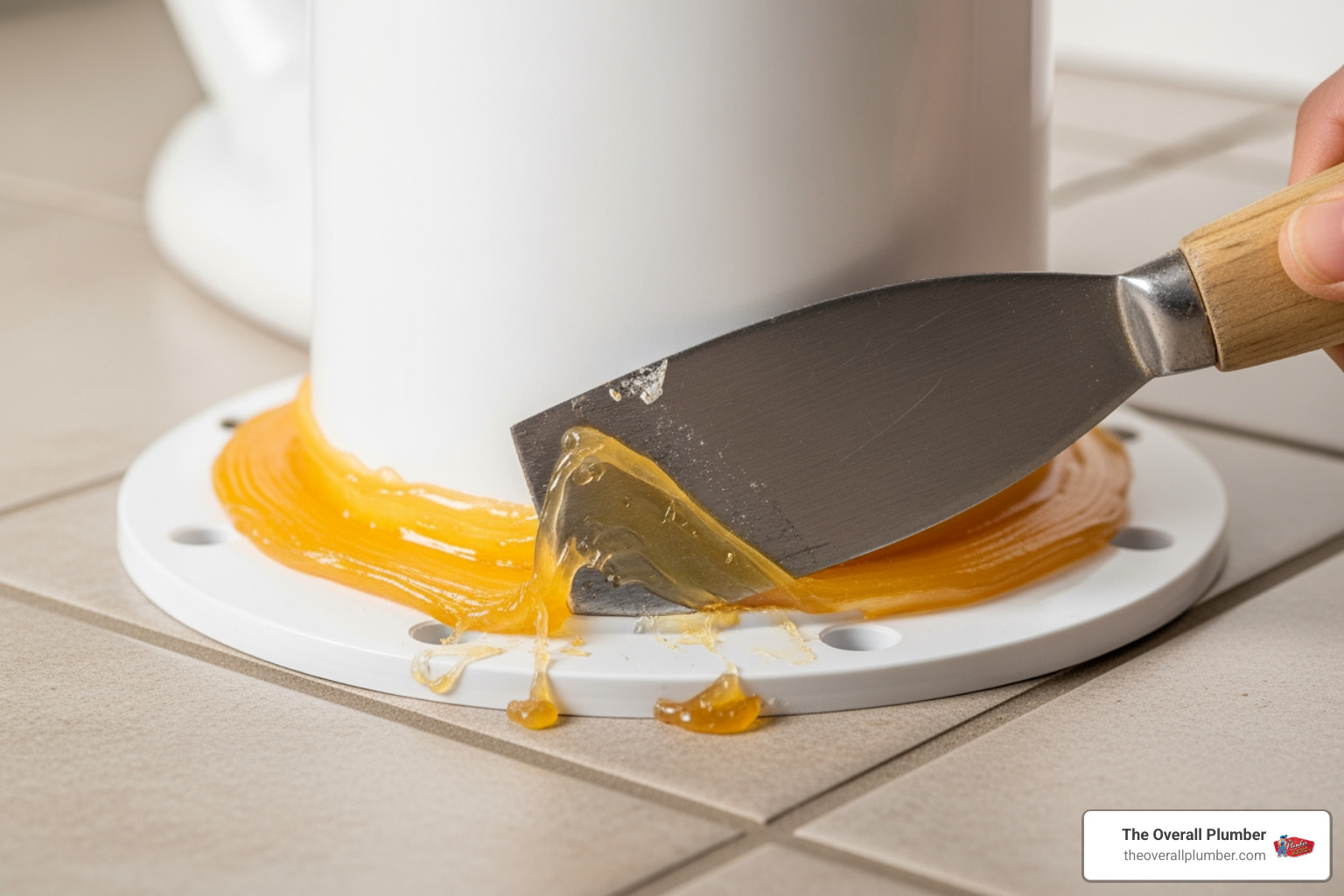
Preparing the Flange and Setting the New Seal
Once the area is clean, inspect the flange (the plastic or metal ring in the floor). If it’s cracked or broken, the new bolts won’t hold, and your toilet will wobble. You can buy flange repair kits that sit right on top of the old one.
Pro Tip: As soon as you remove the toilet, stuff a rag into the drain pipe. This prevents sewer gases from entering your home and—more importantly—prevents you from accidentally dropping a bolt down the drain!
When setting the new seal, you have two choices: place it on the flange or stick it to the bottom of the toilet. For wax rings, we usually find it easier to press it onto the flange first. If you are using a waxless seal, follow the manufacturer’s instructions. Carefully lower the toilet back onto the T-bolts. Use your body weight to sit on the toilet and compress the seal. Tighten the nuts snugly, but do not overtighten, or you will crack the porcelain.
How to Replace a Flush Valve Seal or Tank Gasket
If your leak is coming from between the tank and the bowl, or if your toilet is “ghost flushing,” you need an internal toilet bowl seal replacement.
For a tank-to-bowl leak, you’ll need to remove the tank entirely. This involves unscrewing the two or three bolts inside the tank that connect it to the bowl. Once the tank is off, you’ll see a large sponge rubber gasket. Replace this, along with the bolts and their rubber washers. Always use brass or stainless steel bolts to prevent future corrosion.
If you have a high-performance toilet like an American Standard Champion 4, the flush valve seal is a specialized blue or red silicone ring. These are notorious for blistering over time, which causes leaks.
Internal toilet bowl seal replacement Tips
There is actually a “shortcut” for replacing the flush valve seal on many models that doesn’t require taking the whole tank apart.
- The Lasso Method: For many canister-style flush valves, you can unhook the top, roll the new seal over the assembly like a lasso, and snap it into the groove at the bottom.
- The Food Coloring Test: Not sure if your flush valve is leaking? Drop a few drops of food coloring into the tank. Don’t flush. If the color appears in the bowl after 10 minutes, your seal is failing.
If you find yourself in a “plumbing emergency” in the middle of the night in Galveston or Santa Fe, we offer 24-hour emergency plumbers to help with any toilet replacement services you might need.
Professional Support for Your Plumbing Repairs
How often should I replace my toilet seal?
In a perfect world, a wax ring can last 20 to 30 years—basically the life of the toilet. However, if your toilet ever feels loose or if you are doing a bathroom remodel and need to pull the toilet up to lay new tile, you must replace the seal. Never try to reuse a wax ring. For internal tank seals, we recommend a check-up every 3 to 5 years, as modern cleaning chemicals in the tank can degrade rubber quickly.
Can I stack two wax rings to fix a gap?
This is a common question we get in areas like Pasadena and La Porte where older homes might have uneven floors. While some people do it, we generally advise against stacking two standard wax rings. They can slide against each other and create a leak point. Instead, use a “Jumbo” or extra-thick wax ring, or install a flange extender to bring the flange height up to be flush with your new flooring.
Why does my toilet still leak after replacement?
If you’ve just finished a toilet bowl seal replacement and you still see water, check these three things:
- Overtightening: Did you crack the porcelain or the flange by cranking the bolts too hard?
- Misalignment: Did the wax ring slip off-center when you lowered the toilet?
- The “Other” Leak: Is the water actually coming from the supply line nut or the tank bolts and just running down to the floor?
Need help with a toilet seal replacement?
If you’d rather skip the mess or want a professional to handle the repair, contact The Overall Plumber today or call us at 281-668-8055 to schedule service.