


Toilet Installation Cost Guide for Every Budget
What Is the Cost of Toilet Replacement in 2026?
The cost of toilet replacement typically falls between $224 and $1,238, depending on the toilet type, labor, and any hidden repairs needed. Here’s a quick look at what most homeowners pay:
| Scenario | Estimated Cost |
|---|---|
| DIY replacement (basic toilet + parts) | $150 – $300 |
| Standard professional replacement | $300 – $600 |
| Full replacement (labor + toilet + disposal) | $500 – $1,100 |
| Complex install (wall-mounted, smart, upflush) | $700 – $3,500+ |
Most homeowners pay around $374 for professional installation alone, with the total project cost averaging closer to $725 when you include the toilet itself.
Replacing a toilet sounds simple — until you pull up the old one and find a rotted subfloor or a cracked flange. Those surprises can push costs well beyond the initial estimate. That’s why it pays to understand every piece of the budget before you start.
I’m Dayton Whitworth, a second-generation plumber serving the Greater Houston and Gulf Coast area, and I’ve seen how the cost of toilet replacement can swing dramatically based on what’s hiding underneath the floor. In this guide, I’ll walk you through everything that affects your total cost so you can plan with confidence.
Understanding the Total Cost of Toilet Replacement
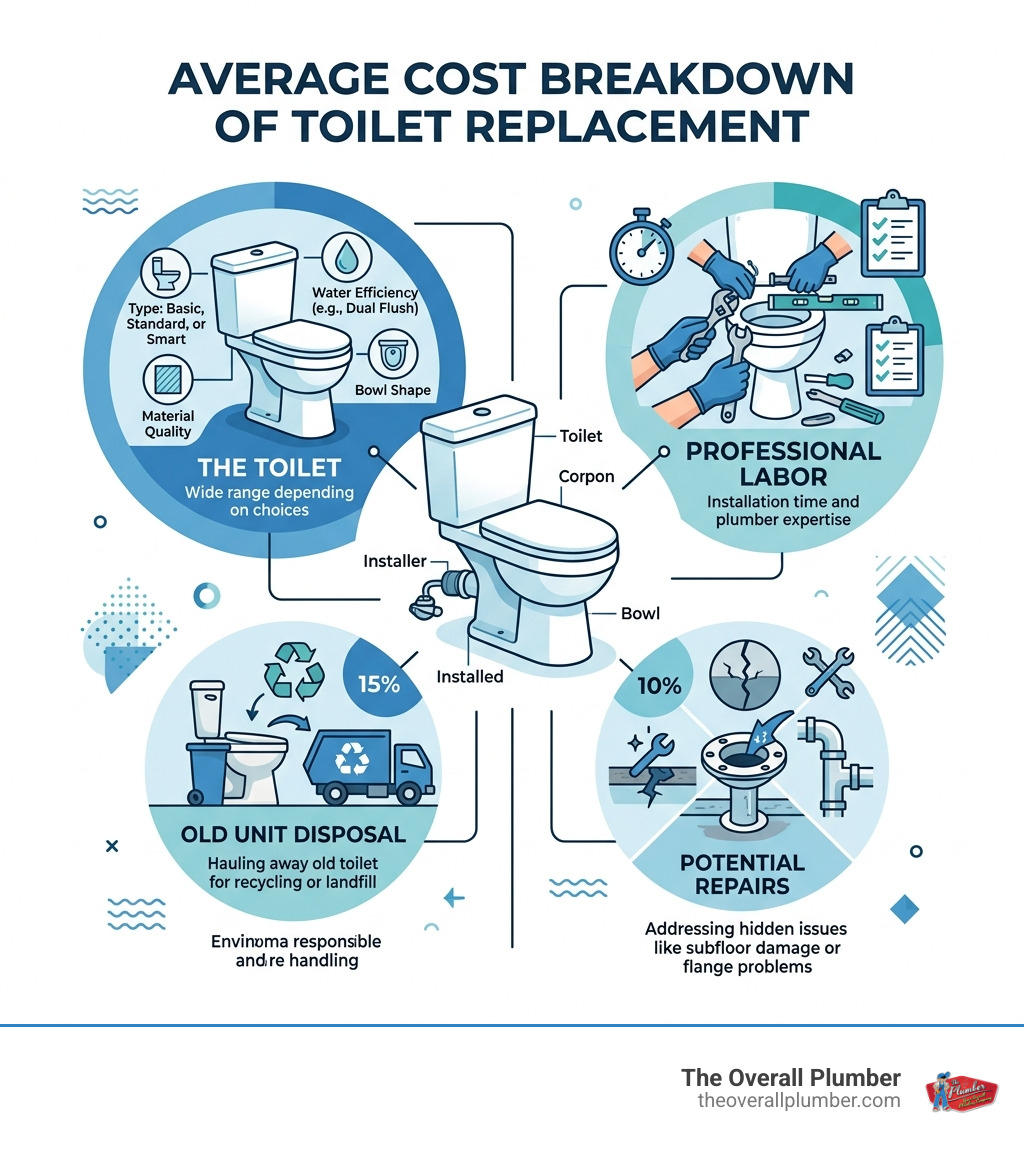
When we talk about the cost of toilet replacement in April 2026, we have to look at the project as a sum of its parts. It isn’t just the porcelain throne you see at the store; it’s the labor, the small hardware that keeps it from leaking, and the removal of the heavy, old unit.
Across the United States, and specifically here in the Houston and Galveston County areas, the national average for a professional replacement ranges from $300 to $600 for standard models. However, if you are looking for a high-end experience, the estimated cost can start at $707 and go up to $1,238 per toilet when factoring in premium fixtures and expert labor.
To give you a better idea of how your choice of fixture impacts the bottom line, take a look at the table below:
| Toilet Category | Typical Unit Cost | Total Installed Cost (Avg) |
|---|---|---|
| Basic Two-Piece | $100 – $300 | $350 – $550 |
| One-Piece | $400 – $900 | $700 – $1,200 |
| Wall-Mounted | $600 – $1,500 | $1,500 – $3,000+ |
| Smart Toilet | $1,200 – $4,000 | $1,800 – $5,000+ |
As noted by experts at How Much Does It Cost to Replace a Toilet?, the “standard” project usually involves a floor-mounted unit. If you decide to switch styles—for example, moving from a standard floor-mount to a wall-hung unit—your costs will skyrocket because the plumbing inside the wall must be completely reworked.
Labor and Material Cost of Toilet Replacement
Labor is often the most significant variable in your quote. For a straightforward swap in cities like Pearland or League City, professional labor typically ranges from $224 to $533. Most homeowners find themselves paying an average of $374 for the expertise of a licensed plumber.
Why does it cost this much? A professional installation isn’t just “bolting it down.” It includes:
- Planning and Prep: Ensuring the new toilet fits the “rough-in” (the distance from the wall to the drain).
- The Wax Ring: This $10–$20 part is the only thing preventing sewer gas and water from leaking into your subfloor.
- New Supply Lines: We always recommend replacing the flexible water line. Reusing an old one is a recipe for a flood.
- Testing: We perform multiple flush tests to ensure there are no slow leaks that could cause rot over time.
According to How Much Does Toilet Installation Cost? [2026 Data], plumbers typically charge between $65 and $150 per hour. A standard installation takes about 1 to 2 hours, but if the flange is broken or the shut-off valve is stuck, that time can easily double.
Hidden Factors in the Cost of Toilet Replacement
In our experience serving Brazoria and Harris Counties, the “hidden” costs are what usually surprise homeowners. When we pull up an old toilet, we occasionally find that the wax seal has been failing for years.
- Subfloor Rot: If water has been seeping into the wood, you might need a carpenter to replace the flooring before a new toilet can be safely installed. This can add $200 to $500 to your project.
- Flange Repair: The flange is the plastic or metal ring that bolts the toilet to the floor. If it’s cracked or sitting too low after a floor renovation, repairs typically cost between $145 and $300.
- Drywall Fixes: If you’re switching from a large old tank to a smaller modern one, you might find unpainted drywall or damage behind the old unit.
- Internal Component Issues: Sometimes the problem isn’t the whole toilet, but just a Toilet Handle Loose or a worn-out flapper. If these are the only issues, a repair is much cheaper than a full replacement.
Factors Influencing Labor and Material Expenses
Geography plays a role, even within Texas. While we don’t charge trip fees, the general cost of living in Houston versus a smaller town in Galveston County can influence local material availability and disposal fees.
Bathroom Accessibility Is the bathroom on the first floor or the third? Carrying a 100-pound porcelain fixture up three flights of stairs takes more time and manpower. Similarly, tight “water closets” where there is barely room to move can increase the labor time.
Disposal Fees Old toilets are heavy and bulky. Most municipal trash services in Santa Fe or Texas City won’t just pick them up on the curb. Professional Toilet Replacement Services usually include a disposal fee, which ranges from $50 to $200, covering the hauling and the landfill’s “tipping” fees.
DIY vs. Professional Risks You can certainly save on labor by doing it yourself, with material costs staying under $150 if you already have the tools. However, the risks are high. A toilet that isn’t leveled properly can crack the flange, and a poorly set wax ring can cause thousands of dollars in water damage before you even notice a leak. We often get calls to “fix a DIY job,” which ends up costing the homeowner more than if they had called us first.
Comparing Costs by Toilet Type and Brand
The type of toilet you choose is the biggest “sliding scale” in the cost of toilet replacement.
- Gravity Flush Toilets: These are the most common and affordable. They use the weight of the water in the tank to push waste down. They are reliable and easy to repair.
- Dual-Flush Toilets: These have two buttons—one for liquid waste and one for solid. While they cost about 25% more upfront (averaging $500), they can save a family of four up to 13,000 gallons of water a year.
- One-Piece Toilets: These sleek units have the tank and bowl molded together. They are easier to clean because there’s no “gap” for grime to hide in, but they usually start around $800.
- Smart Toilets: With features like heated seats, automatic flushing, and built-in bidets, these are the Ferraris of the bathroom. Prices range from $1,200 to over $3,500. These often require an electrician to install a GFCI outlet nearby, adding another $200–$500 to your total.
Brand Reputation We often work with brands like Kohler, Toto, and American Standard.
- American Standard is often the budget-friendly choice for reliable, standard units.
- Kohler offers a massive variety of styles and mid-to-high-tier pricing.
- Toto is world-renowned for its flushing technology and high-end smart toilets.
When you Plumber Install New Fixtures, we always recommend looking for the WaterSense label. Toilets made after 1994 are legally required to use no more than 1.6 gallons per flush (GPF), but WaterSense models use 1.28 GPF or less. This efficiency can pay for itself in water bill savings within just a few years.
Frequently Asked Questions
How long does a toilet typically last?
A well-maintained porcelain toilet can last 25 to 50 years. Porcelain is incredibly durable, but the “guts” inside the tank (the flapper, fill valve, and handle) usually need to be replaced every 3 to 5 years. If your toilet is pre-1994, it is likely costing you a fortune in water bills, and it’s probably time to retire it.
What are the signs that I need a new toilet?
You should consider replacement if you notice:
- Cracks in the Porcelain: Even a hairline crack can lead to a catastrophic flood if the tank or bowl gives way.
- Frequent Clogs: Older toilets often lose their “flushing power” due to mineral buildup in the siphon jet.
- Wobbling: This is a sign the floor underneath is rotting or the bolts have corroded.
- Constant Running: If you’ve replaced the internal parts and it still runs, the porcelain itself may have an internal leak.
- High Water Bills: An inefficient toilet is one of the leading causes of high utility costs.
Does a home warranty cover toilet replacement?
It depends on your specific policy. Most home warranties cover the repair of mechanical parts (like the fill valve). However, they rarely cover the replacement of the porcelain unit itself unless it has a manufacturing defect that causes it to fail. Always check your service call fee, as it might be nearly as much as just hiring a local plumber directly.
Smart Ways to Save on Your Bathroom Upgrade
Upgrading your bathroom doesn’t have to break the bank. Here are a few ways to keep the cost of toilet replacement manageable:
- Buy the Toilet Yourself: You can often find great deals at retailers like Home Depot or Lowe’s. By purchasing the unit yourself, you avoid any potential contractor markup on the fixture.
- Self-Removal: If you are physically able to lift about 100 pounds, you can shut off the water, drain the toilet, and move it to the garage yourself. This can save you the $50-$100 removal fee.
- Check for Rebates: Many local water districts in the Houston and Galveston areas offer rebates for homeowners who switch to high-efficiency WaterSense toilets.
- Bundle Your Jobs: If you have a leaky faucet or a slow drain in the kitchen, have us look at those at the same time. Bundling repairs often results in a lower overall labor cost than booking multiple separate visits.
Schedule your professional toilet replacement today or call us at 281-668-8055.