

The Best Plumbing Snake for Every Clog Type
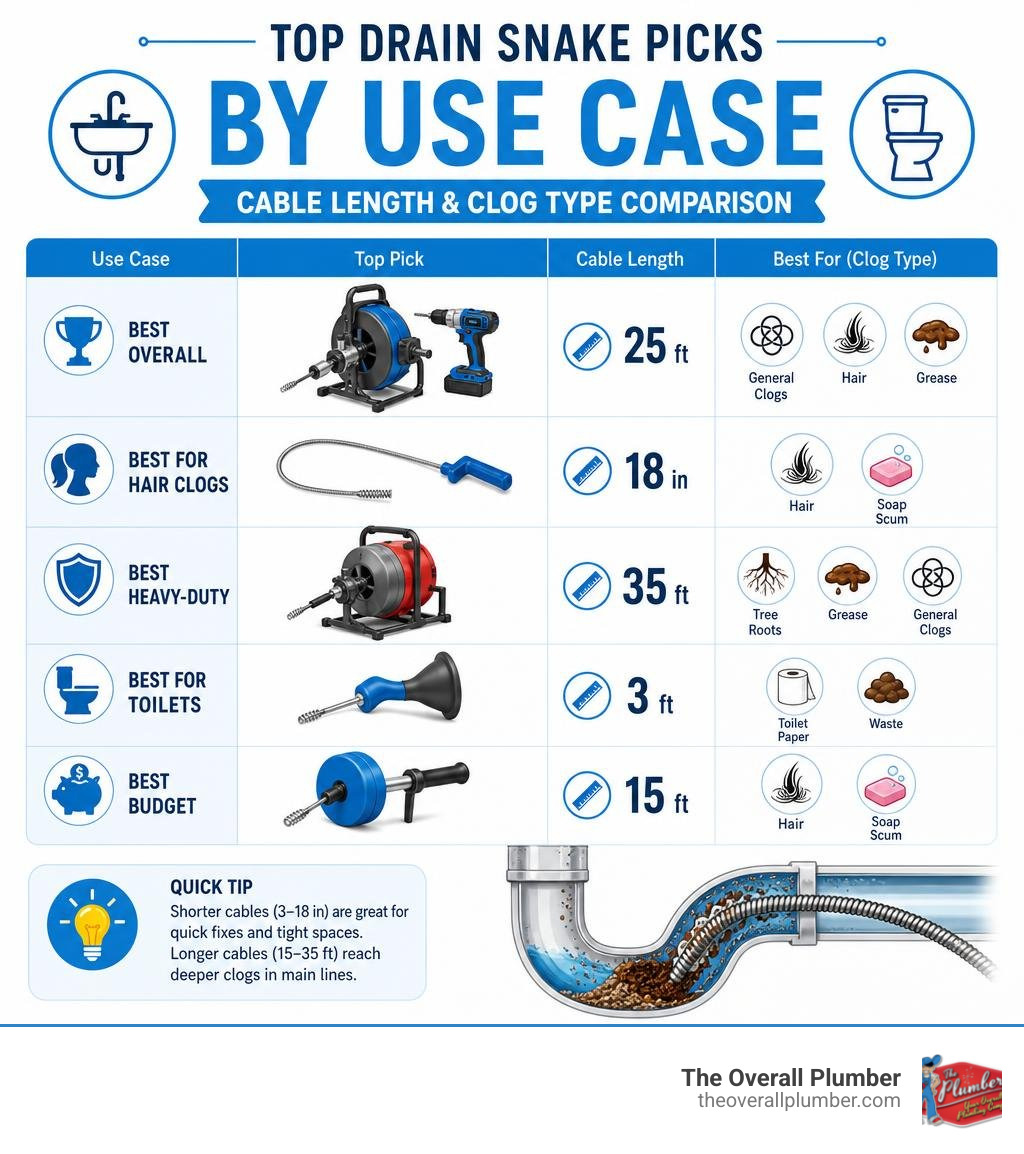
Finding the best plumbing snake for your home doesn’t have to be complicated. Here are the top picks at a glance:
| Use Case | Top Pick | Cable Length |
|---|---|---|
| Best Overall | Ridgid Power Spin+ (dual-powered) | 25 ft |
| Best for Hair Clogs | FlexiSnake Drain Weasel | 18 in |
| Best Heavy-Duty | Milwaukee M18 FUEL Cordless | 35 ft |
| Best for Toilets | Ridgid K-6P Toilet Auger | 3 ft |
| Best Budget | Husky 15-Foot Manual Snake | 15 ft |
When water stops draining, most homeowners reach for a plunger first. But for clogs that don’t budge, a drain snake is the tool that actually gets the job done. It physically pulls or breaks apart the blockage rather than just pushing water against it or dissolving it with harsh chemicals.
The good news? There are solid options for every situation — from a $10 wand for hair clogs to a cordless electric auger for stubborn, deep blockages.
I’m Dayton Whitworth, a second-generation plumber serving Greater Brazoria County, Galveston County, Houston, and the surrounding Gulf Coast, and I’ve cleared enough drains to know exactly which tools work and which ones waste your time and money. In this guide, I’ll share my hands-on perspective on the best plumbing snake options for homeowners so you can make a confident choice before your next clog strikes.
Best plumbing snake terminology:
How Drain Snakes Work and Key Features of the Best Plumbing Snake

Before you head online or run down to the hardware store, it helps to understand how these tools actually work and what features matter. Choosing the wrong tool can lead to scratched porcelain, punctured pipes, or a cable that gets permanently stuck in your plumbing system.
When you encounter a clog, a plumbing snake is designed to travel deep into your pipes, navigate bends, and directly address the obstruction. To find the best plumbing snake for your home, you need to match the tool to the specific type of drain and clog you are dealing with. For a deep dive into the fundamentals, check out our Unclog Your Life with This Ultimate Plumbing Snake Guide.
Here is a quick look at the standard cable sizes required for different household drains:
| Drain Type | Recommended Cable Diameter | Typical Pipe Size | Recommended Length |
|---|---|---|---|
| Bathroom Sinks & Showers | 1/4 in to 5/16 in | 1-1/4 in to 2 in | 15 to 25 ft |
| Kitchen Sinks & Laundry Lines | 5/16 in to 3/8 in | 1-1/2 in to 2 in | 25 to 35 ft |
| Main Sewer Lines | 1/2 in to 3/4 in | 3 in to 4 in | 50 to 100 ft |
What is a Plumbing Snake?
A plumbing snake (also commonly called a drain auger) consists of a flexible metal cable that is pushed into a pipe. At the end of this cable is a specialized tip—usually a corkscrew coil or a barbed hook.
Unlike a plunger, which uses air pressure and water force to push a blockage further down the line, a drain snake relies on physical extraction or destruction. As you rotate the cable, the tip grabs hair, wet wipes, and soap scum, or grinds through hardened grease and food waste. This physical removal ensures that the clog is completely pulled out or broken down into tiny, flushable pieces.
Manual vs. Electric: Choosing the Best Plumbing Snake for Your Needs
When shopping for a snake, you will primarily choose between manual and electric (or drill-powered) models.
- Manual Drain Snakes: These are operated entirely by hand. You push the cable into the line and rotate a hand crank on the back of the drum to spin the cable. They are highly affordable, lightweight, and perfect for simple, close-to-the-surface blockages like soap scum in a bathroom sink.
- Electric & Drill-Powered Snakes: These use motor power to rotate the cable. Some feature built-in electric motors with rechargeable batteries, while others allow you to attach your own power drill to the back of the drum. The motorized rotation makes it much easier to blast through dense grease clogs or navigate tight bends without wearing out your wrists.
If you want to understand the trade-offs in power and convenience, take a look at our detailed breakdown of Electric vs Manual: Choosing the Best Heavy Duty Drain Auger.
Cable Length and Thickness
Cable dimensions dictate how far your tool can reach and how much force it can apply.
For the vast majority of residential issues, a 25-foot cable with a 1/4-inch or 5/16-inch thickness is the sweet spot. It is thin enough to bend through standard P-traps under your sink but strong enough to clear out hair and food scraps.
If you live in a multi-story home in League City or Pearland, or if you are dealing with a clog deep under your home’s foundation, you may want to step up to a 33-foot or 50-foot cable. That longer and thicker cables (such as 1/2-inch main line cables) require heavy-duty drums and motors to operate safely.
Head Design and Materials
The business end of the snake determines what kind of clogs it can clear:
- Bulb Augers: These feature a tightly wound, bulb-shaped spring at the tip. They are excellent for grabbing hair, fabric, and soft debris.
- Cutter Heads: Found on heavier-duty machines, these use sharp metal blades to slice through tree roots, compacted grease, and solid obstructions.
- Barbed Plastic / Hook Wands: Often made of flexible ABS plastic, these feature tiny teeth along the sides. They are designed strictly for shallow hair clogs in showers and bathroom sinks.
High-quality snakes use solid-core steel cables that resist kinking, twisting, and rusting. Lower-end models may use hollow-core cables, which can easily warp or buckle when they hit a tough obstruction.
Top Recommended Drain Snakes for Homeowners
With over 100 options available at major retailers like Home Depot and hundreds more on Amazon, finding the right tool can feel overwhelming. We have analyzed hands-on testing data, customer reviews, and our own field experience to bring you the top-performing drain snakes for residential use. For additional insights on what to look for, you can browse Best Drain Snakes and Augers – The Home Depot.
Best Overall: Dual-Powered Drum Auger
For the average homeowner, the Ridgid Power Spin+ is the ultimate drain-clearing tool. It offers the perfect blend of manual control and mechanical power.
- Why It Wins: It features a dual-powered design. You can operate it manually using the comfortable hand crank, or you can attach a cordless power drill to the rear shaft to let the drill do the heavy twisting.
- Specifications: It comes equipped with a 25-foot Maxcore cable (1/4-inch diameter) that is highly kink-resistant. It also features an auto-feed trigger, meaning you don’t have to manually pull the dirty cable out of the drum; the machine feeds and retracts it for you.
- Best For: Clearing kitchen sinks, bathtubs, and bathroom vanity drains.
Best Plumbing Snake for Hair Clogs: Micro-Hook Wand
When your bathroom sink or shower is draining slowly, 95% of the time the culprit is a mass of hair and soap scum caught right beneath the drain stopper. You don’t need a heavy steel cable for this.
- Why It Wins: The FlexiSnake Drain Weasel is incredibly simple, highly effective, and costs very little. It features a slim handle and disposable 18-inch plastic wands covered in micro-hooks.
- How It Works: You slide the thin wand directly through the slots of your drain grate (no need to disassemble the drain plug), spin the handle, and pull. The micro-hooks grab hair instantly, allowing you to pull the entire clog out in seconds. Once finished, you can snap the dirty wand off into the trash.
- Alternative: The Drano Snake Plus Tool + Gel System is another excellent two-step option that pairs a 23-inch flexible barbed tool with a powerful clog-dissolving gel to clean up any remaining residue.
Best Heavy-Duty: Cordless Electric Drain Snake
If you have recurring clogs, a large home, or simply want a professional-grade tool that requires zero manual effort, a dedicated cordless electric auger is the way to go.
- Why It Wins: The M18 FUEL 18-Volt Lithium-Iron Cordless Plumbing Drain Snake Auger with w/ CABLE DRIVE & 5/16 in. x 35 ft. Cable is a beast of a machine. It delivers the power of a professional plumbing rig in a handheld, battery-powered format.
- Key Features: It features an enclosed drum to keep spinning cables and mess away from your floors, an automatic feed and retract system, and a variable speed trigger. The 35-foot cable gives you plenty of reach to clear clogs deep within 1-1/4 inch to 3 inch lines.
- Budget-Friendly Electric Pick: If the professional price tag of the Milwaukee M18 is too high, the VEVOR 12V Electric Drain Auger is a fantastic cordless alternative for residential pipes up to 2 inches, complete with a 25-foot auto-feed cable and rechargeable battery.
Best for Toilets: Dedicated Toilet Auger
Never, under any circumstances, should you put a standard sink snake down a toilet. The metal cable will permanently scratch and mark the porcelain bowl. Instead, you need a dedicated toilet auger.
- Why It Wins: The Ridgid K-6P Hybrid Toilet Auger is designed specifically for toilets. It features a heavy-duty, vinyl-coated guard (or rubber sleeve) at the bend to protect your toilet bowl from scratches.
- Specifications: It features a 6-foot heavy-duty cable with a bulb head designed to navigate the tight, integrated trap of a toilet bowl. It can be operated manually or powered by a cordless drill for stubborn blockages.
- Budget Toilet Pick: The Husky 3 ft. Toilet Drain Snake is a reliable, highly-rated manual option that gets the job done for basic toilet clogs at a fraction of the cost.
How to Safely Use and Maintain a Drain Snake
Using a drain snake is straightforward, but doing it incorrectly can damage your pipes or leave you with a massive mess. Follow these steps to clear your drains safely:
- Prep the Area: Clear everything out from under the sink. Lay down old towels or a bucket to catch any water that drips when you remove the P-trap or pull back the wet cable.
- Gear Up: Always wear safety glasses and thick leather gloves. Do not use thin latex or jersey gloves; the spinning metal cable can easily snag fabric and injure your hands.
- Bypass the Trap (If Possible): For kitchen and bathroom sinks, the easiest way to snake is to remove the P-trap underneath. This gives you direct access to the wall pipe, preventing you from having to force the snake through tight plastic bends.
- Insert and Feed: Push the cable into the pipe by hand until you feel resistance. This resistance is either a bend in the pipe or the clog itself.
- Rotate and Advance: Once you hit the blockage, lock the cable in place on your drum. Rotate the handle (or activate your drill) in a clockwise direction while applying gentle forward pressure. Do not force it! Forcing the cable can cause it to kink or break.
- Retrieve the Clog: Once the cable feeds past the obstruction, slowly pull the snake back while continuing to rotate it clockwise. Have a trash bag ready to catch the retrieved debris.
- Flush the Line: Reassemble your pipes and run hot water at full force for several minutes to wash away any remaining loose debris.
Maintenance Tips to Prevent Rust and Wear
Because plumbing snakes are exposed to water, hair, and household chemicals, they will rust quickly if not cared for.
- Wash the Cable: After every use, wipe down the cable with a rag as you pull it out of the drain. Flush the cable with clean water to remove organic matter.
- Dry Completely: Leave the cable extended on a towel or driveway in the sun until it is completely dry.
- Lubricate: Before retracting the dry cable back into the drum, spray it with a light coat of WD-40 or machine oil to prevent rust during storage.
When to Call a Professional Auger Service
While a DIY plumbing snake is an excellent tool to keep in your garage or utility closet, it has its limits. Some clogs are symptoms of much deeper issues in your home’s plumbing system.
You should put down the DIY snake and call in the professionals if you experience any of the following:
- Multiple Clogged Drains: If your kitchen sink, shower, and washing machine line are all backing up at the same time, the issue is not a simple hair clog. You have a blockage in your main sewer line.
- Recurring Blockages: If you have to snake the same drain every couple of weeks, there is likely a structural issue, such as a collapsed pipe, a sag in the line (a “belly”), or tree root intrusion.
- Tree Root Intrusion: Tree roots are incredibly strong and can easily break or crush DIY cables. Clearing roots requires heavy-duty professional machines and specialized cutting blades.
- Chemical Exposure: If you poured liquid drain cleaners down the drain and they failed to clear the clog, do not snake the drain yourself. The standing water is now highly acidic and can cause severe chemical burns to your skin and eyes if it splatters.
At The Overall Plumber, we provide expert Houston Auger Service and Brazoria County Auger Service to tackle the toughest blockages. We combine high-powered, professional-grade augers with state-of-the-art sewer camera inspections to find the exact location and cause of your clog. Best of all, we offer satisfaction guarantees, priority scheduling, and absolutely no trip charges or overtime fees.
Frequently Asked Questions About Drain Snakes
What is the difference between a drain snake and a drain auger?
In residential plumbing, the terms “drain snake” and “drain auger” are often used interchangeably. However, there is a slight technical difference. “Drain snake” typically refers to smaller, thinner hand-cranked tools used for minor household drains (like sinks and tubs). “Drain auger” usually refers to larger, heavy-duty, or motorized equipment, such as toilet augers or industrial sewer machines.
Can I use a standard drain snake on a toilet?
No. Standard drain snakes have exposed metal coils at the tip that will scratch, scrape, and leave dark metal marks on the porcelain of your toilet bowl. Furthermore, standard snakes are too flexible to easily navigate the tight “S-trap” built into toilets. Always use a dedicated toilet auger with a protective vinyl sleeve to clear toilet clogs.
Is a drain snake better than chemical drain cleaners?
Yes, absolutely. Chemical drain cleaners rely on harsh acids or caustic bases to dissolve clogs. These chemicals rarely clear the entire blockage, often leaving a small hole through the clog that quickly fills up again. More importantly, these chemicals generate heat that can soften PVC pipes, corrode older metal pipes, and damage the environment. A plumbing snake physically removes the clog safely without damaging your plumbing system.
Need help with a stubborn clog that a DIY snake can’t clear? Call The Overall Plumber for fast, professional drain cleaning services!