

Why a Professional Plumbing Auger Works When a Plunger Fails
A plunger uses pressure to shift a clog. If the blockage is deep in the pipe or firmly packed, that pressure may not reach it. A professional plumbing auger feeds a rotating cable to the blockage to break it up or pull it out. Use a toilet auger for a toilet, and a drain machine sized for the pipe when the clog is farther down the line. Do not snake a drain that may contain chemical cleaner.
I’m Dayton Whitworth, a second-generation plumbing professional serving the Houston area and nearby Gulf Coast communities. My drain-cleaning work has taught me why choosing the right professional plumbing auger matters as much as knowing how to use it.
The Mechanics of Drain Clearing: Plunger Limitations vs. Professional Plumbing Auger Power
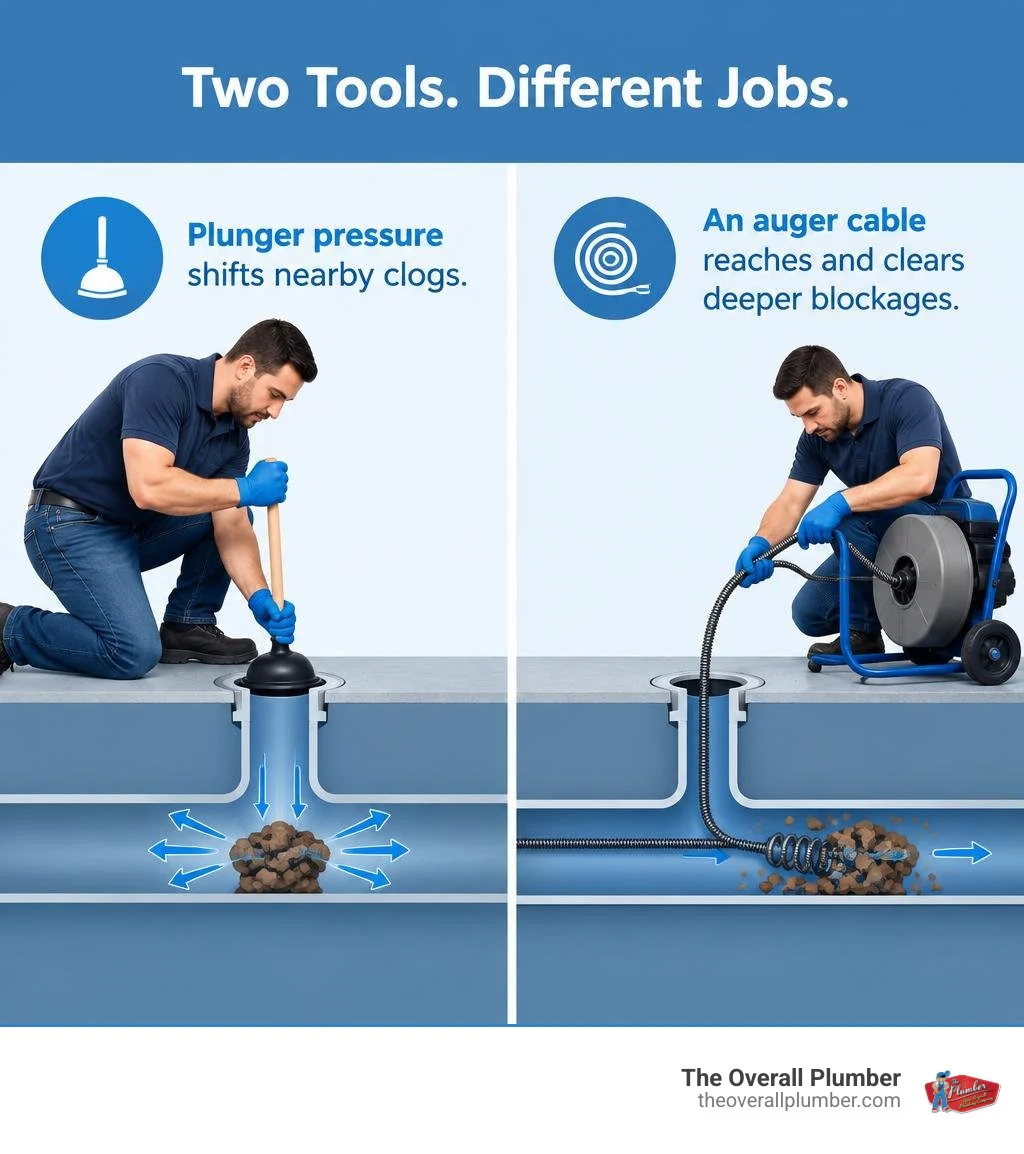
When a drain line backs up, most homeowners instinctively reach for a rubber cup plunger. Plungers rely entirely on hydraulic displacement. By creating a tight seal over the drain opening and rapidly pushing and pulling, you force trapped water back and forth against the stoppage. For soft, localized clogs sitting inside an accessible trap—like a minor wad of toilet paper or loose hair—this sudden surge of hydrostatic pressure can dislodge the obstruction.
However, hydraulic force dissipates rapidly over distance. As water encounters air pockets, pipe vents, complex directional fittings, and expanding line diameters, the energy generated by your plunger simply bleeds off before it ever reaches a deep stoppage. If the blockage consists of dense grease, wet wipes, hardened mineral scale, or invasive tree roots, water pressure simply bounces off the barrier without making an impact.
In contrast, deploying a professional plumbing auger introduces direct mechanical force right at the point of obstruction. Rather than pushing water, an auger drives a heavy-duty, rotating steel cable directly down the interior of the drainage pipe. The specialized cutting or retrieval head physically bites into, shreds, or latches onto the obstruction, restoring unrestricted flow.
| Feature / Metric | Standard Plunger | Professional Plumbing Auger |
|---|---|---|
| Primary Mechanism | Hydraulic push-pull displacement | Rotational torque & mechanical cutting |
| Effective Reach | 1 to 3 feet (fixture trap only) | 25 to 100+ feet deep inside drain runs |
| Blockage Capabilities | Minor paper, loose organic matter | Dense grease, foreign objects, tree roots, heavy scale |
| Pipe Protection | Safe for all fixtures | High-grade control when operated with proper technique |
| Debris Retrieval | None (forces clogs further down) | Captures and extracts fibrous obstructions |
Understanding the Types of Drain Cleaning Machines
Not every drain stoppage calls for the same machine. Professional drain cleaning requires matching equipment configuration to line architecture:
- Hand Spinners & Manual Augers: Compact units designed for basic secondary lines (such as a 1-1/4″ to 1-1/2″ bathroom lavatory or tub drain). These provide controlled manual rotation up to 25 feet. A portable manual drain cleaner or compact hybrid unit like the 3.5-lb RIDGID Power Spin+ lets technicians transition between hand operation and low-speed drill assistance for simple branch line blockages.
- Sink Machines: Dedicated countertop or handheld motorized units spinning 1/4″ to 5/16″ cables at variable speeds. They navigate tight P-traps and multiple 90-degree bends without dismantling fixture assemblies.
- Drum Machines: Self-contained units enclosing the working cable inside an enclosed spinning drum. These machines protect finished interiors from dirty wastewater spray. Advanced commercial models feed and retrieve cable at speeds up to 16 to 20 feet per minute, making them ideal for heavy branch lines and primary sewer laterals.
- Sectional Drain Cleaners: Open-frame machines that spin open-wound cable sections coupled together on-site. Operating at high RPMs (often 500 to 700 RPM), sectional cleaners transmit raw rotational torque over distances extending past 100 to 200 feet, effortlessly shearing stubborn root intrusions.
Reviewing the ultimate guide to choosing a plumbing snake for clogged drains helps clarify how different rotational mechanisms excel across various residential line configurations.
Why Cable Construction and Reinforced-Core Technology Matter
The heart of any drain cleaning machine is its cable. Standard consumer-grade cables are hollow-core springs that easily twist into knots, warp, or snap under moderate torque. In commercial plumbing, cable failure inside a wall or under a concrete slab is a nightmare scenario.
Professional-grade cables, such as patented Flexicore designs, feature two layers of heavy-gauge, oil-tempered spring wire tightly wound over a 49-strand, aircraft-quality wire rope center. This design provides exceptional flexibility for navigating tight sanitary tees while retaining incredible tensile strength. When the cutting head encounters an immovable obstacle, the inner core resists lateral kinking and absorbs torsional loads, transferring raw cutting power straight to the clog.
How to Match the Machine to Pipe Diameter, Length, and Clog Severity
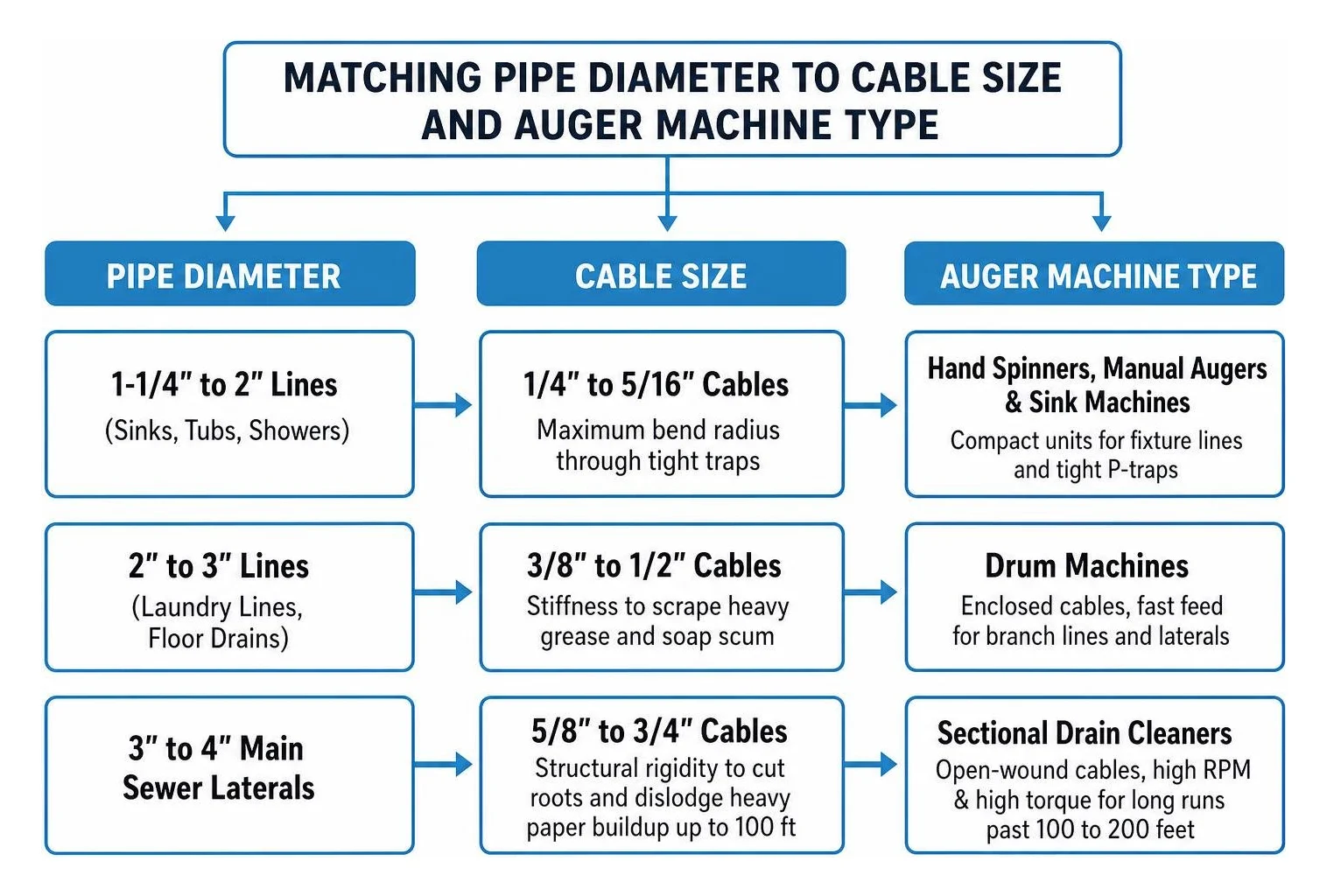
Selecting the wrong machine or an improperly sized cable can damage piping or cause the cable to fold over itself inside the line. As a rule of thumb, cable diameter must correlate with pipe diameter:
- 1-1/4″ to 2″ Lines (Sinks, Tubs, Showers): 1/4″ to 5/16″ cables provide maximum bend radius through tight traps.
- 2″ to 3″ Lines (Laundry Lines, Floor Drains): 3/8″ to 1/2″ inner-core cables supply the stiffness required to scrape heavy grease and soap scum.
- 3″ to 4″ Main Sewer Laterals: 5/8″ to 3/4″ heavy-duty cables provide structural rigidity to slice through tree root balls and dislodge heavy paper buildup over runs up to 100 feet.
When multiple plumbing fixtures gurgle or back up simultaneously across your home, it indicates main drain clogs requiring priority service rather than a minor branch line issue.
Plumbing equipment manufacturers have focused on operator safety and versatility since the 1940s, introducing air-activated foot switches and ground-fault circuit interrupter (GFCI) systems that allow technicians to keep both hands on the cable while maintaining full power regulation.
Choosing a Professional Plumbing Auger for Fixture Lines vs. Main Drains
A small fixture stoppage requires delicate finesse, whereas a main sewer lateral demands raw power and high torque. Evaluating electric vs manual heavy duty drain augers highlights the operational trade-offs between portable hand-cranked spinners and motorized drum cleaners.
For commercial kitchens and complex branch networks, auto-feed drum augers with smooth tri-roller drive systems advance and retract the coil without manual push fatigue. When clearing main lines, industrial auto-feed drum units maintain uniform forward progress through thick sludge at up to 20 feet per minute, reducing wear on the inner cable core while keeping the work area clean.
Specialized Tools for Toilets, Urinals, and Commercial Fixtures
Standard drain cables should never be dropped directly into a porcelain toilet or urinal bowl. The exposed rotating steel coil will leave permanent, dark scratches (known as “snake tracks”) etched into the vitreous china.
To safely clear porcelain fixtures, plumbers rely on dedicated equipment:
- Telescoping Closet Augers: Constructed with a curved, rigid steel guide tube wrapped in a protective vinyl sleeve. Premium models feature a 3-foot standard reach that telescopes to 6 feet with the push of a button, letting you clear blockages beyond the toilet trap without lifting the heavy bowl.
- Down Head Attachments: Articulated cable tips that drop downward precisely into the toilet’s internal siphon passage, negotiating tight curves cleanly.
- Urinal Augers: Specialized, narrow-diameter cables engineered to navigate the tight, compact internal traps of wall-mounted commercial urinals.
For complete service versatility, technicians frequently carry dedicated kits that combine protective bowl shields, specialty closet augers, and sanitary storage cases. You can read our detailed toilet auger guide for clearing stubborn bathroom blockages for deeper insights on porcelain fixture care.
Step-by-Step Guide: How Plumbing Professionals Snake a Drain Pipe Safely and Effectively
Properly snaking a drain line requires methodical execution to protect your home’s plumbing infrastructure and maintain absolute personal safety:
- Don Personal Protective Equipment (PPE): Always wear heavy-duty, seamless leather drain cleaning gloves over nitrile gloves, along with full-wrap eye protection. Standard rubber or fabric work gloves can catch on a spinning steel cable and twist around your fingers, causing severe injuries.
- Establish Direct Access: Access the drainage system via an exterior cleanout, a basement cleanout plug, or by removing the fixture P-trap. Snaking through a sink strainer or pop-up assembly damages the fixture and limits cable mobility.
- Position the Machine Correctly: Set your motorized drum unit no further than 2 to 3 feet from the drain opening. Keeping this distance short prevents the rotating cable from whipping, looping, or binding outside the pipe.
- Feed the Cable into the Line: Feed the initial length of cable into the drain opening by hand until you encounter the first bend or resistance.
- Engage Rotation and Maintain Gentle Forward Pressure: Depress the air-actuated foot pedal to begin clockwise drum rotation. Guide the cable with both hands, letting the rotation work its way through the pipe. Never force or shove the cable when you feel resistance.
- Work the Obstruction: When the cutting head contacts the clog, ease back slightly and allow the spinning tool head to chew through the obstruction. Advance the cable slowly, oscillating back and forth across the stoppage to ensure a clean bore.
- Retrieve the Cable Carefully: Shift the auto-feed into reverse or pull the cable manually while maintaining steady clockwise rotation. Use a damp rag to wipe dirty wastewater, grease, and debris off the cable before it enters the drum.
- Flush and Test the System: Run high-volume hot water through the pipe for several minutes to wash away lingering debris, followed by an in-line camera inspection to verify that the pipe walls are clear.
Operating a Professional Plumbing Auger Without Damaging Pipes
When a rotating auger head grabs onto a solid obstruction—like an invasive root mass or thick textile wad—the cutting tip stops turning while the motor continues spinning the drum. This creates severe torque buildup, causing the cable inside the line to load up like a drawn bowstring.
If the operator fails to release the foot pedal immediately, the energized cable will violently twist, kink, or flip over inside the pipe, risking structural cracks in brittle aged cast iron or puncturing thin-walled PVC fittings. Learning about safely using a sewer auger for tree roots helps prevent dangerous torque kickback and protects the structural integrity of your drainage pipes.
Cable Maintenance, Cleaning, and Rust Prevention
Professional drain cables face harsh, corrosive environments packed with wastewater, acidic food scraps, and bacteria. Without thorough maintenance, steel cables quickly corrode, become brittle, and snap under load:
- Post-Job Rinsing: Flush the entire cable with fresh, hot water immediately after retrieving it from the sewer line.
- Drum Drainage: Drain any standing, contaminated water that collected inside the drum housing through the integrated drum drain plug.
- Corrosion-Inhibiting Lubricant: Coat the working cable with a specialized, biodegradable rust-inhibiting treatment (such as Snake-Oil Classic). This lubricant displaces moisture, neutralizes foul odors, and forms a protective barrier over the metal coils.
- Dry Storage: Store cables in a clean, ventilated environment so residual moisture evaporates fully before your next service call.
Frequently Asked Questions About Professional Plumbing Augers
When Is a Mechanical Auger Appropriate for a Stubborn Clog?
A mechanical plumbing auger is ideal for hard, solid, or fibrous blockages that plungers and gentle flushing cannot budge. This includes invasive tree root systems, sanitary wipes, heavy paper jams, and solid foreign items.
However, if a drain line is heavily coated in soft, coagulated cooking grease, animal fats, or fine sand, a standard auger head may only poke a narrow hole through the sludge rather than restoring the full pipe diameter. In those situations, utilizing specialized expanding scraping blades paired with an in-line HD camera inspection provides a more thorough, wall-to-wall clean.
Can a Motorized Drain Auger Crack or Damage Residential PVC or Cast Iron Pipes?
When operated by an experienced professional using the correct cable gauge and cutter head, a motorized drain auger is completely safe for both modern PVC and historic cast iron drainage systems.
Damage typically occurs only when an untrained user forces an oversized cutting blade into an undersized line, lets unsupported cable whip against pipe walls, or operates the machine at excessive RPMs through corroded, thin-walled cast iron. Variable-speed controls and air foot pedals allow operators to modulate power instantly and protect vulnerable pipes.
Why Do Drain Lines Sometimes Back Up Again Days After Being Snaked?
If a clogged drain begins backing up again just days after being cleared, the initial snaking likely only punched a temporary “pencil hole” through the obstruction rather than clearing the full diameter of the pipe.
Residual kitchen grease can quickly slump back over the opening, or jagged tree root stumps left clinging to the pipe joints can immediately catch toilet paper and hair again. Reviewing what happens when a sewer line is backing up days after snaking explains why pairing mechanical clearing with an optical camera inspection is vital for lasting results.
Ready for a lasting fix? Contact The Overall Plumber or schedule your professional Houston auger service online. The Overall Plumber serves Houston, Pearland, League City, Friendswood, Pasadena, Galveston, and surrounding communities with satisfaction guarantees, priority scheduling, and no overtime fees.