


Houston Water Heater: What to Check First
For a Houston water heater that leaks, runs out of hot water, or needs replacing, start by checking for visible leaks and confirming that the shutoff valve is easy to reach. Before replacement, ask about permits, a safe location, a working relief valve, and a drain pan where a leak could cause damage. A 2026 Houston cost model estimates installation at about $1,371 to $4,921, with the price shaped by the heater type and any plumbing, venting, or electrical changes.
I’m Dayton Whitworth, a second-generation plumbing professional serving Houston and the surrounding Gulf Coast. My plumbing experience informs this checklist of what to ask before a Houston water heater repair or replacement.
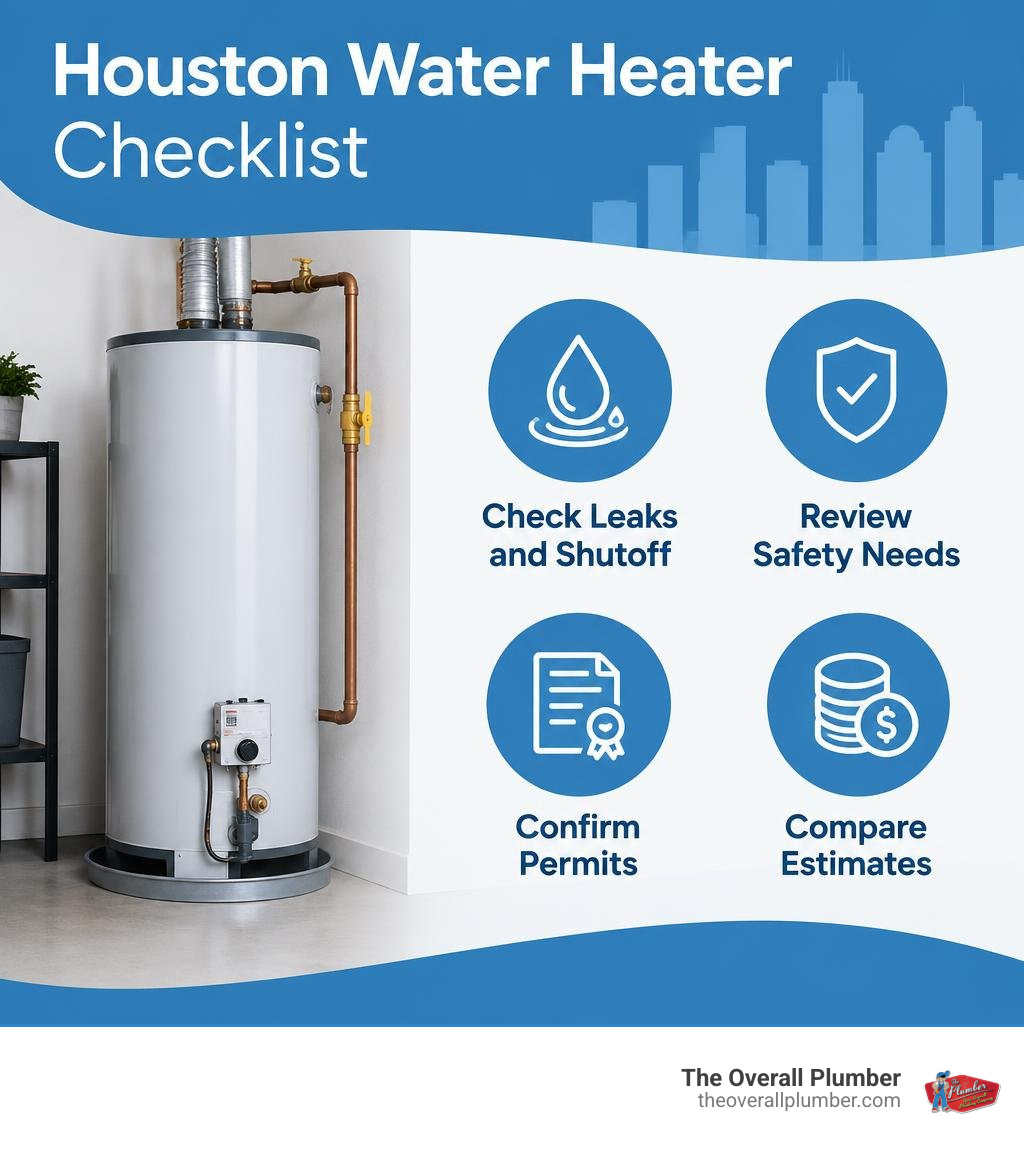
City Code Requirements and Safety Standards (2015 IRC)
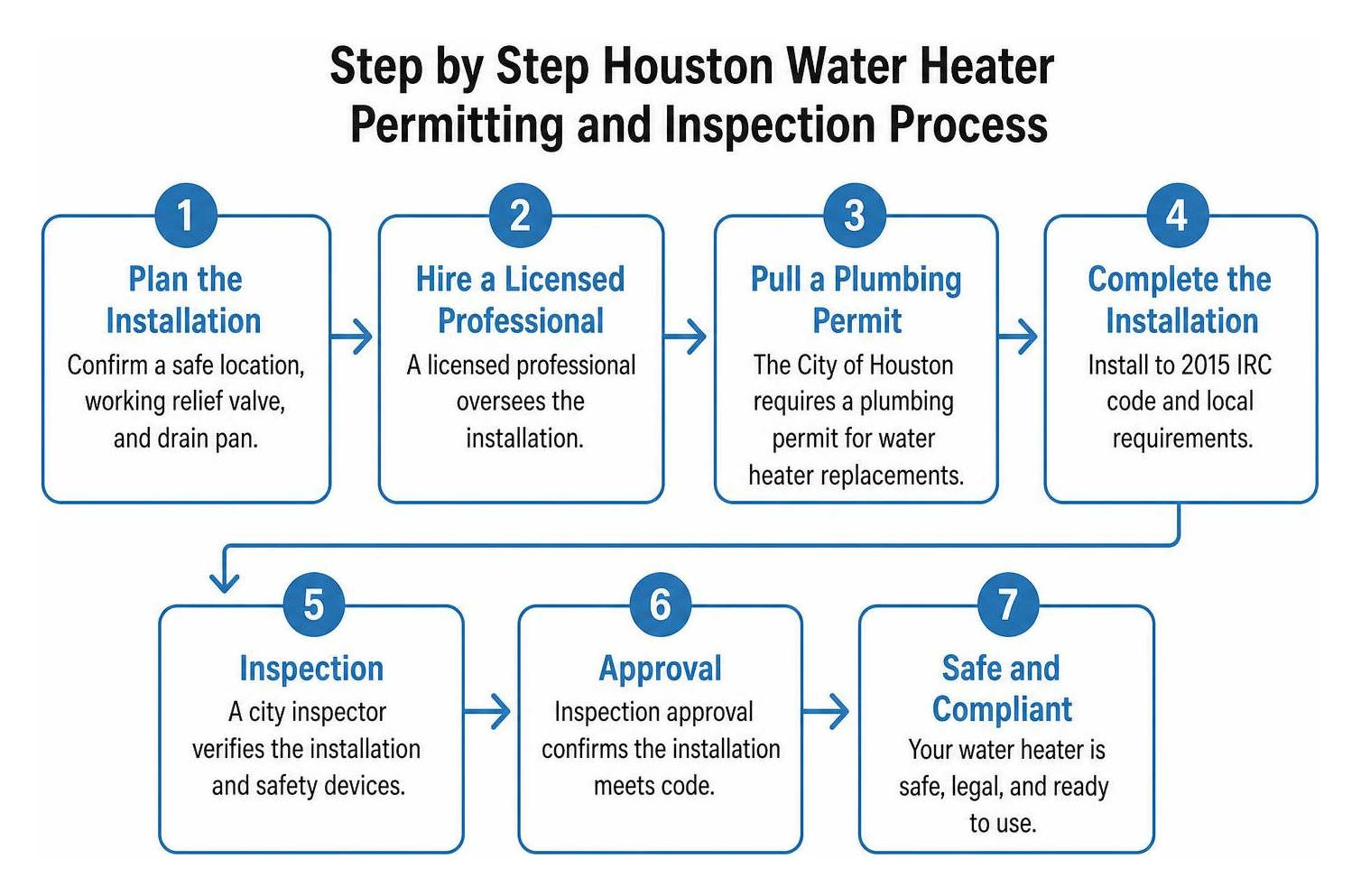
When installing or servicing a residential water heater across Harris County and Brazoria County, following municipal building codes is essential for home safety. The City of Houston enforces standards adapted from the 2015 International Residential Code (IRC). These regulations ensure that pressurized vessels heating water to high temperatures operate without risking structural water damage, gas leaks, or combustion hazards.
In our area, replacing an existing unit is not simply a matter of swapping appliances. The City of Houston requires a plumbing permit for water heater replacements. Permitting ensures that a licensed professional oversees the installation and that a city inspector validates the safety devices. Typical municipal permit fees vary depending on the jurisdiction—such as Houston, Pasadena, Pearland, or League City—but pulling permits protects homeowners by verifying code compliance. Following a comprehensive water heater installation guide helps ensure no critical steps are missed during the upgrade.
Key Code Rules for Your Houston Water Heater in Attics and Garages
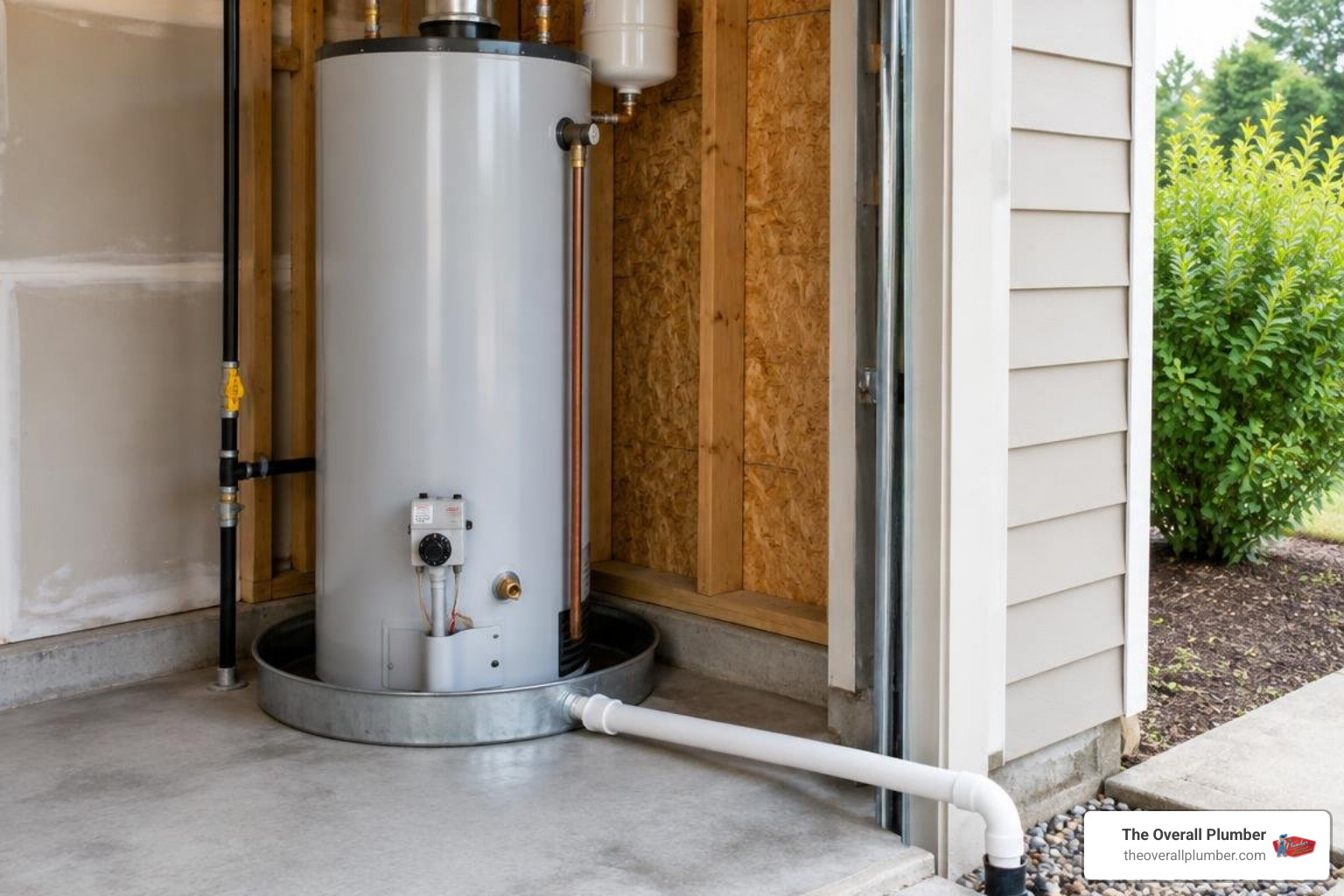
Plumbing setups along the Upper Texas Gulf Coast frequently place water heaters in attics or attached garages to maximize indoor living space. Each location carries strict safety mandates under local building guidelines.
- Garage Installations and Ignition Elevation: Water heaters featuring an open ignition source installed in residential garages must have burners elevated at least 18 inches above the garage floor. This elevation prevents flammable gasoline vapors—which are heavier than air and gather near the ground—from contacting the pilot light or burner. However, appliances listed as Flammable Vapor Ignition Resistant (FVIR) can often be mounted directly on the floor unless local inspectors mandate elevation or physical impact protection from vehicles.
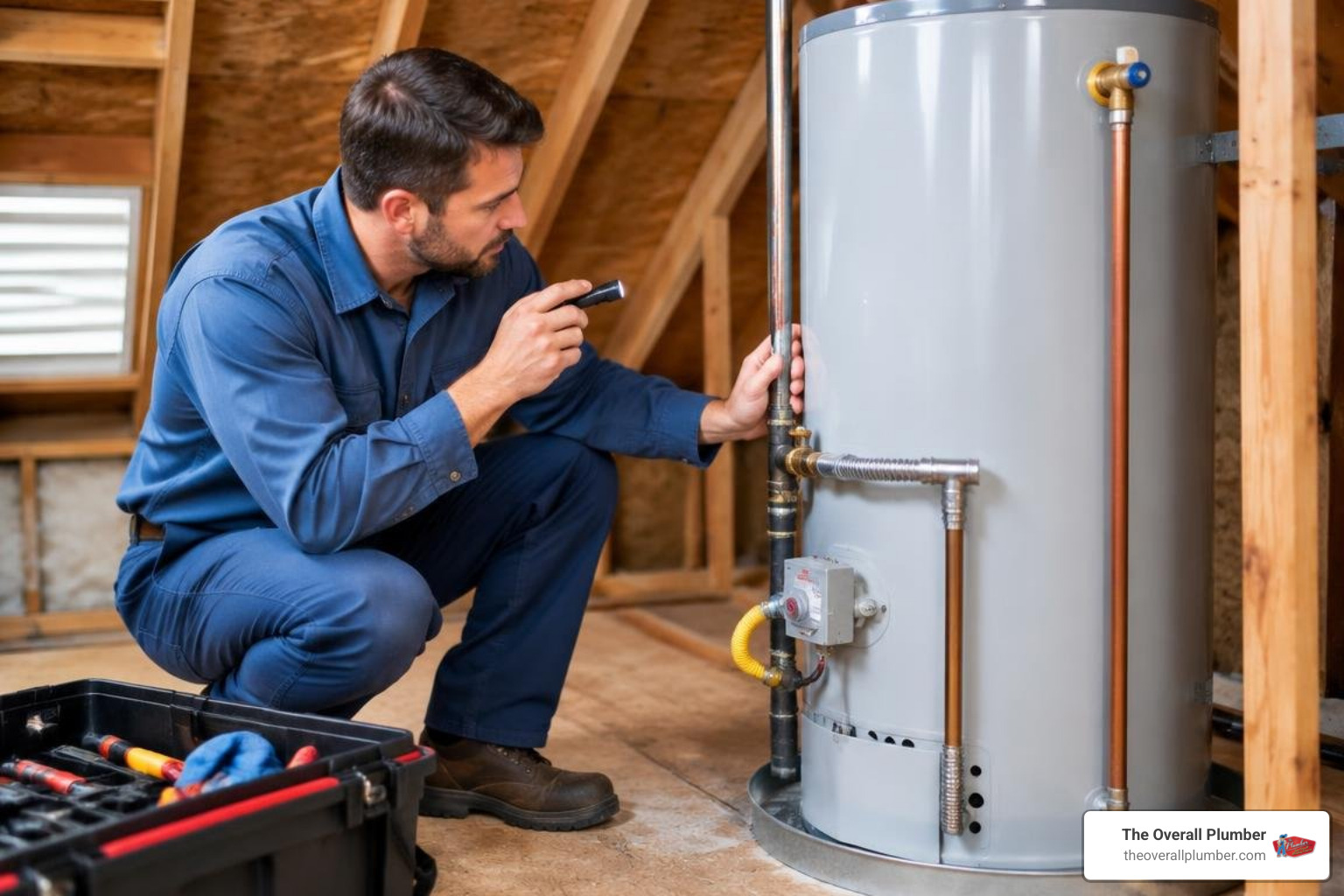
- Attic Access Dimensions: Attic-mounted units must have a clear, unobstructed passageway with solid continuous flooring. The access opening must be large enough to remove the old appliance and fit the replacement unit without altering structural framing.
- Safety Pan and Drain Requirements: Whenever a unit is installed in an attic, furred space, or interior living area where leaks could cause structural or finish damage, a safety pan is mandatory. The pan must have a minimum depth of 1.5 inches. It must be made of corrosion-resistant materials, such as galvanized steel with a minimum thickness of 0.0236 inches or listed nonmetallic plastic (plastic pans are restricted to electric units only). The drain line connecting to the pan must be at least 3/4-inch nominal pipe size and terminate outdoors, discharging between 6 and 24 inches above the ground with an indirect connection.
- Seismic Bracing: Although Southeast Texas has low overall seismic risk, specific construction types such as multi-family townhomes classified under Seismic Design Category C require seismic strapping. These appliances must be anchored or strapped in the upper and lower one-third of the tank to resist horizontal forces equal to one-third of the operating weight.
Pressure Relief, Temperature Control, and Shutoff Valves
Every storage tank requires specialized plumbing valves to manage high pressures and temperatures safely:
- Temperature and Pressure Relief (T&P) Valve: The T&P valve is your system’s primary defense against tank over-pressurization. It must be rated to open if water temperature reaches 210°F or if internal pressure climbs above 150 psi. The discharge pipe attached to this valve cannot be trapped, threaded at the termination point, or reduced in pipe diameter. It must run downward by gravity and terminate with an observable air gap either outside the building or into an approved drain. If yours is dripping or faulty, learning the steps for replacing a pressure relief valve is crucial to preventing dangerous pressure build-up.
- Cold Water Isolation Valve: An accessible shutoff valve must be placed on the cold water supply pipe leading directly into the heater. This allows immediate isolation of the water supply during an emergency without shutting off water to the entire household.
- Thermal Expansion Control: On closed plumbing systems equipped with backflow preventers or check valves at the water meter, installing a hot water expansion tank protects household pipes from excessive pressure spikes that occur when cold water expands during heating.
- Vacuum Relief Valve: Bottom-fed water heaters and tanks installed at elevations that could cause siphoning require a vacuum relief valve to prevent tank collapse under negative pressure.
2026 Cost Breakdown for a Houston Water Heater Installation
Understanding regional installation costs helps homeowners budget accurately for replacements. In Houston, residential improvement costs track roughly 16% below the national average. As of August 2026, the Residential Construction Producer Price Index (PPI) for single-family construction sits at 200.9 (a +2.8% year-over-year rise), keeping equipment pricing steady.
The typical cost for complete water heater installation in the Houston metro area ranges from $1,371 to $4,921, with an average standard installation pricing out near $1,770. On average, equipment accounts for roughly 62% of the project total, while labor accounts for approximately 38%.
Plumbing labor rates across Texas remain competitive compared to coastal markets. The mean hourly wage for licensed Texas plumbers and pipefitters is $28.40 (13.5% below the national plumbing average), resulting in a standard loaded contractor billing rate of roughly $68 per hour in the Houston area. Homeowners looking to optimize budgets often benefit from winter scheduling discounts between December and February, when plumbing contractor schedules ease up after the summer peak. Homeowners can explore local tools like a water heater installation cost calculator for Houston to evaluate project scopes.
Budgeting by Project Scope and Scenario
Total investment depends heavily on fuel sources, venting requirements, and any structural or code corrections:
- Low-Cost Scenario ($1,371): Direct, like-for-like replacement of a basic 50-gallon electric tank in an easily accessible utility closet or garage, utilizing existing wiring and connections with minimal plumbing modifications. Reviewing electric water heater replacement costs helps clarify this baseline budget.
- Mid-Cost Scenario ($2,421): Standard replacement of an atmospheric 50-gallon natural gas tank water heater. This scenario includes pulling city permits, installing a code-compliant drain pan, updating the gas sediment trap, adding an expansion tank, and hauling away the old unit.
- High-Cost Scenario ($4,921): Upgrading to a high-efficiency hybrid heat pump water heater or high-output tankless system. This comprehensive project includes running dedicated electrical circuits, re-routing copper or PEX water lines, adding condensation drains, and converting standard metal flues to direct-vent or power-vent piping.
Key Installation Factors: Tank, Tankless, and Hybrid Heat Pumps
Selecting the ideal water heater setup requires weighing equipment longevity, ongoing energy utility expenses, and initial installation modifications.
| Water Heater Type | Average Installed Cost (Houston) | Expected Lifespan | Energy Efficiency (UEF) | Key Installation Requirements |
|---|---|---|---|---|
| Standard Electric Tank | $1,371 – $2,100 | 10 – 12 Years | 0.90 – 0.93 | 240V / 30-amp dedicated electrical circuit; safety drain pan. |
| Standard Gas Tank | $1,800 – $2,600 | 10 – 12 Years | 0.60 – 0.70 | Category I B-vent chimney; gas supply line; safety drain pan. |
| Tankless Gas | $2,800 – $4,500 | 20+ Years | 0.82 – 0.96 | Dedicated 3/4-inch gas line; Category III/IV direct venting; 120V outlet. |
| Hybrid Heat Pump | $3,200 – $4,921 | 13 – 15 Years | 3.30 – 4.00+ | 240V circuit; condensate drainage; minimum 700 cu. ft. air volume. |
Sizing and Selecting the Right Unit for Local Climate Demands
Houston features a humid subtropical climate with approximately 28 inches of rainfall annually and brief freezing spells limited to roughly one month each winter. Our incoming municipal groundwater temperatures range from around 55°F in January to over 80°F during July and August.
Because incoming winter water temperatures drop, sizing a water heater requires accounting for a necessary 65°F to 70°F temperature rise to deliver a comfortable 120°F to 125°F hot water supply:
- For Tank Systems: Look closely at the First Hour Rating (FHR) rather than overall tank volume alone. A high recovery rate ensures the unit can reheat water quickly between morning showers.
- For Tankless Systems: Measure the system’s Gallons Per Minute (GPM) output calculated against a 70°F temperature rise. While a unit might produce 9 GPM in peak summer, that same system may deliver 5 to 6 GPM on cold winter mornings. Reviewing tankless water heater installation costs helps evaluate equipment sizing needs.
- For Hybrid Heat Pump Units: Houston’s warm climate makes heat pump systems exceptionally efficient, as they draw heat from surrounding attic or garage air to heat the tank. Calculating the cost to install a heat pump water heater against available energy rebates often reveals substantial long-term operating savings.
Pre-Installation and Safety Device Checklist
Review this essential checklist before starting any water heater installation:
- Drain Valve Specifications: Ensure the tank includes a heavy-duty drain valve at the bottom of the vessel, with an inlet size of at least 3/4-inch nominal iron pipe and standard male hose thread connection for easy flushing.
- Safety Pan and Drain Line: Verify that the safety pan is sized at least 1.5 inches deep, with a 3/4-inch drain line discharging outside without uphill runs or traps.
- Potable Water Protection: Check that a thermal expansion tank is installed if a backflow preventer or pressure-reducing valve is present on the main water meter.
- Water Temperature Control: Install a thermostatic mixing valve if setting storage temperatures above 120°F to prevent scalding while mitigating bacterial growth in the tank.
- Gas Shutoff and Sediment Trap: Natural gas units must feature an accessible gas cock within 6 feet of the heater and a proper sediment trap (drip leg) before the gas control valve.
- Electrical Disconnect: Electric and hybrid models require a dedicated breaker and an accessible local disconnect switch within sight of the appliance.
- Combustion Air and Venting: Verify adequate combustion air clearance around gas appliances and inspect the flue piping to ensure proper draft slope toward the roof termination.
- Upgrading Equipment: If you are planning an upgrade to eliminate bulky storage tanks entirely, consider upgrading to a tankless water heater to secure continuous hot water.
Frequently Asked Questions About Houston Water Heater Services
Do I need a permit to replace a water heater in Houston?
Yes. The City of Houston and surrounding municipal jurisdictions like Pearland, Pasadena, and League City require a plumbing permit for water heater installations and replacements. A licensed plumbing contractor must pull the permit and schedule a city inspection upon project completion to verify that all gas connections, electrical circuits, temperature-pressure relief lines, and safety pans meet the 2015 Residential Code standards.
What are the garage elevation rules for gas water heaters in Houston?
Under local building codes, standard gas-fired water heaters with an open ignition source installed in residential garages must be elevated so the burner and pilot assembly are at least 18 inches above the garage floor level. This requirement prevents combustion of heavier-than-air gasoline fumes. Modern water heaters certified as Flammable Vapor Ignition Resistant (FVIR) may be installed at floor level in some areas, provided they are shielded from physical vehicle impact by a protective bollard or barrier.
Why is an expansion tank required with my water heater installation?
When municipal water systems install check valves, pressure-reducing valves, or backflow preventers, your home plumbing becomes a closed system. As water inside your heater heats up, it expands in volume. Without a properly pressurized thermal expansion tank to absorb this excess water volume, internal plumbing pressure spikes rapidly, which can cause leaking relief valves, premature tank rupture, and damage to household fixtures.
Whether you need urgent leak repairs, routine maintenance, or a new system installation, our licensed team at The Overall Plumber provides upfront pricing with no trip charges, no overtime fees, and full satisfaction guarantees across Houston, Clear Lake, Friendswood, Texas City, Galveston, and surrounding communities. Schedule your professional hot water heater replacement today, or call The Overall Plumber.