


What Does Tankless Water Heater Installation Cost Near Me in 2026?
Tankless water heater installation cost near me is one of the most common questions homeowners ask before upgrading their hot water system — and the answer varies more than most people expect.
Here’s a quick snapshot of what you can expect to pay in 2026:
| Installation Type | Typical Cost Range |
|---|---|
| National average (all types) | $1,404 – $3,901 |
| Electric tankless (installed) | $450 – $1,500 |
| Natural gas tankless (installed) | $1,000 – $1,500 |
| Solar tankless (installed) | $1,800 – $6,000 |
| Point-of-use unit only | $100 – $300 |
| Whole-house unit only | $450 – $1,500 |
| Labor only | $600 – $1,850 |
| Complex retrofit (high end) | Up to $5,000+ |
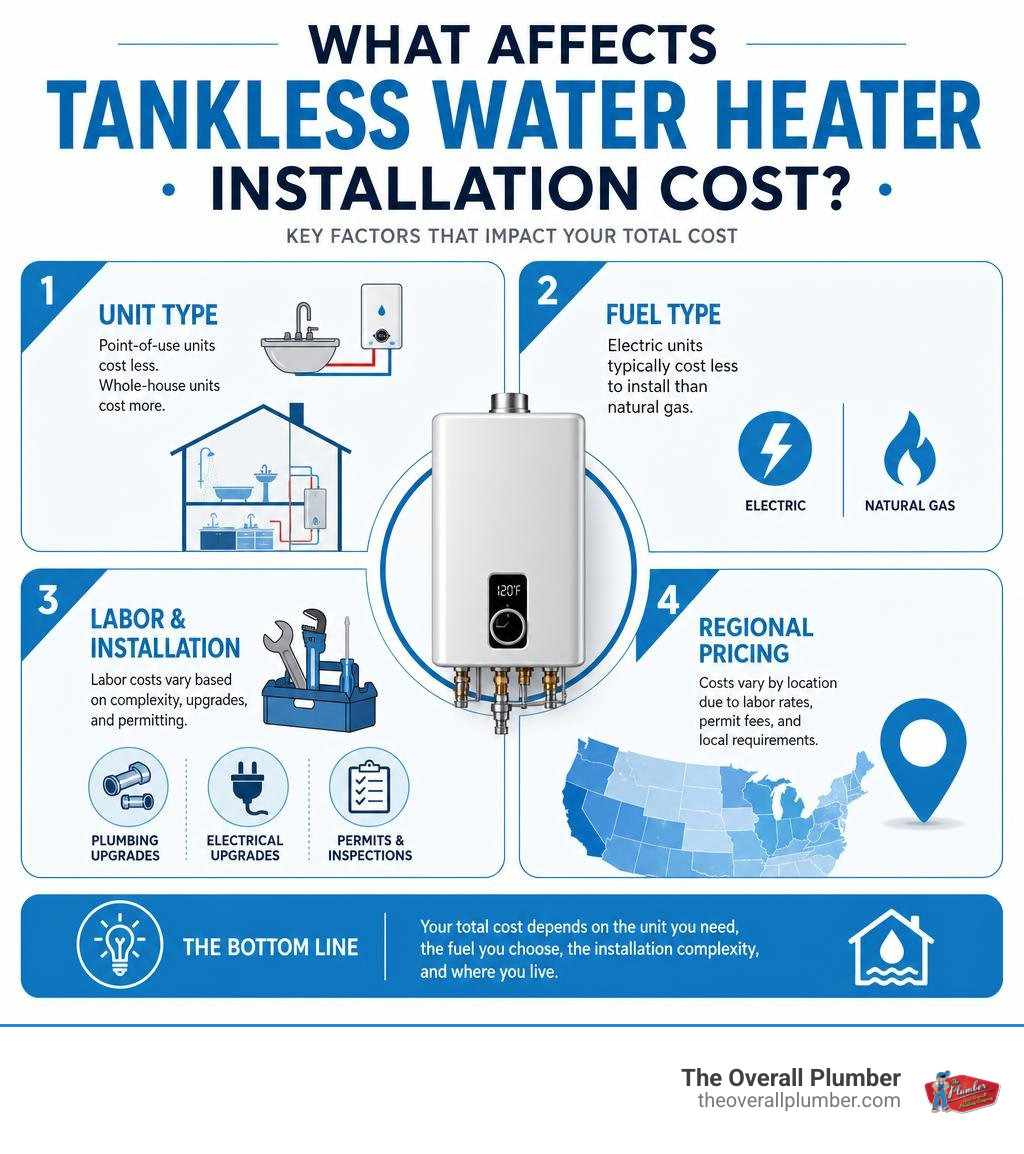
These numbers shift depending on where you live, what fuel type you choose, and how much infrastructure work your home needs. A straightforward swap in a newer home costs far less than a full conversion in an older house with outdated gas lines or a small electrical panel.
At The Overall Plumber, our licensed plumbing team serves Houston, Galveston County, Brazoria County, Clear Lake, Santa Fe, League City, Texas City, La Porte, Friendswood, Pearland, Pasadena, and nearby Gulf Coast communities with transparent pricing, no trip charges, no overtime fees, priority scheduling, and satisfaction-guaranteed service. In this guide, we’ll walk you through everything that drives tankless water heater installation costs near me — so you can budget confidently and avoid surprises.
Tankless water heater installation cost near me word guide:
- cost to have water heater installed
- hot water heater sales and installation
- hot water service installation
Average Tankless Water Heater Installation Cost Near Me in 2026
When evaluating tankless water heater installation cost near me, understanding national benchmarks alongside local market realities gives you a realistic financial baseline. Nationwide in 2026, the baseline cost to install a new tankless hot water heater averages between $2,791 and $3,236 per unit for standard complete turn-key installations. However, total project budgets typically span from $1,404 to $3,901, with an overall average project price tag sitting right around $2,638.
In our local Texas service areas—including Houston, Pearland, League City, Pasadena, Friendswood, and Galveston—typical tankless installation prices average around $2,064 to $2,092 for standard jobs. Lower-end point-of-use replacements can start around $877 to $889, while complex, full-house retrofits involving major utility upgrades can reach up to $4,853 to $4,921.
Total project costs split into two main buckets: equipment purchase costs and professional trade labor. On a standard installation, equipment represents roughly 43% to 46% of the total bid, while installation labor accounts for the remaining 54% to 57%.
| Tankless System Type | Capacity (GPM) | Average Unit Price | Estimated Total Installed Cost |
|---|---|---|---|
| Single Point-of-Use (Electric) | 1.0 – 2.5 GPM | $100 – $300 | $450 – $800 |
| Whole-House Non-Condensing Gas | 5.0 – 7.0 GPM | $800 – $1,000 | $1,800 – $3,200 |
| Whole-House Condensing Gas | 7.5 – 11.0 GPM | $1,100 – $1,850 | $2,500 – $4,500+ |
| Whole-House Electric | 4.0 – 6.0 GPM | $450 – $800 | $1,200 – $2,500 |
| Solar-Assisted System | 5.0 – 9.0 GPM | $1,500 – $3,500 | $1,800 – $6,000 |
How Unit Types Affect Tankless Water Heater Installation Cost Near Me
The primary factor driving equipment pricing is whether you need a point-of-use unit or a whole-house system. Point-of-use electric units heat water for a single fixture—like a garage sink, outdoor kitchen, or guest bath—and cost between $100 and $300 for the hardware alone. Whole-house systems, designed to feed every shower, sink, and washing machine simultaneously, range from $450 to $1,500+ for the hardware.
Within whole-house gas units, you will choose between non-condensing and condensing models:
- Non-Condensing Gas Units: Base hardware costs average $898. These systems vent high-temperature exhaust through specialized stainless steel piping (Category III), which can add material and labor expense if your home lacks an existing stainless vent path.
- Condensing Gas Units: Base hardware costs average $1,198. Condensing models capture heat from exhaust gases, resulting in higher Energy Factor (EF) ratings above 0.90. Because exhaust temperatures are significantly lower, they can utilize lower-cost PVC, CPVC, or polypropylene venting.
Gallons Per Minute (GPM) ratings directly impact equipment price. A small 4.0 GPM unit suited for a 1-2 bathroom home in warm southern climates costs far less than a 9.5 GPM high-efficiency unit required to support 3 to 4 bathrooms running simultaneous showers and appliances during winter months.
To compare regional cost estimates and industry standards across various markets, check out Tankless Water Heater Installation Costs — Compare Prices by Location.
Cost Breakdown by Fuel Type: Gas, Electric, and Solar
Your chosen fuel source heavily influences initial unit cost, installation requirements, and monthly operational expense:
- Electric Tankless Systems: Electric units carry lower upfront equipment price tags ($450 to $800). Total installed costs usually run from $450 to $1,500 if existing electrical wiring is adequate. However, large whole-house electric units draw massive power surges (120 to 160 amps), frequently requiring dedicated 200-amp service updates.
- Natural Gas & Propane Systems: Natural gas equipment costs between $800 and $1,850, with standard basic installations running $1,000 to $1,500. Gas units offer higher GPM output in colder climates and lower continuous operating costs—saving homeowners roughly $100 per year on energy bills compared to tank models according to Department of Energy benchmarks.
- Solar Tankless Setups: Solar-assisted tankless systems are the high-end eco-friendly choice, ranging from $1,800 to $6,000 installed. They utilize solar collectors (covering 50% to 75% of heating demand, known as solar fraction) with gas or electric tankless boosters providing immediate backup when sunlight is limited.
For detailed breakdown examples from high-density metropolitan markets, explore the Tankless Water Heater Cost in Washington, DC cost guide.
Key Factors Driving Total Tankless Installation Expenses
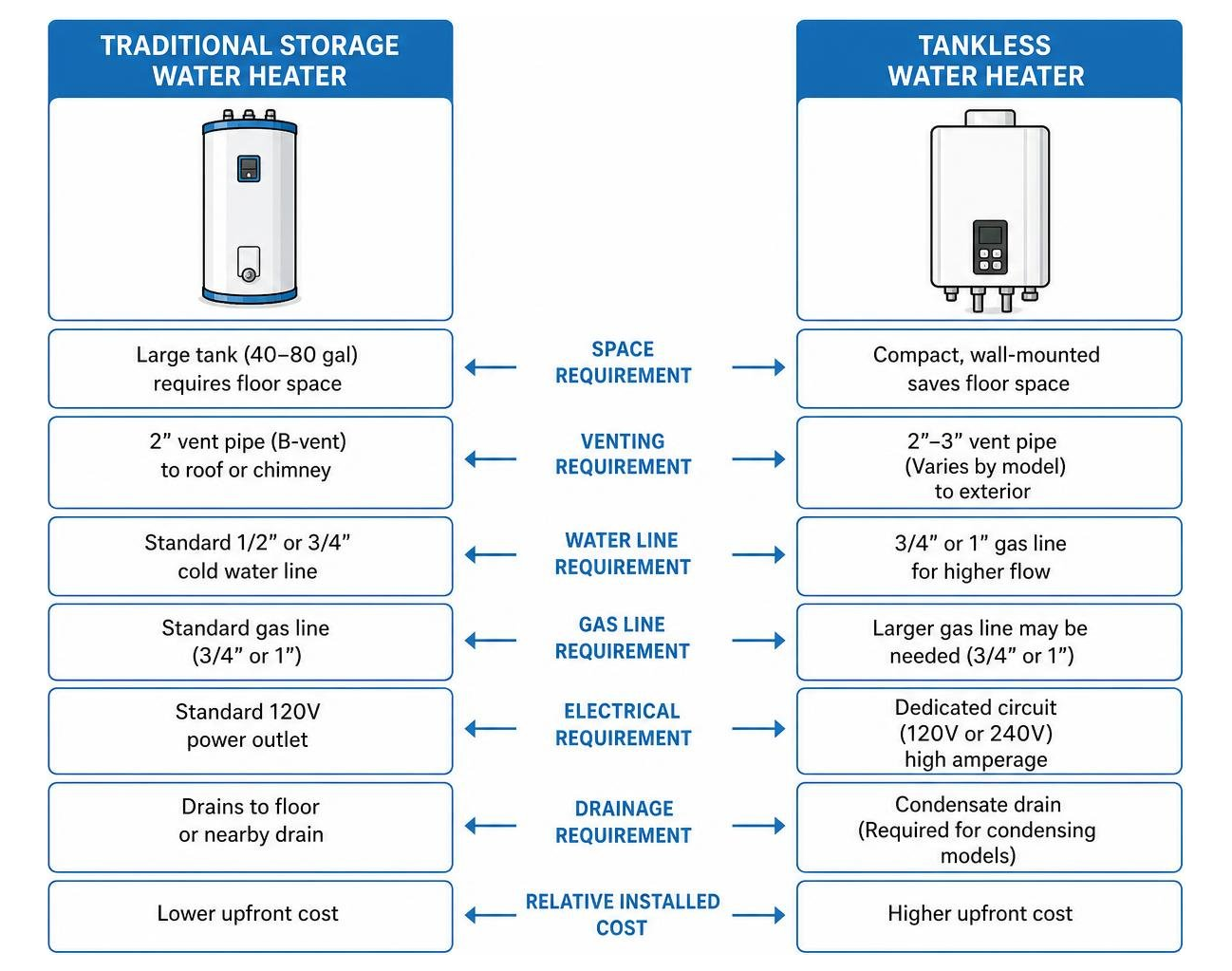
When converting a home from a traditional tank water heater to an on-demand tankless system, the unit purchase is often less than half of the total investment. What drives the ultimate tankless water heater installation cost near me are structural, plumbing, gas, and electrical adjustments necessary to bring the home up to safety code.
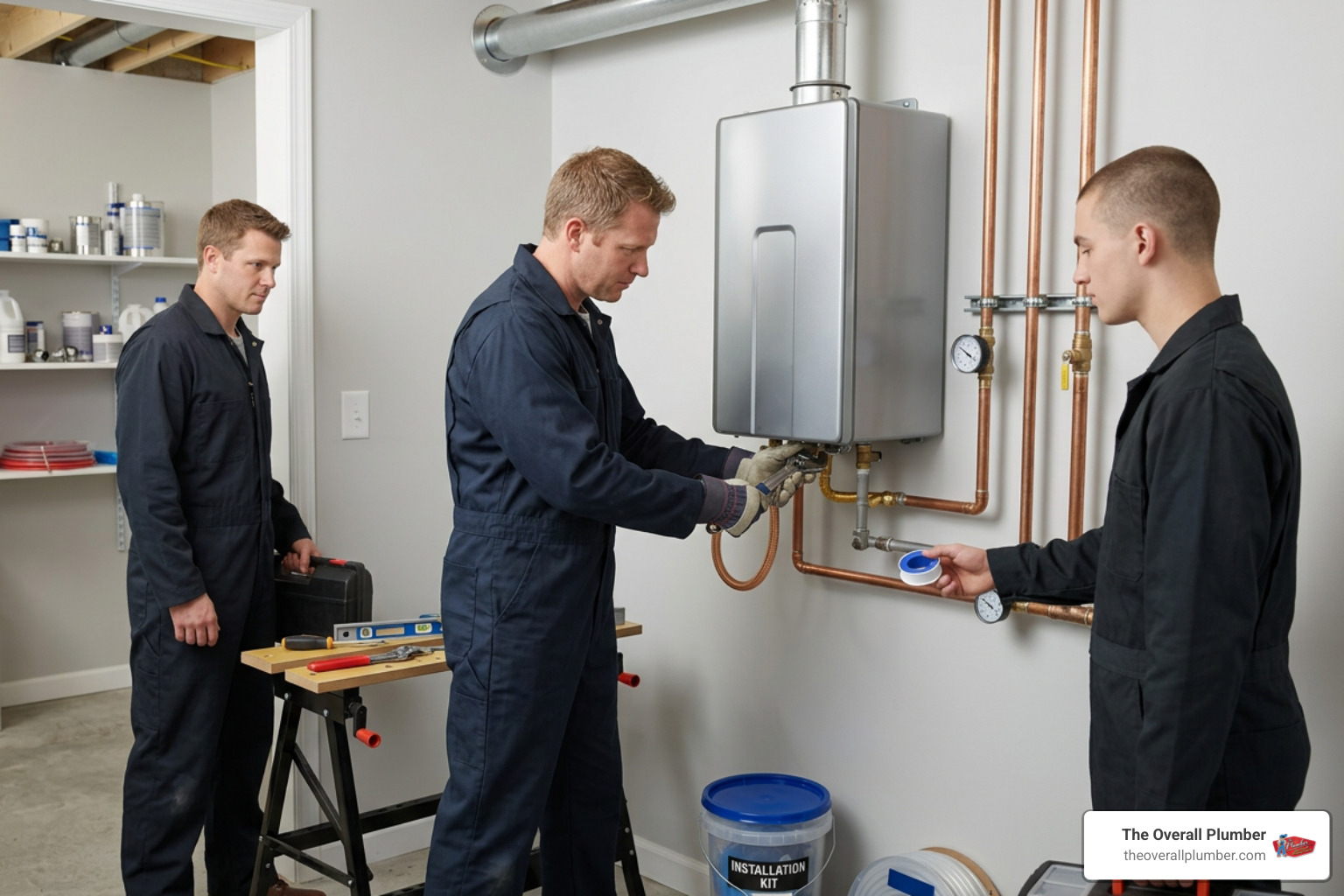
The four biggest infrastructure drivers include:
- Gas Line Upsizing: Traditional tank water heaters burn around 30,000 to 50,000 BTUs per hour. On-demand gas tankless units require 150,000 to 199,000 BTUs per hour to heat cold water instantly. If your existing gas line is only 1/2-inch, upgrading to a 3/4-inch line from the meter costs between $349 for minor branch upgrades up to $798+ for full new gas supply runs.
- Electrical Upgrades: Electric tankless models require multiple dedicated 40-amp or 50-amp breakers and heavy 6-gauge or 8-gauge copper wiring. If your main electrical panel lacks open breaker spaces or total amperage capacity, adding a subpanel or upgrading the main electrical panel costs $599 to $1,500+.
- Venting Modifications: Gas tankless units cannot vent into standard masonry chimneys or shared B-vent pipes used by old tank heaters. Installing dedicated direct venting costs between $399 (for short exterior sidewall penetrations) and $998 (for multi-story concentric stainless steel roof venting).
- Location & Accessibility: Installing a unit in an accessible garage or utility room keeps labor hours low. Mounting units in tight attics, narrow crawlspaces, or multi-story condo walls increases labor costs due to additional staging, safety measures, and custom pipe routing.
Additional Fees for Removal, Permits, and Plumbing Modifications
In addition to core fuel and venting infrastructure, complete job quotes typically include several mandatory line items:
- Old Unit Removal and Disposal: Detaching, draining, hauling off, and recycling your old 40- or 50-gallon steel storage tank costs between $200 and $500+.
- Municipal Building Permits: Local cities throughout Harris, Galveston, and Brazoria counties require plumbing and gas permits for tankless upgrades. Permit and inspection fees generally range from $50 to $100+.
- Water Pressure Regulators: On-demand units require balanced water pressure (typically 50–70 PSI). Installing or replacing a worn pressure-reducing valve (PRV) adds $250 to $350.
- Pipe Insulation & Freeze Protection: Insulating exposed hot and cold supply lines to meet building code adds $50 to $150, protecting pipes from sudden freeze events along the Gulf Coast.
Local Labor Rates and Regional Price Variances
Plumbing labor rates reflect local trade licensing requirements, labor market demand, and business operating overhead. Nationally, licensed plumbers charge hourly rates ranging between $45 and $200 per hour. Total installation labor for tankless projects averages between $600 and $1,850.
Professional plumbing contractors utilize “loaded billing rates”—typically calculating a 2.4x multiplier on mean hourly wages—to cover mandatory master trade licenses, general liability insurance, specialized tools, service vehicles, workers’ compensation, and warranty support.
For example, in Tennessee markets, lower baseline labor rates result in standard installed ranges of $1,500 to $3,233 (as outlined in the Tankless Water Heater Cost in Murfreesboro, TN guide). Across Texas coastal communities—from Pasadena down through Texas City, Santa Fe, and Galveston—labor rates sit very close to regional averages, yielding typical turnkey replacement quotes of $1,900 to $3,500 for standard gas conversions.
How to Find Accurate Tankless Water Heater Installation Cost Near Me
To avoid unexpected bills or mid-project price changes, follow these best practices when requesting quotes:
- Require an On-Site Inspection: Avoid relying solely on phone estimates. A qualified contractor must inspect your main electrical panel, measure gas pipe diameters, and evaluate exterior wall venting locations.
- Request Itemized Line-Item Bids: Ensure quotes break down equipment pricing, trade labor hours, permit fees, gas/electrical retrofits, and disposal fees separately.
- Verify License and Insurance: Confirm that the installer holds a current Master or Journeyman Plumbing License with the state board and carries active general liability and workers’ compensation coverage.
- Check What Is Included: Verify whether condensate drain lines, descaling service valves (flush kits), freeze protection kits, and post-installation building inspections are explicitly written into the contract scope.
Maintenance Costs, Tax Credits, and Ways to Save
While switching to an on-demand system requires a higher initial investment than a standard tank, long-term efficiency savings, government tax credits, and utility rebates help offset upfront expenses.
Annual operational maintenance is essential for preserving performance and validating manufacturer warranties. In hard water areas, dissolved minerals precipitate inside the compact copper or stainless steel heat exchanger. Professional flushing and descaling costs between $150 and $300 per visit (or can be done as a DIY project using a $100 submersible pump kit and food-grade white vinegar).
To maximize long-term savings, take advantage of available financial incentives:
- Federal Energy Efficiency Tax Credits: Under current federal clean energy incentives (such as the Inflation Reduction Act extensions), qualifying ENERGY STAR-certified gas tankless water heaters (Thermal Efficiency ≥ 0.95) eligible homeowners can claim up to 30% of project costs (capped at $600).
- Utility Rebates: Regional electric and gas utilities frequently offer instant or mail-in rebates ranging from $100 to $500 for installing high-efficiency gas tankless units.
- Lower Utility Bills: According to U.S. Department of Energy figures, gas tankless models lower annual water heating bills by approximately $100 per year, while electric tankless units save about $50 per year by eliminating standby standby heat loss.
To explore available equipment specials, check out our selection of Tankless Water Heaters on Sale or review our comprehensive plumbing Services.
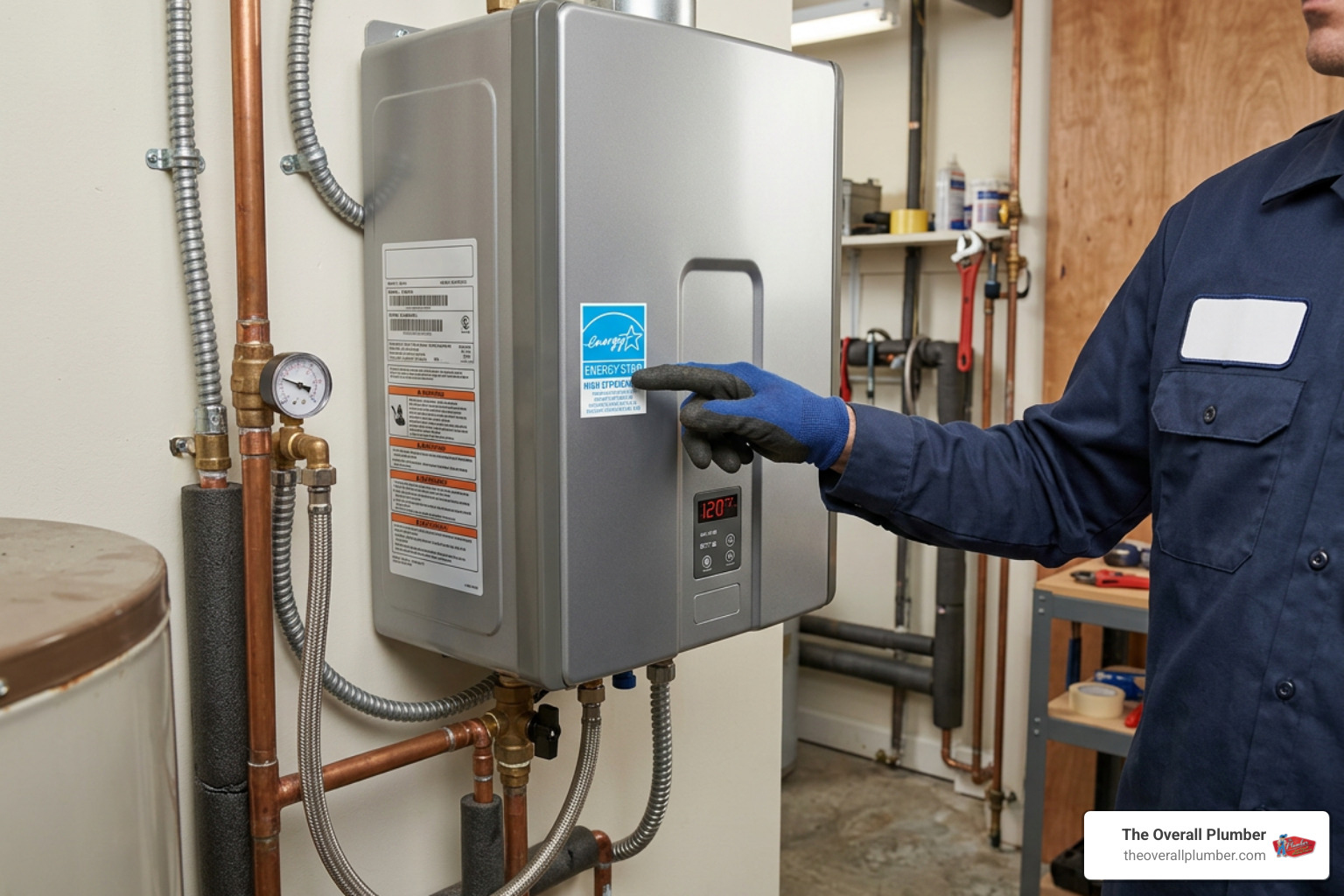
Smart Strategies to Lower Your Upfront Investment
- Accurately Calculate Household GPM Needs: Don’t pay for a massive 11 GPM commercial-grade unit if a 6.5 or 8.0 GPM system easily supplies your home’s peak simultaneous fixture usage.
- Combine Utility Upgrades: If you are planning an electrical panel upgrade, kitchen gas range installation, or home remodel, bundle gas line or electrical subpanel additions with the water heater project to share labor mobilization expenses.
- Select Condensing Gas Models: Although condensing units cost roughly $300 more upfront than non-condensing units, they frequently save money overall by utilizing standard, lower-cost PVC wall venting rather than expensive Category III stainless steel venting through roof lines.
Frequently Asked Questions About Tankless Water Heater Installation
How much does it cost on average to install a tankless water heater in 2026?
The national average cost to install a tankless water heater in 2026 sits between $1,404 and $3,901, with a typical average of $2,638. Basic electric point-of-use units can be installed for as little as $450 to $800, while complete whole-house gas condensing retrofits involving new gas supply lines, concentric venting, and electrical upgrades range from $2,500 to $5,000+.
Are tankless water heaters really worth the higher upfront installation cost?
Yes, for most homeowners, tankless systems are well worth the investment. Tankless units operate 8% to 34% more efficiently than traditional storage tanks by eliminating standby heat losses. They deliver an endless supply of hot water, take up minimal wall space, and last up to 20 years — nearly double the 8- to 12-year lifespan of standard tank water heaters.
Do I need to upgrade my electrical panel or gas line for a tankless system?
In many retrofits, yes. Gas tankless systems draw between 150,000 and 199,000 BTUs/hr at peak demand, which often requires upgrading from an existing 1/2-inch gas pipe to a 3/4-inch supply line. Electric tankless systems draw high amperage (often 120A to 160A across multiple double-pole breakers), frequently necessitating an electrical subpanel or main 200-amp panel upgrade in older homes.
Ready to Upgrade Your Home’s Hot Water System?
The Overall Plumber helps homeowners across Brazoria County, Houston, Clear Lake, Santa Fe, League City, Texas City, La Porte, Friendswood, Pearland, Pasadena, Galveston, Harris County, Galveston County, and nearby Texas Gulf Coast communities with transparent water heater pricing, zero trip charges, no overtime fees, priority scheduling, and satisfaction-guaranteed plumbing service.
To learn more about our complete range of hot water options, visit our Hot Water Heater Replacement guide or reach out directly through our Contact Us page.
Ready for endless hot water without hidden installation fees? Contact The Overall Plumber today or call (713) 842-5904 to schedule your consultation!