


Why Tankless Water Heater Installation in Houston Is Worth It
If you’re considering tankless water heater installation in Houston, here’s a quick summary of what you need to know:
- Cost: Most Houston homeowners pay between $1,500 and $3,500 installed, depending on unit type and home setup
- Time: A standard installation takes 2 to 4 hours; retrofits in older homes may take longer
- Permits: Yes, the City of Houston requires a plumbing permit for water heater installation
- Savings: Tankless units use less energy than traditional tanks, which lowers monthly utility bills
- Lifespan: Tankless heaters typically last 20+ years, compared to 10 to 15 years for tank models
- Maintenance: Houston’s hard water means annual descaling is recommended
Houston homes run hot water constantly — showers, laundry, dishes, all at once. A traditional tank water heater can’t always keep up, and when it runs out, you wait. A tankless system heats water on demand, so you never run out. It also takes up less space and costs less to run over time.
That said, getting it right means choosing the correct size, understanding your home’s gas or electrical setup, and making sure the install meets local code. This guide walks you through all of it.
I’m Dayton Whitworth, a second-generation plumber with hands-on experience in tankless water heater installation across Houston and the surrounding Gulf Coast communities. I’ll walk you through everything you need to make a confident, well-informed decision for your home.
Why Choose Tankless Water Heater Installation Houston
Living in the Greater Houston area, from Harris County down to Galveston County, means managing a home that is both highly active and subjected to extreme seasonal weather. When it comes to your home’s plumbing, the traditional storage tank water heater has been the default option for decades. However, as we move through July 2026, more homeowners are realizing that traditional tanks are no longer the most efficient or reliable way to heat water.
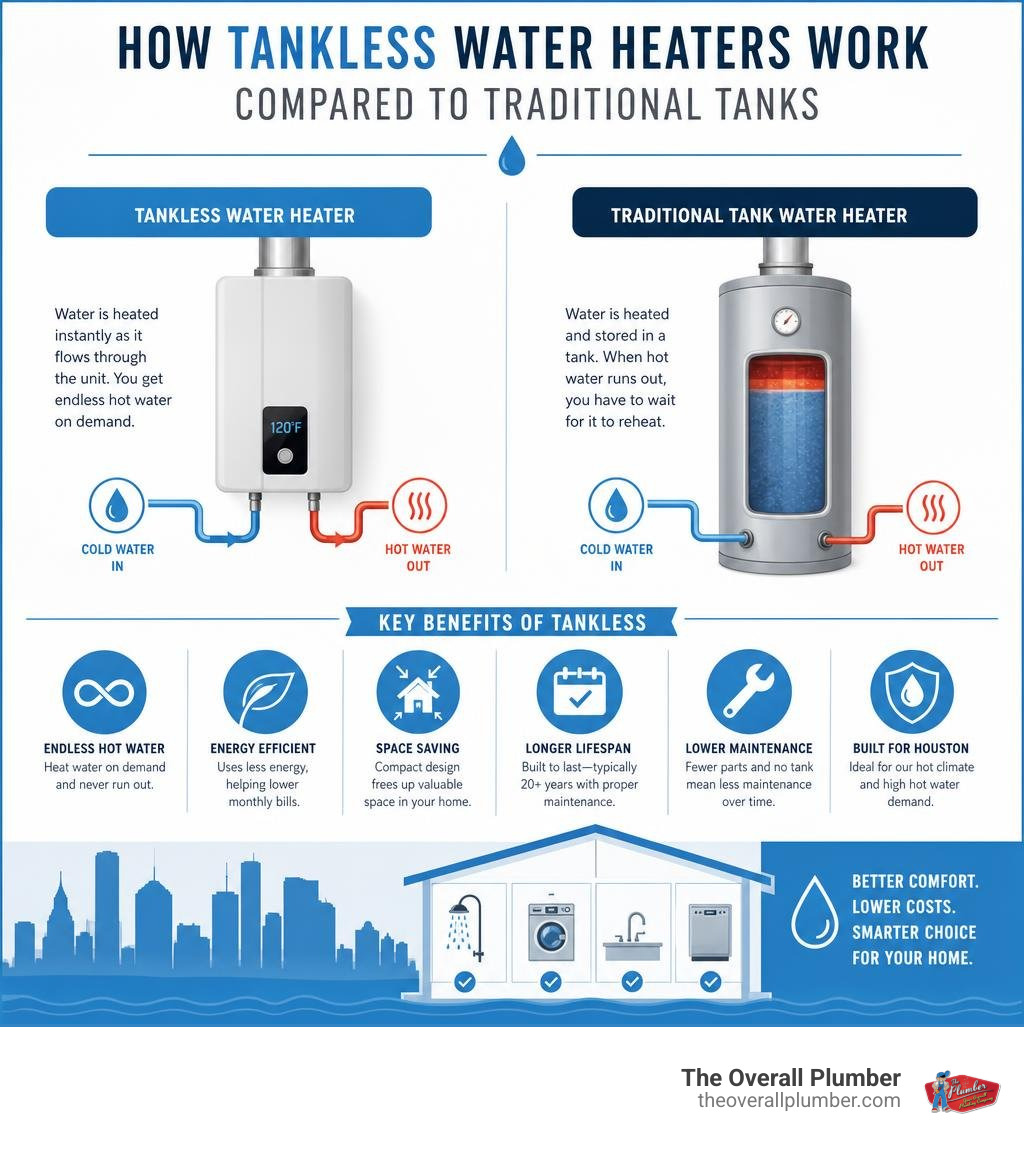
When you choose tankless water heater installation in Houston, you are investing in a modern solution that fundamentally changes how your household uses energy and water. Instead of keeping 40 to 80 gallons of water hot 24 hours a day, seven days a week, a tankless unit only fires up when you open a hot water tap. This on-demand heating process eliminates “standby heat loss,” which is the energy wasted keeping water warm when nobody is using it.
To help you visualize how these two systems match up, we have broken down the core differences in the table below:
| Feature | Traditional Storage Tank | Tankless Water Heater |
|---|---|---|
| Hot Water Supply | Limited to tank capacity (runs out) | Endless, on-demand supply |
| Average Lifespan | 10 to 15 years | 20+ years (with proper maintenance) |
| Physical Size | Large, bulky footprint (takes up closet space) | Compact, wall-mounted (saves floor space) |
| Energy Efficiency | Lower (constant standby energy loss) | High (heats water only when flowing) |
| Risk of Water Damage | High (50+ gallons can flood your home if it leaks) | Very low (no massive reservoir to rupture) |
| Upfront Cost | Lower initial purchase and install price | Higher initial investment, lower operating cost |
Energy Savings and Lower Utility Bills
Because a tankless water heater operates only when there is an active demand for hot water, it uses significantly less energy. For a household that uses a moderate amount of hot water daily, a tankless system can be up to 24% to 34% more energy-efficient than a traditional storage tank. In larger homes with high water usage, you can still see substantial efficiency gains. Over the course of the system’s 20-year lifespan, these monthly utility savings add up to thousands of dollars back in your pocket. If you are curious about transitioning your system, you can explore our professional services for Hot Water Heater Replacement to see how easy the upgrade can be.
Space Conservation
In many Houston homes, especially in master-planned communities in Pearland, League City, and Friendswood, real estate inside the garage or utility closet is highly valuable. A traditional water heater is a massive, heavy metal cylinder that takes up substantial floor space. A tankless water heater is roughly the size of a small suitcase and mounts directly to the wall. This frees up valuable square footage for storage, shelving, or other home appliances.
Extended Lifespan
While a standard tank water heater begins to degrade and rust internally almost immediately, eventually failing within 10 to 15 years, a high-quality tankless system is built to last. With regular maintenance, a tankless system can easily operate efficiently for 20 to 25 years. This longevity effectively doubles the lifespan of your investment, meaning you will not have to worry about replacing your water heater again for a very long time.
Sizing and Retrofitting for Houston Homes
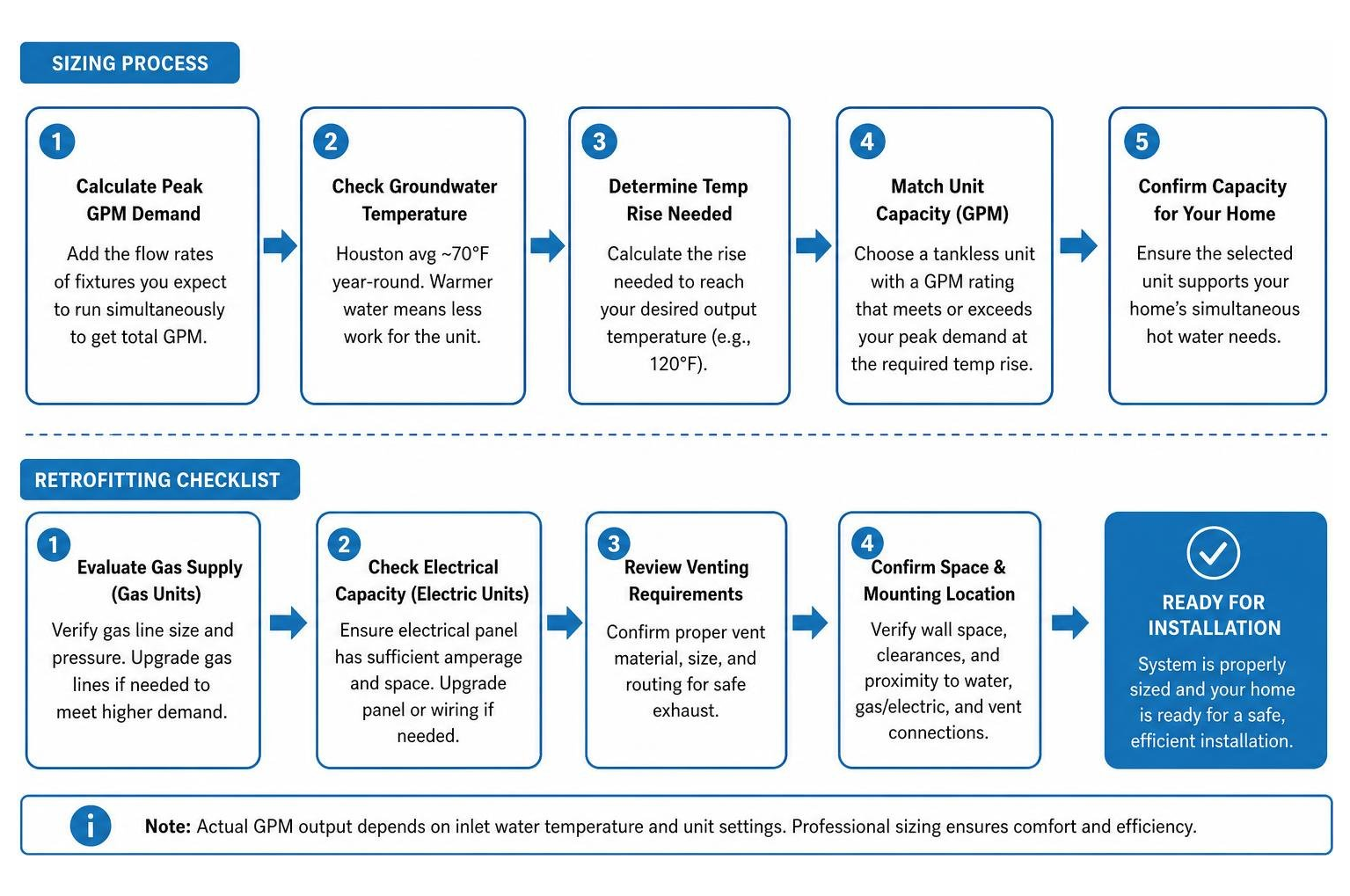
Determining the right setup for your home requires looking at several environmental and mechanical factors. Unlike traditional tanks, where you simply choose a 40-gallon or 50-gallon capacity, sizing a tankless system is all about flow rate and temperature rise.
Furthermore, because our groundwater temperature in Southeast Texas is relatively warm compared to northern states—averaging around 70°F year-round—our tankless systems do not have to work quite as hard to bring your water up to a comfortable 120°F. This regional advantage means a single tankless unit can often support more simultaneous fixtures in a Houston home than it would in a colder climate.
Before diving into the installation phase, we must also evaluate your home’s existing infrastructure. Tankless gas units require a higher volume of gas to fire up their burners instantly, which may require upgrading your gas lines. For electric models, your home’s electrical panel must have sufficient capacity to handle the high amperage required by the heating elements. For a complete understanding of how these installations work, read through A Comprehensive Guide to Water Heater Installation.
Selecting the Right Size for Tankless Water Heater Installation Houston
Sizing a tankless water heater requires calculating the total Gallons Per Minute (GPM) your household might use at any single moment.
To determine your peak demand, add up the flow rates of the fixtures you expect to run simultaneously:
- Standard shower head: 1.5 to 2.5 GPM
- Bathroom faucet: 0.5 to 1.5 GPM
- Kitchen faucet: 1.5 to 2.2 GPM
- Dishwasher: 1.0 to 2.0 GPM
- Washing machine: 1.5 to 3.0 GPM
If you want to be able to run two showers (2.0 GPM each) and a washing machine (2.0 GPM) at the same time, your tankless system must be able to deliver at least 6.0 GPM. Because Houston’s groundwater temperature is warm, the required “temperature rise” (the difference between incoming groundwater and your desired output temperature) is only about 50°F. This lower temperature rise allows standard-sized tankless systems to easily achieve their maximum rated GPM, ensuring you never experience a drop in pressure or temperature during peak usage times.
Retrofitting Older Homes for Tankless Water Heater Installation Houston
If you live in an older, historic home in Houston, La Porte, or Galveston, retrofitting your plumbing for a tankless system requires careful planning. Older properties often have smaller 1/2-inch gas supply lines, whereas modern high-efficiency gas tankless water heaters typically require a dedicated 3/4-inch gas line to deliver enough fuel during start-up.
Additionally, older homes may have outdated venting systems. Traditional water heaters vent exhaust naturally through a vertical metal pipe that goes out through the roof. High-efficiency condensing tankless systems, however, produce cooler exhaust gas and must be vented horizontally through an exterior wall using specialized PVC or polypropylene piping.
Upgrading these systems requires professional expertise to ensure the venting is completely airtight, preventing dangerous carbon monoxide from entering your living spaces. To see what a step-by-step physical installation looks like, you can consult our detailed walkthrough on Installing a Hot Water System: The Ultimate Step-by-Step Guide.
Cost, Permits, and Rebates in Harris County
Upgrading to a tankless water heater is a significant home improvement project. While the long-term savings and convenience are undeniable, understanding the upfront costs, municipal requirements, and available financial incentives will help you budget effectively.
The Upfront Cost vs. Long-Term Savings
The total cost of tankless water heater installation in Houston varies based on several factors, including whether you are installing a gas or electric unit, the physical location of the installation, and any retrofitting requirements.
Generally, an electric tankless water heater is less expensive to purchase and install, but it may require significant electrical panel upgrades. Gas units are highly efficient and offer superior flow rates, but they require proper venting and gas line sizing. While a traditional tank replacement might cost less initially, the extended lifespan and lower monthly operating costs of a tankless system make it the more economical choice over time. For a deep dive into budgeting for this project, check out our resource on How Much to Budget for Your New Water Heater Installation.
City of Houston Permits and Building Codes
Yes, you absolutely need a permit to install a water heater in Houston and surrounding jurisdictions like Pasadena, Pearland, and League City. The City of Houston requires a registered, licensed plumber to secure a plumbing permit before installing or replacing any water heater.
This permit ensures that once the work is completed, a city inspector will review the installation to verify that it complies with all local building and safety codes. This includes checking for correct gas line connections, proper ventilation, and the installation of a mandatory sediment trap and temperature/pressure relief valve. Skipping the permit process can result in fines, issues when trying to sell your home, or even denied insurance claims if a non-permitted unit causes damage.
Tax Credits, Rebates, and Incentives
To help offset the initial cost of upgrading to an energy-efficient tankless system, homeowners can take advantage of several financial incentives available in 2026:
- Federal Tax Credits: Under the Energy Efficient Home Improvement Credit (Section 25C), homeowners can claim a federal tax credit of up to 30% of the total cost (including labor) for installing an ENERGY STAR® certified gas tankless water heater, up to a maximum credit of $600.
- Local Utility Rebates: Depending on your specific location and service provider, local natural gas companies often offer cash-back rebates for upgrading from a standard tank to a high-efficiency tankless gas model. Always check with your utility provider before starting the installation to secure these savings.
Installation Process and Climate-Specific Maintenance
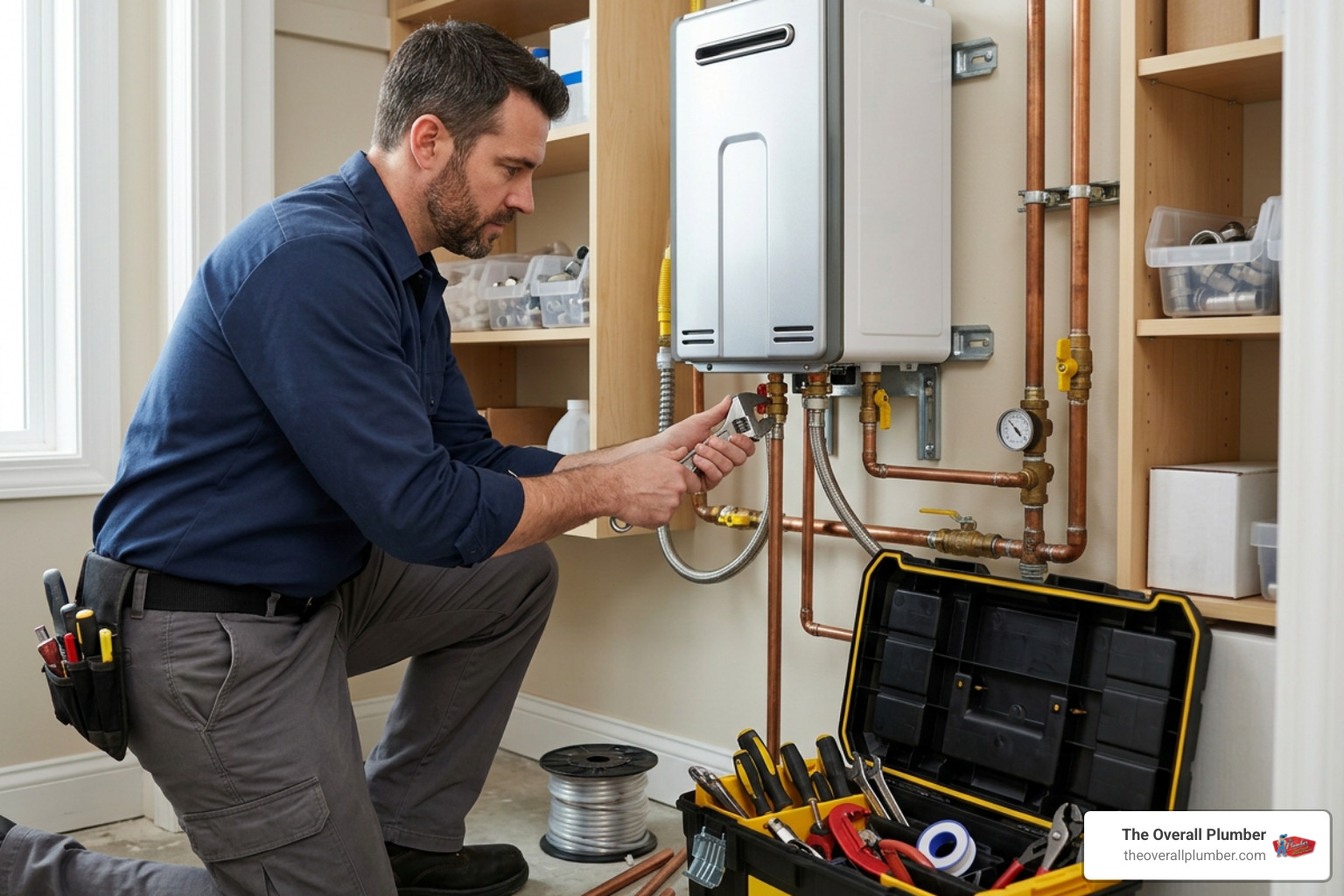
The actual installation of a tankless water heater is a precise process. When our professional plumbers arrive at your Houston home, we begin by safely shutting off the main water supply, gas lines, and electrical breakers. We then drain and remove your old, bulky tank.
Once the space is clear, we mount the compact tankless unit to the wall, connect the water lines, install the new gas or electrical connections, run the dedicated ventilation pipes, and test the system thoroughly to ensure perfect operation.
While tankless systems are incredibly durable, Houston’s local climate and water conditions require specific maintenance to keep your unit running at peak performance.
Dealing with Houston’s Hard Water
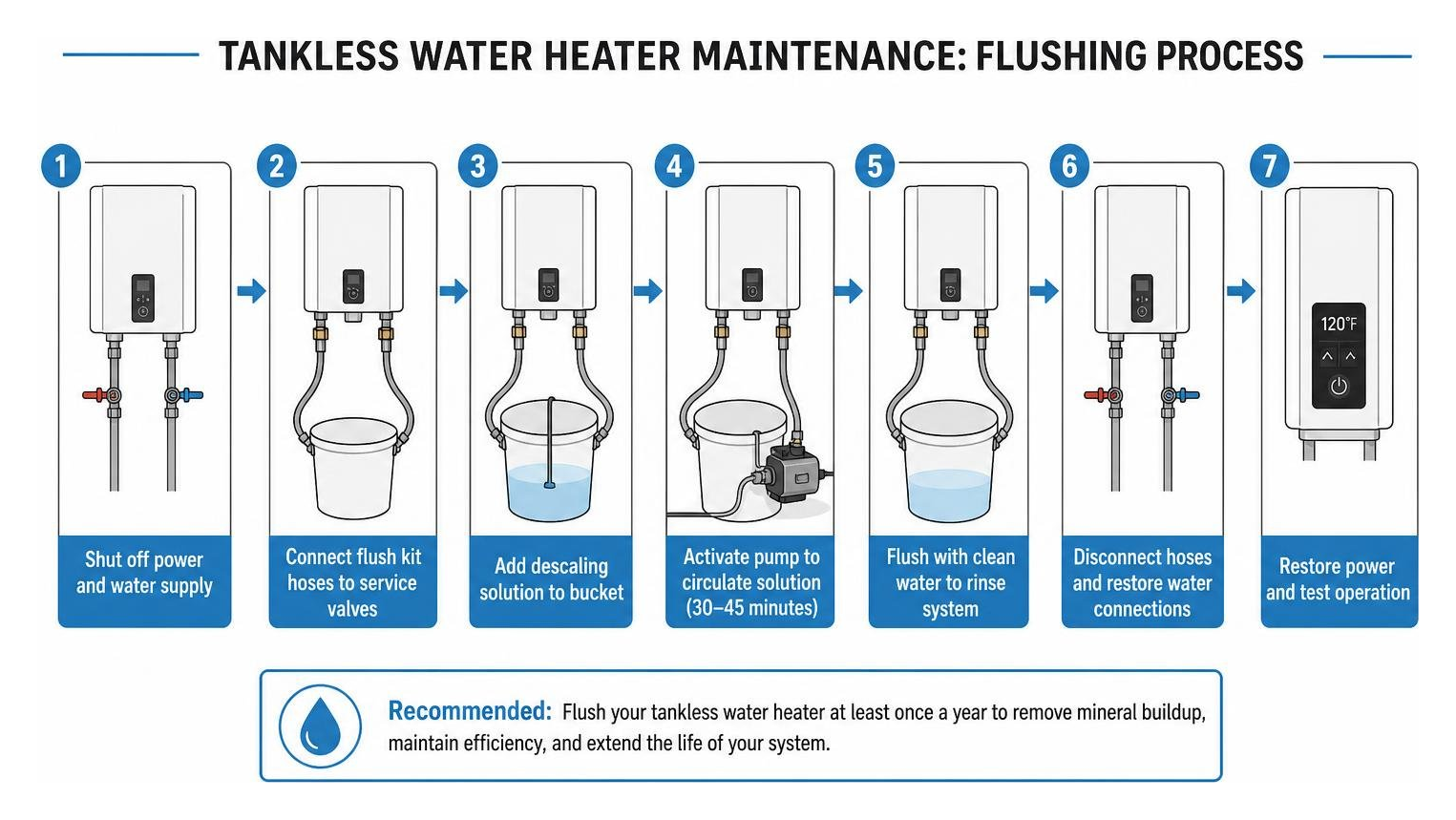
The water supply in Houston and surrounding areas like Clear Lake, Santa Fe, and Texas City contains elevated levels of dissolved minerals, particularly calcium and magnesium. When hard water is heated inside a tankless unit, these minerals solidify and form scale deposits along the copper heat exchanger. Over time, this scale buildup acts as an insulating barrier, forcing the system to work harder to heat the water, reducing efficiency, and potentially causing premature component failure.
To combat this, we recommend:
- Annual Descaling (Flushing): Your tankless system should be flushed with a food-grade descaling solution or virgin white vinegar at least once a year. This process dissolves and removes the mineral buildup, restoring the heat exchanger to pristine condition.
- Water Softener Installation: Installing a whole-home water softener or a dedicated scale-inhibiting filter system upstream of your tankless unit can drastically reduce mineral accumulation, keeping your system clean and extending its operational lifespan.
- Winterization: While Houston is known for hot summers, winter freezes do happen. High-quality tankless units feature built-in freeze protection heaters to protect internal components down to a certain temperature. However, if the power goes out during a hard freeze, or if the unit is installed on an exterior wall, it must be properly insulated and drained to prevent the copper pipes from freezing and bursting.
If you want to keep an eye out for special pricing on these systems, you can check our current Tankless Water Heaters on Sale to find the best deal for your home.
Frequently Asked Questions About Houston Tankless Systems
How long does a tankless water heater installation take?
A straightforward, like-for-like tankless replacement or a standard installation where infrastructure is already in place typically takes between 2 to 4 hours. However, if we are converting your home from a traditional storage tank to a tankless system, the process generally takes a full day (around 6 to 8 hours). This additional time is required to run new gas lines, install the dedicated PVC venting system through an exterior wall, mount the new unit, and modify the existing water lines.
Do I need a permit for tankless water heater installation in Houston?
Yes, a plumbing permit is mandatory for all water heater installations within the City of Houston and throughout Harris and Galveston Counties. Professional plumbing companies must pull this permit to guarantee the work is inspected and fully compliant with local safety codes. This protects your family, keeps your manufacturer warranty valid, and ensures your home remains compliant with local real estate disclosures.
What maintenance does a tankless water heater need in Houston’s climate?
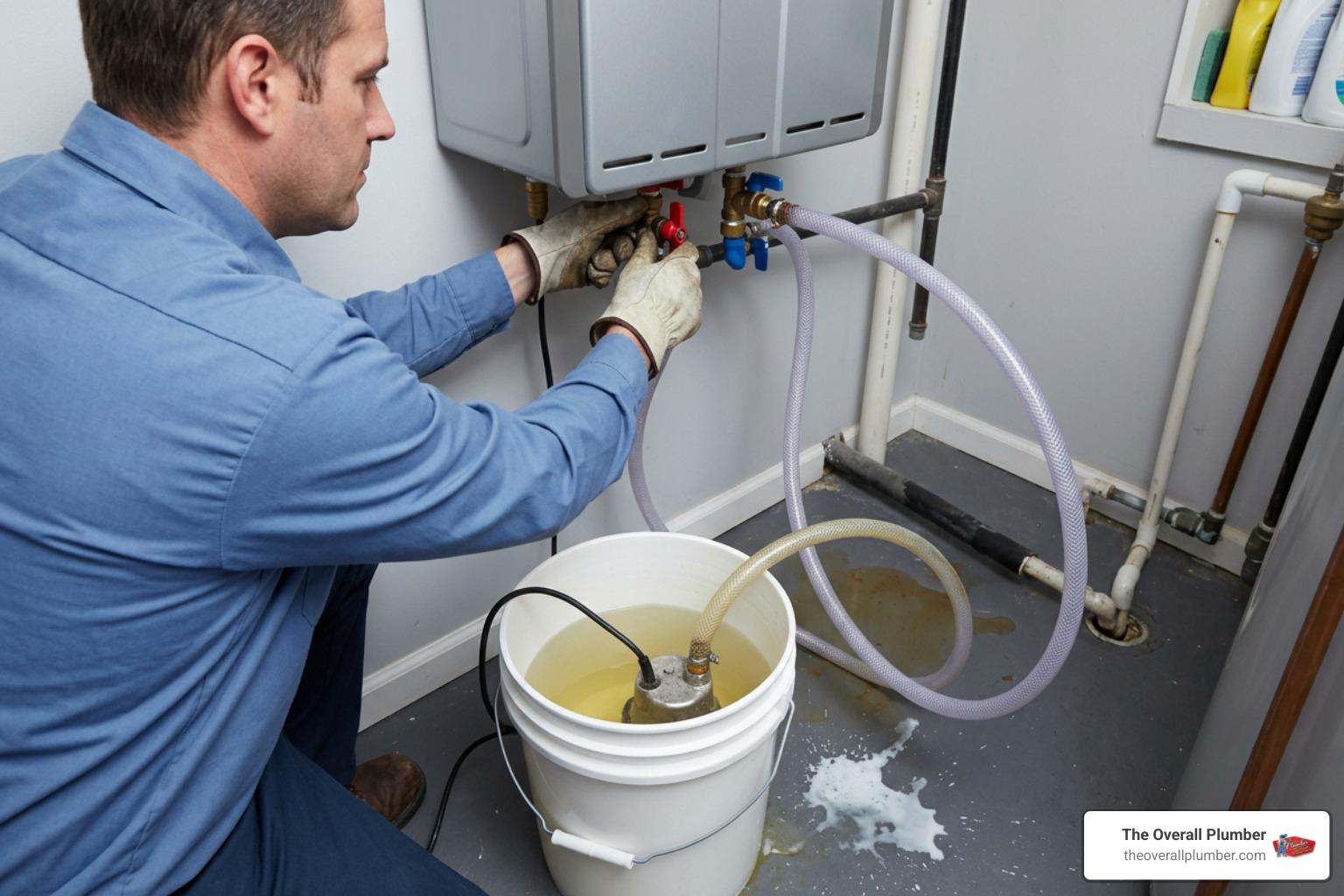
Because of the hard water common to our region, your tankless water heater requires an annual chemical flush to clear out calcium and magnesium scale buildup from the heat exchanger. Additionally, the system’s air intake filter and water inlet screen should be checked and cleaned periodically to ensure optimal airflow and water pressure. If your unit is installed in an unconditioned space like a garage or on an exterior wall, ensuring proper insulation and freeze protection before winter is essential.
Schedule Your Professional Houston Tankless Water Heater Installation
Ready to upgrade your home’s efficiency and enjoy endless hot water? Contact our expert team at The Overall Plumber today to schedule your consultation and find the perfect tankless system for your household. We proudly serve communities across Houston, Pearland, Friendswood, League City, Pasadena, Galveston, and the surrounding areas.