

Act Fast When a Septic Main Line Is Clogged
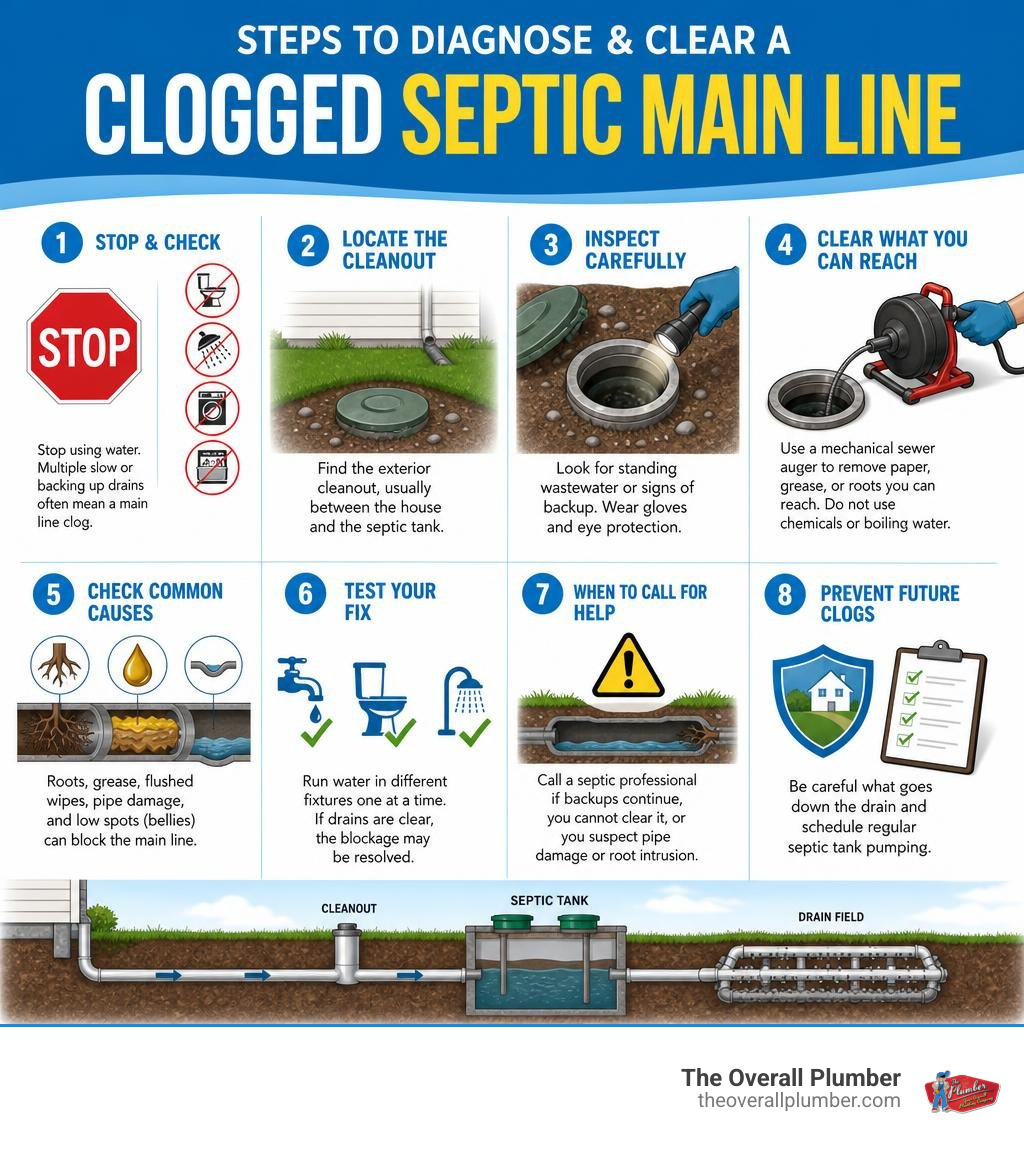
If your septic main line is clogged, stop using water right away. Do not flush toilets, run showers, start laundry, or use the dishwasher. Then check whether more than one fixture is slow, gurgling, or backing up. Multiple affected drains usually point to a blockage in the main line, at the septic tank inlet, or at the tank’s effluent filter rather than a simple sink or toilet clog.
A safe first step is to locate the exterior cleanout and inspect it carefully for standing wastewater. Use gloves, eye protection, and spill protection. A mechanical sewer auger may clear reachable paper, grease, or root blockages, but skip chemical drain cleaners and boiling water. They can harm the bacteria your septic system needs and may damage pipes or fixtures.
Your septic main line is the large pipe, often about 4 inches wide, that carries wastewater from the house to the septic tank. Roots, grease, flushed wipes, pipe damage, and a low spot in the pipe called a belly can all block that path. This guide explains how to spot the problem, try safe DIY checks, and know when a camera inspection or septic professional is the safer call.
I am Dayton Whitworth, a second-generation plumbing professional serving Greater Brazoria County, Galveston County, Houston, and nearby Gulf Coast communities. I have experience helping homeowners diagnose drain backups and respond when a septic main line is clogged, from basic cleanout checks to finding root damage and broken pipes.
Similar topics to septic main line clogged:
Understanding the Septic Main Line and System Anatomy
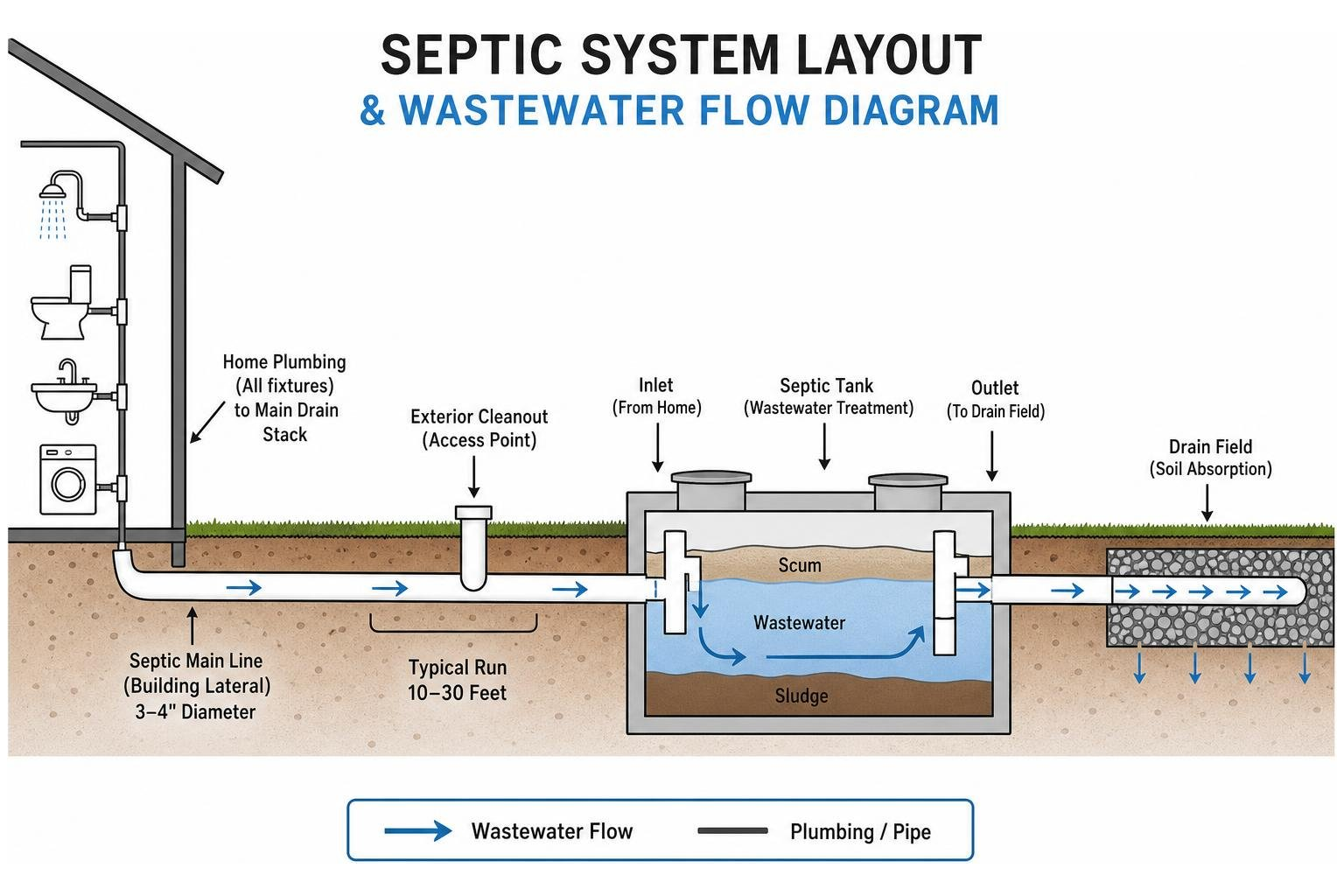
The septic main line—frequently referred to as the sewer lateral or building lateral—is the single primary conduit connecting your interior plumbing network to the exterior septic tank. Every individual branch line in your home, from your upstairs shower and kitchen sink down to the basement utility sink, feeds directly into the main drain-waste stack. That stack transitions beneath your foundation into this heavy-duty, 3- to 4-inch-diameter lateral pipe.
In typical residential septic configurations across Texas, this pipe runs anywhere from 10 to 30 feet from the foundation wall directly into the septic tank’s inlet port. Under standard operating conditions, your septic tank operates nearly full—roughly 98% of liquid capacity—with incoming wastewater designed to be held for approximately three days. As fresh waste enters, gravity gently displaces clarified liquid into the drain field. Because this system relies entirely on passive movement rather than municipal pressure, any structural defect or physical obstruction in this brief pipe run immediately brings household drainage to a standstill.
Pipe Slope and Gravity Flow Dynamics
A properly engineered septic lateral relies on an exact pitch to harness gravity flow. According to municipal plumbing standards, such as local guidance on Preventing Sewer Stoppages | Friendswood, TX, drainage lines must maintain a uniform downward grade—typically 1/4 inch of drop per linear foot of pipe run.
This specific elevation drop ensures the proper flow rate of wastewater:
- If the slope is too flat: Wastewater velocity drops, causing heavy solids and toilet paper to settle at the bottom of the pipe run rather than floating into the septic tank. Modern low-flow toilets exacerbate this issue if the pitch is insufficient.
- If the slope is too steep: Liquid effluent outruns the solid waste, leaving dry mounds of toilet paper and organic matter behind to stick to the interior pipe walls.
- If the slope is properly balanced: Liquids and solids travel together in a consistent suspension, entering the tank smoothly without leaving stragglers behind.
How Pipe Bellies and Soil Shifting Cause Blockages
A “belly” refers to a localized sag or downward dip in an underground pipe run. Because the septic lateral must maintain continuous downward fall, any depression creates a low point where standing wastewater constantly pools. Even if the downstream end of the pipe is clear, solids settle at the lowest point of the sag, creating recurring clogs without the pipe actually being cracked.
Pipe bellies frequently form due to heavy soil shifting or surface compaction. Driving or parking heavy vehicles, trailers, or construction equipment over the pipe run between the home and the septic tank compresses the backfilled dirt, bending PVC or crushing older pipe materials. In the expansive clay soils common to the Texas Gulf Coast, seasonal wet-and-dry cycles cause ground swelling and subsidence that naturally create sags or pull pipe couplings apart over time.
Why Your Septic Main Line Clogged: Primary Culprits and Symptoms
When an underground septic lateral clogs, it is rarely a random event. The blockage is usually the result of structural failure, foreign objects, or biological system imbalances. Recognizing the difference between a minor localized fixture obstruction and an entire lateral shutdown prevents unnecessary panic and misdirected repairs.
Telltale Warning Signs Your Septic Main Line Clogged
To correctly diagnose drainage issues, observe how different plumbing fixtures interact throughout your home:
| Symptom / Behavior | Local Fixture Clog | Septic Main Line Clog |
|---|---|---|
| Affected Drains | Single sink, shower, or toilet | Multiple fixtures across different rooms/levels |
| Water Usage Impact | Running one fixture affects only itself | Running a shower or washing machine causes low toilets to gurgle or back up |
| Drainage Speed | One isolated drain empties slowly | All ground-floor and basement drains back up simultaneously |
| Odors Present | Faint localized drain smell | Strong, pervasive sewage odors indoors and outdoors |
| Yard Conditions | Normal, dry soil | Soggy, saturated soil or pooling wastewater between home and tank |
Tree Root Intrusion and Grease Buildup
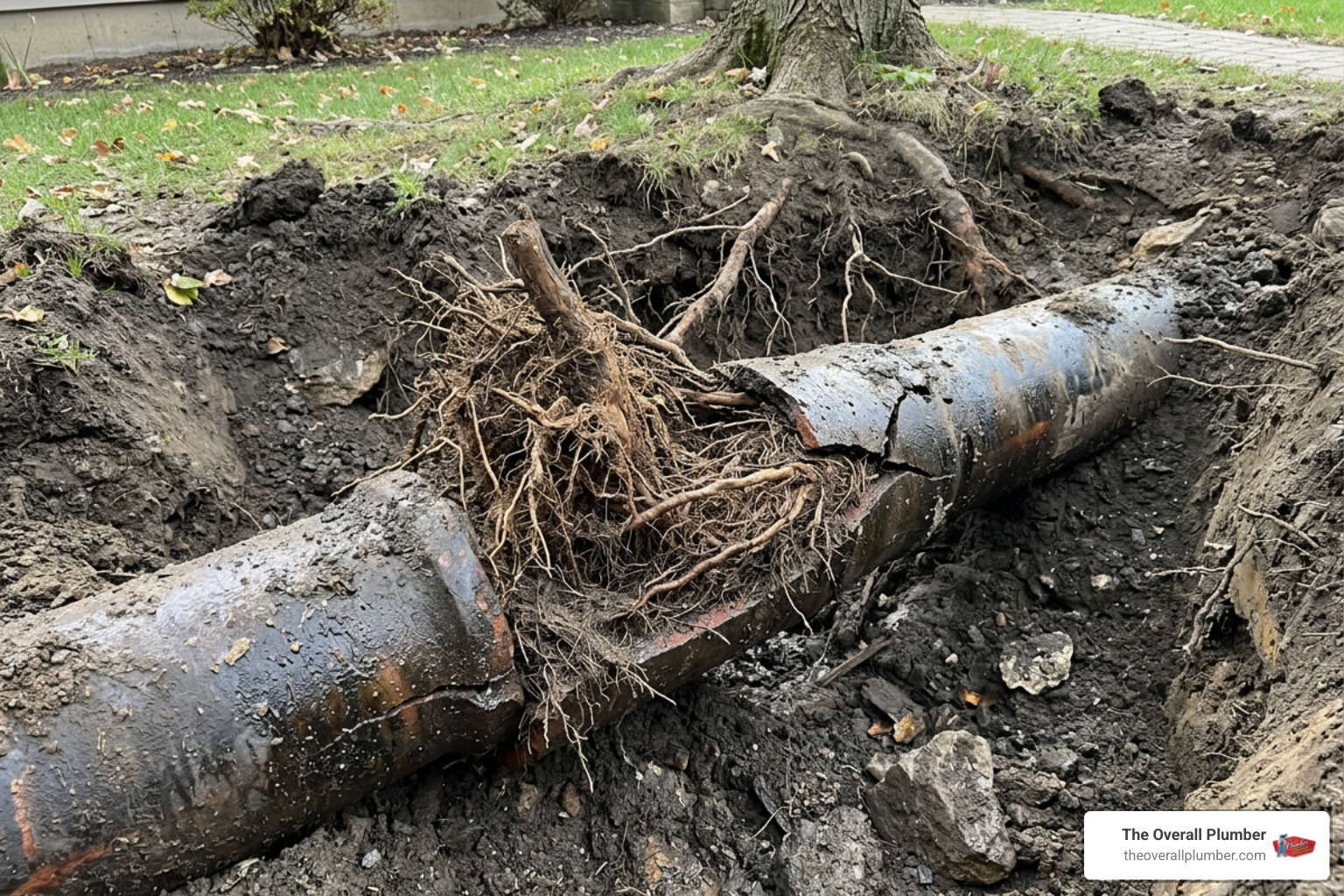
Tree roots are responsible for approximately 30% of septic lateral failures. Thirsty roots from surrounding landscape vegetation exploit microscopic stress fractures, poor joint seals, and loose couplings to seek moisture and nutrients inside the pipe. Once inside, fine feeder roots expand into dense, net-like root balls that catch waste and toilet paper. In these scenarios, clearing root obstructions with a mechanical auger is often required to restore pipe flow.
Similarly, fats, oils, and grease (FOG) account for over 40% of residential blockages. When poured down kitchen sinks, warm liquid fats cool inside the underground lateral, coating pipe walls in sticky layers. Over months, this buildup hardens into solid fatbergs that snag flushed dental floss, wipes, and hygiene products until the line is completely sealed off.
Is Your Septic Main Line Clogged or Is the Tank Filter Blocked?
In up to 90% of sudden septic backup calls, the primary lateral line itself is completely intact, and the real issue is an obstructed septic tank effluent filter or inlet baffle.
Modern septic systems incorporate a cylindrical effluent filter installed inside the outlet tee to prevent suspended solid particles from washing out into the drain field. If this filter becomes caked with organic slime and hair, wastewater cannot exit the tank. The tank fills to its maximum capacity, submerging the inlet baffle and creating a hydraulic roadblock that prevents your house pipes from draining. If you notice waste backing up into the lowest home fixtures during sustained water use, checking both the tank inlet splash wall and the effluent filter can save you hours of unnecessary pipe snaking.
How to Locate and Clear a Blocked Septic Line Safely
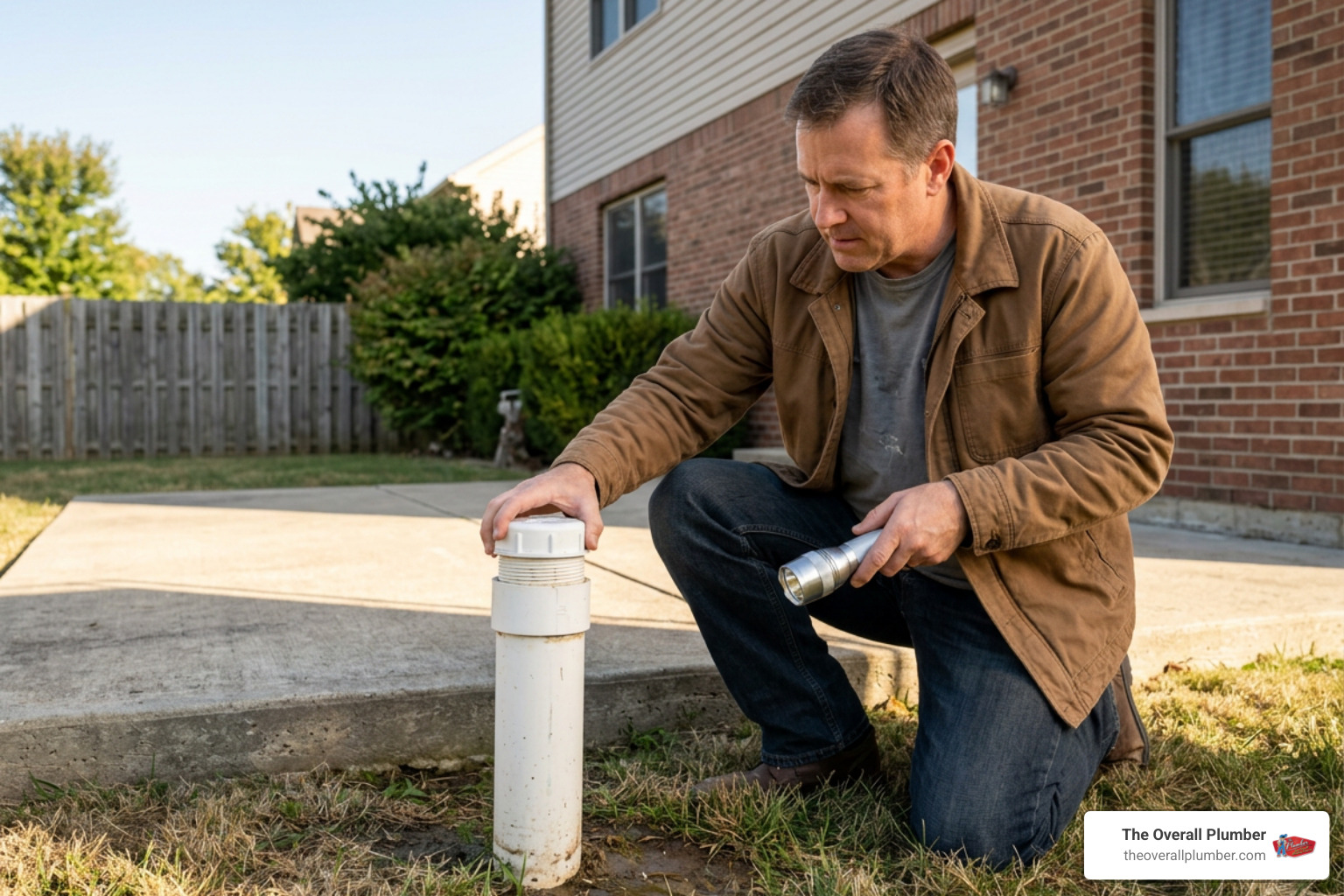
Taking a measured, methodical approach when dealing with raw wastewater protects both your home interior and your personal health. Sewage backflow is classified as Category 3 “black water,” carrying pathogenic contaminants that demand strict safety precautions.
Locating and Opening Main Cleanouts Safely
Cleanouts are capped access points directly tied into your main drainage line. Most homes have at least one exterior cleanout—a 3- or 4-inch PVC or cast-iron pipe with a threaded square-nut plug sticking out of the ground near the exterior foundation wall. If you have trouble finding it, review practical methods for locating cleanout access points.
Follow these steps to access cleanouts safely:
- Gear up: Wear heavy-duty rubber gloves, eye protection, and closed-toe rubber boots.
- Choose the right port: Always open downstream exterior cleanouts before opening any indoor or basement cleanouts. If an indoor cleanout is holding back feet of head pressure, unscrewing the cap will flood your home with raw sewage.
- Protect against spillage: Place a heavy-duty plastic tarp and catchment bucket directly below the cleanout.
- Loosen slowly: Loosen the threaded plug slowly using an adjustable pipe wrench. If wastewater begins to seep past the threads under pressure, tighten the plug back up—this confirms the downstream line or septic inlet is obstructed and holding standing sewage.
Mechanical Snaking and DIY Clearing Methods
If the cleanout is clear of standing water or you have safely relieved line pressure, you can attempt to dislodge the obstruction mechanically. Start by choosing the right drain cleaning snake designed for 3- to 4-inch main sewer laterals. Standard 1/4-inch sink snakes are too flimsy and will simply coil inside a large main pipe.
Feed the auger cable into the cleanout opening, aiming the head toward the septic tank. Rotate the drum while maintaining steady forward pressure. When you meet resistance, do not aggressively force the cable; instead, rotate the cutting head against the obstruction to bore through paper mats or hook fibrous root masses. Once the cable breaks through, retrieve the snake to pull back trapped debris, then run low-volume water to confirm the line is draining freely.
Dangerous DIY Methods to Avoid
When confronting a stubborn sewage stoppage, avoid these destructive practices:
- Caustic chemical drain cleaners: Concentrated sulfuric acid and sodium hydroxide solutions generate intense exothermic heat that warps standard Schedule 40 PVC piping and corrodes older cast iron. Worse, these chemicals kill the natural anaerobic and aerobic bacteria in your septic tank, halting biological decomposition.
- Boiling water flushes: Pouring boiling water down household toilets will crack the cold porcelain bowl instantly. It can also soften thin-walled plastic piping and break down protective glue joints.
- Aggressive toilet plunging: Excessive, high-pressure plunging on a toilet connected to a blocked lateral line can rupture the wax ring seal beneath the base, forcing raw sewage into the subflooring under your bathroom tile.
Advanced Solutions and Professional Diagnostic Techniques
When mechanical snakes fail or clogs return within days of clearing, structural pipe failures or systemic septic malfunctions require professional diagnostic tools.
Diagnostic Video Camera Line Inspections
A professional video camera sewer line inspection takes the guesswork out of main line troubleshooting. A high-resolution, self-leveling fiber-optic camera head is fed through the lateral line, transmitting real-time footage of the pipe interior to a digital monitor.
This inspection allows technicians to:
- Pinpoint the exact location and depth of dense root balls or foreign objects.
- Identify pipe bellies, offset joints, cracked hubs, and collapsed lateral sections.
- Verify whether the issue is inside the building lateral or located at the septic tank baffle.
Professional Hydro Jetting Services
For lines coated in decades of grease, scale, and pervasive root systems, mechanical snakes only poke a temporary hole through the center of the blockage. Commercial hydro jetting drain lines utilizes high-pressure water streams (up to 4,000 PSI) delivered through specialized rotational nozzles. The forward-facing jets blast through stubborn blockages, while the rear-facing jets scour the full 360-degree interior diameter of the pipe wall, restoring original flow capacity without harming sound pipes.
Routine Septic Tank Pumping and Preventive Care
Even the clearest lateral line will back up if the septic tank is overdue for maintenance. Septic tanks should typically be pumped every 1 to 4 years, depending on household size, water volume, and tank capacity. Failing to pump the tank allows the settled bottom sludge layer and top floating scum layer to thicken until they block the inlet and outlet tees. When an unexpected backup strikes and water is rising indoors, contacting trusted emergency plumbing services helps resolve the issue quickly with no trip charges or overtime fees.
Frequently Asked Questions About Clogged Septic Lines
Why does my downstairs toilet bubble when the upstairs shower runs?
This bubbling occurs due to hydraulic displacement and negative air pressure. When the septic lateral has a partial blockage, the large volume of draining shower water fills the entire diameter of the pipe. As this heavy wall of water pushes downward toward the obstruction, it displaces the air trapped inside the drainage stack, forcing air bubbles up through the nearest low-lying water seal—your ground-floor toilet bowl.
How often should a septic tank effluent filter be cleaned?
Septic tank effluent filters should be inspected and rinsed clean every 6 to 12 months, or whenever your tank is pumped. Simply open the access riser over the outlet baffle, pull the cylindrical filter cartridge straight up, and hose it off over the open septic inlet port so the rinsed solids fall back into the tank. Regular filter maintenance prevents up to 90% of sudden household sewage backups.
Can baking soda and vinegar unclog a main septic line?
While pouring 1/2 cup of baking soda followed by 1/2 cup of vinegar is a great, septic-safe DIY trick for minor grease and soap scum inside small 1.5-inch sink traps, it lacks the volume and mechanical force needed to clear a 4-inch septic main line. A major lateral blockage caused by tree roots, flushed wipes, or structural sags requires mechanical snaking, hydro jetting, or physical line repairs.
Protecting Your Septic Main Line for Long-Term Reliability
When you need dependable, mess-free drain clearing backed by satisfaction guarantees and priority scheduling, contact our licensed team for professional sewer line services in Houston or call us directly at (281) 668-8055 to schedule service today.