

The Ultimate Guide to Drain Line Jetting
When Your Drains Won’t Clear, Here’s What You Need to Know
Drain line jetting is a high-pressure water cleaning method that blasts blockages and buildup out of your pipes — and it’s one of the most effective drain cleaning solutions available today.
Here’s a quick summary of what drain line jetting is and how it works:
- What it is: A professional service that forces water through your pipes at 3,000–8,000 PSI to scour away clogs, grease, roots, and buildup
- How it works: A specialized nozzle is fed into your drain line; rear-facing jets propel the hose forward while scouring pipe walls clean
- Best for: Recurring clogs, grease buildup, tree root intrusion, slow drains, and pre-repair pipe prep
- Results last: 1–2 years or more, compared to weeks or months for traditional snaking
- Cost: Typically $350–$600 for residential service
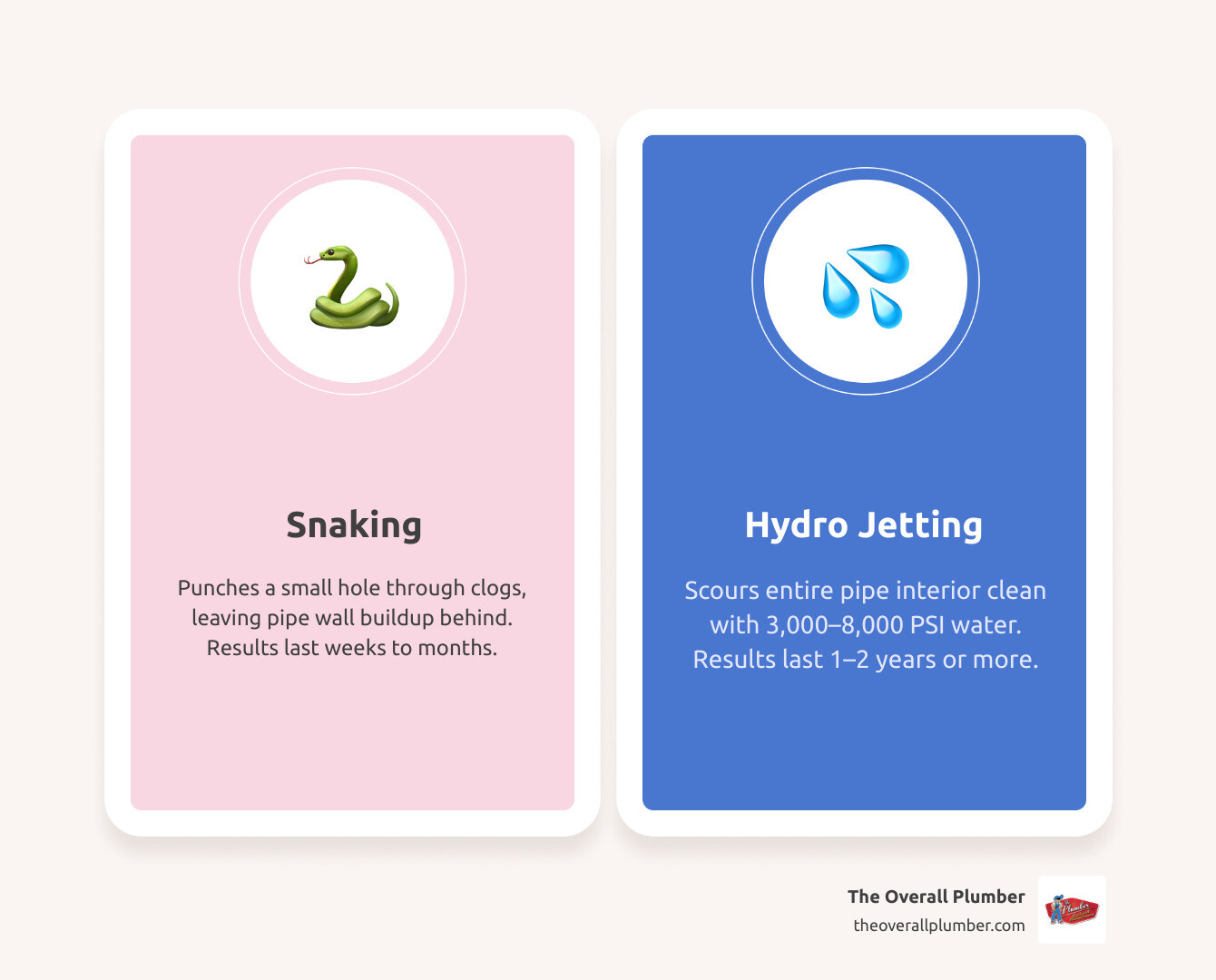
When drains slow down or back up repeatedly, a plunger or snake often isn’t enough. Those tools punch a hole through a clog — but they leave the buildup on the pipe walls behind. That buildup is what causes the problem to come back, sometimes within weeks.
Drain line jetting solves the root cause, not just the symptom. It cleans the entire inner surface of the pipe, not just a path through the middle. Whether it’s grease coating your kitchen drain or tree roots creeping into your sewer lateral, high-pressure water jetting removes it all — and keeps it clear far longer than other methods.
I’m Dayton Whitworth, a second-generation plumber with The Overall Plumber, and through years of hands-on experience across Greater Houston and Brazoria County, drain line jetting has become one of the most valuable tools I use to help homeowners stop dealing with the same clogs over and over. Let’s walk through everything you need to know about it.
What is Drain Line Jetting and How Does It Work?
If you’ve ever used a pressure washer to clean your driveway in Pearland or League City, you already understand the basic concept of drain line jetting. However, instead of cleaning concrete, we are using that same focused power inside your plumbing system.
Hydro jetting is a heavy-duty cleaning method used by licensed professionals to clear obstructions and restore the full flow capacity of your pipes. While a garden hose might put out about 40 to 60 PSI (pounds per square inch), a professional jetter operates between 3,000 and 8,000 PSI. This isn’t just a “rinse”; it is a high-velocity scouring process that strips the interior of the pipe bare.
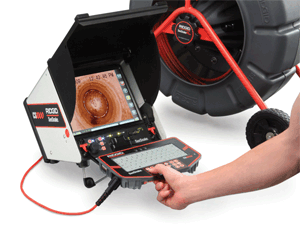
To ensure we aren’t “jetting blind,” we always start with a Sewer Camera inspection. This allows us to see exactly where the blockage is and, more importantly, what the pipe is made of. Pushing 4,000 PSI into a pipe that is already collapsed or made of fragile material is a recipe for disaster, which is why the camera is our most important diagnostic tool.
The Mechanics of Drain Line Jetting
The magic of drain line jetting lies in the physics of the nozzle. A high-pressure hose is connected to a large water tank and a specialized pump. At the end of that hose is a nozzle designed with two specific types of water jets:
- Forward-facing jets: These act like a drill bit, blasting through solid obstructions like grease “logs” or thick clumps of hair.
- Rear-facing “rocket” jets: These are angled backward toward the hose. They serve two purposes: they provide the “thrust” that pulls the hose deep into the pipe (sometimes up to 500 feet), and they scour the pipe walls as the nozzle moves forward.
It’s a bit like a self-propelled rocket moving through your sewer line. As we pull the hose back slowly, those rear jets continue to flush all the emulsified grease and debris downstream toward the municipal sewer main.
Effective Blockage Removal
What can drain line jetting actually handle? In our service areas like Friendswood and Galveston, we see a wide variety of “pipe-stopping” culprits.
- Tree Roots: This is the big one. In older neighborhoods in Houston and Santa Fe, mature trees send roots into sewer pipe joints seeking moisture. Jetting nozzles with rotating heads can cut through these roots like a laser, clearing the line without digging up the yard.
- FOG (Fats, Oils, Grease): Common in kitchen lines. Grease enters the drain as a liquid but cools and hardens into a wax-like substance. Jetting emulsifies this grease, turning it back into a liquid that can be flushed away.
- Mineral Scale: In areas with hard water, minerals can build up on the inside of cast iron pipes, narrowing the opening. Jetting scours this scale away, restoring the pipe’s original diameter.
- Biofilm and Silt: Often called “black gunk,” this slimy buildup can cause persistent odors and slow drainage. Jetting provides a “deep clean” that removes the odor-causing bacteria and sediment.
Benefits of Hydro Jetting vs. Traditional Snaking
When you call for a Houston Auger Service, you are usually looking for a quick fix for a localized clog. Snaking (or augering) involves a metal cable with a tip that spins to break apart a clog. While effective for simple blockages, it has limitations.
| Feature | Mechanical Snaking | Drain Line Jetting |
|---|---|---|
| Method | Physical punching/tearing | High-pressure scouring |
| Cleaning Scope | Creates a hole through the clog | Cleans the entire pipe circumference |
| Effectiveness on Grease | Minimal (it just pushes through) | Excellent (emulsifies and flushes) |
| Root Removal | Tears/breaks roots | Cuts roots flush to the pipe wall |
| Longevity | Weeks to months | 1 to 2 years or more |
| Pipe Safety | Safe for most pipes | Safe if pre-inspected by pros |
The primary benefit of jetting is that it is a full-diameter clean. A snake might clear a 2-inch hole through a 4-inch pipe filled with grease. As soon as you pour more grease down the drain, that small hole fills back up. Jetting returns that 4-inch pipe to its original 4-inch capacity.
When to Choose Drain Line Jetting Over Snaking
We often recommend our Brazoria County Auger Service for minor, one-time clogs. However, you should opt for drain line jetting if you encounter:
- Recurring Clogs: If you have to snake your drain every three months, you don’t have a clog—you have a buildup problem.
- Multiple Slow Drains: If the whole house is draining slowly, the issue is likely in the main sewer lateral.
- Severe Grease Buildup: Especially common in commercial kitchens or homes where heavy cooking is frequent.
- Pre-Trenchless Repair: If we are preparing to install a pipe liner, the host pipe must be perfectly clean so the epoxy can adhere properly.
The Professional Drain Jetting Process Step-by-Step
Professional drain line jetting is a systematic process. It isn’t just about sticking a hose in a hole and turning on the water. Here is how we handle it at The Overall Plumber:
- Access Point Identification: We look for a “cleanout”—a dedicated access pipe usually located outside the home or in a basement. If one doesn’t exist, we may have to pull a toilet or access the line from the roof vent, though we prefer ground-level access for safety.
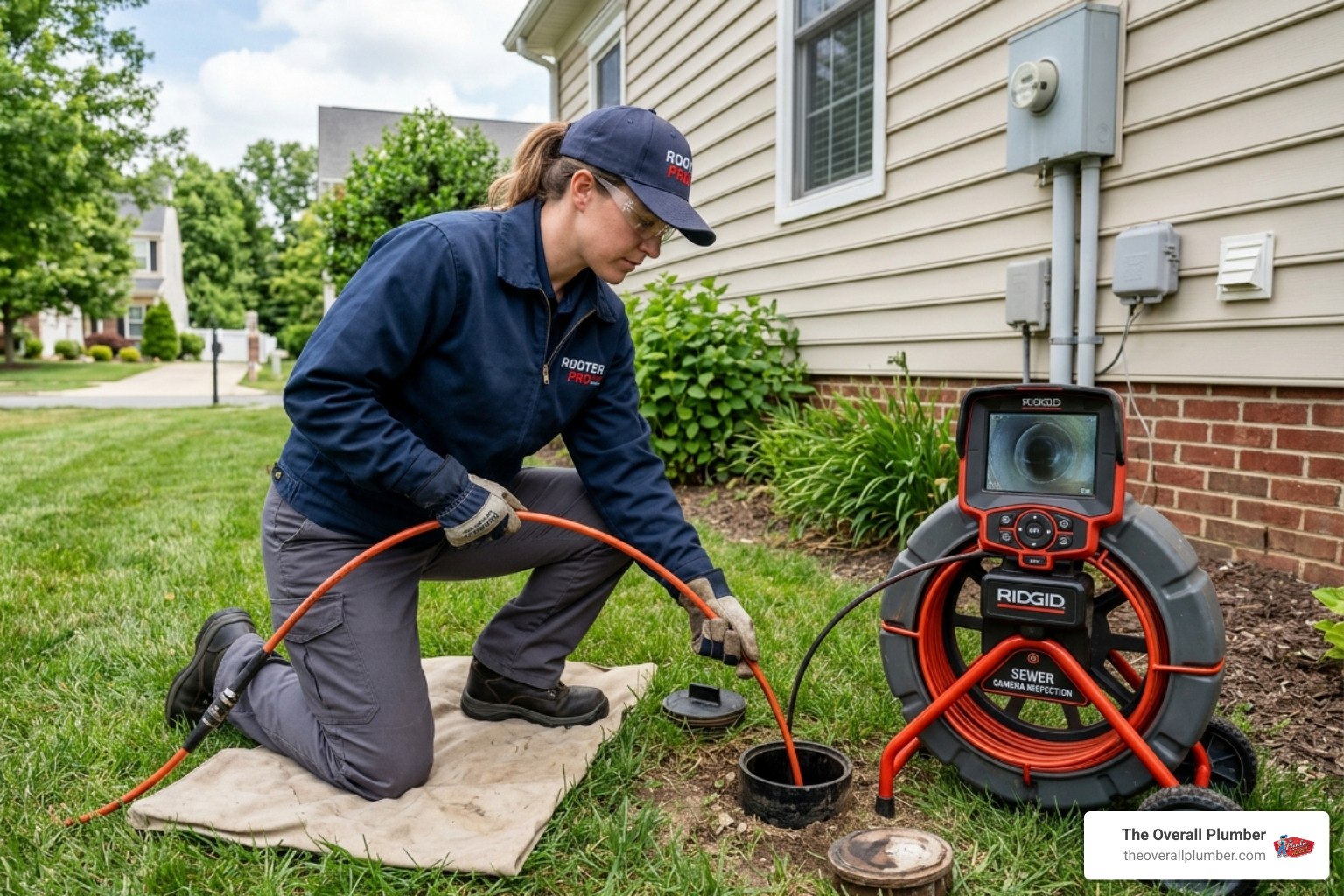
- Pre-Service Camera Inspection: We perform a Video Camera Sewer Line Inspection to map the line, identify the blockage type, and check for structural damage like cracks or collapses.
- Nozzle Selection: Based on what we see (roots vs. grease), we choose the right tool. A “penetrating” nozzle is used for solid blocks, while a “rotating” nozzle is used for scouring walls.
- Pressure Calibration: We adjust the PSI based on the pipe material. PVC can handle higher pressure than older, rusted cast iron.
- The Jetting Pass: We feed the hose into the pipe. The water does the work, pulling the hose upstream. We then slowly draw the hose back, ensuring every inch of the pipe is scoured.
- Post-Service Verification: We run the camera through one last time to show you the results. You’ll see the difference between a “gunked up” pipe and a clean one.
The Importance of Pre- and Post-Service Inspections
You should never let someone jet your Sewer Lines in Houston without a camera inspection first. Why? Because if your pipe is made of Orangeburg (a compressed tar paper material used decades ago) or if it has a massive structural crack, the high pressure of the jetter could finish it off, causing a total collapse.
The post-inspection is equally important for “verification of flow.” It ensures that all the debris we knocked loose actually made it out of your system and into the city main.
Safety, Costs, and Maintenance Frequency
While drain line jetting is incredibly effective, it must be used with respect for the plumbing system.
Residential Frequency: For most homes in Texas City or La Porte, we recommend preventative jetting every 18 to 24 months. This prevents the slow accumulation of biofilm and grease that leads to emergency backups. If you have significant tree root issues, an annual “haircut” for those roots might be necessary.
Commercial Frequency: Restaurants and businesses dealing with high volumes of food waste should have their lines jetted every 3 to 6 months to stay compliant with local grease management regulations and avoid costly downtime.
Cost Factors: The average residential jetting service in our area ranges from $350 to $600. This price typically includes the camera inspection. Factors that can increase the price include:
- Lack of easy access (no cleanouts).
- Extreme length of the run (over 100 feet).
- Severe root infestations requiring specialized cutting heads.
Is DIY Drain Line Jetting Safe?
We get asked this a lot: “Can I just rent a jetter or buy a kit for my pressure washer?”
The short answer is: We don’t recommend it.
While DIY kits exist, they lack the power and safety features of professional equipment. More importantly, DIYers lack the camera equipment to see if the pipe is structurally sound. If you jet a compromised pipe, you could end up needing a Local Residential Plumbing Services Emergency Repair Broken Sewer Line Houston, which costs significantly more than a professional cleaning.
Professional jetters also have “pulsation control” to help navigate tight bends without getting the hose stuck. A stuck jetter hose inside a sewer line is an expensive nightmare to retrieve.
Frequently Asked Questions about Drain Jetting
How much does professional drain line jetting cost?
In the Greater Houston area, residential jetting usually falls between $350 and $600. Commercial rates are higher, often starting at $1,000, depending on the complexity of the system and the amount of grease involved. While this is more expensive than a $150 snaking job, the results last significantly longer, often making it the more cost-effective choice over a two-year period.
Can hydro jetting damage older pipes?
It can if not done properly. This is why the pre-inspection is vital.
- PVC and ABS: Very safe; these modern plastics handle high pressure well.
- Cast Iron: Generally safe, but if the pipe is heavily corroded or “thin-walled,” we must lower the PSI.
- Clay: Safe for removing roots, but we must be careful at the joints.
- Orangeburg pipe: Not safe. This material is too fragile for high-pressure water.
How often should I have my sewer line jetted?
For a standard residential home with no major issues, every 2 years is the “sweet spot” for preventative maintenance. If you have “rooter-class” issues (mature oaks or elms near the line), annual service is smarter. For commercial kitchens, quarterly is the industry standard to prevent FOG overflows.
Conclusion
Drain line jetting is the gold standard for maintaining a healthy plumbing system. It moves beyond the “quick fix” of snaking and provides a deep, lasting clean that protects your home from the mess and stress of sewer backups.
At The Overall Plumber, we pride ourselves on doing the job right the first time. We serve neighbors from Brazoria County to Harris County with a commitment to excellence. When you choose us for your drain cleaning needs, you get:
- Satisfaction Guarantees: We aren’t happy until your drains are flowing perfectly.
- Priority Scheduling: Because we know a clogged drain is an emergency.
- No Trip Charges & No Overtime Fees: Honest, transparent pricing every time.
Don’t wait for a total backup to take action. If your drains are gurgling or moving slowly, give us a call. Whether you need a simple auger service or a full-scale hydro jetting, our team is ready to help.