


Repairing a Broken Storm Drain Pipe Before It Causes a Sinkhole
A broken storm drain pipe needs prompt inspection, site safety measures, and a repair method that fits the damage. Keep people and vehicles away from any sagging pavement, standing water, exposed hole, or rapidly growing crack. Then contact the agency or property owner responsible for the line. A camera inspection can help locate breaks, missing joints, root intrusion, or washed-out soil before crews choose lining, excavation, pipe replacement, or flowable fill to stabilize a void.
Stormwater escaping through a damaged pipe can carry surrounding soil with it. That creates an underground cavity that may eventually collapse beneath a road, driveway, or yard. Heavy rain makes the risk worse by increasing flow and pressure in older brick, metal, and concrete drainage systems.
The repair cost and timeline depend on pipe size, depth, access, soil loss, and whether pavement or nearby utilities are affected. Small repairs may be completed quickly, while a deep cavity and full pipe replacement can require excavation, shoring, traffic control, backfill, and pavement restoration. In Stuttgart, for example, crews planned about four weeks to replace a damaged historic drainage section and address a seven-meter-deep cavity beneath a street.
I am Dayton Whitworth, a second-generation plumbing professional serving the Houston and Gulf Coast area. Our team helps homeowners investigate drainage and pipe failures with clear communication, camera-based diagnostics, and dependable repair options when a broken storm drain pipe threatens property or safety.
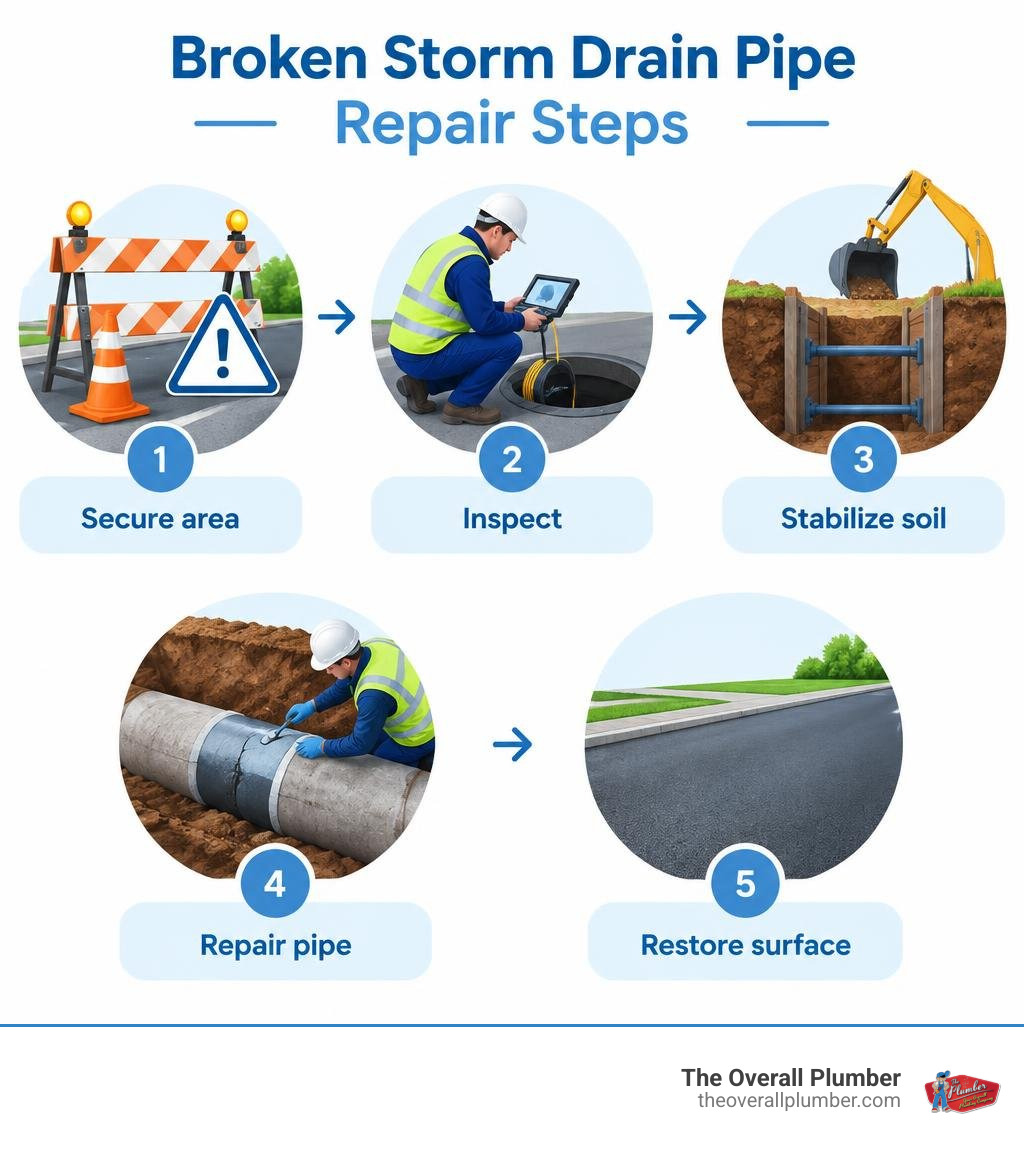
Quick look at broken storm drain pipe:
Understanding the Dangers of a Broken Storm Drain Pipe
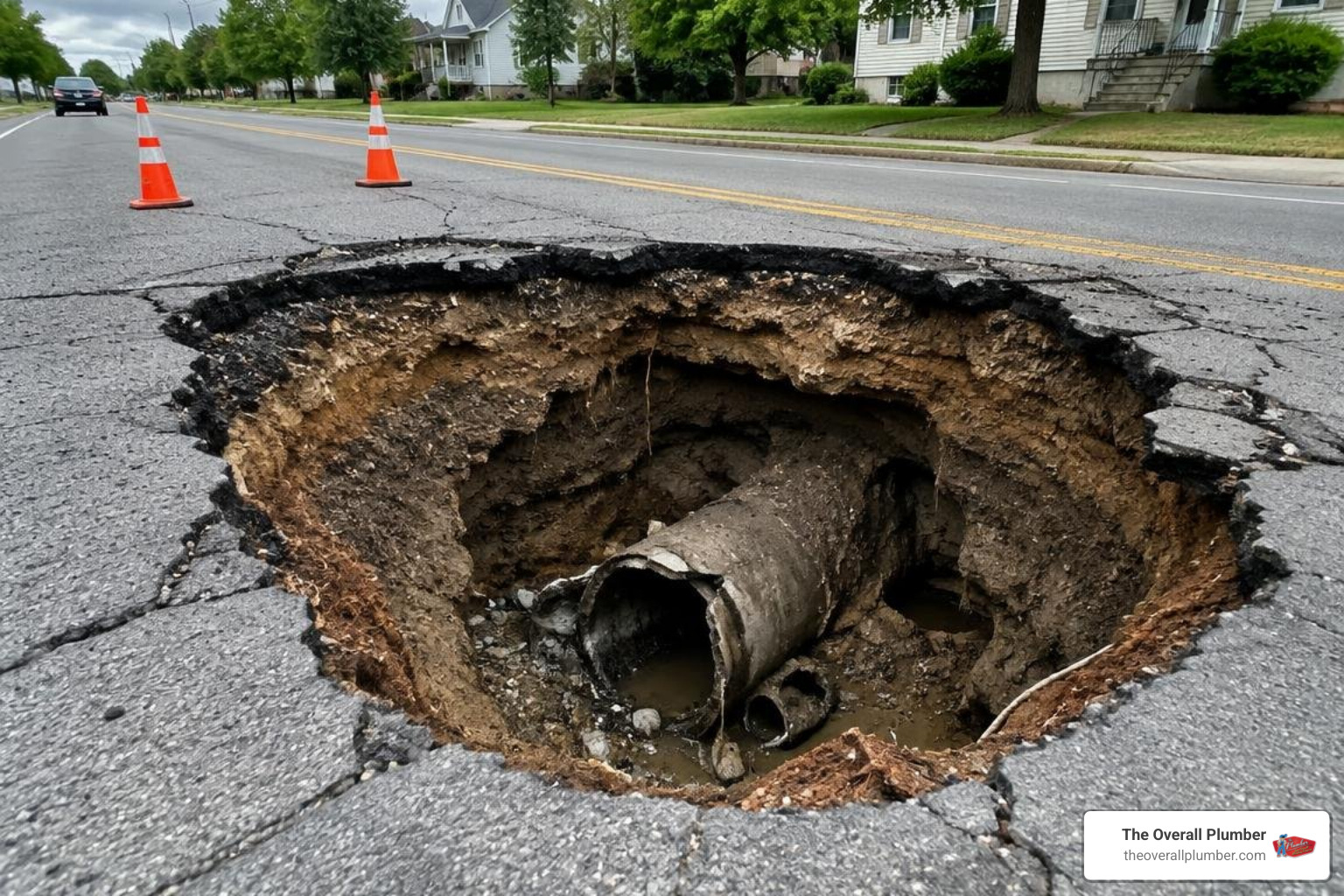
When subsurface drainage infrastructure breaks, the damage rarely stays confined to the pipe itself. Underground stormwater pipes handle massive volumes of turbulent water during downpours. When mortar joints crumble, cast iron fractures, or corrugated metal corrodes through, water escapes directly into the bedding soil.
This rushing water creates a continuous scouring mechanism. As water cycles into and out of the pipe envelope with every rainstorm, it pulls fine silt, sand, and clay through the fractures. The pipe functions like an underground vacuum, stripping away structural backfill while leaving the asphalt or turf above unsupported.
Over time, this missing soil forms an expanding, hidden cavity. The surface looks completely normal until the asphalt shell loses all support and collapses instantly under traffic loads. A famous historical example occurred when a broken sewer line and heavy rain opened a 250-foot-wide San Francisco sinkhole that swallowed a historic three-story home after soil support washed away.
Century-Old Infrastructure Failures and Hydraulic Pressure
Many older municipalities still rely on subterranean networks constructed in the early 20th century. Historic systems frequently feature egg-shaped brick conduits dating back to 1914 or riveted steel pipes installed over 110 years ago. While these structures demonstrated remarkable engineering for their era, century-old materials eventually suffer from material fatigue, joint calcification, and micro-fissuring.
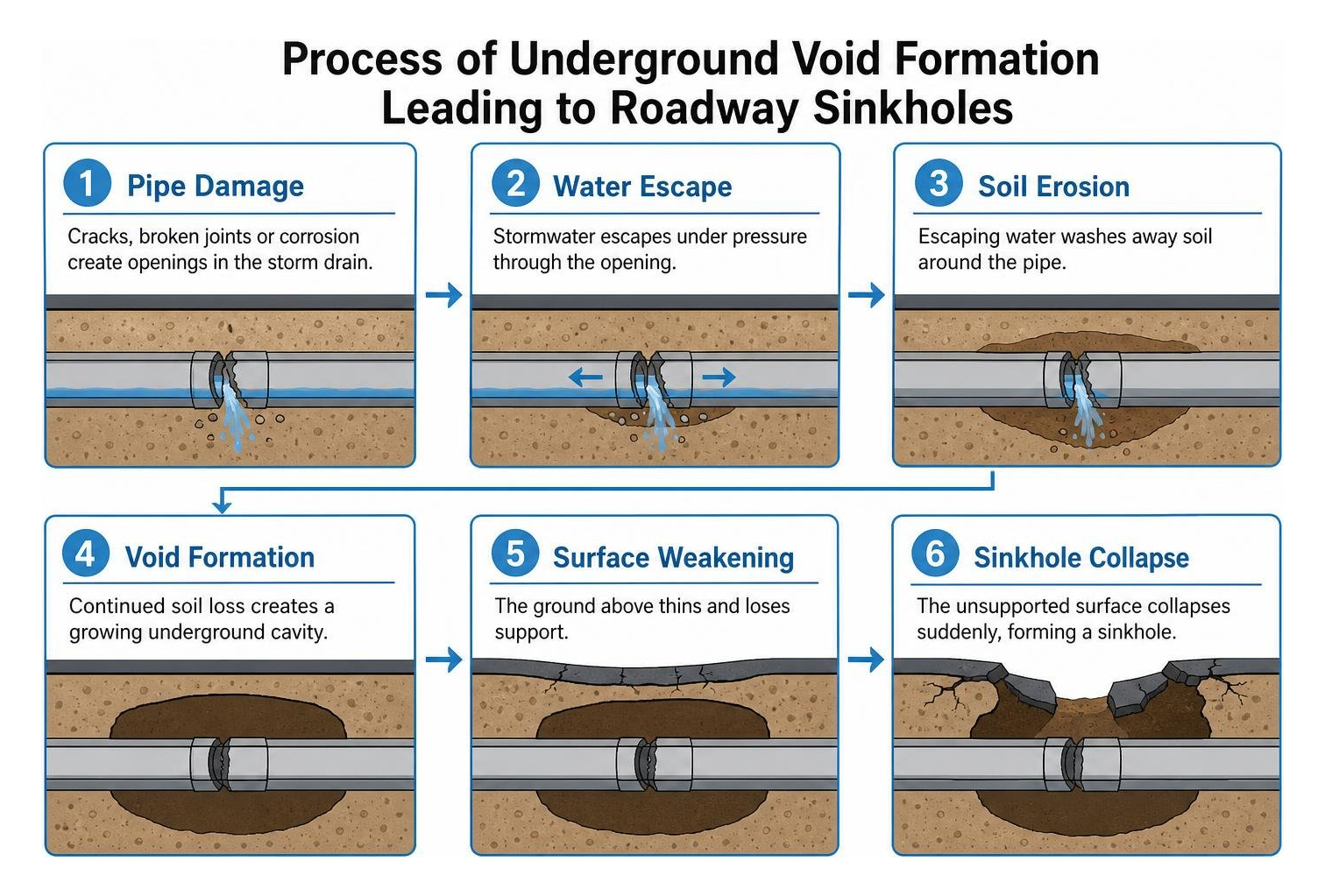
During intense storms, downstream bottlenecks or heavy inflows cause severe hydraulic surcharge. Water fills the pipe completely, creating tremendous outward hydrostatic pressure. This pressurized water punches through microscopic wall fractures, rapidly eroding surrounding gravel bedding. Urban networks face similar vulnerabilities across utility lines; for instance, aging pressurized systems ruptured when Sunset Boulevard in West Hollywood flooded after a water main break released hundreds of thousands of gallons into the streets.
Secondary Threats to Surrounding Properties and Public Safety
A ruptured stormwater line creates immediate cascading hazards for neighboring properties:
- Foundation Undermining: Expanding funnel-shaped voids migrate sideways, stripping away the supporting soil beneath residential foundation footings, driveways, and concrete patios.
- Utility Ruptures: As surrounding earth caves in, adjacent natural gas mains, potable water lines, and electrical conduits lose support and shear under the weight of falling debris.
- Emergency Evacuations: Severe soil destabilization frequently forces local authorities to evacuate nearby residences to protect occupants from potential foundation collapses.
- Surface Inundation: Blocked or collapsed conduits cause sudden street-level flooding, swamping low-lying garages and basements.
Property owners can prevent structural washouts and property damage by recognizing early sewer line problems and avoiding total washouts before underground erosion reaches the foundation.
Diagnostic Approaches: Camera Inspections and Acoustic Surveys
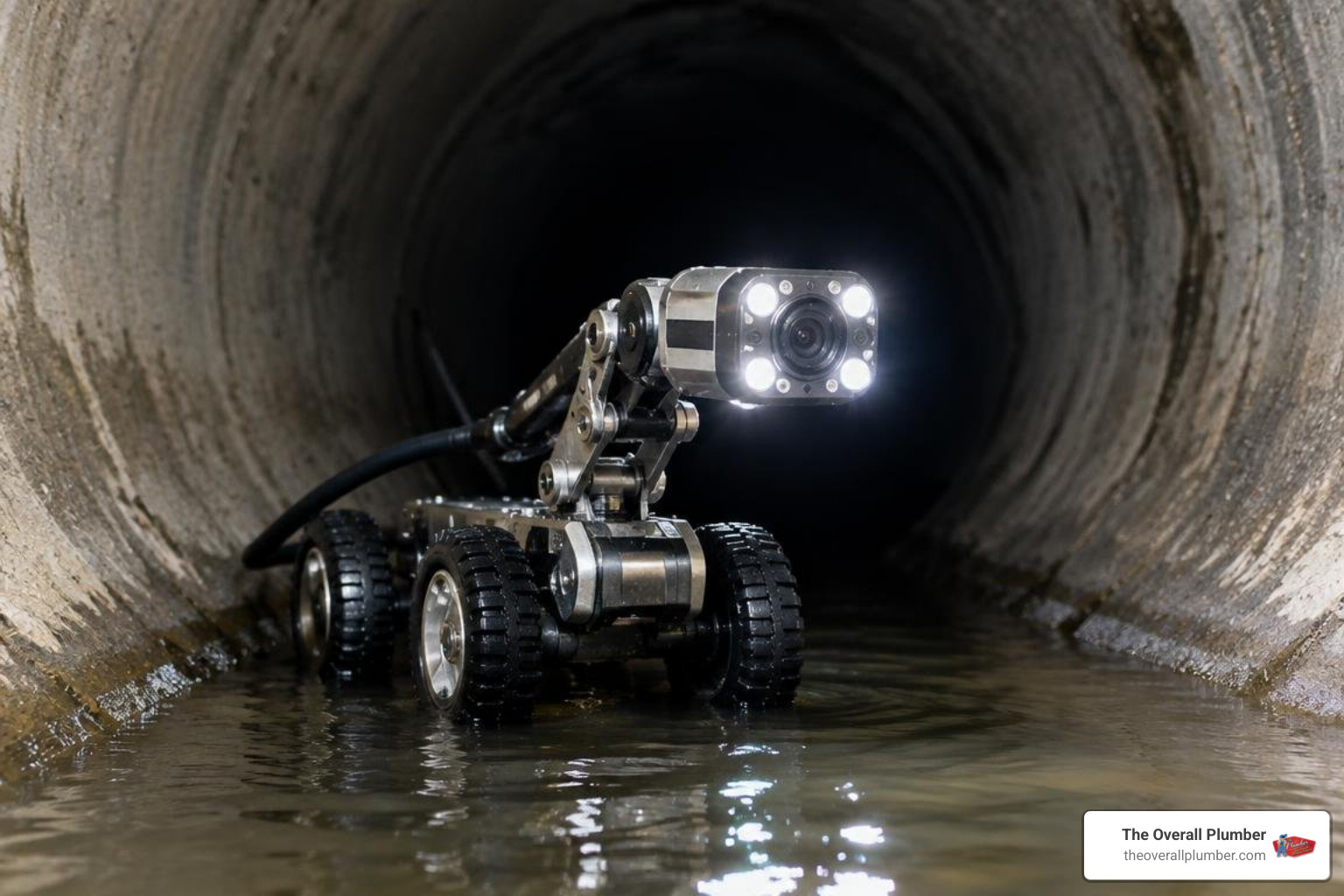
Locating underground pipe defects before a catastrophic street collapse requires advanced diagnostic technology. Modern municipal utilities and residential plumbing contractors use closed-circuit television (CCTV) robotic crawlers and push cameras to perform detailed pipeline logging.
These high-resolution camera heads navigate through subterranean culverts, transmitting real-time footage of internal structural conditions. Technicians identify hairline stress fractures, separated joints, root intrusions, and internal sediment accumulation. For comprehensive diagnostic guidance, property owners can consult The Homeowner’s Guide to Sewer Camera Inspections to understand how video assessments uncover concealed structural flaws.
Why Camera Surveys Are Essential for a Broken Storm Drain Pipe
Routine visual inspections provide the primary defense against unexpected ground failure. Municipalities aim to inspect drainage conduits on scheduled ten-year cycles to catch degradation early.
Camera inspections allow technicians to identify:
- Missing Bricks and Mortar Degradation: Detecting early structural breakdown before water scour pulls in surrounding soil.
- Joint Misalignments: Pinpointing seismic shifts, soil settling, or physical displacement at pipe connections.
- Severe Root Masses: Locating invasive root networks that catch debris, create downstream dams, and spike internal line pressure.
For private laterals and residential storm drainage lines, scheduling a precision video camera sewer line inspection pinpoints the exact depth and physical location of a defect, avoiding costly exploratory digging across your yard.
Limitations of Routine Inspections and Sudden Storm Surges
While camera surveys deliver detailed internal data, they have inherent limitations. Heavy silt deposits and murky standing water can obscure fine micro-fissures from the lens. Furthermore, internal cameras cannot measure the extent of void spaces forming outside the pipe walls where soil has already washed away.
Sudden flash floods can rapidly overwhelm weakened pipes between routine inspection cycles. In Stuttgart, municipal teams discovered a funnel-shaped cavity four meters wide beneath the street surface after heavy rainfall eroded an egg-shaped brick line; as reported when the drainage channel in eastern Stuttgart was repaired at full speed, sudden scouring can quickly hollow out seven-meter-deep underground chambers despite ongoing municipal monitoring.
Engineering Solutions: Trenchless Rehabilitation vs. Open Excavation
Once an inspection identifies a broken storm drain pipe, engineers and master plumbers select an appropriate rehabilitation method based on depth, pipe integrity, surface development, and surrounding soil conditions.
| Repair Method | Best For | Typical Timeline | Surface Disruption | Relative Cost |
|---|---|---|---|---|
| Cured-In-Place Pipe (CIPP) | Cracked, leaking pipes with intact structural alignment | 1 to 3 Days | Minimal (No surface digging) | Moderate |
| Open-Cut Replacement | Collapsed lines, severe backfill washouts, large cavities | 2 to 4 Weeks | High (Full street/lawn excavation) | High |
| Flowable Fill Stabilization | Large underground voids and unstable soil pockets | 2 to 5 Days | Moderate (Grout injection ports) | Moderate to High |
| Pipe Bursting | Severely deteriorated lines needing size upgrades | 2 to 4 Days | Low (Small access pits only) | Moderate |
Homeowners often prefer no-dig technologies because exploring why trenchless sewer line replacement saves property landscaping demonstrates how lining protects mature trees, paved driveways, and custom hardscaping from destructive trenching.
Repairing a Broken Storm Drain Pipe with Flowable Fill and Concrete
When an underground pipe collapse produces deep subsurface cavities, trenchless lining alone cannot solve the problem. Crews must stabilize the compromised soil envelope before installing new piping.
Contractors pump self-leveling, flowable concrete fill (controlled low-strength material) directly into the void. This flowable slurry fills every underground pocket, providing solid structural bedding without requiring mechanical soil compaction in tight, dangerous spaces. After stabilizing the void, crews install heavy-duty precast reinforced concrete culverts or thick-walled HDPE pipe. Similar principles apply to private residential drainage, as detailed in the ultimate guide to fixing broken cast iron drain pipes, where proper bedding prevents recurring shear failures.
Project Timelines and Traffic Management Protocols
Major municipal storm drain replacements frequently require four-week construction windows. During complex civil repairs, contractors implement rigorous safety measures:
- Site Containment: Erecting perimeter safety fencing and steel road plates to protect pedestrians from open excavation pits.
- Emergency Shoring: Installing hydraulic trench boxes to safeguard construction workers against trench wall collapses.
- High-Volume Bypass Pumping: Setting up industrial pumps to route stormwater around the work zone during active rain events.
- Traffic Control: Establishing detour routes and electronic message signs to manage traffic flow around closed roadways.
Cost Factors and Municipal Budgeting for Long-Term Replacements
Repairing subsurface drainage lines involves substantial capital investment. Project costs vary based on depth-to-grade, conduit diameter, groundwater tables, and the extent of surface restoration needed.
Key expenses include:
- Excavation & Shoring: Deep excavations require heavy machinery and certified trench-box shoring systems.
- Soil Stabilization: Injecting flowable concrete or installing engineered gravel bedding to rebuild washed-out ground support.
- Pavement & Hardscape Reconstruction: Laying sub-base aggregate, pouring concrete slabs, and repaving asphalt driving lanes.
For private property owners facing underground line work, reviewing strategic advice on budgeting for underground pipe replacement helps anticipate expenses and select cost-effective repair paths.
Municipal Priority Scheduling and Deferred Maintenance
City engineering departments manage thousands of miles of subterranean assets by using risk-scoring frameworks. Conduits are prioritized based on age, construction material, historical camera survey logs, and their proximity to high-density roadways.
However, budget constraints often force cities to defer capital improvements until emergency blowouts demand immediate action. Addressing these challenges requires specialized municipal contracting and local utility coordination, such as our team’s work repairing broken lines in Houston to resolve localized failures before they escalate into major sinkholes.
Residential Drainage Line Maintenance and Ownership Boundaries
Homeowners are often surprised to learn that they own and must maintain the drainage laterals running through their property up to the municipal connection or ditch right-of-way. Driveway culverts, yard catch basins, and foundation drainage connections are private property responsibilities.
Homeowners should regularly clear surface grates, check for localized soil settling over buried lines, and maintain clear records of their underground piping layout. If you are unsure where your private pipes run, our detailed guide on locating underground drainage and sewer lines explains how modern electromagnetic locators and sonar transmitters trace buried lines without damaging your yard.
Frequently Asked Questions About Stormwater Infrastructure Failures
What Are the Earliest Signs of Underground Storm Drain Failure?
The most reliable indicators include localized depressions or dips in asphalt and concrete driveways, recurring soggy or overly green patches in lawns during dry weather, sudden sinkholes near downspout discharges, and muddy sediment flowing out of drainage outlets after moderate rainfall.
How Long Do Emergency Storm Drain Pipe Repairs Usually Take?
Emergency site stabilization—such as placing safety barricades, installing steel trench plates, and establishing bypass pumping—typically occurs within 24 to 72 hours. Comprehensive repairs involving deep excavation, cavity grouting, culvert replacement, and roadway repaving usually require two to four weeks depending on weather conditions.
What Causes Old Brick and Metal Conduits to Collapse Under Heavy Rain?
Torrential rain causes hydraulic surcharge that fills the conduit completely, creating strong internal water pressure. This outward pressure forces water through deteriorating mortar joints or rusted metal seams. As water escapes into the surrounding soil, it washes away the structural bedding, eliminating the earth support holding the pipe in place and triggering structural collapse.
If you suspect a broken storm drain pipe on your property, call us at tel:(281) 668-8055 to schedule a professional inspection before ground erosion compromises your foundation or driveway.