

How a Back Flow Preventer Keeps Drinking Water Safe
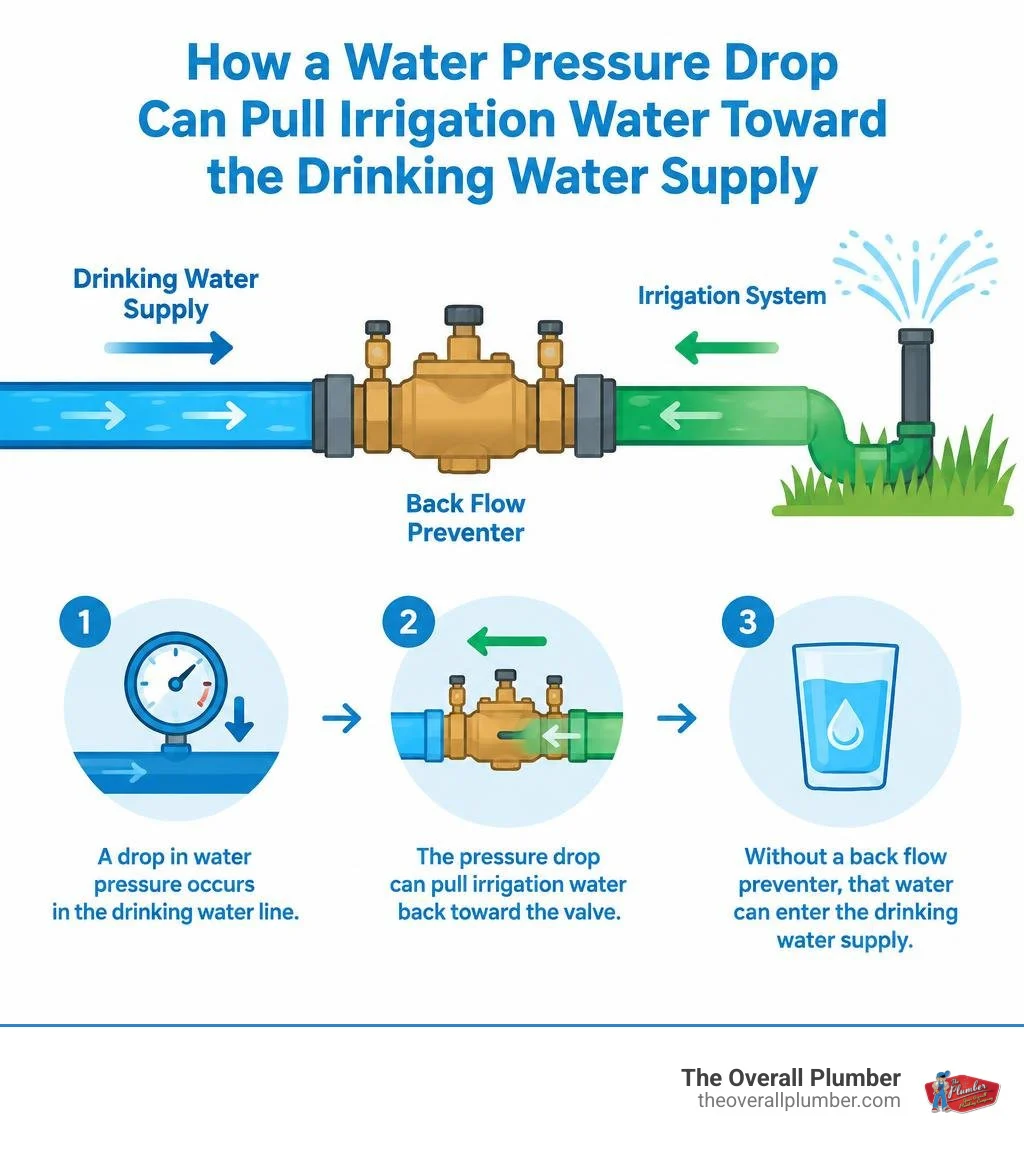
A back flow preventer stops water from flowing backward into your drinking water supply. Backward flow can happen when supply pressure drops or pressure rises in a connected system, such as lawn irrigation. Without protection, water from that system could enter the clean water line.
The right device depends on the connection and the risk it poses. This guide explains how common types work, what affects their cost, and why some assemblies need regular testing.
I’m Dayton Whitworth, a second-generation plumbing professional serving Greater Houston and nearby Gulf Coast communities. My plumbing repair experience helps me explain what a back flow preventer does and why protecting each connection matters.
What Is a Back Flow Preventer and How Does It Protect Potable Water?
Water in a municipal utility network is designed to travel in one direction: from the treatment plant, through the distribution mains, and into your home or commercial building under constant pressure. However, plumbing systems are dynamic. When unintended hydraulic conditions occur, non-potable liquids, chemicals, or stagnant water can reverse direction and enter the clean drinking water line. This hazardous event is known as backflow.
A back flow preventer is an engineered plumbing assembly that acts as a secure, one-way barrier. It isolates clean potable water from potential contaminants found in cross-connections—any physical link between a drinking water system and a non-potable source. Understanding how these assemblies operate begins with exploring core backflow valves terms demystified in standard plumbing terminology.
Backflow occurs through two distinct hydraulic mechanisms:
- Backsiphonage: This happens when negative or sub-atmospheric pressure develops on the supply side of the system. Imagine drinking through a straw—the suction pulls liquid upward. In a plumbing grid, a sudden drop in municipal pressure caused by a nearby water main break, heavy utility maintenance, or local firefighting efforts creates a vacuum that pulls non-potable water backward into potable lines.
- Backpressure: This occurs when downstream pressure exceeds the incoming supply pressure. If a downstream system generates high pressure—via booster pumps, thermal expansion from closed water heating loops, or elevated piping systems—it forces non-potable fluids backward into the lower-pressure municipal supply.
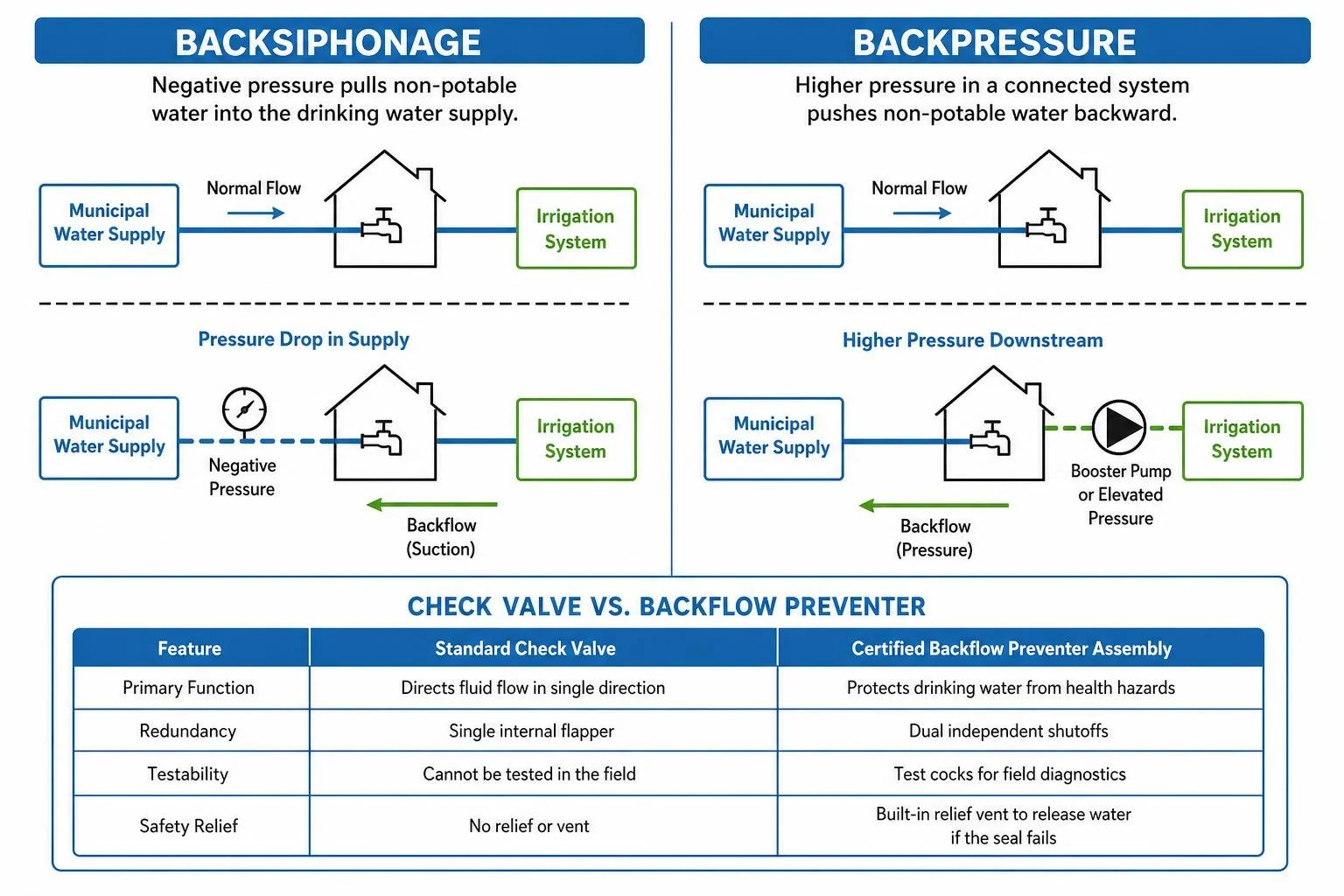
A common point of confusion among property owners is the difference between a standard check valve and an approved backflow prevention assembly. While a basic check valve uses a single internal flapper to deter reverse flow, it lacks redundancy, cannot be tested under field conditions, and has no safety port to release water if the seal fails. In contrast, certified backflow preventers comply with strict American Society of Sanitary Engineering (ASSE) and American Water Works Association (AWWA) standards, featuring dual independent shutoffs, test cocks for precision field diagnostics, and built-in relief vents.
| Feature | Standard Check Valve | Certified Backflow Preventer Assembly |
|---|---|---|
| Primary Function | Directs fluid flow in single direction | Protects drinking water from health hazards |
| Redundancy | Single sealing mechanism | Dual independent check valves / relief ports |
| Field Testability | No test ports; cannot verify seal integrity | Integrated test cocks for calibrated differential gauges |
| Code Approval | Not approved for cross-connection control | ASSE, AWWA, and CSA certified for code compliance |
| Failure Protection | Allows silent backflow if debris blocks seal | Discharges or vents water safely to atmosphere |
Primary Types of Backflow Prevention Assemblies
Plumbing standards classify backflow prevention devices based on the severity of the potential hazard and the hydraulic forces involved. A low-hazard scenario typically involves aesthetic nuisances (such as food coloring or foul taste), while a high-hazard scenario involves toxic chemicals, heavy bacteria, fertilizers, or industrial pathogens.
Selecting the proper assembly requires assessing whether the system experiences continuous pressure (applied for more than 12 consecutive hours) and whether it must defend against backpressure, backsiphonage, or both.
- Atmospheric Vacuum Breaker (AVB): An AVB contains a simple internal float check that drops under supply pressure to seal an air vent. When water pressure stops or drops, the float falls, opening an air intake port that breaks the siphon vacuum. AVBs cannot be placed under continuous pressure and must be installed at least 6 inches above all downstream outlets.
- Pressure Vacuum Breaker (PVB): PVBs use an internal spring-loaded check valve alongside an independently spring-loaded air inlet valve. Because of the internal springs, PVBs can handle continuous operating pressure, making them a fixture for residential lawn irrigation. However, they protect solely against backsiphonage and must sit at least 12 inches higher than the highest downstream sprinkler head or piping run.
- Double Check Valve Assembly (DCVA): A DCVA consists of two independently acting, spring-loaded check valves housed within a single body, framed by two shutoff valves and four test cocks. Models like the Zurn Wilkins 950XLT Top Access Double Check Backflow Preventer Non-Potable | Gra-Mac Irrigation provide robust protection against both backpressure and backsiphonage in low-hazard environments. They are rated for working water pressures up to 175 psi and hydrostatic test pressures up to 350 psi.
- Reduced Pressure Zone (RPZ) Assembly: The most comprehensive mechanical assembly available, the RPZ protects against both backsiphonage and backpressure in high-hazard applications. It incorporates two independent check valves separated by a hydraulically operated differential relief valve.
- Hose Connection Vacuum Breakers: Installed directly onto sillcocks, these compact units prevent outdoor contaminants from entering domestic lines. Homeowners can read our dedicated guide on outside faucet backflow preventers to learn how these affordable devices protect garden hose connections.
Material composition plays a significant role in assembly longevity. Small residential devices for micro-irrigation, such as the DIG Corp | Backflow Preventer, utilize high-impact plastic rated up to 100 psi and 8 GPM for non-continuous residential drip lines. Heavy-duty assemblies rely on lead-free bronze, brass, or stainless steel bodies to resist dezincification, microbial-induced corrosion, and high operating pressures.
| Assembly Type | ASSE Standard | Hazard Level | Protects Against | Continuous Pressure? |
|---|---|---|---|---|
| AVB | ASSE 1001 | Low / High | Backsiphonage only | No (Max 12 hours) |
| PVB | ASSE 1020 | Low / High | Backsiphonage only | Yes |
| DCVA | ASSE 1015 | Low Hazard | Backsiphonage & Backpressure | Yes |
| RPZ | ASSE 1013 | High Hazard | Backsiphonage & Backpressure | Yes |
Reduced Pressure Zone (RPZ) Back Flow Preventer Operation
The Reduced Pressure Zone assembly is the gold standard for high-hazard cross-connection control. Its operation relies on maintaining a strict pressure differential across its internal chambers.
Under normal forward flow, water enters through the first check valve, travels through the intermediate zone, and exits through the second check valve. The spring inside the first check valve is engineered to create a measurable pressure drop (typically 2.0 to 5.0 psi) between the supply inlet and the intermediate chamber.
The differential relief valve is held tightly closed by incoming supply pressure acting on an internal diaphragm. If downstream pressure rises (backpressure) and the second check valve leaks, or if supply pressure plummets (backsiphonage), the pressure differential between the supply and the intermediate zone falls below acceptable tolerances.
When this happens, the internal spring pushes the relief valve open, discharging the water out of the bottom port into the atmosphere. Even if both check valves become fouled with pipe scale or foreign debris simultaneously, the relief valve dumps all incoming and reversing water to the ground, creating a complete physical air gap that makes backflow physically impossible. If your assembly is discharging water unexpectedly, our guide on troubleshooting a leaking relief valve vent breaks down the most common causes and seal maintenance steps.
Selecting the Right Back Flow Preventer by Application
Matching the correct backflow prevention device to your specific plumbing application ensures system safety while avoiding regulatory penalties:
- Residential Sinks and Appliances: Dedicated fixtures connected to chemical dispensers, water softeners, and kitchen sinks benefit from targeted point-of-use units. Homeowners can install a sink system backflow preventer to eliminate siphoning risks from submerged spray nozzles or clogged waste pipes.
- Lawn Irrigation Systems: Residential sprinkler networks with buried heads, dedicated fertilizer injectors, or auxiliary pumps present a high contamination hazard. Systems using chemical injection or situated below grade require an RPZ (ASSE 1013), whereas elevated clean systems can use a PVB (ASSE 1020).
- Fire Suppression Systems: Dedicated fire sprinkler lines require specialized detector assemblies, such as the Zurn 350DA Double Check Detector Assembly, which features low head loss and metered bypass piping to flag unauthorized water use or hidden system leaks.
- Commercial and Industrial Facilities: Chemical plants, hospitals, commercial kitchens, automotive repair bays, and multi-story boilers must isolate their main service lines using large-diameter RPZ assemblies to comply with municipal cross-connection safety rules.
Plumbing Code Requirements and Common Compliance Violations
Cross-connection control is strictly governed by national plumbing codes and local regulatory agencies. Across residential properties, the IRC 2024 Backflow Prevention: Cross-Connection Control for Residential Plumbing | Jaspector standards in Section P2902 mandate approved backflow protection at every physical junction between potable water and potential contamination sources. This includes swimming pool auto-fill lines, boiler makeup water connections, and all threaded hose bibs.
In Texas, the Cross-Connection Control and Backflow Prevention – TCEQ program enforces rigorous public water supply safety mandates. These rules are applied locally across municipal utilities, including the Cross Connection Control Program | City of Houston, the Backflow Testing Program | The League City Official Website!, Cross Connection Metering-Backflow Prevention | City of La Porte, NOTICE OF CHANGE IN BACKFLOW PROCEDURE | City of Friendswood, and Water Service | City of Santa Fe.
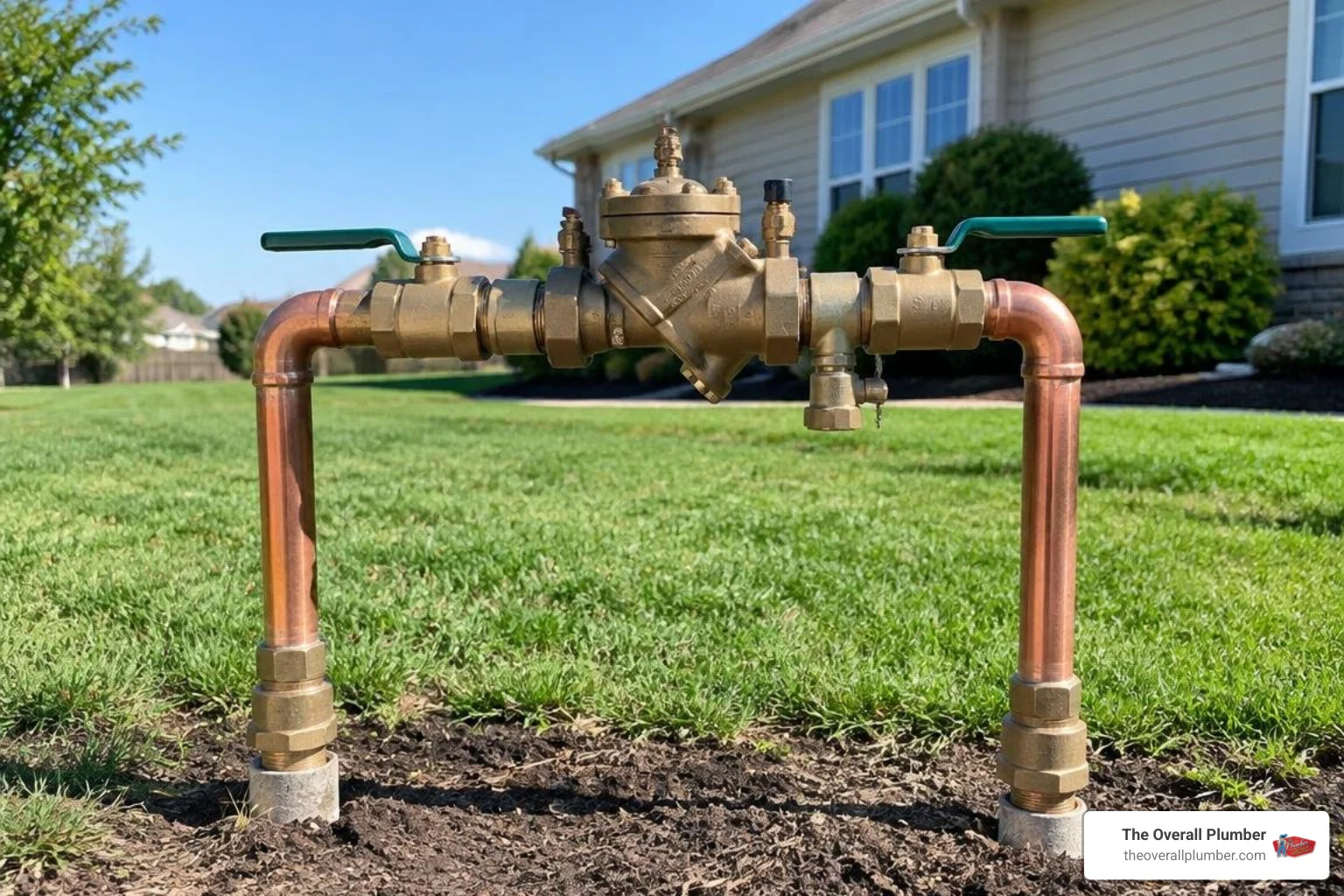
Despite clear regulatory frameworks, plumbing contractors and property owners often commit common installation and maintenance violations:
- Installing RPZ Assemblies in Below-Grade Pits: An RPZ relief valve must discharge freely into daylight. Placing an RPZ inside an underground meter box or pit risks submerging the relief port during heavy rain. If submerged, negative pressure can siphon contaminated floodwater back through the relief valve itself.
- Subjecting Atmospheric Vacuum Breakers to Continuous Pressure: Leaving an AVB under constant upstream pressure for more than 12 hours causes the internal float poppet to adhere to the air inlet seat, preventing it from dropping when a vacuum occurs.
- Inadequate Elevation of PVBs: Installing a Pressure Vacuum Breaker lower than 12 inches above the highest sprinkler head downstream allows backpressure to override the vacuum breaker mechanism.
- Removing Vacuum Breakers Due to Spitting: Homeowners frequently remove hose bib vacuum breakers because they discharge water when a spray nozzle is closed. That brief discharge is the device doing its job—venting backpressure safely to protect the home.
- Omitting Air Gaps on Waste Receptors: Draining water softeners, commercial espresso machines, or relief valve funnels directly into sewer pipes without a physical air gap (at least twice the diameter of the supply pipe, with a 1-inch minimum) creates an unapproved cross-connection.
Backflow Valve Costs, Annual Testing, and Smart Monitoring
The cost of backflow prevention equipment varies depending on the pipe diameter, assembly type, and construction material. Basic residential hose bib vacuum breakers cost between $5 and $20, while residential plastic drip irrigation units average $10 to $40.
For whole-line assemblies, prices reflect the precision manufacturing required for certified components:
- Standard 3/4-inch to 1-inch Double Check Valve Assemblies (DCVA) typically range from $150 to $450.
- High-performance Reduced Pressure Zone (RPZ) assemblies range from $300 to $1,200 for residential sizes. Premium units like the Wilkins 1 in. 975XL Reduced Pressure Principle assembly retail around $698.29, while large-diameter commercial assemblies (up to 10 inches) can cost from $2,000 to over $4,000.
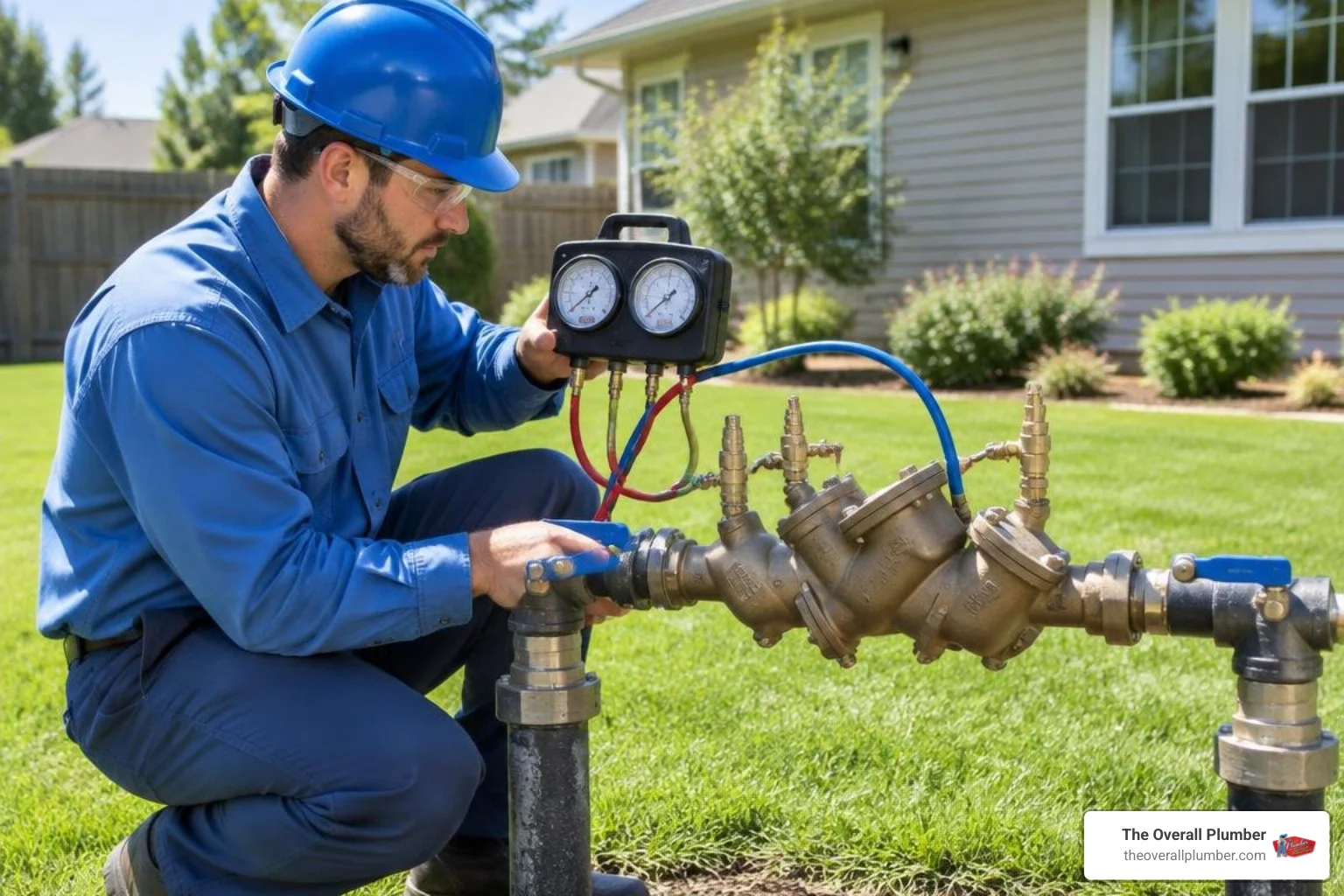
Because mechanical assemblies rely on internal springs, elastomeric discs, and moving diaphragms that wear over time or collect mineral scale, municipal water districts mandate regular certified testing. Annual verification ensures internal springs seat tightly and relief valves open at precise differential pressures. Property owners can schedule annual certified backflow testing through licensed technicians holding specialized tester endorsements.
Recent innovations in backflow prevention incorporate smart monitoring features to prevent catastrophic water damage and winter freeze damage. Advanced double check valve units, such as the LF007 – Watts assembly, offer integrated freeze sensors and ArmorTek corrosion-resistant epoxy coatings. These smart sensors monitor line temperatures and transmit real-time alerts through Wi-Fi or Building Management Systems (BMS) before water reaches freezing temperatures.
Similarly, commercial RPZ units can be outfitted with flood detection switches (like SentryPlus Alert systems) that automatically trigger an electronic shutoff valve if the relief port dumps continuous water, protecting mechanical rooms from indoor flooding.
Backflow Preventer vs. Backwater Valve
The names sound alike, but they protect different things. A backflow preventer sits on the incoming water supply and keeps contaminated water from being pulled back into your drinking water. A backwater valve sits on the sewer line leaving the house and keeps sewage from flowing back in when the city line is overloaded, which matters during heavy Gulf Coast rains. Many homes benefit from both, and only the backflow preventer is usually subject to annual testing.
Frequently Asked Questions About Backflow Prevention
What is the difference between backpressure and backsiphonage?
Backpressure occurs when downstream pressure rises higher than the municipal supply pressure, pushing water backward through the system due to pumps, thermal expansion, or elevated piping. Backsiphonage occurs when a sudden pressure drop in the main supply line (such as from a water main break or fire hydrant operation) creates a vacuum that pulls non-potable water back into clean lines.
Why does my vacuum breaker or RPZ relief valve drip water?
A brief spurt of water from a vacuum breaker or RPZ vent when water flow stops is normal operation—the device is venting pressure to isolate the clean water line. However, continuous dripping or steady drainage indicates that internal check valve seals are worn or fouled by sand, sediment, or mineral debris, requiring professional cleaning or rebuild kit installation.
How often are backflow preventers required to be tested?
Most municipal water authorities and health departments across Texas mandate that testable backflow prevention assemblies (including RPZs, PVBs, and DCVAs) be tested upon installation, after any repair or relocation, and at least once every 12 months by a state-certified cross-connection inspector.
Schedule your professional back flow valve plumbing inspection today or contact The Overall Plumber.