

Why Every Homeowner Needs a Backflow Preventer for Their Sink
A backflow preventer for sink systems is a device that stops contaminated water from flowing backward into your clean water supply. Here is a quick overview of what you need to know:
- What it does: Blocks dirty water, sewer gases, and bacteria from reversing into your potable water lines
- How it works: Uses a one-way valve, air gap, or pressure zone to keep water flowing in one direction only
- Common types: Air gaps, check valves, and reduced pressure zone (RPZ) assemblies
- Who needs one: Any homeowner with a kitchen sink, dishwasher connection, or combined drain lines
- Cost range: From around $10 for a basic check valve up to $300 or more for advanced assemblies
Most homeowners never think about their sink plumbing — until something goes wrong. A clogged drain or a sudden drop in water pressure can push dirty water back toward your clean supply. That is called backflow, and it is more common than you might expect.
The risk is real. Contaminated water can carry bacteria, sewer gases, and other harmful substances. Once it mixes with your potable water, the damage to your health — and your plumbing — can be significant.
The good news is that backflow prevention is a solved problem. The right device, installed correctly, protects your home quietly in the background every single day.
I’m Dayton Whitworth, a second-generation plumber serving Greater Brazoria County, Galveston County, Houston, and the surrounding Gulf Coast communities, with hands-on experience installing and inspecting backflow preventers for sink systems across residential and commercial properties. In this guide, I’ll walk you through everything you need to know — from how backflow happens to which device fits your situation.
Glossary for backflow preventer for sink:
Understanding Sink Backflow and Why It Matters
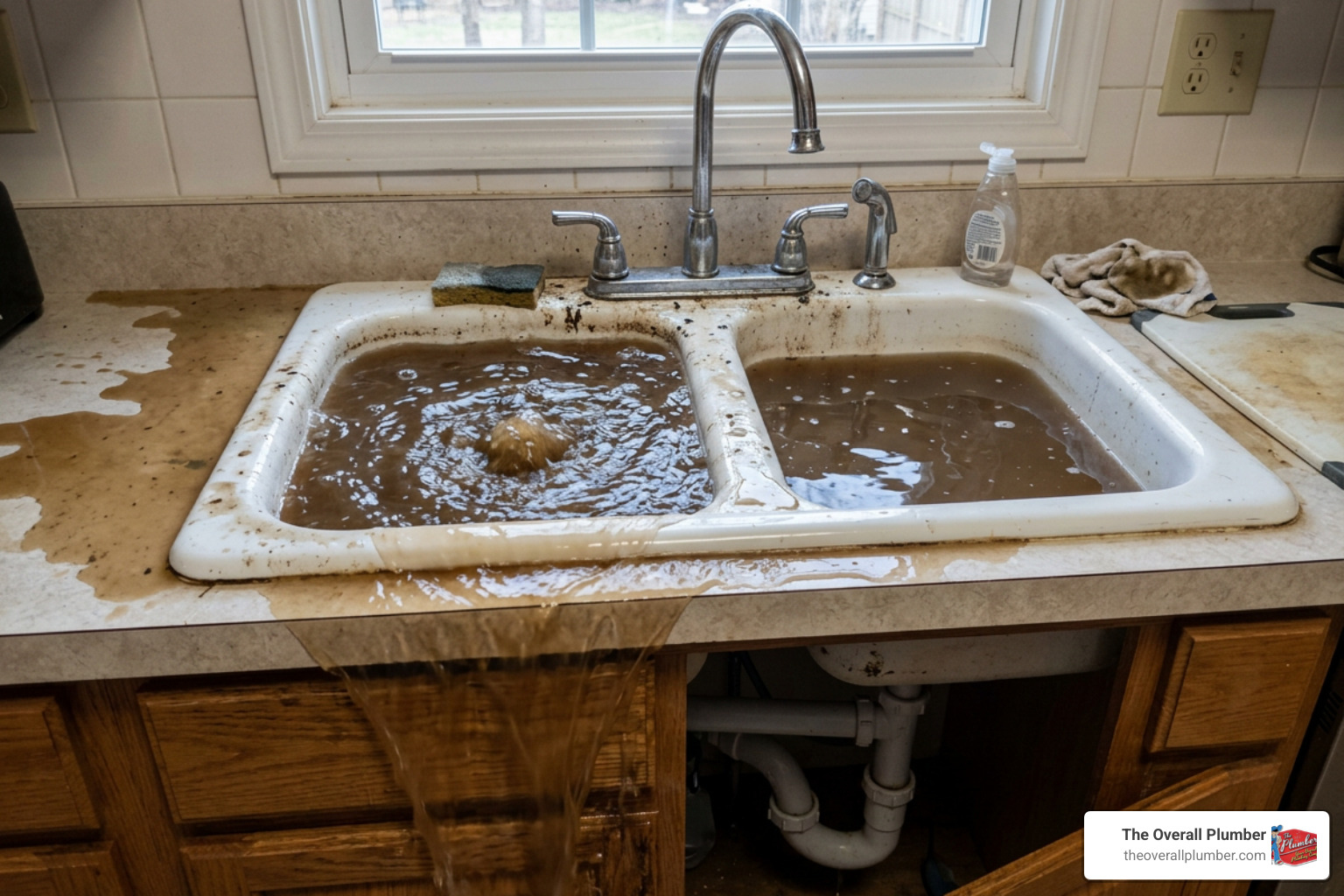
To understand why a backflow preventer for sink installations is so vital, we first need to look at how water moves through your home. Water systems are designed to be a one-way street. Clean, pressurized municipal water flows in, you use it at the tap, and gravity carries the wastewater down the drain.
However, plumbing systems are subject to physical forces that can occasionally reverse this flow. When the clean water system loses pressure, or when waste lines experience a sudden surge in pressure, contaminated water can be sucked or pushed backward. This unwanted reversal is what we call backflow. To dive deeper into the specific terminology plumbers use to describe these systems, check out our guide on Backflow Valves Terms Demystified.
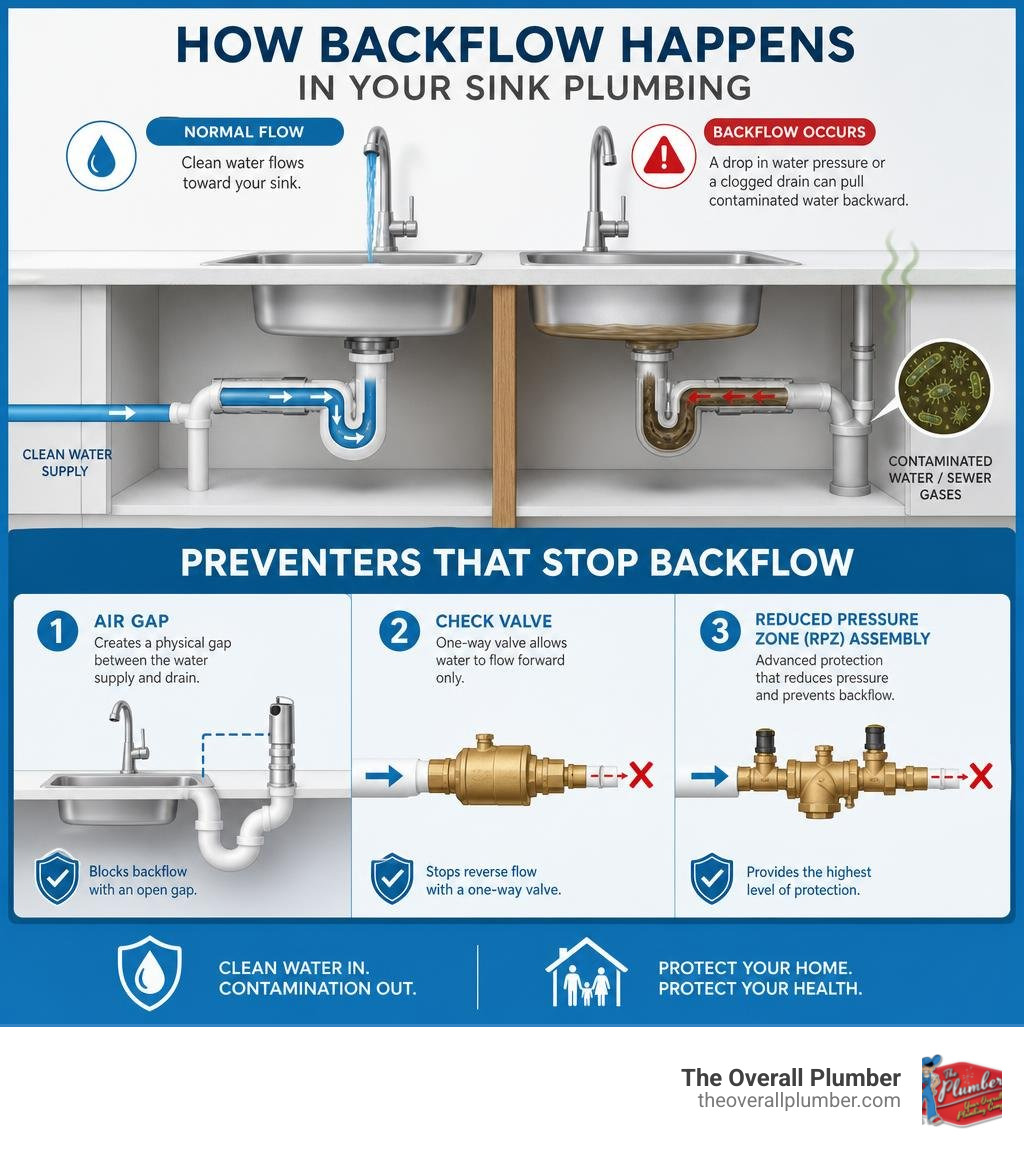
There are two primary mechanisms that cause backflow in sink systems:
- Backsiphonage: This occurs when there is a sudden drop in supply-line pressure. Think of it like drinking through a straw. If a water main breaks down the street in League City, or if firefighters tap into a nearby hydrant in Pearland, the water pressure in your home’s main line can drop dramatically. This creates a vacuum effect, literally sucking dirty water from your sink basin, dishwasher, or drain line back into your clean water pipes.
- Backpressure: This happens when the pressure in your waste or drainage system exceeds the pressure in the supply system. For example, if you have a combined kitchen, dishwasher, and washing machine drain, a heavy discharge from a washing machine pump can overwhelm a clogged 1.5-inch drain pipe. The waste water has nowhere to go but up and out of your kitchen sink, pushing contaminated water past plumbing connections.
A cross-connection is any physical point where your clean potable water system connects with a non-potable source (like wastewater in a sink basin or a dishwasher drain line). Without a reliable barrier at these cross-connections, your family’s drinking, cooking, and bathing water is at risk of serious contamination.
What is a Backflow Preventer for Sink Systems?
A backflow preventer for sink systems is a mechanical device or physical design standard installed at key cross-connections to block reverse flow. Its job is simple: make sure dirty water can never cross paths with your clean, potable water.
Depending on the specific application, these preventers can take several forms. In a standard kitchen sink setup, the most common “preventer” is actually a physical design called an air gap. For supply lines feeding specialty sinks, commercial prep areas, or under-sink appliances, plumbers install mechanical check valves. These spring-loaded valves allow water to flow forward under normal pressure but instantly snap shut if the pressure reverses.
To understand how these residential units compare to the devices we use to protect outdoor hose connections and sprinkler systems, take a look at The Ultimate Guide to Choosing a Backflow Preventer for Outside Faucet Protection.
Why Sink Drain Protection is Crucial for Your Health
It is easy to take clean tap water for granted, but a failing sink barrier can have immediate health consequences. When backflow occurs, wastewater from your garbage disposal, dishwasher, or main sewer line can enter your faucet’s supply lines.
This wastewater is a breeding ground for:
- Harmful bacteria (such as E. coli and Salmonella)
- Viruses and waterborne parasites
- Sewer gases (like hydrogen sulfide) that carry foul odors and toxic compounds
- Chemical residues from dishwashing detergents and household cleaners
In areas like Friendswood, TX, local municipal guidelines stress the importance of maintaining clean drains and functional backflow barriers to avoid systemic municipal water issues. You can read more about how local infrastructure is impacted by these systems in this guide on Preventing Sewer Stoppages | Friendswood, TX .
When a sink drain backs up, a properly installed backflow preventer ensures that even if your sink basin fills with dirty water, that sludge stays in the drain system and never compromises the clean water lines feeding your faucet.
Types of Backflow Preventers for Sinks
Not all sinks are created equal, and neither are the devices we use to protect them. The choice of a backflow preventer for sink installations depends heavily on whether you are protecting a residential kitchen sink, a commercial hand-washing station, or an under-sink appliance like a dishwasher.
| Device Type | Primary Application | How It Works | Hazard Level Protection |
|---|---|---|---|
| Air Gap | Residential kitchen sinks, dishwashers | Physical unobstructed vertical space between water outlet and flood rim | High Hazard (Best physical barrier) |
| Check Valve / Backwater Valve | Inline drain lines, under-sink appliances | Spring-loaded flap or float that seals when water flows backward | Low to Medium Hazard |
| Reduced Pressure Zone (RPZ) | Commercial sinks, high-hazard connections | Two independent check valves with an intermediate relief valve | High Hazard (Commercial grade) |
| Atmospheric Vacuum Breaker | Faucet spouts, hose bib connections | Air inlet valve closes under pressure; opens to vent to atmosphere if pressure drops | Medium Hazard |
Air Gaps: The Gold Standard for Kitchen Sinks
When it comes to residential kitchen sinks, the air gap is the absolute gold standard. An air gap is not actually a mechanical valve; rather, it is a physical, unobstructed vertical space between the lowest point of a water outlet (like your faucet or dishwasher discharge line) and the flood-level rim of the sink basin.
Because air cannot conduct water, a physical gap of at least two inches makes it physically impossible for dirty water to be siphoned backward into the clean water line.
If you look at your kitchen sink, you might see a small cylindrical metal or plastic cap mounted next to your faucet. This is a dishwasher air gap. When your dishwasher pumps out dirty water, it travels up to this air gap fixture above the sink’s flood level before gravity carries it down into the garbage disposal or sink tailpiece. If the branch drain clogs, the wastewater simply spills out onto the sink deck rather than being siphoned back into the dishwasher or clean water lines.
For commercial applications requiring robust, lead-free backflow prevention on direct plumbing connections, specialized fixtures like the Z1399XL-BFP – Lead-Free Backflow Preventer | Zurn are used to provide security with an integrated atmospheric vent.
Check Valves and Backwater Valves
If your plumbing configuration does not allow for a physical air gap, mechanical check valves and backwater valves are the next line of defense. These inline devices are installed directly inside the water supply or drain piping.
Inside a standard check valve, a spring-loaded gate, flap, or rubber float remains open under normal, forward-flowing water pressure. The moment that pressure drops or reverses, the spring forces the gate shut, sealing the pipe and stopping any backward flow.
For smaller residential lines or appliance connections, compact devices like the 375XL (1/2″-2″) Reduced Pressure Principle Backflow Preventer | Zurn offer reliable, compact, and lead-free mechanical protection. They feature an “EZSwap” pressure vessel that can be easily removed for flushing, testing, or winterization, making them highly convenient for tight spaces under utility sinks.
Reduced Pressure Zone (RPZ) Assemblies
For high-hazard applications—typically found in commercial kitchens, medical clinics, and industrial facilities throughout Houston and Harris County—we install Reduced Pressure Zone (RPZ) assemblies.
An RPZ valve is a highly sophisticated mechanical assembly consisting of two independent check valves separated by a pressure-differential relief valve. Under normal operation, the pressure between the two check valves is kept at a lower level than the supply pressure. If either check valve leaks or if pressure drops significantly, the relief valve opens and discharges the backflowing water out of a drain port, ensuring absolute safety.
For heavy-duty commercial sink setups, units like the Wilkins 975XL2 Backflow Preventer | RPZ Valve (3/4”–2”) | Zurn are the industry standard. Their “wye” pattern bronze body design allows separate access to each check valve, which dramatically reduces labor and maintenance costs during annual inspections.
Choosing the Right Backflow Preventer for Sink Applications

Selecting the right backflow preventer for sink systems requires balancing local building codes, plumbing layouts, and your budget.
When helping our customers in Galveston County and Brazoria County choose a device, we look at three main factors:
- Hazard Level: Is this a simple residential kitchen sink (low to medium hazard) or a commercial prep sink handling chemicals and food waste (high hazard)?
- Pipe Size and Flow Rate: Residential under-sink lines typically use 3/8-inch, 1/2-inch, or 3/4-inch connections, while commercial lines can range up to 2 inches or larger.
- Installation Location: Do you have enough physical space under the cabinet for a mechanical assembly, or is an above-sink air gap the best fit?
Building Codes and Regulatory Compliance
You cannot talk about backflow prevention without discussing local plumbing codes. Because cross-connections pose a direct threat to the public water grid, municipal water authorities enforce strict regulations.
For example, the Cross Connection Control Program | City of Houston mandates that commercial properties and certain residential properties install approved backflow assemblies and have them tested annually by a registered tester. Similarly, if you live in Santa Fe, TX, you must comply with local ordinances designed to protect the municipal supply, such as those outlined in the [PDF] CITY OF SANTA FE, NEW MEXICO framework.
These codes dictate not only which devices can be installed but also how they must be mounted. For example, mechanical backflow preventers must be installed in accessible locations with proper clearance, and they can never be submerged in water or placed in areas prone to freezing without proper protection.
Cost Expectations and Where to Buy
The cost of a backflow preventer for sink systems varies widely depending on the complexity of the device:
- Residential Air Gaps: These are highly affordable, typically costing between $10 and $30 at local hardware stores in Pearland or Pasadena.
- Inline Check Valves: Basic brass or stainless steel check valves for under-sink lines run between $20 and $60.
- Commercial RPZ Assemblies: High-end assemblies, such as the LF909-NRS-S-FDA-FS 2 1/2 (which features advanced corrosion-resistant coatings and integrated flood sensors), are designed for larger commercial systems and cost several hundred dollars.
For standard residential needs, reliable devices can be purchased at major home improvement centers or local plumbing distributors. However, for commercial installations or complex retrofits, we highly recommend sourcing the equipment through a licensed plumbing professional who can guarantee code compliance and proper sizing.
Installation and Maintenance Guidelines
Whether you are installing a simple dishwasher air gap or a mechanical check valve under your bathroom utility sink, proper installation is the key to reliable operation. A single mistake during installation can prevent the device from sealing during a pressure drop, rendering it useless.
Step-by-Step Installation of a Backflow Preventer for Sink Drains
While complex commercial assemblies must be installed by licensed professionals, here is an overview of how we install a standard inline check valve or backflow preventer for a residential sink line:
- Shut Off the Water Supply: Locate the local shutoff valves under the sink and turn them off. Open the faucet taps to drain any remaining water from the lines.
- Prepare the Pipe: Using a pipe cutter, carefully remove a small section of the supply or drain line where the valve will be installed. Ensure the cut is clean, straight, and free of burrs.
- Check Flow Direction: Every mechanical backflow preventer has an arrow stamped on its body. This arrow must point in the direction of normal water flow (toward the faucet or toward the main drain). Installing it backward will completely block your water supply!
- Install the Valve: Depending on your piping material (copper, PEX, or PVC), secure the valve using compression fittings, push-to-connect fittings, or solvent weld glue. Ensure all seals are tight and aligned.
- Turn on Water and Test: Slowly open the shutoff valves and check for leaks around the connections. Run the faucet to ensure normal flow rate and pressure.
If you want to ensure your installation meets all local Texas codes and is completely leak-free, we recommend scheduling a professional visit. You can learn more about our process on our Back Flow Valve Plumbing Inspection service page.
Cleaning, Maintenance, and Troubleshooting Common Issues
Like any mechanical device with moving parts, backflow preventers can wear out over time. Mineral deposits from hard water, pipe scale, and organic debris can build up inside the valve, preventing the internal flaps or floats from closing completely.
Here are our top maintenance and troubleshooting tips:
- Clean Air Gaps Regularly: Dishwasher air gaps are notorious for collecting food debris and grease. Simply pull off the decorative chrome cap, unscrew the plastic inner cap, and use a small brush (or a bottle brush) to clear out any buildup.
- Inspect Rubber Washers and Seals: If you notice your inline check valve is dripping, the internal rubber seals may have deteriorated. Replacing these inexpensive washers can resolve minor leaks without requiring a whole new valve.
- Watch for Relief Valve Discharges: On RPZ valves, a constant drip or stream of water from the relief valve port indicates that either dirt is trapped in the first check valve or there is a pressure imbalance. This requires immediate professional attention to flush the system.
For peace of mind and to protect your home from sudden water damage, we recommend having your home’s valves checked regularly. Schedule an inspection today via our Back Flow Valve Plumbing Inspection page.
Frequently Asked Questions about Sink Backflow Prevention
Can I install a sink backflow preventer myself?
For simple, above-counter dishwasher air gaps or basic screw-on vacuum breakers, a handy DIYer can easily handle the job with basic tools. However, if you need to cut into your main copper water lines, install a commercial-grade RPZ valve, or comply with strict municipal codes in cities like Houston or La Porte, you should hire a licensed, professional plumber. Professional installation ensures your system is leak-free, code-compliant, and fully backed by a satisfaction guarantee.
How often should a sink backflow preventer be tested?
Residential air gaps do not require formal testing, though they should be visually inspected and cleaned once or twice a year. However, mechanical backflow assemblies (like RPZ valves or double-check valves) installed on commercial properties or high-hazard residential connections must be tested annually by a certified tester.
While regulations vary by state, similar strict standards are enforced across the country to protect municipal water grids. For example, you can see how other jurisdictions manage these programs by reviewing the guidelines on Backflow Prevention | Lake County, CA . Here in Texas, local water districts require proof of annual testing to maintain your water service connection.
What are the signs that my backflow preventer is failing?
If your backflow preventer is starting to fail, your plumbing system will usually drop a few hints. Keep an eye out for these common warning signs:
- Unusual Water Behavior: If your tap water suddenly looks cloudy, smells metallic, or tastes strange, backflow contamination may have already occurred.
- Constant Dripping: Water constantly leaking from the relief port of an RPZ valve or from the air vent of an atmospheric breaker indicates worn-out internal seals.
- Sudden Pressure Drops: If you experience a noticeable drop in water pressure at the sink, the internal check valves may be stuck in a semi-closed position.
For more helpful answers to common home plumbing questions, check out the Frequently Asked Questions | The League City Official Website! to see how local municipal utilities address residential water issues.
Protect Your Home’s Water Supply Today
We serve homeowners and businesses across Brazoria County, Houston, Clear Lake, Santa Fe, League City, Texas City, La Porte, Friendswood, Pearland, Pasadena, Galveston, Harris County, and Galveston County, Texas. When you work with us, you get the peace of mind that comes with our industry-leading satisfaction guarantees, priority scheduling, and absolutely no overtime fees or trip charges.
If you suspect backflow issues or need a certified professional to inspect, install, or maintain your plumbing system, contact our expert team at The Overall Plumber today.