


Why Your Basement Depends on a Back Flow Valve for Sump Pump Systems
A back flow valve for sump pump discharge lines is one of the cheapest and most important parts of a working basement water management system. Without it, every time your pump shuts off, water slides back down the pipe and into the sump pit — forcing the pump to run again almost immediately. That cycle repeats until the motor burns out.
Here are the best sump pump check valves to know about before you buy:
| Valve Type | Best For | Typical Price |
|---|---|---|
| Spring-loaded (silent) | Noise-sensitive areas, most homes | $20–$45 |
| Standard swing/flapper | Budget installs, basic use | $5–$20 |
| Ball check valve | Sewage systems with solids | $15–$35 |
| Union-style | Easy future service access | $25–$50 |
| Full-flow ABS/PVC inline | 1-1/4″ or 1-1/2″ discharge pipes | $10–$30 |
Most homeowners need a 1-1/2 inch inline or silent check valve rated for Schedule 40 PVC pipe. It installs about 1–3 feet above the pump outlet with the flow arrow pointing up.
Without this simple valve, your pump short-cycles, wastes energy, and can burn out in a single rainy season. With it, your pump runs only when it needs to — and lasts years longer.
I’m Dayton Whitworth, a second-generation plumber serving the Greater Houston and Gulf Coast area, and I’ve seen how a missing or failed back flow valve for sump pump systems can destroy a pump in one wet season. In this guide, I’ll walk you through the top valve options so you can pick the right one with confidence.
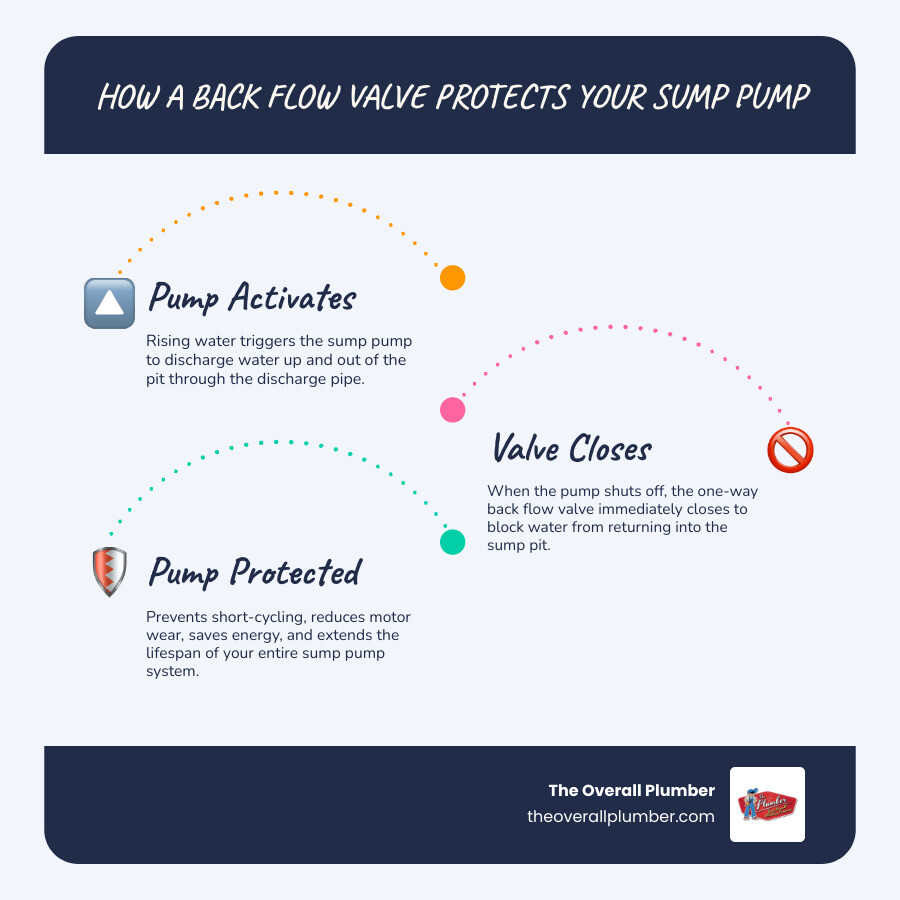
Key back flow valve for sump pump vocabulary:
Why You Need a Back Flow Valve for Sump Pump Protection
A sump pump check valve is a one-way valve installed on the discharge pipe. Its whole job is simple: let water go out, and stop it from coming back in.
That matters more than most people realize.
When the pump shuts off, gravity wants to pull the water sitting in the vertical discharge pipe right back into the sump basin. If there is no check valve, or if the valve has failed, that water returns to the pit. The float rises again. The pump kicks on again. Congratulations, your sump pump has entered its exhausted treadmill era.
This repeated on-off cycling is called short-cycling, and it is hard on:
- the motor
- the float switch
- the pump bearings
- your electric bill
- your patience
A fully functional sump pump check valve can help increase pump life expectancy because it stops the pump from moving the same water twice. It also helps the system run more efficiently during heavy rain, which is especially important for homes we serve around Houston, Pearland, League City, Friendswood, Pasadena, Galveston County, and nearby Gulf Coast areas where sudden storms can put a sump system to work fast.
A few practical reasons we recommend one:
- It reduces unnecessary pump cycles.
- It lowers wear on the motor and switch.
- It helps prevent overflow from repeated drain-back.
- It reduces water hammer in many systems.
- It can make the whole discharge line quieter.
If you want a plain-language breakdown of valve terminology, our guide to Backflow Valves Terms Demystified is a good companion read.
Comparing the Best Sump Pump Check Valve Types
Not all check valves are built the same. Some prioritize quiet operation. Some prioritize low cost. Some are easier to service later. And some are designed for sewage systems, not standard sump pump setups.
For most residential sump pits, the main categories are:
- standard swing or flapper check valves
- spring-loaded silent check valves
- threaded or slip-inline valves
- union-style service-friendly valves
You can also see broader type overviews in this external Sump Pump Check Valve Guide.
Here is the simple comparison:
| Type | How It Closes | Pros | Cons | Best Use |
|---|---|---|---|---|
| Standard flapper/swing | Gravity or reverse flow | Affordable, simple, common | Can thump loudly | Budget-friendly residential installs |
| Spring-loaded silent | Internal spring | Quieter, faster closure, less hammer | Usually costs more | Finished basements or nearby living spaces |
| Union-style | Varies by design | Easier future replacement | Higher upfront price | Homeowners who want easy service |
| Ball check valve | Ball seats against opening | Better for solids | Not usually needed for clear sump water | Sewage or ejector systems |
A quick warning here: a true plumbing backflow preventer for potable water is not the same thing as a sump pump check valve. For a sump pump, you are usually buying a check valve for the discharge line, not a large cross-connection device like an RPZ assembly.
Silent vs. Standard Back Flow Valve for Sump Pump
This is the comparison most buyers care about.
A standard check valve usually uses a flapper that swings open when the pump runs and drops shut when flow stops. These work fine, but they often make a noticeable thump when the water column reverses and the valve closes. That noise is commonly called water hammer, even though in sump systems it is often more of a slam than a full-house pipe hammer.
A silent check valve usually uses a spring-loaded flapper or internal mechanism. Because the spring starts closing the valve before all that water gains momentum, the shutdown is smoother and quieter.
Why silent valves are popular in 2026:
- They reduce thumping noise.
- They can reduce stress on the discharge piping.
- They are better for basements near bedrooms or living areas.
- Many have clear bodies that let you visually confirm flow.
One widely sold spring-loaded model has a 4.7 out of 5 rating from 1,005 reviews, which tells us the demand for quieter operation is real. We do not treat marketplace ratings as gospel, but they are a useful sign that homeowners strongly prefer quieter designs.
Standard valves still have a place:
- They are cheaper.
- They are easy to find.
- They are simple to replace.
- They work well in unfinished utility areas where noise is not a big concern.
Our rule of thumb:
- Choose silent if noise matters.
- Choose standard if budget matters most.
- Choose union-style if future service access matters.
- Choose ball check only for sewage applications, not standard basement sump pits.
For buyers comparing products, examples of the common residential styles include a spring-loaded silent valve option and a full-flow valve for common sump sizes.
Sizing Your Back Flow Valve for Sump Pump
Size matters here, and guessing is a great way to end up back at the store.
The valve size should match your sump pump discharge pipe, not your best guess based on vibes. The two most common residential sizes are:
- 1-1/4 inch
- 1-1/2 inch
In many homes, 1-1/2 inch is the most common. Many modern replacement valves are made to fit either size using reducer inserts, stepped couplings, or adapter gaskets.
How to choose the right size:
- Check the pump outlet size in the manufacturer specs.
- Measure the discharge pipe outside diameter and confirm the pipe type.
- Verify whether the valve is made for Schedule 40 PVC, ABS, or a flexible coupling connection.
- Match the connection style: slip, threaded, rubber coupling, or combo fit.
A few buying tips:
- Do not downsize the pipe unless the pump manufacturer allows it.
- Full-flow designs are helpful because they reduce restriction.
- If your pump discharge line is 1-1/2 inch, buy a true 1-1/2 inch valve unless a dual-size model specifically states compatibility.
- If you are replacing an old valve, measure first. Assumptions are how plumbing projects become character-building exercises.
Many residential inline models fit both major sizes, including this 1-1/4 in. or 1-1/2 in. Full-Flow Sump Pump Check Valve.
Material Durability and Performance Standards for 2026
The body material affects durability, service life, and how forgiving the valve is in a damp, high-cycle environment.
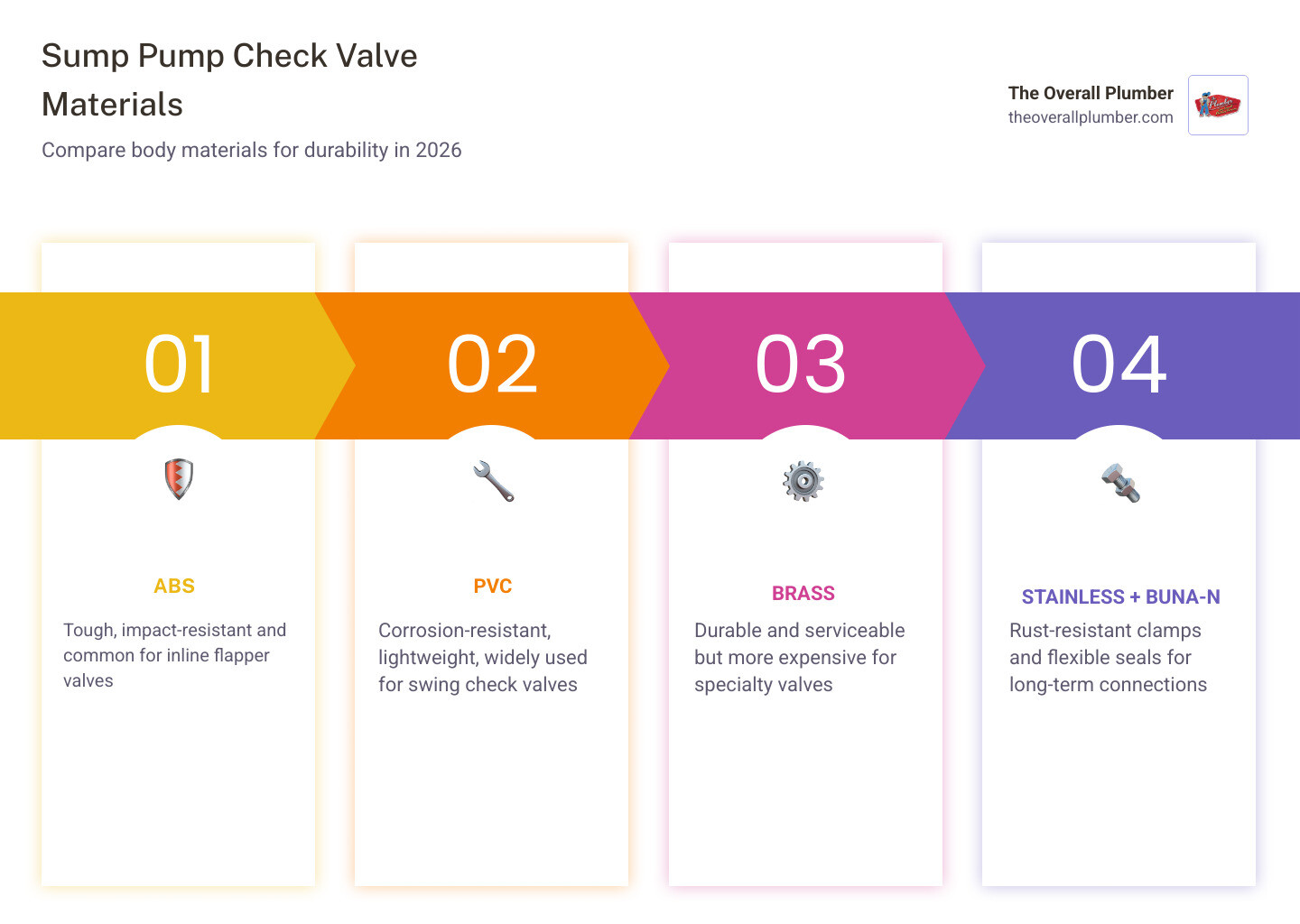
The most common materials are ABS, PVC, and brass, with rubber couplings and stainless steel clamps often included.
| Material | Pros | Cons | Common Use |
|---|---|---|---|
| ABS | Tough, impact-resistant, common in sump valves | Usually opaque, not serviceable | Inline flapper valves |
| PVC | Corrosion-resistant, widely available, lightweight | Some lighter models can feel less rugged | Swing check valves, basic installs |
| Brass | Durable, sometimes serviceable | More expensive, less common for standard sump pits | Specialty or repairable valves |
| Stainless steel clamps | Rust-resistant fastening | Quality varies | Securing rubber couplings |
| Buna-N gaskets/couplings | Flexible, good sealing | Can age over time | Connection and sealing components |
| EPDM flapper | Good moisture resistance | Still subject to wear | Internal flapper mechanism |
ABS and PVC are both common and appropriate for most residential sump systems. We tend to like robust ABS or thick-walled PVC bodies for standard home use because they resist corrosion and are affordable to replace. Brass can be a solid material, but it is less common in basic sump pit installations and often costs more than most homeowners need to spend.
A good residential valve should have:
- a durable body material
- corrosion-resistant clamps
- quality gasket or coupling material
- a clear flow direction arrow
- secure, easy-to-tighten connections
Some valves also offer a clear inspection body, which can be handy for verifying movement and diagnosing problems without cutting the pipe apart.
For an example of common sump valve construction, see this PVC Sump Pump Swing Check Valve, 1-1/4 in. and 1-1/2 in. IPS UC, White.
In 2026, the best value for most homeowners is still:
- ABS or PVC body
- stainless steel clamps
- flexible couplings
- exact pipe-size compatibility
- quiet operation if the sump pit is near living space
Step-by-Step Installation and Maintenance Guide
A typical in-line sump pump check valve installation is very doable for a confident DIYer, but it must be done correctly. Installed backwards, too high, or with poor support, the valve may leak, slam, or fail to prevent backflow.
A well-supported vertical installation is usually best.
Based on industry best practices, the valve is commonly installed:
- on the vertical discharge pipe
- roughly 1 to 3 feet above the pump outlet
- below the pit cover area when possible for easier service
- with the arrow pointing away from the pump and upward
That placement reduces major drain-back while still allowing a small amount of beneficial water return in some systems to help flush sediment.
For a detailed external reference, see Where to Install a Check Valve on a Sump Pump – Engineer Fix.
Typical tools and materials
You may need:
- replacement check valve
- tape measure
- marker
- PVC cutter, saw, or appropriate pipe cutter
- screwdriver or nut driver for clamps
- PVC primer and cement if using glued fittings
- towel or bucket for leftover water
- pipe strap or support if needed
- safety gloves and eye protection
Basic installation steps
- Turn off power to the sump pump.
- Drain and dry the work area as much as possible.
- Identify the vertical discharge section where the valve will go.
- Measure the valve body and mark the pipe cut points.
- Cut out the correct pipe section.
- Dry-fit the valve first.
- Confirm the flow arrow points up and away from the pump.
- Install the valve using the correct couplings, clamps, or solvent-weld fittings.
- Tighten all connections evenly.
- Support the discharge pipe if the valve adds weight or movement.
- Restore power.
- Test the system by adding water to the pit and watching one full cycle.
What to check after installation
Look and listen for:
- leaks at the couplings
- reverse flow into the basin
- excessive thumping
- poor discharge flow
- pipe movement when the pump shuts off
If the system still lets water rush back into the pit, possible causes include:
- valve installed backward
- wrong size valve
- damaged flapper or spring
- debris stuck inside
- horizontal installation when the product requires vertical use
Many residential models are intended for vertical installation only, so always check product instructions before mounting horizontally.
Maintenance tips
Most sump pump check valves are low-maintenance, but not no-maintenance.
We recommend:
- inspecting the valve annually, especially before storm season
- checking clamps and couplings for leaks or cracking
- listening for new thumping or gurgling
- watching the pit after pump shutoff for obvious backflow
- replacing the valve if it is stuck, cracked, or no longer sealing
A common homeowner test is simple:
- run the pump
- listen for closure
- watch the pit water level for 10 to 15 seconds after shutdown
If the level rises noticeably from drain-back, the valve may be failing.
If you want a professional set of eyes on the system, our Back Flow Valve Plumbing Inspection can help identify valve issues before they become pump failures.
Frequently Asked Questions
How long does a sump pump check valve typically last?
A typical residential sump pump check valve often lasts about 5 to 7 years, though actual life depends on:
- how often the pump runs
- water quality and debris
- valve material
- installation quality
- whether the system experiences water hammer
A valve in a high-use pit may wear out sooner. If your home sees frequent stormwater pumping, annual inspection is smart.
Can a check valve be installed horizontally?
Sometimes, but only if the specific product is rated for horizontal installation.
Many common residential sump pump check valves are designed for vertical mounting and may not seal properly when installed sideways. If a product listing or instructions say vertical only, believe it. Gravity and flapper position matter.
When in doubt, install it vertically on the discharge riser.
Why is my sump pump making a loud thumping noise after it stops?
That thump is usually the check valve closing against reversing water flow. Common causes include:
- a standard swing/flapper valve slamming shut
- a long vertical water column gaining speed before closure
- loose discharge piping
- a worn valve that no longer closes smoothly
If the noise is mild, that may be normal for a basic swing valve. If it is loud, sudden, or getting worse, consider:
- tightening pipe supports
- checking for wear or debris
- upgrading to a spring-loaded silent valve
Protect Your Home with Professional Plumbing Support
At The Overall Plumber, we help homeowners across Brazoria County, Harris County, Galveston County, Houston, Clear Lake, Santa Fe, League City, Texas City, La Porte, Friendswood, Pearland, Pasadena, and Galveston with practical plumbing repairs and inspections that protect the rest of the system too.
If your sump pump is short-cycling, making noise, leaking around the discharge line, or running more often than it should, we can help. You can also explore our Services and Residential Plumbing pages to see how we support local homeowners with repairs, inspections, and maintenance. We offer satisfaction guarantees, priority scheduling, and no overtime fees, with no trip charges for repair service.
If you want us to inspect your sump discharge setup, start with our Back Flow Valve Plumbing Inspection.
Contact The Overall Plumber today to schedule your inspection or repair through our website or by using our tel link.