


Sewer Line Repair Starts With Finding the Damage
If drains keep backing up, sewage smells linger, or a patch of your yard stays wet, stop using the affected drains and schedule a sewer camera inspection. The inspection can show where the pipe is damaged and whether a small section needs repair, the line can be lined without a long trench, or it needs replacement. Check local permit rules before work begins.
A good diagnosis helps you avoid paying for a fix that misses the real problem. It also helps you compare repair options based on cost, time, and how much digging they require.
I’m Dayton Whitworth, a second-generation plumbing professional serving homeowners across Greater Houston and the Gulf Coast. My work with plumbing repairs informs this guide to sewer line repair, starting with the warning signs and the options that follow.
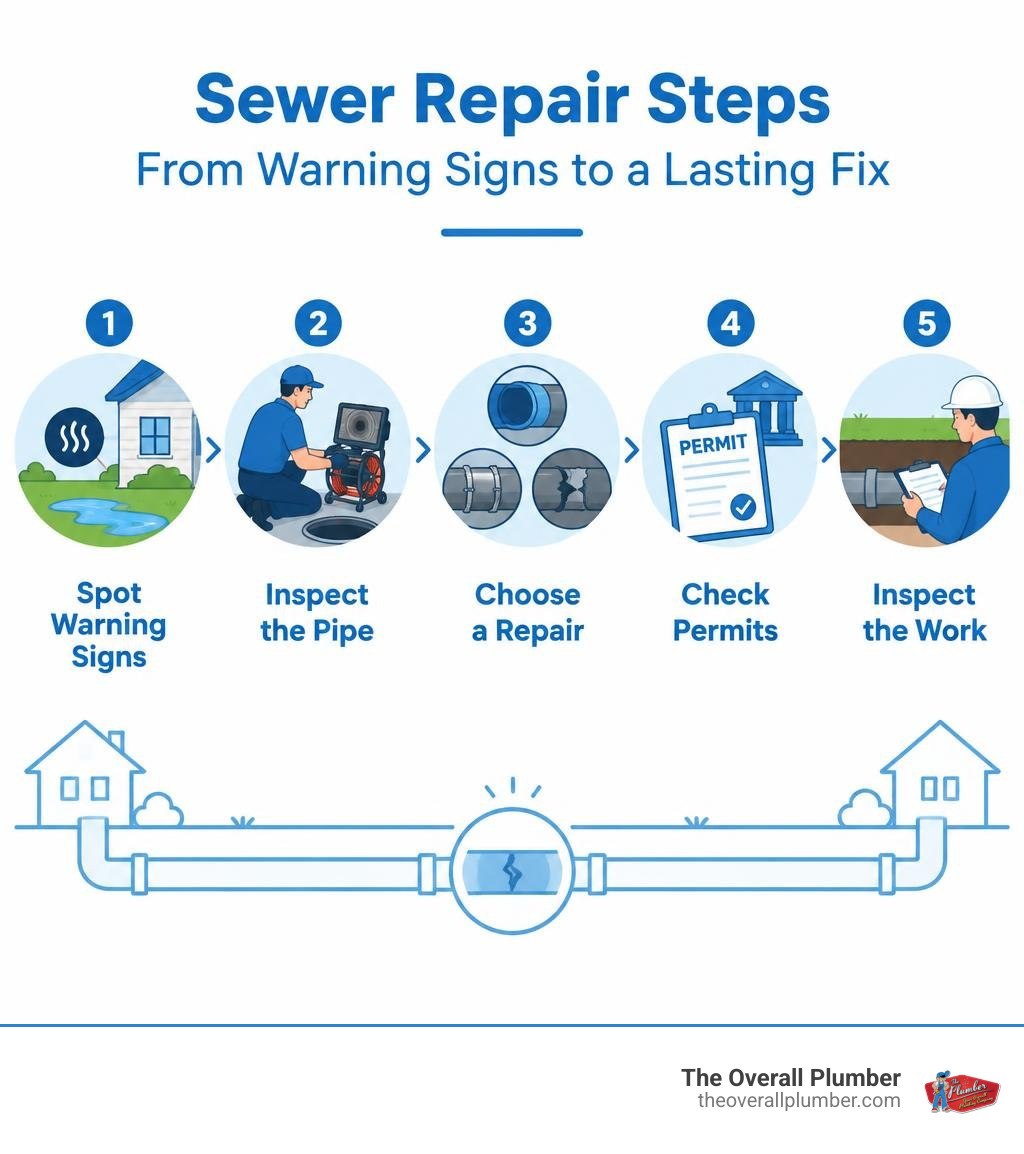
Identifying Warning Signs, Pipe Materials, and Common Failure Points
A failing underground pipe rarely breaks down silently. Instead, it sends clear warnings before waste backs up into your tubs and showers. Recognizing these early warning signs helps you address common sewer line problems before raw sewage floods your floors or compromises your home’s foundation.
Look out for these common warning signs around your property:
- Foul Sewage Odors: A continuous smell of rotten eggs or raw waste near interior drains or around your yard indicates sewer gas escaping through a cracked pipe.
- Soggy, Excessively Green Lawn Patches: Leaking wastewater acts as a potent fertilizer. If a specific patch of grass grows faster and looks brighter green than the rest of the lawn, a subterranean leak is likely feeding it.
- Recurring Drain Backups: When multiple plumbing fixtures back up simultaneously, or when flushing a toilet causes water to gurgle up into your bathtub, the blockage sits in your main lateral line.
- Pest and Rodent Infestations: Rodents travel through sewer systems. Broken lines provide access into your yard, leaving mysterious rat holes that keep reappearing no matter how many times you fill them in.
- Slow Draining Fixtures: Drains that clear slowly despite basic clearing attempts indicate restricted flow along the main channel.
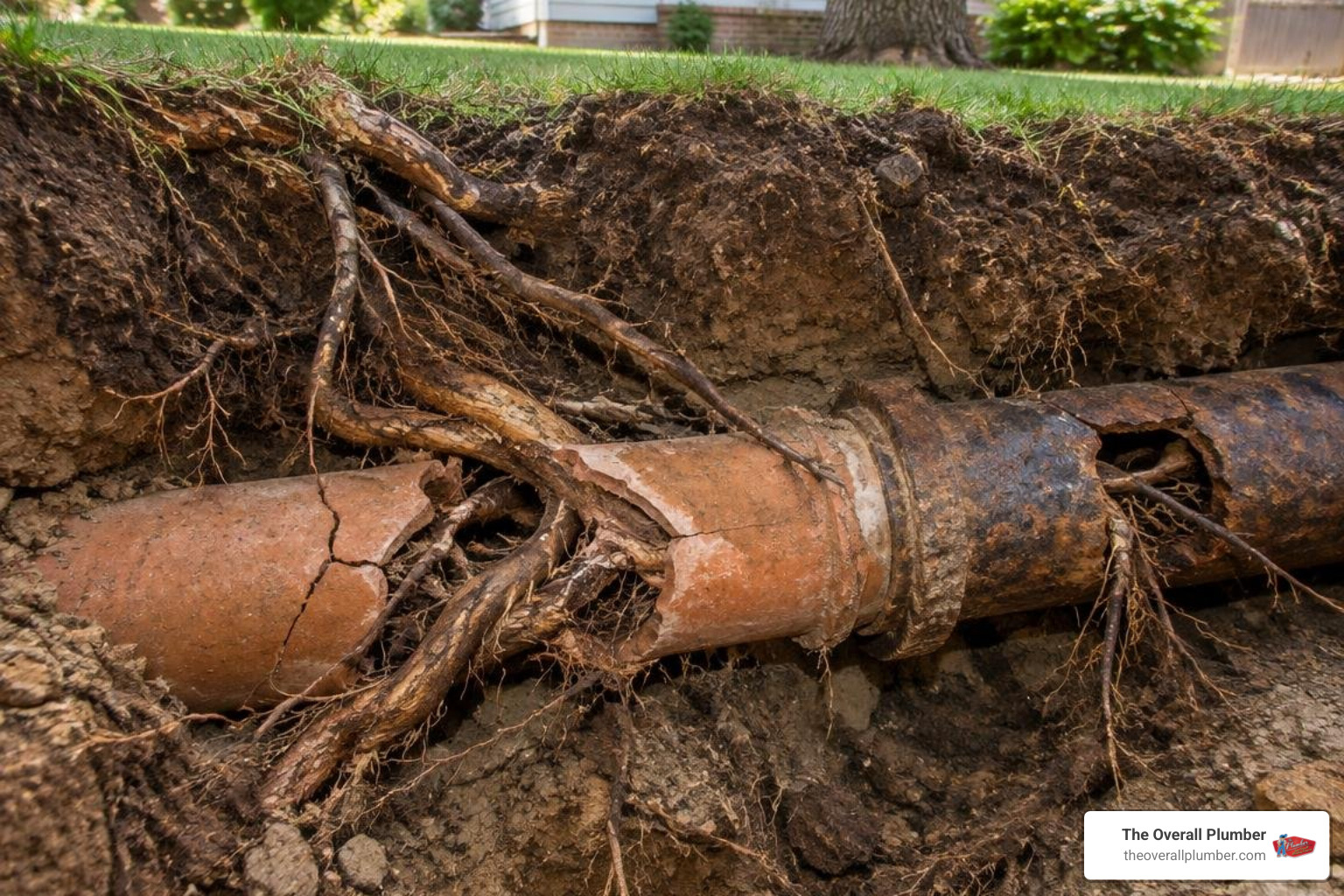
The age of your property directly influences the materials buried beneath your yard and how they fail over time:
- Clay Tile and Vitrified Tile: Common in homes built before the mid-1960s. These pipes feature short sections joined with mortar. Over decades, ground shifting breaks the brittle clay, and thirsty tree roots penetrate the mortar joints.
- Cast Iron: Installed heavily through the mid-1970s. While sturdy, cast iron eventually suffers from interior rust, channeling, and bottom-plate rotting due to acidic wastewater.
- Schedule 40 PVC and ABS: Modern standard materials used in newer builds across Harris and Galveston counties. These plastics resist corrosion and root intrusion well, but ground settling or heavy surface loads can still crack transition joints and fittings near the foundation or curb connection.
The most vulnerable failure points across all piping materials occur at the transition joint between cast iron and plastic, the curb connection where private lines meet city mains, and right below foundation walls where building settlement exerts shear stress on the line.
Advanced Diagnostic Techniques
Guessing the location of a subterranean leak leads to unnecessary digging and inflated costs. Today’s diagnostics eliminate that guesswork through precise underground imaging and testing.
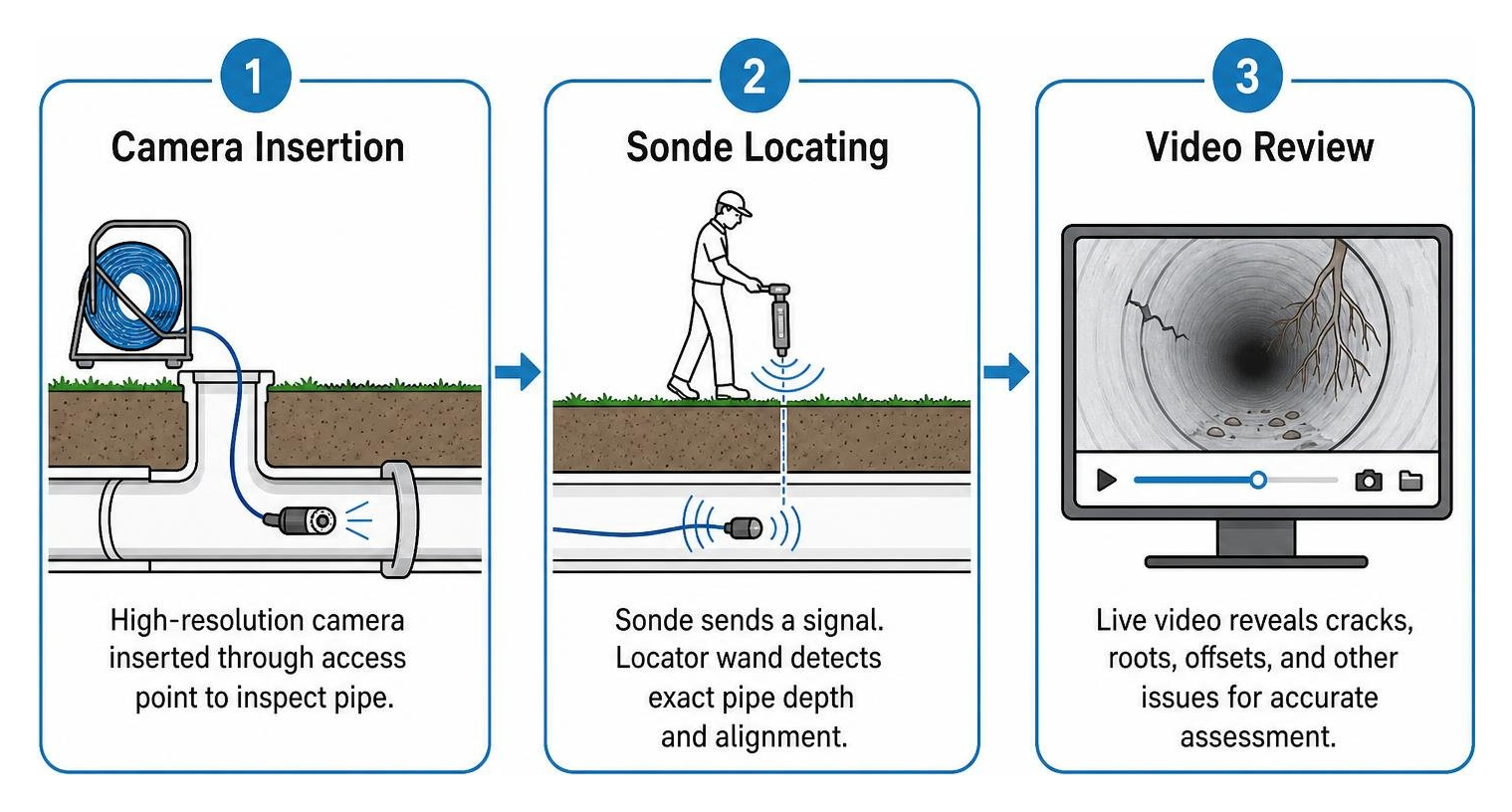
A high-resolution sewer camera inspection feeds an optical head through your cleanout to provide real-time video footage of the interior pipe walls. This process shows cracks, joint offsets, bellies, and invasive roots. Homeowners can learn more about finding their access points in our guide to finding your sewer cleanout.
When subtle hairline leaks or joint failures require verification, plumbers use non-toxic fluorescent dye testing. Technicians flush dye through fixtures and monitor downstream access points or soil surfaces to confirm break locations. Understanding how these assessments work helps you plan ahead, and you can review detailed procedures in our homeowner’s guide to sewer camera inspections.
Alongside optical cameras, technicians use electromagnetic sondes attached to camera heads. Above ground, a locator wand detects the exact depth and alignment of the pipe beneath lawns, driveways, or sidewalks, eliminating unnecessary excavation.
Modern Trenchless Sewer Line Repair Methods and Technologies
Trenchless rehabilitation restores damaged underground pipes without digging a continuous trench through your landscaping, patio, or driveway. Rather than excavating your entire yard, trenchless methods utilize small access pits to install structural liners or pull completely new piping through the old channel.
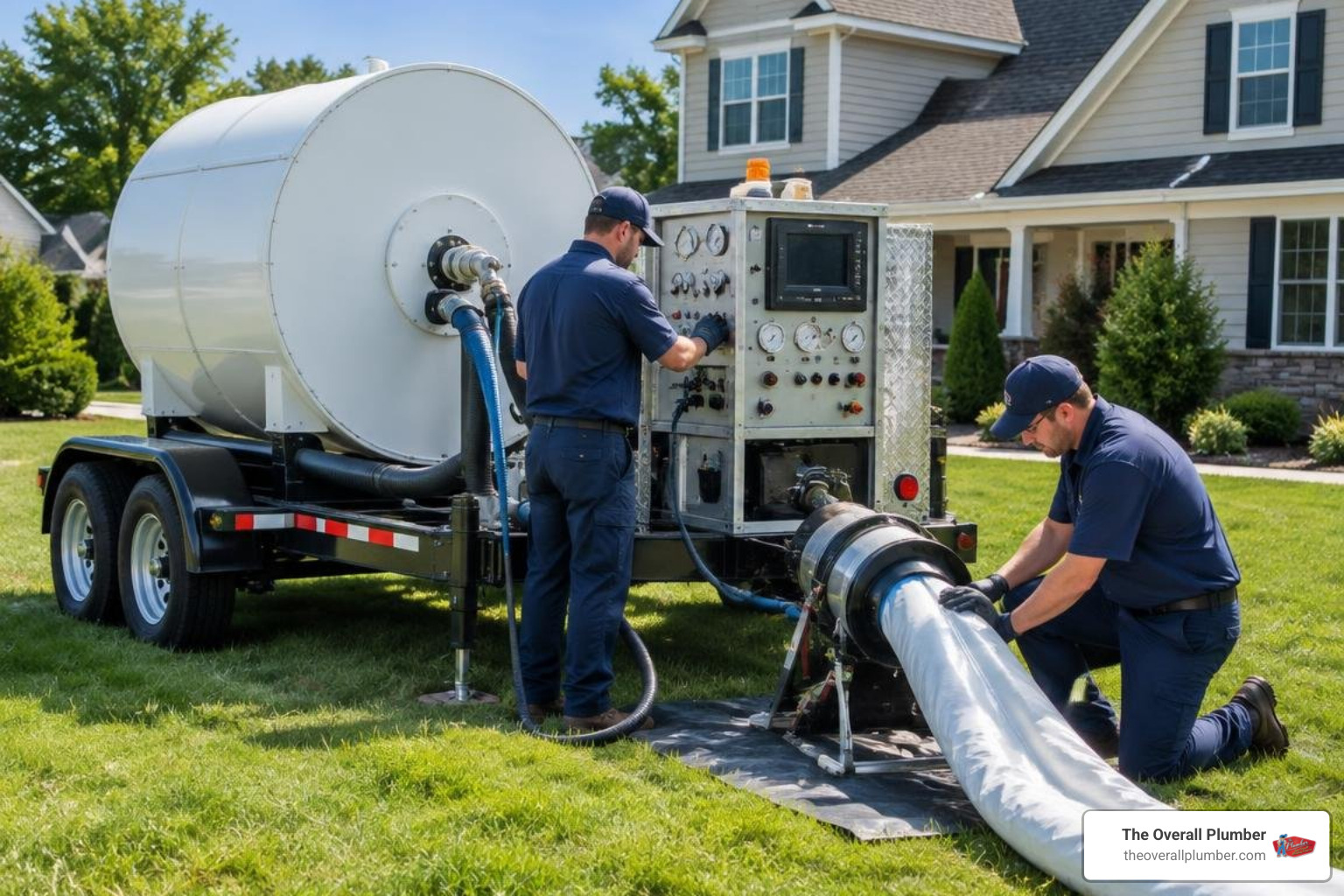
The primary modern trenchless methods include:
- Cured-in-Place Pipe (CIPP) Lining: Technicians pull a flexible fabric tube saturated with thermosetting epoxy resin into the damaged pipe. Once positioned, the bladder inflates with air, steam, or hot water, pressing the resin against the host pipe walls. The resin cures into a solid, seamless, structural pipe within a pipe.
- Pipe Bursting: A hydraulic pulling machine pulls a conical expanding head through the damaged host line. The bursting head fractures the brittle existing pipe outward into the surrounding soil while pulling a seamless high-density polyethylene (HDPE) pipe behind it. This method even allows for pipe upsizing to improve drainage capacity.
- Slip Lining: Used in larger lateral runs, this technique slides a smaller-diameter carrier pipe into the host pipe and grouts the annular space between them.
- Spray-Applied Polyurethane Lining: Robotic spray application applies structural coatings like SprayWall directly to internal pipe surfaces. This specialized polyurethane formulation offers twice the load resistance of traditional liners, providing immediate corrosion protection and structural reinforcement.
To understand why so many homeowners prefer no-dig techniques, read about how trenchless sewer line replacement protects landscapes and saves driveways.
When to Choose Trenchless Sewer Line Repair Over Spot Fixes
Choosing between trenchless relining and isolated spot repairs depends on the overall structural condition of the pipe. If a camera reveals a single localized break caused by isolated mechanical damage, a targeted spot excavation might suffice.
However, when an older clay or cast-iron line shows extensive cracking, continuous root intrusion, or multiple leaking joints, spot repairs only address the immediate symptom while the rest of the line continues to deteriorate.
Trenchless lining or bursting typically costs $120 to $250 per linear foot. Because most projects finish in a single day once permits and utility locates are completed, no-dig rehabilitation saves thousands of dollars in secondary landscaping, concrete replacement, and porch restoration costs.
Comparing Trenchless Solutions and Traditional Open-Trench Excavation
Every property presents unique ground conditions and structural layouts. Reviewing the operational differences between trenchless methods and open-trench excavation helps you evaluate timeline, disruption, and total expenses.
| Feature / Metric | CIPP Lining | Pipe Bursting | Traditional Open Trench |
|---|---|---|---|
| Average Cost (per foot) | $120 – $250 | $130 – $260 | $80 – $200 (excavation only) |
| Secondary Landscape Restoration Costs | Minimal ($0 – $500) | Low ($200 – $1,000) | High ($2,000 – $10,000+) |
| Project Duration | 1 Day (Same-Day) | 1 – 2 Days | 3 – 7 Days |
| Landscape / Hardscape Disruption | Negligible (1 cleanout access) | Low (2 small insertion pits) | Severe (Continuous deep trench) |
| Heavy Machinery on Lawn | None | Minimal (Small puller) | Heavy (Excavators & backhoes) |
| Pipe Upsizing Capability | No (Slight diameter reduction) | Yes | Yes |
| Applicability to Fully Collapsed Pipes | No (Requires open host pipe) | Limited (Depends on collapse) | Yes (Unrestricted) |
Open-trench repair carries a lower raw installation cost per foot in open fields, but suburban residential settings tell a different story. Trenching requires backhoes to cut through driveways, sidewalks, flowerbeds, and patios. When you add concrete repouring, paver resetting, and sod replacement, traditional digging often ends up costing far more than trenchless solutions. Homeowners can read our breakdown of sewer line replacement costs to better understand these line items.
Navigating Jurisdictional Rules, Permits, and Shared Sewer Lines
Understanding where your legal responsibility begins and ends protects you from unexpected municipal fines and disputes with neighbors.
In most Texas municipalities—including Houston, Pasadena, Pearland, League City, and throughout Galveston and Harris counties—the property owner owns and maintains the private sewer lateral from the exterior building foundation up to the municipal main connection point, or up to the property boundary line depending on local utility easements.
You can check local utility guidelines through municipal departments such as the Sanitary Sewer Department – Brazoria, TX and review city-specific maintenance boundaries outlined in Line Repair municipal guidelines.
In older neighborhoods, properties sometimes share a “party sewer line”—a single private lateral serving two or more separate residential lots before tying into the municipal collector main. When a party line backs up, all connected homes share the financial responsibility for maintenance and repairs according to recorded property easements. If no recorded easement exists, homeowners must coordinate joint plumbing assessments and split repair costs proportionately.
Every structural sewer modification requires municipal plumbing permits and post-installation inspections. Licensed contractors pull these permits to confirm that pipe slope, pipe materials, cleanouts, and backwater valves meet the International Plumbing Code (IPC) and local city amendments.
Responding to Municipal Violation Notices and Appeals
Cities routinely conduct smoke testing and dye testing through municipal sanitary systems to detect storm runoff infiltration and lateral pipe leaks. If municipal inspectors detect sewer gas or dye escaping on your property, you will receive an official notice of violation.
Once the city notifies you of a sewer or drain line break or leak on your property, you have 30 days to make repairs or request an official repair extension.
Ignoring a municipal violation notice can lead to escalating daily fines and municipal utility liens placed on your property deed. If you believe the leak resides on the city side of the main tap or stems from a neighboring property, contact a licensed plumbing contractor immediately. Your plumber will perform a certified video inspection and provide recorded, time-stamped footage to submit to the city public works department for an official appeal.
Why Sewer Line Repair Should Be Left to Professionals
Repairing an underground sewer line is not a DIY task. Raw sewage contains dangerous biohazards, airborne pathogens, and combustible methane gas.
Furthermore, digging without proper underground clearance risks striking high-voltage electric feeds, natural gas conduits, or fiber-optic lines. Licensed plumbing contractors manage utility line locating by calling 811 before excavation starts, ensure proper pipe bedding and fall grade, and coordinate mandatory municipal inspections before backfilling the line.
Frequently Asked Questions About Sewer Line Solutions
How long do trenchless CIPP repairs last?
CIPP sewer lining can last 50 years or more when installed properly. The cured epoxy resin forms a continuous, joint-free structural pipe that resists corrosion, chemical erosion, and root penetration.
Who pays for repairs on a shared or party sewer line?
Repairs on a shared private sewer line are the collective responsibility of the connected property owners. Costs are typically divided equally or based on the upstream location of the defect as outlined in private sewer easements or neighborhood deed covenants.
How quickly can a trenchless repair be completed?
Most trenchless sewer repairs can be completed within one day once permits and utility locates are secured. Simple CIPP lining runs often finish in just four to eight hours, returning wastewater service to your home that same evening.
For fast diagnosis and long-lasting underground solutions, schedule an inspection with our team for professional sewer line repair in Houston or call us directly at 281-668-5833. We provide thorough drain cleaning with augers and camera inspections, backed by our satisfaction guarantees, priority scheduling, no overtime fees, and zero trip charges across Houston, Clear Lake, League City, Pearland, Friendswood, Pasadena, and surrounding communities.