

Why a Plumbing Inspection Could Save Your Home From a Costly Disaster
A plumbing inspection is a professional evaluation of your home’s water supply, drain, waste, and vent systems to check for hidden problems before they turn into emergencies. Here is a quick summary of what you need to know:
- What it is: A licensed plumber checks pipes, fixtures, water pressure, shut-off valves, drains, and water heaters for leaks, corrosion, blockages, and code violations.
- Why it matters: Problems like slab leaks, sewer backups, and faulty water heaters often develop out of sight and cause serious damage before any visible signs appear.
- How often: Most plumbing professionals recommend a full inspection once a year.
- What it costs: Private inspections typically range from around $199 flat-rate for a whole-home evaluation, depending on property size and scope.
- Who does it: Either a licensed private plumber or a municipal code inspector, depending on whether you need maintenance or permit compliance.
Most plumbing problems do not announce themselves. A pipe can corrode for months, a drain line can slowly fill with tree roots, and a water heater can build dangerous pressure — all without a single obvious warning sign. By the time damage becomes visible, repair costs can be significant and the disruption to your home even greater.
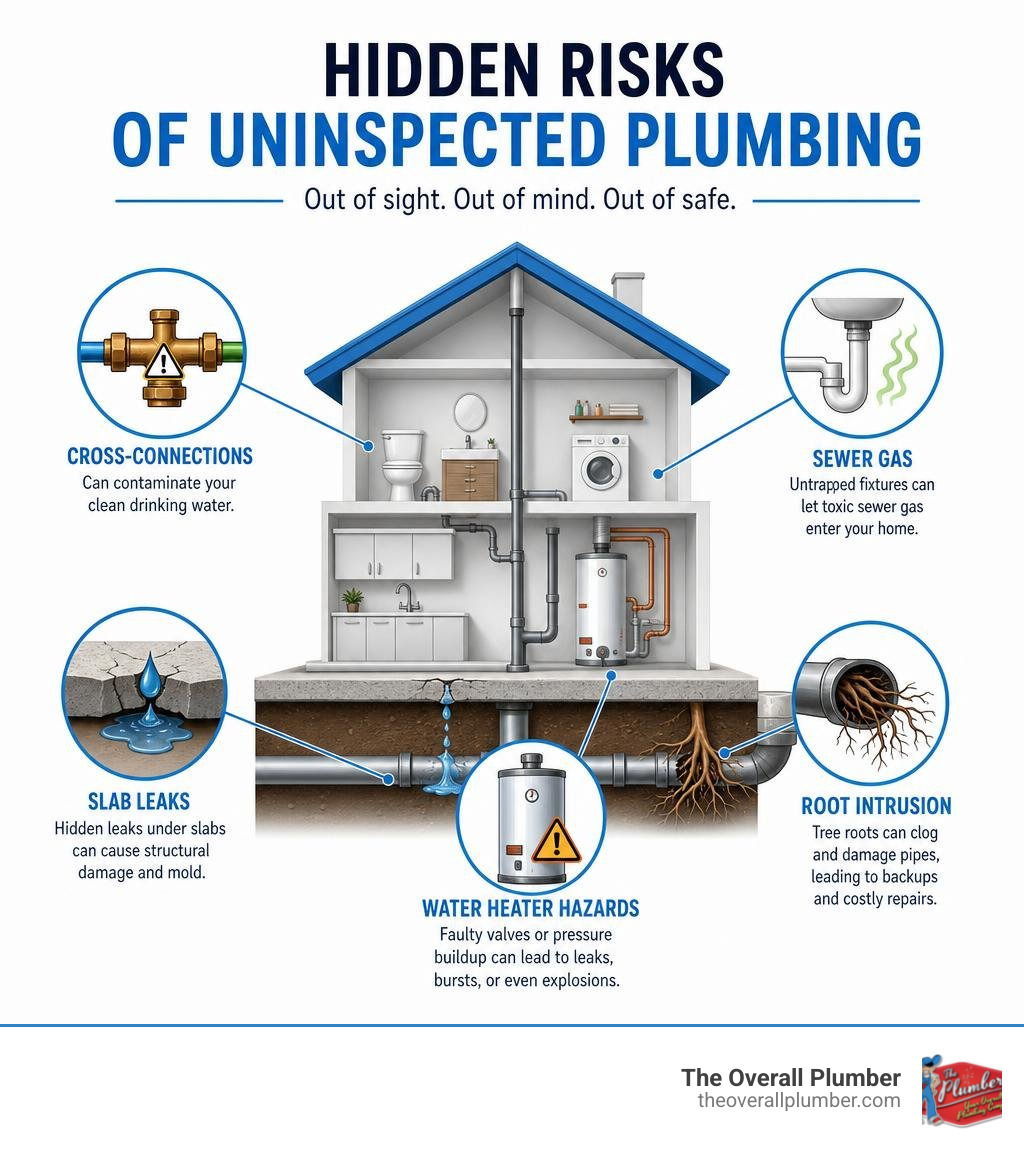
The risks are not just financial. Uninspected plumbing systems can lead to potable water contamination through cross-connections, sewer gas entering your living space through untrapped fixtures, and — in serious cases — water heater failures that pose a real safety hazard. Catching these issues early through a routine evaluation is one of the most practical things a homeowner can do.
I’m Dayton Whitworth, a second-generation plumber serving Greater Brazoria County, Galveston County, Houston, and the surrounding Gulf Coast communities, and I’ve seen how a timely plumbing inspection can prevent the kind of damage that turns a minor fix into a major renovation. In this guide, I’ll walk you through everything you need to know — from inspection types and IRC code requirements to costs, preparation, and what to do when problems are found.
What is a Plumbing Assessment and Why Do You Need One?
When we think about home maintenance, we often focus on the things we can see: a fresh coat of paint, a manicured lawn, or clean gutters. But the most complex and potentially destructive system in your home runs completely out of sight behind your walls and beneath your floors. This is why a professional system assessment is so critical.
At its core, a professional plumbing evaluation is designed to protect your home’s structural integrity and ensure your family’s safety. The primary focus of a plumbing inspection is on safety within a building. We verify that water systems are connected properly without cross-connections that could contaminate your clean drinking water, that fixtures are properly trapped to block toxic sewer gases from entering your living spaces, and that water heaters are safely installed with functioning safety controls.
Without regular checkups, minor plumbing issues can silently escalate. For instance, a small, slow leak under your foundation can gradually wash away the soil supporting your home, leading to catastrophic structural damage. By scheduling a routine assessment, you gain complete peace of mind and protect one of your largest investments. If you suspect your system is already showing signs of trouble, scheduling a professional Local Leak Detection and Repairs Houston Plumber is the best way to pinpoint the issue before it worsens.
Key Components Evaluated During a Standard Plumbing Inspection
During a comprehensive whole-home evaluation, we leave no pipe unturned. We systematically trace your entire system, checking everywhere water flows or drains. The key components we evaluate include:
- Shut-off Valves: We test all individual fixture shut-offs and your main emergency shut-off valve to ensure they turn smoothly and seal completely. If a pipe bursts, a seized shut-off valve can make the difference between a quick fix and a flooded living room.
- Water Pressure: High water pressure is a silent killer for plumbing fixtures and appliances. We test your incoming pressure to ensure it is within a safe range (typically 40 to 80 psi). Excessive pressure ruins seals, causes pipe joint fatigue, and shortens the lifespan of your washing machine and water heater.
- Fixture Performance: We run and inspect every sink, tub, shower, and toilet in your home, looking for slow drainage, weak flushes, or worn-out components like toilet flappers that waste hundreds of gallons of water.
- Drainage Flow and Piping: We inspect all visible supply and drain lines for slow leaks, corrosion, scale buildup, and physical damage.
In our coastal Texas environment, shifting clay soils can put incredible stress on underground pipes. If you are worried about hidden issues beneath your home, learning Is There a Water Leak Under Concrete Slab? Here Is How to Tell can help you recognize the early warning signs of a slab leak before it compromises your foundation.
Common Hazards Prevented by a Professional System Evaluation
A professional evaluation is about more than just finding leaky faucets; it is about preventing severe, high-stakes hazards. Some of the most critical issues we look for include:
- Water Heater Explosions: If a water heater’s temperature and pressure relief (T&P) valve is faulty or improperly piped, the tank can turn into a pressurized rocket. We inspect these safety valves to ensure they are functional and correctly installed.
- Sewer Gas Exposure: Every fixture must have a proper P-trap. If a trap is dry, missing, or improperly vented, toxic and flammable sewer gases can seep directly into your home.
- Slab Leaks and Pipe Corrosion: Galvanized steel or older copper pipes can corrode over time, especially when exposed to the highly mineralized water common in parts of Texas.
- Gas Line Leaks: Many water heaters and heating systems run on natural gas or propane. We check gas connections and appliance vents to ensure there are no dangerous fuel leaks or carbon monoxide hazards.
If you notice unexplained water pooling or an unexpected spike in your water bill but cannot find the source, you should read our guide on Where’s the Water? How to Find a Plumber to Find Water Leak to understand how we locate hidden leaks without tearing your home apart.
The Different Types of Pipe Evaluations Explained
Not all plumbing assessments are the same. Depending on whether you are buying a new home, trying to solve a recurring sewer backup, or remodeling your bathroom, the type of evaluation you need will vary.
We perform several types of inspections to fit different situations:
- Whole-Home Inspections: A comprehensive visual and functional assessment of your entire system, ideal for annual maintenance or pre-purchase evaluations.
- Diagnostic Drain Inspections: Focused evaluations using high-definition cameras to see exactly what is causing blockages inside your pipes.
- Municipal Code Inspections: Official evaluations conducted by city inspectors to verify that new installations comply with safety laws before issuing a Certificate of Occupancy.
For homeowners looking to understand the diagnostic side of things, we recommend checking out The Homeowner’s Guide to Sewer Camera Inspections to see how modern technology takes the guesswork out of pipe maintenance.
Diagnostic and Maintenance Pipe Evaluations
When you are dealing with a slow-draining sink or a recurring main line backup, we do not have to guess what is happening underground. We use state-of-the-art sewer cameras to get a clear, real-time look inside your pipes.
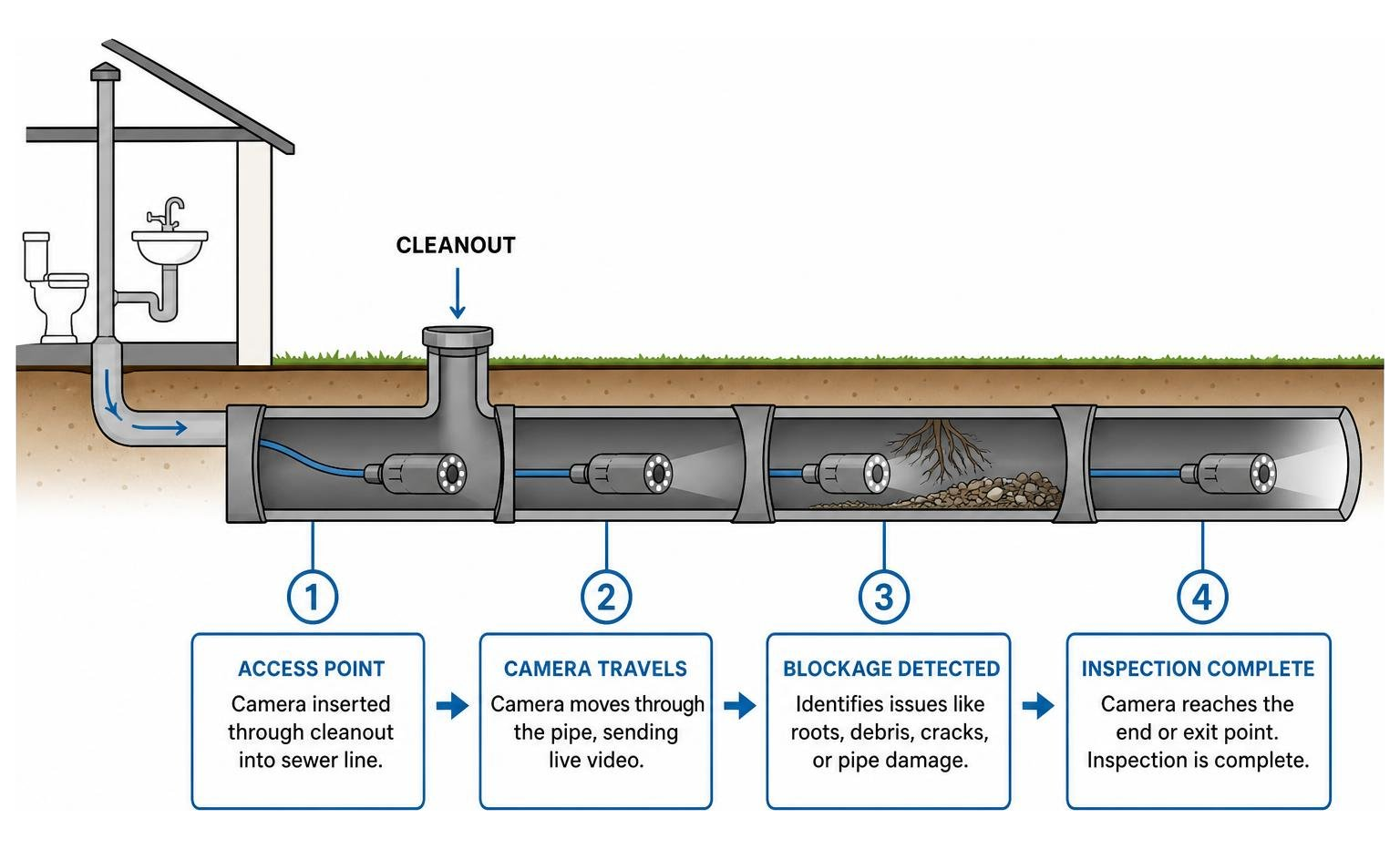
Through a Video Camera Sewer Line Inspection, we insert a flexible, waterproof fiber-optic camera into your sewer cleanout. This allows us to visually inspect the interior of your lines for root intrusion, pipe offsets, cracks, or heavy scale buildup. It is an incredibly efficient way to diagnose problems without digging up your yard.
If you live in Galveston County, we can help you Stop the Guesswork with a Camera Line Inspection in Texas City to pinpoint structural issues before they cause a major backup. Similarly, if you are in the northern part of our service area, scheduling a professional sewer camera inspection can help you keep your drainage system clear and functional. We focus our expertise entirely on the unique coastal soil conditions and plumbing challenges of the Texas Gulf Coast.
Municipal Code and Permit-Required Evaluations
If you are building a new home, adding a room, or undertaking a major renovation, you will need to deal with municipal code inspections. These are official inspections required by your local city or county building department to ensure that all work meets the minimum safety standards defined by the plumbing code.
In our local service areas, you must coordinate with your specific municipal office to pull permits and schedule inspections:
- In Brazoria County, you can find permit resources through Building Permits | Brazoria County, TX .
- For projects within Houston, you can track your permit status using the Inspection Request / Project Status Review portal.
- Residents in League City can schedule and review local requirements via Inspections | The League City Official Website! .
- For projects in Texas City, the official guidelines are hosted at BUILDING INSPECTIONS | Texas City, TX .
- In La Porte, you can coordinate with the city at Building Permit Services | La Porte, TX – Official Website .
These municipal inspections are highly structured. Whether you are looking at the Inspections and Testing | UpCodes guidelines or examining specific out-of-state examples like the Plumbing Inspection Requirements | Murfreesboro, TN – Official Website , the underlying goal remains identical: ensuring public safety. Municipalities around the world, from local Texas cities to far-off regions like Inspections | City of New Westminster or the Inspections and Enforcement Division of Santa Fe, NM, require strict adherence to these testing phases to protect the local water supply and prevent structural hazards.
Understanding the IRC 2024 Plumbing Code Stages
The International Residential Code (IRC) 2024 outlines strict rules for how plumbing systems must be tested and inspected during new construction or major renovations. Under these rules, you cannot simply install pipes and cover them up; the work must be evaluated in three distinct, sequential phases.
| Inspection Phase | What the Inspector Checks | Key Requirements (IRC 2024) |
|---|---|---|
| Underground Rough-In | Under-slab drainage, water service lines, pipe bedding, and slope. | Must be fully exposed; verified before concrete is poured or trenches backfilled. |
| Above-Ground Rough-In | Drain-waste-vent (DWV) piping, water supply lines, and vents. | 50 psi water supply pressure test for 15 minutes; no drywall or insulation installed. |
| Final Inspection | All completed fixtures, water heaters, trim, and functional testing. | System must be fully operational, with no active leaks and correct safety valves. |
To dive deeper into the technical specifics of these phases, you can consult the detailed breakdown of the IRC 2024 Plumbing Inspection Stages: What Inspectors Check at Each Phase (P2503) | Jaspector guide.
Underground and Above-Ground Rough-In Phases
The first phase is the underground rough-in, which local contractors often refer to as a “slab preparation” or “pre-pour” inspection. This occurs after trenches are excavated and the under-slab drain, waste, vent (DWV), and water service lines are installed, but before any concrete is poured or dirt is backfilled. The inspector verifies that the pipes are laid at the proper slope (typically a minimum of 1/8 to 1/4 inch per foot) and that they are protected from shifting clay soils with proper bedding material.
If you are dealing with an older home and need to locate existing underground lines before planning a remodel, we highly recommend reading about Finding Buried Lines with a Pipe Detector for Concrete Floor and The Ultimate Guide to Finding Your Sewer Line Without Making a Mess to see how we locate hidden pipes with minimal disruption.
Once the slab is poured and the home’s framing is complete, it is time for the above-ground rough-in (or “top-out”) inspection. This must be completed before any insulation, drywall, or wall finishes are installed. During this phase, the IRC 2024 requires a rigorous pressure test. The water supply system must be tested under water or air pressure of not less than 50 psi for at least 15 minutes to prove that the joints are completely watertight.
The Final Plumbing Inspection and Code Violations
The third and final phase is the final plumbing inspection. This takes place after the building is completed, all fixtures (toilets, sinks, tubs, showers) are installed and connected, and the water is turned on. The inspector checks that every fixture is fully operational, that traps are properly sealed, and that the water heater is correctly vented and equipped with a properly piped temperature and pressure relief valve.
If any phase of the installation fails to meet code requirements, the inspector will issue a correction notice. Work cannot proceed to the next stage until the violation is corrected and a reinspection is approved. In many jurisdictions, failing an inspection carries a financial penalty. For example, according to the official Texas municipal guidelines in May 27, 2010/Revised November 26, 2013/August 1, 2014/August 23, 2016/ (Information Bulletin 182), a failed inspection can automatically assess a reinspection fee of $51.50. This is why it is so important to work with licensed professionals who get the job done right the first time.
Additionally, to prevent contaminated water from siphoning back into your home’s clean water supply, we pay close attention to backflow prevention. Homeowners can learn more about this safety feature by reading our guide on Back Flow Valve Plumbing Inspection.
Preparing for Your Plumbing Inspection: Costs and Steps
Preparing your home for a professional plumbing inspection does not require a lot of work, but a few simple steps can help the process go smoothly and save you time.
Here is how you can prepare:
- Clear Access Points: Make sure the plumber can easily reach your main water shut-off valve, water heater, crawl spaces, and the areas under your kitchen and bathroom sinks.
- Locate Your Cleanouts: If you are having a sewer camera inspection, clear any landscaping, dirt, or debris away from your outdoor sewer cleanout. If you are unsure where your main line runs, our guide on Sewer Lines 101: How to Locate Them can help you find it.
- Secure Your Pets: Keep your furry friends in a safe, quiet room while our technicians are working.
When it comes to pricing, we believe in keeping things simple and transparent. While some companies charge high hourly rates or surprise you with hidden fees, we offer straightforward, flat-rate pricing for our diagnostic and maintenance inspections.
A standard whole-home plumbing inspection typically costs around $199. If you want ongoing peace of mind, we also offer plumbing protection plans that include annual inspections, priority scheduling, and exclusive member discounts for as little as $168 per year.
Frequently Asked Questions About Home Pipe Assessments
How often should I schedule a plumbing inspection?
We highly recommend scheduling a professional system evaluation once a year. Regular annual maintenance is the single best way to catch minor issues — like a failing water heater anode rod, a slow slab leak, or minor root intrusion — before they turn into expensive, high-stress emergencies. It is a small investment that can add years to the lifespan of your fixtures and appliances.
What happens if my plumbing inspection reveals a code violation?
If we identify a code violation during a private maintenance inspection, we will provide you with a clear, written report detailing the issue and explaining the safety risks involved. We will then give you a flat-rate quote to correct the problem. If the violation is found during an official municipal permit inspection, the city inspector will issue a formal correction notice, and the work must be repaired and reinspected before your permit can be closed.
How much does a professional plumbing inspection typically cost?
A standard, professional whole-home inspection typically ranges from $150 to $250, with $199 being a common flat-rate industry benchmark. The final cost depends on the size of your home, the number of bathrooms, and whether you choose to add specialized diagnostic services like a high-definition sewer camera inspection.
Schedule Your Professional System Evaluation Today
At The Overall Plumber, we are dedicated to keeping your home’s plumbing safe, efficient, and code-compliant. Whether you need a routine annual checkup, a detailed sewer camera evaluation, or help passing a municipal permit inspection, our team of highly trained, licensed professionals is here to help.
We proudly serve homeowners across Brazoria County, Houston, Clear Lake, Santa Fe, League City, Texas City, La Porte, Friendswood, Pearland, Pasadena, Galveston, Harris County, and Galveston County. When you work with us, you benefit from our satisfaction guarantees, priority scheduling, and our strict policy of no trip charges and no overtime fees.
Do not wait for a hidden leak or a clogged sewer line to disrupt your life. Schedule professional residential plumbing services or call us directly at (281) 668-8055 to speak with our friendly team today!