


What You Need to Know About Pipe Replacement (Quick Answer)
Pipe replacement is the process of removing old, damaged, or hazardous plumbing pipes and installing new ones — either in a single section or throughout your entire home.
Here is a quick overview of what most homeowners want to know:
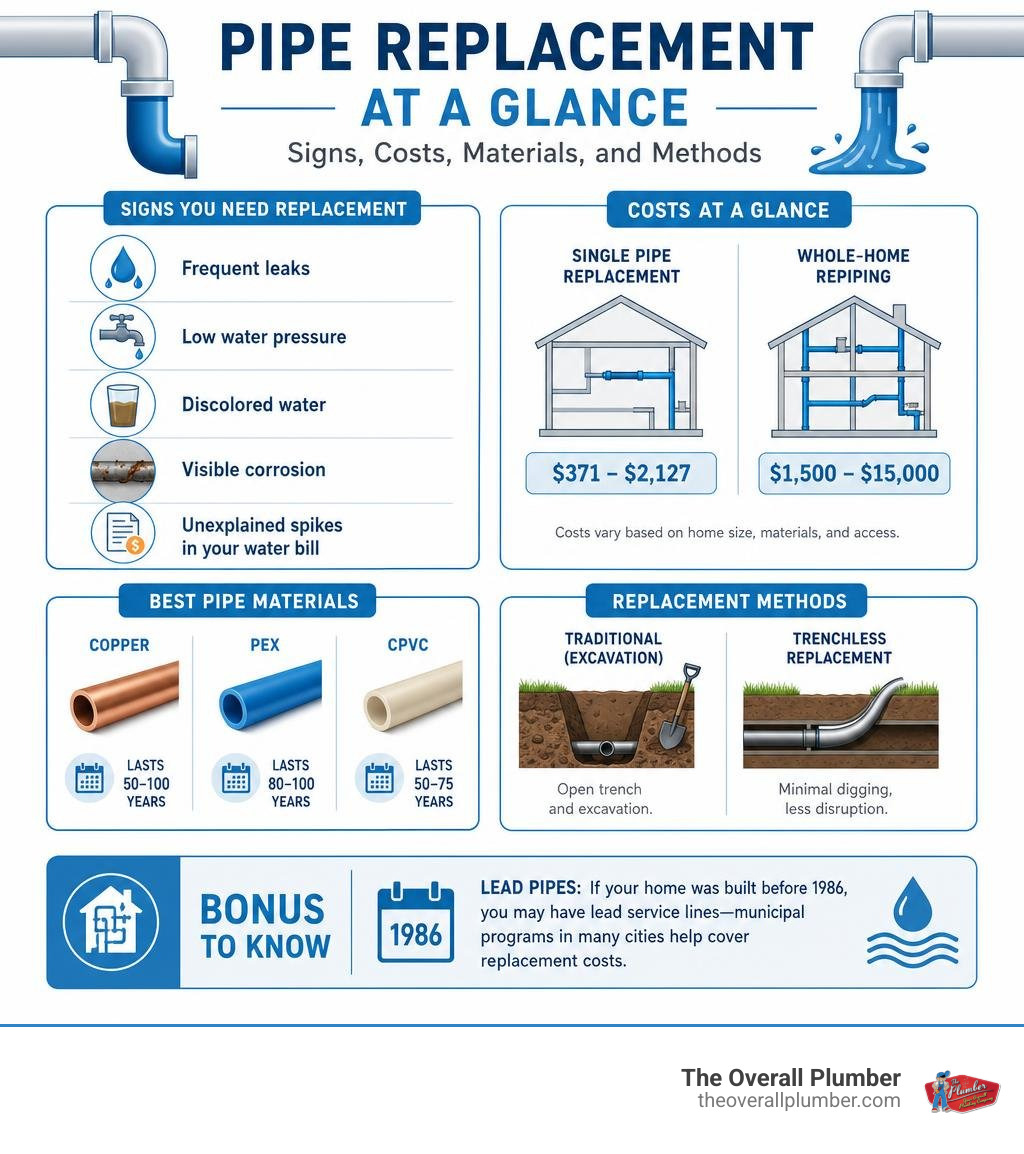
- Average cost: $371 to $2,127 for a single pipe, with whole-home repiping running $1,500 to $15,000
- Common signs you need it: frequent leaks, low water pressure, discolored water, visible corrosion, or unexplained spikes in your water bill
- Best pipe materials: Copper (lasts 50–100 years), PEX (80–100 years), and CPVC (50–75 years)
- How long it takes: Most residential projects are done in one to several days
- Methods: Traditional excavation (open trench) or trenchless replacement, which avoids digging up your yard
- Lead pipes: If your home was built before 1986, you may have lead service lines — municipal programs in many cities help cover replacement costs
Think of your home’s pipes the way you’d think of its circulatory system. When they start to fail, everything downstream suffers — your water quality, your water pressure, and eventually your walls, floors, and foundation.
The good news is that knowing the warning signs early and understanding your options can save you thousands of dollars in emergency repairs and water damage down the line.
I’m Dayton Whitworth, a second-generation plumber serving Greater Brazoria County, Galveston County, Houston, and the surrounding Gulf Coast, with hands-on experience handling pipe replacement projects ranging from single-pipe fixes to full whole-home repipes. In this guide, I’ll walk you through everything you need to know — from spotting the signs of failing pipes to choosing the right materials and contractor for the job.
Signs You Need Pipe Replacement
No one wakes up in the morning hoping to spend their day thinking about plumbing. Usually, we only notice our pipes when they stop doing their job and start making a mess. In our hot, humid Gulf Coast climate—stretching from Houston down to Galveston—soil shifts and water chemistry can accelerate pipe degradation. Recognizing the early warning signs of failing pipes is the best way to prevent a catastrophic blowout.
Here are the most common signs that your home is crying out for professional pipe replacement:
- Frequent leaks: If you find yourself patching up a pinhole leak every few months, you aren’t dealing with isolated bad luck. You are dealing with systemic pipe degradation.
- Drop in water pressure: Over time, mineral scale builds up inside older pipes, narrowing the path water can take. If your shower has gone from a refreshing spray to a sad drizzle, your pipes are likely choked with rust or scale.
- Discolored or rusty water: If the water coming out of your tap looks like weak tea or has a metallic taste, your steel or iron pipes are actively rusting away from the inside.
- Visible corrosion: Exposed pipes in your crawlspace, garage, or under sinks that show green flaking, white powdery deposits, or rust spots are on their last legs.
- Mold growth and musty smells: Hidden leaks behind walls or under floors create the perfect breeding ground for mold. If you smell a persistent dampness, water is escaping somewhere it shouldn’t.
- Unexplained spikes in water bills: If your water usage habits haven’t changed but your monthly bill is climbing, you likely have a hidden leak in your slab or main service line.
Recognizing the Need for Whole-Home Pipe Replacement
While a single leaky joint can often be resolved with a quick repair, older homes built with outdated materials eventually reach a tipping point. If your property was built before the late 1980s, there is a high probability it relies on galvanized steel or cast iron pipes.
Galvanized pipes are notorious for rusting from the inside out, meaning they can look perfectly fine on the exterior while being almost completely blocked by rust internally. Cast iron sewer pipes, common in older homes throughout Harris and Galveston counties, crack and collapse over time, leading to frequent sewage backups.
When these materials begin to fail, attempting to patch them is like putting a band-aid on a dam break. A systemic failure requires a strategic upgrade to modern materials. If you are experiencing constant issues, it is helpful to know How to Fix a Leaking Pipe Quickly to minimize immediate damage while you plan for a comprehensive solution.
Partial Repiping vs. Whole-Home Upgrades
When faced with failing plumbing, you will generally have to choose between a partial repipe and a whole-home upgrade.
A partial repipe involves replacing only the section of plumbing that is actively failing or exposed. For example, if you are planning a bathroom remodel, it is highly cost-effective to replace the outdated pipes behind those specific walls while they are already open. This aligns perfectly with your new fixtures and layout. You can learn more about budgeting for these targeted projects in our guide on The Real Price of Repiping Your Bathroom and Home.
However, if your home has systemic issues, a partial repipe only delays the inevitable. While it saves money upfront, you will likely pay more in the long run as other older sections of your plumbing fail one by one. A whole-home repipe replaces the entire system, giving you complete peace of mind, improved water pressure, and a boost to your home’s resale value.
Understanding Pipe Replacement Costs and Materials
When planning for pipe replacement, the two biggest questions on every homeowner’s mind are: What material should I use? and How much is this going to cost?
On average, replacing a single damaged pipe costs about $1,249 for materials and labor, with a typical project range between $371 and $2,127. If you are looking at a whole-home repipe, the total cost generally runs between $1,500 and $15,000, with the average homeowner spending around $7,500 depending on the size of the home and access to the plumbing.
Comparing Pipe Materials: Copper, PEX, and CPVC
Modern plumbing has moved away from galvanized steel and cast iron in favor of safer, more durable, and more efficient materials. Today, the three primary options are Copper, PEX (cross-linked polyethylene), and CPVC (chlorinated polyvinyl chloride).
| Material | Average Material Cost (per linear foot) | Lifespan | Pros | Cons |
|---|---|---|---|---|
| Copper | $2.00 – $12.00 | 50 – 100 Years | Extremely durable, UV resistant, naturally antibacterial, recyclable | High material cost, rigid (requires soldering joints), vulnerable to acidic water |
| PEX | $0.40 – $4.00 | 80 – 100 Years | Highly flexible (fewer joints needed), freeze-resistant, affordable, fast installation | Cannot be used outdoors (sensitive to UV light), cannot be recycled |
| CPVC | $0.50 – $3.00 | 50 – 75 Years | Corrosion-resistant, handles high temperatures well, DIY-friendly installation | Can become brittle over time, vulnerable to cracking during earthquakes or soil shifts |
While copper has long been the gold standard for plumbing due to its incredible longevity and natural reliability, PEX has rapidly become the preferred choice for Repiping Houston Homes. Its flexibility allows us to snake it through walls with minimal drywall damage, drastically reducing labor costs and installation times.
Key Factors Influencing Your Pipe Replacement Budget
Your total invoice isn’t just determined by the cost of the pipes themselves. Several hidden factors can influence your final price:
- Labor rates: Professional plumbers typically cost between $45 and $200 per hour. Highly complex installations require more hours, which drives up the cost.
- Access to plumbing: If your home is built on a concrete slab—as many are in Pearland, League City, and Pasadena—accessing under-floor lines requires specialized tools or trenchless methods. Crawlspaces and basements make the job much easier and less expensive.
- Drywall and structural repairs: To replace pipes behind walls, we have to make precise cuts in your drywall. Professional drywall repair typically costs $50 to $75 per square foot, so the fewer cuts required, the better.
- Permits and inspections: A standard plumbing permit costs between $50 and $500 depending on your local municipality in Harris or Galveston County.
For a deeper dive into these variables, check out our comprehensive breakdown of Everything You Need to Know About Whole House Repipe Costs.
Municipal Programs and Lead Service Line Replacement
If your home was built before 1986, there is a strong possibility that your main water service line—the pipe connecting your home to the city’s water main—contains lead or lead solder. Lead exposure carries severe health risks, particularly for children and pregnant women.
Because of this, many municipalities across the country have launched initiatives to replace lead lines. While some major cities offer fully funded replacement programs, homeowners in areas without active municipal subsidies are responsible for replacing their private service lines, which typically costs between $5,000 and $10,000.
You can check your pipes for lead using two simple tests:
- The Scratch Test: Locate where the water line enters your home (often near the shut-off valve). Use a key or coin to gently scratch the pipe. If it scratches easily and reveals a bright, shiny silver color underneath, it is likely lead.
- The Magnet Test: Place a magnet on the pipe. If the magnet does not stick, but the pipe passed the scratch test, it is lead (magnets stick to galvanized steel, but not to lead or copper).
If you suspect your main line is compromised, we specialize in safe, durable upgrades to copper water lines. Learn more about how we handle these critical connections in our guide on Water Main Service Pipes Installed by Houston Plumbers.
The Pipe Replacement Process and Methods
A successful pipe replacement project relies on planning, precision, and choosing the right methodology for your property’s unique layout.
Traditional Excavation vs. Trenchless Pipe Replacement
When replacing buried lines, such as your main water line or sewer line, there are two primary approaches: traditional excavation and trenchless technology.
Traditional excavation involves using backhoes to dig an open trench across your yard, driveway, or patio to expose the old pipe. While this is sometimes necessary for collapsed pipes, it can ruin your landscaping and hardscaping.
Trenchless pipe replacement, on the other hand, is a game-changer. Using methods like pipe bursting or pipe lining (such as Perma-Liner), we can run a brand-new pipe directly through the old one using only small entry and exit points. This keeps your yard intact, saves time, and often reduces overall restoration costs. To see why this approach is highly recommended for Gulf Coast properties, read our article on Why Trenchless Sewer Line Replacement Is the Best Way to Save Your Yard.
What to Expect During a Repiping Project
If you are undergoing a whole-home repipe, preparation is key. Here is what a typical project looks like:
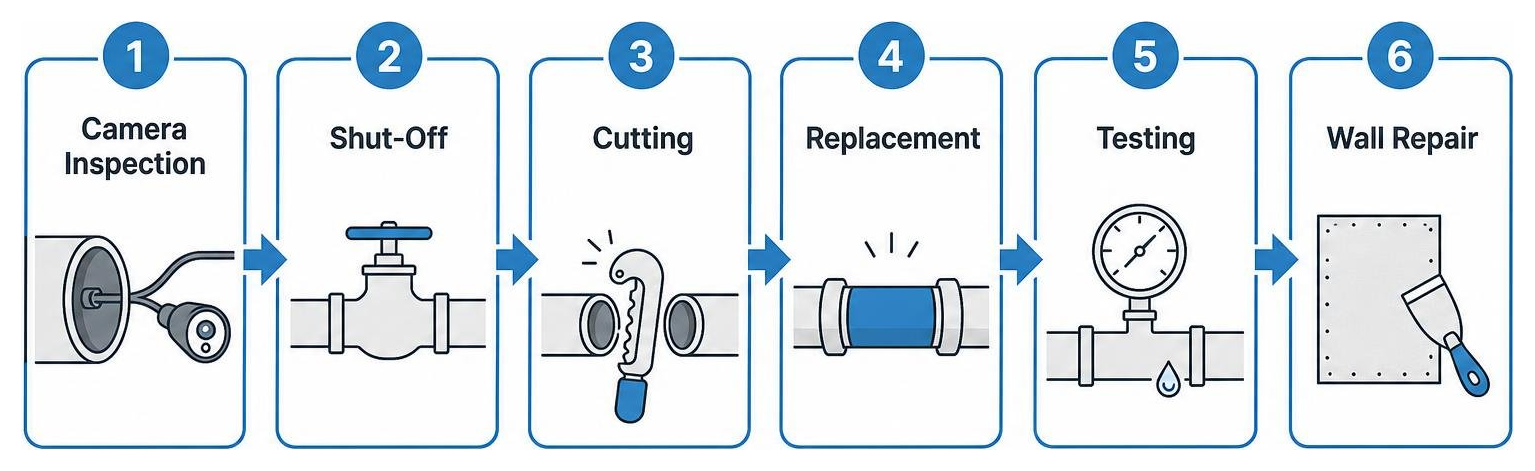
- Locating the lines: We locate and map your plumbing system to plan the most efficient routes. If you aren’t sure where your main sewer lines run, you can find helpful tips in Sewer Lines 101 How to Locate Them.
- Water shut-off: Your water will need to be turned off during working hours. However, our team always ensures your water is turned back on at the end of each workday so your household can function normally in the evening.
- Wall cuts and pipe installation: We make neat, targeted cuts in the drywall to run the new copper or PEX lines.
- Testing and inspection: We perform a rigorous pressure test to ensure there are absolutely no leaks, followed by a local municipal inspection to verify code compliance.
- Patching and cleanup: Once approved, the walls are patched, and the work areas are thoroughly cleaned.
Frequently Asked Questions About Pipe Replacement
How long does a typical pipe replacement project take?
For a single pipe or a localized repair, the job is typically completed in just a few hours. A whole-home repipe for a standard single-family home usually takes between one and three days. Larger homes or properties with complex slab foundations may take up to a week.
What is the difference between partial and whole-home repiping?
A partial repipe targets only the sections of your plumbing that are currently leaking, damaged, or exposed during a remodel. It is a great short-term budget saver. A whole-home repipe replaces every water line in the house. This is the only definitive way to solve recurring leaks and systemic pressure issues in older homes.
How do I choose a professional plumbing contractor?
Always look for a contractor who is fully licensed and insured in the state of Texas. Ask for upfront, transparent estimates rather than vague verbal quotes. Ensure they offer robust warranties on both materials and labor, and look for companies with a strong reputation for customer service and local experience.
While national plumbing trends can give you a general idea of what to expect—as outlined by experts discussing Whole-Home Repiping in Jacksonville & St. Johns [Top Rated] or Professional Pipe Replacement Services in Ann Arbor, MI | Reliable Plumbing Experts —working with a local team that understands our specific Gulf Coast soil, municipal codes, and water conditions is essential.
Schedule Your Professional Pipe Replacement Today
Don’t wait for a small leak to turn into an expensive emergency. At The Overall Plumber, we make the pipe replacement process as simple and stress-free as possible for homeowners across Houston, Pearland, League City, Galveston, and the surrounding areas.
We are proud to offer:
- 100% satisfaction guarantees on our workmanship
- Priority scheduling to fit your busy life
- No overtime fees and no trip charges
- Advanced diagnostic tools, including professional camera inspections and high-power augers
Whether you need a quick Broken Pipe Repair or are ready to discuss a whole-home repiping upgrade, our experienced team is here to help.
Call us today at (281) 668-8055 to schedule your professional consultation.