


Why Underground Water Leak Location Is Harder Than It Looks
Underground water leak location is one of the trickiest problems a homeowner or utility manager can face — because the leak is invisible until it isn’t.
Quick Answer: How to Locate an Underground Water Leak
- Check your water meter — Turn off all water in the house. If the leak indicator dial keeps moving, you have a leak.
- Shut off the main valve — If the meter still moves after shutting off the main, the leak is between the meter and your home.
- Look for surface signs — Wet or soggy patches in the yard, cracking pavement, sinkholes, dead grass, or unusually high water bills all point to a buried leak.
- Call a professional — A licensed plumber can use acoustic sensors, leak correlators, tracer gas, or ground-penetrating radar to pinpoint the exact location without digging up your whole yard.
The problem with buried pipes is simple: out of sight, out of mind. A pipe can silently lose hundreds of gallons every day while you go about your life completely unaware. Across North America, an estimated 20 to 50 percent of all water in supply systems is lost to leaks — that adds up to at least two trillion gallons every single year. The damage isn’t just environmental. It hits your water bill, your landscaping, your foundation, and eventually your wallet in a big way.
The good news is that modern leak detection has come a long way. You no longer need to dig up a football field to find a problem. Today’s tools can narrow a leak down to a 10-meter section of pipe — or even less.
I’m Dayton Whitworth, a second-generation plumber serving Greater Brazoria County, Galveston County, Houston, and the surrounding Gulf Coast, with hands-on experience in underground water leak location across a wide range of pipe materials and property types. In the sections below, I’ll walk you through everything you need to know — from spotting early warning signs to choosing the right detection method for your situation.
The Cost of Silence: Non-Revenue Water and Aging Infrastructure
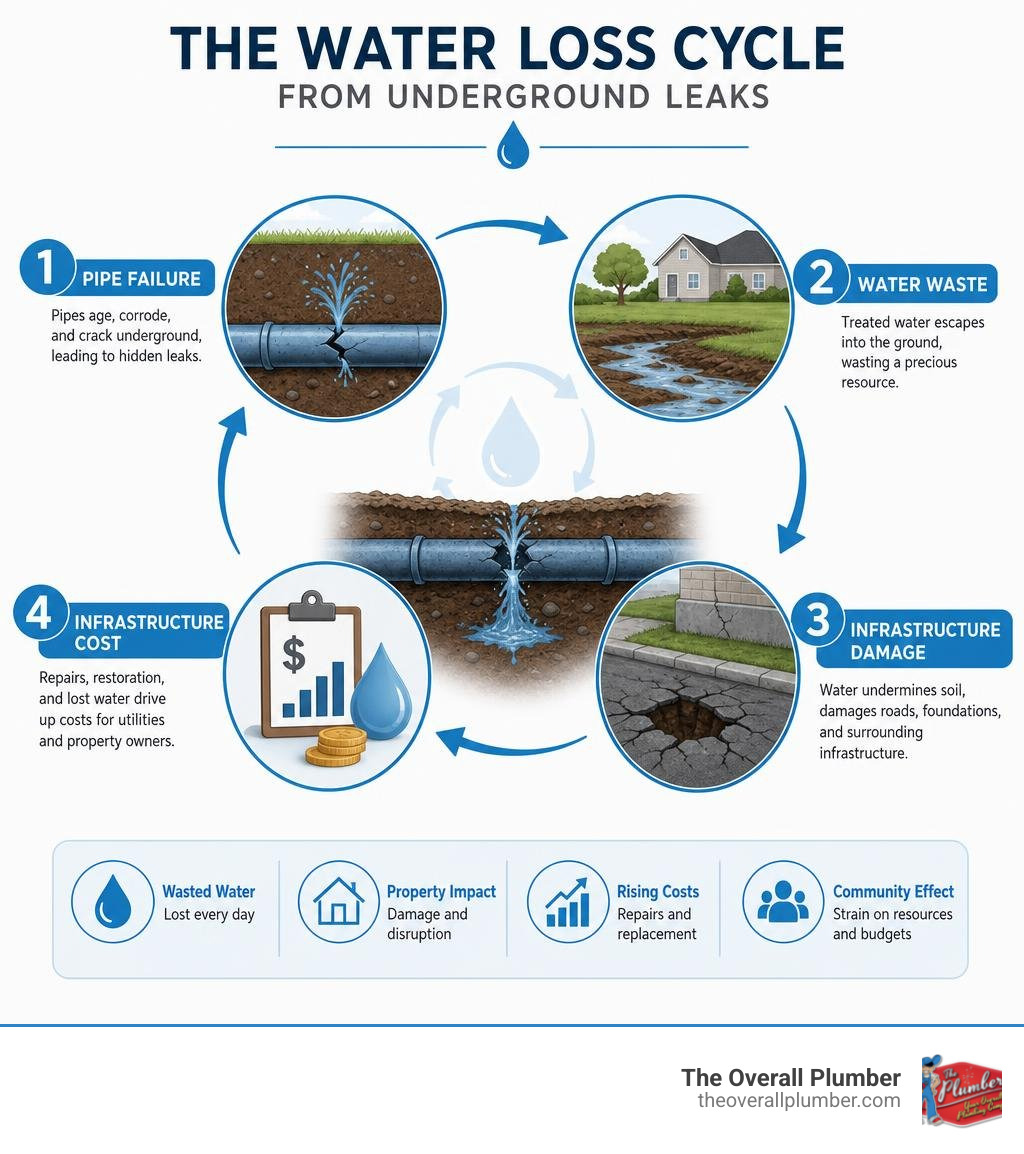
When water leaks into the soil beneath our feet, it doesn’t just disappear; it carries away a massive amount of money. In the municipal utility sector, this is known as Non-Revenue Water (NRW). This is water that has been treated and pumped into the distribution system but is lost before it ever reaches a customer’s meter.
The scale of this issue in 2026 is staggering. According to estimates from the American Society of Civil Engineers (ASCE), more than $2 billion is lost annually to aging and defective water treatment and plumbing infrastructure in the United States alone. When a municipal system or a commercial facility experiences a hidden pipe failure, the financial drain is continuous. For instance, a single pinhole leak in a pipe operating at 60 psi can waste over 790 gallons of water per day—which translates to nearly 300,000 gallons of wasted water over a single year.
In commercial and industrial systems, the losses can be even more extreme. Routine surveys have identified single fire suppression system leaks wasting upwards of 86 million gallons of water per month. For residential homeowners in areas like Houston, Pasadena, and Galveston, a slab leak can cause structural shifting, mold growth, and astronomical utility bills. Understanding the early indicators of these failures is critical. If you suspect your home might be suffering from a hidden line break, you can read our guide on Is There a Water Leak Under Concrete Slab Here Is How to Tell to understand the common warning signs.
Classic vs. Modern Underground Water Leak Location Methods
Locating a leak buried deep beneath concrete, asphalt, or thick Texas clay has historically required a lot of guesswork and destructive excavation. Fortunately, the industry has evolved from “dig and hope” to highly precise, non-invasive diagnostic technologies.
To help you understand the strengths and limitations of each approach, we have put together a comparison of the most common methods used today:
| Technology / Method | How It Works | Best Suited For | Key Advantages | Major Limitations |
|---|---|---|---|---|
| Acoustic Sensors / Ground Mics | Amplifies the sound of pressurized water escaping from a pipe. | Metallic pipes, paved surfaces, localized searches. | Highly accurate, non-invasive, cost-effective. | Less effective on plastic pipes (PVC/PEX); affected by ambient noise. |
| Acoustic Leak Correlators | Uses two sensors placed on contact points to calculate leak distance based on sound timing. | Long pipe runs, municipal mains, commercial systems. | Pinpoints leaks within inches; minimizes excavation. | Requires two accessible contact points; performance drops on plastic. |
| Ground-Penetrating Radar (GPR) | Sends electromagnetic pulses into the ground to detect soil voids or moisture anomalies. | Locating non-metallic pipes, detecting large subsurface water pools. | Works on all pipe materials; maps surrounding soil structure. | Expensive; requires skilled interpretation; struggles in heavy clay soils. |
| Tracer Gas Detection | Injects a safe 5/95 hydrogen-nitrogen mix into a depressurized pipe and sniffs for surface escape. | Small leaks, deep lines, non-metallic pipes, or under thick concrete. | Extremely accurate; gas easily penetrates concrete and soil. | Requires the pipe to be temporarily decommissioned and drained. |
| Satellite-Based Detection (L-Band SAR) | Uses Synthetic Aperture Radar from orbit to detect underground soil moisture. | Large-scale municipal systems, long-distance transmission mains. | Covers massive areas instantly; works in all weather; pipe-material independent. | Low resolution (cannot pinpoint to the exact inch); high initial system cost. |
| Stanford’s Pressure Sensor Method | Real-time computer modeling of water hammer test data to locate pressure drops. | Large transmission networks, oil & gas pipelines. | Runs instantly on existing utility computers; highly accurate. | Requires a network of calibrated pressure sensors already in place. |
Advanced Acoustic Sensors for Precise Underground Water Leak Location
Acoustic leak detection has been the reliable workhorse of our industry for decades, but modern digital signal processing has elevated its accuracy. When water escapes a pressurized pipe, it creates a distinct vibration and sound frequency. Hard materials like copper, steel, and cast iron transmit these high-frequency sounds incredibly well over long distances.
To capture these sounds, we utilize specialized ground microphones and test rods. Systems like the wireless Electroacoustic Leak Detection – sebaKMT utilize Bluetooth-enabled, wind-protected piezo microphones with built-in preamplification to filter out background city traffic or wind interference. By applying adjustable filter curves, we can isolate the exact hiss or thud of a pipe leak.
For long utility runs or complex commercial networks, we rely on advanced correlation systems. A system like the SeCorrPhon AC 200 – Complete system for water leak detection – Sewerin combines a test rod, ground microphone, and a digital correlator into one unit. By placing two acoustic sensors on accessible contact points (such as valves or fire hydrants) on either side of the suspected leak, the correlator measures the exact millisecond delay of the sound reaching each sensor. Using the pipe’s material, diameter, and length, it calculates the exact distance of the leak, often pinpointing it within six inches.
These acoustic tools are fantastic when we already know roughly where the pipe runs. However, if the line is buried deep beneath a concrete foundation and its pathway is unknown, we must first map the line. If you are dealing with a hidden pipeline beneath a foundation, you can learn more about how we locate these lines in our guide on Finding Buried Lines with a Pipe Detector for Concrete Floor.
Satellite and Pressure Sensors: The Future of Underground Water Leak Location
While acoustic tools excel at pinpointing a leak once we are in the right backyard or street, they are highly labor-intensive for scanning miles of pipeline. That is where space-age and academic innovations are changing the landscape of underground water leak location.
Satellite-based leak detection utilizes L-band Synthetic Aperture Radar (SAR) from sensors orbiting nearly 400 miles above the Earth. Because L-band electromagnetic waves can penetrate the ground up to 10 feet (three meters), they can detect the unique dielectric signature of treated drinking water pooling in the soil. This technology works in all weather conditions, is completely independent of pipe material, and can scan an entire city’s infrastructure in a single pass. This provides utilities with a targeted map of high-probability leak zones, which ground crews can then verify using traditional acoustic tools.
On the ground, researchers at Stanford University have developed a groundbreaking method to interpret water hammer tests. Traditionally, water hammer tests—which involve introducing a sudden pressure wave into a pipe network—required highly simplified mathematical assumptions to predict leak locations, often yielding slow or inaccurate results. The new Stanford method uses advanced data assimilation to analyze pressure sensor data in real time on a standard laptop. By avoiding oversimplifying assumptions, this computational method can narrow down a leak to a precise 10-meter section of a transmission main using existing sensor networks, saving utilities thousands of dollars in exploratory excavation.
For more details on how these advanced acoustic and physical principles are deployed in the field, check out this technical overview on Acoustic Leak Detection for Underground Pipes Metro Vancouver | AnyLeak.ca .
Pipe Materials, Proactive Maintenance, and Safe Excavation
The material of your underground pipes plays a massive role in how we locate leaks. Metallic lines like copper, galvanized steel, and cast iron are highly resonant, making them perfect candidates for acoustic listening devices. However, modern residential and commercial properties in Harris County and Galveston County increasingly rely on non-metallic materials like PVC, HDPE, and PEX.
Plastic pipes are flexible and soft, meaning they absorb sound waves rather than transmitting them. To find leaks in plastic lines, we have to adapt:
- Hydrophone Sensing: We insert specialized hydrophones directly into the water column to listen to the sound waves traveling through the water itself, rather than relying on vibrations traveling along the pipe wall.
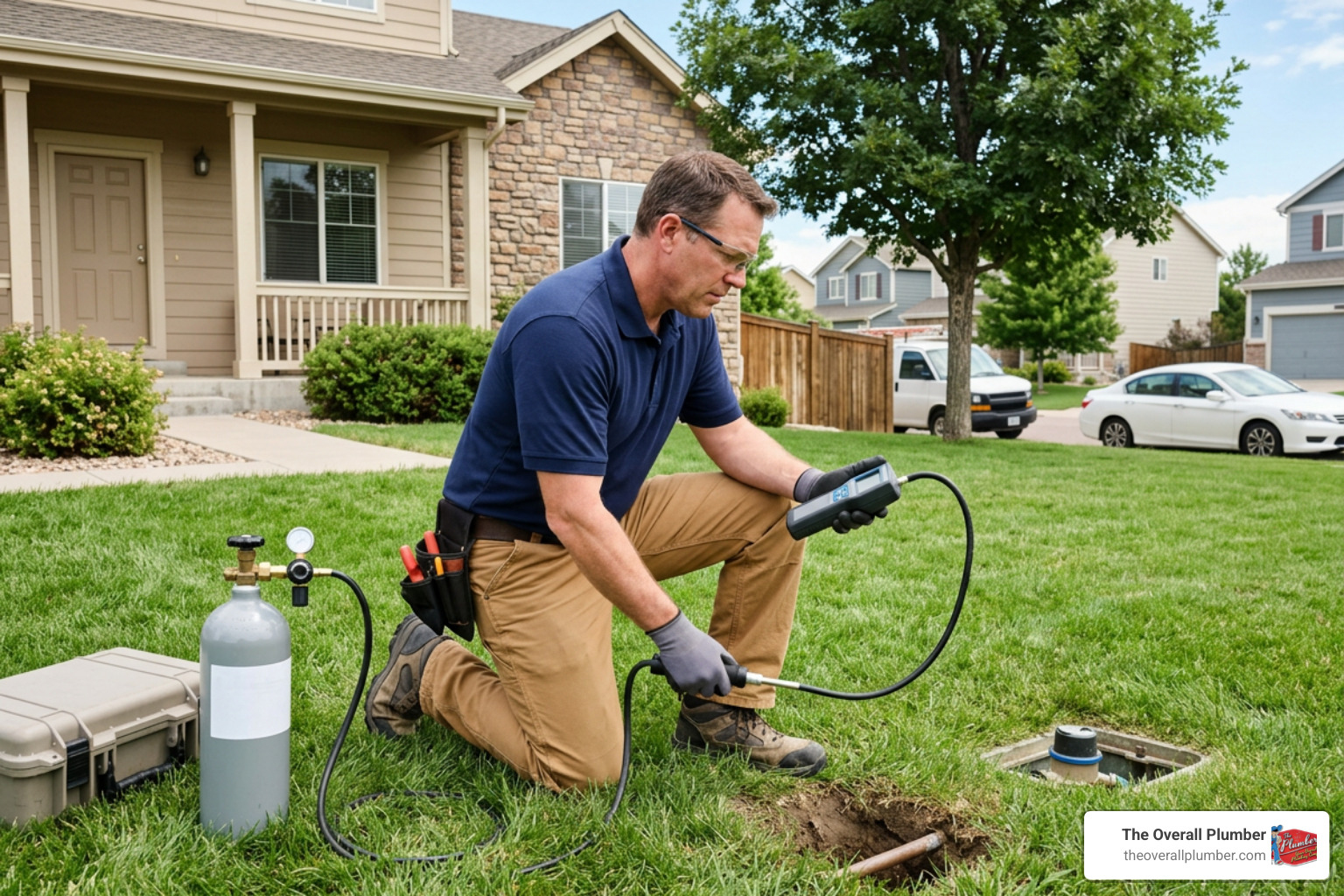
- Tracer Gas Detection: We drain and depressurize the line, then inject a safe, non-toxic mixture of 5% hydrogen and 95% nitrogen. Because hydrogen is the smallest and lightest molecule in the universe, it escapes through the leak and rises rapidly to the surface, where we detect it using a highly sensitive handheld “sniffer” probe.
Beyond reactive leak hunting, proactive maintenance is the best way to prevent catastrophic failures. For commercial properties and municipal utility districts, this involves routine water loss surveys and active valve exercising programs. Valves that are not exercised regularly can seize up, making it impossible to isolate sections of a pipe network during an emergency.
Furthermore, integrating modern mapping technologies like GPS, CAD, and Building Information Modeling (BIM) ensures that every utility line is digitally documented. When it comes time to repair a line, knowing the exact layout prevents accidental strikes on nearby gas, electrical, or sewer lines.
If you suspect your sewer lines are also experiencing issues alongside your fresh water supply, we highly recommend reading The Ultimate Guide to Finding Your Sewer Line Without Making a Mess. For an even closer look inside your drainage systems, you can explore our services on Video Camera Sewer Line Inspection or read about how to choose the right equipment in our guide on The Best Camera to Look in Pipes Without Calling a Plumber.
Across the Texas Gulf Coast, from Houston to Galveston, the necessity of professional water management is clear. Whether dealing with residential slab leaks, pool-specific diagnostics, or localized municipal line repairs, the lesson remains the same: non-invasive detection saves time, money, and property.
For those interested in how these surveys are designed on a larger commercial scale across various states, you can read more about multi-state survey designs via Water Line Leak Detection Services in CT, NY, NJ, MA, RI or review the rapid non-destructive processes detailed in Water pipe leak – Expert inspection [FREE] Quote within 24 hours. .
Frequently Asked Questions About Buried Pipe Leaks
How can I use my water meter to check for an underground leak?
Checking your water meter is the easiest DIY diagnostic test available. First, make sure all water-using appliances inside and outside your home are completely turned off. Locate your water meter box (usually near the street curb) and carefully lift the lid.
Look at the meter face for a small, triangular dial or a digital flow indicator (often called the leak indicator). If this dial is spinning or the digital reading is climbing while all water inside is off, you have an active leak.
To isolate whether the leak is indoors or outdoors, shut off your home’s main water shut-off valve (usually located where the main water line enters the house or near the water heater). Check the meter again. If the meter has stopped moving, the leak is inside your home. If the meter continues to run, the leak is located underground in the service line between the meter box and your home’s shut-off valve.
What are the most common signs of an underground water leak?
Underground leaks often leave clues on the surface before they cause catastrophic damage. Keep an eye out for these common warning signs:
- Unusually high water bills that cannot be explained by seasonal usage.
- A sudden, unexplained drop in household water pressure.
- Wet, soggy, or unusually green patches of grass in your yard, even during dry summer months.
- Cracking asphalt, shifting pavers, or sinking concrete on your driveway or sidewalks.
- Potholes or localized sinkholes forming in your yard.
- Dirty or rusty water coming out of your taps, which can indicate soil entering a cracked pipe.
Does insurance cover underground leak detection and repair?
Whether your homeowner’s insurance covers underground leak detection and repair depends heavily on your specific policy and the cause of the leak. Standard policies typically cover “sudden and accidental” water damage, such as a pipe bursting unexpectedly under your slab. However, gradual wear and tear, corrosion, tree root intrusion, or lack of maintenance are generally excluded.
Many insurance companies will cover the cost of locating the leak (the diagnostic detection services) and repairing the water damage caused to your home, but they may not cover the actual physical pipe repair itself. It is highly recommended to obtain an independent, professional diagnostic report with clear photos and pressure test results to submit to your insurance adjuster. If you have a damaged pipe that needs immediate professional attention, you can read more about our process for Broken Pipe Repair.
Schedule Your Professional Leak Detection Survey Today
If you suspect an underground water leak on your property, don’t wait for a sinkhole to form or your foundation to crack. At The Overall Plumber, we specialize in non-invasive underground water leak location using state-of-the-art acoustic and tracer gas technologies to pinpoint issues without tearing up your landscaping.
We are proud to serve homeowners and businesses throughout our extensive service area, including Houston, Pearland, League City, Pasadena, Galveston, and all of Brazoria, Harris, and Galveston Counties. As your trusted local plumbing experts, we offer robust plumbing protection plans, priority scheduling, and a 100% satisfaction guarantee. Plus, you will never have to worry about trip charges or overtime fees.
To learn more about our specialized diagnostic services, visit our page on Local Leak Detection and Repairs Houston Plumber and check out The Plumber Service Area to see how we serve your neighborhood.
Don’t let a hidden leak drain your wallet. Contact our friendly team today at (281) 668-5059 to schedule your professional leak detection survey!