

The Coca-Cola Drain Trick: Does It Actually Work?
Coca-Cola for clogged drains is a popular DIY hack — but does it actually clear a blockage? Here’s the quick answer:
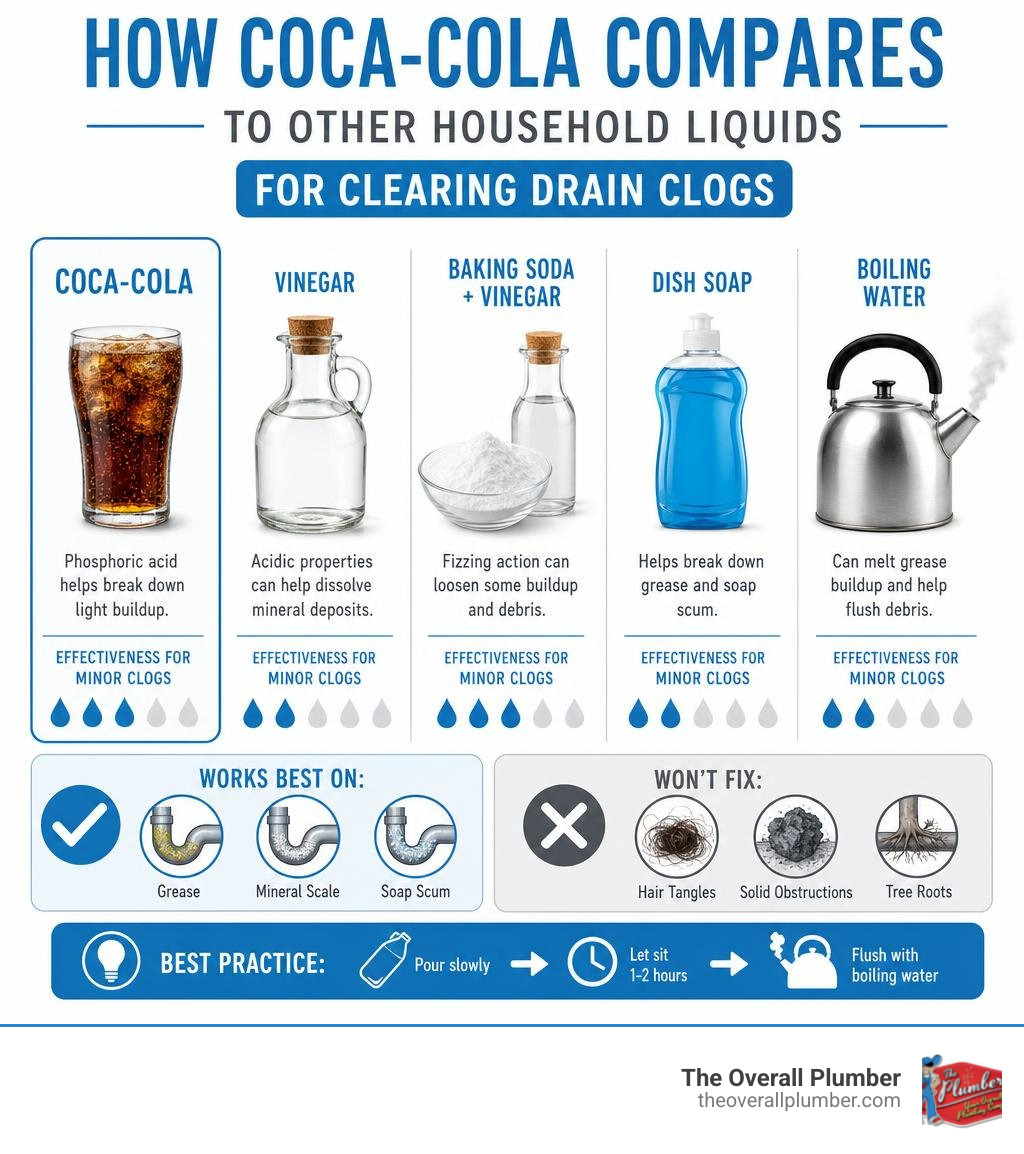
- Yes, but only for minor clogs. Coca-Cola contains phosphoric acid (pH ~2.5), which can soften light mineral scale, soap scum, and grease buildup.
- No, it won’t fix serious clogs. Hair tangles, solid obstructions, tree roots, and deep blockages need mechanical tools or a professional plumber.
- How to use it: Pour a room-temperature 2-liter bottle slowly down the drain, let it sit 1-2 hours, then flush with boiling water.
- Watch out: The sugar content can leave sticky residue that attracts more debris over time.
So it’s worth trying for a slow drain — but don’t count on it for anything more stubborn.
You’ve probably seen the claim floating around online or heard it from a neighbor: just pour some Coke down a slow drain and watch it clear right up. It sounds almost too simple to be true. And depending on what’s actually blocking your pipes, it might be — or it might give you just enough relief to buy some time.
The reality is more nuanced than the viral posts suggest. Coca-Cola has real chemical properties that can act on certain types of buildup. But it also has real limitations that most DIY guides gloss over. Understanding both sides helps you make a smarter call before you reach for that soda bottle — or the phone.
I’m Dayton Whitworth, a second-generation plumber serving Greater Houston and the Gulf Coast, and I’ve seen how often homeowners try the coca-cola for clogged drains trick before calling us — sometimes it buys them time, and sometimes it makes things worse. Let’s break down exactly what’s going on inside your pipes so you know which situation you’re dealing with.
Handy coca cola for clogged drains terms:
Does Coca-Cola for Clogged Drains Actually Work?
To understand whether this sweet, bubbly beverage can double as a plumbing tool, we have to look at the science behind the fizz.
The secret weapon in Coca-Cola is phosphoric acid. This is the ingredient that gives the soda its signature sharp tang and helps prevent the growth of mold and bacteria in the highly sugary liquid. Phosphoric acid is produced from phosphorus, which is found naturally in many foods, but in concentrated industrial forms, it is used to remove rust and dissolve mineral scale.
In a bottle of Coke, the concentration of phosphoric acid is approximately 0.055% by weight. This gives the soda an overall pH level of roughly 2.5. For context, a pH of 7 is neutral, and anything lower is acidic. A pH of 2.5 means Coca-Cola is mildly acidic—more acidic than black coffee or tomato juice, but significantly milder than commercial chemical drain cleaners.
Because of this mild acidity combined with carbonic acid (the carbonation that makes it bubbly), Coca-Cola is capable of slowly breaking down certain types of buildup. It can soften calcium carbonate (mineral scale), weaken thin grease layers, and eat through light soap scum. However, its low acid concentration means it works at a snail’s pace compared to professional-grade chemical formulas.
For a deeper dive into how this chemistry stacks up, check out this Scientific analysis of Coke’s acidity.
Preparing to Use Coca-Cola for Clogged Drains
If you want to give this home remedy a shot, you can’t just grab a cold can out of the fridge and throw it down the sink. Proper preparation makes a big difference in whether the acid can actually do its job.
First, you need the right tool for the job. We recommend a full 2-liter bottle of Coca-Cola or a similar dark-colored cola. Before you start, check the ingredients label on the back. You must verify that phosphoric acid is listed among the first four ingredients. Avoid root beer, as it lacks the necessary phosphoric acid content and will do nothing but coat your pipes in sugar.
Next, let the bottle sit out on the counter until it reaches room temperature. Cold liquids cause fats and cooking oils inside your pipes to solidify and harden, which can actually make a grease clog worse. Room-temperature or slightly warm soda is much better suited to penetrate the blockage. For detailed steps on prepping your plumbing workspace, read this guide on How to prepare the drain.
Step-by-Step Guide: Coca-Cola for Clogged Drains
Once your room-temperature 2-liter bottle of classic, dark-colored cola is ready, follow these steps to maximize your chances of success:
- Clear the standing water: If your sink or tub is completely backed up with standing water, scoop it out first. If you pour soda into a basin full of water, the acid will dilute immediately, rendering it completely useless.
- Pour slowly: Pour the entire 2-liter bottle directly and slowly down the affected drain. Pouring slowly allows the liquid to coat the pipe walls and cling to the clog rather than rushing straight past it.
- Let it dwell: Give the acid time to work. You need to let the cola sit in the drain for at least 1 to 2 hours. For stubborn clogs, leaving it overnight (up to 24 hours) is even better. This gives the mild acid enough contact time to soften the organic “glue” holding the clog together.
- Flush with heat: After the waiting period, flush the drain with a kettle of boiling water (or very hot tap water if you have fragile PVC pipes). The heat is crucial—it melts down any grease that the acid loosened and thoroughly washes away the sticky sugars left behind by the soda.
You might have run across social media videos promoting The viral half-glass method. While pouring a small half-glass (about 4 to 6 ounces) of soda down the drain once a month can act as a gentle preventative measure to keep soap film from building up, it simply does not have enough volume or power to clear an active, sluggish clog. For a real blockage, stick to the full 2-liter bottle method.
Coca-Cola vs. Traditional Drain Cleaning Methods
How does our favorite soda compare to other common solutions sitting in your pantry or on the shelves of your local home improvement store? Let’s look at the pros and cons of each.
| Cleaning Agent | Active Ingredients | pH Level | Best Used For | Major Risks |
|---|---|---|---|---|
| Coca-Cola | Phosphoric acid (0.055%), Carbonic acid | ~2.5 | Minor mineral scale, light soap scum | Leaving sticky sugar residue, attracting pests |
| Baking Soda & Vinegar | Sodium bicarbonate, Acetic acid | Reaction is neutral | Light organic clogs, deodorizing | Fails on heavy grease or hair |
| Commercial Cleaners | Sodium hydroxide (lye), Sulfuric acid | <1 or >13 | Severe organic blockages | Severe pipe corrosion, toxic fumes, chemical burns |
Commercial chemical drain cleaners are incredibly potent. They rely on concentrated caustic agents like sodium hydroxide or sulfuric acid to dissolve hair, grease, and paper products. However, they are highly toxic, bad for the environment, and can easily corrode older metal pipes or soften plastic PVC joints.
On the other hand, DIY options like baking soda and vinegar rely on a fizzing chemical reaction to physically agitate and loosen debris. While safer than commercial chemicals, they still struggle with deep, heavy blockages.
The biggest drawback to using Coca-Cola compared to other Alternative DIY solutions is the sugar content. If you do not flush the pipe thoroughly with hot water after using regular soda, you will leave behind a thick, sticky syrup. This sugary residue acts like glue, trapping hair, dust, and food particles that pass down the drain, which can quickly lead to an even worse clog than the one you started with.
When to Skip the Soda and Call a Professional
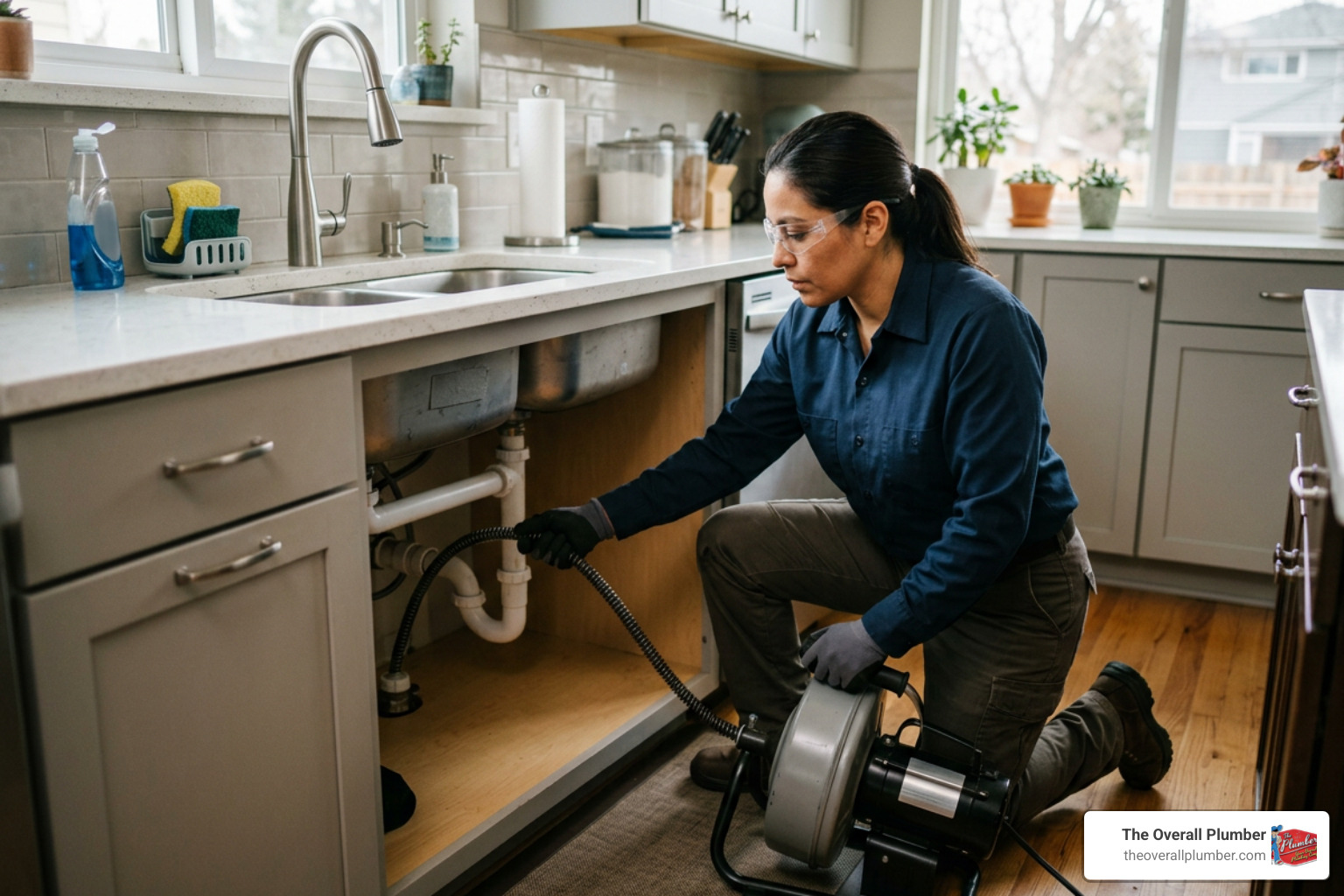
While experimenting with soda can be a fun weekend science project, there are many times when DIY hacks simply will not cut it.
Coca-Cola’s mild acids are completely ineffective against several common plumbing blockages:
- Hair clumps: Hair does not dissolve in mild acids. It requires physical extraction or highly caustic professional solutions.
- Solid objects: Toys, jewelry, dental floss, and flushable wipes will never dissolve in soda.
- Tree roots: If roots have broken into your underground sewer lines, no amount of pantry liquids will clear them.
- Heavy grease blockages: Large deposits of cooking grease require mechanical scraping or high-pressure water.
If you are experiencing a multi-fixture backup (for example, water bubbles up in your shower when you flush the toilet), or if you smell a foul, sewage-like odor coming from your drains, you are dealing with a deeper main line issue. Attempting to pour soda down the drain in these scenarios will only waste your time and money.
To understand how professional interventions can resolve these deep blockages safely and permanently, read about How clogged drain services help. If you suspect a larger mainline blockage under your home, you can also explore how we handle Sewer lines in Houston.
Frequently Asked Questions About DIY Drain Hacks
We hear a lot of questions from homeowners in League City, Pearland, and Pasadena about what is safe to put down their household drains. Here are the facts behind some of the most common plumbing myths.
Can I use diet cola instead of regular Coca-Cola?
Yes, you can actually use diet or zero-sugar colas for this trick! In fact, diet soda is often the superior choice for DIY drain cleaning.
The cleaning action of the soda comes entirely from its phosphoric and carbonic acidity levels, not its sugar content. Diet colas maintain a very similar acidic pH of around 2.5, but they completely eliminate the sugar-free benefits. By using a sugar-free alternative, you avoid leaving behind the sticky syrup that attracts pests and binds debris together inside your pipes.
For a look at how this pantry trick took off, read more about Debunking the pantry liquid myth.
Will Coca-Cola damage my plumbing pipes?
In small, infrequent doses, Coca-Cola is generally safe for modern plumbing systems, including PVC plastic pipes. However, we do not recommend using it regularly.
If you have an older home in historic areas of Galveston or Houston with original galvanized steel or thin copper pipes, repeated exposure to acidic liquids can accelerate metal corrosion and weaken old pipe joints. For more expert perspectives on protecting your home’s pipes from acid damage, read these Expert opinions on pipe safety.
What is the best alternative to chemical drain cleaners?
If you want to avoid harsh store-bought chemicals but need something stronger than soda, we recommend starting with a mechanical plunger or a hand-cranked drain snake.
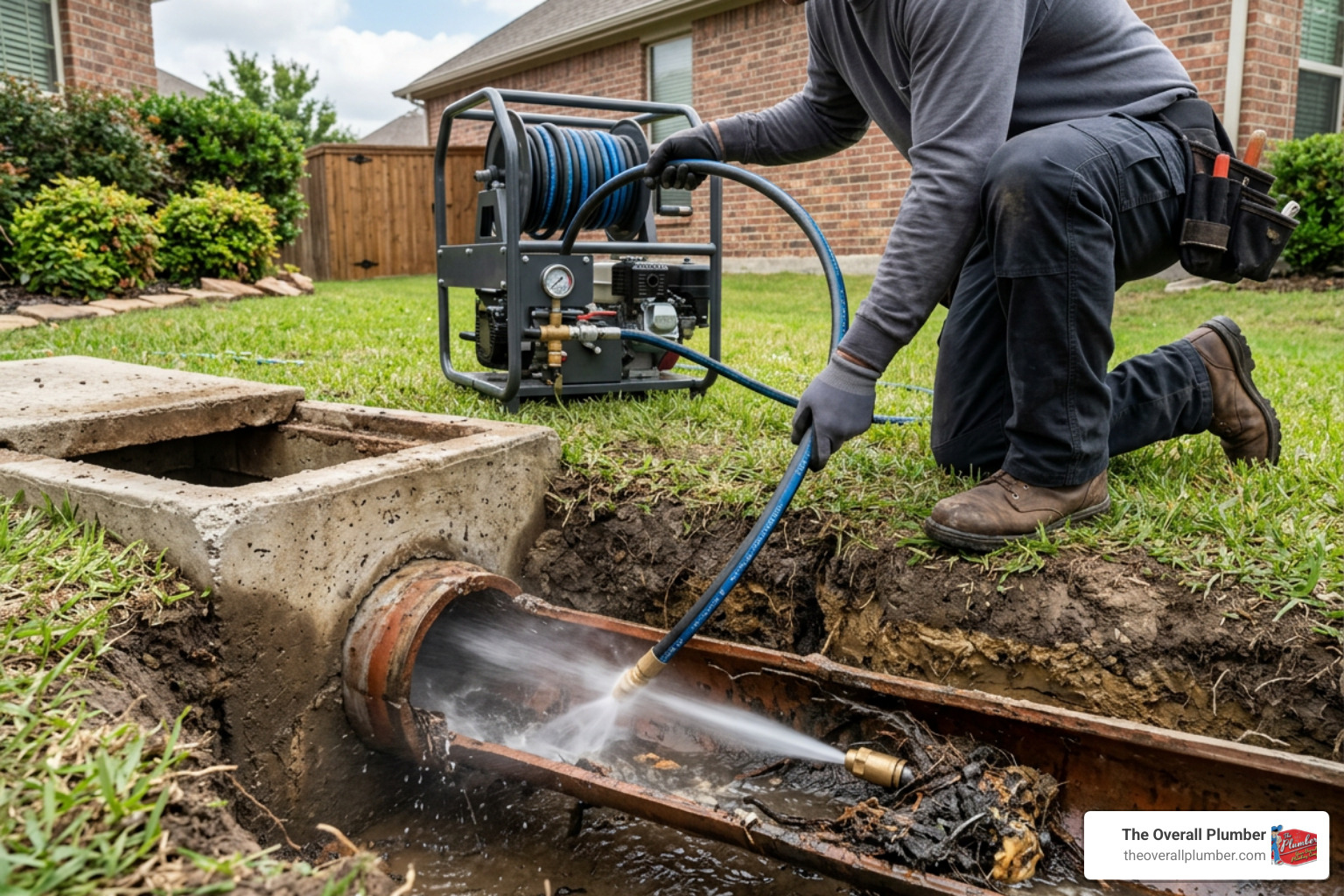
For a liquid solution, enzymatic drain cleaners are an excellent eco-friendly choice. They use natural, non-pathogenic bacteria and enzymes to digest organic waste like hair and grease without damaging your plumbing or the environment. For severe, recurring blockages, the gold standard is professional hydro jetting, which uses high-velocity water to scour the inside of your pipes clean. You can learn more in The ultimate guide to drain line jetting.
Professional Clogged Drain Service in Houston
When DIY tricks fail, you need a team you can trust to get your home’s plumbing flowing smoothly again. At The Overall Plumber, we serve families across Brazoria County, Houston, Clear Lake, Santa Fe, League City, Texas City, La Porte, Friendswood, Pearland, Pasadena, Galveston, Harris County, and Galveston County, Texas.
We don’t believe in temporary fixes or risky chemical shortcuts. Our licensed plumbers use professional-grade equipment to diagnose and clear your pipes safely. Our services include:
- Professional drain cleaning with heavy-duty steel augers.
- High-tech Sewer camera inspections to find the exact location and cause of your clog.
- Advanced hydro jetting to blast away years of grease and scale buildup.
- Plumbing protection plans to keep your home’s system in top shape year-round.
We stand behind our work with ironclad satisfaction guarantees, priority scheduling, and absolutely no overtime fees or trip charges. Whether you need a quick Houston auger service or a comprehensive Local clogged drain service, we are here to help.
Ready to get your drain flowing again? Contact The Overall Plumber today to schedule your professional drain service.