

When a Slow Drain Becomes a Real Problem
Clogged drain service is a professional plumbing solution that clears blocked pipes using tools like drain snakes, hydro jetting, and camera inspections — faster and more thoroughly than any DIY fix.
Here’s what a professional clogged drain service typically includes:
- Diagnosis of the blockage (location, cause, severity)
- Mechanical snaking or hydro jetting to clear the clog
- Video camera inspection to check pipe condition
- Recommendations for preventing future blockages
That slow drain in your kitchen sink or the water pooling around your feet in the shower — these aren’t just annoyances. They’re warning signs. Left alone, a small clog can turn into a sewage backup, pipe damage, or a full plumbing emergency.
The truth is simple: clogged drains don’t fix themselves. They wait for the worst possible moment to get worse.
Chemical drain cleaners feel like a quick fix. But they often corrode pipes and rarely address what’s actually causing the blockage. A professional service gets to the root of the problem — sometimes literally, in the case of tree root intrusions in sewer lines.
I’m Dayton Whitworth, a second-generation plumber with hands-on experience in clogged drain service across Greater Brazoria County, Galveston County, Houston, and the surrounding Gulf Coast communities. Growing up in the trade and training alongside my father Chris — who built his career with major plumbing brands — gave me a thorough understanding of what it really takes to clear drains right the first time.
Common Signs You Need a Professional Clogged Drain Service
You don’t have to be a master plumber to know when something is wrong, but many homeowners in the Houston and Pearland areas tend to ignore the early warning signs until they’re standing ankle-deep in dirty bathwater. Recognizing these symptoms early can save you from a massive headache and even more massive repair bills.
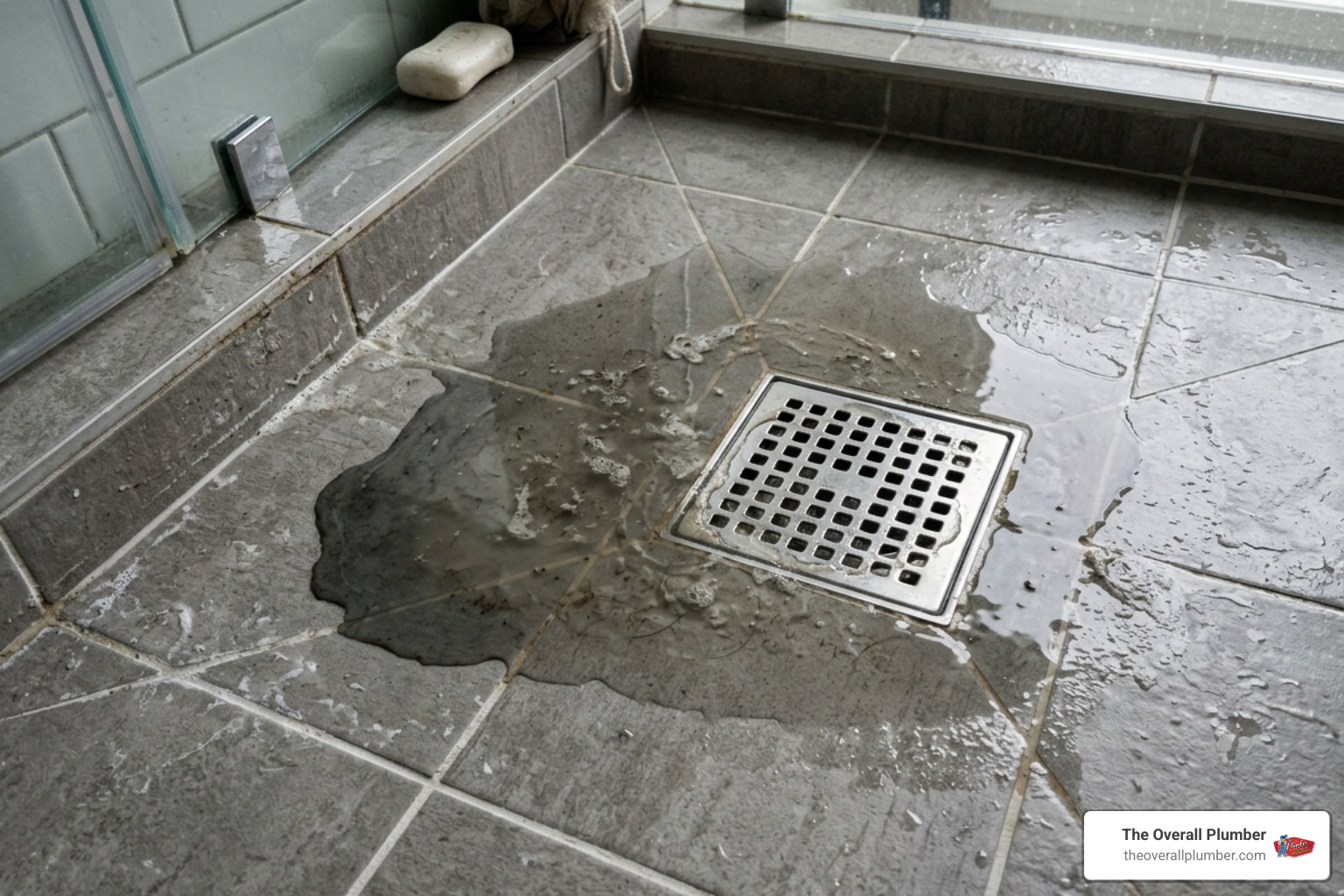
The most obvious sign is slow drainage. If your morning shower involves a rising tide around your ankles, or your kitchen sink takes ten minutes to empty after doing the dishes, you have a restriction. However, there are more subtle signs to watch for:
- Gurgling Sounds: If your pipes are “talking” to you, listen up. Gurgling or bubbling noises coming from a drain or toilet often mean air is trapped by a blockage.
- Foul Odors: The smell of rotting food in the kitchen or a distinct sewage scent in the bathroom indicates that organic matter is stuck in your pipes and decomposing.
- Multiple Clogs: This is a major red flag. If your kitchen sink, bathroom tub, and toilet are all acting up at once, the problem isn’t in a single fixture—it’s likely a main sewer line blockage.
- Toilet Water Bubbling: If you run the bathroom sink and the toilet water starts jumping or bubbling, your plumbing system is struggling to vent properly due to a clog.
- Sewage Backup: This is the “code red” of plumbing. If water or waste is backing up out of your floor drains or lowest fixtures, you need an emergency plumber immediately.
In our experience serving over 60,000 families annually across the region, we’ve seen it all. With a 4.8 average rating from thousands of reviews, we know that catching these signs early is the difference between a simple clogged drain service and a full-scale restoration project.
Understanding the Causes of Stubborn Pipe Blockages
Why do drains clog in the first place? It’s rarely just one thing. Most blockages are a “greatest hits” collection of household waste that builds up over months or years.
In the kitchen, the primary villain is fat, oil, and grease (FOG). When you pour warm grease down the sink, it looks liquid. But as soon as it hits the cool pipes under your Houston home, it solidifies into a wax-like substance that catches everything else passing by. This is why properly maintaining grease traps and garbage disposals is so critical for local homeowners.
In bathrooms, the culprits change. Hair accumulation is the number one cause of shower and tub clogs. Hair binds with soap scum—a filmy substance created when minerals in our Texas hard water react with soap—to create a structural “mat” that is incredibly difficult to move with a plunger.
Outside the home, the environment plays a role. In areas like League City and Friendswood, lush greenery and older trees mean tree roots are a constant threat. Roots seek out moisture and can find even the smallest hairline crack in a sewer pipe. Once inside, they grow rapidly, acting like a net that catches toilet paper and waste. Other factors include:
- Mineral Deposits: Hard water leads to scale buildup that narrows the pipe’s diameter.
- Foreign Objects: From “flushable” wipes (which aren’t actually flushable) to children’s toys and dental floss.
- Pipe Structural Issues: Sagging pipes (bellies) or misaligned joints that allow debris to settle and accumulate.
Professional Solutions: Snaking vs. Hydro Jetting
When you call for a clogged drain service, we don’t just guess. We use the right tool for the specific type of blockage you have. The two most common professional methods are mechanical snaking and hydro jetting.
| Feature | Mechanical Snaking (Auger) | Hydro Jetting |
|---|---|---|
| Primary Tool | Flexible steel cable with a blade | High-pressure water hose & nozzle |
| Best For | Hard objects, hair, and simple clogs | Grease, sludge, and tree roots |
| Effectiveness | Puncture holes/breaks up clogs | Cleans pipe walls “like new” |
| Reach | Limited to the length of the cable | Can reach deep into main lines |
| Safety | Safe for most pipes | Requires professional assessment |
Mechanical snaking is the classic “rooter” service. It involves a motorized cable that spins a specialized head to punch through a clog. It’s excellent for pulling out hair clogs or breaking up solid obstructions. For many residents, our Brazoria County auger service is the quickest way to restore flow to a single fixture.
However, snaking often just “clears” the drain by making a hole. It doesn’t necessarily “clean” the pipe. Hydro jetting, on the other hand, uses water pressurized up to 4,000 PSI to scour the interior walls of the pipe. It blasts away grease, mineral scale, and even shaves tree roots down to the pipe wall. It’s an eco-friendly, highly effective way to ensure the clog doesn’t just come back two weeks later.
The Role of Video Camera Inspections in Modern Plumbing
Gone are the days of digging up a yard just to find a leak. Modern clogged drain service relies heavily on technology to provide “eyes” inside your plumbing system.
A video camera sewer line inspection involves threading a high-definition, waterproof camera through your pipes. This allows us to see exactly what is happening in real-time. We use this for several reasons:
- Diagnostic Accuracy: We can tell the difference between a mass of wet wipes and a collapsed pipe. This prevents us from trying to snake a pipe that is structurally unsound.
- Pinpointing Location: Most cameras have transmitters that allow us to locate the exact spot of the trouble from above ground, saving you money on labor and excavation.
- Quality Assurance: We often perform a “post-cleaning” inspection. After we’ve used an auger or hydro jet, the camera proves to you that the pipe is completely clear and the job was done right.
- Identifying Future Risks: We can spot cracks, corrosion, or early root intrusion before they become emergencies, allowing for proactive repairs.
Why Professional Expertise Outperforms DIY Methods
It is tempting to grab a $10 bottle of liquid drain cleaner from the store, but that “cheap” fix often leads to expensive damage. Research shows that approximately 8-12% of professional service calls are actually made to fix the mistakes of other companies or failed DIY attempts.
Chemical cleaners are heavy in sulfuric acid or lye. These chemicals generate heat to dissolve clogs, which can soften PVC pipes or accelerate corrosion in older cast-iron lines. According to Wikipedia, the corrosive nature of these chemicals can lead to significant pipe thinning over time. Furthermore, if the chemical doesn’t clear the clog, you’re left with a sink full of toxic “soup” that makes it dangerous for a plumber to work on later.
When you hire a professional clogged drain service, you aren’t just paying for someone to push a button. You’re paying for licensed expertise, background-checked technicians, and specialized equipment that isn’t available at the local hardware store. At The Overall Plumber, we provide 24 hour emergency plumbers because we know that a main line backup at 2:00 AM on a Tuesday doesn’t care about your schedule.
When to Call for a Clogged Drain Service
You should call for professional help immediately if you experience any of the following:
- Sewage Overflow: If wastewater is coming out of your floor drains, stop using all water and call us.
- Stagnant Water: Water that sits for more than a few minutes is a breeding ground for bacteria and mold.
- Multiple Fixture Backups: As mentioned, this indicates a deep system issue that a plunger cannot reach.
- Structural Damage: If you notice unexplained wet spots in your yard or foundation cracks accompanied by drainage issues.
Maintaining Your System with a Clogged Drain Service
Prevention is always more affordable than repair. As of April 2026, we recommend that homeowners in high-foliage areas like Santa Fe and Pearland have their main sewer lines professionally inspected or cleaned at least once a year.
To keep your system running smoothly between professional visits, follow these expert tips:
- Use Mesh Strainers: These inexpensive baskets catch hair and food scraps before they enter the pipes.
- The Baking Soda Flush: A monthly mix of baking soda followed by vinegar and hot water can help break up minor soap scum buildup.
- Avoid the “Big Three”: Never put grease, coffee grounds, or “flushable” wipes down your drains.
- Annual Maintenance: Join a program like our Smart Sadie Maintenance Program. With over 4,100 local members, these programs provide priority scheduling and regular check-ups to catch small issues before they become disasters through our residential plumbing services.
Frequently Asked Questions about Drain Cleaning
How much does professional drain cleaning cost?
The cost of a clogged drain service varies based on several factors: the location of the clog, the severity of the blockage, and the equipment required. A simple sink snaking is generally the most affordable, while a full-day hydro jetting of a commercial sewer line will be higher. We provide upfront, honest pricing with no trip charges, so you know exactly what to expect before we start.
Is hydro jetting safe for older pipes?
In most cases, yes, but it requires a professional assessment first. For very old, corroded cast-iron pipes or clay pipes that are already crumbling, the high pressure could cause further damage. This is why we always recommend a camera inspection first. If the pipe is structurally sound, we can adjust the pressure settings to safely clean the line without causing harm.
How often should I have my drains professionally cleaned?
For the average household, a professional cleaning every 18 to 24 months is a great preventative measure. However, if you have many large trees on your property (which is common in Galveston and Harris Counties) or an older home with cast-iron pipes, annual cleaning is a better “insurance policy” against major backups.
Contact Our Clogged Drain Experts
Need immediate help with your clogged drain service? Call us today at 713-252-3620. Our team is ready to provide the professional solutions you need to get your pipes flowing freely again.