


Tankless Electric Water Heater Installation Near Me: The Quick Answer
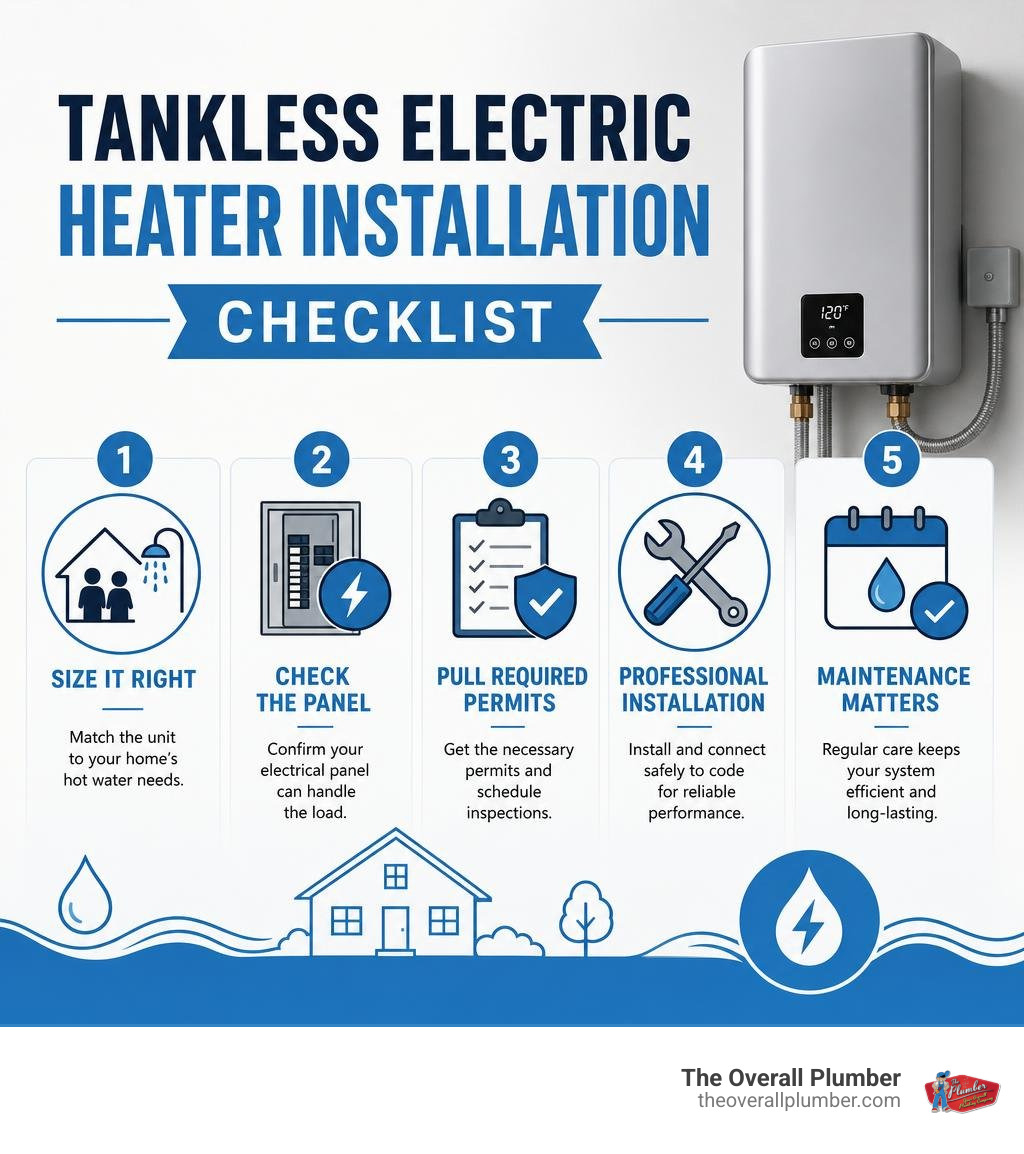
Tankless electric water heater installation near me means hiring a qualified local plumber and electrician, or a properly licensed contractor, to size the unit, confirm your electrical panel can handle it, pull required permits, and connect the system safely.
- A straightforward installation often takes 3 to 5 hours.
- Switching from a tank heater may require new 240-volt circuits, larger breakers, or a panel upgrade.
- Tankless units save wall space and heat water only when you need it, which cuts standby energy loss.
- The right unit depends on your home’s simultaneous hot-water use, incoming water temperature, and electrical capacity.
- Most areas require permits and inspections when electrical or plumbing connections are changed.
A tankless electric heater can provide on-demand hot water without the bulk of a storage tank. But its high electrical demand makes proper planning more important than simply swapping one appliance for another.
I’m Dayton Whitworth, a second-generation plumbing professional serving Greater Brazoria County, Galveston County, Houston, and the Gulf Coast. I help homeowners make informed choices about tankless electric water heater installation near me, from reliable plumbing connections to clear, upfront expectations before work begins.
Tankless electric water heater installation near me vocabulary:
- cost to have water heater installed
- tankless water heater installation cost near me
- hot water expansion tank install
Understanding Costs, Energy Savings, and Household Sizing
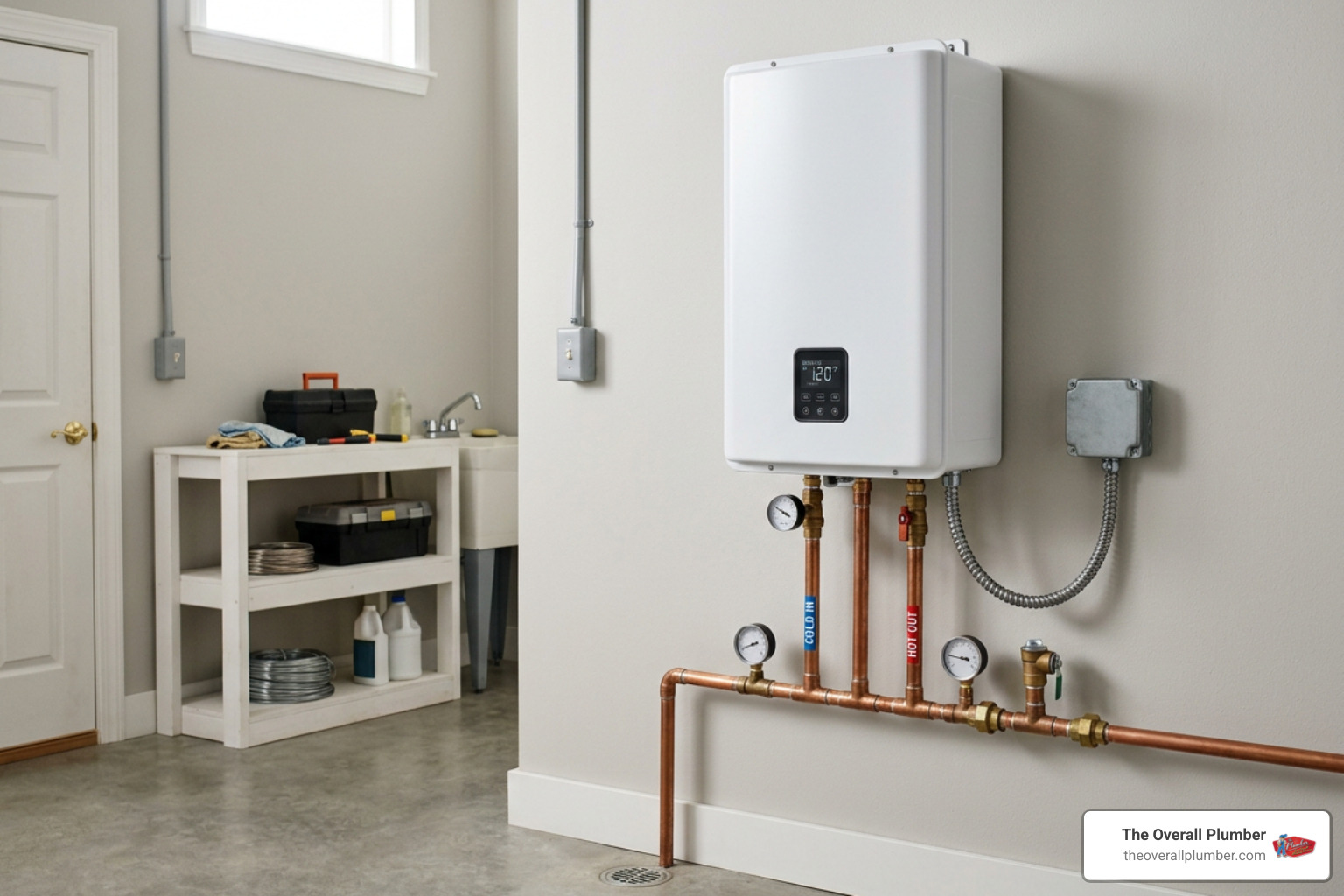
Making the switch to an on-demand hot water system is an exciting upgrade for any home. Unlike conventional storage units that constantly consume electricity to keep 40 to 80 gallons of water heated around the clock, tankless electric models only heat water as it flows through the heating elements. This process eliminates standby heat loss entirely, allowing homeowners across Houston, Pearland, and League City to enjoy significant reductions in their monthly utility bills.
Beyond energy efficiency, the continuous supply of hot water is a major draw. You never have to worry about taking a lukewarm shower simply because someone ran the dishwasher right before you. Furthermore, wall-mounted electric tankless units free up valuable floor space in garages, closets, or utility rooms. To dive deeper into overall project budgeting, explore our guides on Understanding Tankless Water Heater Installation Costs and How Much to Budget for Your New Water Heater Installation.
Average Installation Costs and Price Factors
Across the country, the average installation cost for a tankless water heater centers around $1,225, with standard professional installation services generally landing between $1,870 and $2,310. However, the final price tag for a tankless electric water heater installation near me depends on several distinct variables:
- Equipment Capacity and Brand: Whole-house units require greater heating wattage (measured in kilowatts, or kW), which translates to higher baseline equipment costs compared to point-of-use units.
- Electrical Infrastructure Upgrades: Standard electric tank heaters usually rely on a single 30-amp, 240-volt circuit. High-demand electric tankless units often require two, three, or four dedicated 40-amp or 50-amp double-pole breakers. Adding dedicated copper wiring runs or upgrading an older electrical subpanel increases initial installation expenses.
- Plumbing Work and Rerouting: Moving pipe connections, installing shutoff valves, or converting a gas line setup over to pure electric service alters total labor requirements.
- Local Permitting and Code Approvals: Permit fees in Harris, Galveston, and Brazoria counties ensure that electrical amperage and plumbing setups adhere strictly to municipal safety standards.
Sizing Flow Rates for Household Demand
Sizing an electric tankless water heater requires looking at flow rate, measured in gallons per minute (GPM), alongside the incoming groundwater temperature. In Coastal Texas and Greater Houston, groundwater temperatures remain relatively mild year-round compared to northern climates, which makes electric tankless systems very viable.
To calculate your required GPM, tally the fixtures you expect to run simultaneously:
- Standard Showerhead: 1.5 to 2.5 GPM
- Kitchen Sink Faucet: 1.0 to 1.5 GPM
- Washing Machine: 1.5 to 2.0 GPM
- Bathroom Bathroom Faucet: 0.5 to 1.0 GPM
If your family frequently runs two showers (4.0 GPM combined) and the dishwasher (1.5 GPM) at the same time, you need a unit capable of delivering at least 5.5 GPM at your local temperature rise. Temperature rise is simply the difference between incoming groundwater temperature (typically around 65°F to 70°F in Southeast Texas) and your desired hot water temperature (usually set to 120°F).
Critical Electrical Panel Requirements and Safety Hazards
The single biggest mistake homeowners make when planning a tankless electric water heater installation near me is underestimating the electrical demand. Because an electric tankless unit must instantly raise incoming cold water to 120°F in seconds, it draws an immense amount of electric current while operating.

| Unit Size (kW) | Required Breakers | Total Amperage Draw | Minimum Electrical Panel Capacity |
|---|---|---|---|
| 11 kW – 13 kW | 1 x 60A Double-Pole | 48 – 54 Amps | 100 Amp Panel |
| 18 kW – 24 kW | 2 x 40A Double-Pole | 75 – 100 Amps | 150 Amp Panel |
| 27 kW – 36 kW | 3 or 4 x 40A/50A Double-Pole | 112 – 150 Amps | 200 Amp Panel |
Electrical Service Panel Capacity
Older homes in Pasadena, Galveston, or Santa Fe often have 100-amp or 150-amp main breaker panels. Installing a whole-home electric tankless unit rated at 27kW or 36kW onto a 100-amp main panel will quickly trip the main switch whenever appliances run concurrently.
Before choosing your heater model, we perform a total home load calculation. If your existing electrical service panel lacks available breaker slots or lacks the overall amperage headroom, a main panel upgrade to 200 amps or the addition of a subpanel is mandatory. Ensuring your electrical system is engineered to handle multiple 240-volt circuits protects your electronics and prevents nuisance breaker trips.
DIY Hazards vs. Professional Installation
Installing an electric tankless water heater is never a beginner DIY weekend project. High-amperage 240V circuits carry severe risks of electrocution, electrical fires, and equipment damage if wiring gauges, grounding, or breaker connections are sized incorrectly.
Hiring licensed professionals guarantees:
- Code Compliance: Installation adheres to the National Electrical Code (NEC) and local building regulations across Texas City, Friendswood, and La Porte.
- Safety: Multi-wire 240V hookups, proper bonding, and emergency disconnect switches are wired safely.
- Warranty Protection: Most major manufacturers (such as Rheem, EcoSmart, Stiebel Eltron, and A.O. Smith) explicitly state that their product warranties are void unless installed by a licensed plumber or electrician.
- Plumbing Security: Proper expansion tank handling, pressure-relief discharge piping, and leak-free solder or PEX connections protect your property against water damage.
How to Find Tankless Electric Water Heater Installation Near Me
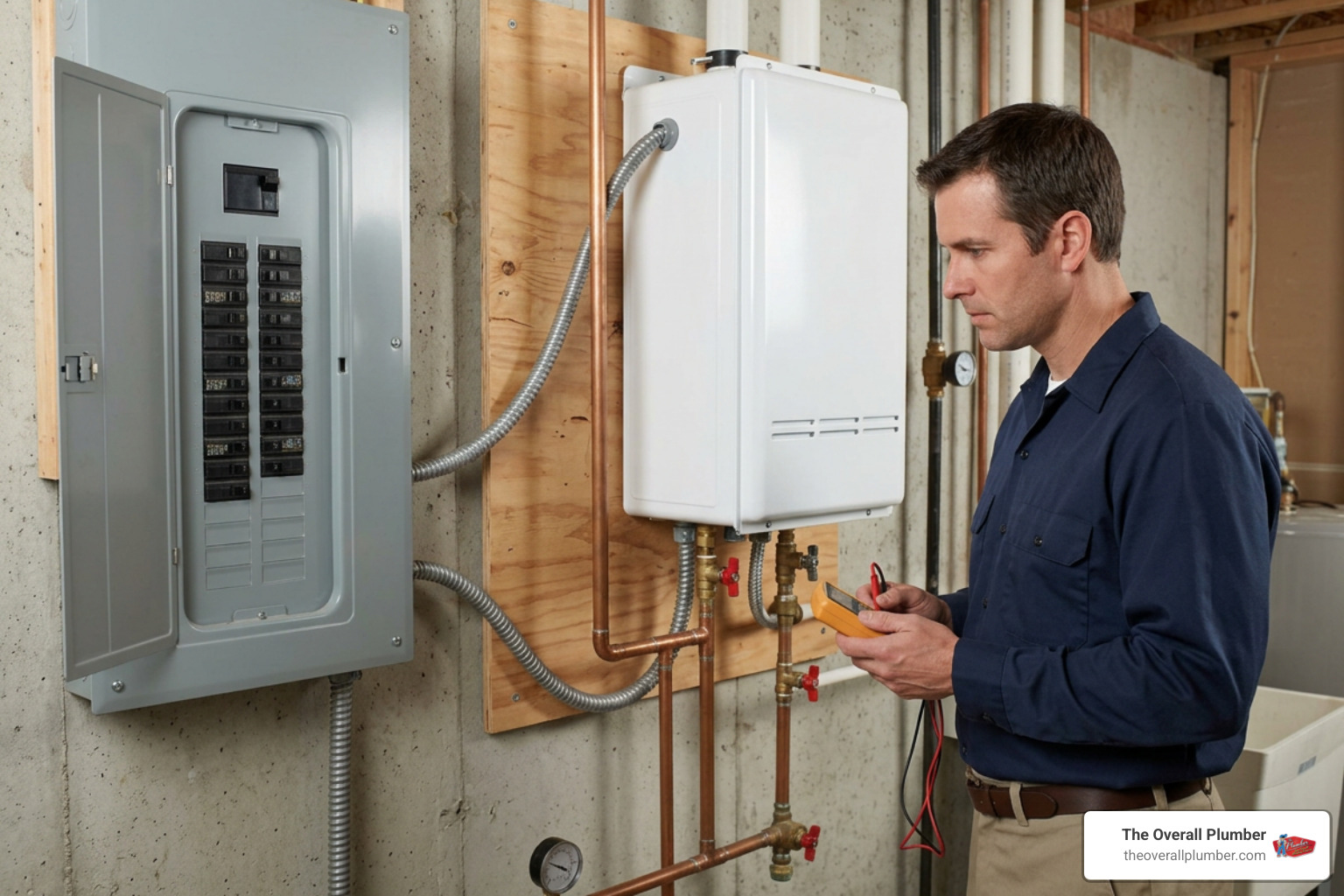
Finding a dependable specialist for your project involves searching for teams that possess dual expertise in both advanced plumbing connections and heavy-duty electrical requirements. When researching local contractors, consult our resource on Finding Local Water Heater Installers.
Evaluating Qualified Pros for Tankless Electric Water Heater Installation Near Me
When searching online for tankless electric water heater installation near me, filter through prospective plumbers using these key benchmarks:
- State Licensing and Insurance: Verify that the plumbing contractor holds an active Master Plumber license with the Texas State Board of Plumbing Examiners and carries comprehensive liability insurance.
- Proven Experience with Electric Tankless Units: Ask specifically how many high-kW electric tankless installations they perform annually. Sizing electrical runs requires specialized know-how beyond traditional tank replacements.
- Transparent Upfront Quotes: Reputable companies provide itemized written estimates detailing equipment cost, labor fees, panel work, and permit fees without hidden surprise costs.
- Verified Local Reviews: Look for strong feedback from real homeowners across Harris and Galveston counties praising prompt scheduling, clean job sites, and reliable post-install follow-up.
Key Questions Before Booking Tankless Electric Water Heater Installation Near Me
To avoid unexpected headaches on installation day, ask these straightforward questions before hiring a pro:
- “Will your estimate include checking my main electrical panel’s capacity?”
- “Do you pull the required municipal building and electrical permits?”
- “Are labor and parts backed by a written warranty?”
- “Will you safely remove and dispose of my old storage tank heater?”
- “How long will my home’s water and power be turned off during installation?”
Step-by-Step Installation, Permits, Maintenance, and FAQs
A professional installation follows a clear sequence. First, we shut off the main water supply and power circuits. Next, we drain and remove the old tank heater. We then mount the compact tankless chassis securely to wall studs, run dedicated 240V electrical lines from the circuit panel, make water supply connections using insulated copper or PEX lines, and install a pressure relief valve. Finally, we purge air from the water lines, power up the system, and verify temp output. Read more about full system installs in A Comprehensive Guide to Water Heater Installation.
Permitting, Inspections, and Project Timeline
In virtually every municipality within Harris County, Brazoria County, and Galveston County, replacing or converting a water heater requires an official permit and a post-installation safety inspection. Permits guarantee that wire gauge sizes, breaker capacities, and plumbing discharge lines conform to updated building codes.
The typical timeline breaks down as follows:
- Direct Replacement (Existing Wiring Ready): 2 to 4 hours.
- Standard Conversion (New 240V Wire Runs Needed): 3 to 5 hours.
- Complex Installation (Panel Upgrade + Plumbing Rerouting): 1 to 2 days.
Ongoing Maintenance and Energy Rebates
Electric tankless water heaters require minimal maintenance compared to standard tank heaters, but routine care is essential to preserve efficiency. Because hard water minerals (calcium and magnesium) accumulate on heating elements, tankless systems should be flushed with a descaling solution once every 12 months. Cleaning the in-line water inlet filter every few months also ensures unimpeded water flow.
Additionally, upgrading to a high-efficiency electric tankless system may qualify you for federal energy-efficiency tax credits or regional utility rebates. Check with your electric provider or tax advisor to see which current incentive programs apply. The U.S. Department of Energy notes that tankless water heaters provide hot water only as needed, which helps avoid the standby energy losses associated with storage tanks; see its home energy guidance on tankless water heaters for more background.
How long does a tankless electric water heater installation take?
A typical tankless electric water heater installation near me takes between 3 to 5 hours for a standard job where the electrical panel is located close by and has sufficient open slots. If your home requires a complete 200-amp main panel replacement or extensive rewiring through finished walls, the job can take up to 1 or 2 days.
Do I need a permit to install a tankless electric water heater?
Yes. Local building departments across Southeast Texas require permits for electric tankless water heater installations. Because these units draw substantial power and connect directly to main drinking water lines, city inspectors must review the electrical circuit sizing and plumbing connections to safeguard your home against fire and contamination hazards.
What maintenance is required after installation?
To keep your electric tankless unit running at peak performance:
- Annual Flush: Flush the internal heating chamber with food-grade white vinegar or a professional descaling kit to remove limescale buildup.
- Inlet Filter Cleaning: Rinse the cold-water inlet screen periodically to catch sediment or debris before it enters the heat exchanger.
- Electrical Inspection: Have a pro check terminal block screws and breaker connections during routine maintenance checks to verify connections stay tight.
Upgrade Your Home’s Hot Water System Today
Ready to get started with professional tankless electric water heater installation near me? Call us today at 1-800-555-0199 to schedule your initial consultation and receive a clear, upfront estimate.