


Standing Water in Your Tub? Here’s How to Fix a Slow Draining Bathtub Fast
If you need to fix a slow draining bathtub, here are the most effective methods to try right now:
- Remove the drain stopper and pull out any visible hair and soap scum by hand.
- Pour boiling water slowly down the drain to loosen grease and soap buildup.
- Use baking soda and vinegar — pour 1/2 cup baking soda, then 1/2 cup vinegar, wait 15–30 minutes, then flush with hot water.
- Plunge the drain using a cup plunger after sealing the overflow opening with duct tape.
- Use a plastic drain snake to pull out deeper hair clogs.
- Call a plumber if none of the above works, or if multiple drains are affected.
You step into the shower and the water starts rising around your ankles. Sound familiar? A slow-draining bathtub is one of the most common household plumbing complaints — and it almost always comes down to the same handful of culprits: hair, soap scum, and mineral buildup inside the drain.
The good news is that most slow drains can be fixed in under 30 minutes with basic tools you probably already have at home. But leaving it alone won’t make it better. That slow drain will turn into a full blockage if buildup keeps accumulating.
I’m Dayton Whitworth, a second-generation plumber serving the Greater Houston and Gulf Coast area, and I’ve cleared hundreds of slow bathtub drains — from simple stopper clogs to heavily scaled pipes in older homes. In this guide, I’ll walk you through exactly how to fix a slow draining bathtub yourself, step by step, and help you recognize when it’s time to bring in a pro.
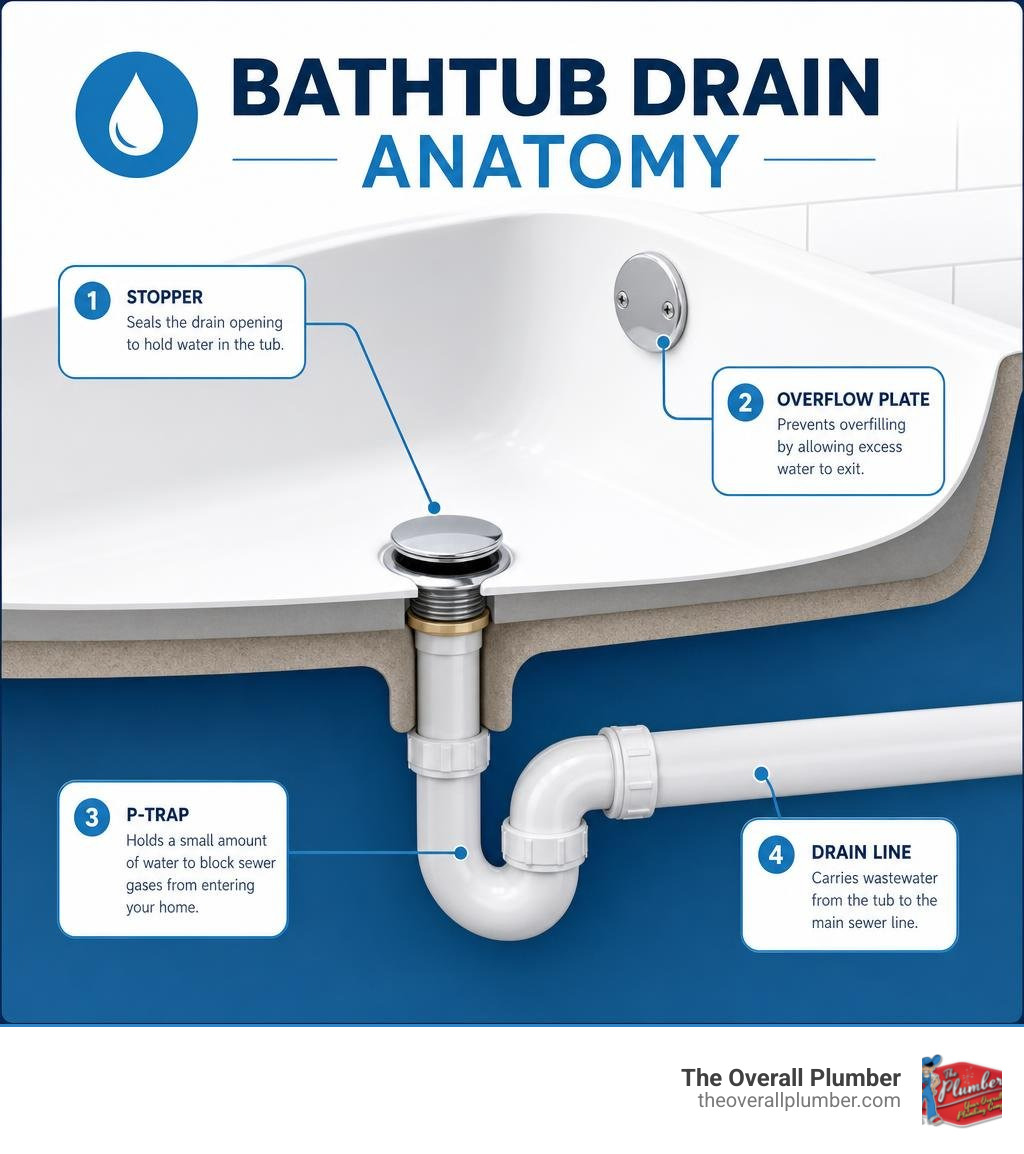
Similar topics to fix a slow draining bathtub:
Why Is My Bathtub Draining Slowly?
Understanding why your bathtub is acting sluggish is the first step toward reclaiming your shower peace. When water pools around your feet, it is usually because the pipe’s interior diameter has been severely restricted.
Here are the primary culprits behind a slow-draining tub:
- Hair Clogs: This is the undisputed number-one cause of slow tub drains. Human hair does not dissolve in water. Instead, it acts like a net inside your drain, catching everything else that washes down.
- Soap Scum: Modern soaps, body washes, and shampoos contain fats and oils. When these combine with the minerals in your water, they form a sticky, paste-like residue known as soap scum. This sticky film coats the pipe walls and snags passing hair, accelerating the clog.
- Hard Water Mineral Deposits: Here in the Gulf Coast region — including Houston, League City, and Pearland — hard water is incredibly common. Dissolved minerals like calcium and magnesium naturally precipitate out of water and bind to your plumbing. Over time, this scale narrows your pipes just like plaque in an artery.
- Cast Iron Pipe Scale: If your home was built between the 1960s and 1980s, you likely have original cast iron drain lines. Over the decades, cast iron develops internal rust and rough scale. This rough surface acts like Velcro, catching hair and soap scum far faster than smooth PVC pipes.
- Bath Oils and Bath Bombs: While relaxing, these products leave behind heavy, greasy residues that solidify as they cool down inside your cold plumbing pipes.
Ignoring these early signs is a recipe for a full-blown plumbing emergency. When water drains slowly, debris continues to settle and compact inside the P-trap. Over time, bacteria feast on this organic matter, producing foul, rotten-egg smells (hydrogen sulfide gas) that ruin your bathroom’s atmosphere. To understand why waiting is a bad idea, check out our guide on why waiting for a clog to clear itself is a recipe for disaster.
For further reading on the structural causes of drainage issues, you can also explore this technical breakdown of drain flow dynamics by How to Fix a Slow Draining Bathtub – Oatey.
How to Fix a Slow Draining Bathtub
If you want to fix a slow draining bathtub, you do not need to immediately reach for harsh chemicals. In fact, standard physical and natural methods are much safer for your pipes and highly effective.
Let’s start with one of the most reliable mechanical tools in your household arsenal: the plunger.
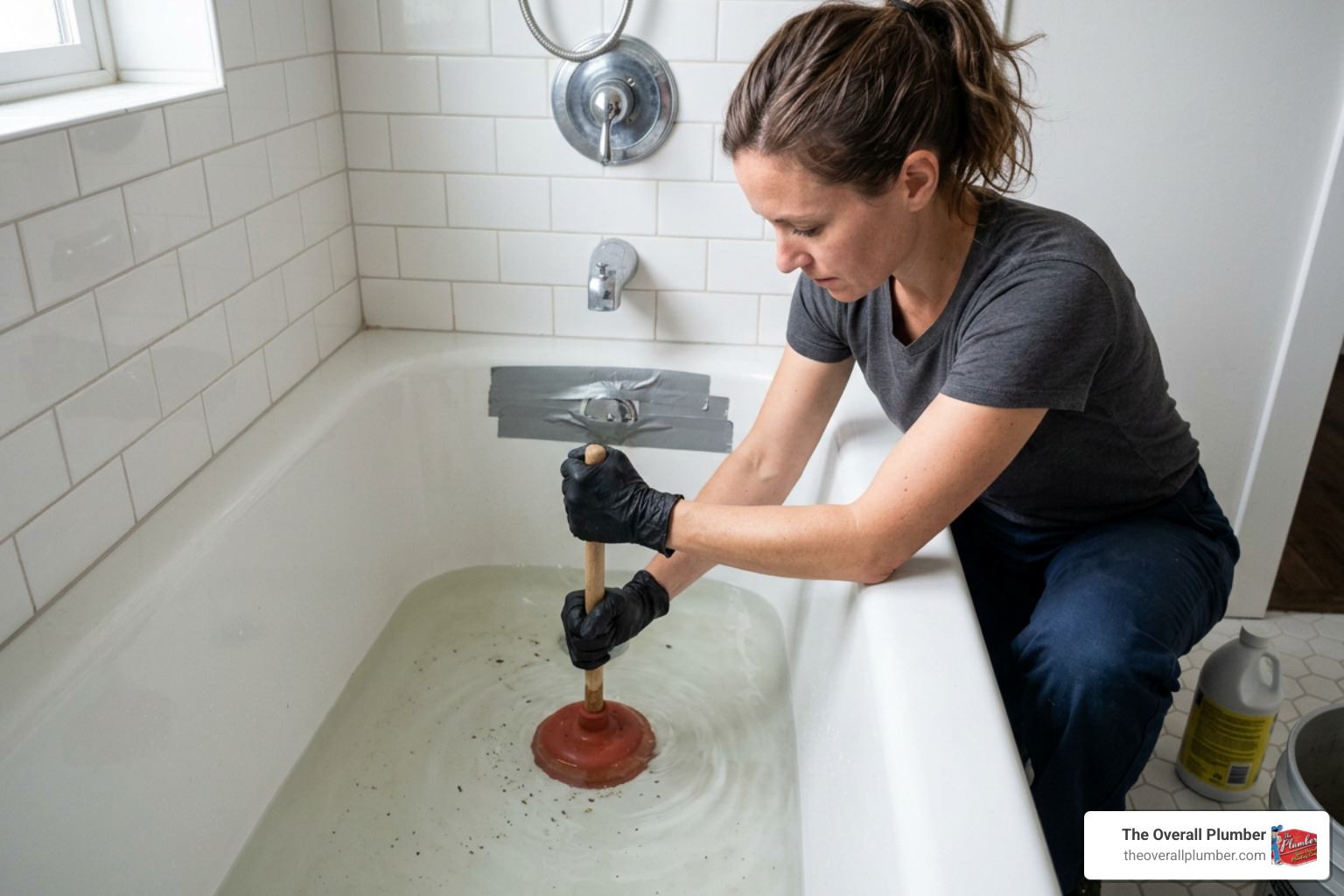
The Cup Plunger Method
Many homeowners make the mistake of using a toilet plunger (which has a narrow, extended rubber flap called a flange) on their flat bathtub floor. For a tub, you need a standard flat-bottomed cup plunger to create a proper seal.
Because a bathtub has an open overflow drain (the metal plate on the tub wall below the faucet), plunging the main drain normally just pushes air and water out of the overflow rather than forcing the clog loose. Here is how to do it correctly:
- Seal the Overflow: Remove the overflow plate or simply cover the openings completely with a thick layer of duct tape or a tightly stuffed wet rag. This ensures all the pressure from your plunging goes directly to the clog.
- Add Water: Ensure there is about 1 to 2 inches of standing water in the tub. This water covers the rubber cup of the plunger, helping to create an airtight seal.
- Apply Lubricant (Optional): Rub a thin layer of petroleum jelly (Vaseline) around the rim of the plunger cup to maximize suction against the tub floor.
- Plunge Vigorously: Place the cup over the drain, push down slowly to force the air out, then pull up and push down rapidly for 20 to 30 seconds. The pulling action is actually what breaks the clog apart, so pull back with force!
- Flush: If successful, you will see dirty water and debris rise into the tub. Remove the debris, peel off the duct tape, and flush the drain with hot water.
The Boiling Water Flush
If your slow drain is primarily caused by hardened soap scum or greasy bath oils, a simple boiling water flush can melt the blockage away.
- Note: Only use boiling water if you have metal or cast iron pipes. If you have PVC pipes, stick to extremely hot tap water, as boiling water can soften and weaken PVC glue joints over time.
Slowly pour a kettle of boiling water directly down the drain opening in stages, letting the heat melt through the greasy buildup. For more tips on handling minor blockages before they pool, read our advice on how to not let your sink pool around simple slow drain repairs.
How to Remove and Clean Different Bathtub Drain Stoppers
About 40% of slow-draining bathtub issues are solved entirely by removing the stopper and clearing the hair tangled directly beneath it. Over time, hair wraps tightly around the stopper’s metal linkage and support crosshairs.
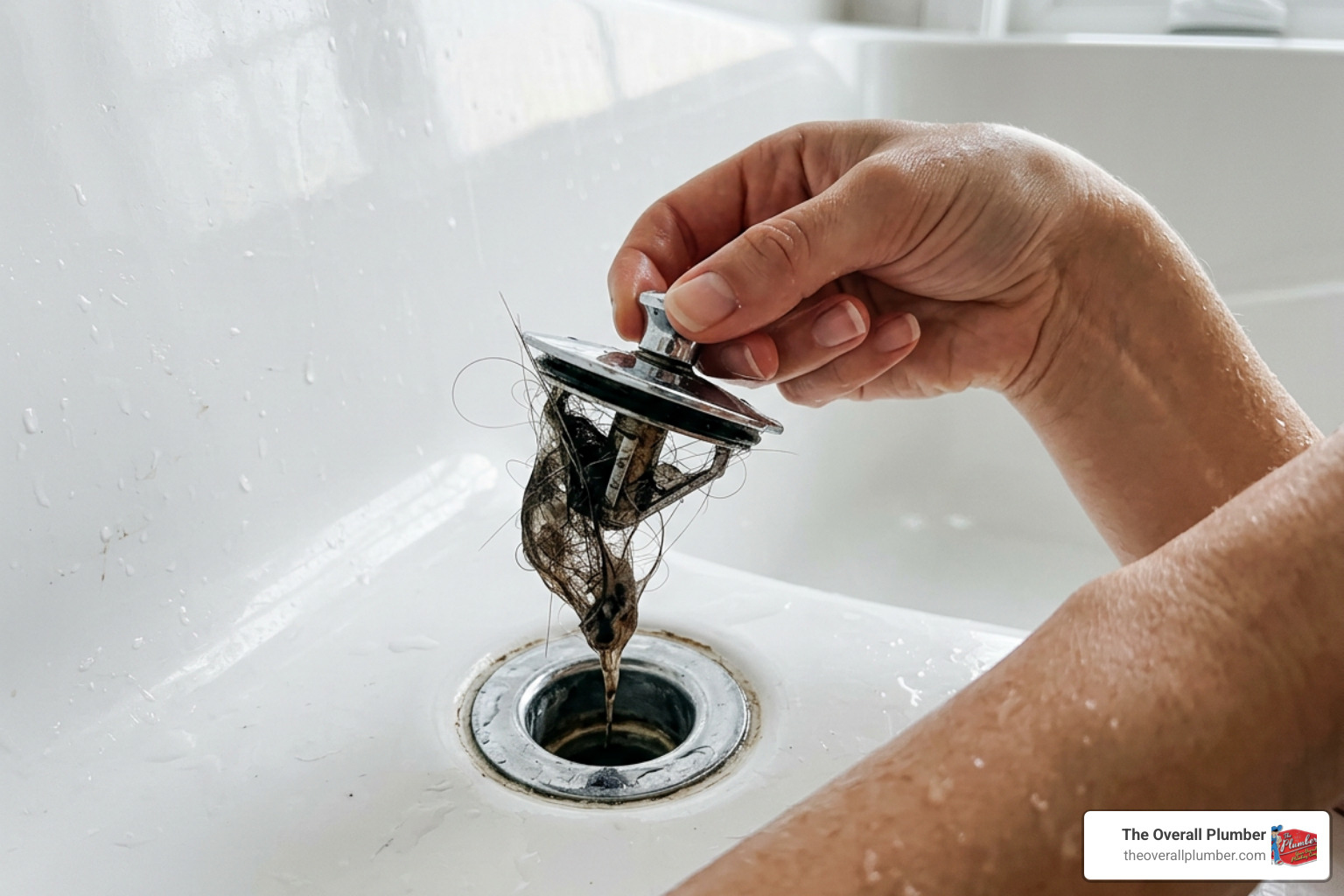
Because there are several different types of stoppers, you must use the correct removal technique to avoid damaging your hardware:
- Lift-and-Turn Stopper: Set the stopper to the “open” position. Lift it upward and look closely for a tiny set screw underneath the cap. Use a small flathead screwdriver or Allen wrench to loosen the screw, then lift the stopper off. If there is no set screw, simply turn the stopper counterclockwise until it unscrews completely.
- Push-Pull Stopper: Hold the bottom base of the stopper firmly with one hand and unscrew the top knob counterclockwise. Once the knob is off, use a flathead screwdriver to unscrew the brass insert post underneath, then lift the assembly out.
- Toe-Touch Stopper: Push down to open the stopper. Unscrew the top metal cap counterclockwise. Underneath, you will see a brass cylinder threaded into the crosshairs. Use a screwdriver to unscrew it and lift the stopper out.
- Pop-Up Stopper: These are operated by a lever on the overflow plate. To remove, simply pull the stopper straight up. It is attached to a long, curved brass rocker arm. Wiggle the arm gently to pull the entire metal assembly out of the drain opening.
- Trip-Lever Stopper: This style has a plunger weight suspended inside the overflow tube. To clean it, you must unscrew the two screws on the overflow faceplate on the tub wall. Carefully pull the faceplate away, and the entire brass linkage rod and weighted plunger will slide out of the wall.
Once your stopper is removed, wear thick utility gloves and use needle-nose pliers to pull out the thick mat of hair and black slime clinging to the mechanism. Wipe down all metal parts with an old toothbrush and soapy water before reinstalling.
To see a visual demonstration of how to remove these various stopper types, check out this helpful video guide on How to Fix a Slow Bathtub Drain – YouTube.
Step-by-Step DIY Methods to Fix a Slow Draining Bathtub
If plunging and cleaning the stopper did not fully restore your flow, it is time to move deeper into the drainage system using these highly effective DIY methods.
Method 1: The Baking Soda and Vinegar Reaction (Natural & Safe)
This classic home remedy uses a natural chemical reaction to break down organic matter and deodorize your pipes without damaging older metal plumbing.
- Pour 1/2 cup of baking soda directly down the drain opening. Use a spoon or funnel to push it down past the crosshairs.
- Pour 1/2 cup of white vinegar down the drain immediately after.
- Cover the drain opening tightly with a stopper or a wet rag to force the fizzing carbon dioxide downward into the clog.
- Let the mixture sit and work its magic for 15 to 30 minutes.
- Flush the drain thoroughly with a large kettle of boiling or extremely hot water.
Method 2: The Plastic Drain Snake (Zip-It Tool)
For less than $5 at any local hardware store in Brazoria County or Galveston County, you can buy a flexible plastic hair-snare tool. These are about 18 to 24 inches long and feature backward-facing barbs.
Simply feed the plastic strip down into the drain opening as far as it will go. Twist it slightly, then pull it back up. The barbs will grab onto the hair clogs and pull them out. Repeat this process at different angles until the tool comes up clean.
Method 3: The Plumber’s Hand Auger
When the clog is located deep past the P-trap, a professional-style hand auger (drain snake) is your best bet.
- Feed Through the Overflow: For bathtubs, it is almost always more effective to feed your snake through the overflow drain rather than the main tub drain. Going through the overflow bypasses the sharp 90-degree turn of the P-trap, giving you a straight path down to the branch line.
- Advance the Cable: Remove the overflow faceplate. Insert the steel cable of the auger into the tube.
- Crank and Clear: Slowly feed the cable while turning the crank handle clockwise. When you feel resistance, you have hit the clog. Keep cranking clockwise while pushing forward gently to allow the corkscrew tip to bite into the blockage.
- Retrieve: Slowly pull the cable back, turning the handle clockwise as you pull. Have a plastic bucket and trash bag ready to catch the wet hair and debris.
For a deeper dive into choosing and operating these tools safely, read our ultimate guide to unclogging your life with this ultimate plumbing snake guide. You can also cross-reference these instructions with the step-by-step illustrations provided by How To Fix a Slow-Draining Tub – This Old House.
Method 4: The Wet-Dry Vacuum Trick
If you have a powerful shop vacuum, you can use it to suck clogs right out of the drain.
- Remove the tub stopper and clean the area.
- Seal the overflow drain completely with duct tape to prevent air bypass.
- Place the nozzle of your wet-dry vacuum directly over the main drain opening.
- Wrap a wet rag around the nozzle to create a tight seal against the tub floor.
- Turn the vacuum on “wet” mode for 15 to 20 seconds. The powerful suction can easily extract hair clumps and foreign objects that plungers can’t budge.
When DIY Fails: Professional Solutions to Fix a Slow Draining Bathtub
While DIY fixes are fantastic first steps, there comes a point where home remedies can do more harm than good.
Why You Should Avoid Chemical Drain Cleaners
It is incredibly tempting to grab a bottle of liquid drain cleaner from the supermarket shelf, but professional plumbers strongly advise against them.
- Pipe Corrosion: Chemical cleaners rely on strong acids or sodium hydroxide (lye) to generate intense heat. In older homes with galvanized steel or cast iron pipes, this acid eats away at the pipe walls, leading to pinhole leaks.
- Melting Plastic: In newer homes, the heat generated by these chemical reactions can literally deform thin PVC pipes and melt the glue holding the joints together.
- Toxic Fumes: Chemical cleaners release toxic, caustic fumes that can irritate your lungs and eyes, and they pose a severe burn hazard to you — or any plumber who has to work on the line later.
- Ineffective on Deep Clogs: If the chemical doesn’t clear the clog, you are left with a bathtub full of highly corrosive, toxic standing water.
Warning Signs of a Major Sewer Line Issue
If you notice any of the following symptoms, stop your DIY efforts immediately. These signs indicate a deeper mainline blockage rather than a simple tub clog:
- Multiple Slow Drains: If your kitchen sink, toilet, and bathtub are all draining slowly at the same time, the clog is in your main sewer stack, not your tub.
- Gurgling Sounds: If your toilet bubbles or gurgles when your bathtub drains, air is trapped inside your venting system due to a deep mainline restriction.
- Foul Sewage Odors: Persistent sewer smells rising from multiple drains mean sewer gases are bypassing your dry P-traps.
- Water Backing Up: If water backs up into your shower when you run your washing machine or flush the adjacent toilet, your main line is obstructed.
When these complex issues arise, professional intervention is required to clear the lines safely and permanently. To learn more about how a professional plumber handles these situations, read about how clogged drain service can help you unclog fast.
Preventative Maintenance to Keep Your Tub Flowing
The easiest way to deal with a slow-draining bathtub is to prevent the clog from forming in the first place. By adopting a few simple weekly and monthly habits, you can keep your plumbing running smoothly for years.
- Install a Mesh Hair Catcher: This is the single most effective action you can take. A stainless steel or silicone mesh drain screen sits directly over your drain opening, catching hair and small debris before they ever enter your P-trap. Simply wipe it clean after every shower.
- Perform a Weekly Hot Water Flush: At the end of every week, run extremely hot tap water down your tub drain for 2 to 3 minutes. This melts away fresh soap scum before it has a chance to solidify and bind with hair.
- Implement a Monthly Baking Soda Treatment: Treat your drains to a monthly baking soda and vinegar flush. This naturally scours the pipe walls, neutralizes odor-causing bacteria, and keeps your system fresh.
- Never Wash Heavy Debris Down the Drain: If you’ve been gardening, working in the yard, or washing a sandy dog, shake off heavy dirt, sand, and pet hair outside before rinsing off in the tub.
To help you stay on top of your plumbing health, we’ve broken down these preventative steps into a simple schedule:
| Method | Frequency | Best For | Safety Level |
|---|---|---|---|
| Mesh Hair Catcher | Continuous / Daily | Catching hair, pet fur, and solid debris | 100% Safe for all systems |
| Hot Water Flush | Weekly | Dissolving soap scum and bath oils | 100% Safe (avoid boiling water on PVC) |
| Baking Soda & Vinegar | Monthly | Deodorizing and scouring pipe walls | 100% Safe and eco-friendly |
| Manual Stopper Cleaning | Every 3 Months | Clearing hair wrapped around the mechanism | 100% Safe |
Frequently Asked Questions About Slow Bathtub Drains
Can I use chemical drain cleaners for a slow-draining bathtub?
We strongly advise against using chemical drain cleaners. The harsh acids and lye inside these bottles generate intense chemical heat that can warp PVC pipes, dissolve joint glue, and accelerate corrosion in older cast iron plumbing. Furthermore, the toxic fumes are hazardous to your household’s health.
Instead, opt for physical clearing methods like a cup plunger, a plastic drain zip-tool, or natural, eco-friendly alternatives like baking soda and white vinegar.
Why does my bathtub drain clog so frequently?
If your tub drain clogs every few weeks, it is usually due to one of three issues:
- Incomplete Cleaning: A basic hand snake might just punch a small hole through a hair clog rather than removing it, allowing it to close right back up.
- Rough Cast Iron Pipes: Older cast iron pipes develop internal rust scale that constantly snags hair.
- Hard Water Scale: Mineral buildup has narrowed the pipe’s internal diameter, making it incredibly easy for even small amounts of hair to cause a blockage.
How do I clear a clog if there is standing water in the tub?
If your tub is holding ankle-deep standing water, do not pour any chemical or natural cleaners into it, as they will simply dilute in the standing water and fail to work.
Instead, wear rubber gloves and use a cup plunger (remembering to seal the overflow drain with duct tape first). If plunging doesn’t work, use a plastic hair-snare tool or a wet-dry vacuum to extract the hair clog directly out of the standing water.
Schedule Your Professional Drain Cleaning Today
If you’ve tried plunging, snaking, and natural flushes and your bathtub is still draining slowly, it’s time to bring in the local experts. At The Overall Plumber, we provide top-tier drain cleaning services using professional-grade augers and state-of-the-art sewer camera inspections to find and eliminate the root cause of your plumbing issues.
We proudly serve homeowners throughout the Greater Houston and Gulf Coast area, including Brazoria County, Houston, Clear Lake, Santa Fe, League City, Texas City, La Porte, Friendswood, Pearland, Pasadena, and Galveston.
When you work with us, you enjoy the peace of mind that comes with:
- Our Plumber Guarantee: Complete satisfaction guarantees on every single job.
- No Trip Charges: We never charge you just to show up at your door.
- No Overtime Fees: Honest, upfront pricing with no hidden charges.
- Priority Scheduling: We get to your home fast to restore your comfort.
Don’t let a slow drain turn into a major plumbing emergency. Visit our local plumber clogged drain service page or call us directly at (281) 668-5056 to learn more about our comprehensive solutions and schedule your service today.