

When a Slow Drain Becomes a Real Problem
A slow drain fix is something most homeowners need sooner or later — and the good news is that most cases can be resolved quickly with the right approach.
Here’s how to fix a slow drain fast:
- Remove visible debris from the drain opening (hair, soap scum, gunk)
- Flush with hot water and a squirt of dish soap
- Use a cup plunger with the overflow hole covered
- Pour 1/2 cup baking soda followed by 1 cup white vinegar, wait 15-30 minutes, then flush
- Use a drain snake or zip tool to pull out deeper clogs
- Clean the P-trap under the sink if water still drains slowly
- Call a licensed plumber if multiple drains are affected or the problem keeps coming back
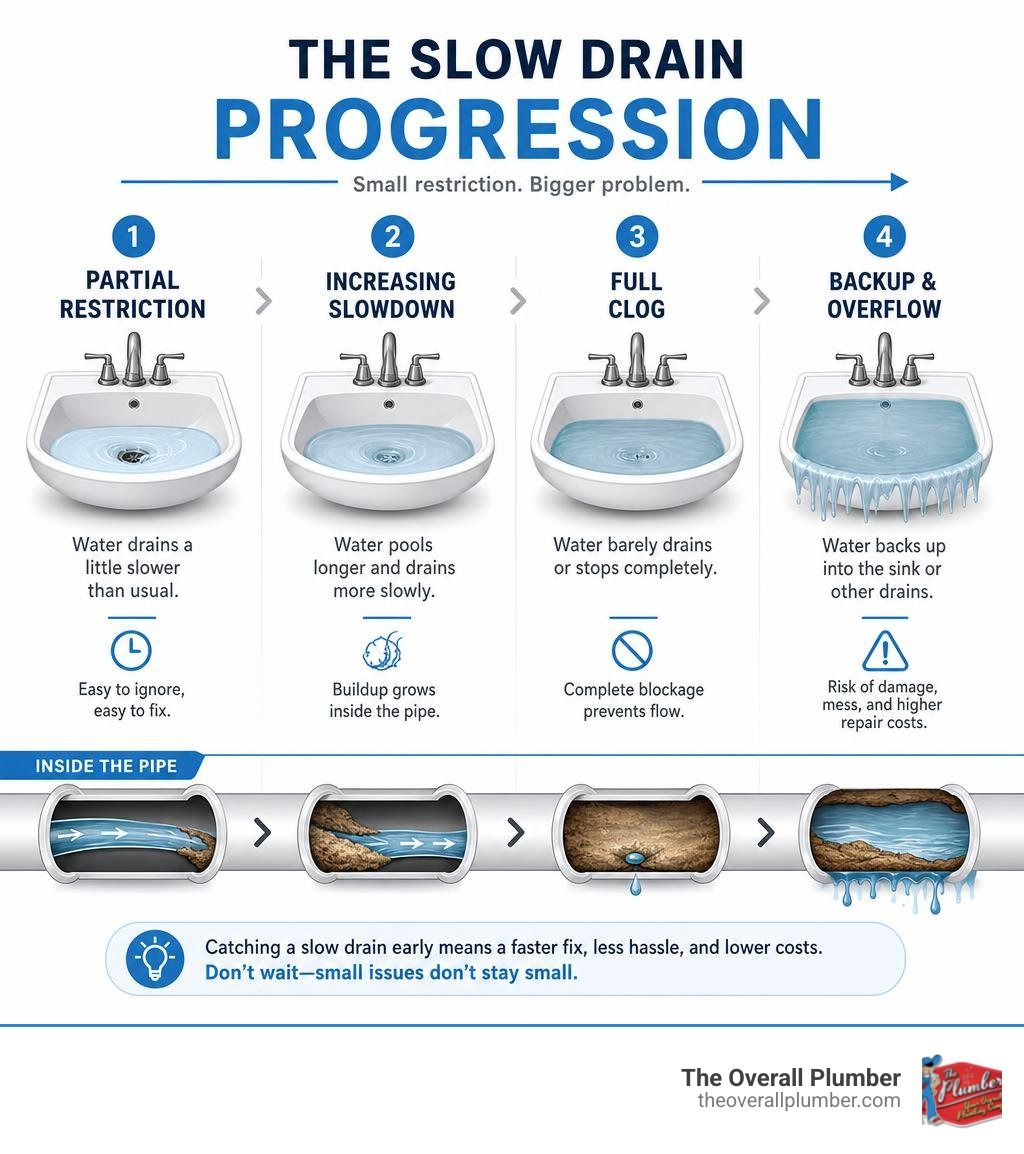
Most slow drains start small. Water takes a little longer to go down after you wash your hands. Then your shower starts pooling around your feet. Left alone, that partial restriction keeps building until you have a full blockage or even a drain backup on your hands. According to industry data, slow drains account for roughly 30% of all residential plumbing service calls in the U.S. — and over half of those cases trace back to hair, grease, or soap scum sitting in the P-trap or drainpipe.
The fix is almost always straightforward if you catch it early.
I’m Dayton Whitworth, a second-generation plumber serving Greater Brazoria County, Galveston County, Houston, and the surrounding Gulf Coast, and I’ve handled more slow drain fix calls than I can count — from simple hair clogs to full main line blockages. In the sections below, I’ll walk you through exactly how to diagnose what’s causing your slow drain and fix it safely, starting with the easiest methods first.
Common Causes and How to Diagnose a Sluggish Pipe
Before you can implement a permanent slow drain fix, you have to know what you are fighting. Different rooms in your house face different plumbing enemies. In the bathroom, the primary culprits are hair, soap scum, toothpaste, and organic biofilm. When hair falls down the drain, it acts like a net, catching soap residue and sticky toothpaste. Over time, this mixture creates a thick, solid mass that narrows the pipe diameter.
In the kitchen, the enemies are fats, oils, grease (collectively known as FOG), and food scraps. When warm grease is poured down the sink, it looks liquid, but as soon as it hits the cold pipes underground, it solidifies. It clings to the pipe walls, trapping coffee grounds, produce stickers, and pasta waste until the water can barely squeeze through.
Beyond these daily deposits, two other sneaky factors can slow down your plumbing:
- Biofilm Accumulation: This is a sticky layer of bacteria and organic matter that grows inside your pipes. It acts like plaque in an artery, gradually restricting water flow.
- Mineral Scale: If your home has hard water, dissolved minerals like calcium and magnesium will slowly deposit along the inner walls of your drainpipes, narrowing the pathway over time.
Diagnosing the issue safely starts with a quick inspection. If you are renting or want to keep your hands clean, you can learn how to fix a slow drain safely (renter edition) using non-invasive tools. The most important diagnostic rule is to act early. Many homeowners assume a sluggish sink will eventually resolve itself as water trickles past, but waiting for a clog to clear itself is a recipe for disaster because partial clogs attract more debris, eventually hardening into a solid obstruction that can cause expensive pipe ruptures.

Localized Clog vs. Main Sewer Line Issues
How do you know if you are dealing with a simple, localized clog or a massive headache deep in your home’s main sewer line? The diagnostic test is simple: count the affected drains.
If only a single fixture is draining slowly—such as your master bathroom sink—the problem is localized. The restriction is almost certainly located in the pop-up stopper, the P-trap directly beneath the basin, or the immediate branch line behind the wall.
However, if you notice multiple slow drains occurring simultaneously across your home (for example, your shower pools water while the toilet gurgles and the kitchen sink backs up), you are dealing with a systemic issue.
Watch out for these classic warning signs of a main sewer line or venting problem:
- Gurgling Sounds: If your sink bubbles or gurgles when you flush a nearby toilet, air is trapped in the system because the main line or plumbing vent is restricted.
- Sewer Odors: Foul, rotten-egg smells rising from multiple drains indicate that sewer gases are escaping because of a backup or a dry, blocked vent.
- Water Backing Up: If running your washing machine causes water to pool in your bathtub, the water has nowhere to go because of a deep clog.
When multiple fixtures are backed up, standard DIY methods will not work. These situations require specialized equipment, which is why main drain clogs require a priority auger service to clear the main line before sewage backs up into your living spaces.
Step-by-Step DIY Slow Drain Fix Methods
If you have determined that your slow drain is localized to one sink or shower, you can likely resolve it yourself. DIY drain cleaning methods successfully resolve about 60% to 70% of minor slow drain problems without professional help.
Before you start, gather your safety gear. We always recommend wearing thick rubber gloves and safety goggles. Even if you haven’t poured harsh chemicals down the drain, older plumbing lines can contain nasty bacteria, mold, and stagnant water that you do not want on your skin or in your eyes.
To help you get started, we will walk through the most effective steps, keeping in mind the diagnostic ladder outlined in how to fix a slow draining sink: 7 proven DIY solutions.
Using a Plunger as a Quick Slow Drain Fix
Plunging is not just for toilets. A standard flat-bottomed cup plunger is incredibly effective at clearing partial clogs in sinks, bathtubs, and showers.
To use a plunger correctly:
- Seal the Overflow: Most bathroom sinks and bathtubs have an overflow hole near the top to prevent flooding. If you do not seal this hole with a damp rag or duct tape, the air and water pressure you create with the plunger will simply escape through the overflow instead of pushing against the clog.
- Fill the Basin: Run enough warm water into the sink or tub to cover the rubber cup of the plunger. This water creates a tight seal around the drain opening.
- Plunge Vigorously: Place the plunger cup firmly over the drain. Push down slowly to expel the air, then pump up and down vigorously for 20 to 30 seconds. The alternating pressure and suction will break up the clog and pull it toward the surface.
- Flush the Line: Remove the plunger and run hot tap water down the drain to flush away the loosened debris.
Natural Enzymes and Baking Soda for a Safe Slow Drain Fix
If mechanical pressure does not clear the slow drain, you can use safe chemical reactions to break down organic buildup. We strongly advise against using caustic commercial drain cleaners. Instead, try a natural baking soda and vinegar flush, or a biodegradable enzyme cleaner.
To perform a baking soda and vinegar flush:
- Pour 1/2 cup of baking soda directly down the drain. Use a funnel or a spoon to make sure it goes deep into the pipe.
- Pour 1 cup of white distilled vinegar down after it.
- Immediately plug the drain with a stopper or a rag to force the chemical reaction downward. The mixture will fizz and bubble, loosening grease and soap scum.
- Let the mixture sit for 15 to 30 minutes.
- Flush the drain with a generous amount of hot tap water.
For stubborn biofilm and organic waste, enzyme-based cleaners are an excellent alternative. These products contain natural bacteria that digest organic matter over several hours or overnight. They are incredibly safe for all pipe materials and septic systems, making them ideal for routine monthly maintenance.
Cleaning the P-Trap and Pop-Up Stopper
If the water is still draining slowly, the clog is likely sitting in the P-trap (the U-shaped pipe beneath your sink) or wrapped around the pop-up stopper mechanism.
To clean these components:
- Clear the Stopper: In bathroom sinks, unscrew the pop-up stopper or remove the pivot rod from beneath the sink to pull the stopper out. Clean off the hair and soap scum that typically wrap around the mechanism.
- Set Up a Bucket: Place a small bucket or tray beneath the P-trap to catch the water that sits inside the bend.
- Loosen the Slip Nuts: Hand-tighten or use slip-joint pliers to loosen the plastic slip nuts on both ends of the U-shaped trap.
- Remove and Clean: Pull the P-trap down. Empty the dirty water and debris into your bucket. Run a brush or a rag through the pipe to clean out any remaining gunk.
- Reassemble Carefully: Reinstall the P-trap, ensuring the rubber washers are seated correctly. Hand-tighten the nuts, then add a quarter-turn with pliers. Run the water to test for leaks.
Snaking the Line with a Hand Auger
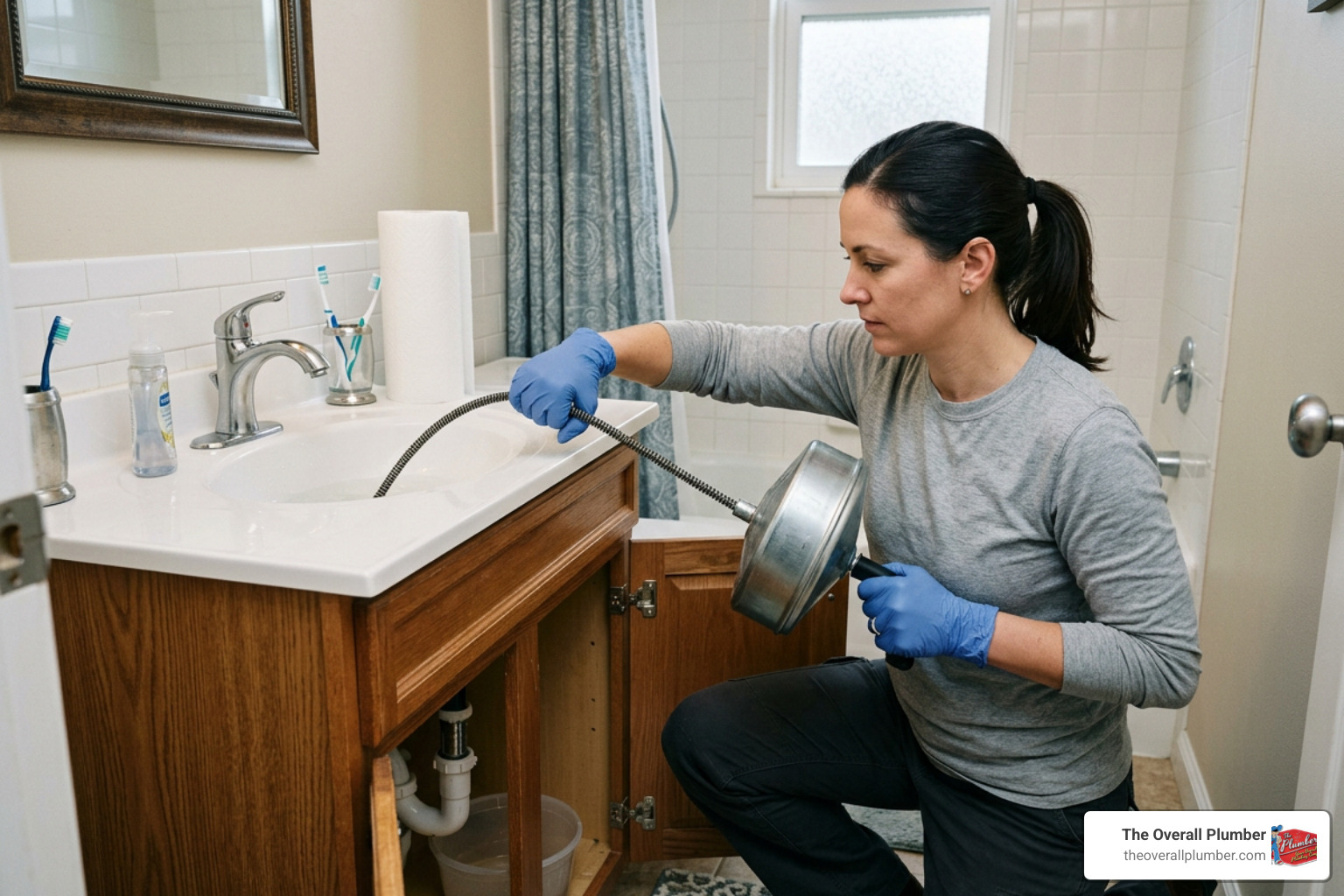
When the clog is located past the P-trap, deep inside the branch line behind the wall, you will need a manual drain snake (also called a hand auger). A basic 25-foot hand snake is inexpensive and highly effective.
To snake your drain line:
- Remove the P-trap to access the trap arm (the pipe entering the wall).
- Feed the end of the drain snake cable manually into the wall pipe until you feel resistance.
- Tighten the lock screw on the snake canister.
- Turn the hand crank clockwise while applying gentle forward pressure. This rotation allows the corkscrew tip of the cable to grab onto or break through the clog.
- Slowly pull the cable back out of the pipe. Have a plastic bag ready, as the snake will likely pull out a mass of hair and grease.
- Reassemble the P-trap and flush the system with hot water.
If you find yourself struggling with deeper blockages that a standard hand snake cannot reach, learning how clogged drain service can help you unclog fast can save you time and prevent damage to your pipes.
Why Chemical Cleaners Do More Harm Than Good
When faced with a stubborn slow drain, it is tempting to run to the grocery store and buy a bottle of chemical drain cleaner. However, professional plumbers universally agree: do not use chemical drain cleaners.
Chemical drain cleaners rely on harsh, caustic ingredients like sodium hydroxide (lye) or sulfuric acid to dissolve clogs. While they may clear a temporary path, they cause severe, irreversible damage to your home’s plumbing system:
- Pipe Corrosion: Caustic chemicals generate intense heat as they react with organic matter inside your pipes. This heat can soften and deform PVC pipes, weaken glued joints, and accelerate corrosion in older cast iron or galvanized steel lines. Repeated use of chemical drain cleaners can reduce your pipes’ lifespan by up to 40%.
- Toxic Fumes: The chemical reaction produces toxic fumes that can irritate your eyes, nose, and lungs. If you try to plunge a drain after pouring chemicals down, you risk splashing these highly corrosive liquids onto your skin or into your eyes.
- Environmental Hazard: These harsh chemicals eventually make their way into municipal water treatment systems or your backyard septic tank, where they kill the beneficial bacteria needed to break down waste.
Investing in a simple plunger or a $20 hand auger is a much safer, more effective, and cheaper alternative that protects your home’s plumbing over the long term.
Frequently Asked Questions About Slow Drains
| DIY Methods | Professional Drain Cleaning |
|---|---|
| Cost: $0 – $35 (basic tools) | Cost: $150 – $500 (average range) |
| Effectiveness: Best for minor, localized clogs | Effectiveness: Clears stubborn, deep, or recurring blockages |
| Safety: Safe if using mechanical tools or natural enzymes | Safety: Safe; performed by licensed, insured professionals |
| Tools Used: Plunger, hand snake, baking soda | Tools Used: Commercial augers, hydro jetting, sewer cameras |
Why is my sink draining slowly but not fully clogged?
A sink that drains slowly but is not fully clogged is suffering from a partial restriction. Over time, hair, soap scum, grease, and hard water mineral scale build up along the inner walls of the pipe. This reduces the pipe’s internal diameter, allowing only a small stream of water to pass through. If left untreated, this partial restriction will continue to trap debris until the pipe is completely blocked.
Can boiling water damage my home’s plumbing pipes?
Yes, boiling water can damage your pipes, specifically if your home uses PVC or ABS plastic plumbing. PVC pipes and their glued joints are rated to handle temperatures up to 140°F. Pouring boiling water (which is 212°F) down the sink can melt, warp, or crack plastic pipes and soften the adhesive holding the joints together, leading to hidden leaks behind your walls. If you have plastic pipes, always use hot tap water instead of boiling water.
How often should I clean my drains to prevent slow water flow?
We recommend performing quick maintenance on your drains once a month. This includes clearing hair from pop-up stoppers, washing out drain screens, and flushing your kitchen sink with hot water and dish soap to wash away residual grease. Additionally, installing fine-mesh drain screens in your showers and tubs is the single best way to prevent hair from entering your plumbing system in the first place.
Professional Solutions for Stubborn Pipe Blockages
While DIY methods can resolve minor clogs, some plumbing issues require professional expertise. If your drains are persistently slow, if you are dealing with multiple clogged fixtures, or if you suspect a main sewer line issue, we are here to help.
At The Overall Plumber, we provide comprehensive drain cleaning services tailored to homeowners throughout Greater Houston and the Texas Gulf Coast. Our team serves:
- Brazoria County
- Houston
- Clear Lake
- Santa Fe
- League City
- Texas City
- La Porte
- Friendswood
- Pearland
- Pasadena
- Galveston
- Harris County
- Galveston County
- Communities throughout the Texas Gulf Coast
When our licensed technicians arrive at your home, we do not just poke a temporary hole in the clog. We use advanced diagnostic tools to resolve the root cause of the problem:
- Camera Diagnostics: We feed a high-resolution waterproof camera down your sewer line to visually inspect the interior of your pipes. This allows us to locate the exact position of the blockage and check for pipe damage, bellies, or tree root intrusion.
- Hydro Jetting: Using high-pressure water streams, we blast away grease, mineral scale, and tree roots, cleaning the entire diameter of the pipe and restoring your plumbing to like-new condition.
- Professional Augers: For tough blockages, we use heavy-duty commercial drain snakes that can reach deep into your main line.
We stand behind our work with outstanding guarantees, priority scheduling, no trip charges, and absolutely no overtime fees. We also offer plumbing protection plans to keep your home’s system running smoothly year-round. To learn more about why choosing the right plumber matters, read our guide on slow drains and why you need a satisfaction guarantee.
If you are ready to restore smooth, worry-free drainage to your home, check out the ultimate guide to plumbing repair Houston homeowners need, schedule professional drain cleaning with The Overall Plumber, or call us directly at (888) 555-0199 for immediate assistance.